


Camellia japonica, commonly known as the Japanese Camellia or simply Camellia, is one of the most celebrated flowering shrubs in the horticultural world. Native to China, Japan, and Korea, this evergreen shrub has been cultivated for over a thousand years and holds deep cultural significance in East Asian societies. The plant was introduced to Europe in the 18th century and has since become a prized ornamental specimen in gardens worldwide, particularly in regions with mild climates.
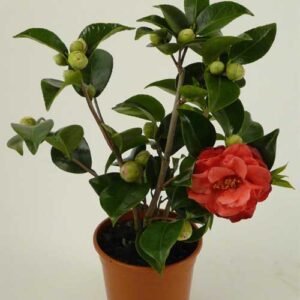
The Camellia japonica is renowned for its stunning, rose-like flowers that bloom during the cooler months when few other plants are in flower. The blooms can range from pure white to deep red, with many varieties displaying pink tones and bicolor patterns. The flowers typically measure 3-5 inches across and can be single, semi-double, or fully double in form. The plant’s dark green, glossy, leathery leaves provide an excellent backdrop for the spectacular blooms and remain attractive year-round, making it valuable for both seasonal color and evergreen structure in the landscape.
This slow-growing shrub can reach heights of 6-12 feet and widths of 5-10 feet at maturity, though some specimens can grow much larger over time. Camellia japonica has a naturally upright, somewhat pyramidal growth habit with dense branching. The plant’s longevity is remarkable, with some specimens living for several centuries. In its native habitat, it often grows as an understory plant in woodland settings, which informs its preference for partial shade and protection from harsh environmental conditions.
Caring for Camellia japonica requires understanding its natural woodland origins and providing conditions that mimic its native environment. This elegant shrub thrives in partially shaded locations with consistent moisture, well-draining acidic soil, and protection from harsh winds and extreme temperatures. Success with camellias often comes down to proper site selection and establishing the right growing conditions from the start, as these plants can be somewhat particular about their requirements but reward proper care with decades of stunning blooms.
The key to successful camellia cultivation lies in patience and attention to detail. These are slow-growing plants that may take several years to become established and reach their full flowering potential. During the establishment period, consistent watering, proper mulching, and protection from environmental stresses are crucial. Once established, camellias become more resilient but still require regular maintenance including appropriate fertilization, pruning, and monitoring for common pests and diseases.
Understanding the seasonal needs of Camellia japonica is essential for optimal care. The plant sets its flower buds during summer for the following year’s bloom, making summer care particularly important. This includes maintaining adequate moisture during bud formation, providing appropriate nutrition, and avoiding late-season pruning that might remove developing flower buds. Winter protection may be necessary in marginal climates, while summer care focuses on maintaining consistent moisture and protecting from excessive heat and sun exposure.
 Soil
Soil
Camellia japonica requires well-draining, acidic soil with a pH range between 5.5 and 6.5 for optimal growth and flowering. The ideal soil composition consists of rich, organic matter with good moisture retention capabilities while still allowing excess water to drain freely. A mixture of native soil amended with compost, leaf mold, and coarse organic matter such as pine bark creates the perfect growing medium. The soil should be loose and friable to allow proper root development and air circulation. Beneficial soil amendments include peat moss, aged compost, pine needles, and bark chips, which help maintain acidity while improving soil structure and water retention. Poor drainage leads to root rot and fungal diseases, as camellias cannot tolerate waterlogged conditions despite their need for consistent moisture. Soil compaction restricts root growth and reduces oxygen availability, causing stunted growth and poor flowering. Inappropriate pH, particularly alkaline conditions above 7.0, causes chlorosis and nutrient deficiencies as the plant cannot properly absorb iron and other essential nutrients. Salt build-up from over-fertilization or poor-quality water causes leaf burn and root damage. Nutrient deficiencies, particularly nitrogen, iron, and magnesium, result in poor growth, yellowing leaves, and reduced flowering. Root boundness in container-grown plants restricts growth and requires careful repotting with fresh, appropriate soil mix.
 Fertilizer
Camellia japonica benefits from regular fertilization with acid-forming fertilizers specifically formulated for acid-loving plants such as azaleas, rhododendrons, and camellias. Apply a balanced, slow-release fertilizer with a ratio approximately 10-10-10 or similar three times per year: early spring as new growth begins, late spring after flowering concludes, and mid-summer during bud formation. The ideal fertilizer should contain micronutrients, particularly iron, which is essential for preventing chlorosis in these acid-loving plants. Signs of over-fertilization include excessive vegetative growth at the expense of flowers, dark green foliage with reduced flowering, salt burn on leaf edges, and increased susceptibility to pests and diseases. Under-fertilization manifests as pale or yellowing leaves (chlorosis), poor growth, reduced flowering, and small, weak branches. Organic alternatives include well-aged compost, fish emulsion, bone meal, and cottonseed meal, which provide slow-release nutrition while improving soil structure. Coffee grounds can be used sparingly as a soil amendment for their acidifying properties. Common nutrient deficiencies in camellias include iron deficiency (causing chlorosis), magnesium deficiency (yellowing between leaf veins), and nitrogen deficiency (overall pale foliage and poor growth). Regular soil testing helps identify specific nutrient needs and prevents over-application of fertilizers.
 Watering
Camellia japonica requires consistent, deep watering throughout the growing season, with the soil maintained at an evenly moist but never waterlogged condition. These plants have shallow, fibrous root systems that dry out quickly, making regular watering essential, particularly during summer months when flower buds are forming. Water deeply but less frequently to encourage deep root growth, applying approximately 1-1.5 inches of water per week through rainfall and irrigation combined. The soil should feel slightly moist at a depth of 2-3 inches. Water quality significantly affects camellia health, with rainwater being ideal due to its naturally acidic pH and lack of chemicals. If using tap water, allow it to sit for 24 hours to dissipate chlorine, or use filtered water in areas with heavily treated municipal water. Signs of underwatering include wilting, leaf drop, bud drop, and brown leaf edges. Overwatering symptoms include yellowing leaves, root rot, fungal growth, and a musty soil odor. Watering needs change seasonally, with increased requirements during hot summer months and flower bud formation, while winter watering should be reduced but not eliminated, especially for container plants and in protected environments.
Stop guessing. Most houseplant failures are caused by volumetric errors and improper moisture tension. Our deterministic calculator moves beyond "once-a-week" watering by analyzing the four critical pillars of root health:
Personalized for this plant
Disclaimer: Our calculator is pretty smart. We’ve crunched the numbers, but we’re not measuring the quantum state of your living room. Since we don’t know your exact indoor temperature, humidity, light, airflow, or whether your plant receives daily sweet nothings and motivational speeches, use this calculator as a guide—and always keep an eye on your plant.
 Lighting
Camellia japonica performs optimally in partial shade to filtered sunlight, preferring morning sun with afternoon shade, especially in warmer climates. The ideal lighting condition provides 4-6 hours of gentle, indirect light daily, mimicking the dappled sunlight of their native woodland understory environment. In cooler climates, camellias can tolerate more direct sunlight, while in hot, sunny regions, they require more shade protection to prevent leaf scorch and stress. East-facing locations are often ideal, providing gentle morning light while offering protection from intense afternoon sun. Signs of insufficient light include leggy growth, reduced flowering, pale green foliage, and weak branch development. Plants receiving too little light often produce fewer flower buds and may have poor overall vigor. Excessive light exposure manifests as leaf scorch (brown, crispy leaf edges), yellowing foliage, wilting during hot periods, and stunted growth. In extreme cases, entire leaves may turn brown and drop. To adjust lighting conditions, consider relocating container plants, installing shade cloth during summer months, or planting taller companion plants to provide natural shade. In indoor settings, bright, indirect light near east or north-facing windows works best, with supplemental grow lights if necessary during winter months.
 Temperature
Camellia japonica thrives in moderate temperatures with an ideal range of 60-70°F (15-21°C) during the growing season. These plants are remarkably cold-hardy once established, typically surviving temperatures down to 10-15°F (-9 to -12°C), though flower buds may be damaged at temperatures below 20°F (-6°C). The plant’s cold tolerance varies among cultivars, with some Japanese varieties being more cold-hardy than others. Heat tolerance is more limited, with plants beginning to show stress when temperatures consistently exceed 85°F (29°C), particularly when combined with low humidity or drought conditions. Temperature fluctuations can significantly impact camellia performance, particularly rapid changes that don’t allow the plant to acclimate gradually. Late spring frosts can damage new growth and flower buds, while early fall freezes may harm plants that haven’t properly hardened off for winter. To protect camellias from extreme temperatures, apply a thick layer of mulch around the base in fall to insulate roots, wrap young or tender plants with burlap during harsh winter weather, and provide shade cloth during excessive summer heat. Container plants require extra protection since roots are more exposed to temperature extremes, and may need to be moved to protected locations during severe weather. Proper site selection, choosing a location protected from harsh winds and extreme temperature swings, is crucial for long-term plant health.
 Humidity
Camellia japonica prefers moderate to high humidity levels between 40-60%, reflecting its native woodland environment where moisture levels remain relatively stable. In regions with naturally high humidity, such as the southeastern United States, camellias often perform exceptionally well with minimal intervention. However, in drier climates or indoor environments, supplemental humidity measures become necessary for optimal plant health and flowering performance. Low humidity stress symptoms include brown leaf tips, premature bud drop, reduced flowering, and increased susceptibility to spider mites. High humidity problems, while less common, can promote fungal diseases, particularly in poorly ventilated areas, and may manifest as leaf spots, petal blight, or root rot issues. To increase humidity around camellias, use pebble trays filled with water beneath container plants, ensuring the pot bottom doesn’t sit directly in water. Misting can be effective but should be done early in the day to allow foliage to dry before evening. Humidifiers work well for indoor plants, while outdoor plants benefit from mulching, grouping with other plants, and protection from drying winds. Installing shade cloth can also help maintain higher humidity levels by reducing evaporation rates in the immediate vicinity of the plant.
 Propagation
Camellia japonica can be propagated through several methods, with semi-hardwood cuttings being the most reliable for home gardeners. The best time for propagation is late summer to early fall (August-September) when current year’s growth has begun to mature but isn’t completely hardened. Success rates vary by method: semi-hardwood cuttings (60-80% success rate), air layering (80-90% success rate), and grafting (90%+ success rate with experience). Seeds can be collected and planted but may not produce plants identical to the parent. Step-by-step cutting propagation: 1) Select healthy, current-year growth that’s beginning to harden, cutting 4-6 inch pieces just below a leaf node. 2) Remove lower leaves, leaving 2-3 pairs at the top, and make a clean cut at the base. 3) Dip the cutting in rooting hormone containing IBA (indole-3-butyric acid). 4) Plant in a well-draining medium of half peat moss and half perlite or sand. 5) Place in a humid environment with bright, indirect light and temperatures of 65-75°F. 6) Maintain consistent moisture and high humidity using a plastic tent or misting system. 7) Roots typically develop in 6-8 weeks, with new growth appearing in 10-12 weeks. 8) Transplant to individual containers once roots are well-established, usually after 3-4 months. New plants typically take 2-3 years to become fully established and may not flower for 3-5 years depending on the variety and growing conditions.
 Potting
Container-grown Camellia japonica requires specific potting considerations to ensure healthy growth and flowering. Choose containers that are at least 18-24 inches wide and deep for mature plants, with multiple drainage holes to prevent waterlogging. The ideal potting mix consists of 50% high-quality potting soil, 25% pine bark or peat moss, and 25% perlite or coarse sand to ensure proper drainage while retaining moisture. Commercial azalea/camellia potting mixes work well, or create a custom blend with pH between 5.5-6.5. Repotting frequency depends on plant size and growth rate, typically every 2-3 years for young plants and every 3-4 years for established specimens. Signs indicating repotting needs include water running straight through the pot without being absorbed, roots growing through drainage holes, slow growth despite proper care, and soil pulling away from pot edges. The best time to repot is late winter or early spring before new growth begins, avoiding the flowering period. When repotting, carefully remove the plant and gently tease apart circled roots without damaging the root ball excessively. Root pruning may be necessary for severely root-bound plants, removing no more than 25% of the root mass and focusing on circled or damaged roots. Place fresh soil in the bottom of the new container, position the plant at the same depth as previously grown, and fill with soil mix, firming gently and watering thoroughly after repotting.
 Pruning
Camellia japonica requires minimal pruning compared to many flowering shrubs, but strategic pruning enhances plant health, shape, and flowering performance. The optimal pruning time is immediately after flowering concludes in late spring, typically April through June, depending on variety and climate. This timing allows the plant to develop new growth and set flower buds for the following year’s bloom, as camellias form buds during summer months.
Annual light pruning maintains plant health and shape, while more extensive pruning should be done every 2-3 years. Pruning purposes include removing dead, diseased, or damaged wood, improving air circulation, maintaining desired size and shape, encouraging bushier growth, and rejuvenating old, overgrown specimens. Avoid heavy pruning, as camellias respond slowly and may not flower well for 1-2 years after severe cutting.
Essential tools include sharp, clean bypass pruners for branches up to 1 inch diameter, loppers for larger branches up to 2 inches, and a pruning saw for anything larger. Clean all tools with rubbing alcohol before and between plants to prevent disease transmission. Wear protective clothing including gloves and long sleeves when working around thorny or dense growth.
Apply a thin layer of wound sealant to cuts larger than 1 inch in diameter, though this is often unnecessary for healthy plants. Water thoroughly after pruning and apply a balanced fertilizer to encourage new growth. Mulch around the base to retain moisture and suppress weeds. Monitor for signs of stress or disease in the weeks following pruning, and avoid fertilizing late in the growing season to allow proper hardening before winter.
 Blooming
Camellia japonica blooms during late winter to early spring, typically from December through April, depending on variety and climate. The blooming period lasts 2-3 months, with individual flowers persisting for 1-2 weeks in cool weather. Peak flowering occurs when temperatures remain between 45-65°F with high humidity and protection from direct sunlight. Flowers are typically 3-5 inches across, ranging from single to fully double forms, in colors from pure white through various pinks to deep red, with some varieties displaying variegated patterns.
 Pests and Diseases
Scale Insects
Aphids
Spider Mites
Camellia Petal Blight
Root Rot
Leaf Spot
Note: Always follow label instructions on any pesticide or fungicide and consider integrated pest management (IPM) first: cultural controls, mechanical removal, and biological controls before chemical treatments.
 Special Features
Camellia japonica possesses several unique characteristics that make it particularly valuable in the garden. Most notably, its winter and early spring blooming period provides spectacular color when most other flowering plants are dormant, making it an invaluable specimen for extending seasonal interest. The flowers are not only beautiful but also long-lasting, with individual blooms persisting for several weeks in cool weather. Many varieties produce a light, sweet fragrance, though this varies considerably among cultivars. The plant’s evergreen nature means it provides year-round structure and visual interest, with the glossy, dark green foliage serving as an excellent backdrop for other plants even when not in bloom. Additionally, the fallen petals create an attractive carpet beneath the plant, and the spent flowers drop cleanly without becoming unsightly, requiring minimal cleanup compared to many other flowering shrubs.
 Plant Benefits
Camellia japonica has been used in traditional medicine for its anti-inflammatory and antioxidant properties. The leaves contain compounds similar to those found in tea plants and have been used to make herbal preparations for treating digestive issues and skin conditions. Some studies suggest potential benefits for cardiovascular health due to the presence of flavonoids and catechins. The plant’s oil has been used in cosmetic applications for its moisturizing properties, though most medicinal uses should be approached with caution and professional guidance.
 Additional Information
Camellia japonica is the state flower of Alabama and holds significant cultural importance in Japan, where it symbolizes divine love and faithfulness. The plant has been extensively hybridized, resulting in thousands of named varieties with diverse flower forms and colors. Some notable cultivars include ‘Alba Plena’ (white double), ‘Debutante’ (light pink), and ‘Professor Charles S. Sargent’ (red). The plant prefers woodland garden settings and pairs beautifully with azaleas, rhododendrons, and ferns. In suitable climates, mature specimens can live for several centuries and become significant landscape features.
 Life Cycle
Camellia japonica follows a predictable annual cycle that gardeners should understand for optimal care. Spring brings new vegetative growth and the conclusion of the flowering period. Summer is crucial for flower bud formation, requiring consistent moisture and nutrition. Fall preparation involves reducing fertilization and ensuring adequate water storage for winter. Winter dormancy includes the spectacular flowering period when most growth ceases. The plant typically takes 3-5 years from propagation to first flowering, with full maturity and peak performance reached after 7-10 years. Proper establishment during the first few years is critical for long-term success.
 Are Japanese Camellia Poisonous, Toxic
Camellia japonica is classified as non-toxic to cats, dogs, and children by the ASPCA. Unlike many ornamental plants, all parts of the camellia — leaves, flowers, and stems — are considered safe if ingested. In fact, one camellia species, Camellia sinensis, is the plant used worldwide to produce green and black tea, underscoring the genus’s general edibility.
That said, eating a large quantity of any plant material can occasionally cause mild gastrointestinal upset in pets or children, such as nausea, vomiting, or diarrhea — but this is a reaction to the fibrous bulk, not to any toxic compound in the camellia itself.
First aid: If your pet or child eats camellia leaves or flowers, no specific treatment is typically needed. If mild stomach upset occurs, offer small amounts of water and monitor. Contact a veterinarian or poison control center if symptoms are severe or persistent, or if you’re unsure what was actually ingested (in case another, genuinely toxic plant was involved).
Prevention: While camellias themselves pose minimal risk, it’s still good practice to discourage pets and small children from habitually chewing on garden plants, since many common landscaping species are toxic and easily confused with one another.
 Frequently Asked Questions
Camellia japonica, commonly known as the Japanese Camellia, is a slow-growing evergreen shrub native to China, Japan, and Korea. It is prized for its rose-like blooms in winter and early spring, ranging from white to pink to deep red. With glossy, dark green leaves and flowers 3–5 inches wide, it provides beauty and structure year-round. Mature plants can reach 6–12 feet tall and live for centuries.
It thrives in acidic, well-draining soil (pH 5.5–6.5) rich in organic matter. A mix of compost, pine bark, leaf mold, and peat moss works well. Poor drainage causes root rot, while alkaline soils lead to nutrient deficiencies such as chlorosis.
Use an acid-forming fertilizer for camellias, azaleas, or rhododendrons three times per year: early spring, late spring after flowering, and mid-summer. Balanced slow-release formulas (10-10-10) or organics like cottonseed meal, compost, or fish emulsion are ideal. Avoid over-fertilizing, which causes leaf burn and reduced blooms.
Water deeply and consistently to keep soil evenly moist, especially in summer when buds are forming. Aim for about 1–1.5 inches of water per week. Rainwater is best, but dechlorinated tap water can be used. Overwatering causes root rot, while underwatering leads to bud drop and leaf scorch.
It prefers partial shade or filtered morning sun with afternoon protection. In cooler climates, it can tolerate more sun, while in hot climates, too much sun causes leaf scorch. Plants in too much shade may grow leggy and bloom less.
Ideal growing temperatures are 60–70°F (15–21°C). They tolerate cold down to 10–15°F (-9 to -12°C), though buds may be damaged below 20°F (-6°C). Protect from frost in spring and extreme summer heat above 85°F (29°C).
Yes, it prefers moderate humidity (40–60%). Low humidity can cause bud drop and leaf tip burn. Outdoors, mulch and grouping help retain humidity; indoors, pebble trays or humidifiers are effective.
It can be propagated by semi-hardwood cuttings (best in late summer), air layering, or grafting. Seeds may also be grown but won’t always produce true-to-type plants. Cuttings typically root in 6–8 weeks under high humidity and indirect light.
Container-grown plants should be repotted every 2–3 years for young shrubs and every 3–4 years for mature ones. Use a camellia-specific potting mix, and repot in late winter or early spring before new growth begins.
Minimal pruning is required. Prune after flowering in late spring to remove dead, weak, or crossing branches and to shape the plant. Avoid pruning in summer or fall, as buds for next year’s flowers form then.
Japanese Camellias bloom in late winter to early spring, from December through April depending on the variety and climate. Flowers last 1–2 weeks each, with the blooming season extending up to 3 months.
Yes, it has mild toxicity due to saponins. Ingestion by cats, dogs, or children may cause nausea, vomiting, or diarrhea, but symptoms are usually mild. Keep out of reach of pets and children.
It is one of the few shrubs to bloom in winter, producing large, rose-like flowers when most plants are dormant. Its glossy evergreen leaves provide year-round beauty, and fallen petals create an attractive carpet beneath the shrub.
Beyond its ornamental appeal, Camellia japonica has been used in traditional medicine for its antioxidant and anti-inflammatory properties. Camellia oil is valued in cosmetics, and caring for the plant provides stress relief and seasonal garden interest.
Yes, though it is best suited for outdoor gardens in mild climates. Indoors, it requires bright, indirect light, acidic soil, consistent moisture, and high humidity. It can be challenging indoors but is possible with proper care.
Botanical name: Camellia japonica
Common names: Japanese Camellia, Common Camellia, Rose of Winter, Tsubaki
Family: Theaceae
Plant type: Evergreen shrub
Native range: China, Japan, Korea, eastern Asia
Size: 6–12 feet tall, 5–10 feet wide at maturity
 Can I grow Japanese Camellia in my indoor space
Difficulty: Intermediate
Size: Medium to Large
Light: Medium
Water: Medium to High
Flowering: Yes
Pet Safe: Yes
Air Purifier: Low
 Camellia japonica botanical details
Common Name: Japanese Camellia
Other Common Names: Common Camellia, Rose of Winter, Tsubaki
Botanical Name: Camellia japonica
Native Area: China, Japan, Korea, and eastern Asia
Family Name: Theaceae
Plant Type: Evergreen shrub
Genus: Camellia
Kingdom: Plantae
 Photo Gallery
If you find the Houseplant Encyclopedia helpful and would like to support Healthy Houseplants, you can use the links below to shop for recommended plants, products, and plant-care supplies.
Some links are affiliate links, which means I may earn a small commission if you make a qualifying purchase through them, at no additional cost to you. Thank you for supporting Healthy Houseplants and helping me continue to provide free plant-care information!

Want even more personalized plant-care help? Check out my AI Julie Chatbot—trained on my 20 years of houseplant knowledge, not just information from the internet!  Try it now:Ask AI Julie
✅ “Bring Home This Beauty Today”
✅ “Get Your Own Japanese Camellia Before It’s Gone”
✅ “Shop Trusted Sellers – Limited Availability”
✅ “Free Delivery”
As an Amazon Associate, I earn commission from qualifying purchases.
 Plant Puns and Jokes
Why don’t camellias ever get stressed about timing? Because they always know it’s never too late to make a beautiful impression – they save their best blooms for when everyone else has given up for the winter!
 Signup to our newsletter and download Japanese Camellia care guide
 My Japanese Camellia Plant Care Recommendations
 Buy Japanese Camellia Online
