I love trailing houseplants. They soften a room and add that little spark of movement that upright plants simply can’t replicate. When vines spill gently over a shelf or trail from a hanging basket, they make a space feel welcoming and lived-in. Because many trailing varieties are easygoing and adaptable, it’s no surprise they often end up in the rooms we use the most, such as living areas, bedrooms, and entryways where a little greenery goes a long way.
Of course, vines don’t always stay exactly where we place them. A stem stretches toward the light, a planter gets nudged during everyday life, and before long the display can feel a bit tangled or awkward to walk around. Keeping an eye on those small shifts, and making simple adjustments along the way, helps your indoor garden stay beautiful while still keeping your home comfortable and easy to move through.
Why Some Houseplants Trail and Spread Indoors
Trailing houseplants aren’t being “messy.” They’re simply doing what they’re designed to do. A lot of these plants naturally creep and drape in the wild, spreading along the forest floor, climbing when they can, and spilling over rocks and fallen branches. Bring them indoors, and they keep following that same game plan. They grow out, grow down, and keep exploring for space and light.
Light is usually the biggest driver of how quickly they start reaching. If a plant is getting most of its light from one direction (hello, window), the stems will slowly lean and stretch that way. And in lower light, you’ll often see longer, thinner growth as the plant tries to “find” better conditions. This is one reason trailing plants can start looking a little leggy or unpredictable over time.
The pot and where you place it plays a role, too. When a plant sits low to the ground or on a narrow stand, it doesn’t have many choices besides spreading outward. And as the plant matures, those older stems don’t stop growing just because the base stays compact. So, the plant’s overall footprint can change gradually, until one day you realize it has reached farther than you ever expected. That’s not a bad thing. It just means you’ll want to plan ahead so things stay pretty and practical.
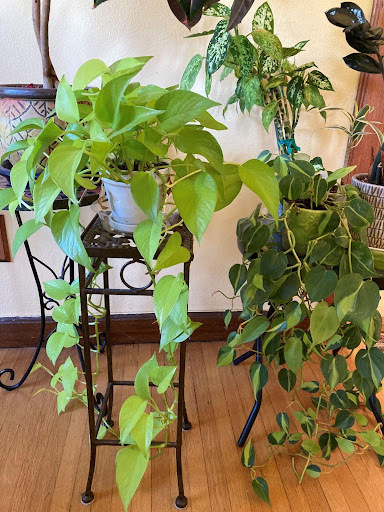
Trailing Neon Pothos and Philondendron ‘Brasil’ in Julie’s indoor garden
How Trailing Plants End Up in Everyday Walking Areas
Trailing plants often start as small accents, tucked where they add texture without taking up much space. Over time, their stems reach beyond those original boundaries, especially if a wall, chair, or shelf edge guides growth outward. In rooms you use constantly, that slow expansion can bring leaves and stems closer to where people step, turn, or pass through.
Floor-level pots are one of the most common culprits. If a plant is allowed to spill outward instead of being guided up or back, stems can end up across open floor space, particularly in smaller homes or apartments. Low shelving can create the same issue, because foliage drapes down into areas that felt clear when the plant was younger.
Hanging plants can also cause problems when placed near seating, entrances, or narrow pass-through areas. Air movement, routine dusting, and simple daily contact can shift stems over time. Because these changes happen gradually, it’s easy not to notice until the plant is suddenly in the way.
Placement Choices That Keep Rooms Easy to Move Through
Placement matters just as much as watering or checking the soil. When you choose a spot with the plant’s grown-up size in mind, you’re far less likely to end up with vines creeping into the places you walk, sit, and reach every day. A higher shelf is often the simplest fix. It gives stems room to drape beautifully without getting underfoot. And if you can give a trailing plant a little extra surface depth (instead of a narrow ledge), you’ll notice it stays looking intentional rather than “spilling” outward as it grows.
It also helps to think about how light will steer the plant. When most of the light comes from one direction, trailing plants will slowly angle and stretch toward it, which can shift their reach into spaces you didn’t plan for. (If you’ve ever watched a plant lean toward a window, that’s exactly what’s happening.) And if you’re not sure whether your plant is reaching because it’s chasing light or just growing normally, how to tell if your houseplant is getting too much or not enough light can help you spot the clues.
The good news is that small tweaks really do make a difference. Turning the pot every week or two, scooting it a few inches back from the edge, or moving it to a slightly deeper shelf can keep stems from wandering into “high-traffic” zones. It’s simple, quiet maintenance, but it goes a long way toward keeping both the plant and the room feeling balanced.
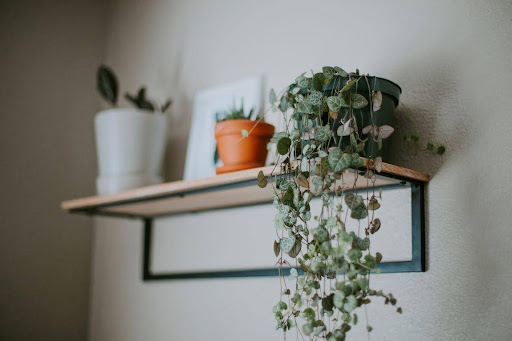
String of Turtles plant hanging from a shelf
When Plant Layouts Create Broader Safety Concerns
In many homes, a plant that stretches a little too far is mostly a minor inconvenience. But in environments where mobility is limited, even small obstacles along the floor can become much more significant. A trailing stem that’s easy to step over in a private living room may be far more disruptive in a shared setting, where furniture placement stays consistent and clear walkways matter.
Regional housing styles can also influence how quickly those small challenges show up. In dense cities like Chicago or New York, interiors often include narrow hallways and multi-use rooms, leaving less room for anything that grows outward unexpectedly. Nearby states such as Indiana or Wisconsin may offer more overall space, yet rugs, steps, and mixed flooring surfaces can create their own movement considerations. And in places like Florida and Arizona, where tile floors and open layouts are common, the idea of stable footing can look very different from one home to another.
In Illinois, many care facilities operate in older buildings or adapted residential spaces, where maintaining a consistent layout helps people move comfortably from room to room. Because falls are often linked to surrounding conditions, everyday details—furniture placement, lighting, and floor clearance—can make a real difference. After a serious incident, families sometimes find themselves needing to get help after a Chicago nursing home fall while trying to understand how environment, routine, and supervision came together in that moment.
Looking at how different living environments affect movement can also shift the way we think about plant placement at home. Choosing which plants stay elevated, which vines are guided upward, and which areas remain clear of everyday pathways helps keep a space feeling both welcoming and easy to navigate over time.
Habits That Keep Trailing Plants Manageable Over Time
Most trailing plant challenges don’t require a complete reset. Usually, it’s just a matter of noticing small shifts before they turn into everyday obstacles. Many trailing varieties grow in spurts depending on the season, light levels, and watering habits, so a quick check now and then helps you see where new vines are headed while they’re still easy to guide.
Pruning is one of the simplest ways to keep growth looking full without letting it wander too far. Trimming back longer stems helps control reach and encourages fresh growth closer to the base, which often creates a fuller, healthier look overall.
It also helps to remember that plant placement isn’t permanent. A location that felt perfect when a plant was small can start to feel crowded as it matures. Sliding the pot a few inches, moving it to a slightly higher shelf, or simply rotating it toward better light can make a big difference without disrupting your setup.
Trailing houseplants really shine when their growth is guided with a little intention. Paying attention to where stems extend, how pots are positioned, and how you move through a room day to day keeps plants from becoming obstacles instead of accents.
With a few small adjustments and regular upkeep, trailing plants can stay lush and expressive without making your space feel cluttered or hard to live in. When the plant and the room work together, everything just feels easier.
Julie Bawden-Davis is a best-selling garden author, blogger, YouTuber and Master Gardener dedicated to sharing indoor gardening expertise with aspiring gardeners. She has published several gardening books and more than 5,000 articles in major publications. A former garden columnist for the LA Times, San Francisco Chronicle and Parade.com, she is founder of HealthyHouseplants.com and its YouTube channel.
 Julie Bawden-DavisFebruary 14, 2026