How to Blend Indoor and Outdoor Gardens for a Seamless Living Space
 Julie Bawden-DavisApril 15, 2026


 Julie Bawden-DavisApril 15, 2026
Create a home where your indoor plants and outdoor garden flow together as one living space
One of my favorite moments in my indoor garden happens quietly and unexpectedly. I’ll be tending to my houseplants—watering, pruning, or simply admiring a new leaf—and then I’ll glance up and see the outdoor garden just beyond them through the window. Layers of green, one leading into the other.
In those moments, it feels as though the walls disappear. With hundreds of houseplants and a home filled with windows, I’m often struck by the feeling that I’m not just indoors. I’m living in a greenhouse. The indoor and outdoor gardens don’t feel separate. They feel connected, like part of the same living space.
Sometimes I even like to think my plants are “talking” to each other across the glass. It’s a lighthearted thought, but when everything is lush and thriving, it doesn’t feel far-fetched.
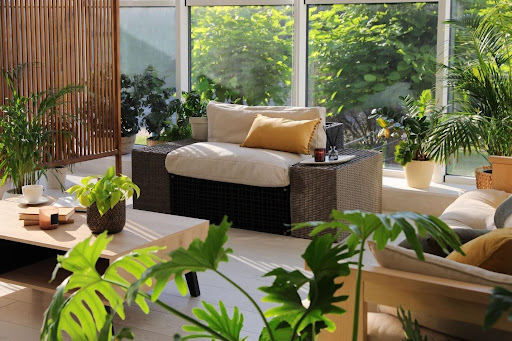
Mid-century modern homes, especially Eichler houses, are well known for this. With expansive glass walls, open floor plans, and an emphasis on bringing nature in, they make it easy to feel connected to the outdoors at all times.
Other styles that lend themselves to this feeling include:
But you don’t need a specific architectural style to create this effect. What matters most is light and visibility.
Windows are the bridge between your indoor and outdoor gardens. When you position indoor plants near windows, something special happens. Your eye doesn’t stop at the glass. It travels through it, blending the two spaces together.
From some of my windows, I can see a grapevine growing just outside. At certain times of the year, it forms a lush, living wall of green. When I place houseplants in front of that view, the effect is layered and rich. Indoor foliage is framed by outdoor foliage. That elevates everything.
Even a simple windowsill herb garden can create a cohesive feeling, especially when it mirrors what’s growing just beyond. This is what creates that natural indoor-outdoor flow that makes a space feel larger and more connected.
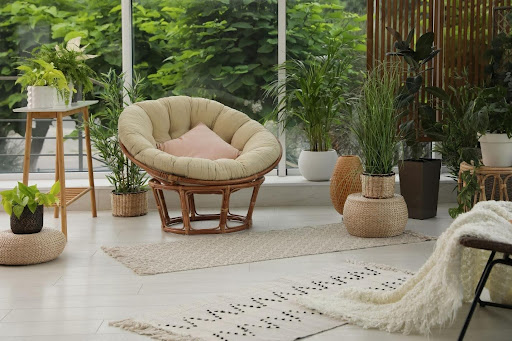
You can intentionally design this feeling in your home, no matter your layout. Here are a few of my favorite ways to blur the lines.
Place houseplants near windows where they visually connect with outdoor greenery. Think of it as extending the garden inward.
Sliding glass doors or French doors are perfect for this. Position houseplants near these openings so that moving outside feels like a natural continuation of the indoor space.
If the view outside your windows feels a bit disconnected, improving that space can make a big difference. Thoughtful landscaping can turn what you see through the glass into a true extension of your indoor garden. For those who want to create a more cohesive and inviting outdoor space, working with a professional service on landscaping design can help bring that vision to life.
If you have ferns, vines, or flowering plants outdoors, bring similar shapes or textures inside. This creates a sense of continuity.
Place indoor plants near windows. Arrange plants so your eye moves from indoor plants to window view to outdoor planting. This layering effect is what creates that greenhouse-like feeling at home.
Avoid blocking windows with heavy furniture or clutter. Let the greenery inside and out be the focus.
When you begin to think of your indoor and outdoor plants as part of the same environment, your entire home changes. It becomes softer, more alive, and more connected.
You’re not just decorating with plants. You’re creating a living space that flows, breathes, and evolves with the seasons.
And once you experience that feeling—of looking through your indoor garden into your outdoor one and seeing them as a single, continuous landscape—it’s hard to go back.