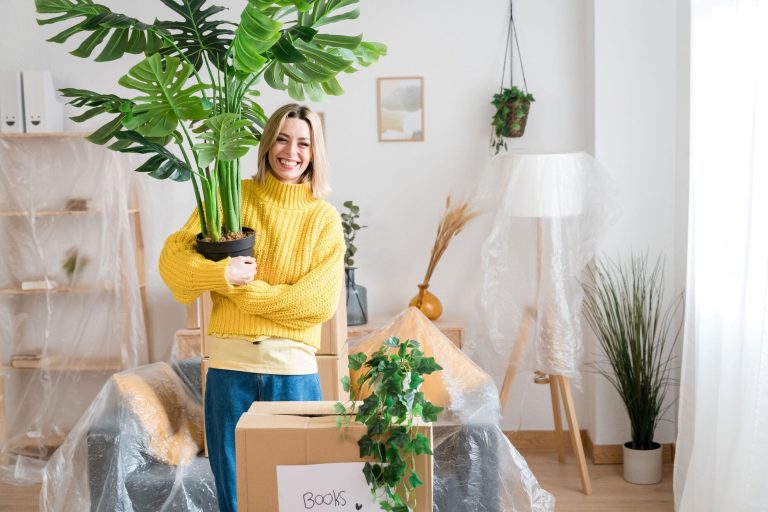
A house move is stressful for people and brutal for houseplants. Roots get jostled, leaves get crushed, and a treasured collection can arrive as a box of stems. A little planning changes that outcome completely.
Plants rarely make the moving checklist until the last minute. Yet the same budgeting step that starts most moves (running the numbers through a moving calculator), is the moment to plan for your indoor garden transport. Deciding early how your greenery safely travels saves heartbreak later.
Why Is Moving So Hard on Houseplants?
Houseplants are built to stay put, not to travel. A move exposes them to darkness, temperature swings, and constant jostling in a matter of hours. That combination triggers real stress.
Light is the other quiet shock. A plant accustomed to one window struggles when the angle and intensity suddenly change. Even a healthy houseplant may sulk for weeks while it recalibrates after a move.
Transplant shock is the stress a plant feels after a sudden disruption to its roots or environment. It shows up as drooping, dropped leaves, or stalled growth. Most houseplants recover after an indoor garden relocation, but the shock is worth minimizing.
Temperature is the silent killer during a move. Many tropical houseplants suffer when exposed to conditions of 50°F or lower, even briefly. A cold truck or a hot car can undo weeks of careful prep.
How Should You Prepare Plants Before Moving Day?
Good preparation starts a couple of weeks prior to your move. A short checklist keeps the work manageable.
Skip last-minute repotting. Repot at least 3 weeks before or wait until after the move.
Prune lightly. Trim dead or leggy growth so plants travel smaller and cleaner.
Inspect for pests. Check leaves and soil for mealybugs, spider mites, and scale before packing.
Water wisely. Water 2 to 3 days ahead so soil is moist but not soggy.
Gather supplies. Collect boxes, plant sleeves, and packing paper in advance.
What Is the Safest Way to Pack and Transport Houseplants?
Packing protects both the houseplant and everything around it. A plant sleeve is a loose protective wrap that shields foliage during handling. Slide one over each plant or use a paper cone for the same effect.
Boxes do the heavy lifting. Place pots in sturdy boxes, pad gaps with paper, and keep them upright at all times. Punch air holes and label each box as fragile and living.
Temperature control matters most in the vehicle. Advice on acclimating plants safely stresses gradual change, so never leave plants in a freezing or baking vehicle. Whenever possible, transport them in the climate-controlled cabin.
How Do You Handle a Long-Distance or Interstate Move?
Distance multiplies every risk. A cross-country trip means days in transit, low light, and possible state rules on bringing plants across borders. Some states restrict certain plants to prevent pests from spreading. Check the rules for your destination before you travel. When in doubt, take cuttings rather than whole plants.
Plan the logistics early. If plants ride in the car, keep them shaded and stable, and give them water at stops. Guidance on moving plants indoors is useful here, since a long move mimics the stress of a seasonal transition.
Some plants are not worth the trip. Large or fragile specimens may fare better gifted to a friend or propagated into cuttings. A small cutting travels far more easily than a full plant.
Loading order helps, too. Put the plants on the truck last and take them off first, so they spend the least time boxed and dark. On a multi-day move, that small choice makes a real difference.
How Do You Help Houseplants Recover After the Move?
The first weeks in a new home decide the outcome. Resist the urge to fuss, since constant handling slows recovery. Give plants time to settle.
Find the light. Match each plant to a window with similar light to its old spot.
Ease off water. Let plants adjust before returning to a normal watering routine.
Hold the fertilizer. Wait until you see fresh growth before feeding.
Be patient. Expect 3 to 4 weeks of adjustment before plants look themselves again.
Acclimation is the slow process of adjusting a houseplant to new conditions. Rushing it, or moving plants around the home too often, only prolongs the stress. Sensitive plants like Calathea need the most patience of all.
What to Keep in Mind
A move exposes plants to darkness, jostling, and temperature swings all at once.
Temperatures of 50°F or lower can damage many tropical houseplants.
Repot at least 3 weeks before a move, never the day of.
Pack pots upright in sturdy, labeled boxes and transport them in the cabin.
Long-distance moves may face state rules on bringing plants across borders.
Expect 3 to 4 weeks of recovery before plants fully settle.
Bringing Your Green Family Home
Moving a houseplant collection is a project, not an afterthought. Plan this task alongside the rest of the move, protect plants from cold and rough handling, and give them room to recover. Do that, and your indoor garden will arrive ready to thrive in your new home.
Julie Bawden-Davis is a best-selling garden author, blogger, YouTuber and Master Gardener dedicated to sharing indoor gardening expertise with aspiring gardeners. She has published several gardening books and more than 5,000 articles in major publications. A former garden columnist for the LA Times, San Francisco Chronicle and Parade.com, she is founder of HealthyHouseplants.com and its YouTube channel.
 Julie Bawden-DavisJuly 12, 2026