What to Add to Houseplant Soil for Better Drainage and Aeration
 Julie Bawden-DavisAugust 20, 2026


 Julie Bawden-DavisAugust 20, 2026
Years ago, I bought a bag of potting soil that was much too heavy for many of my houseplants. As soon as I opened the bag, I knew the dense mix wasn’t going to provide the drainage and aeration their roots needed.
Rather than throw out the soil, I amended it with pumice. The pumice opened up the mix, creating more space for water to drain and, just as importantly, for air to reach the roots.
Today, I have a high-quality potting soil that I love and use regularly, but that experience illustrates something important. Even when you’re starting with packaged potting soil, you can alter its physical properties when necessary to better suit the plants you’re growing.
There are a variety of potting mix amendments you can use for this purpose, including pumice, perlite, orchid bark, LECA, horticultural sand, coconut husk chips, gravel, and horticultural charcoal. Some remain relatively unchanged in the potting mix for a long time, while organic materials such as bark and coconut husk eventually decompose.
Before deciding what to add, though, it helps to understand exactly what you’re trying to accomplish.
We talk a lot about providing houseplants with adequate water, but roots need oxygen, too.
A healthy potting mix contains pore spaces—the small openings between particles that can hold either water or air. When you water, some of those spaces fill with moisture. As excess water drains away and the plant uses water, air returns to those spaces.
Problems develop when a potting mix becomes too dense or remains saturated for too long. The amount of oxygen available to the roots declines. Roots require oxygen for respiration, and when they’re deprived of it for extended periods, they become stressed and can begin to die. Prolonged overly wet conditions also favor the organisms associated with root rot.
That’s why good drainage and good aeration go hand in hand.
The goal isn’t to create soil that sheds every drop of water as quickly as possible. Houseplants need moisture as well as oxygen. What you’re looking for is a growing medium that holds an appropriate amount of water for the particular plant, while allowing excess water to drain and sufficient air to remain around the roots.
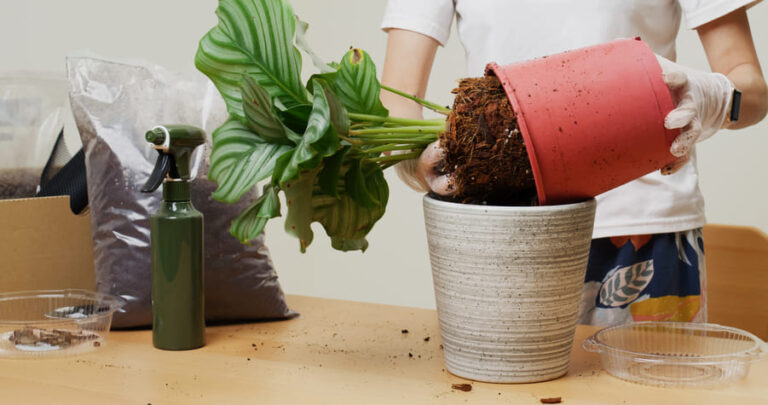
Not necessarily. A high-quality potting soil may already have excellent drainage and aeration and work perfectly well for many of your houseplants without adding anything. Don’t amend potting soil simply because you think you’re supposed to. Instead, consider the plant you’re growing and how the soil behaves.
If water has difficulty penetrating the mix, the soil remains saturated for an excessive amount of time, or the mix quickly becomes dense and compacted, an amendment may help. You may also want to alter an otherwise good potting mix for a plant that requires especially good aeration or drainage.
Succulents, cacti, Hoyas, many aroids and epiphytic plants, for example, generally benefit from more air around their roots than plants adapted to consistently moist growing conditions.
As a general starting point, I use about 1 part drainage amendment to 3 parts potting soil, which works out to roughly 25 percent amendment.
For plants that require especially sharp drainage, you can increase that to approximately 1 part amendment to 2 parts potting soil, or about one-third amendment.
These are guidelines rather than rigid formulas. The appropriate amount depends on the plant, the original potting mix, the amendment you’re using, and your growing conditions. These ratios are particularly useful when you’re adding materials such as pumice or perlite to conventional potting soil. Chunkier ingredients such as orchid bark, LECA and charcoal may be used differently depending on the type of growing medium you’re creating.
The goal is always the same—to create the right balance of moisture and air for the plant’s root system.
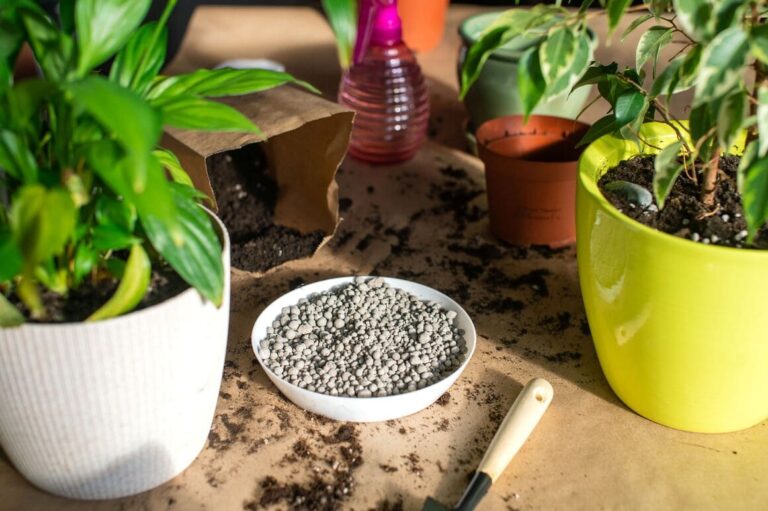
Pumice is one of my favorite amendments for improving drainage and aeration. This porous igneous rock forms during volcanic eruptions. Because the individual pieces contain numerous tiny pores, pumice helps create airspace within potting soil while allowing excess water to drain readily.
Years ago, I used perlite for many of my houseplants. It worked, but I found that because it was so lightweight, it tended to float toward the soil surface after repeated watering. It also gradually broke down.
Then I discovered pumice, and an entire world of drainage opened up to me. I began using pumice not only in my houseplant potting mixes but also when planting outdoors in heavy clay soil. It became—and remains—one of my top choices for creating better drainage and aeration on a long-lasting basis.
Unlike organic amendments, pumice doesn’t readily decompose. It also has some weight to it, so it tends to remain distributed throughout the growing medium rather than floating to the surface or washing away.
I use my Perfect Pumice, which can be mixed into potting soil, incorporated into garden soil or combined with orchid bark to create an especially airy growing medium.
Best for: General houseplant mixes, succulents, cacti, and plants requiring excellent drainage and aeration.
Pros: Long-lasting, porous, provides excellent aeration and drainage, and has enough weight to remain in place.
Considerations: Heavier than perlite and sometimes more expensive or difficult to find.
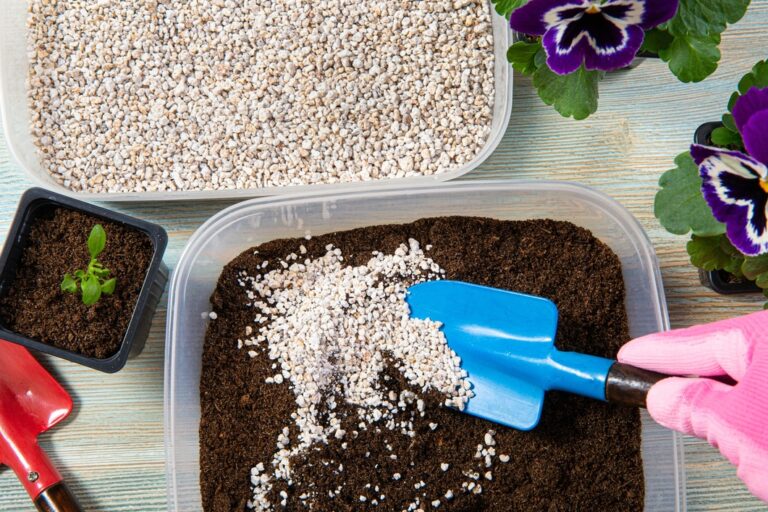
Perlite is the familiar lightweight white material you see in many commercial potting mixes. It’s made from volcanic material that has been heated until it expands.
Perlite creates additional pore space within potting soil, helping improve both aeration and drainage. It is lightweight, readily available and relatively inexpensive, which makes it a useful general-purpose amendment.
As I mentioned above, I used perlite for years before discovering pumice. One drawback I found is that its light weight allows it to gradually work its way toward the soil surface with repeated watering. It can also break down over time.
Best for: General-purpose potting mixes when you want to increase drainage without adding much weight.
Pros: Lightweight, inexpensive, readily available, and effective for improving aeration and drainage.
Considerations: Can float toward the soil surface, breaks down over time and can be dusty when dry. Moisten perlite before handling to avoid breathing the dust.
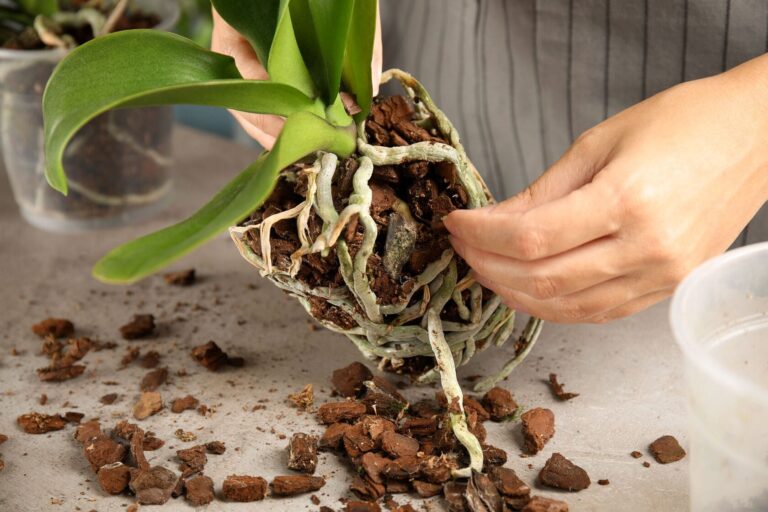
Orchid bark provides a wonderful illustration of just how important air around plant roots can be. Many of the orchids we grow as houseplants are epiphytes. In their native habitats, they grow attached to trees rather than rooted in ordinary ground soil. Their roots are exposed to abundant air circulation and rapid drainage.
That’s why orchids are commonly grown in chunky bark-based media rather than conventional potting soil. The large pieces create substantial spaces around the roots while still retaining some moisture and keeping the plant upright. (In their native habitat, orchids grow upside down hanging from trees and other vegetation.)
Orchid bark can also be incorporated into potting mixes for other houseplants that appreciate an open, chunky root environment. It’s particularly useful for many aroids and other tropical plants.
Because orchid bark is organic, however, it eventually decomposes. As it breaks down, the particles become smaller and the mix begins holding more moisture and less air. That’s one reason plants growing in bark-based media eventually need fresh growing medium.
Best for: Orchids, epiphytes, aroids, and tropical plants that prefer chunky, airy growing media.
Pros: Creates substantial airspace, provides excellent structure, and mimics the growing conditions of many epiphytes.
Considerations: Breaks down over time and eventually needs replacing.
Can you mix wood chips into houseplant soil? Sometimes, but choose the material carefully. Wood particles can create larger pore spaces and improve the physical structure of a potting mix, but wood chips aren’t inert. They decompose over time, and microorganisms breaking down fresh wood can temporarily tie up some of the available nitrogen in the immediate area.
I would also avoid simply scooping landscape wood chips or mulch into a houseplant pot. You don’t necessarily know what kind of wood you’re getting, how it was processed, whether it has been treated, or what organisms or contaminants might be present.
If you want the structural benefits of wood in a houseplant mix, a horticultural product such as orchid bark is generally the more predictable choice.
Best for: Specialized chunky mixes when you’re using a horticulturally appropriate wood product.
Pros: Can create airspace and add structure.
Considerations: Decomposes and can temporarily affect nitrogen availability as it breaks down, and unknown landscape products may not be appropriate for indoor containers.
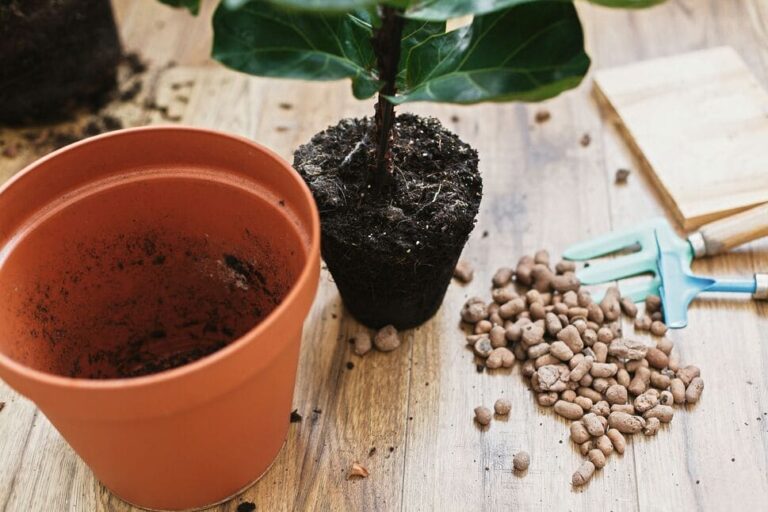
LECA stands for lightweight expanded clay aggregate. These round clay pebbles are heated during manufacturing, producing a hard, porous material.
LECA is widely known for semi-hydroponic growing, where plants may be grown in LECA rather than conventional potting soil. It can also be incorporated into some chunky growing media to create larger spaces for air and drainage.
Because LECA particles are much larger than perlite or many grades of pumice, however, I don’t consider it a direct substitute for those amendments in every potting mix. Particle size matters. You want the components of a mix to work together rather than creating an awkward combination of very large and very fine particles.
Best for: Semi-hydroponic growing and certain chunky specialty mixes.
Pros: Durable, reusable, porous and excellent for creating large airspaces.
Considerations: Its large particle size makes it less suitable for some conventional potting mixes, and watering requirements differ considerably when LECA is used for semi-hydroponics.
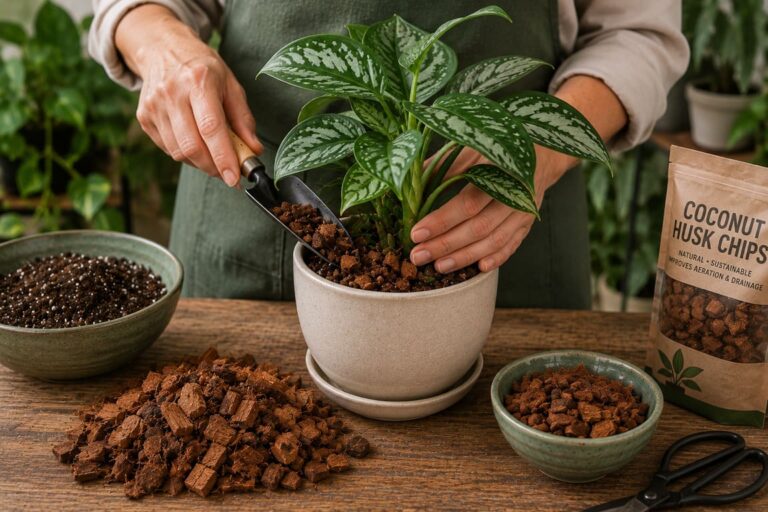
Coconut husk chips, sometimes called coco chips, are larger pieces of coconut husk. They differ from finely textured coco coir, which is generally used more for moisture retention.
The chunky structure of coconut husk chips creates airspace while the material itself retains some moisture. That combination makes them useful for plants that appreciate an airy root environment but don’t necessarily want to dry out as rapidly as they might in a highly porous mix.
Because coconut husk is organic, it eventually decomposes.
Best for: Tropical plants and chunky mixes requiring both aeration and some moisture retention.
Pros: Provides a useful combination of aeration and moisture retention.
Considerations: Breaks down over time. Use material intended for horticultural purposes.
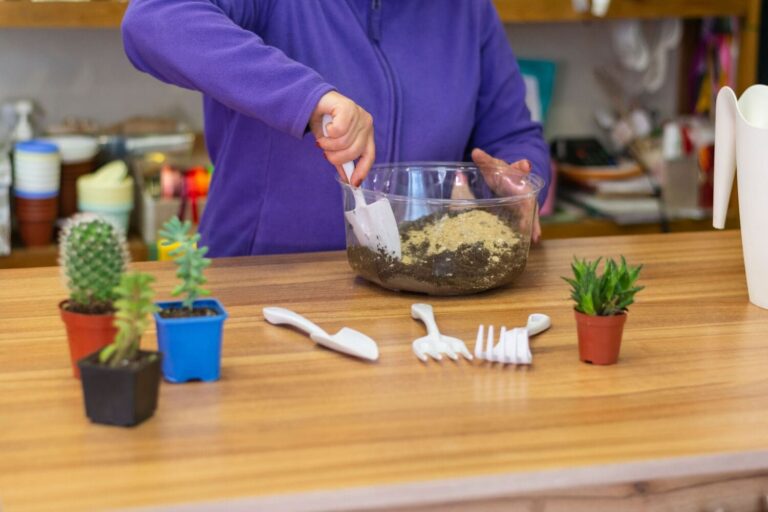
Sand can be useful in certain potting mixes, but the type of sand matters tremendously.
Use coarse horticultural sand specifically intended for gardening and potting mixes. Its larger particles can help create a more open structure and add weight to a container.
Don’t substitute ocean sand. Ocean sand contains salt, which can damage houseplants. I also wouldn’t use playground sand. It can contain a high proportion of very fine particles and dust and isn’t formulated for potting mixes. Fine sand can settle into the spaces between larger soil particles, making a potting mix denser rather than better drained.
This is a good example of why simply adding something gritty doesn’t automatically improve drainage.
Best for: Specialty mixes requiring a coarse, gritty component or additional weight.
Pros: Adds weight and can improve the structure of appropriate mixes when a coarse horticultural grade is used.
Considerations: Fine sand can decrease aeration and drainage. Use sand specifically sold for horticultural purposes.
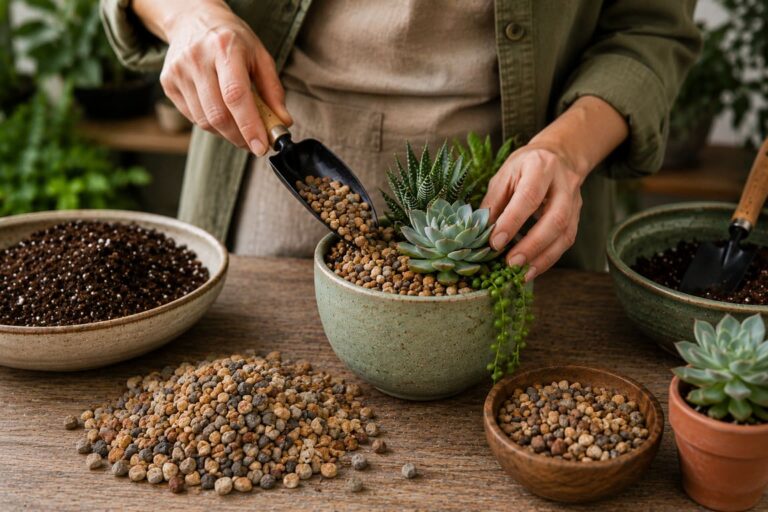
Gravel needs some explanation because of a persistent houseplant myth. Small gravel can be incorporated into certain specialty growing mixes where additional structure or weight is useful. It can also be placed on top of the soil.
However, don’t put a layer of gravel in the bottom of a pot in an attempt to improve drainage. Doing so doesn’t make water drain more effectively from the soil above it. The change in particle size can actually cause water to remain in the potting medium above the gravel rather than solving the drainage problem.
If a plant needs better drainage, address the structure of the potting mix itself and always use a container with adequate drainage holes.
Best for: Specialty mixes where additional weight or coarse structure is useful.
Pros: Durable and adds weight and structure.
Considerations: Heavy and generally unnecessary in ordinary houseplant mixes. Don’t use it as a drainage layer at the bottom of pots.
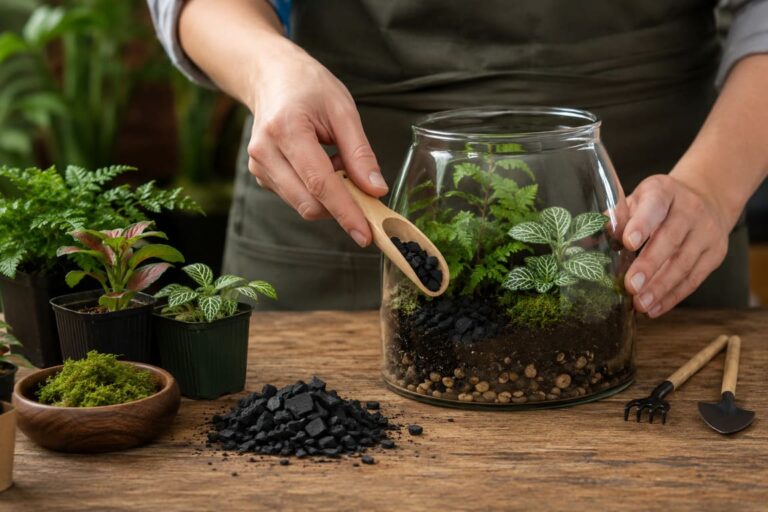
Horticultural charcoal is another chunky amendment sometimes included in orchid and tropical plant mixes. It can help maintain an open structure and create pore space within a growing medium. Because it breaks down very slowly, it can contribute to longer-lasting structure in a chunky mix.
Horticultural charcoal is also useful in terrariums, where it can help neutralize odors.
You’ll sometimes see broader claims made about charcoal “purifying” houseplant soil or preventing a wide variety of soil problems. I wouldn’t rely on it for that. Its most useful roles are as a structural component in an appropriately formulated growing medium and as an odor-control component in terrariums.
Best for: Orchid and tropical plant mixes and terrariums.
Pros: Lightweight, porous, slow to break down, and useful for creating structure. Can also help neutralize odors in terrariums.
Considerations: Not necessary for most houseplants and isn’t a substitute for proper watering, drainage, or good-quality potting soil.
Just because a material appears as though it might improve drainage doesn’t mean it belongs in your houseplant containers.
Avoid adding:
Whenever possible, choose amendments specifically produced for horticultural use.
There is no single perfect potting mix for every houseplant.
A cactus growing in an arid environment has very different root requirements from a fern growing on a moist forest floor. An epiphytic orchid growing on a tree needs something different again.
That’s why I prefer to think in terms of what the plant’s roots need rather than following one potting-soil recipe for everything.
Start with a high-quality potting mix appropriate for houseplants. Then determine whether the particular plant would benefit from additional drainage, aeration, moisture retention, or weight.
And pay attention to what happens when you water. Does water penetrate the soil readily? Does excess water drain from the pot? Does the mix remain soggy for many days? Has it become compacted? How quickly is the plant using the available moisture?
Your plants will tell you a great deal about what’s happening beneath the soil surface if you know what to look for.
The goal isn’t simply fast drainage. It’s the right balance of water and air around the roots. Get that balance right, and you’ve created the foundation for a much healthier houseplant.
How much drainage amendment should I add to potting soil?
As a general starting point, use approximately 1 part amendment to 3 parts potting soil, or about 25 percent amendment, when adding something such as pumice or perlite. For plants requiring especially sharp drainage, you can increase that to approximately 1 part amendment to 2 parts potting soil, or about one-third amendment.
The ideal amount depends on the original potting soil, the amendment, the plant, and your growing conditions.
Can I add pumice to regular potting soil?
Yes. Pumice can be mixed into regular houseplant potting soil to increase pore space, improve aeration and help excess water drain more readily.
Is pumice or perlite better for houseplants?
Both improve drainage and aeration. Perlite is lighter and usually less expensive. Pumice has more weight, tends to remain distributed throughout the potting mix and lasts a long time. After using both, pumice has become one of my preferred amendments for creating long-lasting drainage and aeration.
Can I mix wood chips into houseplant soil?
Wood chips can create airspace, but they decompose and aren’t all equally suitable for indoor plants. For most houseplant applications, horticultural orchid bark is a more predictable choice than landscape wood chips or mulch.
Can I use orchid bark for plants other than orchids?
Yes. Orchid bark can be mixed into the growing media of many houseplants that benefit from an airy, chunky root environment. Many tropical plants, particularly aroids, respond well to bark-containing mixes.
Can I use sand to improve houseplant drainage?
Yes, but use coarse horticultural sand intended for growing plants. Fine sand can actually reduce drainage by filling pore spaces within the potting mix. Avoid ocean sand and playground sand.
Should I put gravel in the bottom of my houseplant pots?
No. A gravel layer doesn’t improve drainage from the potting soil above it. Use a well-draining potting mix and a container with adequate drainage holes instead.
What is the best amendment for preventing root rot?
There isn’t one amendment that prevents root rot. Pumice, perlite, bark and other amendments can help create better aeration and drainage, but proper watering, an appropriately sized pot, adequate drainage holes, and a suitable potting mix all work together to keep roots healthy.
Do I need to amend all store-bought potting soil?
No. A good-quality potting mix may already provide the right balance of moisture retention and aeration. Amend it when the characteristics of the soil or the needs of the particular plant give you a reason to do so.