About Philodendron Gloriosum
Philodendron Gloriosum Introduction
Philodendron gloriosum is a terrestrial, rhizomatous aroid native to the humid lowland and montane rainforests of Colombia, with scattered populations reported in other parts of Central and South America. Unlike the majority of philodendrons, which climb host trees using aerial roots, P. gloriosum grows horizontally along the forest floor. A thick, segmented rhizome creeps across the leaf litter, rooting as it goes and periodically sending up a single new leaf from its growing tip. This creeping habit, combined with its preference for deep shade beneath the rainforest canopy, sets it apart from climbing relatives such as Philodendron hederaceum or Philodendron melanochrysum.
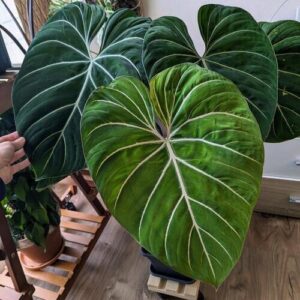
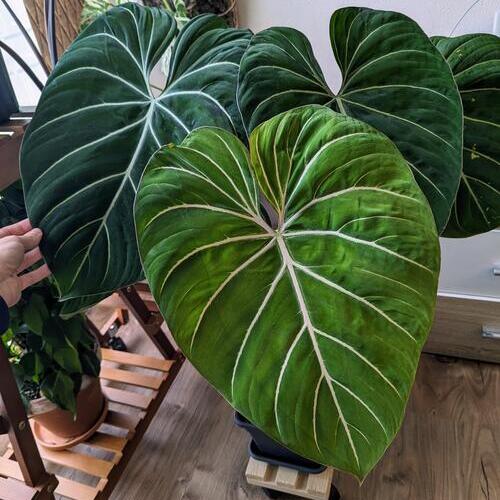
The species is prized above almost any other characteristic for its foliage. Mature leaves are broadly heart-shaped (cordate), can reach 30 to 90 centimeters in length in ideal conditions, and have a distinctive velvety, almost suede-like texture caused by microscopic surface cells that scatter light. The deep green leaf surface is overlaid with striking pale cream to white venation that becomes more pronounced as each leaf matures, giving the plant a dramatic, almost hand-painted appearance. New leaves emerge tightly furled from a protective cataphyll and slowly unfurl and darken over several weeks.
In cultivation, Philodendron gloriosum has become one of the most sought-after aroid houseplants among collectors, prized for its architectural presence and relatively manageable size compared to giant aroids like Monstera or Alocasia. In the wild, however, the species is classified as Vulnerable by the IUCN, and wild populations are increasingly threatened by habitat loss, making nursery-propagated specimens the responsible choice for hobbyists.
Philodendron Gloriosum Care & Growing Guide
Caring for Philodendron gloriosum successfully starts with recreating the dappled, filtered light of its native rainforest floor. Indoors, this means bright, indirect light rather than direct sun, which can scorch the velvety leaf surface. An east-facing window, or a spot a few feet back from a south- or west-facing window with a sheer curtain, tends to work well. Because the plant grows horizontally via a creeping rhizome, it is best suited to a wide, shallow pot or a terrarium-style setup that gives the rhizome room to spread rather than a tall, narrow container.
Soil and water go hand in hand for this species. Philodendron gloriosum wants a chunky, well-aerated aroid mix, typically built from orchid bark, perlite, and coconut coir or peat, that holds some moisture while draining quickly. Water thoroughly when the top inch or two of the mix has dried, then allow excess water to escape completely, since the rhizome is prone to rot if it sits in soggy soil. Consistent, moderate-to-high humidity (ideally 60 percent or higher) and warm, stable temperatures round out the plant’s core needs, and both should be maintained year round rather than allowed to fluctuate widely.
Beyond the basics, regular light feeding during the growing season, occasional wipe-downs of the leaves to keep the velvet texture free of dust, and periodic repotting as the rhizome outgrows its container will keep a Philodendron gloriosum thriving for years. It is a slow grower, so patience is part of its care: a single new leaf can take a month or more to fully unfurl and color in, but the payoff is some of the most striking foliage in the aroid world.
Soil
Philodendron gloriosum needs a loose, chunky, fast-draining aroid mix rather than standard potting soil. A good base combines roughly equal parts orchid bark, perlite, and a moisture-retentive component such as coconut coir or peat, sometimes with added charcoal to keep the mix fresh. The ideal pH is mildly acidic, around 5.5 to 6.5. This open structure mimics the loose leaf litter and decomposing organic matter of the rainforest floor, allowing oxygen to reach the roots and rhizome while still holding enough moisture between waterings. Amendments like horticultural charcoal help prevent souring, and a top layer of sphagnum moss can help retain surface humidity for the crawling rhizome. Because the plant grows along the surface rather than sending roots deep, soil quality has an outsized effect on rhizome health specifically: heavy, compacted soil is one of the fastest ways to trigger rot. Common soil problems to watch for include poor drainage and waterlogging (leading to root and rhizome rot), compaction over time as organic components break down (requiring a refresh every one to two years), pH drift outside the 5.5–6.5 range (which can lock out nutrients), salt build-up from fertilizer or tap water (visible as a white crust on the soil surface or pot rim), nutrient deficiencies from old, exhausted mix, and root- or rhizome-boundness once the plant has fully colonized its container’s surface area.
Fertilizer
Feed Philodendron gloriosum with a balanced, diluted liquid houseplant fertilizer (roughly a 3-1-2 or 20-20-20 formulation diluted to half or quarter strength) every four to six weeks during the active growing season (spring through summer), tapering off or pausing entirely in fall and winter when growth slows. Signs of over-fertilization include a white crust of salts on the soil surface, browning or burnt-looking leaf tips and edges, and stunted new growth; under-fertilization shows up as pale, washed-out leaf color, smaller-than-normal new leaves, and slowed overall growth. Organic alternatives such as diluted worm castings tea, fish emulsion, or a light top-dressing of compost can supply a gentler, slower-release nutrient source. Like many aroids, this species benefits from occasional micronutrient supplementation (particularly magnesium and iron), since deficiencies in these can show up as interveinal yellowing on older leaves.
Watering
Water Philodendron gloriosum thoroughly when the top 2.5 to 5 centimeters (roughly 1 to 2 inches) of the potting mix has dried out, then let any excess drain away completely rather than watering on a fixed calendar. Room-temperature filtered, distilled, or rainwater is preferable to hard tap water, which can build up mineral salts over time; if only tap water is available, letting it sit out for 24 hours to off-gas chlorine helps. Overwatering shows up as yellowing lower leaves, a mushy or foul-smelling rhizome, and soil that stays wet for many days; underwatering shows up as drooping or curling leaves, dry and crispy leaf edges, and a potting mix that pulls away from the pot sides. Watering needs generally increase during the warmer, brighter growing season (spring through summer) and should be scaled back in fall and winter when growth slows and the mix dries more slowly.
Philodendron Gloriosum Watering Calculator
🪴 Precision Watering Intelligence
Science-Based Hydration for Your Collection
Stop guessing. Most houseplant failures are caused by volumetric errors and improper moisture tension. Our deterministic calculator moves beyond "once-a-week" watering by analyzing the four critical pillars of root health:
- • Transpiration Coefficients: 120+ species mapped by metabolic rate.
- • Substrate Porosity: Adjusts for Standard vs. Cactus/Well-Draining mixes.
- • Geometric Volume (V = π r² h): Calculates exact cups based on pot surface area.
- • The Drainage Factor: Accounts for pot material (Terracotta) and the risk of a perched water table.
Personalized for this plant
Disclaimer: Our calculator is pretty smart. We’ve crunched the numbers, but we’re not measuring the quantum state of your living room. Since we don’t know your exact indoor temperature, humidity, light, airflow, or whether your plant receives daily sweet nothings and motivational speeches, use this calculator as a guide—and always keep an eye on your plant.
Lighting
Bright, indirect light is ideal, replicating the filtered, dappled sun that reaches the forest floor beneath a rainforest canopy. An east-facing window with gentle morning sun, or a spot several feet from a south- or west-facing window, works well. Direct, unfiltered sun, especially through glass, can scorch the delicate velvety leaf surface, causing bleached or brown patches and washed-out coloration. Insufficient light shows up as slow or stalled growth, smaller new leaves, longer gaps between leaves, and duller, less contrasted venation. If natural light is limited, a full-spectrum LED grow light positioned about 12 to 18 inches above the foliage and run for 10 to 12 hours a day is an effective substitute, and can be used year-round to keep growth steady through darker winter months.
Temperature
This species thrives in warm, stable conditions between roughly 18 to 27°C (65 to 80°F), consistent with its tropical rainforest origin. It has little tolerance for cold and should be protected from temperatures below about 15°C (59°F), as chilling can cause leaf yellowing, stunted growth, and rhizome stress. It is equally sensitive to sudden temperature swings, so it should be kept away from drafty windows, exterior doors, and heating or air-conditioning vents. During any outdoor summer placement, bring the plant back inside well before nighttime temperatures drop into the cooler range in autumn.
Humidity
Philodendron gloriosum prefers consistently high humidity, ideally in the 60 to 80 percent range, to support its large, thin, velvety leaves. Low humidity commonly causes crispy or browning leaf edges, slower unfurling of new leaves, and leaves that fail to reach full size; excessively high humidity combined with poor airflow can instead encourage fungal issues on the leaf surface. Effective ways to raise humidity include a room humidifier (the most reliable and adjustable method), grouping plants together to create a shared humid microclimate, and a pebble tray filled with water beneath (not touching) the pot. Misting offers only a brief, superficial humidity boost and is far less effective than a humidifier for sustained results; a terrarium or greenhouse cabinet setup, popular among collectors, is often the most effective long-term solution for this particular species.
Propagation
Philodendron gloriosum is propagated almost exclusively through rhizome division, since its creeping growth habit makes this both the most reliable and the fastest method compared to leaf cuttings (which generally cannot root this species) or seed (rarely practical outside specialized breeding). Step-by-step guide: 1) Choose a healthy, actively growing rhizome section with at least one visible node or growing eye and, ideally, existing roots. 2) Using a clean, sharp, sterilized blade, cut through the rhizome between two nodes, leaving each division with its own growth point. 3) Allow the cut ends to air-dry and callous for a few hours to a day to reduce infection risk. 4) Optionally dust the cut surface with cinnamon powder or a rooting hormone as an antifungal aid. 5) Plant each division horizontally, just at or barely below the surface of a chunky, well-draining aroid mix, positioning the growth point facing upward. 6) Keep the mix lightly moist (not soggy) and place the pot in warm, humid conditions with bright, indirect light, using a humidity dome or propagation box if possible. 7) Expect new root growth within two to four weeks and the emergence of a new leaf within four to eight weeks under ideal conditions. Division has a notably higher success rate than other methods for this species, and late spring through summer, when the plant is actively growing, is the best time to propagate; newly divided plants typically establish and resume regular growth within two to three months.
Potting
Use a wide, shallow pot rather than a tall one, since the rhizome grows and spreads horizontally across the soil surface; a pot with generous drainage holes is essential given this species’ sensitivity to soggy roots. Repot every one to two years, or sooner once the rhizome has crept to the edge of the container or the potting mix has visibly broken down and compacted. Signs it is time to repot include roots or rhizome segments visible above the soil surface or through drainage holes, water draining unusually fast or unusually slowly, and stalled growth despite otherwise good care. When repotting, minimize root pruning; only trim rotten, mushy, or clearly dead root sections with sterilized shears, leaving healthy roots intact. Move the plant into a pot only one size up (roughly 5 to 8 centimeters/2 to 3 inches wider) to avoid a mix that stays wet too long, gently loosen the root ball, and settle it at the same depth it was growing previously to minimize transplant stress. Keep the newly repotted plant in stable warmth and humidity for one to two weeks and hold off on fertilizing until new growth confirms it has settled in.
Pruning
Best Time to Prune
Late winter to early spring, just before the plant enters its active growing season, is the ideal window, since this gives the plant the most time to recover and push new growth afterward.
Frequency
Philodendron gloriosum needs only occasional, light maintenance pruning rather than a routine schedule; most owners prune just a few times a year, primarily to remove spent or damaged leaves.
Purpose
Pruning is mainly used to remove yellowing, damaged, or dead leaves, to redirect the plant’s energy toward healthy new growth, and, when dividing the rhizome for propagation, to shape the size of the plant.
Tools and Preparation
Use clean, sharp, sterilized bypass pruners or precision scissors. Sterilize the blade with rubbing alcohol before and between cuts, and wear gloves, since the plant’s sap can irritate skin.
Step-by-Step Pruning Guide
- Inspect the plant and identify any yellowing, brown, torn, or diseased leaves along the rhizome.
- Sterilize your cutting tool with rubbing alcohol.
- Follow the petiole (leaf stem) back to its point of attachment on the rhizome.
- Cut the petiole cleanly close to the rhizome, without cutting into the rhizome tissue itself.
- Dispose of removed foliage and avoid leaving debris on the soil surface, which can encourage pests or fungal growth.
- Wipe down the remaining leaves with a damp cloth to remove dust and check for pests while you have easy access.
- Sterilize tools again after finishing to avoid spreading any pathogens to other plants.
Aftercare and Special Considerations
After pruning, keep the plant in its usual warm, humid, indirect-light spot and avoid fertilizing for a week or two to let it recover. Because Philodendron gloriosum is slow-growing, avoid removing more than a couple of leaves at once, since each leaf contributes significantly to the plant’s total energy production.
Blooming
In its native habitat, mature specimens can flower, typically producing a classic aroid inflorescence (a white to pale green spathe surrounding a central spadix) roughly between May and July under ideal warmth, humidity, and light. Blooming in cultivated, indoor specimens is rare, since the plant usually needs the stable warmth, high humidity, and maturity of jungle conditions to trigger flowering. When it does occur, each bloom lasts only a few days and is not showy compared to the plant’s foliage, which remains the primary ornamental feature.
Pests and Diseases
Pests
Name: Spider mites
Symptoms: Fine webbing on leaf undersides and stems, stippled or speckled yellowing on leaf surfaces, and a dry, dusty appearance to the foliage.
Treatment: Isolate the plant, rinse leaves thoroughly under running water, increase humidity (mites thrive in dry air), and treat with insecticidal soap or horticultural oil, repeating every 5 to 7 days until resolved.
Name: Mealybugs
Symptoms: Small, cottony white clusters in leaf axils and along the rhizome, sticky honeydew residue, and localized yellowing.
Treatment: Dab visible clusters with a cotton swab dipped in rubbing alcohol, then treat the whole plant with insecticidal soap or neem oil, repeating weekly for several weeks to catch newly hatched insects.
Name: Scale insects
Symptoms: Small, brown or tan, dome-shaped bumps on stems and leaf undersides that don’t wipe off easily, along with sticky honeydew and sooty mold.
Treatment: Scrape off visible scale with a fingernail or soft brush, wipe with alcohol, and follow with horticultural oil applications every 1 to 2 weeks until no new scale appears.
Name: Thrips
Symptoms: Silvery streaking or scarring on leaves, tiny black fecal specks, and distorted new growth.
Treatment: Isolate the plant, use sticky traps to monitor and reduce populations, and apply insecticidal soap or spinosad-based treatment, repeating according to the product’s schedule.
Diseases
Name: Root and rhizome rot
Symptoms: A mushy, discolored, foul-smelling rhizome, yellowing or collapsing leaves, and soil that stays wet far longer than usual.
Treatment: Unpot the plant, trim away all soft, dark, or mushy tissue with a sterilized blade, treat cut surfaces with cinnamon or a fungicide, and repot into fresh, fast-draining mix; reduce watering frequency going forward.
Name: Bacterial leaf spot
Symptoms: Water-soaked, dark, often angular spots on leaves that may develop yellow halos and can spread quickly in humid, stagnant conditions.
Treatment: Remove and discard affected leaves, avoid overhead watering and misting directly onto foliage, improve air circulation, and apply a copper-based bactericide if the issue persists.
Name: Fungal leaf spot
Symptoms: Circular or irregular brown or black spots with defined edges, sometimes surrounded by a yellow ring, typically appearing in overly humid, poorly ventilated conditions.
Treatment: Remove affected foliage, improve airflow around the plant, avoid wetting leaves when watering, and apply a broad-spectrum fungicide if spotting continues to spread.
Special Features
Philodendron gloriosum stands out among houseplants for its dramatic, velvety, cordate leaves overlaid with striking pale venation, a texture and pattern that make it one of the most visually distinctive foliage plants in cultivation. Its unusual crawling, rhizomatous growth habit, rare among philodendrons, gives it an architectural, sculptural presence rather than the vining or climbing form typical of the genus, making it equally at home as a striking terrarium centerpiece or a low, spreading specimen plant. While it does not offer edible fruit or fragrant flowers, its rarity and singular leaf texture have made it one of the most sought-after aroids among plant collectors worldwide.
Plant Benefits
Philodendron gloriosum has no established culinary, herbal, or pharmaceutical uses; like most aroids, its tissues contain calcium oxalate crystals that make it unsuitable for ingestion. Its primary benefit is ornamental and psychological: as with houseplants generally, caring for striking foliage plants is associated with modest stress-reduction and wellbeing benefits, and this species in particular is valued by collectors for its rarity and dramatic appearance.
Additional Information
Philodendron gloriosum is often confused with the similar-looking Philodendron pastazanum and with its natural hybrid, Philodendron ‘Glorious’ (a cross between P. gloriosum and P. melanochrysum), which combines the velvety texture of gloriosum with a more upright, semi-climbing habit. Because true P. gloriosum is listed as Vulnerable in the wild by the IUCN, collectors are encouraged to source nursery-propagated plants rather than wild-collected specimens to help reduce pressure on native populations.
Life Cycle
Philodendron gloriosum is a long-lived, slow-growing evergreen perennial rather than an annual or biennial. It begins life as a small rhizome division or seedling, gradually extending its rhizome across the growing medium and producing one new leaf at a time from the growing tip, with each leaf taking a month or more to fully unfurl and mature. As the rhizome lengthens, older, leafless sections toward the back may be trimmed away or left to eventually die back naturally while the actively growing tip continues to advance. Under ideal warm, humid, and stable conditions, mature plants can flower and, in the wild, set seed, though most propagation in cultivation relies on rhizome division rather than the seed cycle. With consistent care, a single plant can live and continue producing new growth for many years, even decades.
Are Philodendron Gloriosum Poisonous, Toxic
Philodendron gloriosum contains insoluble calcium oxalate crystals throughout its tissues, with the highest concentrations in the leaves and stems/rhizome. It is considered toxic to cats, dogs, and children if chewed or ingested. When plant tissue is bitten into, the needle-like crystals are released and penetrate soft tissue, causing immediate oral irritation. Symptoms in pets and children typically include intense burning or tingling in the mouth and tongue, excessive drooling, pawing at the face (in pets), difficulty swallowing, localized swelling of the lips, tongue, or throat, and vomiting. Severity is usually mild to moderate, with symptoms resolving on their own within a few hours, though swelling severe enough to affect breathing is a rare but serious emergency. First aid includes gently rinsing the mouth with water or milk, offering a small amount of cool water or a dairy product to soothe irritation, and avoiding inducing vomiting since this can cause further irritation on the way back up. Contact a veterinarian or, for children, poison control or a pediatrician promptly, especially if swelling, drooling, or breathing difficulty is significant. Preventive measures include placing the plant well out of reach of pets and small children, choosing a hanging or elevated display, and immediately removing any dropped or chewed leaf debris.
Frequently Asked Questions
Is Philodendron gloriosum easy to care for?
It is considered an intermediate to advanced houseplant. It needs consistently high humidity, well-draining aroid soil, and stable warmth, so it takes more attention than many common philodendrons.
Why is Philodendron gloriosum so expensive?
It is slow-growing, relatively rare in the wild, and in high demand among collectors, all of which keep nursery supply limited relative to demand and prices elevated.
Does Philodendron gloriosum climb or crawl?
It crawls. Unlike most philodendrons, it has a creeping rhizome that spreads horizontally across the soil surface rather than climbing a support.
Is Philodendron gloriosum toxic to cats and dogs?
Yes. It contains calcium oxalate crystals that irritate the mouth and digestive tract if chewed or swallowed, and it should be kept away from pets and small children.
How often should I water Philodendron gloriosum?
Water when the top 1 to 2 inches of soil have dried out, which is typically every 1 to 2 weeks depending on light, humidity, and pot size, rather than on a fixed schedule.
What kind of pot does Philodendron gloriosum need?
A wide, shallow pot with good drainage works best, since the rhizome spreads horizontally rather than growing deep roots.
How do you propagate Philodendron gloriosum?
The most reliable method is rhizome division: cutting a healthy section of rhizome with at least one growth node and rooting it in a warm, humid, well-draining aroid mix.
What humidity does Philodendron gloriosum need?
It prefers relatively high humidity, generally in the 60 to 80 percent range, to support its large, thin, velvety leaves and prevent crispy edges.
Does Philodendron gloriosum flower?
It can, particularly in its native habitat or under ideal warm, humid conditions, but flowering indoors is uncommon since the plant is grown almost entirely for its foliage.
How big does Philodendron gloriosum get?
Individual leaves can reach roughly 30 to 90 centimeters (12 to 36 inches) long, with wild specimens generally growing larger than potted indoor plants.
Can I grow Philodendron Gloriosum in my indoor space
Difficulty: Advanced
Size: Medium
Light: Medium
Water: Medium
Flowering: Yes
Pet Safe: No
Air Purifier: Low
Philodendron gloriosum botanical details
Common Name: Philodendron Gloriosum
Other Common Names: Glorious Philodendron, Velvet Philodendron
Botanical Name: Philodendron gloriosum
Native Area: Tropical rainforests of Colombia, with additional populations reported in parts of Central America (including Mexico) and other regions of northern South America such as Venezuela, Ecuador, Peru, and western Brazil.
Family Name: Araceae
Plant Type: Evergreen, rhizomatous, terrestrial perennial
Genus: Philodendron
Kingdom: Plantae
Photo Gallery
My Philodendron Gloriosum Plant Care Recommendations
- Perky Plant fertilizer: https://amzn.to/3RdLA00
- Seaweed extract: https://amzn.to/3z2CsFh
- Rooting hormone: https://amzn.to/3bIXi0t
- Espoma fertilizer: https://amzn.to/3vPa9bs
- Worm compost: https://amzn.to/3HVL01u
- Full-spectrum Light Bulb-Large: https://amzn.to/3yR6VBu
- Full-spectrum Lighting: https://amzn.to/3qhhaiv
- Light meter: https://amzn.to/4dpmp3s
- Moisture meter: https://amzn.to/3TEUu5N
- Hygrometer: https://amzn.to/3Cf6h2F
- Pruning shears: https://amzn.to/3X6oOcg
- ProMix Potting Soil: https://amzn.to/3iVIrjE
- My Organic Green Gourmet Houseplant Fertilizer: Healthy Houseplants Store
- My Perfect Pumice: Healthy Houseplants Store
- My Healthy Houseplants Store: All Products
Buy Philodendron Gloriosum Online
✅ “Bring Home This Beauty Today”
✅ “Get Your Own Philodendron Gloriosum Before It’s Gone”
✅ “Shop Trusted Sellers – Limited Availability”
✅ “Free Delivery”
As an Amazon Associate, I earn commission from qualifying purchases.
Plant Puns and Jokes
Why did the Philodendron gloriosum refuse to race the other houseplants? It said it preferred to take things one slow, velvety leaf at a time.