


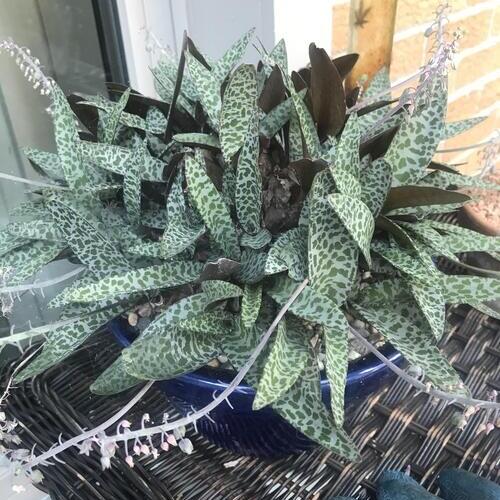
Silver Squill, botanically classified as Ledebouria socialis, is a compact bulbous perennial belonging to the Asparagaceae family, within the subfamily Scilloideae, a group that also includes hyacinths, scillas, and other bulb-forming plants known for their fleshy underground storage organs and often striking foliage or flowers. The species is native to the rocky, semi-shaded woodland edges and grassland habitats of South Africa’s Eastern Cape and KwaZulu-Natal provinces, an environment of seasonal rainfall and periodic drought that has shaped the plant’s resilient, water-storing bulbs and its tolerance for both bright light and periods of neglect.
The defining characteristic of this species is its small, onion-like bulb, which sits partially exposed above the soil line rather than buried deep underground, a trait shared by relatively few common houseplants and one that gives Silver Squill much of its distinctive appearance in cultivation. From each bulb emerges a low rosette of narrow, fleshy, lance-shaped leaves, typically two to six inches long, marked with an eye-catching pattern of silvery-gray blotches against a dark green background, with the leaf undersides and bulb tunics often flushed a rich purple. True to its species epithet “socialis,” meaning social or colonial, the plant is a prolific producer of offsets, with a single bulb capable of generating dozens of new bulblets clustered tightly around its base over just a few years, gradually forming a dense, spreading colony that can fill and eventually overflow a shallow pot.
What makes Ledebouria socialis particularly appealing to houseplant collectors and succulent enthusiasts alike is the striking contrast between its diminutive size and its bold, almost exotic-looking foliage pattern, paired with genuinely undemanding care requirements that make it well suited to bright windowsills, terrariums, and mixed succulent dishes. Its twice-yearly capacity for modest, delicate flowering, low water needs, and ease of propagation by simple bulb division have made it an increasingly popular choice among growers seeking an unusual, low-maintenance accent plant that rewards patience with an ever-expanding colony of offsets over time.
Caring for Silver Squill is refreshingly undemanding, making it a great choice for beginner growers or anyone seeking an easy, low-water houseplant with striking visual interest. This plant thrives with bright, indirect to lightly direct light, a well-draining, gritty potting mix similar to what is used for succulents, and a watering routine that allows the soil to dry out between waterings, since like many bulb-forming plants, Ledebouria socialis is considerably more tolerant of drought than of consistently soggy soil.
During the active growing season in spring and summer, Silver Squill benefits from consistent bright light, regular but moderate watering once the topsoil has dried, and light monthly feeding to support the vigorous production of new leaves and bulb offsets. Because the bulbs multiply so readily and sit partially above the soil surface, growers will notice the clump gradually filling out and even beginning to spill over the rim of its container within a couple of growing seasons, at which point dividing the clump or moving it to a slightly larger pot helps maintain healthy growth and airflow around the crowded bulbs.
As temperatures cool in autumn and winter, watering should be reduced significantly to mimic the plant’s natural dry-season rest, and while bright light remains important, the plant tolerates a cooler resting period that can actually encourage more reliable spring flowering. With minimal fuss, a forgiving tolerance for missed waterings, and an eagerness to multiply, Silver Squill rewards even inattentive growers with steady, attractive growth, provided it is kept out of prolonged deep shade, protected from frost, and given soil that never stays wet for extended periods.
 Soil
Soil
Silver Squill requires a well-draining, gritty potting mix similar to those used for succulents and cacti, reflecting the rocky, well-drained habitats of its native South Africa. A recommended blend combines a standard succulent or cactus potting mix with extra perlite, coarse sand, or fine pumice to ensure excess water passes through quickly rather than pooling around the partially exposed bulbs. The ideal soil pH is slightly acidic to neutral, generally between 6.0 and 7.0.
Soil composition plays a significant role in this plant’s long-term health, since the bulbs, sitting partially above the soil line, are especially vulnerable to rot if surrounded by consistently damp or poorly aerated soil. Adding a thin top-dressing of coarse grit or fine gravel around the base of the bulbs improves surface drainage, reduces contact with damp soil, and gives the display a tidy, finished look while also helping to anchor the shallow-rooted bulbs.
Common soil problems to watch for include poor drainage, which can quickly cause bulb and root rot, particularly if watering is not correspondingly reduced; soil compaction over time, which restricts aeration around the crowded bulb cluster and should be corrected with periodic repotting into fresh, loose mix; inappropriate pH, which can hinder nutrient uptake and dull leaf coloration; salt build-up from tap water or fertilizer residue, visible as a white crust on the soil surface and best remedied by flushing thoroughly with water during the growing season; and nutrient deficiencies, often presenting as pale or washed-out leaf patterning and correctable with light, appropriately timed fertilization. Root-boundness and bulb overcrowding are common in this fast-multiplying species, so dividing the clump and refreshing the soil every one to two years helps prevent stunted growth and maintains vigorous flowering.
 Fertilizer
Silver Squill has modest fertilization needs and benefits from feeding during its active spring and summer growing season, using a balanced, water-soluble houseplant fertilizer or one formulated for succulents, diluted to half strength and applied every four to six weeks while the plant is actively producing new leaves and offsets. Fertilization should be reduced or suspended entirely during the cooler autumn and winter months, when growth naturally slows or pauses, as feeding during this dormant-adjacent period offers little benefit and can lead to salt buildup around the sensitive bulbs. Signs of over-fertilization include white, crusty salt deposits on the soil surface, leaf tip burn, and unusually soft or elongated new growth, while under-fertilization typically presents as pale, washed-out leaf patterning and slow, minimal seasonal development. Organic alternatives such as diluted fish emulsion or a light compost tea can be used during the active growing season for growers preferring a more natural approach, though feeding should always remain light and infrequent, since this species is adapted to relatively lean, rocky native soils and does not require heavy nutrient input to thrive.
 Watering
Watering Silver Squill should follow a typical succulent-adjacent regimen, allowing the top inch or two of soil to dry out before watering again, since the bulbs store water efficiently and are considerably more prone to rot from overwatering than to damage from occasional dry spells. During the active growing season in spring and summer, water thoroughly until it drains from the pot’s base, then wait until the soil has dried noticeably, typically every seven to twelve days depending on light, temperature, and pot size. Room-temperature rainwater, distilled water, or tap water left to sit for 24 hours are all suitable, helping to avoid mineral or chlorine buildup in the soil over time.
During the cooler months of autumn and winter, watering should be reduced substantially, often to once every three to five weeks, as the plant enters a period of slower growth or partial rest. Signs of overwatering include soft, mushy, or translucent leaves, a foul smell from the soil, and bulb rot at the base, all of which require immediate corrective action such as reducing water and improving drainage, while signs of underwatering include shriveled, thin, or curling leaves that plump back up readily once watered. Because Silver Squill bulbs are quite drought-tolerant and store reserves efficiently, erring on the side of underwatering is generally the safer approach for this resilient, low-maintenance plant.
Stop guessing. Most houseplant failures are caused by volumetric errors and improper moisture tension. Our deterministic calculator moves beyond "once-a-week" watering by analyzing the four critical pillars of root health:
Personalized for this plant
Disclaimer: Our calculator is pretty smart. We’ve crunched the numbers, but we’re not measuring the quantum state of your living room. Since we don’t know your exact indoor temperature, humidity, light, airflow, or whether your plant receives daily sweet nothings and motivational speeches, use this calculator as a guide—and always keep an eye on your plant.
 Lighting
Silver Squill performs best in bright, indirect light, with a few hours of gentle direct morning or late-afternoon sun helping to intensify its silvery leaf coloration and encourage more compact, sturdy growth; an east- or west-facing window is generally ideal for indoor specimens. Insufficient light causes the leaves to lose their vivid silver patterning, fading to a duller, more uniformly green appearance, while also causing the rosettes to stretch and become loose or leggy as the plant reaches toward available light. Excessive, intense direct sun, particularly through unfiltered south-facing windows in summer, can scorch the delicate foliage, leaving bleached or brown patches, so a plant being moved into brighter conditions should be acclimated gradually over one to two weeks. If natural light is limited, supplement with a full-spectrum LED or fluorescent grow light positioned relatively close to the foliage for ten to twelve hours daily to maintain the plant’s characteristic coloration and compact habit.
 Temperature
Silver Squill prefers moderate to warm temperatures, thriving between 65°F and 80°F (18°C to 27°C) during its active growing season, and tolerating a cooler winter rest period down to around 50°F (10°C) without harm, which can actually help trigger more reliable spring flowering. It has limited cold tolerance and should be protected from temperatures below 40°F (4°C), with frost being potentially fatal to the exposed bulbs, making it unsuitable for outdoor cultivation in temperate climates except during the warmest months. The plant adapts well to typical indoor temperature fluctuations and does not require special climate control, though it should be kept away from cold drafts near winter windows and doors as well as away from hot, dry air from heating vents. To protect it from temperature extremes, bring container specimens indoors well before the first autumn frost, and avoid placing the plant in a spot with intense, prolonged summer heat without some protective afternoon shade.
 Humidity
Silver Squill adapts well to average indoor humidity levels, generally thriving in the range of 30 to 50 percent, and does not require any special humidity adjustments in most typical home environments, reflecting its native habitat’s seasonal and moderate rainfall patterns. High humidity combined with poor air circulation or overly damp soil increases the risk of fungal issues and bulb rot, making adequate airflow more beneficial to this species than elevated ambient moisture. Symptoms of excess humidity stress include soft or mushy leaf patches and fungal spotting, particularly if water sits on the foliage or crowded bulbs for extended periods, while low humidity rarely causes noticeable problems for this adaptable plant. Because misting can encourage fungal problems and rot around the tightly clustered bulbs, it is generally best avoided; instead, prioritize good air circulation, appropriate watering, and well-draining soil to keep the plant healthy without needing humidifiers or pebble trays.
 Propagation
Silver Squill is remarkably easy to propagate, primarily through division of its naturally occurring bulb offsets, though leaf cuttings can occasionally succeed as a secondary method with more variable results. Because the species produces new bulblets so readily and continuously during active growth, division is by far the most common, fastest, and most reliable propagation method, requiring no special equipment beyond a clean cutting tool. The best time to propagate is during the active growing season in spring, when both the parent clump and new divisions establish and recover most quickly.
Compared to bulb division, leaf cutting propagation is considerably slower and less reliable, often taking many weeks longer to produce a new plantlet and carrying a higher risk of the cutting rotting before rooting occurs, making it a less practical choice for most home growers. Divided bulbs typically resume active growth and produce new leaves within two to four weeks under suitable conditions, with a newly divided offset generally reaching a reasonably established, self-sufficient size within one growing season.
 Potting
Silver Squill should be planted in a shallow, wide pot with ample drainage holes, since its bulbs multiply outward across the soil surface rather than growing deeply, making a bulb pan or shallow dish more suitable than a tall, narrow container. Unglazed terracotta or other porous materials work particularly well, as they help wick excess moisture away from the partially exposed bulbs and reduce rot risk, though any well-draining container is workable with careful watering. Repotting or dividing is typically needed every one to two years, once the clump becomes visibly overcrowded, and should be done during the active growing season using a fresh, gritty succulent mix. Signs that repotting is needed include bulbs pushing up and over the rim of the pot, significantly reduced flowering compared to previous seasons, water running through too quickly without being absorbed, or visibly congested bulbs with little room for new offsets to develop. When repotting, handle the shallow root systems gently, and if any roots appear damaged, mushy, or overly long, light trimming with clean, sterilized tools can encourage healthier new growth. To minimize transplant stress, repot during active growth when possible, position the bulbs at their previous depth with the upper portion exposed, and withhold heavy watering for several days afterward to allow the roots to settle into the new soil.
 Pruning
Silver Squill requires very little pruning in the traditional sense, since it does not produce woody growth or require shaping, but occasional grooming helps keep the plant tidy and healthy. The best time to remove spent foliage or flower spikes is during the active growing season in spring or summer, when the plant recovers quickly, though yellowing or damaged leaves can be trimmed at any time as needed.
Use a clean, sharp pair of small scissors or precision snips, sterilized with rubbing alcohol before use, to make clean cuts that minimize stress and reduce the risk of introducing disease to the fleshy leaves and bulbs. Gloves are not strictly necessary for this species, as it is not known to cause skin irritation, though sensitive individuals may prefer to wear them, and hands should always be washed after handling given the plant’s toxicity if ingested.
After trimming, allow the plant to rest in its normal growing conditions without any special adjustments, though it’s wise to hold off on heavy watering for a day or two if a significant amount of foliage was removed, to reduce the risk of rot at fresh cut sites. Because the bulbs and leaves are toxic if ingested, always dispose of pruned material out of reach of pets and children, and wash hands thoroughly after handling any plant debris.
 Blooming
Silver Squill typically blooms in mid to late spring, occasionally extending into early summer, with individual flowering spikes lasting two to three weeks and the overall bloom period stretching across several weeks as different bulbs within a clump flower in succession. Under favorable indoor conditions, particularly bright light and a distinct cool winter rest, the plant may bloom once annually, though some vigorous, well-established clumps can produce a light secondary flush later in the growing season. Flowers emerge on slender, arching racemes that rise several inches above the mottled foliage, each spike bearing a cluster of small, star-shaped, greenish-white to soft purple blossoms with reflexed petals and prominent protruding stamens, giving them a delicate, almost orchid-like appearance despite their diminutive size. Optimal flowering is encouraged by bright indirect to direct light, a period of reduced watering and cooler temperatures around 50°F to 60°F (10°C to 16°C) during winter dormancy, and a moderately pot-bound bulb cluster, since crowded bulbs tend to flower more reliably than recently divided or repotted specimens.
 Pests and Diseases
Name: Mealybugs
Symptoms: Small cottony white masses nestled between leaf bases and around the bulb neck, often accompanied by sticky honeydew residue and weakened or distorted new growth.
Treatment: Dab visible clusters with rubbing alcohol on a cotton swab, then treat the plant with insecticidal soap or diluted neem oil, repeating every seven to ten days until the infestation clears.
Name: Spider Mites
Symptoms: Fine webbing on and between leaves, stippled or bronzed leaf coloring, and a general dulling of the silver leaf pattern, particularly in hot, dry indoor conditions.
Treatment: Rinse foliage thoroughly with water to dislodge mites, increase humidity and air circulation slightly, and apply a miticide or insecticidal soap as needed for persistent infestations.
Name: Aphids
Symptoms: Small clusters of green or gray insects on new leaves and emerging flower stalks, often causing curling or distorted new growth.
Treatment: Dislodge aphids with a gentle stream of water and follow with insecticidal soap or neem oil applications until the population is controlled.
Name: Fungus Gnats
Symptoms: Small flying insects around the soil surface, most often a sign of consistently overwatered or slow-draining soil, with larvae potentially feeding on fine roots.
Treatment: Allow the soil to dry out more thoroughly between waterings, use sticky traps to reduce adult populations, and consider a beneficial nematode or mosquito bit (Bti) soil drench for persistent infestations.
Name: Bulb and Root Rot
Symptoms: Soft, mushy, or discolored tissue at the base of the bulb, a foul odor from the soil, and yellowing or collapsing leaves despite otherwise adequate care.
Treatment: Remove the plant from its pot, trim away all soft or discolored bulb and root tissue with a sterilized blade, allow the remaining healthy tissue to dry and callus, and repot in fresh, dry, fast-draining mix, significantly reducing watering going forward.
Name: Fungal Leaf Spot
Symptoms: Brown, black, or gray spots, sometimes with a yellow halo, appearing on the leaves during periods of high humidity or poor air circulation.
Treatment: Remove affected leaves promptly, improve air circulation around the plant, avoid wetting foliage during watering, and apply a copper-based fungicide if the problem persists or spreads.
Name: Botrytis (Gray Mold)
Symptoms: Fuzzy gray mold developing on damaged or decaying plant tissue, particularly on fallen leaves or spent flower stalks left in contact with moist soil.
Treatment: Promptly remove and dispose of any affected plant material, improve airflow and reduce ambient humidity around the plant, and apply a fungicide labeled for Botrytis if the infection spreads to healthy tissue.
 Special Features
Silver Squill is prized chiefly for its striking foliage rather than its modest flowers, with each fleshy, lance-shaped leaf displaying an almost metallic silver sheen overlaid with irregular dark green to olive spotting, and a deep wine-purple coloring on the leaf undersides and bulb necks that peeks through as the plant shifts and grows. This combination of iridescent, animal-print-like patterning has earned it comparisons to snakeskin or leopard markings, making it a favorite among collectors of unusual foliage plants and terrarium enthusiasts despite its relatively small stature. Its clumping, semi-exposed bulbs give it an architectural, almost sculptural quality in a shallow dish or bulb pan, and because the bulbs multiply so readily, a single specimen can be divided repeatedly over the years to fill additional pots or share with other growers, making it both a rewarding long-term houseplant and an easy, low-cost plant to propagate and gift.
 Plant Benefits
Ledebouria socialis has a limited history of use in traditional South African herbal medicine, where related bulbous plants in the broader Scilloideae subfamily have occasionally been used externally or in very controlled preparations for various folk remedies; however, there is no well-established, scientifically validated herbal or pharmaceutical application specific to this species, and given its content of bufadienolide-type compounds similar to other toxic members of this plant group, it is not considered safe for any home herbal or medicinal use. Any documented interest in the bioactive compounds found in Ledebouria and related genera remains within the realm of phytochemical and toxicological research rather than practical home remedy application, and this plant should be grown and enjoyed purely as an ornamental specimen, with no ingestion, extraction, or home preparation ever recommended.
 Additional Information
Silver Squill belongs to the genus Ledebouria, part of the Scilloideae subfamily within Asparagaceae, a taxonomic placement that has shifted over the years; the species was formerly classified under Scilla (as Scilla socialis or Scilla violacea) and is still occasionally sold under these older names in the nursery trade. It is closely related to other ornamental Ledebouria species, some of which share similar spotted foliage and clustering bulb habits, though Ledebouria socialis remains by far the most widely cultivated member of the genus as a houseplant. In its native South African habitat, the species is well adapted to seasonal wildfires and periodic drought, with its partially exposed, protective bulb tunics helping it survive conditions that would damage less resilient plants, a resilience that translates well into its reputation as a hardy, forgiving houseplant in cultivation.
 Life Cycle
Silver Squill grows from small, semi-exposed bulbs that sit partially above the soil surface, a hallmark trait of the species that distinguishes it from fully subterranean bulb plants. Each bulb produces a rosette of fleshy, lance-shaped leaves marked with irregular silvery-gray blotches over a deep green base and flushed purple on their undersides, and over time a single bulb steadily produces offsets, or “bulblets,” clustering tightly around the parent bulb to form a dense colony, a growth habit reflected in the species name “socialis,” meaning social or gregarious. As the clump matures over one to three years, it fills out its container, with dozens of bulbs eventually crowding at and above the soil line, each capable of producing its own leaves and, once mature, its own flowering spike. The plant follows a mild seasonal growth rhythm rather than a strict dormancy: it grows most actively in spring and summer with warmth and longer daylight hours, slows considerably in autumn, and may lose a portion of its older leaves or pause growth entirely in winter, particularly if kept cool and dry, before resuming active growth as temperatures and light levels rise again in spring. Unlike monocarpic succulents, Silver Squill is not a once-and-done bloomer; mature bulbs within an established clump can flower annually for many years, and because the plant propagates so readily through offsets, a single original bulb can give rise to a large, long-lived, self-sustaining colony over the course of a decade or more.
 Are Silver Squill Poisonous, Toxic
Ledebouria socialis contains bufadienolide-type compounds similar to other members of the Scilloideae subfamily, present throughout the bulb and, to a lesser extent, the leaves, and is considered toxic to cats, dogs, and other pets, as well as posing a risk to children if ingested. Ingestion primarily affects the gastrointestinal system, with symptoms including drooling, vomiting, diarrhea, and abdominal discomfort in mild to moderate cases; in more significant ingestions, particularly of the bulb, effects can extend to the cardiovascular system, potentially causing irregular heart rhythms, weakness, or tremors, especially in small pets. Severity generally ranges from mild gastrointestinal upset with small accidental nibbles of leaf material to more serious effects with larger ingestions of bulb tissue, so any suspected ingestion, especially of bulb material, should be treated as a matter warranting prompt veterinary or medical attention rather than home management. If ingestion occurs, do not induce vomiting unless specifically directed by a professional, and contact a veterinarian, pediatrician, or poison control center promptly, bringing a plant sample or photo if possible to aid identification. Preventive measures include keeping the plant, particularly its partially exposed bulbs, out of reach of curious pets and children, considering a non-toxic alternative for households with young children or pets prone to chewing on plants, and promptly cleaning up any spilled soil or dislodged bulbs that could be encountered and ingested.
 Frequently Asked Questions
Yes, Silver Squill is toxic to cats, dogs, and other pets due to bufadienolide-type compounds concentrated mainly in the bulb, and ingestion can cause gastrointestinal upset or, in larger amounts, more serious cardiovascular effects.
This is a natural growth habit of the species, which readily produces offset bulbs, or bulblets, clustering around the parent bulb to form a dense, multiplying colony over time.
Water thoroughly and then allow the top inch or two of soil to dry before watering again, typically every seven to twelve days during active growth, and much less often during cooler winter months.
It needs bright, indirect light, with a bit of gentle direct sun helpful for maintaining vivid silver leaf coloration and compact growth.
Yes, it produces small, delicate, star-shaped greenish to purple flowers on arching stalks, typically in mid to late spring, and can bloom annually once established.
It needs a well-draining, gritty mix such as a succulent or cactus blend enriched with extra perlite or coarse sand, with a soil pH between 6.0 and 7.0.
The easiest method is dividing the naturally occurring offset bulbs from the parent clump and planting them individually in well-draining soil, with the top portion of each bulb left exposed.
No, Silver Squill bulbs should be planted with roughly the top half to two-thirds exposed above the soil surface, as this partially exposed growth habit is natural to the species.
Yes, it grows very well indoors near a bright window and is a popular choice for shallow dishes, terrariums, and succulent arrangements due to its compact size and easy care.
Fading or duller leaf coloring usually indicates insufficient light, and moving the plant to a brighter spot with some gentle direct sun typically helps restore its vivid silvery pattern.
 Can I grow Silver Squill in my indoor space
Difficulty: Easy
Size: Small
Light: Medium
Water: Low
Flowering: Yes
Pet Safe: No
Air Purifier: Low
 Ledebouria socialis botanical details
Common Name: Silver Squill
Other Common Names: Wood Hyacinth, South African Squill, Leopard Lily, Silver Squill Bulb, Scilla socialis (synonym), Silver Squill Hyacinth
Botanical Name: Ledebouria socialis
Native Area: South Africa, primarily the Eastern Cape and KwaZulu-Natal provinces, where it grows in rocky, semi-shaded woodland margins and grassland habitats
Family Name: Asparagaceae (subfamily Scilloideae)
Plant Type: Bulbous perennial (herbaceous, evergreen to semi-deciduous)
Genus: Ledebouria
Kingdom: Plantae
 Photo Gallery
 My Silver Squill Plant Care Recommendations
If you find the Houseplant Encyclopedia helpful and would like to support Healthy Houseplants, you can use the links below to shop for recommended plants, products, and plant-care supplies.
Some links are affiliate links, which means I may earn a small commission if you make a qualifying purchase through them, at no additional cost to you. Thank you for supporting Healthy Houseplants and helping me continue to provide free plant-care information!

Want even more personalized plant-care help? Check out my AI Julie Chatbot—trained on my 20 years of houseplant knowledge, not just information from the internet!  Try it now:Ask AI Julie
 Buy Silver Squill Online
✅ “Bring Home This Beauty Today”
✅ “Get Your Own Silver Squill Before It’s Gone”
✅ “Shop Trusted Sellers – Limited Availability”
✅ “Free Delivery”
As an Amazon Associate, I earn commission from qualifying purchases.
 Plant Puns and Jokes
Why did the Silver Squill get invited to every party? Because it always knew how to multiply the fun and never showed up without a plus-one… or fifty!
 Signup to our newsletter and download Silver Squill care guide

