About Mandarin Plant

Mandarin Plant Introduction

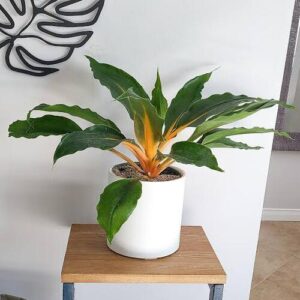
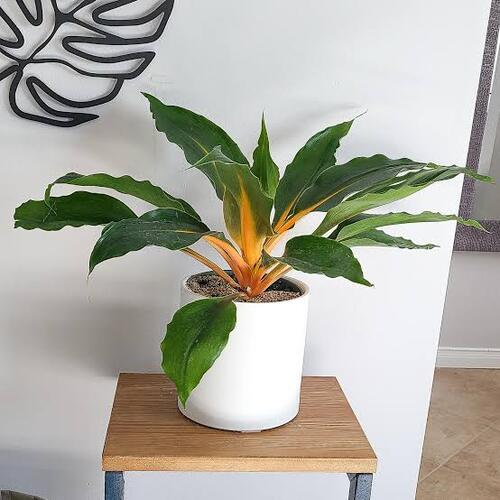
The Mandarin Plant, botanically classified as Chlorophytum amaniense ‘Fire Flash’, is a striking tropical perennial prized for its bold, glossy foliage and vivid orange central stems and petioles, which resemble small flames rising from the center of the rosette. Unlike its well-known cousin the spider plant (Chlorophytum comosum), Fire Flash does not produce trailing runners or plantlets, instead maintaining a compact, upright rosette form that makes it well suited to small spaces, desks, and shelves. The lance-shaped leaves are a deep, glossy green that contrasts dramatically with the coral-orange stalks, giving the plant an almost sculptural, fiery appearance that has made it a favorite among houseplant collectors in recent years.

Native to the lowland tropical rainforests of West Africa, particularly regions of Tanzania and neighboring areas, this species evolved as an understory plant, growing beneath the dense forest canopy where light is filtered and diffuse. This origin explains its preference for bright, indirect light rather than harsh direct sun, as well as its appreciation for warm, humid conditions reminiscent of its native habitat. In the wild, it grows in leaf litter and humus-rich soil, absorbing nutrients from decomposing organic matter on the forest floor.

As a member of the Asparagaceae family, the Mandarin Plant shares botanical kinship with other popular houseplants such as snake plants and lily-of-the-valley. It is a relatively slow to moderate grower, typically reaching a mature size of around 12 to 18 inches in height and width, making it an excellent choice for tabletops, terrariums, and mixed container displays. Its manageable size, striking color contrast, and relatively forgiving care requirements have contributed to its growing popularity as both a standalone specimen and an accent plant in curated indoor jungles.

Mandarin Plant Care & Growing Guide

Caring for a Mandarin Plant is straightforward once its basic preferences are understood, making it an approachable choice even for those new to houseplants. The plant thrives in bright, indirect light, though it can tolerate moderate light conditions reasonably well; direct sun exposure should be avoided as it can scorch the leaves and fade the vibrant orange coloration of the stems. A spot near an east or north facing window, or a few feet back from a south or west facing window, typically provides the ideal balance of brightness without harsh rays.

Watering should be approached with a ‘moderate and consistent’ philosophy: allow the top inch or two of soil to dry out between waterings, then water thoroughly until it drains from the pot’s base. Fire Flash is somewhat more tolerant of inconsistent watering than many tropical houseplants, but prolonged drought will cause leaf tip browning, while consistently soggy soil can lead to root rot. Because the plant is sensitive to salt and mineral buildup, using filtered, distilled, or rainwater is often recommended, especially in areas with hard tap water.

Beyond light and water, the Mandarin Plant benefits from warm temperatures between 65 and 80°F (18–27°C), moderate to high humidity, and well-draining, nutrient-rich potting soil. Light monthly feeding during the spring and summer growing season supports healthy foliage and vibrant stem coloration, while feeding should be paused in fall and winter when growth naturally slows. Repotting every one to two years, along with occasional grooming to remove yellowing or damaged leaves, will keep the plant looking its best and encourage steady, healthy growth over time.

 Soil Soil

The Mandarin Plant thrives in a light, well-draining potting mix that mimics the loose, organic-rich soil of its native forest floor habitat. A blend of standard potting soil combined with perlite or coarse sand for drainage, along with peat moss or coco coir for moisture retention and organic matter, creates an ideal growing medium. A slightly acidic to neutral pH range of about 6.0 to 6.5 supports optimal nutrient uptake.

Good drainage is critical, as this species is susceptible to root rot in compacted or waterlogged soil. Adding orchid bark or additional perlite can improve aeration and prevent compaction over time. Soil problems to watch for include poor drainage (leading to root rot and yellowing leaves), compaction (which restricts root growth and oxygen flow), inappropriate pH (which can lock out nutrients), salt build-up from tap water or over-fertilizing (visible as white crust on soil surface or leaf tip burn), and nutrient deficiencies (often showing as pale or discolored foliage). Root-bound plants, identified by roots circling the pot or emerging from drainage holes, should be repotted promptly with some gentle root pruning if roots have become excessively dense.

 Fertilizer Fertilizer

During the active growing season of spring and summer, the Mandarin Plant benefits from monthly feeding with a balanced, water-soluble houseplant fertilizer diluted to half strength. Feeding should be reduced or paused entirely during fall and winter when growth naturally slows and nutrient demand decreases. A fertilizer with a roughly balanced N-P-K ratio supports both foliage health and overall vigor.

Signs of over-fertilization include brown, crispy leaf tips and margins, a white crust of salt buildup on the soil surface, and stunted or distorted new growth. Under-fertilization, by contrast, typically presents as pale, slow-growing, or smaller than expected leaves over an extended period. Organic alternatives such as diluted fish emulsion, compost tea, or worm castings can be used as gentler, slow-release nutrient sources. This species has no unusual or highly specific nutrient requirements beyond standard balanced houseplant feeding practices.

 Watering Watering

Water the Mandarin Plant when the top inch or two of soil has dried out, then water thoroughly until excess drains from the pot’s base. During the active growing season in spring and summer, this typically means watering every 7 to 10 days, while in fall and winter watering frequency should be reduced to every 10 to 14 days as growth slows. Filtered, distilled, or rainwater is preferred, as this species can be sensitive to the chlorine, fluoride, and mineral salts commonly found in tap water, which may cause brown leaf tips over time.

Signs of underwatering include drooping or curling leaves, dry and crispy brown leaf tips, and slowed growth. Overwatering, by contrast, typically presents as yellowing lower leaves, a mushy or soft base, and a musty odor from the soil, which can indicate root rot has begun to set in. Adjusting watering seasonally and always checking soil moisture before watering, rather than following a rigid schedule, will help maintain a healthy balance for this plant.

Mandarin Plant Watering Calculator

🪴 Precision Watering Intelligence

Science-Based Hydration for Your Collection

Stop guessing. Most houseplant failures are caused by volumetric errors and improper moisture tension. Our deterministic calculator moves beyond "once-a-week" watering by analyzing the four critical pillars of root health:

  • • Transpiration Coefficients: 120+ species mapped by metabolic rate.
  • • Substrate Porosity: Adjusts for Standard vs. Cactus/Well-Draining mixes.
  • • Geometric Volume (V = π r² h): Calculates exact cups based on pot surface area.
  • • The Drainage Factor: Accounts for pot material (Terracotta) and the risk of a perched water table.

Personalized for this plant

6"
🪴
--
approx. every --

Disclaimer: Our calculator is pretty smart. We’ve crunched the numbers, but we’re not measuring the quantum state of your living room. Since we don’t know your exact indoor temperature, humidity, light, airflow, or whether your plant receives daily sweet nothings and motivational speeches, use this calculator as a guide—and always keep an eye on your plant.

 Lighting Lighting

Bright, indirect light is ideal for the Mandarin Plant, replicating the dappled light conditions of its rainforest understory origin. A location a few feet from an east-facing window, or filtered light from a south or west-facing window, works well. The plant can also tolerate moderate or lower light conditions, though growth will slow and the vibrant orange stem coloration may become less pronounced.

Signs of insufficient light include leggy or stretched growth, smaller new leaves, and a dulling or fading of the characteristic orange coloration. Excessive or direct light exposure, on the other hand, can cause bleached, scorched, or brown patches on the leaves, particularly if the plant is suddenly moved into stronger sun. If natural light is limited, a sheer curtain can be used to diffuse harsh direct sun, or a full-spectrum grow light placed 12 to 24 inches above the plant can supplement natural light for 10 to 12 hours daily.

 Tempature Temperature

The Mandarin Plant grows best within a temperature range of 65 to 80°F (18–27°C), consistent with its tropical origins. It has limited tolerance for cold and should be protected from temperatures below 55°F (13°C), as cold exposure can cause leaf damage, discoloration, and stunted growth. The plant should also be kept away from drafty windows, doorways, and air conditioning vents, as sudden temperature fluctuations can cause stress.

While it tolerates typical indoor temperature variations reasonably well, it is not frost-tolerant and should never be exposed to freezing conditions. In warmer climates, the plant can be grown outdoors in shaded, protected areas during summer months, but should be brought indoors before temperatures drop in autumn. Keeping the plant away from heating vents in winter and providing stable, consistent warmth year-round will support the healthiest growth.

 Humidity Humidity

The Mandarin Plant prefers moderate to high humidity levels, ideally between 50 and 70 percent, reflecting its native rainforest habitat. In drier indoor environments, particularly during winter when heating systems reduce ambient moisture, the plant may show signs of humidity stress such as browning or crisping leaf edges and tips, or slowed growth.

To increase humidity, a pebble tray filled with water placed beneath the pot (without letting the pot sit directly in water) can provide a modest, localized humidity boost. Grouping plants together also creates a beneficial microclimate through collective transpiration. A humidifier is the most effective and reliable method for maintaining consistent humidity, especially in dry climates or heated homes. Occasional light misting can offer temporary relief but is less effective than ambient humidity solutions and should be done in the morning to allow leaves to dry and reduce fungal risk. Excessively high humidity combined with poor air circulation can occasionally encourage fungal issues, so a small fan for gentle air movement is a helpful complement to humidity-boosting methods.

 ropagation Propagation

The Mandarin Plant is most commonly propagated through division, as it does not produce the trailing plantlets characteristic of common spider plants. Division involves separating offsets or sections of the root clump into individual plants, each with its own roots and leaves.

Step-by-step division guide:
1. Remove the parent plant from its pot and gently shake or rinse away excess soil from the root ball.
2. Identify natural separations or offset clusters within the root system.
3. Using a clean, sharp knife or your hands, carefully divide the root ball into sections, ensuring each division retains healthy roots and at least a few leaves.
4. Trim away any damaged, mushy, or rotten roots with sterilized scissors or shears.
5. Plant each division into its own pot with fresh, well-draining potting mix.
6. Water thoroughly and place in bright, indirect light.
7. Keep soil consistently moist (not soggy) for the first two to three weeks to support root establishment.
8. Reduce watering frequency gradually once new growth appears, transitioning to normal care.

Division has a relatively high success rate when done carefully with healthy root systems, typically 70 to 85 percent, and new divisions generally establish within 4 to 6 weeks. Propagation is best undertaken in spring or early summer when the plant is actively growing and better able to recover from the disturbance. Seed propagation is possible but rarely used by home growers due to slow germination and inconsistent results.

 Potting Potting

The Mandarin Plant does well in a pot with ample drainage holes to prevent water accumulation at the roots. A well-draining potting mix, as described in the soil section, combined with a pot only slightly larger than the current root ball, supports healthy growth without excess soil retaining unnecessary moisture. Repotting every one to two years is generally sufficient, or when the plant becomes visibly root-bound.

Signs that repotting is needed include roots circling the surface of the soil or emerging from drainage holes, water running through the pot too quickly without being absorbed, and slowed or stunted growth despite otherwise good care. When repotting, gently loosen the root ball and, if roots are densely circling, trim away the outermost tangled roots to encourage healthy new growth. Move the plant to a pot only one size larger than its previous container to avoid overpotting, which can lead to waterlogged soil. After repotting, water thoroughly and keep the plant in a stable, moderately bright location for a week or two to minimize transplant stress.

 Pruning Pruning

When to Prune

Prune the Mandarin Plant as needed throughout the year, primarily during the growing season in spring and summer, to remove yellowing, damaged, or dead leaves.

Purpose of Pruning

Pruning helps maintain the plant’s appearance, redirects energy toward healthy growth, and reduces the risk of pest or disease issues from decaying plant material.

Tools Needed

Clean, sharp scissors or pruning shears sterilized with rubbing alcohol before and after use.

Step-by-Step Pruning Guide

  1. Inspect the plant for yellow, brown, or damaged leaves.
  2. Sterilize pruning shears or scissors with rubbing alcohol.
  3. Cut damaged leaves at the base, near the soil line, rather than tearing them off.
  4. Remove any spent flower stalks if the plant has bloomed.
  5. Dispose of removed plant material away from the base of the plant to prevent fungal or pest issues.
  6. Wipe down remaining healthy leaves with a damp cloth to remove dust.

Aftercare

Water lightly if the soil is dry and place the plant back in its normal bright, indirect light location. Avoid fertilizing immediately after a heavy pruning session.

Special Considerations

Avoid removing more than 20 to 25 percent of the plant’s foliage at one time to prevent stress.

 Blooming Blooming

The Mandarin Plant produces small, star-shaped white flowers, though blooming indoors is uncommon and considered a secondary feature rather than the plant’s main attraction. When flowering does occur, it typically happens in spring or summer under favorable bright, warm, and humid conditions, with blooms appearing sporadically along a central flower spike rather than in a defined seasonal flush. Individual flowers are short-lived, often lasting only a day or two, but a mature, well-cared-for plant may produce them intermittently over several weeks. Flowering is more frequently observed in outdoor or greenhouse-grown specimens where light levels and humidity more closely mimic the plant’s native tropical understory environment.

 Pests & Diseases Pests and Diseases

Pests

Name: Spider Mites

Symptoms: Fine webbing on leaves and stems, tiny yellow or white speckling on leaf surfaces, overall dulling of leaf color.

Treatment: Isolate the plant, rinse leaves with water, and treat with insecticidal soap or neem oil, repeating every 7 to 10 days until resolved.

Name: Mealybugs

Symptoms: Small, cottony white clusters at leaf joints and undersides, sticky residue on leaves.

Treatment: Dab affected areas with rubbing alcohol on a cotton swab, then treat the plant with insecticidal soap or neem oil.

Name: Aphids

Symptoms: Clusters of small green, black, or brown insects on new growth, curling or distorted leaves.

Treatment: Spray affected areas with a strong stream of water, followed by insecticidal soap application if the infestation persists.

Diseases

Name: Root Rot

Symptoms: Yellowing and wilting leaves, mushy and dark roots, foul soil odor.

Treatment: Remove the plant from its pot, trim away affected roots, and repot into fresh, well-draining soil; reduce watering frequency going forward.

Name: Leaf Spot (Fungal or Bacterial)

Symptoms: Brown or black spots with yellow halos on leaves, sometimes with a wet appearance.

Treatment: Remove affected leaves, improve air circulation, avoid overhead watering, and apply a copper-based fungicide if needed.

 Special Features Special Features

The Mandarin Plant’s most distinctive feature is the vivid coral-orange coloration of its central stems and petioles, which creates a striking flame-like visual contrast against its glossy dark green leaves, a trait uncommon among common houseplants and one that has driven its rising popularity among collectors. Unlike its trailing relative the spider plant, Fire Flash maintains a compact, upright rosette form without producing plantlets or runners, making it particularly well suited to small spaces, terrariums, and curated plant displays. It also offers modest air-purifying benefits as a member of the Chlorophytum genus, and its relatively easygoing care requirements make it an appealing statement plant for both novice and experienced indoor gardeners seeking bold color without demanding maintenance.

 Benefits Plant Benefits

As a member of the Chlorophytum genus, the Mandarin Plant offers modest air-purifying qualities, contributing to the filtering of certain indoor air pollutants, similar to studies conducted on its relative, the common spider plant. However, unlike some related species used in traditional herbal medicine, Chlorophytum amaniense ‘Fire Flash’ is primarily grown as an ornamental plant and does not have well-documented pharmaceutical or medicinal applications; it should not be ingested and is not used in herbal remedies.

  Additional Information Additional Information

The ‘Fire Flash’ variety is one of the more recent Chlorophytum cultivars to gain widespread popularity in the houseplant trade, largely due to social media exposure highlighting its unusual coloration. It is sometimes confused with its parent species’ more common green-stemmed forms, so buyers seeking the vivid orange coloration should look specifically for the ‘Fire Flash’ cultivar name when purchasing.

  Lifecycle Life Cycle

The Mandarin Plant is a herbaceous perennial that grows from a fibrous, somewhat fleshy root system. It begins as a small rosette of leaves that gradually expands over one to two years to reach a mature size of around 12 to 18 inches. As it matures, it may periodically send up a central flower spike bearing small white blooms, followed by the eventual formation of seed capsules if pollinated, though indoor specimens rarely set seed. The plant continues to produce new leaves from its center throughout the growing season, with older outer leaves naturally yellowing and dying back over time. With appropriate care, the Mandarin Plant can live for many years indoors, periodically requiring division as its root clump expands and offsets form at the base.

  Plant ToxicityAre Mandarin Plant Poisonous, Toxic

The Mandarin Plant is considered mildly toxic to cats, dogs, and children if ingested. All parts of the plant, but particularly the leaves, contain compounds that can cause gastrointestinal irritation. Cats in particular seem drawn to chewing on the foliage, similar to their attraction to spider plants, possibly due to mild psychoactive compounds present in related Chlorophytum species. Affected pets or children may experience symptoms such as drooling, vomiting, diarrhea, and mild oral or gastrointestinal irritation after ingesting plant material. In most cases, toxicity is considered mild, and severe or life-threatening reactions are uncommon, though symptoms can be distressing.

If ingestion occurs, remove any remaining plant material from the mouth, rinse the mouth with water, and offer a small amount of water to help dilute stomach contents. Contact a veterinarian, pediatrician, or poison control center for guidance, especially if symptoms persist or worsen. Preventive measures include placing the plant out of reach of curious pets and small children, considering hanging planters or elevated shelves, and providing pets with safe alternatives like cat grass to redirect chewing behavior.

 FAQ Frequently Asked Questions

Is the Mandarin Plant safe for cats?

No, the Mandarin Plant is mildly toxic to cats and can cause gastrointestinal upset if chewed or ingested.

How much light does a Fire Flash plant need?

It thrives in bright, indirect light but can tolerate moderate light, though direct sun should be avoided.

Why are the stems of my Mandarin Plant losing their orange color?

Fading stem color is usually a sign of insufficient light; move the plant to a brighter, indirect light location.

How often should I water a Fire Flash Chlorophytum?

Water when the top one to two inches of soil are dry, typically every 7 to 10 days in the growing season.

Does the Mandarin Plant produce babies like a spider plant?

No, unlike common spider plants, Fire Flash does not produce trailing plantlets and is instead propagated by division.

What humidity level does the Mandarin Plant prefer?

It prefers moderate to high humidity, ideally between 50 and 70 percent.

Why are the leaf tips on my Mandarin Plant turning brown?

Brown leaf tips are often caused by low humidity, mineral buildup from tap water, or inconsistent watering.

How big does a Fire Flash Chlorophytum get?

It typically reaches a compact mature size of 12 to 18 inches in height and width.

Does the Mandarin Plant purify the air?

Yes, as a Chlorophytum species it offers modest air-purifying benefits similar to its relative, the spider plant.

How often should I repot my Mandarin Plant?

Repotting every one to two years, or when the plant becomes root-bound, is generally sufficient.

Can I grow this plant in my indoor spaceCan I grow Mandarin Plant in my indoor space

Difficulty: Easy

Size: Small

Light: Medium

Water: Medium

Flowering: Yes

Pet Safe: No

Air Purifier: Medium

Can I grow this plant in my indoor spaceChlorophytum amaniense 'Fire Flash' botanical details

Common Name: Mandarin Plant

Other Common Names: Fire Flash, Fire Flash Chlorophytum, Orange Star Plant, Mandarin Spider Plant, Fire Star

Botanical Name: Chlorophytum amaniense 'Fire Flash'

Native Area: Tropical rainforests of West Africa, primarily Tanzania and surrounding regions

Family Name: Asparagaceae

Plant Type: Herbaceous perennial

Genus: Chlorophytum

Kingdom: Plantae

 Photo Gallery Photo Gallery

 Care recommendationsMy Mandarin Plant Plant Care Recommendations

  •   Buy onlineBuy Mandarin Plant Online

    “Bring Home This Beauty Today”

    “Get Your Own Mandarin Plant Before It’s Gone”

    “Shop Trusted Sellers – Limited Availability”

    “Free Delivery”

    Fire Flash Plant Care
    Fire Flash Plant Care

    As an Amazon Associate, I earn commission from qualifying purchases.

      Plant Joke Plant Puns and Jokes

    Why did the Mandarin Plant win the talent show? Because it really knew how to bring the fire to its performance stems!

    Newsletter Signup Signup to our newsletter and download Mandarin Plant care guide

    AI Julie Chatbot, ask me!
    Let's ask AI Julie
    Chatbot Icon