


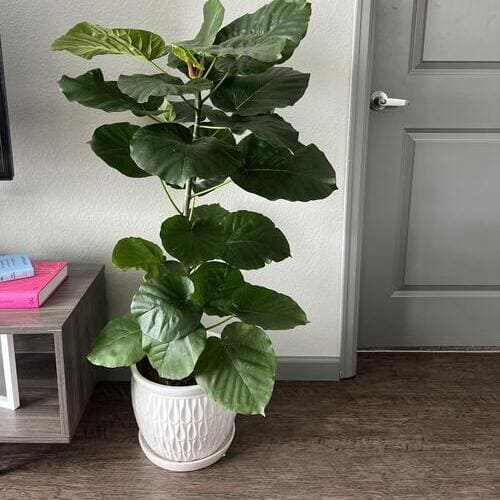
Ficus umbellata, widely known as the Umbrella Fig, is a deciduous to semi-deciduous tree in the family Moraceae, native to the tropical forests and forest margins of West and Central Africa. Its natural range extends across countries including Senegal, Guinea, Sierra Leone, Côte d’Ivoire, Ghana, Nigeria, Cameroon, Gabon, and parts of the Democratic Republic of Congo, where it grows in lowland rainforest, gallery forest along rivers, and in secondary growth and disturbed clearings. In the wild it can reach 10 to 20 metres in height, developing a broad, spreading crown that casts dense shade, which is precisely the characteristic that earned it the common name Umbrella Fig. The species was formally described by the Belgian botanist and taxonomist Wilhelm Gerhard Walpers in the mid-nineteenth century, and it has long been valued in its native regions as a shade tree and a source of fibre and fodder.
The most striking feature of Ficus umbellata, and the reason it has become a sought-after houseplant in recent years, is its foliage. The leaves are large, thin, and distinctly heart-shaped to broadly ovate with a rounded or cordate base and a short, abruptly pointed tip. Mature leaves can reach 15 to 30 centimetres in length and almost as wide, held on slender petioles that give the canopy an airy, layered appearance quite unlike the stiff, leathery foliage of its close relative Ficus lyrata. The leaf surface is a soft, matte mid-green with prominent pale venation, and new growth often emerges with a delicate bronze or coppery flush that matures to green. The bark on young stems is smooth and pale grey-green, becoming lightly fissured with age, and all parts of the plant exude a milky white latex when cut, a hallmark of the genus.
As a cultivated indoor specimen, Ficus umbellata has gained significant popularity, particularly in Japan and increasingly across Europe and North America, where it is often sold as a slender, single-stemmed tree or a multi-branched standard. Its appeal lies in a combination of the fashionable fiddle-leaf aesthetic with a lighter, more graceful habit and a reputation for being somewhat more forgiving than Ficus lyrata. Indoors it typically reaches 1.5 to 2.5 metres with regular pruning, growing at a moderate to fast rate during the warm months. One important characteristic for growers to understand is that the species is naturally deciduous or semi-deciduous in response to seasonal drought and cool temperatures, meaning some leaf drop in autumn and winter is a normal physiological response rather than a sign of poor care. In warm, stable indoor conditions it generally retains most of its foliage year-round.
Caring for Ficus umbellata successfully comes down to providing bright light, warm and stable temperatures, and a watering rhythm that keeps the soil evenly moist without ever becoming saturated. The species wants more light than most people expect from a foliage plant. Place it directly in front of an east-facing window where it receives several hours of gentle morning sun, or within a metre of a south- or west-facing window behind a sheer curtain that diffuses the harshest afternoon rays. Insufficient light is the single most common cause of disappointment with this plant, producing stretched internodes, undersized leaves, and a steady loss of lower foliage. Rotating the pot a quarter turn each week keeps growth symmetrical and prevents the plant leaning toward the light.
Watering should be thorough and infrequent rather than light and often. Allow the top three to five centimetres of the potting mix to dry, then water generously until liquid runs freely from the drainage holes, and discard whatever collects in the saucer within half an hour. During active growth in spring and summer this usually means watering once every five to eight days, while in autumn and winter the interval commonly stretches to ten to fourteen days as growth slows and evaporation decreases. The large, thin leaves transpire rapidly, so the plant is less drought-tolerant than thicker-leaved figs and will wilt visibly if allowed to dry out completely. At the same time, its roots are intolerant of standing water, and overwatering in a heavy mix is the most frequent route to root rot. A chunky, free-draining substrate and a pot with generous drainage resolve most of this tension.
Beyond light and water, the key practices are consistency and patience. Ficus umbellata dislikes being moved and will often respond to relocation, repotting, or a sudden draught by dropping leaves, so choose a good position and leave it there. Maintain temperatures between 18°C and 28°C, keep humidity above 50% where possible, and feed with a balanced liquid fertiliser at half strength every two to four weeks through the growing season, stopping entirely in winter. Wipe the broad leaves with a damp cloth every few weeks to clear dust and allow efficient photosynthesis, and inspect the undersides at the same time for spider mites and scale, the two pests most likely to appear. Prune in late winter or early spring to control height and encourage branching, always wearing gloves, as the milky latex is a skin irritant. Repot every two to three years into a container only one size larger, and expect the plant to sulk for a fortnight afterwards before resuming growth.
 Soil
Soil
Ficus umbellata requires a fertile, loamy, free-draining potting medium that holds enough moisture to support its large, rapidly transpiring leaves while shedding excess water quickly enough to keep the root zone aerated. A reliable mix consists of approximately 50% good-quality peat-free or peat-based houseplant compost as the base, 25% perlite or pumice for drainage and aeration, 15% fine to medium orchid bark or composted pine bark for structure and long-term porosity, and 10% coarse horticultural grit or coir chips to maintain open channels and resist compaction. Adding a tablespoon or two of horticultural charcoal per litre of mix helps absorb impurities and improve drainage, while a handful of worm castings or well-rotted leaf mould supplies slow-release organic nutrition and beneficial microbial activity. For larger specimen trees in heavy containers, increasing the proportion of bark and grit to around 40% combined gives greater structural stability and guards against the mix slumping and waterlogging over time.
The preferred pH range is slightly acidic to neutral, between 6.0 and 7.0, with the optimum sitting close to 6.5. Within this band nitrogen, phosphorus, potassium, calcium, magnesium, and the key micronutrients iron and manganese are all readily plant-available. Below pH 5.5 manganese and aluminium can reach phytotoxic concentrations and calcium uptake declines, while above pH 7.2 iron, manganese, and zinc become progressively locked out, producing the interveinal chlorosis on new growth that is a classic symptom in alkaline-watered figs. pH can be checked with an inexpensive probe or a soil test kit, raised with a light dressing of dolomitic lime, and lowered with elemental sulphur, acidified ericaceous compost, or by switching from hard tap water to rainwater.
Soil composition has a direct and visible effect on plant health. Ficus umbellata develops a vigorous, fibrous root system with thick anchoring roots that demand oxygen at the root surface; in an open, well-structured mix these roots colonise the pot rapidly and support fast canopy growth and large, well-expanded leaves. In a dense, water-retentive medium the same root system becomes oxygen-starved, root hair function declines, water and nutrient uptake falls, and the plant paradoxically shows drought symptoms such as wilting and leaf drop despite wet soil, while opportunistic pathogens colonise the weakened tissue. Conversely, a mix that is too coarse and inert dries out between waterings faster than the plant can cope with, leading to chronic water stress, crisped leaf margins, and premature leaf abscission.
Several soil problems recur with this species. Poor drainage, usually from a dense peat-heavy mix, a pot without adequate holes, or a decorative cachepot that traps water, creates anaerobic conditions and is the leading cause of root rot from Pythium, Phytophthora, and Fusarium. Compaction develops as organic matter mineralises over two to three years, collapsing air space, shedding water off the surface, and slowly suffocating the roots; it is recognised by water pooling on top or running straight down the inside of the pot wall. Inappropriate pH, most often alkaline drift caused by repeated irrigation with hard tap water, impairs micronutrient uptake and shows as yellowing between the veins of the newest leaves while the veins stay green. Salt build-up from fertiliser residue and dissolved minerals in tap water concentrates in the upper mix and around the pot rim, visible as a white or buff crust, and burns root tips, producing brown, dry leaf margins and tip necrosis; flushing the pot every two to three months with several times its volume of clean water leaches these salts away. Nutrient deficiencies are common in exhausted mix, with nitrogen shortage showing as uniform pale yellowing of the oldest leaves and reduced leaf size, magnesium shortage as interveinal yellowing on older leaves, and iron shortage as chlorosis concentrated on the youngest growth. Root boundness arises readily because the species roots vigorously; a pot-bound plant develops a dense circling mat, water runs straight through without wetting the mix, growth stalls, new leaves shrink, and the plant becomes top-heavy and prone to tipping. Refreshing the top five centimetres of mix annually, repotting into fresh medium every two to three years, and teasing out circling roots at repotting time address compaction and root boundness together.
 Fertilizer
Ficus umbellata is a moderately heavy feeder during its active growing season, reflecting the fast production of large leaves and the vigorous root growth it puts on in warm, bright conditions. A balanced water-soluble fertiliser with an NPK ratio of 20-20-20, or a formulation slightly weighted toward nitrogen such as 3-1-2 or 24-8-16, suits the species well, as nitrogen drives the lush foliage that is its entire ornamental value. Dilute to half the manufacturer’s recommended strength and apply every two to four weeks from early spring through to early autumn. Always water the plant lightly before feeding, or feed immediately after a normal watering, so the fertiliser solution distributes evenly through moist mix rather than contacting dry roots at full concentration. Suspend feeding entirely from mid-autumn through winter, when low light and cool temperatures slow growth and unused fertiliser salts simply accumulate in the substrate. An alternative approach for larger specimens is a controlled-release granular fertiliser incorporated into the top layer of mix at the start of spring, supplying nutrients steadily over three to four months, optionally supplemented with a dilute liquid feed once a month at peak growth.
Signs of under-fertilisation develop gradually. Growth slows or stalls despite good light and watering, new leaves emerge progressively smaller than the ones before them, the oldest lower leaves yellow uniformly and are shed, overall leaf colour becomes a pale, washed-out green, and internodes may shorten as the plant conserves resources. Specific deficiencies have characteristic patterns: nitrogen shortage produces uniform pale yellowing of the oldest leaves working upward with notably reduced leaf size; magnesium shortage shows as interveinal yellowing on older leaves while the veins remain green, often with a reddish or purple tint developing; iron shortage causes interveinal chlorosis concentrated on the newest growth, commonly induced by alkaline soil or hard water rather than by genuine absence of iron; potassium shortage appears as yellowing and browning along the leaf margins of older leaves; and manganese shortage mimics iron chlorosis but with a slightly mottled rather than sharply veined pattern.
Signs of over-fertilisation are usually more abrupt and more damaging. Leaf tips and margins turn brown and dry with a scorched, almost burnt appearance, a white or buff crusty residue forms on the soil surface and around the inner rim of the pot, leaves may yellow and drop suddenly, new growth can emerge distorted or unusually dark and brittle, and the plant may wilt despite adequate moisture because damaged root tips can no longer take up water. In severe cases roots appear brown and shrivelled at the tips. The remedy is to flush the pot thoroughly, running clean water equal to three or four times the pot’s volume slowly through the mix to leach out accumulated salts, then withhold fertiliser for six to eight weeks before resuming at a lower concentration. Repotting into fresh mix is warranted if symptoms are severe.
Organic alternatives work well with this species and carry a much lower risk of salt burn. Worm castings applied as a two-centimetre top dressing twice during the growing season release nutrients slowly and improve soil biology; worm casting tea or compost tea can be used as a liquid drench every three to four weeks; fish emulsion diluted to half strength every three to four weeks provides readily available nitrogen, though it has a pronounced odour for a day or two; seaweed or kelp extract supplies a broad spectrum of micronutrients along with growth-promoting hormones and is particularly useful as a gentle fortnightly tonic; and well-rotted compost or leaf mould incorporated at repotting provides a slow-release nutrient base. For the iron chlorosis that commonly affects figs watered with hard water, a chelated iron supplement in the form of iron EDDHA applied once or twice during the growing season corrects the deficiency far more effectively than iron sulphate, which is quickly rendered unavailable at higher pH. Addressing the underlying water hardness or soil pH is the durable solution.
 Watering
Ficus umbellata prefers a cycle of thorough soaking followed by partial drying, which replicates the alternating wet and drier periods of its native seasonal tropical climate. Water when the top three to five centimetres of the potting mix feel dry to the touch and the pot has become noticeably lighter, but before the mix dries out completely through its depth. Apply room-temperature water slowly and evenly over the entire soil surface until it drains freely from the bottom, which both hydrates the full root ball and flushes accumulated salts, then discard any water that collects in the saucer or cachepot within 20 to 30 minutes. Never allow the pot to stand in water. Bottom watering, by setting the pot in a tray of water for 20 to 30 minutes until the surface darkens, is an excellent alternative that encourages deep rooting and avoids compacting the surface, although it should be alternated with occasional top watering to leach salts.
Frequency depends on light, temperature, humidity, pot size, and substrate rather than the calendar. During active growth in spring and summer, a plant in a bright position typically needs water every five to eight days. In autumn and winter, as light levels fall and growth slows, the interval commonly extends to every ten to fourteen days or longer. Newly repotted plants need slightly more careful monitoring for the first month, as the fresh mix holds moisture differently, while large specimens in sizeable containers dry more slowly than small plants in proportionally larger pots. A moisture meter or the simple expedient of inserting a finger or a wooden skewer to a depth of five centimetres gives far more reliable guidance than a fixed schedule.
Regarding water quality, Ficus umbellata is moderately sensitive to dissolved minerals and to chlorine and fluoride. Rainwater is the best choice, followed by filtered water and distilled or reverse-osmosis water. Hard tap water with high calcium and magnesium carbonate content gradually raises the soil pH and leaves white mineral deposits on the soil surface and leaf edges, eventually inducing iron chlorosis in the newest growth. If tap water is the only practical option, letting it stand uncovered for 24 hours allows free chlorine to dissipate, although this does not remove chloramine, fluoride, or dissolved minerals; in hard-water areas, alternating tap water with collected rainwater and flushing the pot thoroughly every two to three months keeps mineral accumulation in check. Always use water at room temperature, as cold water shocks the roots and can trigger leaf drop.
Signs of overwatering include yellowing that begins on the lower and innermost leaves and progresses upward, leaves that drop while still green or only partly yellow, soft brown spots with yellow halos on the foliage, a soggy mix that stays wet for many days, a sour or musty smell from the soil, fungus gnats around the pot, and wilting despite obviously wet soil, which indicates that root function has already been compromised. In advanced cases the stem base feels soft and the roots appear brown, black, and mushy rather than firm and pale. Signs of underwatering include leaves that droop and feel limp or papery, curling of the leaf margins, dry brown crisping that starts at the leaf tips and edges, premature yellowing and abscission of lower leaves, visibly dry mix that has shrunk away from the sides of the pot, and water running straight through without being absorbed. Because the species is naturally deciduous to semi-deciduous, a degree of leaf drop in autumn and winter is normal and should not be mistaken for a watering fault; the distinguishing feature is that seasonal drop is gradual and affects the oldest leaves, whereas watering problems cause rapid loss accompanied by discolouration or soil symptoms. Consistency matters greatly to this species, and erratic swings between bone dry and saturated are a frequent trigger for sudden heavy leaf drop.
Stop guessing. Most houseplant failures are caused by volumetric errors and improper moisture tension. Our deterministic calculator moves beyond "once-a-week" watering by analyzing the four critical pillars of root health:
Personalized for this plant
Disclaimer: Our calculator is pretty smart. We’ve crunched the numbers, but we’re not measuring the quantum state of your living room. Since we don’t know your exact indoor temperature, humidity, light, airflow, or whether your plant receives daily sweet nothings and motivational speeches, use this calculator as a guide—and always keep an eye on your plant.
 Lighting
Ficus umbellata is a light-hungry species that performs best in bright, indirect light with a few hours of gentle direct sun. In its native habitat it grows in forest margins, river gallery forest, and disturbed clearings rather than deep understory shade, so it is adapted to considerably more light than many popular foliage plants. The ideal indoor position is immediately in front of an unobstructed east-facing window, where it receives two to four hours of soft morning sun followed by bright ambient light for the remainder of the day. A position within one metre of a south- or west-facing window also works well provided a sheer curtain or voile diffuses the intense midday and afternoon rays. North-facing windows are generally too dim for sustained healthy growth in temperate latitudes, though they may suffice in bright tropical or subtropical settings. Established plants that have been gradually acclimatised can tolerate several hours of direct sun, but any increase in exposure must be introduced over two to three weeks to avoid scorch.
Signs of insufficient light are distinctive and appear within a few weeks. Internodes elongate noticeably so the stem looks stretched and bare between leaves, new leaves emerge progressively smaller and thinner than their predecessors, the canopy becomes sparse, and the oldest lower leaves yellow and abscise as the plant sheds foliage it can no longer support. Leaf colour becomes a flat, dull green, the bronze flush on new growth is muted or absent, growth slows or stops entirely, and the whole plant leans markedly toward the window. Low light also slows soil drying, which compounds the risk of root rot from an unchanged watering routine.
Signs of excessive light exposure include bleached, washed-out pale patches on the leaf surfaces facing the glass, dry crispy brown or tan scorch marks that develop first in the leaf centre and along the upper margins, a reddish or bronzed overtone across exposed foliage, downward curling or cupping of the leaf blade, and wilting during the hottest part of the day despite adequately moist soil. Scorch is permanent and the damaged tissue will not recover, although the plant will outgrow it. Leaf drop can follow severe sunburn as the plant sheds compromised foliage.
If natural conditions are suboptimal, there are several effective adjustments. Where light is too intense, hang a sheer curtain, apply a translucent window film, move the plant 50 to 150 centimetres further back into the room, or shift it from a south-facing to an east-facing aspect. Where light is too low, relocate the plant closer to the brightest available window, remove obstructing furniture or outdoor foliage, clean the window glass and wipe dust from the leaves to improve light transmission, and use pale walls or a light-coloured surface behind the plant to bounce additional light back into the canopy. Supplemental lighting is highly effective for this species: a full-spectrum LED grow light of 30 to 50 watts positioned 45 to 75 centimetres above the canopy and run on a timer for 10 to 14 hours daily will sustain vigorous growth through dim winters, and a second unit placed to the side helps light a large specimen evenly. Rotating the pot 90 degrees once a week keeps the crown symmetrical regardless of light source.
 Temperature
Ficus umbellata thrives in the warm, stable temperatures characteristic of its tropical African origin. The ideal range for active growth is 18°C to 28°C (65°F to 82°F), with the most vigorous leaf production occurring between 22°C and 27°C when combined with bright light, adequate humidity, and regular feeding. Ordinary room temperatures suit the species well, and a gentle natural drop of a few degrees at night is beneficial rather than harmful.
The plant is not cold-hardy and should be kept above 13°C (55°F) at all times. Growth ceases below roughly 15°C, and prolonged exposure to temperatures between 10°C and 13°C induces substantial leaf drop as the plant’s natural deciduous response is triggered; below 10°C (50°F) tissue damage begins, appearing as dark water-soaked patches, blackened leaf margins, and dieback of soft growth, and frost is fatal. The species is rated approximately USDA zone 10b to 12 and can only be grown outdoors year-round in frost-free tropical and subtropical climates. At the other extreme, sustained temperatures above 32°C (90°F) cause heat stress, especially when humidity is low, with transpiration outpacing root uptake and producing midday wilting, leaf scorch, flower and fruit abortion in outdoor specimens, and eventual leaf drop.
Tolerance of fluctuation is one of this plant’s genuine weaknesses. Ficus umbellata is markedly sensitive to abrupt temperature change and to draughts, and sudden swings of more than 8°C to 10°C within a short period frequently provoke rapid, heavy leaf shedding even when every other aspect of care is correct. Cold draughts from an opening exterior door, an unsealed single-glazed window in winter, or a nearby air conditioning vent are classic triggers, as is the hot, desiccating airflow from a radiator or heating duct. Stability matters more than hitting any particular number within the acceptable range.
To protect the plant from temperature extremes, site it away from exterior doors, draughty windows, air conditioning outlets, and heat sources, and avoid positions where foliage touches cold glass in winter. During cold months, move the plant 30 to 50 centimetres further into the room at night, consider insulating the pot with a sleeve or hessian wrap to keep the root zone warm, and reduce watering in step with the slower growth so cold wet soil does not compound the stress. In summer, shade the plant from intense afternoon sun, increase humidity, water more frequently, and improve air movement to help it shed heat. If the plant has summered outdoors, bring it back inside well before night temperatures approach 15°C, and acclimatise it gradually over one to two weeks in both directions to minimise shock. When transporting a plant in cold weather, wrap the entire canopy in paper or fleece and keep the journey as short as possible, as even a few minutes of exposure below 5°C can cause leaf loss.
 Humidity
Ficus umbellata prefers moderate to high relative humidity, ideally between 50% and 70%, which reflects the humid tropical forest margins of its West and Central African origin. It adapts reasonably well to typical household humidity of 40% to 50% and is noticeably more tolerant of average indoor air than many thin-leaved tropicals, but sustained humidity below 35%, as often occurs in centrally heated rooms during winter, will produce visible stress. Humidity above 50% supports larger leaf expansion, a healthier matte sheen, and reduced pest pressure.
Symptoms of low humidity stress appear first at the leaf extremities. Tips and margins turn dry, brown, and brittle, often with a narrow yellow transition zone where damaged tissue meets healthy tissue. Leaf blades may curl or cup inward to reduce transpiring surface area, newly unfurling leaves can emerge smaller than expected or with distorted, partly stuck edges, and the overall foliage looks dull rather than softly lustrous. Low humidity also dramatically increases susceptibility to spider mites, which thrive in warm dry air and are by far the most common pest consequence of an under-humidified Ficus. In combination with a cold draught or dry heat from a radiator, low humidity frequently triggers abrupt leaf drop.
Symptoms of excessively high humidity, generally above 80% and particularly when paired with stagnant air and cool temperatures, are chiefly pathological rather than physiological. Fungal and bacterial leaf spots develop as dark, water-soaked or brown lesions, sometimes with concentric rings or yellow haloes, powdery mildew may appear as a white bloom on leaf surfaces, botrytis can colonise senescing tissue and pruning wounds as a grey fuzzy mould, and persistent surface moisture encourages edema, where small corky bumps or blisters form on the leaf underside as cells rupture from excess internal water pressure. Soil that stays wet in a humid, poorly ventilated room also raises the risk of root rot.
Several methods increase ambient humidity with differing effectiveness. An electric humidifier is by far the most reliable, capable of lifting and holding room humidity in the target 50% to 65% band; a cool-mist unit placed one to two metres from the plant and set to maintain around 55% gives consistent results and is the recommended approach for specimen-sized plants. Grouping the fig with other tropical plants creates a genuine microclimate several percentage points higher than the surrounding room through collective transpiration, and is both free and effective, with the added benefit of mutual wind shelter. A pebble tray, consisting of a wide shallow saucer filled with gravel and water with the pot resting on the stones clear of the water line, provides a modest local lift of perhaps 5% to 10% immediately around the base; it is helpful but insufficient on its own for a large plant, as the broad canopy sits far above the evaporative source. Misting the foliage with filtered or rainwater raises humidity only transiently, for minutes rather than hours, and carries a real risk of promoting fungal and bacterial leaf spot if water lingers on the large flat leaves, so if used at all it should be a fine mist applied early in the morning in a well-ventilated spot so the leaves dry quickly. Keeping the plant away from radiators, heating vents, and air conditioning outlets prevents the localised dry air that these create. Where humidity is too high, improve air circulation with a gentle oscillating fan directed away from the plant, increase spacing between plants, reduce misting entirely, water in the morning so surfaces dry before nightfall, and ventilate the room daily.
 Propagation
Ficus umbellata is propagated vegetatively, most commonly from stem tip cuttings and by air layering, both of which exploit the genus’s strong capacity to form adventitious roots. The best time to propagate is late spring through midsummer, when day length, warmth, and the plant’s own hormonal balance all favour rapid root initiation; cuttings taken in autumn or winter root slowly and unreliably and are prone to rotting before they establish. Semi-ripe wood from the current season’s growth, firm but not yet woody, roots considerably better than either soft green tips or old hardened stems.
Comparing methods, air layering is the most reliable technique with a success rate commonly between 90% and 95%, because the developing roots are supported by the parent plant throughout and the new plant is never water-stressed; its drawbacks are that it takes longer, requires more setup, and yields only one or two plants at a time. Stem cuttings rooted in a sterile soil or perlite medium under high humidity achieve roughly 70% to 85% success and produce roots that transition to normal potting conditions easily. Stem cuttings rooted in water succeed around 55% to 70% of the time and have the advantage of visible progress, but the water-formed roots are structurally different and often struggle when transferred to soil, with a noticeable proportion of cuttings failing at that transition. Rooting in damp sphagnum moss gives intermediate results of about 75% to 85% and combines good root architecture with easy monitoring. Seed propagation is not practical, since the obligate fig wasp pollinator is absent outside the plant’s native range and viable seed is effectively unobtainable in cultivation.
Step-by-step guide for stem cutting propagation:
1. Choose a healthy, pest-free parent plant and identify a stem tip from the current season’s growth that is firm rather than soft, bearing three to five leaves and at least two to three nodes, and showing no signs of disease.
2. Put on nitrile or rubber gloves and prepare a clean workspace, as the stems will exude copious irritant white latex when cut. Sterilise a sharp knife, secateurs, or razor blade with isopropyl alcohol.
3. Cut the stem to a length of 15 to 25 centimetres, making the lower cut at a slight angle approximately one centimetre below a node. Make a single decisive cut rather than crushing the stem.
4. Stand the cutting upright in a glass of clean lukewarm water for 15 to 30 minutes, or blot the cut end repeatedly with a damp cloth, until the latex stops flowing. Skipping this step is the most common cause of failure, as congealed latex seals the vascular tissue and blocks both water uptake and root emergence.
5. Remove the lowest one or two leaves so that at least one bare node will sit in the rooting medium. If the remaining leaves are very large, reduce transpiration by trimming each one back by roughly half across its width with clean scissors.
6. Optionally dip the basal two centimetres in rooting hormone powder or gel containing indole-3-butyric acid, tapping off any excess. This is not essential for Ficus but measurably speeds and evens root initiation.
7. Fill a 10 to 13 centimetre pot with a sterile, free-draining rooting medium such as equal parts perlite and coco coir, or a 70:30 blend of perlite and fine bark, and moisten it thoroughly, then let it drain so it is damp rather than saturated.
8. Insert the cutting four to six centimetres deep so at least one node is buried, firm the medium gently around the stem to ensure good contact, and water lightly to settle it.
9. Enclose the pot in a clear plastic bag supported on short stakes so the plastic does not touch the foliage, or place it in a propagator or a humidity dome, to hold relative humidity at 80% or above.
10. Site the propagator in bright, indirect light at a stable 22°C to 27°C, never in direct sun, which will cook the cutting inside the enclosure. A heat mat set to 24°C beneath the pot significantly improves and accelerates rooting.
11. Ventilate the enclosure for 10 to 15 minutes every two to three days to exchange air and reduce fungal risk, and check that the medium remains evenly damp without becoming wet. Mist the inside of the bag lightly if condensation disappears entirely.
12. Expect the first roots at three to six weeks. Test by tugging very gently on the stem; firm resistance indicates roots have formed. Avoid pulling the cutting out to inspect it, as this damages the fragile new root tips.
13. Once rooting is confirmed and new leaf growth begins, usually at six to ten weeks, acclimatise the young plant by opening the enclosure for progressively longer periods over seven to ten days before removing it entirely.
14. Pot the rooted cutting into a 13 to 15 centimetre container of standard Ficus umbellata mix, water thoroughly, and keep it in bright indirect light with slightly elevated humidity for a further two weeks. Begin feeding at quarter strength about four weeks after potting on.
Step-by-step guide for air layering:
1. Select a healthy, straight section of stem 20 to 40 centimetres below the growing tip, ideally on a stem one to two centimetres in diameter, and wearing gloves remove the leaves from a 10 centimetre band around the chosen point.
2. Using a sterilised sharp knife, make two parallel horizontal cuts through the bark around the full circumference of the stem, two to three centimetres apart, then one vertical cut joining them, and peel away the ring of bark and the green cambium beneath to expose the pale wood. Blot the latex until it stops flowing.
3. Scrape the exposed surface lightly to ensure all cambium is removed, which prevents the wound simply healing over, then dust the upper edge of the wound with rooting hormone.
4. Wrap a generous handful of pre-soaked, well-squeezed sphagnum moss around the wound to form a ball five to eight centimetres across, enclosing the whole girdled area.
5. Wrap the moss ball firmly in clear plastic film and secure it tightly above and below with twine, tape, or cable ties so no moisture escapes and no water runs in from above. Clear film allows root development to be monitored.
6. Optionally cover the clear wrap with aluminium foil or opaque tape to exclude light, which encourages stronger rooting, removing it briefly to check progress.
7. Keep the parent plant in its normal position with normal care. Check the moss every two to three weeks and inject a little water with a syringe if it begins to dry.
8. Roots typically become visible within the moss at six to twelve weeks. Wait until a dense network of roots fills the ball, with several roots two to three millimetres thick, before separating.
9. Sever the stem immediately below the root ball with sterilised secateurs, blot the latex from the parent wound, and unwrap the plastic carefully without disturbing the moss or breaking the brittle new roots.
10. Pot the new plant directly into a container just large enough to hold the root ball plus two to three centimetres of fresh mix, leaving the sphagnum in place around the roots, water thoroughly, and keep it in bright indirect light with humidity above 60% for three to four weeks while the roots adapt to the substrate.
New plants from stem cuttings generally take eight to twelve weeks to root and establish, and a further two to three months to begin producing vigorous new foliage, reaching a presentable size in six to twelve months. Air-layered plants establish faster once separated, typically settling within three to five weeks and resuming normal growth almost immediately, and they have the considerable advantage of starting out as a substantial, already-branched plant.
 Potting
Ficus umbellata should be grown in a sturdy container with generous drainage, sized to the root ball rather than to the eventual size of the plant. Terracotta is an excellent choice for this species because its porous walls allow moisture to evaporate through the sides and admit air to the root zone, both of which reduce the risk of the root rot that is the plant’s chief vulnerability; the extra weight of a clay pot also provides welcome stability for a top-heavy tree. Glazed ceramic and good-quality plastic both work perfectly well provided watering is adjusted for their slower drying, and plastic has the practical advantage of being light enough to move a large specimen. Whatever the material, at least one generous drainage hole is essential, and several are better. Avoid the common mistake of planting directly into a decorative cachepot with no outlet; instead, keep the plant in a functional nursery pot and sit that inside the decorative vessel, raised on feet or a layer of gravel so it never stands in drained water, and empty the outer container after each watering.
Select a pot only two to five centimetres larger in diameter than the current one at each repotting. An oversized container holds a volume of mix that the root system cannot dry out between waterings, which keeps the centre of the pot permanently wet and invites fungal root pathogens. Depth should roughly match the pot’s width for young plants; mature specimens benefit from a slightly deeper container that accommodates the thick anchoring roots and resists tipping.
Repotting frequency is typically every two to three years for an established plant, and annually for a fast-growing young one. Early spring, as the plant breaks into active growth, is much the best time, since the roots recover fastest when day length and temperature are increasing. For very large specimens that have reached their final container size, replacing the top five to eight centimetres of mix annually and leaching the pot thoroughly serves well in place of full repotting for several years.
The ideal soil composition for potting is the free-draining loamy mix described in the soil section: roughly half quality houseplant compost, a quarter perlite or pumice, and the remainder orchid bark and coarse grit, with charcoal and worm castings added. Increase the proportion of bark and grit for larger containers, where mix slumping and compaction are greater risks.
Signs that Ficus umbellata needs repotting include roots emerging from the drainage holes or circling visibly on the soil surface, water running straight through the pot in seconds without wetting the mix, the plant needing water markedly more often than it used to, growth that has slowed or stopped despite good light and feeding, new leaves that emerge consistently smaller than established ones, the root ball lifting out of the pot as a solid mass of circling roots with little visible soil, the plant becoming top-heavy and prone to tipping, a white salt crust on a mix that has turned grey and hydrophobic, and soil level dropping as organic matter mineralises away.
Root pruning is appropriate for this species and is a standard technique for keeping a large Ficus in a manageable container indefinitely. When a plant is severely pot-bound, tease the circling outer roots apart with fingers or a root hook and trim away up to a quarter of the outer root mass with sterilised secateurs, cutting cleanly rather than tearing, and remove any roots that are brown, black, mushy, or foul-smelling. If root pruning is substantial, reduce the canopy by a comparable proportion at the same time so the remaining roots are not asked to support more foliage than they can supply. Root pruning should only be carried out in spring, never on a plant already stressed by pest damage or disease.
To transition the plant with minimal stress, water it thoroughly one to two days before repotting so the root ball is fully hydrated and holds together. Prepare the new pot with a layer of fresh mix in the base, then ease the plant out by laying it on its side and supporting the main stem rather than pulling on it, tapping and squeezing the sides of a flexible pot or running a knife around the inside of a rigid one. Loosen the outer centimetre or two of the root ball gently, keeping as much of the inner root mass intact as possible, and position the plant at exactly the same depth it was growing before, as burying the stem base invites rot. Backfill with fresh mix, firming lightly in stages to eliminate large air pockets without compacting the medium, leaving two to three centimetres between the soil surface and the pot rim for watering. Water thoroughly and let the pot drain completely. For the following two to four weeks, keep the plant in bright indirect light rather than direct sun, maintain slightly elevated humidity, water carefully as the fresh mix will dry at an unfamiliar rate, and withhold all fertiliser so that the damaged root tips can heal without chemical stress; resume normal feeding after four to six weeks. Expect some leaf drop and a pause in growth for two to three weeks after repotting, which is this species’ standard reaction to disturbance and not a cause for further intervention. Resist the temptation to move the plant to a new location at the same time, as compounding two stresses is what turns a brief sulk into serious defoliation.
 Pruning
Ficus umbellata responds well to pruning and benefits from it regularly, as the species grows vigorously and tends toward a tall, sparse habit with bare lower stems if left unchecked. Pruning controls height to keep the tree in scale with its room, stimulates branching from dormant buds below each cut to create a fuller, more umbrella-like crown, removes damaged or diseased material, and allows a leggy or lopsided plant to be rebuilt into a balanced shape. The plant branches readily from the node below a cut, usually producing two or three new shoots, which makes shaping unusually rewarding with this species.
Prune in late winter or early spring, just as the plant begins to break into active growth, so it has the full growing season to recover and fill out. Light maintenance pruning can be done at any point from spring through to late summer. Avoid significant pruning in autumn and winter, when low light and cool temperatures leave the plant unable to produce the replacement growth, and cuts heal slowly and are more vulnerable to infection. Most plants need one structural pruning session per year, with occasional removal of damaged leaves as required in between.
Use sharp bypass secateurs for stems up to one centimetre thick and a clean pruning saw for anything heavier; anvil-type secateurs crush the stem and should be avoided. Sterilise all blades with isopropyl alcohol or a dilute bleach solution before starting, between plants, and again afterwards. Wearing nitrile or rubber gloves is essential rather than optional, because the milky latex is a skin irritant and a photosensitiser, and long sleeves are advisable. Protect the floor with a dust sheet or newspaper, as the latex drips freely and stains. Have a damp cloth to hand for blotting cut ends, and work in a well-ventilated space. Decide on the finished shape before making the first cut.
Leave the cut surfaces to seal naturally in the air; they will callus over within a few days. Return the plant to its usual bright position and resume normal watering, bearing in mind that a plant carrying less foliage transpires less and will therefore need water somewhat less often for the first few weeks. Withhold fertiliser for one to two weeks, then resume at half strength, as a steady supply of nitrogen supports the flush of new shoots. Keep humidity in the usual 50% to 70% range and maintain good air circulation so the wounds dry properly. New buds generally break within two to four weeks in spring, and visible new shoots follow shortly after. Watch the cut sites over the following month for any softening, blackening, or oozing, which would indicate infection and should be dealt with by cutting back to clean tissue.
Never remove more than a quarter to a third of the total foliage in a single session; taking more than this severely limits the plant’s photosynthetic capacity and can cause prolonged stall, dieback, or heavy secondary leaf drop. A badly overgrown plant should be reduced over two or three successive springs rather than in one drastic cut. Be aware that the latex is the chief hazard of this task: it irritates skin, stings badly in the eyes, and causes a phototoxic reaction if exposed skin is subsequently sunlit, so gloves and eye care are genuinely important, and anyone with a known natural rubber latex allergy should avoid pruning this plant altogether. Remember also that this species is naturally deciduous to semi-deciduous, so some leaf loss after pruning, particularly in cooler months, is a normal response rather than a sign that something has gone wrong. Finally, avoid pruning at the same time as repotting or relocating the plant; Ficus umbellata dislikes change and combining stresses is the surest way to provoke heavy defoliation. Space major interventions at least four to six weeks apart.
 Blooming
Ficus umbellata does not produce conventional showy flowers. Like all members of the genus Ficus, it bears its flowers inside a hollow, enclosed receptacle called a syconium, the structure commonly recognised as a fig. In its native West and Central African range, syconia are produced mainly during the warm wet season, broadly from late spring through summer, with mature trees sometimes fruiting more than once per year. The syconia are small, rounded to slightly pear-shaped, borne singly or in pairs in the leaf axils, and ripen from green through yellow to a reddish or purple-brown, typically reaching one to two centimetres across. The tiny true flowers lining the interior cavity are unisexual and are pollinated exclusively by species-specific fig wasps that enter through a narrow apical opening called the ostiole, an obligate mutualism without which no viable seed is set. Because the appropriate pollinating wasp is absent outside the plant’s natural range, indoor and greenhouse specimens essentially never fruit, and when a young cultivated plant does form occasional syconia they remain small and drop unripened. The plant is grown exclusively for its foliage, and blooming is of no ornamental consequence in cultivation.
 Pests and Diseases
Pests:
1. Spider Mites (Tetranychus urticae and related species)
Symptoms: Fine, silky webbing in the leaf axils, along the petioles, and on the undersides of leaves; minute pale stippling or speckling across the leaf surface that coalesces into a bronzed, dusty, washed-out appearance; yellowing and premature drop of affected foliage; and, under a hand lens, tiny moving dots of red, green, or yellow on the leaf underside. Spider mites are the single most common pest of Ficus umbellata and thrive in warm, dry air, so infestations typically appear in heated rooms in winter or during hot dry spells.
Treatment: Isolate the plant immediately to protect neighbouring specimens. Take it to a shower or outdoors and rinse the entire canopy thoroughly with a firm stream of lukewarm water, paying particular attention to leaf undersides, which physically removes a large proportion of the population. Allow the foliage to dry, then spray all surfaces to the point of run-off with a neem oil solution of 5 ml neem oil plus a few drops of mild liquid soap per litre of water, or with a proprietary insecticidal soap. Repeat every five to seven days for at least three or four consecutive applications to catch newly hatched mites, as eggs are unaffected by these treatments. For heavy infestations, alternate active ingredients to avoid resistance, and consider introducing the predatory mite Phytoseiulus persimilis, which is highly effective. Critically, raise ambient humidity above 50% and wipe the leaves regularly thereafter, as dry air is what allows mites to establish in the first place.
2. Scale Insects (soft scale and armoured scale, including Coccus hesperidum and Saissetia species)
Symptoms: Small, immobile brown, tan, or waxy white oval bumps three to five millimetres across adhering tightly to the stems, petioles, leaf midribs, and leaf undersides; sticky honeydew deposits on the foliage and on surfaces beneath the plant; black sooty mould developing on the honeydew; yellowing, distorted, or undersized leaves; general loss of vigour and dieback of heavily colonised stems. Scale is slow-moving and easily overlooked until populations are substantial.
Treatment: Isolate the plant. Remove individual scales mechanically by scraping with a fingernail, an old toothbrush, or a blunt knife, or dab each one directly with a cotton bud soaked in isopropyl alcohol, which dissolves the protective waxy covering. Follow with a thorough spray of horticultural oil or neem oil to smother any remaining crawlers and newly hatched nymphs, repeating every seven to ten days for four to six weeks, since the protected adult stage is highly resistant and successive generations must be caught as they emerge. Prune out and destroy badly infested stems. Wash off honeydew and sooty mould with mild soapy water. For persistent severe infestations on a valuable specimen, a systemic insecticide containing imidacloprid applied as a soil drench is effective but should be a last resort and never used on plants that might be accessed by pets.
3. Mealybugs (Pseudococcus and Planococcus species)
Symptoms: White, cottony, waxy masses clustered in the leaf axils, at the junctions of petiole and stem, in the crevices of new growth, and on leaf undersides; sticky honeydew and subsequent sooty mould; yellowing leaves; stunted or distorted new growth; and premature leaf drop. A faint white powdery residue may be visible where the insects have been feeding.
Treatment: Isolate the plant. Remove visible colonies with a cotton bud dipped in isopropyl alcohol, which kills on contact and dissolves the waxy coating; for larger infestations, dab systematically through every crevice. Spray the whole plant thoroughly with neem oil or insecticidal soap, ensuring the solution penetrates the leaf axils and the tight folds of new growth where mealybugs shelter. Repeat every seven to ten days for at least four weeks. Check the soil surface and upper root zone, as some species also feed on roots; if root mealybugs are present, the plant should be unpotted, the roots washed clean, and the plant repotted in fresh mix. Inspect neighbouring plants, as mealybugs spread readily.
4. Thrips (Heliothrips haemorrhoidalis and related species)
Symptoms: Silvery, bronzed, or stippled streaks and patches on the leaf surface where cell contents have been sucked out; tiny black varnish-like specks of frass scattered across the damaged areas; distorted, puckered, or scarred new growth; and slender, fast-moving insects one to two millimetres long visible along the veins or in the folds of unfurling leaves. Damage is often mistaken for spider mite injury but lacks webbing.
Treatment: Isolate the plant and remove the most heavily damaged leaves. Spray thoroughly with neem oil, insecticidal soap, or a spinosad-based product, concentrating on leaf undersides and new growth, and repeat every five to seven days for three to four weeks to break the life cycle, which includes a soil-dwelling pupal stage. Because of that soil stage, also apply a soil drench of a spinosad or beneficial nematode product, or top-dress with a layer of sand or diatomaceous earth to disrupt emerging adults. Blue sticky traps placed close to the canopy both monitor and reduce the adult population. Improve air circulation and quarantine any newly acquired plants, as thrips are commonly introduced on new purchases.
5. Fungus Gnats (Bradysia species)
Symptoms: Small dark flies two to four millimetres long running across the soil surface or flying weakly around the pot, most noticeable immediately after watering; translucent larvae with dark heads visible in the top centimetres of damp mix; and, in heavy infestations, slow growth and occasional unexplained wilting in young plants as larvae feed on fine root hairs. The adults are a nuisance rather than a serious threat, but their presence is a reliable indicator that the soil is being kept too wet.
Treatment: Allow the top three to five centimetres of the mix to dry thoroughly between waterings, which alone will usually break the cycle, and correct any underlying overwatering or drainage fault. Apply a soil drench of Bacillus thuringiensis var. israelensis to kill larvae, repeating at weekly intervals for three weeks, or water in beneficial nematodes of the genus Steinernema. A one-centimetre top dressing of horticultural sand, fine grit, or diatomaceous earth deters egg-laying. Place yellow sticky traps flat on the soil surface to catch adults, and remove any fallen leaves and organic debris from the pot surface.
Diseases:
1. Root Rot (Pythium, Phytophthora, Fusarium, and Rhizoctonia species)
Symptoms: Progressive yellowing of the lower and innermost leaves followed by drop; leaves falling while still green; wilting and drooping despite visibly wet soil, which is the hallmark sign; a sour, musty, or foul smell from the mix; soil that remains saturated for many days; softening and darkening of the stem at soil level; and, on inspection, roots that are brown or black, soft, slimy, and easily stripped of their outer layer rather than firm, pale, and resilient. This is the most serious and most frequently fatal disorder of Ficus umbellata.
Treatment: Act immediately, as the condition progresses quickly. Remove the plant from its pot and wash the root ball free of all old mix under lukewarm running water so the extent of the damage can be seen. With sterilised secateurs, cut away every root that is soft, dark, or slimy, continuing until only firm healthy tissue remains, and sterilise the blades between cuts. If a large proportion of the roots has been lost, reduce the canopy by a comparable amount so the surviving roots are not overwhelmed. Dust the cut surfaces with ground cinnamon or a horticultural fungicide, or soak the remaining roots briefly in a dilute hydrogen peroxide solution of one part 3% peroxide to four parts water. Discard all the old substrate and either use a new pot or scrub and disinfect the original. Repot into fresh, sterile, sharply draining mix in a container no larger than the reduced root system requires, water in once lightly, and thereafter water sparingly until new growth appears. Place the plant in bright indirect light with good air movement, withhold fertiliser for at least six weeks, and correct the underlying cause by improving drainage, increasing the proportion of perlite and bark in the mix, ensuring the pot is not sitting in water, and extending the interval between waterings.
2. Anthracnose and Fungal Leaf Spot (Colletotrichum, Cercospora, and Glomerella species)
Symptoms: Circular to irregular brown or tan spots on the leaves, often with a darker margin, a yellow halo, or faint concentric rings; spots that enlarge and merge into large necrotic blotches; tiny black fruiting bodies sometimes visible as dots within older lesions; dieback progressing from the leaf tip or margin inward; and premature leaf drop. Infection is favoured by prolonged leaf wetness, high humidity with stagnant air, and overhead watering or misting.
Treatment: Remove and destroy all affected leaves promptly rather than composting them, and clear fallen leaf litter from the pot surface, as both harbour spores. Stop misting entirely and water at the soil surface only, keeping the foliage dry. Improve air circulation around the plant with a gentle fan directed away from it and increase spacing from neighbouring plants. Reduce humidity slightly if it is above 70%. Apply a fungicide containing copper hydroxide, chlorothalonil, or a broad-spectrum systemic product according to label directions, repeating at seven to fourteen day intervals until new growth is clean. Sterilise any tools used on the plant. Water in the morning so that any incidental leaf wetting dries before nightfall.
3. Bacterial Leaf Spot and Blight (Xanthomonas and Pseudomonas species)
Symptoms: Small, water-soaked, translucent spots that appear greasy or glassy when held to the light, enlarging into angular dark brown or black lesions frequently bounded by the leaf veins and surrounded by a bright yellow halo; lesions that may ooze a sticky bacterial exudate in humid conditions; rapid spread along the leaf and from leaf to leaf; and in severe cases blackening of petioles and soft collapse of young shoots. Bacterial infection spreads much faster than fungal spotting and is distinguished by the water-soaked margins and angular shape.
Treatment: Isolate the plant at once and remove all affected foliage with sterilised tools, disinfecting the blades between every cut, and destroy the material. Stop all misting and overhead watering immediately and keep the foliage completely dry. Increase air circulation substantially and reduce humidity. Apply a copper-based bactericide, repeating at seven to ten day intervals, accepting that copper suppresses spread rather than curing established infection. Avoid handling wet foliage, as bacteria are readily transmitted on hands and tools. If the infection has reached the main stem and is causing soft collapse, taking clean cuttings from unaffected upper growth and starting again may be the only realistic option.
4. Botrytis Blight or Grey Mould (Botrytis cinerea)
Symptoms: Soft, brown, water-soaked decay of leaves, petioles, and pruning wounds, rapidly covered by a characteristic fuzzy grey or grey-brown mould; collapse of soft new growth; and a general musty smell. Botrytis colonises senescing tissue, wounds, and fallen leaves preferentially, and flourishes in cool, very humid, still air.
Treatment: Remove and destroy all infected tissue immediately, cutting well back into clean healthy wood with sterilised tools, and clear away every fallen leaf and piece of debris from the soil surface and the surrounding area. Improve air circulation markedly and reduce humidity below 70%. Raise the temperature if the room is cool, as Botrytis is favoured by cool conditions. Water at the soil only, and only in the morning. Apply a fungicide containing iprodione, chlorothalonil, or a biological product based on Bacillus subtilis. Prevent recurrence by avoiding dense overcrowding of plants, pruning cleanly so wounds seal quickly, and never leaving dead material on the plant or in the pot.
5. Sooty Mould (saprophytic fungi, including Capnodium species)
Symptoms: A black, soot-like or powdery coating spreading across the upper leaf surfaces, petioles, and stems, and often on nearby furniture and floors; leaves that feel sticky beneath the deposit; and reduced vigour with some yellowing where the coating is dense enough to block light. Sooty mould does not infect the plant itself but grows on the honeydew excreted by sap-sucking insects, so its presence always signals an underlying infestation of scale, mealybugs, or aphids.
Treatment: Identify and eliminate the sap-sucking pest producing the honeydew, as the mould cannot be controlled while the food source persists; treat according to the relevant pest entry above. Then wash the affected surfaces with a soft cloth and a solution of mild liquid soap in lukewarm water, supporting each leaf from beneath, and rinse with clean water. Heavy deposits may need two or three cleanings a few days apart. Once the pest is gone and the residue removed, the mould does not return.
6. Edema (physiological disorder, not pathogenic)
Symptoms: Small corky bumps, blisters, or water-filled warts on the underside of leaves, sometimes becoming brown and scabby and occasionally visible as slight pitting on the upper surface. Caused by roots taking up water faster than the leaves can transpire it, so cells swell and rupture; it occurs when soil is warm and wet while air is cool and very humid, or after heavy watering in dim, still, saturated conditions.
Treatment: No treatment restores affected leaves, and the damage is cosmetic rather than progressive. Correct the conditions by reducing watering frequency, improving drainage and air circulation, lowering humidity if it is above 80%, raising light levels to increase transpiration, and watering in the morning rather than the evening. Avoid watering when the room is cool and still. New growth produced under corrected conditions will be unblemished.
 Special Features
Ficus umbellata earns its place as a specimen plant chiefly through its foliage, which combines the fashionable architectural presence of the fiddle-leaf fig with a far lighter, more graceful quality. The leaves are large, thin, and distinctly heart-shaped, held on slender petioles so that they overlap in soft, layered tiers rather than standing stiffly, and the broad crown they form casts the dappled, parasol-like shade that gives the species its common name. New growth is a particular pleasure, unfurling with a delicate bronze or coppery flush that gradually deepens to a soft matte green and provides a quiet seasonal interest that fully evergreen figs lack. The species branches freely and willingly after pruning, which makes it unusually responsive to shaping and allows a grower to build a full, well-proportioned small tree rather than accepting whatever form the plant chooses, and it is correspondingly popular as a bonsai subject and as a trained standard. In its native West and Central Africa it has long been valued as a village shade tree, a source of bast fibre, and fodder for livestock, while in its ornamental role it contributes meaningfully to indoor air quality and the sense of calm that a large living canopy brings to a room. Its naturally deciduous to semi-deciduous habit, often treated as a flaw, is better understood as a genuine seasonal rhythm: a plant that responds visibly to the turning year rather than remaining static.
 Plant Benefits
Ficus umbellata has a modest but genuine record of use in West and Central African traditional medicine, though it is considerably less studied than better-known medicinal figs such as Ficus exasperata or Ficus religiosa, and none of its traditional applications is supported by rigorous clinical evidence. In parts of its native range, preparations of the leaves and bark have been used externally as poultices for wounds, skin infections, and inflammatory swellings, and decoctions have been taken for gastrointestinal complaints, dysentery, and as a general tonic. The latex has been applied topically to warts, ringworm, and other skin lesions, a practice common across the genus and attributable to the proteolytic enzyme ficin and the furocoumarins the latex contains, which have demonstrable keratolytic and antimicrobial activity in laboratory settings. Phytochemical screening of the genus consistently reveals flavonoids, tannins, triterpenoids, phenolic acids, and coumarins, compounds associated with antioxidant, anti-inflammatory, and antibacterial properties, and some preliminary in vitro work on Ficus umbellata extracts has reported antioxidant and antimicrobial activity along with investigation of oestrogenic constituents in related Cameroonian material. The species is also used non-medicinally as a source of bast fibre for cordage and as fodder for livestock.
These traditional uses should be treated as ethnobotanical record rather than guidance. The plant is not edible, the latex is an irritant and a photosensitiser capable of causing significant contact dermatitis and allergic sensitisation, and no part of it should be ingested or applied to skin. For the indoor grower, the real benefits are its contribution to ambient air quality through carbon dioxide uptake and modest volatile organic compound absorption, its role in raising local humidity through transpiration, and the well-documented psychological advantages of living with large-leaved greenery, including reduced stress, improved mood and attention, and a measurable sense of restfulness in planted interiors. This information is provided for general interest and is not medical advice.
 Additional Information
Ficus umbellata belongs to the subgenus Sycomorus within the large and taxonomically complex genus Ficus, which comprises around 850 species worldwide. It is closely allied to Ficus sur and Ficus vallis-choudae and shares the cauliflorous or axillary fruiting habit typical of that group. The species epithet umbellata derives from the Latin umbella, a little shade or parasol, referring to the broad, flat-topped crown of a mature tree.
The plant is frequently confused in the houseplant trade with several relatives. It is most often mistaken for Ficus lyrata, the fiddle-leaf fig, but is readily distinguished by its thin, matte, heart-shaped leaves with a rounded base, whereas Ficus lyrata has thick, glossy, violin-shaped leaves with a distinctly waisted outline. It is also confused with Ficus auriculata, the Roxburgh fig, which has far larger and more heavily textured leaves with conspicuous red venation, and occasionally with Ficus religiosa, which has a long drip tip entirely absent in umbellata. A further complication is that plants sold as Ficus umbellata in some markets are in fact Ficus sur or hybrids, so provenance from a reputable nursery is worth seeking.
The species rose to prominence as an interior plant in Japan during the 2010s, where its light, airy canopy suited minimalist interiors particularly well, and from there its popularity spread to Korea, Europe, and North America. It is now widely available as a slender single-stemmed tree, a multi-stemmed clump, or a braided standard. In frost-free tropical and subtropical regions, roughly USDA zones 10b to 12, it can be grown outdoors as a fast-growing shade or street tree, though its vigorous root system and brittle branches warrant careful siting away from foundations, paving, and services. Its fast growth and ready branching also make it a popular bonsai subject.
Growers should be aware of two characteristics that cause unnecessary alarm. The first is the plant’s naturally deciduous to semi-deciduous habit: in response to shortening days, cooler temperatures, or seasonal drought it will shed a proportion of its leaves, and this is normal physiology rather than a care failure. The second is its pronounced dislike of change; relocating, repotting, or draughting the plant commonly provokes leaf drop within days, and the best response is to restore stable conditions and wait rather than to intervene further. All parts exude irritant white latex, and anyone with a natural rubber latex allergy should handle the plant with particular caution, as cross-reactivity is documented across the genus.
 Life Cycle
Ficus umbellata is a long-lived woody perennial tree that in its native West and Central African habitat can persist for many decades and reach 10 to 20 metres in height, while as a container-grown indoor specimen it remains indefinitely viable at 1.5 to 2.5 metres under regular pruning and periodic repotting. Unlike a strictly evergreen tropical, it is deciduous to semi-deciduous, shedding part or occasionally most of its canopy in response to the seasonal dry period or to cool temperatures, then flushing vigorously as warmth and moisture return. Indoors, where conditions are more stable, it typically retains the majority of its leaves year-round but still shows a distinct slowing and some leaf loss through autumn and winter followed by a strong spring flush.
In the wild the cycle begins with a seed deposited, usually by a fruit-eating bird or bat, in a crevice, on disturbed ground, or occasionally on another tree. Germination requires warmth of 24°C to 30°C, constant moisture, and light, and proceeds within two to four weeks. The seedling establishes a taproot and a spreading fibrous system, producing its first simple leaves within a month and entering a rapid juvenile phase in which height growth is prioritised over branching as it competes for canopy light. Juvenile leaves are often smaller and proportionally narrower than mature foliage. Over three to six years in favourable conditions the tree develops its characteristic broad, spreading crown, its bark changes from smooth pale grey-green to lightly fissured, and it attains reproductive maturity. Thereafter it produces syconia in the leaf axils during the warm wet season, pollinated exclusively by a species-specific fig wasp that enters through the narrow ostiole, lays its eggs, and dies within the cavity, completing a mutualism on which seed set entirely depends. The ripened figs are dispersed by frugivores, and the cycle repeats. Mature trees continue this annual rhythm of leaf flush, flowering, fruiting, and partial leaf fall for many decades.
In cultivation the life cycle is almost entirely vegetative, since the pollinating wasp is absent outside the species’ native range and viable seed is effectively unobtainable. Nursery and hobby plants originate from stem cuttings or air layers, which root in six to twelve weeks under warm, humid conditions and establish over a further two to three months before beginning vigorous growth. A young plant reaches a presentable size within six to twelve months and thereafter grows moderately to rapidly through each spring and summer, adding 30 to 60 centimetres of extension growth in a good season, then pausing through the cooler months. Growth requirements across the cycle are consistent: bright indirect light with some direct morning sun, temperatures between 18°C and 28°C with no exposure below 13°C, relative humidity of 50% to 70%, a fertile free-draining mix at pH 6.0 to 7.0 kept evenly moist but never saturated, and balanced feeding at half strength every two to four weeks from spring to early autumn with a complete winter rest. Repotting every two to three years in early spring, annual structural pruning to maintain shape and stimulate branching, and stability of position are the interventions that keep a container specimen healthy and well-proportioned over many years. Indoor plants very rarely produce syconia, and when a young plant does form the occasional fruit it remains small and drops unripened without setting seed.
 Are Umbrella Fig Poisonous, Toxic
Ficus umbellata is considered mildly to moderately toxic to cats, dogs, horses, and children. The toxic agent is the milky white latex, or sap, present throughout the plant, which is contained in all parts including the leaves, petioles, stems, bark, roots, and unripe syconia. The latex contains proteolytic enzymes such as ficin, together with psoralens and furocoumarins, which act as both direct irritants and photosensitising compounds.
In pets, ingestion of leaves or stems typically produces irritation and burning of the mouth and lips, excessive drooling or hypersalivation, pawing at the face, vomiting, diarrhoea, and loss of appetite. Cats in particular may show marked oral discomfort and lethargy. Dermal exposure in animals, for instance from brushing against a freshly cut stem, can cause localised redness and itching, and in light-coated or thinly furred animals the photosensitising psoralens can intensify irritation on sun-exposed skin. In children, chewing on a leaf causes burning and tingling of the lips, tongue, and throat, drooling, nausea, and occasionally vomiting. Skin contact with the latex commonly produces contact dermatitis presenting as redness, itching, stinging, and in sensitive individuals small blisters; this reaction is substantially worsened by subsequent exposure to sunlight. Latex entering the eye causes immediate stinging, redness, watering, and transient blurred vision. Repeated occupational handling, such as in nurseries, has been associated with sensitisation and latex-related allergy, including cross-reactivity with natural rubber latex and with certain fruits in the so-called latex-fruit syndrome.
The overall severity is low to moderate. The intensely unpleasant taste and immediate oral burning usually prevent an animal or child from consuming a large quantity, so serious systemic poisoning is uncommon and fatalities are not reported. Nevertheless, gastrointestinal upset can be pronounced in small pets, and dermatological and ocular reactions can be genuinely painful.
First aid steps for ingestion are to remove any remaining plant material from the mouth, rinse the mouth thoroughly with cool water, and offer cold water, milk, or ice chips to soothe the irritated tissue. Do not induce vomiting. For skin contact, wash the affected area immediately with soap and copious cool water to remove the latex, avoid rubbing, and keep the area out of direct sunlight for at least 24 hours to prevent a phototoxic reaction; a cool compress and a bland emollient will ease residual irritation. For eye exposure, flush the eye with clean lukewarm water or sterile saline for at least 15 minutes and seek medical attention. Contact a veterinarian promptly for any pet that has ingested plant material, and a poison control centre or doctor for a child, and seek urgent care if there is significant swelling, difficulty breathing or swallowing, persistent vomiting, or a severe skin or eye reaction.
Preventive measures include positioning the plant where pets and young children cannot reach the foliage, such as a raised plinth or a room that is kept closed, and promptly sweeping up any shed leaves, which remain irritant after they fall. Always wear nitrile or rubber gloves and ideally long sleeves when pruning, taking cuttings, or repotting, work in a ventilated space, and avoid touching the face or eyes while handling the plant. Seal cut ends by blotting with a damp cloth or dusting with charcoal to stop latex dripping onto floors and skin, wash tools and hands thoroughly afterwards, and dispose of prunings in a sealed bag rather than leaving them accessible. Deterring pets by placing the pot on a surface they do not frequent, or using a physical barrier around the base, is more reliable than relying on taste alone.
 Frequently Asked Questions
Ficus umbellata, known as the Umbrella Fig, is a deciduous to semi-deciduous tree in the Moraceae family, native to the tropical forests and forest margins of West and Central Africa. It is grown as a houseplant for its large, thin, heart-shaped leaves and broad, parasol-like crown, which is what gives it its common name. Indoors it typically reaches 1.5 to 2.5 metres with regular pruning, while wild trees can reach 10 to 20 metres.
The two are easily distinguished by their leaves. Ficus umbellata has thin, matte, heart-shaped leaves with a rounded or cordate base held on slender petioles, giving an airy, layered canopy. Ficus lyrata, the fiddle-leaf fig, has thick, glossy, leathery leaves with a distinctly waisted violin shape. Ficus umbellata also grows faster, branches more readily after pruning, and is naturally deciduous to semi-deciduous, whereas Ficus lyrata is evergreen. Many growers find umbellata somewhat more forgiving.
Some leaf drop is normal, because this species is naturally deciduous to semi-deciduous and sheds foliage in autumn and winter in response to cooler temperatures and lower light. Beyond that, the most common causes are sudden change of any kind, including relocating the plant, repotting, or exposure to a cold draught; overwatering leading to root rot, which causes leaves to drop while still green alongside soggy soil; underwatering or erratic watering; insufficient light; and temperature swings of more than eight to ten degrees. If the drop is gradual and affects the oldest leaves, it is likely seasonal. If it is rapid and accompanied by yellowing, wet soil, or a sour smell, check the roots.
Ficus umbellata needs bright light, more than most people expect. The ideal position is directly in front of an east-facing window with two to four hours of gentle morning sun, or within a metre of a south- or west-facing window behind a sheer curtain. North-facing windows are usually too dim in temperate latitudes. Insufficient light causes stretched stems, progressively smaller leaves, and loss of lower foliage. A full-spectrum LED grow light run for 10 to 14 hours daily is very effective through dim winters.
Water when the top three to five centimetres of the mix feel dry, typically every five to eight days in spring and summer and every ten to fourteen days in autumn and winter. Water thoroughly until it drains from the bottom, then discard anything that collects in the saucer within half an hour. The large thin leaves transpire quickly so the plant is less drought-tolerant than thicker-leaved figs, but the roots are intolerant of standing water. Rainwater or filtered water at room temperature is preferable to hard tap water, which raises soil pH over time.
Yes. Ficus umbellata is mildly to moderately toxic to cats, dogs, horses, and children. The milky white latex found throughout the plant contains ficin and photosensitising furocoumarins, and ingestion causes oral burning, drooling, vomiting, and diarrhoea, while skin contact can cause dermatitis that worsens with sun exposure. Rinse the mouth with cool water and contact a veterinarian or poison control centre rather than inducing vomiting. Keep the plant out of reach, sweep up shed leaves, and always wear gloves when pruning.
The two reliable methods are stem cuttings and air layering, both best done in late spring to midsummer. For cuttings, take a 15 to 25 centimetre tip with two or three nodes, rinse the cut end until the latex stops flowing, remove the lowest leaves, optionally dip in rooting hormone, and insert into damp perlite and coir under a humidity dome at 22°C to 27°C; roots appear in three to six weeks with a 70 to 85 per cent success rate. Air layering is more reliable at 90 to 95 per cent and produces a larger plant, taking six to twelve weeks for roots to fill the moss ball. Seed propagation is not feasible, as the pollinating fig wasp is absent outside Africa.
Prune in late winter or early spring, just as growth resumes, so the plant has the full season to recover. Use sterilised sharp secateurs and always wear gloves, as the latex is a skin irritant and photosensitiser. Cut about half a centimetre above a node, choosing one whose bud faces the direction you want new growth to take, and remove dead, crossing, or inward-growing stems first. Cutting the leader back by a quarter to a third encourages two or three new shoots and a fuller crown. Never remove more than a quarter to a third of the foliage at once, and avoid pruning at the same time as repotting or moving the plant.
Use a fertile, free-draining mix of roughly 50 per cent quality houseplant compost, 25 per cent perlite or pumice, 15 per cent orchid bark, and 10 per cent coarse grit, with charcoal and worm castings added, at a pH of 6.0 to 7.0. Choose a pot with generous drainage only two to five centimetres larger in diameter than the current one, as an oversized container stays wet in the centre and invites root rot. Terracotta suits the species well for its porosity and stability. Repot every two to three years in early spring, and expect a brief pause in growth and some leaf drop afterwards.
Essentially never. Like all figs, Ficus umbellata bears its flowers inside an enclosed receptacle called a syconium and depends on a species-specific fig wasp entering through a tiny opening to pollinate them. That wasp does not occur outside the plant’s native West and Central African range, so cultivated specimens cannot set viable seed. A young plant may occasionally form small syconia in the leaf axils, but they remain undeveloped and drop unripened. The species is grown purely for its foliage.
 Can I grow Umbrella Fig in my indoor space
Difficulty: Intermediate
Size: Large
Light: High
Water: Medium
Flowering: Yes
Pet Safe: No
Air Purifier: Medium
 Ficus umbellata botanical details
Common Name: Umbrella Fig
Other Common Names: Umbrella Fig, Heart-Leaf Fig, African Fig Tree, Umbrella Tree Fig
Botanical Name: Ficus umbellata
Native Area: West and Central Africa, including Senegal, Guinea, Sierra Leone, Côte d'Ivoire, Ghana, Nigeria, Cameroon, Gabon, and the Democratic Republic of Congo
Family Name: Moraceae
Plant Type: Perennial, Deciduous to Semi-Deciduous Tree
Genus: Ficus
Kingdom: Plantae
 Photo Gallery
 My Umbrella Fig Plant Care Recommendations
If you find the Houseplant Encyclopedia helpful and would like to support Healthy Houseplants, you can use the links below to shop for recommended plants, products, and plant-care supplies.
Some links are affiliate links, which means I may earn a small commission if you make a qualifying purchase through them, at no additional cost to you. Thank you for supporting Healthy Houseplants and helping me continue to provide free plant-care information!

Want even more personalized plant-care help? Check out my AI Julie Chatbot—trained on my 20 years of houseplant knowledge, not just information from the internet!  Try it now:Ask AI Julie
 Buy Umbrella Fig Online
✅ “Bring Home This Beauty Today”
✅ “Get Your Own Umbrella Fig Before It’s Gone”
✅ “Shop Trusted Sellers – Limited Availability”
✅ “Free Delivery”

As an Amazon Associate, I earn commission from qualifying purchases.
 Plant Puns and Jokes
Why did the Ficus umbellata make such a terrible roommate? Every time someone suggested rearranging the furniture, it dropped all its leaves and sulked for a month.
 Signup to our newsletter and download Umbrella Fig care guide

