Many houseplant problems can be traced to conditions in the root zone. Yellow leaves, mushy stems, and fungus gnats are often associated with watering problems, but the potting mix can also play an important role. A mix that holds too much water, collapses after a few months or never lets air reach the roots will cause trouble, no matter how carefully you water.
The good news is that choosing the right mix is not complicated once you know what roots need. Peat-free mixes can also provide the moisture retention, aeration, and structure many houseplants need.
What Roots Need from a Potting Mix
Roots need three things at the same time. These are water, air, and something to hold on to. In nature, rainforest plants grow in loose, crumbly material full of bark, leaf litter, and gaps. Desert plants grow in gritty, fast-draining ground soil. A good potting mix copies the conditions a plant evolved in.
That is why one bag of all-purpose soil rarely suits every plant in your home. A fern, a monstera, and a cactus have very different ideas about how wet their roots should be.
Why Consider Something Other than Peat?
For decades, peat was the default base of most potting soils. It holds water well and is generally readily available. But peat bogs are among the most important carbon stores on the planet, and they take thousands of years to form. Draining and harvesting them releases that carbon and destroys rare habitats.
Peat also has practical downsides indoors. Once it dries out completely it becomes hard to rewet, so water runs straight down the sides of the pot. Over time, it breaks down and compacts, squeezing the air out of the root zone.
Peat-free mixes use alternatives such as coconut coir, composted bark, wood fiber, perlite, pumice, and worm castings to provide the moisture retention, aeration, drainage, and structure houseplant roots need.
The Building Blocks of a Peat-Free Mix
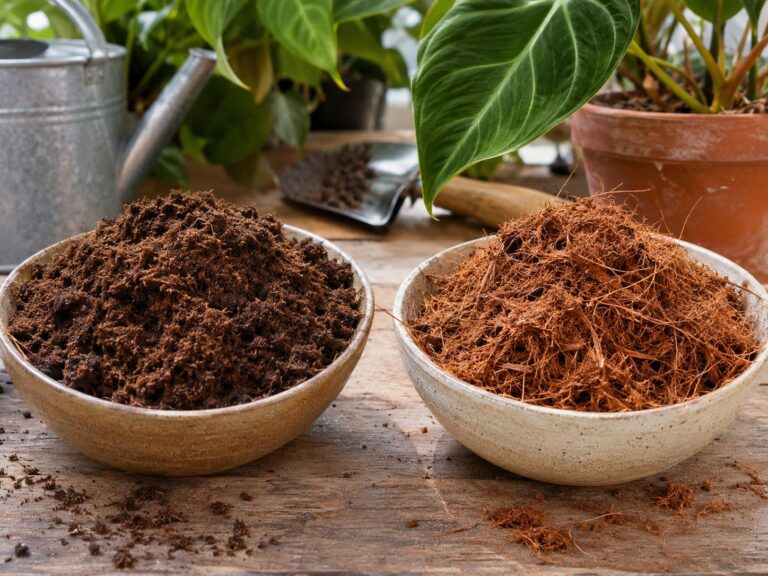
Coconut coir provides good moisture retention while generally rewetting more readily than dried peat. Orchid bark and pine bark create large air pockets and give climbing plants something to grip. Perlite and pumice are lightweight minerals that keep the mix open and help excess water drain away. Worm castings and compost add gentle, slow-release nutrition. Horticultural charcoal can help keep the mix fresh in pots. By changing the ratio of these ingredients you can build a mix for almost any houseplant.
Matching the Mix to the Plant
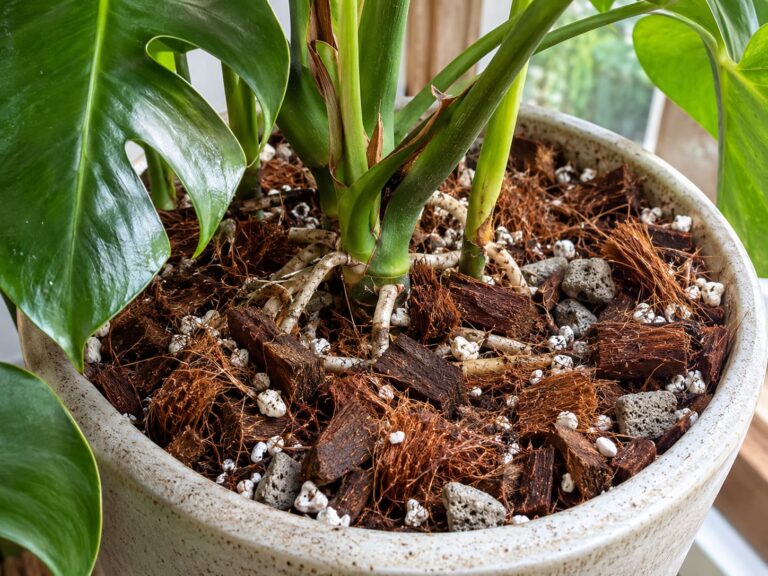
Aroids such as monstera, philodendron, anthurium, and alocasia love a relatively chunky, well-aerated mix with bark and mineral components, adjusted for the plant and growing environment. That mix could contain bark, coir and perlite, with a little compost or worm castings. Their thick roots rot quickly in dense soil, so plenty of air is the priority. If you would rather not mix it yourself, a ready-made chunky aroid soil mix saves a lot of trial and error.
Succulents and cacti need the opposite of a moisture-holding mix. In such soil, use mostly mineral material such as pumice, grit, and perlite, with a smaller share of coir or compost. The goal is for water to run through quickly and for the soil to dry out between waterings.
Ferns, calatheas, and marantas like to stay lightly moist but never soggy. A finer mix with more coir and compost works well, with some perlite to keep it from turning into mud.
Orchids such as phalaenopsis grow on trees in the wild. They need almost pure bark, sometimes with a little sphagnum moss to hold humidity.
Signs Your Plant is in the Wrong Mix
Watch for soil that stays wet for more than a week after watering, has a sour or musty smell, has fungus gnats hovering around the pot, or roots that are brown and soft instead of firm and pale.
If the potting mix has pulled away from the sides of the container or water runs straight through without soaking in, it may have become overly dry, compacted, or difficult to rewet.
Any of these is a good reason to repot. Spring and early summer are the best times to do this, because plants recover quickly while they are actively growing.
Repotting into a Fresh Mix
Water the plant at least three hours before, then ease it out of the pot and gently loosen the old soil from the roots. Trim any roots that are black or mushy. Choose a pot only slightly larger than the root ball, add a layer of fresh mix, set the plant at the same depth as before and fill in around it, gently tamping the soil surface. Water lightly and keep the plant out of direct sun for a week while it settles.
Choosing the Right Soil for Your Plant
There is no single perfect potting mix for every houseplant. The best choice depends on the plant, your growing conditions, and the balance of moisture retention, drainage, and aeration the roots require. Peat-free mixes are one option, and ready-made blends can make it easier to match the growing medium to the plant.
Brands such as Sybotanica now offer peat-free blends tailored to specific plant groups, providing a convenient option for growers who prefer a ready-made mix.
Julie Bawden-Davis is a best-selling garden author, blogger, YouTuber and Master Gardener dedicated to sharing indoor gardening expertise with aspiring gardeners. She has published several gardening books and more than 5,000 articles in major publications. A former garden columnist for the LA Times, San Francisco Chronicle and Parade.com, she is founder of HealthyHouseplants.com and its YouTube channel.
 Julie Bawden-DavisNovember 10, 2026