Choosing the right potting mix is one of the most important steps in maintaining healthy houseplants. Even when indoor plants receive adequate light and proper watering, an unsuitable growing medium can contribute to problems such as root rot, yellowing leaves, poor growth, and weak root development.
Different plants have different requirements for moisture retention, drainage, nutrients, and aeration, so using the same potting mix for every variety is not always a good idea.
For example, many tropical foliage plants appreciate a mix that retains some moisture while still draining well, whereas cacti and succulents generally require a faster-draining potting mix. Understanding these differences can help you provide healthier growing conditions for your indoor plants.
Understand the Basic Ingredients of Potting Mix
Before selecting a potting mix, it helps to understand what common ingredients contribute to the growing medium. Most commercial houseplant mixes contain a combination of organic and inorganic materials that help support roots and regulate moisture and drainage.
Some common ingredients include:
Coco coir: Made from coconut fibers, it retains moisture while helping create a lightweight growing medium.
Peat moss: Helps hold moisture and provides an organic base for many commercial potting mixes.
Perlite: A lightweight volcanic material that improves aeration and drainage.
Vermiculite: Retains moisture and nutrients and is often used in mixes for plants that prefer more consistent moisture.
Orchid bark: Creates larger air spaces in the mix and improves drainage.
Pumice: A porous volcanic material that improves aeration and helps reduce compaction.
Each ingredient serves a different purpose. A suitable potting mix combines materials in proportions that match the needs of the plant as well as the conditions in your home.
Choose an Appropriate Mix for Tropical Houseplants
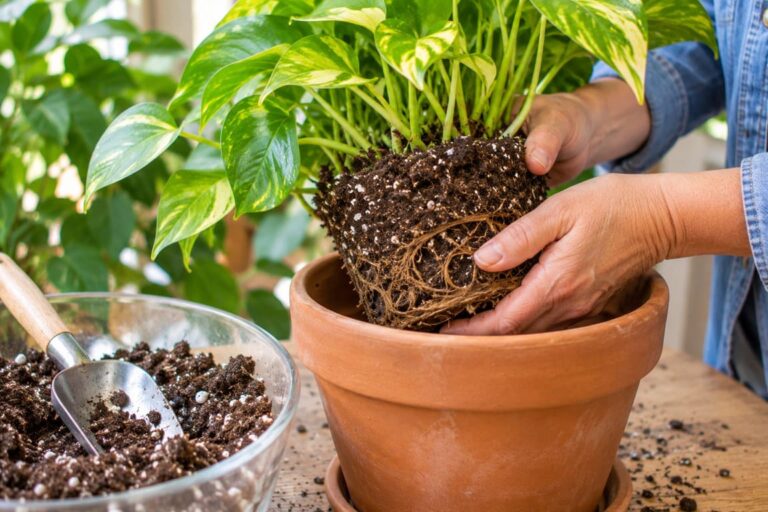
Popular houseplants such as pothos, Monstera, philodendrons, and peace lilies generally grow well in a potting mix that retains some moisture while allowing excess water to drain.
Rather than relying on one recipe for every tropical plant, look for a loose, well-aerated indoor potting mix and adjust it as needed. Adding perlite, pumice, or orchid bark can increase drainage and aeration, while moisture-retentive ingredients such as peat moss or coco coir can help keep the mix from drying too rapidly.
Individual plants still have different preferences. Peace lilies, for example, generally tolerate more consistent moisture than many philodendrons. Your home’s temperature, humidity, light levels, and watering habits also affect how quickly a potting mix dries.
Select Fast-Draining Mixes for Cacti and Succulents
Cacti and succulents store water in their leaves, stems, or roots, allowing them to tolerate periods of limited moisture. Their potting soil should therefore drain efficiently rather than remain wet for extended periods.
A standard moisture-retentive houseplant mix may hold more water than these plants require. Instead, choose a commercial cactus and succulent mix or amend a regular potting mix with materials such as perlite, pumice, or coarse horticultural sand to improve drainage.
Growing media requirements vary considerably, depending on where and how plants are grown. Outdoor projects such as Cerritos sod delivery and installation involve soil and site conditions suited to turfgrass, while houseplants depend on container mixes designed to provide the drainage, moisture retention, and aeration their roots require. The distinction illustrates why potting soil should always be selected according to the plant and its environment.
Use Specialized Mixes for Orchids and Epiphytic Plants
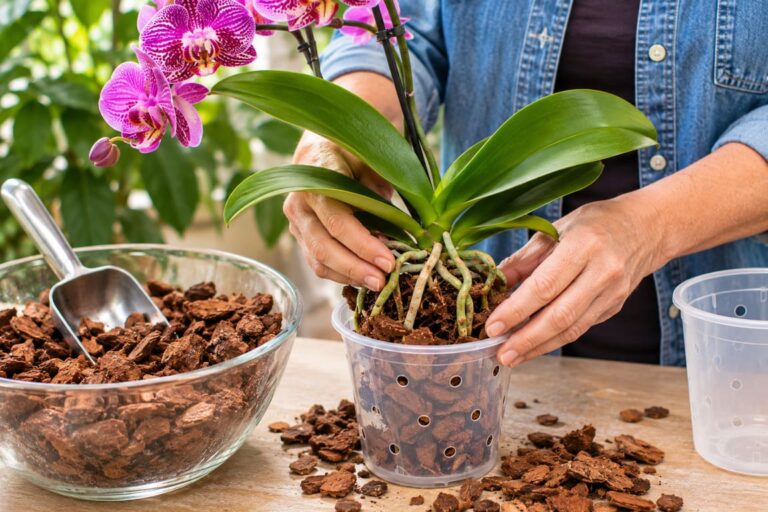
Many orchids, including commonly grown Phalaenopsis orchids, have different root requirements from typical foliage plants. In their natural environments, these orchids often grow attached to trees rather than with their roots buried in dense soil.
Planting them in ordinary potting soil can restrict airflow and retain excessive moisture around the roots. A specialized orchid mix provides larger air spaces and allows water to drain more freely.
Common orchid-growing materials include bark, sphagnum moss, perlite, and horticultural charcoal. The best combination depends on the orchid species, container, watering habits, and indoor environment.
For example, orchids grown in drier indoor conditions may benefit from a mix that retains a bit more moisture, such as one containing some sphagnum moss. Always use a container that allows adequate drainage and airflow around the roots.
Select Suitable Potting Soil for Ferns and Other Moisture-Loving Plants
Many ferns, calatheas, and prayer plants prefer soil that remains more consistently moist than mixes used for succulents and other drought-tolerant plants.
The goal is to retain adequate moisture without creating a dense, waterlogged root zone. A quality indoor potting mix containing moisture-retentive ingredients such as peat moss or coco coir, combined with materials that improve aeration and drainage, can work well for many of these plants.
Avoid allowing moisture-loving plants to remain excessively dry for long periods, but also avoid keeping the potting mix continuously saturated. Water according to the individual plant’s needs and the conditions in your home.
Check the Potting Mix Before Buying It
Not every bag labeled for houseplants contains the same ingredients or provides the same growing conditions. Reading the packaging can help you choose a mix appropriate for your plants.
Check whether the product contains fertilizer, moisture-retaining additives, or ingredients intended for particular plant groups. The mix should generally feel loose and well-structured rather than dense and compacted, but it also shouldn’t consist largely of coarse, ground-up bark with too little finer material to maintain consistent moisture around the roots. Because some commercial potting mixes rely too heavily on bark, it’s worth taking a closer look at the ingredients before choosing a mix for your houseplants.
Avoid bags that are excessively wet or have a strong rotten odor, as these conditions may indicate poor storage or deterioration.
Store unused potting mix in a cool, dry location and protect it from excess moisture and contamination.
Know When Your Houseplants Need Fresh Potting Mix
Potting mix gradually changes as plants grow and organic components break down. Over time, the growing medium may become compacted, drain less effectively, or become more difficult to rewet.
Signs that a plant may benefit from fresh potting mix include:
Water drains much more slowly than it once did.
The growing medium remains wet for an unusually long time.
The mix has become dense or compacted.
Water runs rapidly through the pot without adequately moistening the growing medium.
Roots have filled much of the container and the plant is ready to be repotted.
Roots emerging from drainage holes can also indicate that a plant may be becoming rootbound, although this alone does not always mean immediate repotting is necessary.
When repotting, select a container appropriate to the size of the root system rather than automatically moving the plant into a larger pot. Use fresh potting soil suited to the plant’s requirements and handle healthy roots gently.
Give Every Houseplant the Potting Soil It Needs
There is no single potting mix that works perfectly for every houseplant. Tropical foliage plants, succulents, orchids, ferns, and other indoor plants have different requirements for moisture retention, drainage, and root aeration.
Start by identifying your plant’s individual needs, then choose a commercial or customized potting mix that provides an appropriate balance of moisture and air around the roots.
Pay attention to the condition of the potting soil over time as well as container drainage and your own watering habits. With a suitable potting mix and consistent care, you can create a healthier root environment and give your houseplants a better opportunity to thrive.
 Plant ParentNovember 17, 2026