Chameleon ZZ Plant: The Must-Have Rare Find for Your Indoor Jungle
 Julie Bawden-DavisSeptember 19, 2025


 Julie Bawden-DavisSeptember 19, 2025
If you’re a fan of ZZ plant (Zamioculcas zamiifolia) like me, you’re going to love the Chameleon ZZ. This unusual variety, exclusive in North America to Costa Farms, is an eye-catching addition to the indoor garden. Even better, like all ZZ plants, it’s extremely easy to grow.
One thing—among many—that I love about growing houseplants is finding out how they were discovered and made their way into our indoor gardens. To learn the origins of the Chameleon ZZ, I consulted with Costa Farm’s resident Horticulturist Justin Hancock.
According to Hancock, Chameleon ZZ was discovered by Costa Farms Plant Hunter Mike Rimland on a trip he made to Asia. “When he found the plant, he was told about how the new growth comes out golden yellow before maturing to dark green,” says Hancock.
“Mike wasn’t sure about the plant, because there were several plant scams going around at the time, but he tried it anyway,” says Hancock. “He was able to buy just four plants, which he then imported back to the United States. Then, after the plants settled, he harvested leaves for cuttings.”
According to Hancock, “It took about four months for the cuttings to start growing and for the team to know Chameleon is a legitimate new variety.
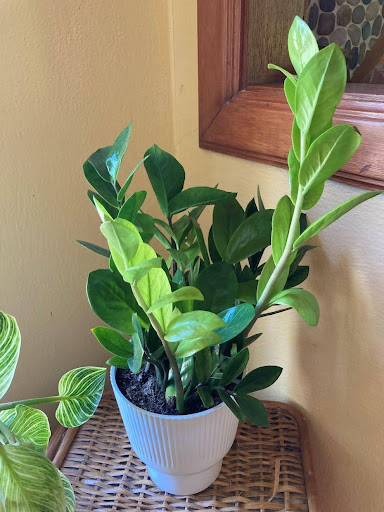
Because the plant was so new and different, Mike applied for a plant patent on it. Since he owns the patent, he chooses which growers get licenses to be able to grow it. Right now, it’s only available from one grower in North America (Costa Farms).”
While the Chameleon ZZ was found in Asia, Zamioculcas zamiifolia is native to areas of Eastern Africa.
“ZZ plant was first described to Western Horticulture in 1829, but it was nearly 170 years before it started to become used as a houseplant. So compared to some of the well-known, traditional houseplants, such as Dracaena, Pothos and Snake Plant, ZZ plant is new to the party. And in those terms, Chameleon is brand new,” says Hancock, who believes that ZZ plant will become a classic in time.
The Chameleon may look exotic, but it’s just as easy to grow as other ZZ plants.
“The plant is incredibly tolerant of a wide range of conditions,” says Hancock, noting that it will thrive in bright light and tolerates medium and even low light.
Chameleon ZZ has thick, rubbery leaves and tubers that store water, making it exceedingly drought tolerant. In most homes, it can go a month without water. The thick leaves also mean the plant is not fussy about humidity.
The bottom line is you can grow Chameleon ZZ in just about any room in your home (as long as there’s some light).
“This makes it a fun pick for first-time houseplant parents, as well as a great addition for busy gardeners and plant collectors looking for something different,” says Hancock. “It’s rare to find a houseplant as easy-growing to grow as ZZ Plant.”
Of course, the plant’s dramatic color show is also a huge plus.
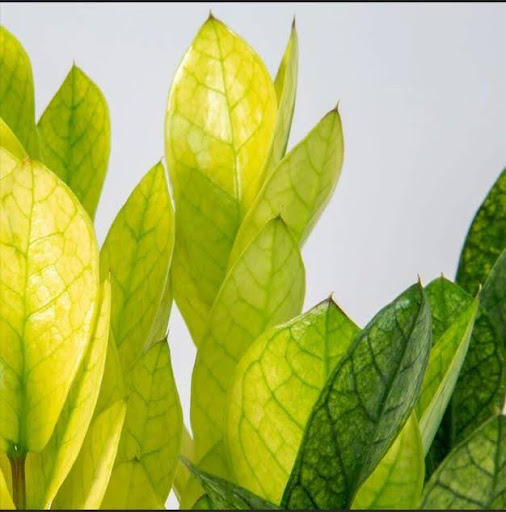
(Photo: Costa Farms)
“There’s something almost magical about watching a new leaf unfurl with its bright yellow color and over the course of a couple of months see it transition to green,” he says.
To have the best luck growing Chameleon ZZ in your indoor garden, keep the following tips in mind.
“While being drought tolerant means the plant can survive weeks without water, for best growth, water regularly when the top half or so of the potting mix dries to the touch if you’re watering traditionally,” says Hancock.
If you are growing in a self-watering container, Hancock says all you need to do is add water to the pot’s reservoir as the reservoir starts to empty. “Just be sure to NEVER overfill the reservoir,” he says.
While Chameleon ZZ does tolerate low light, optimal placement for it is within 3 to 4 feet of an unobstructed south-, east-, or west-facing window.
“Just like with light, being drought tolerant means the plant can survive weeks without water,” notes Hancock. “But for best growth, water regularly when the top half or so of the potting mix dries to the touch if you’re watering traditionally.”
If you are growing in a self-watering container, Hancock says all you need to do is add water to the pot’s reservoir as the reservoir starts to empty. “Just be sure to NEVER overfill the reservoir,” he says.
Encourage Chameleon ZZ to grow well by fertilizing with an all-purpose, organic fertilizer monthly during spring and summer.
Chameleon ZZ is fine with average household temperatures and relative humidity levels.
Well, there you have it—the lowdown on growing the incredible Chameleon ZZ plant. To get one for your indoor collection, go to Costa Farm’s online nursery, or find this beauty at a local nursery that carries Costa Farm’s plants.