Designing Seamless Transitions: Matching Indoor Plants with Outdoor Spaces
 Julie Bawden-DavisOctober 3, 2025


 Julie Bawden-DavisOctober 3, 2025
Having a beautiful garden and a well-decorated interior with houseplants is great, but why not make them mesh seamlessly, so that your entire property feels connected with a single theme?
Sure, you could have two separate designs, and it’d still look great. Some homeowners even prefer to have different themes indoors and outdoors.
But if you’d rather have a cohesive aesthetic throughout your property, here’s how to do it.
This may sound obvious, but it’s an often-overlooked point.
It can be tempting to try to fill up your space with a variety of plants, thinking the diversity adds to the charm of your space.
In reality, too much variety only detracts from the beauty of design, as it often looks like you’re trying to do too much at once.
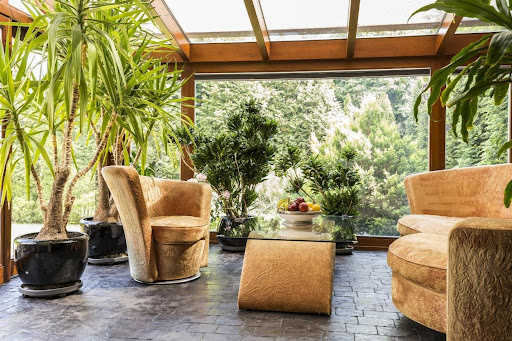
Using the same few textures and colors doesn’t make your space boring—it makes it cohesive.
Here are a few examples so you get a better idea of how to go about it:
You can’t bring outdoor plants indoors, or indoor plants outdoors, but echoing their various design aspects will give you an overall balanced, coordinated space that feels intentional rather than accidental.
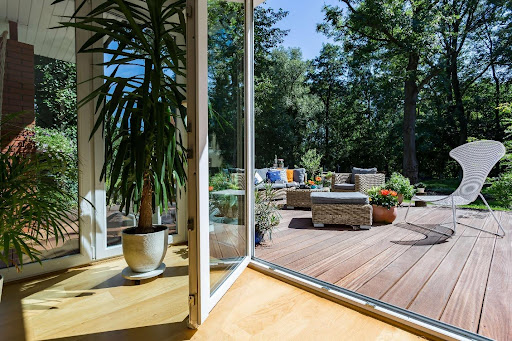
Matching plant color, pattern, and texture will do wonders to ensure your exterior and interior play well together.
But if you want to take it one step further, you can even match their shape and form, so that when you walk from your backyard into your living room, both spaces feel like extensions of each other.
This isn’t referring to just getting similar-looking leaves or flowers. Plant forms are made of the following aspects:
Consider the different aspects of your plants’ form and mirror them across your outdoor and indoor spaces for a truly seamless look.
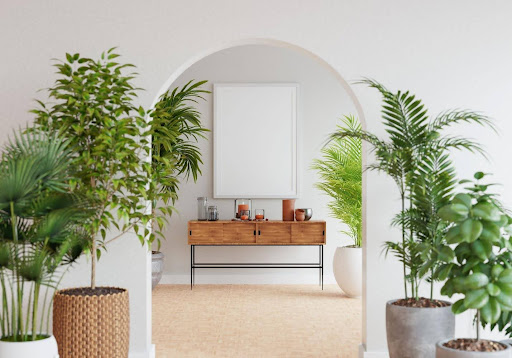
Matching your plants is guaranteed to unify the outside and inside of your home.
But what if you want a little bit of variety here and there? Or what if you just want a quick fix that gives your home a bit more cohesion?
One of the easiest ways to create some chemistry between your exterior and interior is to mirror their containers. If it’s terracotta indoors, replicate those same pots in your patio. Similarly, if it’s woven baskets indoors, add some wicker planters to your porch.
Ideally, use the same shapes and materials so it’ll be obvious at first glance that they were deliberately chosen. It’s fine to vary their sizes and proportions. In fact, by changing up their heights and arranging them strategically from tallest to shortest, you can add a bit of flair to your space without affecting the overall design.
The nice thing about planters is they come in just about any color that you like, so they can fit any vibe. You can have matte black planters for minimalist spaces, or you could opt for concrete ones for an industrial vibe.
First impressions matter. When you walk from the outdoors to indoors, or from indoors to outdoors, the first few plants you see set the tone for what you can expect for the rest of the space.
The plants at the entryway are essential for creating that connection in your brain. When you see a few coherent plants, your brain automatically thinks the rest of the space will be the same. That means you can have fewer plants in the rest of your interior space and still have people feel like it’s an extension of your outside.
Remember, your goal is to have both spaces be extensions of each other. That means when you walk between those two spaces, it should feel like they’re connected. That’s exactly what your entryway plants do—they act as a bridge that keeps both spaces joined smoothly.
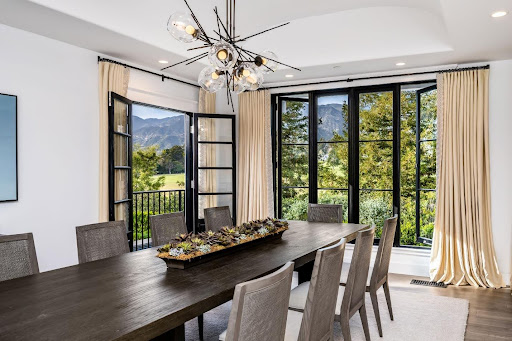
No matter how well you join your exterior and interior, at the end of the day, if either one underperforms, it still ruins the overall visual appeal.
Generally, the interior isn’t such a huge issue, as all it usually takes is a few well-placed houseplants to liven up the space.
In contrast, it takes much more for your outdoor space to look good. Whatever style you’re going for, whether it’s Mediterranean, modern minimalist, or cottage-style, you’ll need to plant flowers, keep your lawn pristine, add the necessary hardscapes, and basically carry out work on a very large portion of your backyard.
If you don’t already have a landscape you’re proud of, it’s a good idea to engage a reputable landscaping company to give your yard a makeover. For example, landscaping companies like Boise Landscaping Company, which have high ratings and a high customer satisfaction rate, can turn your landscape into a space you can take pride in.
This way, when you join your outdoor and indoor spaces, you’re combining one beautiful space with another, and they can come together to become more than the sum of their parts.