


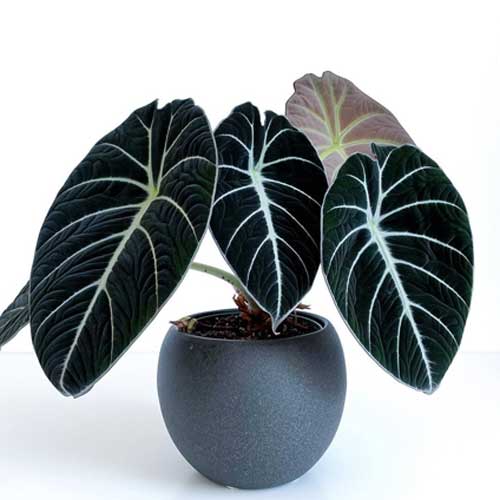
The Black Velvet Alocasia (Alocasia reginula) is a stunning compact houseplant native to the rainforests of Borneo, Southeast Asia. This remarkable aroid belongs to the Araceae family and has gained tremendous popularity among houseplant enthusiasts for its distinctive and dramatic foliage. The plant was first discovered in the wild relatively recently and has quickly become one of the most sought-after houseplants due to its unique appearance and manageable size.
What sets the Black Velvet Alocasia apart from other Alocasia species is its extraordinary leaf texture and coloration. The leaves have a velvety, almost suede-like texture that appears nearly black with prominent white or silver veining running through them. Each leaf typically grows to about 6-8 inches in length and has a distinctive heart-shaped or arrow-shaped form. The contrast between the deep, dark foliage and the bright veining creates an almost otherworldly appearance that makes this plant a true conversation starter.
As a member of the jewel Alocasia group, this compact beauty rarely exceeds 12-18 inches in height and width, making it perfect for indoor cultivation. The plant produces thick, sturdy petioles that support the dramatic leaves, and under optimal conditions, it may produce small, inconspicuous flowers typical of aroids. The Black Velvet Alocasia is considered a slow to moderate grower, typically producing new leaves throughout the growing season when provided with proper care and environmental conditions.
Caring for a Black Velvet Alocasia requires understanding its tropical rainforest origins and replicating those conditions as closely as possible in your home environment. This jewel aroid thrives in warm, humid conditions with bright, indirect light and consistently moist but well-draining soil. Success with this plant largely depends on maintaining stable environmental conditions, as it can be sensitive to sudden changes in temperature, humidity, or watering routines.
The key to successful Black Velvet Alocasia care lies in creating a balanced microenvironment that mimics its native habitat. This means providing high humidity levels (60-80%), warm temperatures (65-80°F), and bright but filtered light. The plant prefers to be kept evenly moist but never waterlogged, and it benefits from regular feeding during the growing season. Good air circulation is also important to prevent fungal issues that can arise in high-humidity environments.
Consistency is crucial when caring for this plant, as it doesn’t respond well to neglect or erratic care schedules. Regular monitoring of soil moisture, humidity levels, and overall plant health will help you catch any issues early. During the winter months, the plant may go dormant or slow its growth significantly, requiring adjusted care routines. With proper attention to its needs, a Black Velvet Alocasia can be a long-lived and rewarding addition to any houseplant collection.
 Soil
Soil
Black Velvet Alocasia thrives in a well-draining, organic-rich potting mix that retains some moisture while allowing excess water to drain freely. The ideal soil composition should include a blend of high-quality potting soil, perlite, orchid bark, and peat moss or coco coir in roughly equal parts. This mixture provides the perfect balance of moisture retention and drainage while offering the organic matter that these tropical plants crave. The preferred pH range is slightly acidic to neutral, between 5.5 and 6.5, which allows for optimal nutrient uptake.
To enhance the soil mixture, consider adding amendments such as worm castings for slow-release nutrients, a small amount of charcoal for filtration, and sphagnum moss to increase moisture retention without compromising drainage. The soil should feel light and airy when squeezed, never compacted or heavy. Proper soil composition directly affects root health, as these plants are prone to root rot in overly dense or water-retentive soils.
Common soil problems include poor drainage leading to root rot, soil compaction that restricts root growth and air circulation, inappropriate pH levels causing nutrient lockout, salt build-up from over-fertilization or hard water, and nutrient deficiencies in depleted potting mix. Root boundness can occur when plants outgrow their containers, leading to circling roots and poor nutrient uptake. Regular soil replacement every 1-2 years and proper pot sizing help prevent these issues.
 Fertilizer
Black Velvet Alocasia benefits from regular fertilization during the growing season (spring through early fall) using a balanced, diluted liquid fertilizer. Use a 20-20-20 or similar balanced fertilizer diluted to quarter strength every 2-3 weeks during active growth. Alternatively, a slow-release fertilizer can be applied at the beginning of the growing season following package directions for houseplants.
Signs of over-fertilization include salt buildup on soil surface, brown leaf tips, stunted growth despite feeding, and root burn. Under-fertilization symptoms appear as slow growth, smaller leaves, pale coloration, and overall poor plant vigor. Organic alternatives include diluted fish emulsion, worm casting tea, or compost tea applied monthly. Common nutrient deficiencies include nitrogen (yellowing older leaves), potassium (brown leaf edges), and magnesium (yellowing between leaf veins). Flush soil monthly to prevent salt buildup and stop fertilizing during winter dormancy.
 Watering
Proper watering is crucial for Black Velvet Alocasia health, requiring a careful balance between keeping the soil consistently moist and avoiding waterlogged conditions. Water when the top inch of soil feels dry to the touch, typically every 5-7 days during the growing season and less frequently during winter dormancy. The plant prefers filtered water, rainwater, or distilled water, as it can be sensitive to chlorine and fluoride found in tap water.
Signs of underwatering include drooping leaves, crispy leaf edges, stunted growth, and leaves that feel thin or papery. Overwatering symptoms manifest as yellowing leaves starting from the bottom, soft or mushy stems, fungal growth on soil surface, and a musty smell from the pot. During active growing season (spring and summer), watering frequency increases, while winter months require reduced watering as growth slows. Always water thoroughly until water drains from the bottom, then allow excess to drain completely to prevent standing water.
Stop guessing. Most houseplant failures are caused by volumetric errors and improper moisture tension. Our deterministic calculator moves beyond "once-a-week" watering by analyzing the four critical pillars of root health:
Personalized for this plant
 Lighting
Black Velvet Alocasia requires bright, indirect light to maintain its distinctive coloration and healthy growth pattern. The ideal location is near an east or north-facing window where it receives gentle morning light or consistent bright, filtered light throughout the day. Direct sunlight should be avoided as it can scorch the delicate leaves and fade the dramatic black coloration that makes this plant so desirable.
Signs of insufficient light include loss of the deep black coloration, with leaves becoming more green, leggy growth as the plant stretches toward light sources, smaller new leaves, and overall decline in plant vigor. Excessive light exposure manifests as brown, crispy leaf edges, fading of the black pigmentation, yellow or bleached-looking leaves, and rapid soil drying. If natural light conditions are suboptimal, consider using a grow light positioned 12-18 inches away from the plant, providing 12-14 hours of supplemental lighting daily during the growing season.
 Temperature
The ideal temperature range for Black Velvet Alocasia is between 65-80°F (18-27°C), with consistent warmth being more important than specific temperatures. The plant is sensitive to cold drafts and sudden temperature changes, which can cause stress and leaf drop. Minimum temperatures should not fall below 60°F (15°C), as cold stress can cause the plant to go dormant or suffer damage.
This tropical plant has low tolerance for temperature fluctuations and should be protected from heating vents, air conditioning drafts, and cold windows during winter. Signs of temperature stress include yellowing leaves, dropping leaves, stunted growth, and going dormant. To protect from extreme temperatures, move plants away from windows during winter, use plant heat mats in cold conditions, and maintain consistent indoor temperatures year-round.
 Humidity
Black Velvet Alocasia thrives in high humidity environments, preferring levels between 60-80% to mimic its native rainforest habitat. Low humidity stress appears as brown, crispy leaf edges, curling leaves, slower growth, and increased susceptibility to spider mites. High humidity problems are less common but can lead to fungal issues if air circulation is poor.
Effective humidifying methods include using a high-quality humidifier (most effective), placing the plant on pebble trays filled with water, grouping plants together to create a humid microclimate, and light misting (though avoid getting water directly on leaves frequently). Pebble trays provide moderate humidity increases and are decorative, while humidifiers offer the most consistent and controllable humidity levels. Ensure good air circulation when maintaining high humidity to prevent fungal problems.
 Propagation
Black Velvet Alocasia can be propagated through division, offsets, and occasionally by rhizome cuttings. Division and offset separation have the highest success rates, while rhizome propagation is more challenging but possible. The best time for propagation is during spring or early summer when the plant is actively growing.
Step-by-step division process: 1) Remove the plant from its pot during repotting time, 2) Gently shake off excess soil to expose roots and rhizomes, 3) Identify natural separation points where offsets have their own root systems, 4) Use clean, sharp knife to separate offsets with at least 2-3 roots attached, 5) Allow cut surfaces to dry for 2-3 hours to prevent rot, 6) Plant each division in appropriate potting mix, 7) Water lightly and place in bright, indirect light, 8) Maintain high humidity and avoid fertilizing for 4-6 weeks, 9) New growth typically appears within 4-8 weeks, 10) Full establishment takes 2-3 months.
Offset separation is easier and more successful than rhizome cutting, with success rates near 80-90% versus 50-60% for rhizome propagation. Maintain temperatures around 75-80°F and humidity above 70% for optimal rooting success.
 Potting
Black Velvet Alocasia prefers slightly snug pots with excellent drainage, requiring repotting every 1-2 years or when roots become visible through drainage holes. Choose pots with multiple drainage holes, preferably terracotta or ceramic for better moisture regulation. The new pot should be only 1-2 inches larger in diameter than the current pot, as too large containers can lead to overwatering issues.
Signs that repotting is needed include roots growing through drainage holes, water running straight through without absorbing, extremely fast soil drying, stunted growth despite proper care, and visible root circling when removed from pot. The best time to repot is during spring when active growth begins.
Repotting process: 1) Water plant 24 hours before repotting, 2) Prepare new pot with drainage layer and fresh potting mix, 3) Gently remove plant and inspect roots, 4) Trim any black, mushy, or circling roots with sterile scissors, 5) Place in new pot at same depth as before, 6) Fill with fresh soil mix, leaving 1 inch from rim, 7) Water lightly and place in bright, indirect light, 8) Monitor closely for 2-3 weeks during adjustment period. Minimal root disturbance reduces transplant shock.
 Pruning
Pruning Black Velvet Alocasia
Black Velvet Alocasia requires minimal pruning, primarily focusing on removing damaged, yellowing, or dead leaves to maintain plant health and appearance. The best time for pruning is during the growing season (spring through early fall) when the plant can quickly recover and produce new growth.
Pruning Frequency and Purpose: Prune as needed throughout the growing season, typically every 4-6 weeks, to remove yellowing or damaged leaves. The primary purposes are to prevent disease, improve air circulation, maintain aesthetic appearance, and redirect energy to healthy growth.
Tools and Preparation: Use clean, sharp scissors or pruning shears sterilized with rubbing alcohol. Have paper towels ready for cleanup, as the plant produces a milky sap that can be irritating to skin.
Step-by-Step Pruning Guide:
1) Identify leaves that are yellowing, brown, damaged, or completely dead
2) Put on gloves to protect hands from plant sap
3) Sterilize cutting tools with rubbing alcohol
4) Cut the petiole (stem) close to the base of the plant, making a clean cut
5) Remove any leaf debris from soil surface
6) Wipe tools clean and sterilize between cuts if multiple leaves are removed
7) Dispose of removed plant material in compost or trash
8) Wash hands thoroughly after handling
Aftercare and Special Considerations: After pruning, avoid getting the cut areas wet for 24 hours to prevent infection. Never remove more than 1/3 of the plant’s foliage at once. The milky sap can be toxic and irritating, so always wear gloves and avoid contact with eyes or mouth.
 Blooming
Black Velvet Alocasia rarely blooms indoors, but when it does, it typically occurs during late spring to early summer. The flowers are small, inconspicuous spadix and spathe typical of aroids, lasting 1-2 weeks. Blooming requires optimal conditions with high humidity, warm temperatures, and bright indirect light. The flowers are not particularly ornamental and many growers remove them to redirect energy to foliage growth.
 Pests and Diseases
Spider Mites
Aphids
Mealybugs
Thrips
Root Rot
Bacterial Leaf Spot
Anthracnose
Note: Always sterilize tools after handling infected plants, and isolate diseased specimens to protect healthy ones.
 Special Features
The Black Velvet Alocasia’s most remarkable feature is its extraordinary foliage that appears almost artificial due to its unique texture and coloration. The leaves have a plush, velvety surface that feels soft to the touch and appears nearly black under most lighting conditions, creating a dramatic contrast with the bright white or silver veining that runs throughout each leaf. This striking appearance makes it one of the most photographed and Instagram-worthy houseplants, earning it a place as a true collector’s specimen that never fails to impress visitors and fellow plant enthusiasts.
 Plant Benefits
While Black Velvet Alocasia is primarily grown for ornamental purposes, it provides psychological benefits through its stress-reducing presence and air-purifying qualities typical of houseplants. The plant contributes to improved indoor air quality by removing common household toxins, though at lower levels than some other houseplants. It offers therapeutic benefits through plant care activities and adds natural beauty to indoor spaces, contributing to overall well-being and mental health.
 Additional Information
Black Velvet Alocasia is considered a collector’s plant and can be quite expensive due to its popularity and relatively slow growth rate. The plant may go dormant during winter months, losing some or all leaves, which is normal behavior. It’s important to continue minimal care during dormancy as the rhizome remains alive underground. This plant is often used in terrariums and plant displays due to its compact size and dramatic appearance. When shopping for this plant, ensure you’re getting true Alocasia reginula, as it’s sometimes confused with other dark-leafed Alocasias.
 Life Cycle
Black Velvet Alocasia follows a typical aroid life cycle, beginning from rhizome sprouting in spring with emerging shoots developing into mature leaves over 4-6 weeks. The active growing season spans spring through early fall, producing 3-6 new leaves under optimal conditions. During autumn, growth slows and the plant may enter dormancy during winter months, with some or all leaves dying back while the rhizome remains alive underground. Growth resumes in spring when temperatures and light levels increase. The plant reaches maturity at 1-2 years, producing offsets for natural propagation. Lifespan can exceed 5-10 years with proper care, though individual leaves typically last 6-12 months before naturally aging and being replaced by new growth.
 Are Black Velvet Alocasia Poisonous, Toxic
Black Velvet Alocasia is toxic to cats, dogs, and children due to calcium oxalate crystals present in all parts of the plant, particularly the leaves and stems. When ingested, these crystals cause immediate oral irritation, swelling of mouth and tongue, difficulty swallowing, excessive drooling, and vomiting. Symptoms can be severe and require immediate medical attention. First aid includes rinsing mouth with water, offering small amounts of milk or yogurt to coat the throat, and seeking immediate veterinary or medical care. Preventive measures include keeping plants out of reach of pets and children, educating family members about plant toxicity, and wearing gloves when handling the plant to avoid skin irritation from the sap.
 Frequently Asked Questions
The Black Velvet Alocasia (Alocasia reginula) is a compact tropical houseplant from Borneo, Southeast Asia. It’s known for its velvety black leaves with striking white or silver veins and belongs to the Araceae family. This jewel Alocasia stays small (12–18 inches tall) and is prized for its unique foliage.
It thrives in a well-draining, organic-rich mix of potting soil, perlite, orchid bark, and coco coir or peat moss. The soil should be airy, retain some moisture, and have a slightly acidic to neutral pH (5.5–6.5).
Water when the top inch of soil feels dry—about every 5–7 days in spring and summer, less in winter. Use distilled or rainwater if possible. Overwatering causes yellow, mushy leaves, while underwatering leads to drooping and crispy edges.
It prefers bright, indirect light for 6–8 hours daily. Morning sun is fine, but direct midday light can scorch the leaves. Too little light causes leggy growth and duller leaf color.
Ideal temperatures are 65–80°F (18–27°C). Avoid drafts, sudden changes, and cold below 60°F (15°C). Consistent warmth is key to preventing stress.
Yes—this plant prefers 60–80% humidity. Low humidity leads to crispy edges, while high humidity without airflow may cause fungal issues. Use a humidifier or pebble tray for best results.
It is best propagated by division or separating offsets during spring or summer. Gently split offsets with roots attached, plant them in fresh soil, and keep humidity high until established.
Repot every 1–2 years or when roots outgrow the pot. Use a slightly snug container with drainage holes. Terracotta pots are ideal since they prevent excess moisture buildup.
Minimal pruning is required. Trim yellow, brown, or dead leaves during the growing season. Always use sterilized shears and wear gloves, as the plant’s sap can be irritating.
It rarely blooms indoors, but when it does, it produces small, pale spathe-and-spadix flowers in late spring to summer. Most growers remove flowers to direct energy to the foliage.
Yes. It contains calcium oxalate crystals, which are toxic to cats, dogs, and humans if ingested. Symptoms include mouth irritation, swelling, drooling, and vomiting. Keep it away from pets and children.
Its velvety black foliage with silver veins gives it a rare, jewel-like appearance. Compact in size, it is highly decorative and popular among collectors.
While mainly ornamental, it helps improve indoor aesthetics, reduces stress through plant care, and provides minor air-purifying benefits. Its dramatic foliage makes it a statement piece indoors.
Yes—it is well-suited for indoor growing. It requires bright, indirect light, warm temperatures, moderate watering, and high humidity to thrive.
Botanical name: Alocasia reginula.
Common names: Black Velvet Alocasia, Black Velvet Elephant Ear, Jewel Alocasia, Black Magic Alocasia.
Family: Araceae.
Type: Perennial tropical houseplant.
Native range: Borneo, Southeast Asia.
Size: 12–18 inches tall and wide.
 Can I grow Black Velvet Alocasia in my indoor space
Difficulty: Intermediate
Size: Small
Light: Medium
Water: Medium
Flowering: No
Pet Safe: No
Air Purifier: Low
 Alocasia reginula botanical details
Common Name: Black Velvet Alocasia
Other Common Names: Black Velvet Elephant Ear, Jewel Alocasia, Black Magic Alocasia
Botanical Name: Alocasia reginula
Native Area: Borneo, Southeast Asia
Family Name: Araceae
Plant Type: Perennial tropical houseplant
Genus: Alocasia
Kingdom: Plantae
 Photo Gallery
✅ “Bring Home This Beauty Today”
✅ “Get Your Own Black Velvet Alocasia Before It’s Gone”
✅ “Shop Trusted Sellers – Limited Availability”
✅ “Free Delivery”
As an Amazon Associate, I earn commission from qualifying purchases.
 Plant Puns and Jokes
Why did the Black Velvet Alocasia go to therapy? Because it had too many deep, dark thoughts and needed someone to help it see the light… but not too much light, because that would burn its beautiful black leaves!
 Signup to our newsletter and download Black Velvet Alocasia care guide
 My Black Velvet Alocasia Plant Care Recommendations
 Buy Black Velvet Alocasia Online