


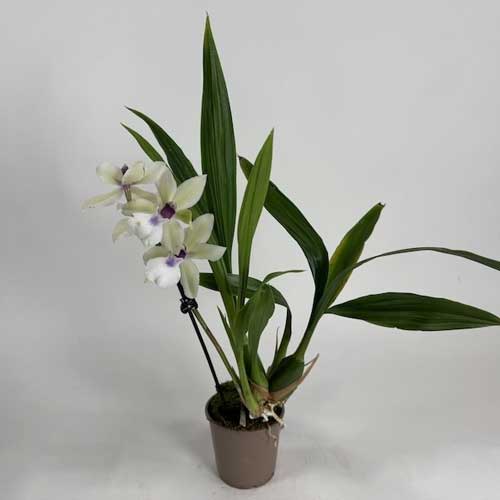
The Peacock Orchid (Zygopetalum spp.) is a stunning genus of epiphytic orchids native to South America, particularly found in the cloud forests of Brazil, Colombia, Venezuela, and other tropical regions. These remarkable orchids are named for their vibrant, peacock-like coloration that displays intricate patterns of purple, burgundy, white, and green markings on their petals and sepals. The genus comprises approximately 15 species, with Zygopetalum intermedium and Zygopetalum mackayii being among the most commonly cultivated varieties.
What makes Zygopetalum orchids particularly distinctive is their pseudobulbous growth habit, where thick, bulb-like stems store water and nutrients for the plant. These pseudobulbs produce long, pleated leaves that can reach 12-18 inches in length, creating an elegant fountain-like appearance. The leaves are typically bright green with prominent parallel veins, and they emerge from the base of the pseudobulbs in a fan-like arrangement. In their natural habitat, these orchids grow as epiphytes on trees in humid, misty environments at elevations between 1,000 to 6,000 feet.
The most captivating feature of Peacock Orchids is undoubtedly their exotic flowers, which typically appear in late fall to early winter. Each flower spike can produce 5-12 waxy, long-lasting blooms that measure 3-4 inches across. The flowers display a complex pattern with sepals and petals in shades of green and brown, while the distinctive lip (labellum) features bold purple or burgundy stripes against a white or cream background. This dramatic contrast, combined with their sweet, spicy fragrance, makes them highly prized among orchid enthusiasts and collectors worldwide.
Caring for Peacock Orchids requires understanding their epiphytic nature and mimicking their natural cloud forest environment. These orchids are considered intermediate in difficulty, making them suitable for orchid enthusiasts who have some experience but not necessarily advanced growers. The key to success lies in providing consistent humidity, proper air circulation, and avoiding extremes in temperature and watering. Unlike many houseplants, Peacock Orchids have specific seasonal requirements that correspond to their natural growth cycles.
The foundation of proper Zygopetalum care begins with understanding their growth pattern. These orchids experience active growing seasons typically in spring and summer, followed by a rest period in late fall and winter when they often bloom. During the growing season, they require more frequent watering, higher humidity, and regular fertilization. During the rest period, watering should be reduced, and fertilization should be minimal or stopped entirely. This seasonal variation is crucial for healthy development and successful blooming.
Successful cultivation also depends on providing an environment that promotes good air circulation while maintaining humidity levels between 50-70%. These orchids are particularly sensitive to stagnant air and waterlogged conditions, which can quickly lead to root rot and fungal problems. Regular monitoring of the growing medium, proper drainage, and attention to environmental conditions will ensure your Peacock Orchid thrives and produces its spectacular blooms year after year.
 Soil
Soil
Peacock Orchids require a specialized epiphytic growing medium that provides excellent drainage while retaining some moisture and allowing for proper air circulation around the roots. The ideal soil composition consists of a mixture of fine to medium-grade fir bark (40-50%), perlite (20-25%), sphagnum moss (15-20%), and chunky peat or coconut coir (10-15%). This combination creates a slightly acidic environment with a pH range of 5.5-6.5, which is optimal for nutrient uptake. Some growers also add small amounts of charcoal to help prevent bacterial buildup and improve drainage.
The growing medium should never be allowed to become waterlogged, as this leads to root rot, which is one of the most common causes of Zygopetalum death. Poor drainage manifests as yellowing leaves, soft pseudobulbs, and a musty smell from the potting medium. Compacted soil prevents proper air circulation and should be avoided by ensuring the medium maintains its chunky texture. Inappropriate pH levels can cause nutrient lockout, leading to yellowing leaves and poor growth. Salt build-up from over-fertilization appears as white crusty deposits on the medium surface and can damage roots. Nutrient deficiencies, particularly nitrogen and potassium, result in yellowing older leaves and poor pseudobulb development. Root boundness occurs when roots circle the pot excessively, leading to reduced blooming and stunted growth.
 Fertilizer
Peacock Orchids have moderate fertilization needs and respond well to a balanced, dilute feeding schedule. During the growing season (spring through early fall), fertilize every 2-3 weeks with a balanced orchid fertilizer diluted to quarter strength (typically 1/4 teaspoon per gallon of water). A ratio of 20-20-20 or 20-10-20 works well during active growth, while switching to a bloom booster with higher phosphorus (like 10-30-20) in late summer can encourage flower spike development. During the rest period and while blooming, reduce fertilization to once monthly or discontinue entirely.
Over-fertilization symptoms include salt buildup on the pot surface, brown or burned root tips, excessive vegetative growth with few flowers, and dark green foliage that’s soft and disease-prone. Under-fertilization manifests as slow growth, yellowing older leaves, small pseudobulbs, and poor flowering. Organic alternatives include diluted fish emulsion, kelp meal tea, or specialized organic orchid fertilizers applied at half the recommended concentration. These orchids commonly develop potassium deficiencies (shown by yellowing leaf edges) and benefit from occasional supplementation with potassium-rich fertilizers.
 Watering
Watering Peacock Orchids requires a delicate balance, as they prefer to dry out slightly between waterings but should never become completely desiccated. During the active growing season (spring and summer), water thoroughly when the potting medium is nearly dry, typically every 5-7 days. In winter, reduce watering frequency to every 10-14 days. The water quality is crucial; these orchids prefer rainwater, distilled water, or reverse osmosis water, as they are sensitive to minerals and chemicals found in tap water. If tap water must be used, allow it to sit for 24-48 hours to let chlorine evaporate.
Signs of underwatering include wrinkled pseudobulbs, yellowing and dropping of older leaves, and stunted growth. The potting medium will be completely dry and may pull away from the pot edges. Overwatering symptoms include soft, yellowing pseudobulbs, root rot (evidenced by brown, mushy roots), and a foul smell from the potting medium. Leaves may also develop black spots or become unusually soft. Seasonal watering adjustments are essential: increase frequency during warm weather and reduce during cool periods and when the plant is in its rest phase after blooming.
Stop guessing. Most houseplant failures are caused by volumetric errors and improper moisture tension. Our deterministic calculator moves beyond "once-a-week" watering by analyzing the four critical pillars of root health:
Personalized for this plant
 Lighting
Peacock Orchids thrive in bright, indirect light conditions that mimic the filtered sunlight of their native cloud forest habitat. They require approximately 2,000-3,000 foot-candles of light, which translates to a bright location near an east or west-facing window, or slightly back from a south-facing window with sheer curtains. In their natural environment, they receive dappled sunlight filtered through the forest canopy, never direct sunbeams. Indoor growers often find success placing these orchids 2-3 feet from a bright window or under fluorescent or LED grow lights positioned 12-18 inches above the plants.
Signs of insufficient light include dark green foliage, elongated growth, lack of flowering, and weak pseudobulb development. The leaves may also become softer and more prone to disease. Conversely, excessive light exposure causes yellowing or bleaching of leaves, particularly at the tips and edges, stunted growth, and premature aging of foliage. In severe cases, leaves may develop brown or black patches indicating light burn. If natural conditions are suboptimal, artificial lighting can be provided using full-spectrum LED grow lights for 12-14 hours daily, or fluorescent lights positioned closer to the plant and operated for 14-16 hours daily.
 Temperature
Peacock Orchids are classified as cool to intermediate temperature orchids, thriving in daytime temperatures of 65-75°F (18-24°C) and nighttime temperatures of 55-65°F (13-18°C). This 10-15 degree temperature differential between day and night is crucial for proper growth and flower spike development. They can tolerate brief temperature fluctuations but prefer stable conditions. These orchids are moderately cold-sensitive and should not be exposed to temperatures below 50°F (10°C) for extended periods, as this can cause leaf damage and shock the plant.
Heat sensitivity becomes apparent above 80°F (27°C), where growth may slow, and the plant becomes more susceptible to stress and disease. During hot summer months, provide extra ventilation, increase humidity, and ensure adequate shading. Protect from extreme temperatures by avoiding placement near heating vents, air conditioning units, or drafty windows. In winter, maintain the cooler night temperatures as this often triggers flower spike development. A small fan can help prevent temperature stagnation while improving air circulation.
 Humidity
Peacock Orchids require humidity levels between 50-70% to thrive, with 60-65% being optimal. This high humidity requirement stems from their natural cloud forest habitat where moisture levels remain consistently high. Low humidity stress manifests as brown leaf tips, accordion-pleated leaves, bud drop, and overall stunted growth. The pseudobulbs may also become wrinkled even when adequately watered. High humidity stress, while less common, can lead to fungal and bacterial problems, soft growth, and poor air circulation issues.
To increase humidity, several methods can be employed effectively. Pebble trays filled with water and placed beneath the pot provide localized humidity as water evaporates, but ensure the pot sits on the pebbles above water level. Room humidifiers are highly effective and can maintain consistent humidity levels, especially during winter when indoor air tends to be dry. Misting can be beneficial but should be done carefully in the morning so leaves dry before evening, and avoid misting the flowers directly. Grouping orchids together creates a microclimate with higher humidity. For greenhouse or dedicated growing areas, humidity trays with expanded clay pellets or automated misting systems work exceptionally well.
 Propagation
Peacock Orchids are primarily propagated through division of mature plants, which has the highest success rate at nearly 90% when done properly. The best time for propagation is during repotting in late spring or early summer when new growth is just beginning. Back bulb propagation is also possible but has a lower success rate of about 40-50%.
Step-by-step division process: 1) Remove the plant from its pot and gently clean away old potting medium from the roots, 2) Examine the plant for natural division points where pseudobulbs are connected by rhizomes, 3) Using sterilized cutting tools, cut through the rhizome ensuring each division has at least 3-4 healthy pseudobulbs with good roots, 4) Allow cut surfaces to dry for 2-4 hours to prevent infection, 5) Plant each division in fresh, appropriate potting medium in properly sized pots, 6) Place in bright, indirect light with high humidity but reduced watering for 4-6 weeks, 7) Resume normal care once new growth appears, typically after 6-8 weeks.
New plants typically take 2-3 years to reach blooming size after division. Back bulb propagation involves removing older pseudobulbs without leaves and potting them separately in sphagnum moss, keeping them warm and humid until new growth emerges, which can take 3-6 months.
 Potting
Peacock Orchids should be repotted every 2-3 years or when the potting medium begins to decompose and retain too much moisture. Use pots with multiple drainage holes; plastic pots with additional side holes or specialized orchid pots work best. The pot size should accommodate the root system with about 1-2 inches of extra space around the sides. Clear plastic pots are beneficial as they allow you to monitor root health and moisture levels.
Signs that repotting is needed include: potting medium that stays wet for extended periods, decomposed bark that has turned to dust, roots growing out of drainage holes extensively, or when the plant has outgrown its current container. The repotting process should be done in late spring: 1) Carefully remove the plant and gently clean away old medium, 2) Trim any dead, rotted, or damaged roots with sterilized scissors, 3) Place the plant in the new pot at the same depth it was previously planted, 4) Fill around roots with fresh potting medium, tapping gently to settle, 5) Secure with a stake if necessary but avoid packing the medium tightly, 6) Water lightly and place in bright, indirect light with high humidity for recovery.
 Pruning
Pruning Peacock Orchids
The best time to prune Peacock Orchids is during the active growing season in late spring or early summer when the plant can quickly heal from cuts. Pruning should be done annually or as needed to maintain plant health. Gather sterilized pruning shears, rubbing alcohol for tool cleaning, and powdered cinnamon or sulfur for wound treatment.
Pruning Frequency and Purpose: Prune as needed to remove yellowed, damaged, or diseased leaves and spent flower spikes. The primary purposes are to prevent disease, improve air circulation, maintain plant health, and redirect energy to new growth.
Step-by-Step Pruning Process:
1) Sterilize all cutting tools with rubbing alcohol before beginning and between cuts to prevent disease transmission
2) Remove any yellowed, damaged, or diseased leaves by cutting at the base where they attach to the pseudobulb
3) Trim flower spikes after blooms have faded, cutting just above the base unless seed collection is desired
4) Remove any dead or rotted roots during repotting, cutting back to healthy white or green tissue
5) Cut away any shriveled or diseased pseudobulbs, ensuring cuts are made cleanly through healthy tissue
6) Apply cinnamon powder to larger cut surfaces to prevent infection
7) Allow the plant to rest in bright, indirect light for several days after extensive pruning
Aftercare and Considerations: After pruning, reduce watering slightly for 1-2 weeks to prevent infection at cut sites. Maintain high humidity but ensure good air circulation around the plant. Never remove more than 1/3 of the plant material at one time, as this can shock the plant and inhibit growth.
 Blooming
Peacock Orchids typically bloom in late fall to early winter (November through February) with each flowering cycle lasting 6-8 weeks. Mature plants may bloom once or twice per year under optimal conditions. The blooming period requires cool night temperatures (55-60°F), reduced watering, and bright indirect light. Flower spikes emerge from the base of mature pseudobulbs and develop over 4-6 weeks before opening. Each spike produces 5-12 waxy, fragrant flowers that are 3-4 inches across with intricate patterns of green, brown, white, and purple coloration.
 Pests and Diseases
Scale Insects
Spider Mites
Mealybugs
Aphids
Thrips
Crown Rot
Root Rot
Bacterial Soft Rot
Fungal Leaf Spots
Viral Infections
Note: Always isolate infected plants, sterilize tools after each use, and monitor surrounding orchids regularly to prevent recurrence.
 Special Features
One of the most remarkable features of Peacock Orchids is their intense, sweet fragrance that fills the air during blooming season. The scent is often described as a combination of hyacinth and cinnamon, with some varieties producing an almost chocolate-like aroma that is particularly strong in the morning and evening hours. Additionally, the flowers are exceptionally long-lasting, often remaining fresh on the plant for 6-8 weeks, making them excellent for cut flower arrangements. The waxy texture of the petals gives them an almost artificial appearance, yet they are completely natural, and their intricate patterns and color combinations make each bloom a miniature work of art that changes subtly as the flower matures.
 Plant Benefits
While Peacock Orchids are not commonly used in traditional herbal medicine, some South American indigenous cultures have historically used certain Zygopetalum species in ceremonial practices and as natural air fresheners due to their intense fragrance. The flowers have been used to create natural perfumes and aromatherapy preparations. However, there are no scientifically documented pharmaceutical benefits, and these orchids are primarily valued for their ornamental and aromatic qualities rather than medicinal properties.
 Additional Information
Peacock Orchids are excellent candidates for orchid shows and competitions due to their reliable blooming habits and spectacular flowers. They can be grown outdoors year-round in USDA zones 9-11 but require protection from direct sun and strong winds. In cooler climates, they make excellent greenhouse plants. These orchids are often used in breeding programs to create new hybrids, and many award-winning cultivars exist. The fragrance is often strongest in the morning and evening hours, making them popular for indoor cultivation where their scent can be appreciated.
 Life Cycle
Peacock Orchids follow a predictable annual cycle beginning with new growth emergence in spring from the base of previous year’s pseudobulbs. During spring and summer, new shoots develop rapidly, forming mature pseudobulbs by late summer. The plant enters a rest period in fall, during which flower spikes typically develop. After blooming in winter, the cycle begins again. Individual pseudobulbs live 3-5 years before naturally declining, while new growth continues the plant’s life indefinitely. Sexual maturity is reached at 3-4 years from seed, though divisions from mature plants may bloom within 1-2 years under proper care.
 Are Peacock Orchid Poisonous, Toxic
Peacock Orchids are generally considered non-toxic to cats, dogs, and children. However, as with all plants, ingestion of large quantities may cause mild gastrointestinal upset including nausea or stomach discomfort. The flowers, leaves, and pseudobulbs are not known to contain toxic compounds, but the potting medium may contain materials that could cause digestive irritation if consumed. First aid steps include rinsing the mouth with water and offering small sips of water or milk. Contact a veterinarian or physician if significant amounts are consumed or if symptoms persist. Preventive measures include keeping plants out of reach of small children and pets who may be inclined to chew on plant materials.
 Frequently Asked Questions
The Peacock Orchid (Zygopetalum spp.) is a striking genus of epiphytic orchids native to South America, especially Brazil, Colombia, and Venezuela. Known for their velvety, patterned flowers in purple, burgundy, green, and white, they feature pseudobulbs, long pleated leaves, and highly fragrant blooms that last 6–8 weeks.
Peacock Orchids thrive in a chunky, well-draining orchid mix of fir bark (40–50%), perlite (20–25%), sphagnum moss (15–20%), and coconut coir or peat (10–15%). The medium should stay airy, slightly acidic (pH 5.5–6.5), and never soggy to prevent root rot.
During spring and summer, water every 5–7 days when the medium is nearly dry. In winter, reduce to every 10–14 days. Use rainwater, distilled, or reverse osmosis water, as they are sensitive to minerals and salts. Overwatering causes root rot and yellow pseudobulbs, while underwatering leads to wrinkled pseudobulbs.
They prefer bright, indirect light, around 2,000–3,000 foot-candles. Place near an east- or west-facing window, or a shaded south window. Avoid harsh direct sunlight, which causes leaf burn. Too little light results in dark green leaves and lack of blooms.
These orchids grow best in cool to intermediate conditions: 65–75°F (18–24°C) by day and 55–65°F (13–18°C) at night. A 10–15°F temperature drop helps trigger flower spikes. Protect from prolonged heat above 80°F (27°C) or cold below 50°F (10°C).
Yes, they need 50–70% humidity with good air circulation. Low humidity causes brown leaf tips and bud drop. Increase humidity with pebble trays, humidifiers, or grouping plants together, but avoid stagnant, overly damp air.
They are best propagated by division during repotting in late spring or early summer. Each division should have 3–4 pseudobulbs with roots. Back bulb propagation is also possible but slower. Divisions typically bloom within 2–3 years.
Repot every 2–3 years or when the potting mix breaks down. Use an orchid pot with excellent drainage. Repot in late spring after blooming, trimming dead roots and refreshing the medium.
Minimal pruning is needed—remove dead, yellow, or diseased leaves and spent flower spikes. Always use sterilized tools and avoid cutting more than one-third of the plant at once.
Yes, they typically bloom in late fall to early winter. Each flower spike produces 5–12 fragrant, waxy flowers lasting 6–8 weeks. Cool nights and reduced watering help trigger blooms.
No, Peacock Orchids are considered non-toxic to cats, dogs, and children. However, ingestion of large amounts may cause mild stomach upset.
Their flowers are highly fragrant, often smelling like hyacinth, cinnamon, or chocolate. The blooms are long-lasting, intricate, and very popular in shows and competitions.
While mainly ornamental, they are valued for their fragrance and beauty. They can be used in natural perfumery and aromatherapy, and they add elegance to indoor and greenhouse collections.
Yes, they adapt well to indoor conditions if provided with bright indirect light, consistent humidity, and cool night temperatures. They are considered intermediate in difficulty.
Botanical name: Zygopetalum spp.
Common names: Peacock Orchid, Zygo Orchid, Rainbow Orchid.
Family: Orchidaceae.
Type: Perennial epiphytic orchid.
Native range: South America, especially Brazil, Colombia, Venezuela, Ecuador, and Peru.
Size: Medium-sized, with 12–18 inch leaves and spikes bearing multiple flowers.
 Can I grow Peacock Orchid in my indoor space
Difficulty: Intermediate
Size: Medium
Light: Medium
Water: Medium
Flowering: Yes
Pet Safe: Yes
Air Purifier: Low
 Zygopetalum spp. botanical details
Common Name: Peacock Orchid
Other Common Names: ["Zygo Orchid","Rainbow Orchid"]
Botanical Name: Zygopetalum spp.
Native Area: South America, particularly Brazil, Colombia, Venezuela, Ecuador, and Peru
Family Name: Orchidaceae
Plant Type: Perennial epiphytic orchid
Genus: Zygopetalum
Kingdom: Plantae
 Photo Gallery
✅ “Bring Home This Beauty Today”
✅ “Get Your Own Peacock Orchid Before It’s Gone”
✅ “Shop Trusted Sellers – Limited Availability”
✅ “Free Delivery”
As an Amazon Associate, I earn commission from qualifying purchases.
 Plant Puns and Jokes
Why don’t Peacock Orchids ever feel underdressed? Because they always come with their own fancy patterns and never need to worry about accessorizing – they’re already the most fashionable plants at the party!
 Signup to our newsletter and download Peacock Orchid care guide
 My Peacock Orchid Plant Care Recommendations
 Buy Peacock Orchid Online