


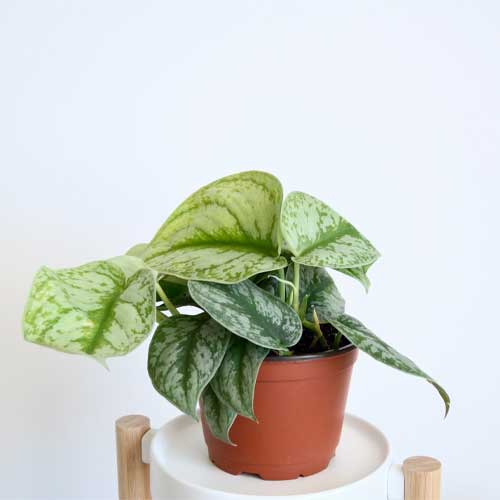
The Silver Satin Pothos (Scindapsus pictus) is a stunning tropical climbing vine native to Southeast Asia, particularly found in the rainforests of Bangladesh, Thailand, Philippines, Malaysia, and Indonesia. Despite its common name suggesting it’s a Pothos, it actually belongs to the genus Scindapsus and is more closely related to Philodendrons than true Pothos plants. This evergreen perennial has gained immense popularity as a houseplant due to its striking foliage and relatively easy care requirements.
The most distinctive feature of this plant is its heart-shaped, velvety leaves that display a rich dark green base color adorned with silvery-white splashes and spots. The leaves have a unique satin-like texture that gives the plant its common name, and they can grow anywhere from 2-4 inches in length when grown indoors. As the plant matures, the leaves may develop more pronounced silver variegation, creating an even more dramatic visual impact. The stems are slender and flexible, making this an excellent choice for hanging baskets or training up moss poles.
In its natural habitat, Scindapsus pictus can climb trees and reach impressive heights of up to 10 feet, but as a houseplant, it typically remains more compact at 3-6 feet in length. The plant produces aerial roots along its stems that help it attach to surfaces in nature, and these same roots make propagation incredibly easy for home gardeners. While it rarely flowers indoors, in its native environment, it may produce small, inconspicuous spadix flowers typical of the Araceae family.
Caring for a Silver Satin Pothos is remarkably straightforward, making it an ideal choice for both beginner and experienced plant enthusiasts. This adaptable plant thrives in typical household conditions and is quite forgiving of occasional neglect. The key to success lies in understanding its natural rainforest habitat and replicating those conditions as closely as possible indoors. This means providing bright, indirect light, consistent moisture without waterlogging, and maintaining adequate humidity levels.
The plant’s climbing nature means it benefits greatly from some form of support, such as a moss pole, trellis, or even just allowing it to trail from a hanging basket. Regular monitoring of soil moisture, occasional feeding during the growing season, and periodic pruning to maintain shape are the primary maintenance tasks required. The Silver Satin Pothos is also excellent at communicating its needs through its foliage – drooping leaves indicate thirst, while yellowing may suggest overwatering or other issues.
One of the most rewarding aspects of caring for this plant is its rapid growth during the spring and summer months. With proper care, you can expect to see new leaves unfurling regularly, each displaying the characteristic silver variegation that makes this species so beloved. The plant also responds well to regular cleaning of its leaves, which not only keeps them looking their best but also helps with photosynthesis and pest prevention.
 Soil
Soil
Silver Satin Pothos thrives in a well-draining, loose potting mix that mimics the organic-rich forest floor of its native habitat. The ideal soil composition should consist of a high-quality potting mix amended with perlite, bark chips, or coconut coir to ensure excellent drainage while retaining some moisture. A pH range of 6.1 to 6.5 (slightly acidic) is optimal, though the plant can tolerate a broader range from 5.5 to 7.0. Adding organic matter such as compost or worm castings will provide slow-release nutrients and improve soil structure.
Poor drainage is the most common soil-related problem, leading to root rot and yellowing leaves. Compacted soil restricts root growth and oxygen flow, while inappropriate pH levels can cause nutrient lockout, preventing the plant from absorbing essential minerals. Salt build-up from tap water or over-fertilization can burn roots and cause leaf browning, particularly along the edges. Nutrient deficiencies, especially nitrogen and iron, may manifest as pale or yellowing leaves with reduced variegation. Root boundness occurs when the plant outgrows its container, leading to circling roots, reduced growth, and increased watering frequency requirements. Regular repotting every 1-2 years and using appropriate soil amendments can prevent most of these issues.
 Fertilizer
Silver Satin Pothos benefits from regular fertilization during the growing season (spring through early fall) to support its vigorous growth and maintain vibrant variegation. Use a balanced, water-soluble fertilizer with an N-P-K ratio of 20-20-20 or 10-10-10, diluted to half the recommended strength every 2-4 weeks during active growth periods. Reduce fertilization to monthly during winter months when growth slows significantly.
Over-fertilization symptoms include excessive dark green growth with reduced variegation, brown or burnt leaf tips, salt crust buildup on soil surface, and increased susceptibility to pest problems. Under-fertilization manifests as pale or yellowing leaves, reduced growth rate, smaller leaf size, and diminished silver variegation. Organic alternatives include diluted fish emulsion, worm casting tea, or compost tea applied monthly. The plant commonly experiences nitrogen deficiency, which appears as yellowing older leaves, and iron deficiency, showing as yellowing between leaf veins while veins remain green. Always water thoroughly before and after fertilizing to prevent root burn, and flush the soil occasionally with plain water to prevent salt accumulation.
 Watering
Proper watering technique is crucial for Silver Satin Pothos health, requiring a balance between maintaining adequate moisture and preventing waterlogged conditions. Water when the top inch of soil feels dry to the touch, typically every 7-10 days during growing season and less frequently in winter. The plant prefers lukewarm water that has been allowed to sit overnight, which helps chlorine dissipate and brings the water to room temperature. Rainwater or distilled water is ideal, especially in areas with heavily treated or hard tap water.
Underwatering symptoms include drooping or curling leaves, dry and crispy leaf edges, slower growth, and soil pulling away from the pot edges. The plant may also drop older leaves as a stress response. Overwatering signs are more serious and include yellowing leaves starting from the bottom, soft and mushy stems, fungal growth on soil surface, and a musty odor from the potting mix. During winter months, reduce watering frequency as the plant enters a period of slower growth and requires less moisture. Always ensure excess water can drain from the pot, and never allow the plant to sit in standing water, as this quickly leads to root rot and plant death.
Stop guessing. Most houseplant failures are caused by volumetric errors and improper moisture tension. Our deterministic calculator moves beyond "once-a-week" watering by analyzing the four critical pillars of root health:
Personalized for this plant
 Lighting
Silver Satin Pothos performs best in bright, indirect light conditions that replicate the dappled sunlight of its natural rainforest understory habitat. East or north-facing windows are ideal, providing gentle morning light or consistent indirect illumination throughout the day. The plant can tolerate lower light conditions but may experience reduced growth rates and less pronounced variegation. Direct sunlight should be avoided as it can scorch the delicate leaves and fade the beautiful silver markings.
Signs of insufficient light include leggy growth with long spaces between leaves, smaller leaf size, reduced silver variegation, and overall pale coloration. The plant may also lean heavily toward the nearest light source. Conversely, excessive light exposure manifests as brown, crispy leaf edges, fading of the silver variegation, yellowing leaves, and in severe cases, white or brown patches where the leaves have been burned. If natural lighting is suboptimal, LED grow lights placed 12-18 inches from the plant for 10-12 hours daily can supplement inadequate conditions. Rotating the plant weekly ensures even growth and prevents it from becoming lopsided as it reaches toward the light source.
 Temperature
Silver Satin Pothos thrives in warm temperatures between 65-85°F (18-29°C), with the optimal range being 70-80°F (21-27°C). This temperature range promotes active growth and maintains the plant’s vibrant coloration and variegation. The plant can tolerate brief temperature drops to 60°F (15°C) but prolonged exposure to cooler conditions will slow growth significantly and may cause leaf yellowing or dropping.
This tropical plant is quite sensitive to cold temperatures and should never be exposed to temperatures below 50°F (10°C), which can cause permanent damage or death. It’s also sensitive to sudden temperature fluctuations, so avoid placing it near heating vents, air conditioning units, drafty windows, or exterior doors. During winter months, ensure the plant is positioned away from cold windows and maintain consistent indoor temperatures. If growing outdoors in temperate climates during summer, bring the plant indoors before nighttime temperatures drop below 60°F. Heat tolerance is generally good up to 90°F (32°C), but ensure adequate humidity and watering during hot periods to prevent stress.
 Humidity
Silver Satin Pothos thrives in humidity levels between 40-60%, which mimics its native tropical environment. While it can tolerate average household humidity levels around 30-40%, higher humidity promotes more vigorous growth, larger leaves, and more pronounced variegation. Low humidity stress manifests as brown, crispy leaf edges, smaller new growth, and increased susceptibility to pest infestations, particularly spider mites. Conversely, excessively high humidity above 70% combined with poor air circulation can lead to fungal issues and leaf spot diseases.
Effective humidifying methods include using a humidifier near the plant, placing the pot on a pebble tray filled with water (ensuring the pot bottom doesn’t touch the water), grouping plants together to create a microclimate, and occasional misting of the surrounding air. However, avoid misting the leaves directly as this can lead to bacterial and fungal problems, especially if water sits on the velvety leaf surface. The most reliable method is using a small humidifier, which provides consistent humidity levels without the risk of overwatering or creating stagnant moisture conditions.
 Propagation
Silver Satin Pothos is exceptionally easy to propagate through stem cuttings, making it perfect for sharing with friends or expanding your collection. The best time for propagation is during spring and summer when the plant is actively growing. Success rates are highest with water propagation (95%) followed by direct soil propagation (85%).
Water Propagation Steps:
1. Select a healthy stem with 3-4 nodes and at least 2 leaves
2. Cut just below a node using clean, sharp scissors or pruning shears
3. Remove any leaves from the bottom 2 inches of the cutting
4. Place cutting in a glass jar filled with room temperature water
5. Position in bright, indirect light away from direct sun
6. Change water every 3-4 days to prevent bacterial growth
7. Roots should develop within 1-2 weeks and be 1-2 inches long
8. After 3-4 weeks, transplant to soil when roots are well-established
9. Keep soil consistently moist for the first month after transplanting
10. New growth should appear within 4-6 weeks of transplanting
Soil propagation involves planting cuttings directly into moist potting mix and maintaining high humidity with a plastic bag cover. This method takes 3-4 weeks for root establishment but eliminates transplant shock.
 Potting
Silver Satin Pothos requires well-draining pots with adequate drainage holes to prevent waterlogging and root rot. Terra cotta or ceramic pots are excellent choices as they allow soil to dry between waterings, while plastic pots retain moisture longer and require more careful watering. The pot should be only 1-2 inches larger in diameter than the current pot to prevent overwatering issues in oversized containers.
Repotting should occur every 1-2 years or when signs indicate the plant has outgrown its container: roots growing through drainage holes, water running straight through without absorbing, extremely frequent watering needs, or stunted growth despite proper care. The best time for repotting is during spring when active growth begins. Choose a potting mix of high-quality indoor plant soil amended with perlite, bark, or coconut coir for drainage.
Repotting Process:
1. Water the plant 24 hours before repotting
2. Gently remove from current pot and examine roots
3. Trim any black, mushy, or circling roots with sterile pruners
4. Add fresh potting mix to the bottom of the new pot
5. Position plant at the same depth as previously planted
6. Fill around roots with fresh soil, gently firming
7. Water lightly and place in bright, indirect light
8. Avoid fertilizing for 4-6 weeks to prevent root burn
Minimize transplant shock by maintaining consistent moisture and avoiding direct sunlight for the first week after repotting.
 Pruning
Pruning Silver Satin Pothos
Best Time and Frequency: Prune Silver Satin Pothos during spring and summer when the plant is actively growing. Light pruning can be done year-round to remove damaged or yellowing leaves. Major pruning should be performed every 6-12 months to maintain shape and encourage bushy growth.
Purpose and Benefits: Pruning serves multiple purposes: encouraging fuller, bushier growth by promoting branching, removing damaged or yellowing foliage, controlling plant size and shape, preventing legginess, and providing cuttings for propagation.
Tools and Preparation: Use clean, sharp scissors or pruning shears sterilized with rubbing alcohol. Wear gloves as the plant’s sap can cause skin irritation in sensitive individuals. Have a container ready for cuttings if you plan to propagate.
Step-by-Step Pruning Guide:
1. Examine the entire plant to identify areas needing attention
2. Remove any yellowing, damaged, or pest-infested leaves first
3. Cut leggy or excessively long vines back to desired length
4. Make cuts just above a node or leaf joint for new growth
5. Pinch growing tips to encourage branching and fuller growth
6. Remove no more than 25% of the plant at one time
7. Clean up any fallen debris from around the plant
Aftercare and Special Considerations: Place pruned plant in bright, indirect light and maintain normal watering schedule. New growth should appear within 2-3 weeks. Save healthy cuttings for propagation, and monitor for any signs of stress following pruning. The plant may appear sparse initially but will quickly fill out with proper care.
 Blooming
Silver Satin Pothos rarely blooms indoors, but in its native habitat, it may produce small, inconspicuous spadix flowers typical of the Araceae family during late spring to early summer. The flowers are not ornamental and the plant is grown primarily for its striking foliage. Optimal flowering conditions in nature include high humidity, warm temperatures (80-85°F), and mature plant age of several years. Indoor flowering is extremely rare and not significant for ornamental purposes.
 Pests and Diseases
Spider Mites
Fine webbing, yellow speckling, dry leaves
Increase humidity, wipe leaves, neem oil or insecticidal soap
Mealybugs
White cotton-like clusters, sticky residue, stunted growth
Dab with alcohol, wipe leaves, repeat neem oil spray
Scale Insects
Brown bumps on stems/leaves, sticky residue, yellowing leaves
Scrape off gently, apply horticultural oil or neem oil
Aphids
Sticky leaves, curled/distorted new growth
Rinse with water, neem oil, beneficial insects
Fungus Gnats
Tiny flies near soil, yellowing leaves, poor growth
Dry topsoil, sticky traps, hydrogen peroxide soil drench
 Special Features
The Silver Satin Pothos possesses several unique characteristics that set it apart from other houseplants. Its most notable feature is the distinctive silver variegation that appears as random splashes and spots across the velvety, dark green leaves, creating a stunning metallic sheen that changes appearance under different lighting conditions. The leaves have a unique satin-like texture that is pleasantly tactile and helps distinguish it from true Pothos varieties. Additionally, this plant is an excellent air purifier, capable of removing common household toxins such as formaldehyde and benzene from the air, making it both beautiful and functional. Its trailing growth habit and aerial root production make it incredibly versatile for various display options, from hanging baskets to trained climbers, while its rapid growth rate provides quick satisfaction for gardeners looking to see immediate results from their care efforts.
 Plant Benefits
While Silver Satin Pothos is not traditionally used for herbal or pharmaceutical purposes, it provides significant indoor air purification benefits by removing common household toxins including formaldehyde, benzene, and xylene from the air. The plant contributes to improved indoor air quality and may help reduce symptoms of sick building syndrome. Additionally, caring for houseplants like Silver Satin Pothos has been shown to reduce stress levels, improve mental well-being, and provide therapeutic benefits through the act of nurturing and connecting with nature indoors.
 Additional Information
Silver Satin Pothos is often confused with true Pothos (Epipremnum aureum) but belongs to a different genus. The plant has gained popularity on social media platforms due to its photogenic qualities and ease of care. It’s an excellent choice for beginners and makes a wonderful addition to plant collections. The plant can be trained to climb moss poles or trellises, or allowed to trail from hanging baskets. Variegation can be enhanced with proper lighting conditions, and the plant responds well to regular care routines.
 Life Cycle
Silver Satin Pothos follows a typical tropical vine life cycle, beginning as a cutting or young plant with small leaves that gradually increase in size as the plant matures. During the juvenile phase (0-6 months), the plant focuses on root establishment and initial leaf production. The active growth phase occurs during spring and summer months when temperatures are warm and daylight hours are longer, producing the most dramatic growth and largest leaves. During winter, the plant enters a semi-dormant period with significantly slowed growth. The plant can live for many years indoors with proper care, becoming more attractive with age as the stem thickens and leaves increase in size. Mature plants may develop larger leaves with more pronounced variegation patterns.
 Are Silver Satin Pothos Poisonous, Toxic
Silver Satin Pothos is toxic to cats, dogs, and children due to calcium oxalate crystals present in all parts of the plant, particularly the leaves and stems. When ingested, these crystals cause immediate pain and irritation in the mouth, tongue, and throat. Symptoms include drooling, difficulty swallowing, vomiting, and oral irritation. While rarely fatal, ingestion can cause significant discomfort. First aid involves rinsing the mouth with water, offering milk or yogurt to ease irritation, and seeking veterinary or medical attention. Preventive measures include placing the plant out of reach of pets and children, educating family members about the plant’s toxicity, and considering alternative pet-safe plants in homes with curious animals or small children.
 Frequently Asked Questions
The Silver Satin Pothos (Scindapsus pictus) is a tropical climbing vine native to Southeast Asia. Despite its common name, it belongs to the genus Scindapsus, not Epipremnum, and is prized for its velvety, heart-shaped leaves with silvery variegation.
Care involves providing bright indirect light, watering when the top inch of soil is dry, maintaining moderate humidity, and fertilizing every 2-4 weeks during the growing season. It prefers well-draining soil and temperatures between 65–85°F (18–29°C).
Silver Satin Pothos thrives in bright, indirect light but can tolerate medium light. Direct sun should be avoided to prevent leaf burn, while too little light may cause leggy growth and reduced variegation.
Water every 7–10 days in the growing season and less in winter. Allow the top inch of soil to dry out before watering again. Overwatering leads to yellowing leaves and root rot, while underwatering causes drooping and crispy edges.
Yes. Silver Satin Pothos contains calcium oxalate crystals and is toxic to cats, dogs, and children if ingested. Symptoms include oral irritation, drooling, vomiting, and difficulty swallowing. Keep it out of reach of pets and kids.
Propagation is best done through stem cuttings. Place cuttings with 2–3 nodes in water or directly into soil. Roots usually appear within 2–3 weeks, and the new plant can be potted once roots are well established.
A well-draining mix of potting soil with perlite, bark chips, or coconut coir is ideal. Soil should be slightly acidic with a pH of 6.1–6.5, preventing compaction and root rot.
Yes, Silver Satin Pothos helps remove toxins such as formaldehyde, benzene, and xylene from indoor air, making it both decorative and functional.
Blooming is very rare indoors. In its natural habitat, it produces small, non-showy spadix flowers, but it is primarily grown for its attractive silver-patterned foliage.
Indoors, Silver Satin Pothos typically grows 3–6 feet long when trailing or climbing. In its natural environment, it can climb trees up to 10 feet.
 Can I grow Silver Satin Pothos in my indoor space
Difficulty: Easy
Size: Medium
Light: Medium
Water: Medium
Flowering: No
Pet Safe: No
Air Purifier: Medium
 Scindapsus pictus botanical details
Common Name: Silver Satin Pothos
Other Common Names: Satin Pothos, Silver Philodendron, Silver Vine,Silk Pothos
Botanical Name: Scindapsus pictus
Native Area: Southeast Asia, including Bangladesh, Thailand, Philippines, Malaysia, and Indonesia
Family Name: Araceae
Plant Type: Perennial vine
Genus: Scindapsus
Kingdom: Plantae
 Photo Gallery
✅ “Bring Home This Beauty Today”
✅ “Get Your Own Silver Satin Pothos Before It’s Gone”
✅ “Shop Trusted Sellers – Limited Availability”
✅ “Free Delivery”
As an Amazon Associate, I earn commission from qualifying purchases.
 Plant Puns and Jokes
Why did the Silver Satin Pothos break up with the regular Pothos? Because it was tired of being called a fake when it was clearly the more glamorous one with better fashion sense – after all, not everyone can pull off that silver satin look!
 Signup to our newsletter and download Silver Satin Pothos care guide
 My Silver Satin Pothos Plant Care Recommendations
 Buy Silver Satin Pothos Online