


The String of Arrows (Ceropegia woodii) is a captivating succulent vine native to South Africa, Zimbabwe, and Swaziland. This remarkable trailing plant belongs to the milkweed family (Apocynaceae) and has gained tremendous popularity as a houseplant due to its distinctive arrow-shaped leaves and cascading growth habit. The plant naturally grows in rocky outcrops and cliff faces in its native habitat, where it has adapted to survive in arid conditions with minimal soil and water.
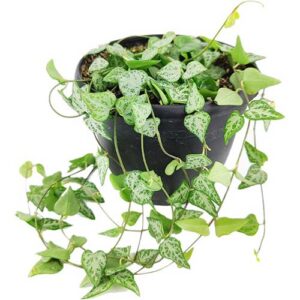
The most striking feature of Ceropegia woodii is its delicate, silvery-green Arrow-shaped leaves that are beautifully marbled with cream or white patterns on the upper surface and deep purple underneath. These leaves are arranged in pairs along thin, purple-tinged stems that can grow several feet long when mature. The plant produces small, tuberous nodes along its stems, which serve as both water storage organs and potential propagation points, making it incredibly resilient and easy to multiply.
What makes this plant truly special is its ability to produce small aerial tubers along the trailing stems, earning it various common names including ‘String of Arrows,’ ‘Rosary Vine,’ and ‘Arrows on a String.’ These tubers not only add visual interest but also serve as the plant’s survival mechanism, allowing it to quickly establish new growth points if the main plant is damaged. The String of Arrows typically grows as an epiphyte or lithophyte in nature, meaning it can survive with very little soil, making it an excellent choice for hanging baskets and elevated displays where its cascading nature can be fully appreciated.
Caring for a String of Arrows is relatively straightforward, making it an excellent choice for both beginner and experienced plant enthusiasts. This resilient succulent thrives on a philosophy of ‘less is more’ – it prefers to be slightly neglected rather than overly pampered. The key to successful String of Arrows care lies in understanding its native habitat and mimicking those conditions as closely as possible in your home environment.
The plant’s natural adaptation to arid conditions means it requires well-draining soil, infrequent but thorough watering, and bright, indirect light to maintain its vibrant coloration and healthy growth. Unlike many houseplants, the String of Arrows actually benefits from periods of drought, as this encourages the development of its characteristic tubers and prevents root rot, which is one of the few serious threats to this otherwise hardy plant.
Successful care involves establishing a routine that allows the soil to dry completely between waterings, providing adequate light without exposing the plant to harsh direct sunlight, and maintaining moderate temperatures year-round. The plant’s trailing nature makes it perfect for hanging planters or elevated shelves where it can cascade naturally. Regular monitoring for the few pests that affect this species, along with occasional feeding during the growing season, will ensure your String of Arrows remains healthy and continues to produce its charming Arrow-shaped foliage for years to come.
 Soil
Soil
The String of Arrows requires exceptionally well-draining soil with a composition that mimics its natural rocky habitat. The ideal soil mixture should consist of 50% regular potting soil combined with 50% drainage materials such as perlite, pumice, coarse sand, or orchid bark. A slightly acidic to neutral pH range of 6.0-7.0 is optimal, though the plant can tolerate slight variations. The soil should be loose and airy, allowing water to pass through quickly while still retaining minimal moisture for brief periods.
Specific soil amendments that benefit String of Arrows include adding activated charcoal for drainage and odor control, coconut coir for slight moisture retention without waterlogging, and small amounts of worm castings for gentle, slow-release nutrition. The soil composition directly affects plant health by preventing the root rot that commonly kills this species – proper drainage ensures roots stay healthy while the loose structure allows for proper aeration.
Common soil problems include poor drainage leading to root rot and plant death, soil compaction preventing proper water flow and root development, inappropriate pH causing nutrient lockout, salt build-up from over-fertilization or hard water creating toxic conditions, nutrient deficiencies from depleted or inappropriate soil mixes, and root boundness where plants become stressed in too-small containers with exhausted growing medium. Prevention involves using proper soil mixtures, regular repotting, and monitoring watering practices.
 Fertilizer
String of Arrows requires minimal fertilization due to its adaptation to nutrient-poor soils in its native habitat. During the growing season (spring through early fall), feed monthly with a diluted, balanced liquid fertilizer at quarter strength (25% of package recommendations). A 10-10-10 or 20-20-20 fertilizer diluted to an N-P-K ratio of approximately 2.5-2.5-2.5 works well.
Signs of over-fertilization include rapid, weak growth with elongated stems, reduced variegation in leaves, salt buildup visible as white crust on soil surface, burned or brown leaf tips, and increased susceptibility to pests. Under-fertilization symptoms are subtle and may include very slow growth, smaller than normal leaves, and reduced tuber development, though these are often normal characteristics for this slow-growing species.
Organic alternatives include diluted fish emulsion applied monthly during growing season, worm casting tea used bi-monthly, or slow-release organic granules applied once in spring. The plant commonly experiences nitrogen sensitivity, so avoid high-nitrogen fertilizers that can cause excessive soft growth. Always fertilize only when soil is moist, never fertilize dry plants, and suspend all feeding from late fall through winter when the plant is dormant. Flush soil with plain water every few months to prevent salt accumulation.
 Watering
The String of Arrows follows a drought-tolerant watering schedule that allows soil to dry completely between waterings. During the growing season (spring and summer), water thoroughly when the soil is completely dry, typically every 1-2 weeks depending on environmental conditions. In winter, reduce watering frequency to every 3-4 weeks as the plant enters dormancy and requires less moisture.
Water quality preferences lean toward slightly acidic to neutral water, with rainwater and distilled water being ideal choices. Tap water can be used if allowed to sit for 24 hours to dissipate chlorine, though avoid water high in minerals or salts. Signs of underwatering include shriveled, wrinkled leaves, dry and brittle tubers, leaf drop starting from the bottom of stems, and stems becoming thin and weak. Overwatering symptoms are more serious and include yellowing leaves, mushy or black tubers, soft, translucent stems, soil that remains wet for extended periods, and a musty odor from the soil indicating root rot.
Seasonal watering adjustments are crucial – increase frequency during warm months when growth is active, and significantly reduce during winter dormancy. Always water in the morning to allow excess moisture to evaporate during the day, and ensure water drains completely from pot saucers within 30 minutes of watering.
Stop guessing. Most houseplant failures are caused by volumetric errors and improper moisture tension. Our deterministic calculator moves beyond "once-a-week" watering by analyzing the four critical pillars of root health:
Personalized for this plant
 Lighting
String of Arrows thrives in bright, indirect light conditions that simulate the dappled sunlight it would receive in its native habitat growing among rocks and cliff faces. The ideal location provides 4-6 hours of bright, filtered light daily, such as near an east-facing window or a few feet back from a south or west-facing window. While the plant can tolerate some direct morning sunlight, intense afternoon sun can scorch the delicate leaves and fade their beautiful variegation.
Signs of insufficient light include elongated stems with widely spaced leaves (etiolation), loss of the characteristic pink and purple coloring in stems and leaf undersides, reduced variegation in the foliage, and overall weak, spindly growth. Excessive light exposure manifests as bleached or yellowed leaves, brown crispy edges on foliage, red or purple stress coloring throughout the plant, and leaves that appear shriveled despite adequate watering.
To adjust lighting conditions, gradually move plants experiencing low light closer to windows or supplement with grow lights positioned 12-18 inches away for 12-14 hours daily. For plants receiving too much direct sun, relocate them further from windows, use sheer curtains to filter intense light, or move them to east-facing exposures where they’ll receive gentler morning sun.
 Temperature
The ideal temperature range for String of Arrows is between 65-80°F (18-27°C) during the day, with nighttime temperatures that can drop 10-15 degrees lower. This temperature variation mimics natural conditions and can help promote blooming. The plant shows good tolerance to temperature fluctuations and can handle brief periods outside this range without significant stress.
String of Arrows exhibits moderate cold sensitivity and should be protected from temperatures below 50°F (10°C), which can cause leaf drop and stem damage. Prolonged exposure to temperatures below 40°F (4°C) can be fatal. The plant handles heat better than cold and can tolerate temperatures up to 90°F (32°C) if humidity isn’t too high and air circulation is adequate.
To protect from extreme temperatures, move plants away from heat sources like radiators and air conditioning vents, bring outdoor plants inside when temperatures drop below 55°F (13°C), provide extra air circulation during heat waves, and consider the plant’s location near windows where temperature fluctuations are most extreme. During winter, maintain temperatures above 60°F (15°C) for optimal health, and avoid placing plants near cold drafts or frequently opened doors.
 Humidity
String of Arrows adapts well to average household humidity levels between 40-60%, though it can tolerate lower humidity better than most houseplants due to its succulent nature. Unlike tropical plants, this species doesn’t require high humidity and can actually suffer if humidity levels consistently exceed 70%, as this can promote fungal issues and reduce the plant’s natural drought-stress responses that keep it healthy.
Symptoms of low humidity stress (below 30%) include leaf edges becoming crispy and brown, increased leaf drop, and slower growth rates. However, these symptoms are rare with String of Arrows as it’s naturally adapted to arid conditions. High humidity stress (above 80%) presents more serious problems including increased susceptibility to fungal diseases, slower soil drying leading to root rot risk, and reduced development of the characteristic stress coloring that makes the plant attractive.
To increase humidity around the plant if needed, use pebble trays filled with water placed beneath the pot (ensuring the pot doesn’t sit directly in water), group plants together to create a microclimate, or use a humidifier set to maintain 50-60% humidity. Avoid misting String of Arrows directly as water on the leaves can cause spotting and fungal issues. To decrease excessive humidity, ensure proper air circulation with fans, avoid overcrowding plants, and reduce watering frequency.
 Propagation
String of Arrows can be propagated through several highly successful methods, with stem cuttings and tuber propagation being the most reliable. The best time for propagation is during active growing season from spring through early summer when the plant has the most energy for developing new roots.
**Stem Cutting Propagation (Success Rate: 90-95%):**
1. Select a healthy stem section 4-6 inches long with several pairs of leaves
2. Cut just below a node using clean, sharp scissors
3. Remove the bottom pair of leaves to expose nodes
4. Allow cutting to callus for 24-48 hours in a dry location
5. Plant in well-draining soil mix or place in water
6. Keep soil barely moist and provide bright, indirect light
7. Roots typically develop within 2-4 weeks
8. New growth appears in 4-6 weeks
**Tuber Propagation (Success Rate: 85-90%):**
1. Identify aerial tubers along existing stems
2. Gently remove tuber with attached stem section
3. Plant tuber just below soil surface with stem above ground
4. Water lightly and maintain consistent moisture
5. Roots and new shoots develop within 2-3 weeks
**Water Propagation** is also successful, with cuttings developing roots in 1-2 weeks when placed in clean water and transferred to soil once roots reach 1 inch long. New plants typically establish fully within 8-12 weeks regardless of propagation method used.
 Potting
String of Arrows should be repotted every 2-3 years or when the plant becomes rootbound, typically indicated by roots growing through drainage holes, water running straight through the pot without being absorbed, or significantly slowed growth despite proper care. The best time for repotting is in spring when active growth resumes.
Choose a pot only 1-2 inches larger in diameter than the current container, as String of Arrows prefers to be slightly rootbound and oversized pots can lead to water retention and root rot. Terracotta or unglazed ceramic pots are ideal as they allow soil to dry more quickly than plastic containers. Ensure multiple drainage holes are present, and consider adding a layer of gravel or broken pottery shards at the bottom for extra drainage.
The ideal soil composition for potting is 50% quality potting mix combined with 50% drainage amendments like perlite, coarse sand, or orchid bark. Signs indicating repotting is needed include extremely rapid soil drying, roots circling the pot’s bottom, water immediately running out drainage holes, or the plant becoming top-heavy and unstable.
**Repotting Steps:**
1. Water the plant lightly 2-3 days before repotting
2. Gently remove plant from current pot
3. Inspect roots and trim any black or mushy sections with clean scissors
4. Add fresh soil mix to new pot, creating a small well
5. Position plant at same depth as previously grown
6. Fill around roots with soil mix, tapping gently to settle
7. Water lightly and place in bright, indirect light
8. Avoid fertilizing for 4-6 weeks to prevent root burn
 Pruning
Pruning Requirements and Techniques
Best Time and Frequency: Prune String of Arrows during active growing season (spring through early summer) when the plant can quickly recover and redirect energy. Light pruning can be done throughout the year as needed, but major pruning should be limited to once or twice annually.
Purpose and Benefits: Pruning serves multiple purposes: maintaining desired length and shape, encouraging bushier growth, removing damaged or yellowing foliage, harvesting material for propagation, and preventing stems from becoming too long and sparse.
Tools and Preparation: Use clean, sharp scissors or pruning shears sterilized with rubbing alcohol. Prepare a clean workspace and have small containers ready for cuttings you wish to propagate.
Step-by-Step Pruning Guide:
1. Identify stems that are too long, damaged, or sparse
2. Locate a healthy node or tuber where you want new growth to emerge
3. Cut just above the node at a 45-degree angle
4. Remove any yellowing or damaged leaves along remaining stems
5. Trim back any stems that have lost most of their leaves
6. Clean up debris around the plant base
7. Save healthy cuttings for propagation if desired
Aftercare: After pruning, reduce watering slightly for 1-2 weeks to prevent stress. Provide bright, indirect light and avoid fertilizing for 3-4 weeks. New growth typically appears within 2-4 weeks from remaining nodes and tubers.
Special Considerations: String of Arrows produces a milky sap when cut that can be irritating to sensitive skin – wear gloves if needed. Never remove more than 1/3 of the plant at once, and always leave several healthy nodes on each stem to ensure recovery.
 Blooming
String of Arrows typically blooms from late summer through fall (August to October), producing small, tubular flowers intermittently throughout this period. Individual flowers last 2-3 weeks, with blooming occurring more frequently on mature, well-established plants. Optimal blooming conditions include bright indirect light, slight temperature variations between day and night, and allowing soil to dry between waterings. The flowers are small (about 0.5 inches long), tubular, and colored in shades of pink, purple, or magenta with intricate markings designed to trap small flies for pollination.
 Pests and Diseases
Aphids
Spider Mites
Mealybugs
Scale Insects
Root Rot
Stem Rot
Fungal Leaf Spots
Note: Consistent monitoring, proper watering, and isolating new plants are the best defenses against recurring pest and disease issues.
 Special Features
The String of Arrows possesses several remarkable features that set it apart from other houseplants. Its ability to produce small, tubular flowers that resemble tiny lanterns or parachutes is particularly fascinating – these blooms are specifically adapted to trap flies for pollination, creating a small chamber that temporarily holds insects until they’re covered in pollen. The plant’s aerial tubers serve as both decorative elements and survival mechanisms, allowing it to store water and nutrients while providing numerous propagation opportunities. Additionally, the striking contrast between the silvery-marbled upper leaf surfaces and deep purple undersides creates a stunning visual display, especially when the plant is positioned where light can illuminate both sides of the trailing stems.
 Plant Benefits
String of Arrows has limited documented herbal or pharmaceutical benefits, though it belongs to the Apocynaceae family which includes plants with traditional medicinal uses. In its native South Africa, some indigenous communities have historically used certain Ceropegia species for minor digestive ailments, though specific uses for C. woodii are not well-documented. The plant contains cardiac glycosides, which have pharmaceutical significance but make the plant unsuitable for home remedies. Modern benefits are primarily ornamental and psychological, as caring for plants can reduce stress and improve indoor air quality to a minimal degree.
 Additional Information
String of Arrows is often confused with String of Spades (Ceropegia ampliata), which has similar growth habits but differently shaped leaves. The plant can live for decades with proper care and will eventually develop a woody caudex (thickened stem base) that stores water and nutrients. In optimal conditions, mature plants can produce trailing stems up to 12 feet long. The plant exhibits CAM photosynthesis, opening its stomata at night to conserve water, which makes it exceptionally drought tolerant. Interestingly, the flowers are designed as temporary traps for small flies – insects enter the tubular flower but cannot escape until the pollen is mature, ensuring effective pollination.
 Life Cycle
String of Arrows follows a perennial life cycle beginning with seed germination or vegetative propagation from tubers or stem cuttings. Young plants initially focus energy on developing a strong root system and main stem with characteristic arrow-shaped leaves appearing in pairs along purple-tinted stems. During the juvenile stage (first 1-2 years), the plant establishes its trailing habit and begins producing aerial tubers along the stems for water storage and backup propagation points. The mature stage (2+ years) is characterized by longer trailing stems, regular flower production during favorable seasons, and development of a thickened caudex base. Growth requirements include well-draining soil, bright indirect light, infrequent deep watering, and temperatures between 65-80°F. The plant can remain productive for decades, with older specimens developing impressive stem lengths and more frequent blooming cycles.
 Are String of Arrows Poisonous, Toxic
String of Arrows is considered mildly toxic to cats, dogs, and children due to the presence of cardiac glycosides typical of the Apocynaceae family. All parts of the plant contain these compounds, with the highest concentrations found in the stems and tubers. Affected organisms include cats, dogs, small pets, and young children who may chew on the attractive arrow-shaped leaves. Symptoms of toxicity include mild gastrointestinal upset (nausea, vomiting, diarrhea), drooling, and potential skin irritation from the milky sap. The severity is generally low to moderate with small ingestions. First aid steps include removing plant material from the mouth, rinsing thoroughly with water, and contacting veterinarian or poison control if symptoms develop. Preventive measures include keeping plants out of reach of pets and children, especially in hanging baskets or elevated locations.
 Frequently Asked Questions
The String of Arrows (Ceropegia woodii) is a trailing succulent vine native to South Africa, Zimbabwe, and Swaziland. It has distinctive arrow-shaped, marbled leaves with purple undersides and produces small tubers along its stems, making it both decorative and easy to propagate.
String of Arrows requires very well-draining soil that mimics its rocky native habitat. A mix of 50% potting soil with 50% drainage materials like perlite, coarse sand, or pumice works best. The soil should be loose, airy, and slightly acidic to neutral (pH 6.0–7.0).
Water only when the soil is completely dry. In spring and summer, this is usually every 1–2 weeks, while in winter it may be every 3–4 weeks. Overwatering can cause root rot, while underwatering shows up as shriveled or wrinkled leaves.
This plant thrives in bright, indirect light for 4–6 hours daily. It can handle gentle morning sun but should be protected from harsh afternoon rays, which can scorch the leaves. Too little light will cause stretched, leggy growth.
String of Arrows grows best in daytime temperatures between 65–80°F (18–27°C). It should be protected from cold below 50°F (10°C), as prolonged cold can damage or kill the plant.
No, it adapts well to average household humidity (40–60%). Unlike tropical plants, it doesn’t need misting, and too much humidity (above 70%) can cause fungal issues.
You can propagate String of Arrows through stem cuttings, tubers, or water propagation. Cuttings root within 2–4 weeks, while tubers planted just below the soil surface sprout in 2–3 weeks. Spring to early summer is the best time for propagation.
Repot every 2–3 years or when rootbound. Choose a pot only slightly larger than the old one, with excellent drainage. Terracotta pots are ideal as they allow the soil to dry faster.
Yes, prune during the growing season (spring to early summer) to encourage bushier growth, remove yellow leaves, and shape the plant. Use sterilized scissors and avoid cutting more than one-third of the plant at a time.
Yes, it produces small, tubular flowers in late summer to fall. These pink or purple blooms are uniquely designed to trap flies for pollination. Mature, well-cared-for plants bloom more often.
Yes, it is mildly toxic to cats, dogs, and children due to cardiac glycosides. Ingestion may cause nausea, vomiting, or diarrhea. Keep it out of reach of pets and children.
String of Arrows is mainly ornamental, with its cascading vines and arrow-shaped leaves adding beauty to indoor spaces. Caring for it can also reduce stress, and like most houseplants, it provides minimal air-purifying benefits.
Yes, String of Arrows is an excellent indoor plant. It’s easy to care for, thrives in medium to bright indirect light, requires low water, and is small enough for hanging baskets, shelves, and window sills.
Botanical name: Ceropegia woodii.
Common names: String of Arrows, Rosary Vine, Arrows on a String, Chain of Arrows.
Family: Apocynaceae.
Type: Perennial succulent vine.
Native range: South Africa, Zimbabwe, and Swaziland.
 Can I grow String of Arrows in my indoor space
Difficulty: Easy
Size: Small
Light: Medium
Water: Low
Flowering: Yes
Pet Safe: No
Air Purifier: Low
 Ceropegia woodii botanical details
Common Name: String of Arrows
Other Common Names: String of Arrows, Rosary Vine, Arrows on a String, Chain of Arrows ,
Botanical Name: Ceropegia woodii
Native Area: South Africa, Zimbabwe, and Swaziland
Family Name: Apocynaceae
Plant Type: Perennial succulent vine
Genus: Ceropegia
Kingdom: Plantae
 Photo Gallery
✅ “Bring Home This Beauty Today”
✅ “Get Your Own String of Arrows Before It’s Gone”
✅ “Shop Trusted Sellers – Limited Availability”
✅ “Free Delivery”
As an Amazon Associate, I earn commission from qualifying purchases.
 Plant Puns and Jokes
Why don’t String of Arrows ever break up with their plant parents? Because they’re always hanging around with their arrowstrings attached! Plus, they keep dropping little Arrow-shaped hints that they want to stay forever – and with all those aerial tubers, they’re practically throwing themselves at you for propagation!
 Signup to our newsletter and download String of Arrows care guide
 My String of Arrows Plant Care Recommendations
 Buy String of Arrows Online