For many people, houseplants are more than décor, they’re part of the rhythm of daily life. They soften a room, improve air quality, and create a sense of calm that’s hard to replicate. When it’s time to move, though, plants introduce a layer of complexity that most people don’t anticipate.
Unlike furniture or boxes, plants are living organisms. They react to changes in light, temperature, and handling, which makes relocation a delicate process. With the right preparation, however, your indoor garden can transition safely and continue to thrive in its new environment.
Planning the Move and Choosing a Mover
Before moving day arrives, logistics should be carefully considered, not just for your belongings, but for your plants as well. Timing, transportation conditions, and coordination all play a role in how successfully your plants make the transition.
This is where planning ahead becomes essential. Working with services like Three Movers can help simplify the broader relocation process, allowing you to focus on the more sensitive aspects, like protecting fragile plants from temperature fluctuations and unnecessary movement. When the main logistics are handled efficiently, it becomes much easier to give your plants the attention they require.
At this stage, think about how your plants will travel when you relocate your indoor garden. Will they be placed in your own vehicle for better control, or will they need to be carefully packed alongside other items? These decisions should be made early to avoid last-minute stress.
Why Moving Is Stressful for Plants
Plants depend on consistency. Light exposure, humidity, watering routines, and even positioning within a room all contribute to their health. A move disrupts all these factors simultaneously.
During transport, plants may experience darkness, shifting temperatures, and physical movement. This often leads to temporary stress responses such as leaf drop, wilting, or slowed growth. While these symptoms can look concerning, they are often part of the adjustment process.
The key is minimizing disruption wherever possible. The more stable the conditions during the move, the easier it will be for plants to recover afterward.
What Science Says About Plant Stability
Research from NASA has shown that environmental stability plays a crucial role in plant health. Their studies on indoor plants highlight how sensitive they are to changes in light, air quality, and moisture levels.
Even minor environmental shifts can influence how plants perform essential functions like photosynthesis and water regulation. This reinforces the importance of maintaining as much consistency as possible during a move.
In practical terms, this means protecting plants from extreme temperatures, avoiding prolonged darkness, and re-establishing stable conditions as quickly as possible after arrival.
Preparing Plants Before Moving Day
Preparation should begin several days in advance. Start by checking the overall health of each plant. Remove dead leaves, clean dust from foliage, and inspect for pests.
Avoid repotting right before the move. While it might seem like a convenient time, repotting adds stress to the roots, making plants more vulnerable during transport. Keeping them in their current containers helps maintain stability.
Watering should also be carefully timed. Light watering one to two days before the move ensures plants are hydrated without making the soil too heavy or messy.
If you’re using decorative or fragile pots, consider temporarily switching to lightweight plastic containers. This reduces the risk of damage and makes plants easier to transport.
Packing and Transporting Plants Safely
Plants should never be packed tightly or sealed in boxes without airflow. Instead, use open containers or boxes with ventilation.
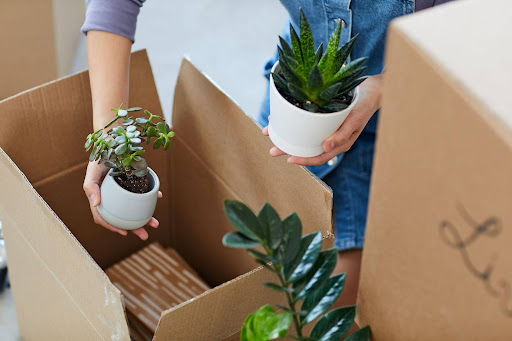
Smaller plants can be grouped together with padding around the pots to prevent shifting. Taller plants may need gentle support to keep stems upright. The goal is to stabilize the plant without restricting it.
Temperature control is critical. Avoid exposing plants to extreme heat or cold, even for short periods. Whenever possible, transport them in a climate-controlled environment.
If you’re moving locally, your own vehicle is usually the safest option. It allows you to monitor conditions and adjust as needed. For longer distances, planning becomes more detailed, and prioritizing plant safety becomes even more important.
Helping Plants Settle into a New Home
Once you arrive, resist the urge to rearrange everything immediately. Plants need time to adjust to their new environment. Start by placing them in areas with similar light conditions to their previous location. Gradual adjustment helps prevent shock. Sudden exposure to strong sunlight, for example, can damage leaves that were previously in indirect light.
Watering should also be approached with care. Overwatering is a common reaction when plants appear stressed, but it can cause further issues. Instead, monitor soil moisture and allow plants to adapt naturally.
Some signs of stress, like leaf drop, are normal. What matters most is consistency in the days and weeks following the move.
Creating Stability for Long-Term Growth
After the initial adjustment period, focus on establishing a routine. Consistent watering, stable lighting, and predictable conditions will help plants recover and grow.
A new space may also offer opportunities. Different lighting patterns or layouts can support healthier growth if used thoughtfully. Observing how your plants respond will guide small adjustments that make a meaningful difference.
A Smooth Move for You and Your Plants
Moving with houseplants requires more care than packing standard belongings, but it doesn’t have to be overwhelming. With preparation, attention to detail, and a focus on stability, your plants can transition successfully alongside you.
In the end, the process reflects what plant care has always required: patience, consistency, and awareness. Approach your move with that mindset, and your indoor garden will continue to thrive, no matter where you call home next.
Julie Bawden-Davis is a best-selling garden author, blogger, YouTuber and Master Gardener dedicated to sharing indoor gardening expertise with aspiring gardeners. She has published several gardening books and more than 5,000 articles in major publications. A former garden columnist for the LA Times, San Francisco Chronicle and Parade.com, she is founder of HealthyHouseplants.com and its YouTube channel.
 Julie Bawden-DavisApril 30, 2026