One of the simplest ways to keep houseplants healthy is also one of the most overlooked. Keep the foliage clean.
Over time, houseplant leaves naturally collect dust, grime, and particles from the indoor air. Besides making plants look dull, that buildup can interfere with how efficiently plants function. Houseplants “breathe” through tiny pores called stomata, which are located on the undersides of leaves and, depending on the plant, sometimes on the tops as well. Through these stomata, plants exchange gases and help clean the air by pulling toxins from it.
When leaves become coated in dust, those stomata don’t work as efficiently. Keeping foliage clean helps plants stay healthy, improves their appearance, and can even help discourage pests and disease issues.
Why Clean Leaves Matter
Clean foliage doesn’t just look prettier. Dusty leaves can make it harder for plants to photosynthesize and exchange air properly. I’ve also found that regular cleaning helps keep pests and diseases under control. When you routinely wipe or rinse foliage, you’re often removing early pest activity, dust buildup, and anything else that may be lingering on the leaves before it becomes a bigger problem.
Many times, plants don’t even appear dirty until you begin cleaning them. Then suddenly you realize just how much dust has accumulated.
The Best Way to Clean Most Houseplants
For many houseplants, one of the safest and easiest methods is using a microfiber cloth. I like the type designed for cleaning electronics because the material is soft and won’t scratch delicate foliage.
Some leaves are surprisingly sensitive. The key is to always clean them gently. If cleaned too roughly, leaves can develop brown striations or fine scratches that never disappear. Even paper towels can sometimes leave tiny scratches because of the wood fibers they contain.
For that reason, I prefer using soft microfiber cloths, such as the kind designed for cleaning electronics. If you hire a house cleaning service, you might also suggest they use these gentle cloths for delicate houseplant foliage to help avoid accidental leaf damage while dusting.
For lightly dusty plants, use the cloth dry. If the leaves need more attention, mist them with water and gently wipe each leaf. You can also dampen the cloth more thoroughly for especially dusty plants. An added bonus is that microfiber cloths are reusable and machine washable, making them a sustainable choice.
Giving Houseplants a Shower
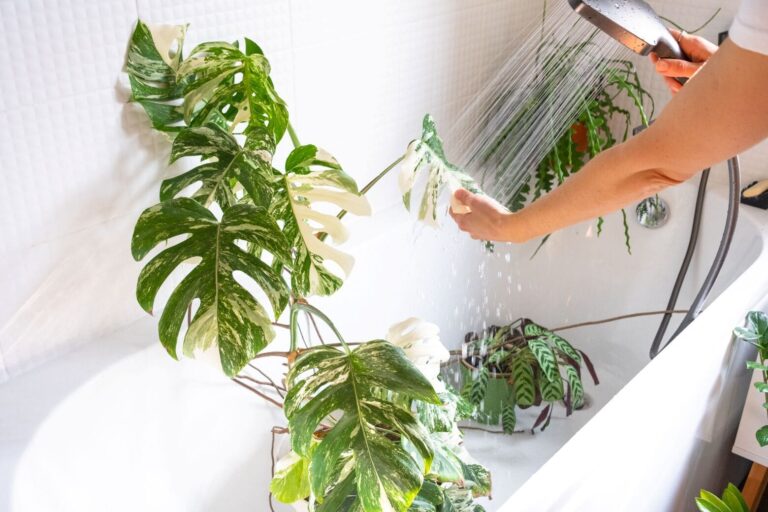
Many larger houseplants benefit from an occasional shower. I often place plants in the bathtub or sink and gently rinse the foliage using a handheld sprayer or soft stream of water. You don’t want to blast the plant as though it’s standing in a torrential rainstorm. A gentle shower is best.
When showering plants, cover the soil with a plastic bag or bubble wrap to prevent potting mix from washing out.
For extra cleaning power, use a mild soap solution. I like using insecticidal soap or a gentle Castile soap. Both clean foliage while also helping to discourage pests.
After applying soap, gently wipe the leaves with soft sponges or microfiber cloths. If you’re treating pests such as mealybugs, you can let the solution sit for a while before rinsing the foliage clean. Just be sure not to leave heavy soap residue on the leaves long term, as buildup can clog the stomata.
How to Clean Fuzzy-Leaf Plants
Plants with fuzzy leaves, such as African violets, require a different approach. Because moisture sitting on the foliage can encourage disease problems, it’s best not to wash these plants directly with water. Instead, I recommend using soft paintbrushes, art brushes, or even certain makeup brushes to gently dust the leaves.
Use brushes with soft to medium bristles and lightly sweep dust from the foliage. Smaller brushes are especially helpful for reaching tight spaces between leaves. Avoid hard brushes such as toothbrushes, which can scratch delicate foliage.
If needed, you can very lightly mist the brush itself with water but avoid wetting the foliage directly. The goal is simply to lift away dust without saturating the leaves.
A Little Leaf Cleaning Goes a Long Way
Regular leaf cleaning keeps houseplants looking vibrant and healthy while helping them function at their best. It’s also one of those small maintenance tasks that ensures you notice your plants more closely. As you wipe leaves or rinse foliage, you’re more likely to spot early signs of pests, yellowing leaves, or other problems before they become serious.
And, of course, there’s something satisfying about seeing freshly cleaned, shiny leaves in your indoor garden.
Julie Bawden-Davis is a best-selling garden author, blogger, YouTuber and Master Gardener dedicated to sharing indoor gardening expertise with aspiring gardeners. She has published several gardening books and more than 5,000 articles in major publications. A former garden columnist for the LA Times, San Francisco Chronicle and Parade.com, she is founder of HealthyHouseplants.com and its YouTube channel.
 Julie Bawden-DavisMay 28, 2026