


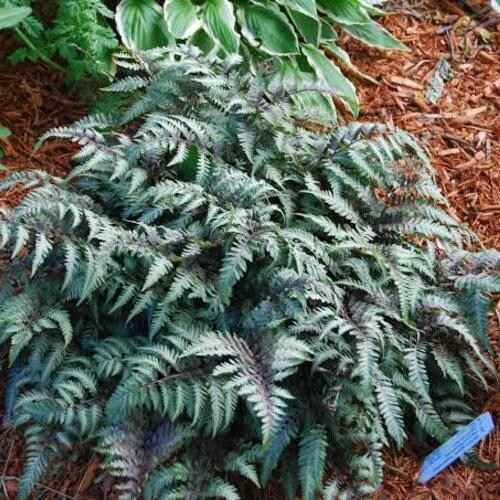
Athyrium niponicum, universally adored as the Japanese Painted Fern, is one of the most ornamentally distinguished of all fern species, celebrated for its exquisitely painted fronds in a subtle but complex palette of silver, grey, green, and deep burgundy-wine that gives it the appearance of a living watercolour. Native to a broad range of East Asian temperate and subtropical regions including Japan, China, Korea, Taiwan, and parts of the Russian Far East, this deciduous perennial fern grows naturally in the cool, moist, deeply shaded woodland environments of mountain slopes, ravine margins, stream banks, and forest understorey habitats. In these environments, it thrives beneath dense canopy trees in deep, humus-rich, consistently moist, acidic soils where direct sunlight rarely reaches the forest floor — conditions that define its cultivation requirements and shade-loving character.
The fronds of Athyrium niponicum are the defining ornamental feature and the source of its worldwide popularity. Typically arching gracefully outward and slightly downward from the central crown in a vase-like arrangement, the bipinnate to tripinnate fronds reach 12–18 inches (30–45 cm) in length and display a distinctive two-toned colouration: the pinnae (leaflets) are a soft, silvery grey-green with a central zone of deeper green along the main veins, while the rachis (central midrib of each frond) and the petiole (frond stalk) are deep wine-red to burgundy, sometimes with a metallic sheen. This combination of cool silver, rich green, and warm burgundy creates a colour harmony of remarkable sophistication. The degree and intensity of the silver coloration varies between cultivars and individuals, and is influenced by light levels: greater indirect light generally produces the most vivid silver and burgundy tones, while deep shade produces greener, less silvery fronds. Among the many outstanding named cultivars, the Perennial Plant of the Year 2004 recipient ‘Pictum’ is the most widely grown, offering particularly vivid silver colouration and strongly contrasting burgundy rachises.
As a deciduous fern, Athyrium niponicum follows a clear annual cycle: its fronds die back completely in autumn and winter, disappearing entirely from view until the warmth of spring triggers the emergence of new, tightly coiled croziers (fiddleheads) from the crown. This seasonal disappearance surprises and sometimes alarms gardeners unfamiliar with deciduous ferns — the plant has not died but is simply resting through the cold season in a dormant state with its energy conserved in the rhizome. The spring reemergence of the silvery croziers unfurling from the dark soil is one of the great seasonal pleasures of gardening with this species, and the fresh fronds that emerge in spring are often the most brilliantly silvered of the entire season before the summer heat subtly mellows their colouration. In cultivation, Japanese Painted Fern is outstanding both as a garden plant in shaded borders and woodland gardens (USDA zones 4–98) and as a container plant for shaded patios, indoor cool rooms, and terrariums in appropriate conditions.
Caring for Athyrium niponicum indoors is an intermediate-level challenge that requires a genuine commitment to providing high humidity, consistent soil moisture, cool temperatures, and low to moderate indirect light — conditions that closely replicate the cool, moist, deeply shaded mountain woodland habitats of the plant’s native East Asia. When these conditions are reliably provided, the Japanese Painted Fern thrives with remarkable elegance, producing its characteristic silver-and-burgundy fronds in a graceful, slowly expanding clump that becomes more beautiful with each passing season. The plant is significantly less forgiving of the dry air and inconsistent watering of typical indoor environments than many other popular ferns, and growers who attempt to grow it in warm, dry rooms without supplemental humidity will typically find it declining within months.
Humidity is the most critical and most frequently underestimated care requirement for indoor Japanese Painted Fern. This species originates from cool mountain woodland environments where ambient humidity is consistently high — often 70–90% — and it suffers visibly and quickly in the dry air of centrally heated or air-conditioned indoor spaces. Brown, crispy frond tips and margins are the earliest and most characteristic symptom of humidity stress, typically appearing within weeks of placement in dry indoor air. A dedicated cool-mist humidifier maintaining humidity above 60–70%, or the use of a terrarium or enclosed plant cabinet, is the most effective and practical solution for indoor cultivation in dry climates. Grouping the plant with other moisture-loving species provides additional passive humidity support.
Consistent soil moisture and cool temperatures are the other non-negotiable requirements. The root system of Athyrium niponicum is relatively shallow and fibrous, and it dries out quickly in poorly draining or compacted soil. The potting medium must remain consistently and evenly moist — never completely drying out, and never remaining waterlogged. A rich, humus-based, well-aerated mix that retains moisture while draining freely is ideal. Temperature is equally important: this is a cool-climate woodland fern that performs best between 55°F and 72°F (13°C–22°C) and declines rapidly in warm, stuffy rooms above 75°F (24°C). It is far better suited to cool, north-facing rooms, unheated conservatories in winter, or outdoor shaded positions in temperate gardens than to the typical warm interior of a modern heated home.
 Soil
Soil
Athyrium niponicum requires a rich, humus-based, consistently moisture-retentive but well-draining potting mix that closely mirrors the cool, leaf-litter-rich forest floor soils of its native East Asian woodland habitat. The ideal mix combines high organic matter content — for moisture retention, nutrient availability, and beneficial microbial activity — with adequate aeration to prevent waterlogging of the fibrous root system.
An ideal mix consists of 40% quality peat-free potting mix or coco coir, 30% well-rotted leaf mould or quality compost, 20% perlite or coarse horticultural grit for aeration and drainage, and 10% worm castings for slow-release fertility and microbial activity. Alternatively, a commercial fern or woodland plant potting mix with additional leaf mould amendment is suitable.
Optimal soil pH is between 5.0 and 6.0 — strongly to moderately acidic. This mirrors the naturally acidic, leaf litter-enriched woodland soils of the plant’s native habitat and is essential for effective uptake of iron and other micronutrients critical to healthy frond development. Neutral or alkaline soil above pH 6.5 will cause the plant to struggle and display chlorosis.
While the mix must retain consistent moisture, it must simultaneously drain freely enough to prevent waterlogging. A soggy, oxygen-deprived root zone causes root rot as rapidly in ferns as in succulents — the difference is that this fern needs the moisture level to remain consistently above zero, while succulents need it to drop to zero between waterings. The ideal state is ‘moist like a wrung-out sponge’ at all times.
Leaf mould is the single most beneficial amendment for Japanese Painted Fern, replicating the decomposing leaf litter that forms the natural growing medium in its native habitat. It improves moisture retention, improves soil structure, lowers pH slightly, and supports the beneficial soil fungi (mycorrhizae) that ferns rely on for nutrient uptake. Pine bark fines or composted bark chips improve aeration while contributing to acidification.
Persistently waterlogged soil deprives the fibrous roots of oxygen, causing root rot, frond yellowing, and eventual plant collapse. Ensure the mix contains adequate perlite and pots have drainage holes.
Potting mix compacts over time, particularly mixes high in organic content, reducing aeration and drainage. Repot into fresh mix every 1–2 years to maintain soil structure.
Alkaline soil (pH above 6.5) is one of the most common causes of poor performance in Japanese Painted Fern. Symptoms include interveinal chlorosis (yellowing between the veins while veins remain green), reduced frond size, and generally poor vigour. Use ericaceous (acid) compost, water with rainwater, and check pH annually.
Salt accumulation from tap water and synthetic fertilizers appears as white soil surface deposits and may cause brown frond tip and margin burn. Use rainwater or filtered water and flush the soil periodically.
In poor, nutrient-depleted soil, fronds may emerge smaller, paler, and less vibrantly coloured than expected. Regular light fertilization during the growing season and the use of leaf mould-enriched mix prevents most deficiency symptoms.
A severely root-bound Japanese Painted Fern will show reduced frond size, very rapid soil drying after watering, and crowded, congested crown growth. Repot in spring as new croziers begin to emerge.
 Fertilizer
Athyrium niponicum is a moderate, light feeder that benefits from gentle, regular fertilization during its active growing season. Unlike many tropical houseplants, it does not require high concentrations of nutrients and responds better to dilute, frequent applications than to infrequent concentrated ones. Heavy fertilization causes salt burn of the sensitive frond tissue and disrupts the acidic soil conditions the plant requires.
A balanced, water-soluble fertilizer formulated for ferns or acidic-loving plants (e.g., 20-10-20 or 15-5-15 NPK) diluted to one-quarter of the label-recommended strength. Alternatively, a balanced 10-10-10 or 20-20-20 formulation at one-quarter strength can be used. Liquid seaweed extract or fish emulsion fertilizers are excellent choices that support the acidic soil environment.
Apply dilute liquid fertilizer every 3–4 weeks from spring (when new croziers emerge) through mid-summer. Reduce to once every 6–8 weeks in late summer as growth slows. Withhold all fertilization from autumn through winter during dormancy.
Always water the plant thoroughly before applying dilute fertilizer to prevent root burn on dry roots. Apply the solution evenly to the moist soil surface. Avoid getting fertilizer on the fronds, which may cause burn marks on the delicate pinnules.
Brown, scorched frond tips and margins appearing shortly after fertilization; white crusty salt deposits on the soil surface; yellowing of fronds despite adequate watering; wilting despite moist soil in severe cases.
Progressively smaller frond size over successive growing seasons; pale, light green fronds lacking the characteristic silver and burgundy richness; slow or sluggish spring emergence; the clump failing to expand year over year.
Leaf mould worked into the top of the potting mix at the beginning of the growing season provides a gentle, slow-release, acidifying nutrient source that perfectly replicates the plant’s natural nutrition regime. Worm castings top-dressed onto the soil provide a mild balanced fertilizer with excellent microbial benefits. Diluted fish emulsion or liquid seaweed extract applied monthly are highly effective organic liquid fertilizers that are well-tolerated by this species.
Iron is the micronutrient most commonly associated with deficiency in Japanese Painted Fern, particularly when grown in alkaline conditions or with hard tap water. Chelated iron supplements applied as a soil drench (following label directions) address interveinal chlorosis when it occurs. Ensuring the correct acidic soil pH is the primary preventive measure against iron deficiency.
 Watering
Athyrium niponicum requires consistently moist soil throughout its active growing season — it must never be allowed to dry out completely, even briefly. The fibrous, shallow root system has limited water storage capacity and wilts rapidly when soil moisture drops below adequate levels, sometimes causing permanent frond damage before the grower has an opportunity to intervene. The correct watering target is ‘evenly moist at all times, like a wrung-out sponge’ — not saturated, not dry.
Every 2–3 days during warm spring and summer months in most indoor environments. Every 4–7 days during cooler autumn months as growth slows. During the winter dormancy period, reduce watering very significantly — the crown and rhizome should be kept barely moist, not completely dry, to prevent desiccation of the dormant buds.
Japanese Painted Fern is sensitive to the fluoride, chlorine, and dissolved minerals in municipal tap water, which can cause brown frond tip burn and lower soil pH over time. Rainwater is strongly preferred and produces the best results. Filtered water or water that has been left overnight to off-gas chlorine is an acceptable alternative. Hard, calcium-rich tap water also gradually raises soil pH toward alkalinity, which is detrimental to this acid-preferring species.
Fronds wilting and drooping rapidly; frond tips turning brown and crispy; the potting mix pulling away from the pot edges; new croziers failing to unfurl properly; progressively smaller frond size.
Yellowing of the fronds — particularly at the base; soft, darkened, mushy crown tissue at soil level; a foul odour from the soil; fungus gnats around the soil; dark, malodorous root tips on inspection.
During winter dormancy, after the fronds have died back completely, water only enough to keep the rhizome and crown from completely desiccating — approximately once every 2–3 weeks with a small amount of water. Do not water normally during dormancy as the plant has no active transpiration demand.
Increase watering frequency in warmer months as transpiration and evaporation rates rise. In autumn, as fronds begin to age and die back, gradually reduce watering frequency. Resume normal watering in spring as new croziers emerge from the crown.
Stop guessing. Most houseplant failures are caused by volumetric errors and improper moisture tension. Our deterministic calculator moves beyond "once-a-week" watering by analyzing the four critical pillars of root health:
Personalized for this plant
Disclaimer: Our calculator is pretty smart. We’ve crunched the numbers, but we’re not measuring the quantum state of your living room. Since we don’t know your exact indoor temperature, humidity, light, airflow, or whether your plant receives daily sweet nothings and motivational speeches, use this calculator as a guide—and always keep an eye on your plant.
 Lighting
Athyrium niponicum is a shade-loving fern that thrives in low to moderate indirect light — ideally 100–500 foot-candles. It performs best in a north- or east-facing window position, or in a bright room where it receives no direct sun at any time of day. In outdoor settings, it is ideal under the dappled shade of deciduous trees. The characteristic silver colouration of the fronds is most vivid and pronounced in positions that receive gentle, indirect bright light rather than deep shade.
There is an important and nuanced relationship between light level and frond colouration in Athyrium niponicum. In complete deep shade (below 100 foot-candles), fronds produce more chlorophyll for photosynthetic efficiency and become progressively greener and less silver. In bright indirect light (300–500 foot-candles), anthocyanin and silver pigmentation are maximised, producing the most vividly painted colouration. This means that growing the plant in the brightest shade-appropriate position (rather than the deepest available shade) produces the most ornamentally rewarding display.
Progressive greening of the fronds with loss of silver pigmentation; dull, less vibrant burgundy colouration on the rachis; generally smaller frond size; slow growth.
Fronds that are pale, yellowed, or bleached; crispy, brown frond margins and tips; fronds lying flat or wilting during periods of light exposure; scorched patches on the frond surface. Even brief exposure to direct midday sun can cause irreversible scorching of the delicate frond tissue.
If natural shade is insufficient, supplement with a very low-output full-spectrum LED grow light (100–300 foot-candles) running 10–12 hours per day. Position well away from the plant — at least 24 inches — to prevent heat damage. For outdoor specimens, ensure complete protection from direct afternoon sun, which is particularly damaging.
 Temperature
Athyrium niponicum is a cool-temperate woodland fern that performs best at temperatures between 55°F and 72°F (13°C–22°C). This temperature preference reflects its native mountain woodland habitat and distinguishes it significantly from the tropical and subtropical plants that dominate the indoor plant market. It is far better suited to cool, consistently temperatured rooms than to warm, heated modern interiors.
Unlike most common indoor houseplants, Japanese Painted Fern is genuinely cold-hardy as a garden plant, tolerating winter temperatures as low as -20°F (-29°C) in USDA hardiness zones 4–9 when grown in the ground. The rhizome survives hard frosts, and the plant regrows reliably each spring from its dormant crown. As an indoor plant, brief exposure to temperatures down to 40°F (4°C) is tolerable for the dormant plant.
The Japanese Painted Fern is considerably more sensitive to heat than to cold. Temperatures consistently above 75°F (24°C) cause progressive frond deterioration — the delicate pinnules brown at the tips and margins, the plant loses vigour, and it may enter premature dormancy during summer heat. In hot climates, providing a cool microenvironment through shade, adequate humidity, and air circulation is essential.
Outdoor specimens are exceptionally tolerant of natural temperature fluctuations across seasons. Indoor specimens prefer stable, cool temperatures and respond poorly to sudden heat events from radiators, sunny windowsills, or nearby heat sources.
Indoors, keep away from radiators, heat vents, and south-facing windows that generate heat. During summer heat waves, move to the coolest available indoor location or to a deep outdoor shade position. In winter, indoor specimens can benefit from placement in a cool room (50–60°F / 10–15°C) where the dormant plant experiences a more natural cool rest period. Outdoor specimens need no protection in USDA zones 4–9 beyond ensuring good snow cover or mulching over the crown in the coldest zones.
 Humidity
Athyrium niponicum requires consistently high humidity of 60–80% for optimal growth and frond health. This is significantly higher than typical indoor household humidity levels, which commonly drop to 20–40% during winter heating season, causing rapid and visible deterioration in frond quality. This species is one of the more humidity-demanding ferns in cultivation and is not suitable for dry indoor environments without supplemental humidification.
Brown, crispy frond tips and margins — the earliest and most characteristic symptom; progressively browning frond edges that spread inward; dull, less vibrant frond colouration; new fronds emerging smaller than expected; the delicate pinnule tips shrivelling before fully unfurling.
In enclosed environments where humidity exceeds 90% and air circulation is poor, fungal diseases including grey mould (Botrytis), rhizome rot, and leaf spot may develop. Adequate ventilation is essential alongside high humidity.
The most effective solution for indoor cultivation. A cool-mist ultrasonic humidifier maintaining 60–70% relative humidity positioned within 3–5 feet of the plant prevents virtually all humidity-related frond deterioration. Essential equipment for serious indoor cultivation of this species in dry climates.
Growing Japanese Painted Fern in a large open terrarium, Wardian case, or enclosed plant cabinet naturally maintains the high humidity the plant requires through evaporation from the soil and plant transpiration. This is arguably the most elegant and effective indoor cultivation solution for this species.
A wide tray filled with pebbles and water placed beneath the pot provides a moderate localised humidity boost. Partially effective, particularly in combination with plant grouping. Less effective than a humidifier in very dry environments.
Lightly misting the fronds with room-temperature rainwater or filtered water 1–2 times daily provides a temporary humidity boost and helps maintain frond turgidity. More effective than a pebble tray alone but less consistent than a humidifier. Avoid misting in the evening as moisture sitting on fronds overnight in cool conditions promotes fungal disease.
Grouping the Japanese Painted Fern with other moisture-loving plants — such as Asplenium nidus, Maidenhair Fern, or Calathea — creates a shared, passively elevated humidity microclimate through collective transpiration.
If humidity exceeds 85% in enclosed growing environments, increase ventilation by partially opening terrarium lids, using a small fan for air circulation, or reducing the number of plants in the enclosure. Ensure adequate airflow to prevent fungal disease development.
 Propagation
Athyrium niponicum can be propagated by two main methods: crown division (the most reliable and commonly practised) and spore sowing (a slower, more specialised technique best suited to advanced fern enthusiasts). Division is the standard propagation method for garden and indoor cultivation and produces established plants reliably within one growing season. Spore propagation requires specialised conditions and patience but can produce many new plants from a single frond.
Success Rate: Very High (85–95%) when performed correctly at the right time
Description: As the crown of Japanese Painted Fern matures and expands, it develops multiple growing points or crowns that can be separated to produce new independent plants. This is the primary and most reliable propagation method.
Steps:
Success Rate: Moderate (50–70%) — requires patience and careful technique
Description: Spore propagation produces many new plants from a single frond but requires specialised conditions and 6–12 months to produce plantlets of significant size. Best suited to experienced fern enthusiasts.
Steps:
Crown division: early spring as croziers are just emerging. Spore sowing: late summer through early autumn when spores are naturally mature.
Crown divisions: fully established within one growing season (6–8 weeks for roots, full frond production within 8–12 weeks). Spore-grown plants: 12–18 months from spore sowing to a plant of ornamental size.
 Potting
Shallow, wide pots or half-pots (azalea pots) are ideal for Japanese Painted Fern, as the root system is relatively shallow and fibrous rather than deep-reaching. A wide, low container accommodates the horizontal spread of the rhizome and the naturally low-growing, spreading habit. Ceramic, plastic, or fibreglass pots all work well. Avoid terracotta in dry indoor environments as its porous walls wick moisture from the mix more rapidly than this species can comfortably tolerate. If terracotta is preferred aesthetically, increase watering frequency to compensate.
Drainage holes are essential. While the mix should remain consistently moist, it must not be waterlogged. A layer of coarse perlite or pumice at the base of the pot provides additional drainage insurance.
Choose a pot 1–2 inches wider than the current root spread, rather than overpotting. Japanese Painted Fern responds better to gradually increasing pot size rather than a very large pot from the outset, which holds excess moist soil relative to root volume.
Every 2–3 years in spring as new croziers emerge, or when the crown has expanded to fill the current container and division is desirable. Do not repot during dormancy or during the active summer growing season.
The crown has expanded to the edges of the pot with no room for further spread; frond size has diminished progressively over successive seasons; the potting mix has compacted and water drains too slowly or too quickly; the plant is producing fewer, smaller fronds than in previous seasons.
Early spring is the ideal repotting time. Remove the plant carefully from its pot, gently shake off old soil, and examine the rhizome and roots. Trim any dead or mushy roots with sterile scissors. Divide the crown if desirable (see propagation section). Repot into fresh, humus-rich, acidic fern potting mix in an appropriately sized shallow container. Set the crown at the same depth as previously. Water thoroughly with rainwater or filtered water and place in a cool, humid, shaded location.
Root pruning is not routinely required or recommended for Japanese Painted Fern. If the plant is severely root-bound, division is a more appropriate and productive response than root pruning.
After repotting, maintain the plant in a cool (55–68°F / 13–20°C), deeply shaded, high-humidity location for 2–3 weeks. Keep soil consistently moist. New frond emergence within 3–4 weeks confirms successful establishment.
 Pruning
Pruning of Athyrium niponicum is primarily a matter of removing damaged, aged, or dying fronds as needed throughout the growing season, and cutting back the entire plant to ground level in autumn as it enters natural deciduous dormancy. Unlike many houseplants where pruning is a complex structural task, fern pruning is straightforward and guided primarily by the plant’s own seasonal cycle — nature does most of the ‘pruning’ through natural frond senescence, and the grower’s role is to assist this process neatly and hygienically.
Remove individual damaged, browned, or heavily pest-affected fronds at any time during the growing season as they are identified. Perform the main seasonal cutback — removing all remaining fronds to near ground level — in late autumn after the fronds have naturally yellowed, died back, and lost their ornamental value. Do not cut back fronds while they are still green and actively contributing to photosynthesis and rhizome energy storage, even if they appear tired or slightly tatty by late summer.
Remove individual damaged fronds as needed throughout spring and summer. Perform the seasonal complete cutback once per year in late autumn. In early spring, once new croziers are clearly emerging, remove any old frond bases or debris remaining from the previous season’s cutback.
Removal of damaged, browned, or pest-affected fronds to maintain the plant’s ornamental appearance and reduce disease-harbouring debris; seasonal cutback in autumn to prepare the plant for clean dormancy; removal of old frond stubs in spring to allow new croziers to emerge unobstructed; general hygiene maintenance to prevent fungal disease in the dense frond canopy.
Clean, sharp scissors or bypass pruning shears sterilized with 70% isopropyl alcohol. For the autumn cutback of a large, established clump, long-handled pruning shears or a sharp garden knife may be more comfortable. Gloves are recommended for sensitive individuals as some fronds may cause minor skin irritation on contact.
After the autumn cutback, maintain the plant in cool, moist, dormant conditions through winter. Reduce watering to a minimum. After the spring clean-up and as croziers emerge, resume the full watering and humidity regime and apply the first dilute liquid fertilizer of the season to support vigorous new frond development.
The most common pruning error with deciduous ferns is cutting back the fronds too early in autumn while they are still green and photosynthetically active, or in response to the fronds looking tired and less vibrant than in spring. Late summer fronds may look somewhat tattered and less silvery than fresh spring fronds, but they are still performing a vital function: photosynthesising and channelling carbohydrate reserves down into the rhizome to power the following spring’s growth. Premature cutback weakens the plant and reduces the vigour and size of the following year’s fronds. Wait until the fronds have clearly died back naturally before performing the seasonal cutback. Additionally, in mild winter regions where some fronds persist through winter, withhold cutback until early spring and simply clean up the old fronds as new croziers emerge, rather than cutting back in autumn.
 Blooming
Athyrium niponicum is a fern and does not produce flowers or seeds in the conventional botanical sense. Ferns are non-flowering, non-seeding vascular plants that reproduce through spores rather than seeds, and spores rather than flowers and fruit. The reproductive structures of Japanese Painted Fern are sori — small, dot-like clusters of spore-producing sporangia — that appear on the undersides of mature fronds during mid-to-late summer. In Athyrium species, the sori are characteristically elongated or horseshoe-shaped (J-shaped to linear), covered initially by a similarly shaped indusium (protective covering), and arranged in rows along the sides of the frond pinnules (ultimate leaflet divisions).
The sori of Athyrium niponicum are not ornamentally significant and are rarely noticed by casual observers. When present, they add a subtle textural interest to the underside of the fronds and are the mechanism by which the plant can be propagated from spore. Mature spores are typically shed in late summer through autumn. In cultivated garden or indoor specimens, spore production is variable and depends on the plant’s maturity and overall health. The absence of conventional flowers means that the entire ornamental value of the Japanese Painted Fern rests in the extraordinary visual artistry of its fronds — arguably the most exquisitely patterned foliage of any fern species in temperate horticulture.
 Pests and Diseases
Name: Vine Weevil (Otiorhynchus sulcatus)
Symptoms: Irregular, notched feeding marks on frond margins from adult beetle activity at night; unexplained wilting and plant collapse despite consistent watering — indicating larval feeding on the roots and rhizome; white, C-shaped larvae (up to 10mm long) found in the root zone when the plant is removed from its pot. One of the most damaging pests of container-grown ferns.
Treatment: If larval damage is suspected, remove the plant from its pot and inspect the root zone, removing and destroying all larvae found. Apply a biological nematode control (Steinernema kraussei — particularly effective against vine weevil larvae) to the soil as a preventive and curative measure. Systemic insecticide drenches containing imidacloprid are also effective. Repot into fresh, sterile potting mix. Prevent adult entry by using physical barriers on pot surfaces and by avoiding positioning the plant on the ground where adults can access the soil.
Name: Slugs and Snails
Symptoms: Irregular, ragged holes in fronds; silvery slime trails on fronds and pot surfaces; damage primarily to young, unfurling croziers in spring, which are particularly palatable. More common in outdoor cultivation or where pots are placed on ground level.
Treatment: Handpick slugs and snails from the plant at night when they are most active. Apply iron phosphate-based slug pellets (safer for wildlife and pets than metaldehyde formulations) around the pot. Use copper tape as a physical barrier on pot rims. Raise pots above ground level to reduce slug access.
Name: Aphids (Aphididae)
Symptoms: Clusters of small soft-bodied insects on young fronds and unfurling croziers; sticky honeydew deposits; distorted, curled young fronds.
Treatment: Dislodge aphids with a gentle stream of water. Apply insecticidal soap spray to all affected frond surfaces. Repeat every 5–7 days for 2–3 cycles.
Name: Scale Insects (Coccidae)
Symptoms: Small, flat, brownish or greyish shell-like bumps on frond rachises and petioles; honeydew deposits; progressive frond yellowing and weakening.
Treatment: Physical removal with a cotton swab dipped in isopropyl alcohol. Apply neem oil or horticultural oil spray to affected areas. Systemic insecticide drench for severe infestations.
Name: Fungus Gnats (Bradysia spp.)
Symptoms: Small dark flies around the consistently moist soil surface; larvae in the upper soil layer; root hair damage; slowed growth.
Treatment: Apply Bacillus thuringiensis var. israelensis (Bti) soil drench. Use yellow sticky traps for adults. Apply a layer of horticultural sand over the soil surface. Allow the very top surface of the soil to dry slightly between waterings — though take care not to allow the soil below to dry out significantly.
Name: Rhizome Rot (Pythium spp., Phytophthora spp.)
Symptoms: Fronds collapsing and yellowing en masse despite adequate watering; soft, darkened, mushy rhizome tissue when inspected; foul odour from the soil and crown area; plant failing to produce new croziers in spring.
Treatment: Remove the plant from its pot and cut away all rotted rhizome and root tissue with sterile scissors until only firm, healthy tissue remains. Dust cut surfaces with sulphur powder or cinnamon. Allow to dry briefly. Repot into fresh, well-draining acidic mix. Water conservatively for 2 weeks. Severe rhizome rot is often fatal — if the plant cannot be saved, take any healthy crown sections for division and restart.
Name: Botrytis / Grey Mould (Botrytis cinerea)
Symptoms: Soft, grey-brown, water-soaked patches on fronds; visible grey fuzzy mould in humid, poorly ventilated conditions; dieback of young fronds and croziers at the crown level.
Treatment: Remove all affected frond material immediately. Significantly improve air circulation around the plant. Reduce overhead misting. Apply a copper-based fungicide or chlorothalonil according to label directions. Ensure adequate ventilation even while maintaining high humidity.
Name: Frond Tip Burn (Environmental / Physiological)
Symptoms: Brown, crispy frond tips and margins progressing inward from the tips of the pinnules; most pronounced on the most delicate, outer fronds and on the newest unfurling fronds. Not infectious. Caused by low humidity, fluoride toxicity from tap water, salt accumulation, heat stress, or direct sun exposure.
Treatment: Not a disease — address by increasing ambient humidity to above 60–70%, switching to rainwater or filtered water for irrigation, flushing the soil periodically, ensuring the plant is not exposed to direct sun or heat sources, and removing the most severely affected fronds. Improve environmental conditions to prevent further browning of new fronds.
Name: Rust Fungi (Uredinales)
Symptoms: Small, reddish-brown, powdery pustules on the underside of fronds (which may be confused with sori, but are more irregular and powdery in texture and appearance); yellowing of frond tissue above the pustules.
Treatment: Remove and dispose of affected fronds in sealed bags. Apply a sulphur-based or copper-based fungicide to remaining healthy fronds as a preventive measure. Improve air circulation. Rust is uncommon in indoor-grown specimens but occasionally occurs in outdoor plants or poorly ventilated indoor environments.
 Special Features
Athyrium niponicum is the undisputed jewel of the temperate fern world, possessing an aesthetic refinement that has secured it a permanent place among the most admired and collected of all shade garden and houseplants. Its most extraordinary feature is the frond colouration — a naturally occurring combination of soft silver-grey over green pinnules with deep wine-red rachises that creates a living watercolour effect of extraordinary subtlety and sophistication. This painted quality is unique among ferns, with no other commonly cultivated species producing a comparable combination of colours and metallic iridescence. The plant’s deciduous seasonal cycle adds a further dimension of living interest: the spring emergence of the tightly coiled, silvery-flushed croziers is one of the most anticipated seasonal events in the shade garden, followed by the progressive unfurling of fresh, brilliant fronds that are typically the most vivid silver and deepest burgundy of the entire season. The plant’s outstanding cold hardiness — surviving to USDA zone 4 (–30°F / –34°C) — makes it accessible to gardeners in climates where most ornamental ferns would perish, extending its horticultural reach far beyond the tropical and subtropical zones. As a non-toxic species, it is genuinely safe for households with cats, dogs, and children, adding practical value to its aesthetic appeal. The plant received the Royal Horticultural Society’s prestigious Award of Garden Merit, recognising its outstanding and reliable garden performance across a wide range of conditions.
 Plant Benefits
Athyrium niponicum has no documented significant medicinal or edible uses in either traditional or modern pharmacology and should not be consumed. In traditional East Asian folk medicine and practice, various fern species have been used for wound treatment, fever reduction, and anti-inflammatory applications, but specific medicinal uses of Athyrium niponicum itself are not well-documented in the ethnobotanical literature. The plant’s primary benefits to its human keepers are psychological, aesthetic, and environmental. As a non-toxic plant, it provides the considerable peace of mind of being genuinely safe in households with curious pets and young children. Its documented moderate capacity for absorbing airborne volatile organic compounds — including formaldehyde and xylene, as demonstrated in various research studies on fern species — contributes to marginally improved indoor air quality. The significant psychological and wellbeing benefits of living with plants are well-established in environmental psychology research, and the Japanese Painted Fern’s unique aesthetic — its cool, meditative palette of silver, grey, and burgundy — makes it particularly suited to creating contemplative, calming indoor environments. In therapeutic horticulture and mindfulness-based gardening programmes, deciduous plants that follow clear, observable seasonal cycles are specifically valued for the engagement and grounding they provide through the experience of natural rhythm.
 Additional Information
Athyrium niponicum was named by the 19th-century botanist Eduard Fenzl and described in the flora of the Japanese archipelago — the species name ‘niponicum’ refers to Japan (Nippon). The cultivar ‘Pictum’ — derived from the Latin for ‘painted’ — is the most widely grown and commercially available form, and it is this cultivar that was selected as Perennial Plant of the Year 2004 by the Perennial Plant Association. A remarkable number of named cultivars have been selected from populations of Athyrium niponicum, ranging from the silver-intensive forms such as ‘Silver Falls’ and ‘Ursula’s Red’ to the more green-silver ‘Apple Court’ and the dramatically burgundy-rachised ‘Pewter Lace.’ Athyrium niponicum has also been crossed with the native North American Lady Fern (Athyrium filix-femina) to produce the outstanding hybrid series Athyrium × ‘Ghost,’ which combines the silvery colouration of A. niponicum with the greater vigour and heat tolerance of A. filix-femina, making it more adaptable to warmer climates and indoor conditions than the pure species. The plant has received the Royal Horticultural Society’s Award of Garden Merit, one of the most reliable quality assurance marks in British horticulture.
 Life Cycle
Athyrium niponicum follows a clearly defined annual cycle of active growth and deciduous dormancy that is one of its most engaging characteristics and distinguishes it markedly from the evergreen tropical plants that dominate the indoor plant market. In late winter to early spring, as soil temperatures rise above approximately 45°F (7°C), the dormant rhizome initiates growth and the first tightly coiled croziers (fiddleheads) push through the soil surface. These unfurl progressively over 2–4 weeks, producing the season’s first fresh, brilliantly silvery fronds. Throughout spring and early summer, the plant produces a succession of new fronds from the crown, the clump expanding in diameter as the rhizome extends outward. By mid-summer, growth slows as temperatures peak and the plant reaches its full seasonal display. Spores mature on the undersides of established fronds in late summer. As autumn arrives and temperatures cool, the fronds progressively yellow and die back, and the plant channels its remaining resources into the rhizome as carbohydrate storage for the following year’s growth. By late autumn, all fronds have died back and the plant is dormant, invisible above ground until the following spring. This cycle repeats annually for the plant’s long life — well-established garden clumps can persist and expand for decades, becoming increasingly large and impressive ornamental features of shaded gardens over time.
 Are Japanese Painted Fern Poisonous, Toxic
Athyrium niponicum is considered non-toxic to humans, cats, dogs, and other domestic animals. The ASPCA lists Athyrium species as non-toxic to cats and dogs, and no significant toxicity concerns are associated with accidental ingestion of frond material by children or pets. This makes the Japanese Painted Fern one of the genuinely pet-safe and child-safe choices among decorative foliage plants.
No parts of the plant are considered significantly toxic.
No significant toxicity symptoms expected. As with any plant material, ingestion of large quantities of frond material may cause minor gastrointestinal discomfort (nausea, vomiting) in sensitive animals or children, but this is a general non-specific response to consuming unusual plant matter rather than true toxicity.
The fronds of some fern species can cause minor skin irritation in very sensitive individuals due to the physical texture of the fronds. Washing with soap and water resolves any such response.
Very Low. Not considered a toxicity risk for typical household exposure.
No specific first aid required for normal handling or incidental leaf contact. If a pet or child has consumed a significant quantity of frond material and is displaying unusual symptoms, contact a veterinarian or Poison Control as a precaution.
Wash any affected area with soap and water if minor irritation occurs from frond contact.
No specific preventive measures are required for this non-toxic species. Standard hygiene practice — washing hands after gardening — is sufficient.
 Frequently Asked Questions
No, Japanese Painted Fern (Athyrium niponicum) is considered non-toxic to cats and dogs. The ASPCA lists Athyrium species as non-toxic to both cats and dogs. This makes it one of the genuinely pet-safe choices among ornamental ferns and shade plants. As with any plant, ingestion of large quantities may cause mild, non-specific gastrointestinal discomfort, but the plant does not contain significant toxins that pose a health risk to pets or children.
Complete die-back in autumn is entirely normal for Japanese Painted Fern — it is a deciduous fern that naturally loses all of its fronds in autumn and winter, entering a dormant state with its energy stored in the underground rhizome. The plant has not died. Reduce watering to a minimum, cut back the dead fronds in late autumn, and wait for the new croziers (fiddleheads) to emerge in spring. This seasonal cycle repeats annually, with each spring bringing a fresh flush of the characteristic silver-painted fronds.
Brown frond tips in Japanese Painted Fern are almost always caused by insufficient humidity — the most common care problem for this species indoors. The plant requires 60–80% relative humidity and suffers rapidly in dry indoor air, particularly during winter heating season. Increase ambient humidity using a cool-mist humidifier, misting 1–2 times daily with rainwater, using a pebble tray, or growing the plant in a terrarium or enclosed cabinet. Also check that you are using rainwater or filtered water rather than fluoride-containing tap water, which also causes tip burn.
Japanese Painted Fern thrives in low to moderate indirect light of 100–500 foot-candles. It performs best in a north- or east-facing window position or in deep, bright shade with no direct sun exposure. Importantly, the characteristic silver colouration is most vivid in the brightest shade-appropriate position — brighter indirect light produces more vivid silver and burgundy tones, while very deep shade causes the fronds to become progressively greener and less ornamental. Direct sun at any intensity will scorch the delicate frond tissue.
The easiest and most reliable method is crown division in early spring as new croziers are just emerging. Remove the plant from its pot, identify separate growing crowns with their own croziers and root systems, and cut cleanly between them with a sharp, sterile knife. Pot each division into humus-rich, acidic fern potting mix, keep consistently moist and in cool, humid, shaded conditions, and the divisions will establish within 4–8 weeks. Advanced growers can also propagate from spores collected in late summer and sown on sterile moist mix, though this process takes 12–18 months to produce plants of ornamental size.
Japanese Painted Fern requires a rich, humus-based, consistently moisture-retentive but well-draining, acidic potting mix with a pH of 5.0–6.0. An ideal mix consists of 40% peat-free potting mix or coco coir, 30% leaf mould or quality compost, 20% perlite, and 10% worm castings. Leaf mould is the single most beneficial amendment, replicating the natural growing medium of the forest floor. Avoid alkaline soils and lime-rich composts. Water with rainwater to prevent gradual alkalinisation from hard tap water.
Japanese Painted Fern is a cool-temperate woodland species that prefers temperatures of 55–72°F (13–22°C). As a garden plant it is extremely cold-hardy (USDA zones 4–9, surviving to -20°F / -29°C). As an indoor plant, it prefers cool rooms and deteriorates in warm, stuffy conditions above 75°F (24°C). Keep away from radiators and sunny south-facing windowsills that generate heat. This species is far better suited to cool north-facing rooms, unheated conservatories, or shaded outdoor positions than to typical warm modern interiors.
Japanese Painted Fern can be a stunning indoor plant in the right environment but requires more specific conditions than many popular houseplants. It needs cool temperatures (55–72°F / 13–22°C), high humidity (60–80%), consistently moist acidic soil, and low indirect light — with no direct sun. It is deciduous, disappearing completely in winter. In a cool, humid room or terrarium with rainwater for irrigation, it can be extraordinary. In a warm, dry, centrally heated home, it will struggle. It is more commonly and easily grown as an outdoor shade garden plant in temperate climates.
Water Japanese Painted Fern frequently enough to keep the soil consistently and evenly moist at all times — like a wrung-out sponge. During active growth in spring and summer, this typically means watering every 2–3 days indoors in typical household conditions. Use rainwater or filtered water rather than tap water, which contains fluoride and chlorine that can cause frond tip browning and gradually raise soil pH. During winter dormancy, reduce watering to barely moist — just enough to prevent the rhizome from desiccating completely.
Cut back Japanese Painted Fern in late autumn after the fronds have naturally yellowed and died back completely. Do not cut the fronds back while they are still green — even if they look tired and tatty in late summer — as they are still photosynthesising and storing energy in the rhizome for the following year’s growth. Cut all dead fronds to within 1–2 inches of the crown. In spring, once new croziers are clearly emerging, remove any remaining old frond stubs and debris from around the crown to allow unobstructed new frond development.
 Can I grow Japanese Painted Fern in my indoor space
Difficulty: Intermediate
Size: Small
Light: Low
Water: High
Flowering: No
Pet Safe: Yes
Air Purifier: Medium
 Athyrium niponicum botanical details
Common Name: Japanese Painted Fern
Other Common Names: Painted Fern, Asian Painted Fern, Nippon Lady Fern, Japanese Lady Fern
Botanical Name: Athyrium niponicum
Native Area: Japan, China, Korea, Taiwan, and parts of the Russian Far East. Found naturally in cool, moist, deeply shaded temperate and subtropical woodland environments, particularly on mountain slopes, ravine margins, and stream banks.
Family Name: Athyriaceae
Plant Type: Perennial deciduous fern
Genus: Athyrium
Kingdom: Plantae
 Photo Gallery
 My Japanese Painted Fern Plant Care Recommendations
If you find the Houseplant Encyclopedia helpful and would like to support Healthy Houseplants, you can use the links below to shop for recommended plants, products, and plant-care supplies.
Some links are affiliate links, which means I may earn a small commission if you make a qualifying purchase through them, at no additional cost to you. Thank you for supporting Healthy Houseplants and helping me continue to provide free plant-care information!

Want even more personalized plant-care help? Check out my AI Julie Chatbot—trained on my 20 years of houseplant knowledge, not just information from the internet!  Try it now:Ask AI Julie
 Buy Japanese Painted Fern Online
✅ “Bring Home This Beauty Today”
✅ “Get Your Own Japanese Painted Fern Before It’s Gone”
✅ “Shop Trusted Sellers – Limited Availability”
✅ “Free Delivery”
As an Amazon Associate, I earn commission from qualifying purchases.
 Plant Puns and Jokes
Why does the Japanese Painted Fern never worry about looking its best in winter? Because it knows that after a good long rest, it will come back more stunning than ever — the original artist who perfected the ‘seasonal rebrand!’
 Signup to our newsletter and download Japanese Painted Fern care guide

