


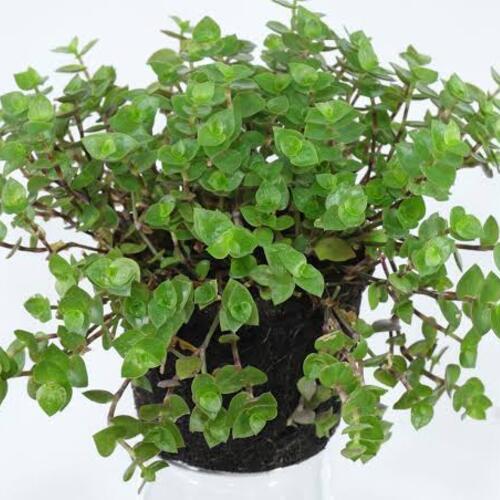
Callisia repens, popularly known as the Turtle Vine or Creeping Inch Plant, is a delightful, mat-forming, trailing perennial herb belonging to the Commelinaceae family — the same family that includes the popular Tradescantia, Wandering Dude, and Spiderwort genera. Native to a broad range of tropical and subtropical regions spanning from southern Mexico and Central America through the Caribbean and into South America, particularly in Bolivia, Brazil, and Argentina, Callisia repens thrives in its native habitat as a low-growing, spreading ground cover in the humid understorey of tropical forests, along stream banks, in disturbed open woodland margins, and in moist rocky terrain. Its creeping, freely rooting stems allow it to colonise large areas of ground efficiently in warm, humid climates, and in several regions outside its native range it has naturalised so successfully as to be considered an invasive species in parts of Australia, Florida, and other warm-climate regions.
The most immediately distinctive feature of Callisia repens is its tiny, densely packed, succulent-like foliage — small, oval to round leaves typically measuring only 0.5–1 inch (1.2–2.5 cm) in length, arranged in two alternating rows along slender, creeping or trailing stems in a pattern that closely resembles the overlapping scutes on a turtle’s shell — the inspiration for its charming common name. The leaves of the standard species are a glossy, deep forest green on their upper surface with a distinctive reddish-purple or plum colouration on their undersides — a trait shared by many Commelinaceae family members and created by anthocyanin pigmentation. Several cultivars have been developed for enhanced ornamental value, including the popular ‘Bianca’ or ‘Pink Lady’ variant, which displays cream, white, and pink variegated leaves that intensify in colour under bright light, and the ‘Turtle’ form with particularly compact, deep-coloured foliage. The stems themselves have a slightly succulent quality, storing moisture and contributing to the plant’s moderate drought tolerance relative to other members of its family.
As a trailing plant, Callisia repens is supremely versatile in its ornamental applications. Grown in hanging baskets, it produces dense, lush curtains of tiny leaves that cascade elegantly over the pot rim. As a potted plant on a shelf or tabletop, its trailing stems create an attractive draping effect. As a ground cover in terrariums, vivariums, or outdoor tropical gardens, it spreads rapidly to form a dense, weed-suppressing mat of miniature foliage. It has also become well-established in the reptile and amphibian keeping community as a naturalistic vivarium plant — safe for many reptile species (though not for cats and dogs — see toxicity section), visually appealing, and vigorous enough to tolerate the conditions of a bioactive enclosure. Its combination of charm, adaptability, rapid growth, extreme ease of propagation, and minimal care demands makes it one of the most beginner-friendly and generously rewarding of all small trailing houseplants.
Caring for Callisia repens is an exceptionally straightforward and forgiving experience that makes it an ideal choice for beginner plant enthusiasts, those who travel frequently, or anyone seeking a rapidly rewarding, low-maintenance trailing plant. Its care requirements are moderate and forgiving across almost all parameters — it tolerates a range of light levels, forgives occasional missed waterings with its slightly succulent stems, and propagates so easily that a single stem cutting will produce a thriving new plant in a matter of weeks. The key to keeping Turtle Vine looking its most lush and attractive lies primarily in three areas: providing adequate bright indirect light to maintain colour intensity, maintaining consistent soil moisture without waterlogging, and performing regular pinching and trimming to encourage a dense, bushy form rather than the sparse, leggy appearance that results from neglect of these points.
Watering discipline is the most important practical care skill for Turtle Vine. While significantly more drought-tolerant than its Tradescantia relatives thanks to its slightly succulent stem tissue, Callisia repens performs best in consistently moist (but not saturated) soil. Allowing the soil to dry out completely for extended periods causes the lower leaves to drop, resulting in bare, leggy stems that can only be remedied by cutting back and propagating. Conversely, consistently waterlogged, poorly draining soil causes root rot that can spread rapidly through the shallow, compact root system. A ‘little and often’ watering approach during the growing season — keeping the top inch of soil consistently moist — produces the most consistently attractive results. During winter, reduce watering to match the plant’s reduced metabolic activity.
Regular pruning and pinching is the other essential care practice that separates a magnificent, full, cascading Turtle Vine from a straggly, bare-stemmed disappointment. The plant’s vigorous growth habit means stems extend rapidly and become increasingly bare at the base as the plant matures. Regular tip-pinching — removing the growing tip of each stem — encourages lateral branching and maintains a dense, full appearance. Harder cutbacks once or twice per year refresh the overall form. The removed stem sections provide an essentially unlimited supply of propagation cuttings that root within days under good conditions, making Turtle Vine one of the most generous plants for sharing with other enthusiasts.
 Soil
Soil
Callisia repens thrives in a moderately fertile, well-draining, moisture-retentive potting mix that supports the plant’s shallow, fibrous root system while preventing waterlogging. The ideal mix balances moisture retention with adequate aeration, as the slightly succulent stems can buffer short dry periods but the roots are susceptible to rot in persistently saturated conditions. Standard high-quality potting mix performs well for this species with minimal amendment.
A mix of 60% quality peat-free potting mix or coco coir and 40% perlite or pumice provides an excellent balance of moisture retention and drainage for Callisia repens. Alternatively, a standard all-purpose potting mix with a 20–30% addition of perlite is suitable. The mix should feel light and well-aerated, not dense or compacted.
Optimal soil pH is between 5.5 and 6.5 (mildly to moderately acidic). This range supports effective nutrient uptake from the fibrous root system and mirrors the slightly acidic tropical soils of the plant’s native range.
Good drainage is important — the mix must allow water to pass freely through the root zone without pooling. Pots must have drainage holes. Callisia repens is more tolerant of brief dry periods than of chronic waterlogging, which causes rapid root rot in its shallow, fibrous root system.
A small quantity of worm castings (10–15% by volume) mixed into the potting medium at potting time provides a gentle, slow-release nutrient supply and supports beneficial microbial activity. Horticultural charcoal at 5–10% helps maintain a clean root environment.
Persistently waterlogged soil causes root rot, manifesting as yellowing leaves, soft basal stems, and a foul soil odour. The shallow, dense root mat of Callisia repens is particularly vulnerable. Solution: improve drainage with additional perlite and ensure pot has adequate drainage holes.
Potting mix compacts over time as organic material breaks down, reducing drainage and aeration. Signs include water pooling on the surface and slowed growth. Repot into fresh mix every 1–2 years.
Alkaline soil above pH 7.0 caused by hard tap water or lime-rich mix can cause yellowing from nutrient lock-out. Use filtered water or rainwater and check pH annually.
Salt accumulation from tap water and synthetic fertilizers appears as white deposits on the soil surface and pot edges and may cause leaf tip browning. Flush the soil thoroughly every 2–3 months and use fertilizer at half strength.
Pale, light green leaves during the active growing season in an unfertilized plant may indicate nitrogen deficiency. Callisia repens is a relatively fast grower and benefits from regular fertilization during spring and summer.
The plant’s vigorous root system fills pots quickly. Signs of root-bound conditions include very rapid soil drying after watering, roots emerging densely from drainage holes, and slowed above-ground growth despite good conditions. Repot every 1–2 years or divide and refresh.
 Fertilizer
Callisia repens is a relatively vigorous grower with moderate nutrient requirements during its active growing season. Regular fertilization from spring through summer supports rapid, lush growth, the most vibrant foliage colouration, and strong stem production. Fertilization should be withheld during the slower autumn and winter months.
A balanced, water-soluble liquid fertilizer with an NPK ratio of 20-20-20 or 10-10-10, diluted to half the label-recommended strength, applied every 2–4 weeks during spring and summer. For variegated cultivars such as ‘Bianca’ and ‘Pink Lady,’ a formula with moderate nitrogen (to avoid excessive all-green growth) and adequate phosphorus and potassium is preferred.
Every 2–4 weeks from spring through early autumn. Withhold completely from late autumn through winter.
Apply the diluted fertilizer solution directly to the soil, ensuring it does not sit in contact with stems at soil level for extended periods. Water lightly before applying if the soil is completely dry. Never fertilize a recently repotted or pest-stressed plant.
Salt crust on the soil surface; brown leaf tip and margin burn; unusually rapid, soft, pale green growth that lacks the characteristic compactness of well-grown Callisia repens; limp stems despite moist soil in severe cases.
Pale, progressively lighter green foliage; reduced growth rate and stem length during the active growing season; loss of the rich, deep colouration in the leaf undersides and the vibrancy of variegated cultivar colouring.
Worm castings top-dressed onto the soil surface at the beginning of the growing season provide a gentle, slow-release balanced nutrient supply. Monthly diluted liquid seaweed extract at quarter strength supports micronutrient availability and root health. Compost tea applications maintain healthy soil microbiology.
Callisia repens is not particularly demanding of specific micronutrients, but magnesium — available via monthly Epsom salts applications (1 teaspoon per gallon of water) — can enhance the richness of the deep green and reddish-purple pigmentation that makes this plant attractive.
 Watering
Callisia repens prefers consistently moist soil during its active growing season, but tolerates short dry periods better than many of its Commelinaceae relatives due to its slightly succulent stem tissue. The ideal approach is to water when the top half-inch to inch of soil has dried, ensuring the pot drains freely after each watering. Consistent moisture prevents the lower leaf drop that leads to bare, leggy stems.
Every 5–7 days during spring and summer (active growth). Every 10–14 days in autumn and winter as growth slows. The specific frequency will vary significantly depending on pot size, material (terracotta dries faster than plastic), light level, and temperature — always assess soil moisture before watering.
Callisia repens is moderately sensitive to fluoride and chlorine in tap water, which can cause brown leaf tips over time — a particularly common issue with the pale, cream-coloured sections of variegated cultivars. Rainwater or filtered water is preferred. Tap water left overnight to off-gas chlorine is an acceptable compromise.
Lower leaf drop — the most characteristic and common symptom of drought stress; limp, slightly shrivelled stems and leaves; dry soil pulling away from pot edges; general loss of the compact, dense growth habit as stems elongate between waterings without adequate hydration.
Yellowing of leaves throughout the plant, not limited to lower leaves; soft, mushy, darkened stem bases; a foul soil odour; fungus gnats around the soil surface; dark, mushy roots on inspection. Overwatering symptoms in Callisia repens typically develop more slowly than underwatering symptoms due to the slightly succulent stem tissue.
During winter and in cooler, lower-light conditions, reduce watering frequency significantly as the plant’s metabolic rate slows and evaporation decreases. In summer, particularly if the plant is in a sunny, warm location, monitor soil moisture more frequently. Plants in terracotta pots dry out faster than those in plastic or ceramic and require more frequent watering attention.
Stop guessing. Most houseplant failures are caused by volumetric errors and improper moisture tension. Our deterministic calculator moves beyond "once-a-week" watering by analyzing the four critical pillars of root health:
Personalized for this plant
Disclaimer: Our calculator is pretty smart. We’ve crunched the numbers, but we’re not measuring the quantum state of your living room. Since we don’t know your exact indoor temperature, humidity, light, airflow, or whether your plant receives daily sweet nothings and motivational speeches, use this calculator as a guide—and always keep an eye on your plant.
 Lighting
Callisia repens thrives in bright to medium indirect light — ideally 500–1,500 foot-candles. It performs best near an east- or west-facing window where it receives 2–4 hours of direct or bright indirect light daily. The purple-red colouration of the leaf undersides and the intensity of any variegation in ornamental cultivars such as ‘Bianca’ and ‘Pink Lady’ are most vibrant under bright indirect light. A degree of gentle direct morning sun enhances colouration without causing damage.
Callisia repens is more shade-tolerant than many small trailing houseplants and will survive in medium indirect light (200–500 foot-candles). However, in lower light, stems become leggy with wider internodal spacing, the characteristic reddish-purple undersides fade to a duller, less vibrant tone, and variegated cultivars lose their cream and pink colouration, reverting toward plainer green.
Leggy, elongated stems with wider spacing between leaves; loss of the characteristic reddish-purple leaf underside colouration; variegated cultivars reverting toward plain green; smaller leaves; reduced overall plant density and the characteristic ‘turtle shell’ leaf overlap pattern becoming less pronounced.
In intense, direct midday sun — particularly through glass — leaves may develop bleached, yellowed, or scorched patches, particularly the pale pink and cream sections of variegated cultivars which contain less protective pigmentation. The leaf surfaces may become dull and faded rather than glossy. Afternoon direct sun in summer is the most common cause of sun damage.
If natural light is insufficient, supplement with a full-spectrum LED grow light providing 500–1,000 foot-candles, running 12–14 hours per day at a distance of 12–18 inches. The light response of variegated cultivars is particularly pronounced — for the most vivid ‘Bianca’ and ‘Pink Lady’ colouration, prioritise the brightest available indirect light position.
 Temperature
Callisia repens thrives at temperatures between 60°F and 85°F (15°C–29°C). This range reflects the warm, consistently tropical conditions of its native habitat and is comfortably within the range of most indoor environments throughout the year.
Callisia repens is cold-sensitive and should not be exposed to temperatures below 50°F (10°C) for extended periods. Brief exposure to cooler temperatures may be tolerated by healthy, well-established plants but causes visible stress — leaf discolouration, stem softening, and slowed growth. Frost is fatal. Temperatures below 45°F (7°C) will cause irreversible cold damage.
The plant handles warm temperatures up to approximately 90°F (32°C) well, provided adequate humidity and moisture are maintained. In very high heat, watering frequency should be increased to match elevated transpiration.
Callisia repens tolerates moderate temperature fluctuations better than many tropical houseplants, reflecting the somewhat variable conditions of its native range across different habitat types. However, sudden cold snaps from open windows, cold drafts, or air conditioning vents during winter can cause rapid leaf drop and stem collapse.
During winter, keep away from cold, single-pane windows and drafty exterior doors. In summer, ensure air conditioning does not blow cold air directly at the plant. Maintain temperatures consistently above 60°F (15°C) year-round for the most vigorous, attractive growth.
 Humidity
Callisia repens prefers moderate to high humidity levels of 50–70% for optimal growth and the most attractive, turgid foliage. It tolerates standard household humidity levels of 30–50% reasonably well — better than many tropical plants — but performs noticeably better in more humid conditions, particularly in the quality and vigour of new growth and the prevention of brown leaf tip development.
Brown or crispy leaf tips and margins — particularly pronounced in the pale, cream, or pink sections of variegated cultivars; slight curling of leaf edges; less turgid, slightly softer leaf texture; slowed growth and reduced stem length. Low humidity is a common cause of tip browning in Callisia repens in dry, centrally heated homes during winter.
Ambient humidity above 80%, combined with poor air circulation and cool temperatures, can promote fungal disease on the densely packed foliage. Powdery mildew and fungal leaf spots may develop where air circulation is insufficient. Ensure adequate ventilation in high-humidity growing environments.
A cool-mist ultrasonic humidifier positioned near the plant is the most effective and consistent method for maintaining humidity above 55–60%, significantly improving foliage quality and reducing tip browning, particularly in dry winter conditions.
Place the pot on a tray of pebbles and water with the pot base above the waterline. Provides a moderate localised humidity boost as water evaporates. Effective as a supplementary measure, particularly for plants in hanging baskets where a tray beneath is not practical.
Misting the foliage lightly 2–3 times per week with room-temperature water provides a temporary localised humidity boost and helps keep the dense leaf surface clean. Effective as a supplement but less consistent than a humidifier. Ensure good airflow after misting to prevent water sitting in the dense leaf canopy for extended periods.
Callisia repens is an excellent choice for open terrariums and bioactive vivariums, where naturally higher humidity levels due to the enclosed environment are ideal for this species. Its compact, mat-forming habit and tolerance of moderate shade make it a popular vivarium ground cover.
Grouping Turtle Vine with other moisture-loving plants creates a shared, passively elevated humidity microclimate through collective transpiration. A natural and cost-free supplementary approach.
If ambient humidity exceeds 80%, increase air circulation with a fan, ensure the potting mix is not overly dense or moisture-retentive, and avoid daily misting. Space plants to allow airflow between leaves and stems.
 Propagation
Callisia repens is one of the easiest plants to propagate in all of indoor horticulture — it roots so readily and reliably from stem cuttings that almost any piece of stem with a node will produce a new plant under even moderately favourable conditions. This extraordinary ease of propagation, combined with the plant’s vigorous growth habit, means a single plant can generate essentially unlimited new specimens within a single growing season. The best time to propagate is spring through summer, though successful propagation is achievable year-round given warm temperatures.
Success Rate: Very High (90–98%)
Description: The simplest and most popular propagation method. Stem sections root in water within days under warm conditions.
Steps:
Success Rate: Very High (85–95%)
Description: Direct soil propagation is equally reliable and produces plants slightly better adapted to soil conditions from the outset.
Steps:
Success Rate: Very High (95–100%) — the plant layers itself spontaneously
Description: Callisia repens stems produce adventitious roots at nodes wherever they contact moist soil or substrate. This natural layering can be exploited deliberately to produce rooted new plants while still attached to the parent.
Steps:
Spring through mid-summer (March–July) when warm temperatures above 65°F (18°C) accelerate rooting. However, Callisia repens roots so readily that year-round propagation is feasible with adequate warmth.
Under optimal conditions, rooted cuttings develop into full, independently growing plants within 4–8 weeks from cutting. A pot filled to a lush, dense display can be achieved within 8–12 weeks by starting with multiple cuttings in a single container.
 Potting
Hanging baskets are the ideal display container for Callisia repens, as they showcase the plant’s trailing habit to maximum effect and provide excellent air circulation around the dense foliage. Plastic, ceramic, or lightweight resin hanging baskets all work well. For tabletop or shelf display, standard plastic or terracotta pots of 4–6 inches in diameter are appropriate for young to medium-sized specimens. Terracotta’s faster drying rate suits the watering preference of Callisia repens well in humid environments.
Drainage holes are essential. The compact, fibrous root system of Callisia repens is susceptible to root rot in standing water. Never allow the pot to sit in a water-filled saucer for extended periods.
Start cuttings in small pots (3–4 inches) and step up by 1–2 inches when roots fill the current container. For a full, cascading display in a hanging basket, planting multiple cuttings (4–8) in a larger basket (8–10 inches) simultaneously creates the densest, most immediately impressive result.
Every 1–2 years in spring, or when the plant is clearly root-bound or the potting mix has compacted and degraded. Alternatively, rather than repotting, many growers prefer to take fresh cuttings annually and start the plant anew — producing a more compact, bushy display than a mature plant in decline.
Roots emerging densely from all drainage holes; the soil drying out unusually quickly after watering; progressively declining vigour despite good care; the potting mix has become densely compacted and water-repellent.
Water the plant 24 hours before repotting. Gently tip from its current pot and loosen the root ball. Remove any dead or rotted roots. Repot into fresh potting mix in a pot 1–2 inches larger. Water gently and keep in a sheltered, humid location for 1 week before returning to normal conditions.
If repotting is impractical and the plant is severely root-bound, gently trim up to 25% of the outer root mass with sterile scissors to allow a return to the same or similar pot size with fresh mix. Water conservatively for 2 weeks after root pruning to allow recovery.
Callisia repens transplants readily with minimal stress response due to its vigorous root regeneration capacity. Minor temporary wilting after repotting is normal and typically resolves within 24–48 hours in appropriate conditions.
 Pruning
Regular pruning and pinching is one of the most important maintenance practices for keeping Callisia repens looking its best. Without periodic trimming, the stems elongate progressively, become bare and leafless at the base, and lose the dense, compact, visually impressive form that makes the plant so attractive. Fortunately, pruning is quick, simple, and productive — every removed piece of stem is a potential propagation cutting that can be rooted to produce new plants or increase the density of the original pot.
Light tip-pinching can be performed at any time throughout the year as part of routine maintenance. More significant cutbacks — trimming the plant by one-third to one-half of its total stem length — are best performed in early spring at the onset of the active growing season, when the plant’s vigour is greatest and recovery and regrowth will be fastest.
Tip-pinch actively growing stems every 2–4 weeks during the growing season to maintain density. Perform a harder cutback once or twice per year — in spring and optionally again in late summer — to refresh the overall form and prevent the long, bare-stemmed appearance that develops as the plant ages.
Encourage lateral branching and a denser, more compact growth habit; prevent the progressive basal leaf drop and leggy stem development that occurs without pruning; refresh the plant’s overall form and appearance; collect propagation cuttings; remove any damaged, diseased, or pest-affected stem sections.
Clean, sharp scissors or fingernails (for soft tip-pinching). Bypass pruning shears for harder cutbacks on woody older stems. Sterilize cutting tools with 70% isopropyl alcohol between plants. Gloves are recommended for sensitive individuals as the sap can cause mild skin irritation.
After tip-pinching, new lateral shoots typically emerge from the nodes below the cut within 7–14 days. After a hard cutback, new basal growth should appear within 2–4 weeks in warm, bright conditions. Maintain consistent soil moisture and temperatures above 65°F (18°C) during the recovery period to support rapid regeneration. Increase light slightly if recovery seems slow.
The sap of Callisia repens is a mild dermal irritant and may cause contact dermatitis in sensitive individuals. Wear gloves if you have sensitive skin, and always wash hands after pruning. For variegated cultivars such as ‘Bianca’ and ‘Pink Lady,’ note that the pale, cream, and pink sections of stems and leaves are more susceptible to bruising and marking from handling than the green sections — handle with care to preserve the decorative appearance of trimmed cuttings. Avoid hard cutbacks in winter when the plant’s reduced metabolic activity slows recovery significantly.
 Blooming
Callisia repens produces small but charming flowers, typically in spring and summer during the warmest months of the year, though indoor specimens in consistently warm conditions may bloom sporadically at other times. The flowers are tiny — measuring only a few millimetres across — and are produced in small clusters at the stem tips and leaf axils. They consist of three white petals arranged symmetrically in the typical Commelinaceae pattern, with a small, delicate appearance that complements the miniature scale of the plant’s foliage without dominating it.
The flowers of Turtle Vine are not particularly ornamentally significant compared to the plant’s attractive foliage and are often overlooked due to their small size. They last only a brief period individually but may be produced in a continuous succession throughout the blooming season. Optimal blooming conditions include bright indirect light, warm temperatures above 70°F (21°C), and regular fertilization during the active growing season. The primary ornamental value of Callisia repens lies in its cascading foliage rather than its flowers, and many growers of this species never observe it in bloom if the plant is maintained primarily as a foliage trailer. When blooming does occur, the tiny white flowers add a gentle, fleeting seasonal interest to the display.
 Pests and Diseases
Name: Spider Mites (Tetranychus urticae)
Symptoms: Fine webbing between stems and leaves, particularly in the dense, compact leaf canopy where air circulation is poor; tiny moving specks on leaf undersides and stems; stippled, pale, or bronzed discolouration on the upper leaf surfaces from cell piercing; leaves becoming dull and faded; most common in hot, dry conditions with low humidity.
Treatment: Increase ambient humidity immediately as the primary control measure — spider mites thrive in dry conditions. Rinse the entire plant — including all leaf undersides — under a gentle stream of warm water to physically dislodge mites and webbing. Spray thoroughly with neem oil solution (2 tsp neem oil, 1 tsp dish soap per litre of water) or insecticidal soap, ensuring complete coverage of all surfaces including the dense inner canopy. Repeat every 5–7 days for 3–4 cycles. Maintain humidity above 50% as an ongoing preventive measure.
Name: Mealybugs (Pseudococcus spp.)
Symptoms: White, cottony, waxy clusters at stem joints, in the dense leaf axils, and along stems; sticky honeydew deposits on leaves and surfaces below the plant; sooty mould developing on honeydew; distorted or stunted new growth; yellowing of affected stems.
Treatment: Remove visible mealybug clusters with a cotton swab or fine paintbrush dipped in 70% isopropyl alcohol, working carefully through the dense canopy. Spray the entire plant with neem oil or insecticidal soap solution, paying particular attention to stem joints and dense leaf axils where mealybugs shelter. For severe infestations, apply a systemic insecticide (imidacloprid) as a soil drench. Isolate the plant immediately and repeat treatment every 5–7 days for 3—4 cycles.
Name: Fungus Gnats (Bradysia spp.)
Symptoms: Small dark flies around the soil surface; larvae in the upper soil layer; damage to fine root hairs from larval feeding; slowed growth in established plants; most common when soil is consistently kept too moist.
Treatment: Allow the top layer of soil to dry more thoroughly between waterings to disrupt larval survival. Apply a layer of coarse sand over the soil surface as a deterrent to adult egg-laying. Use yellow sticky traps to capture adults and monitor population levels. Apply Bacillus thuringiensis var. israelensis (Bti) soil drench as a biological control of larvae. Hydrogen peroxide soil drench (1:4 ratio of 3% H2O2 to water) kills larvae on contact.
Name: Aphids (Aphididae)
Symptoms: Clusters of small, pear-shaped, soft-bodied insects at growing tips and on young leaves; distorted, curled new growth; sticky honeydew deposits; sooty mould on deposits; may be green, black, or yellow.
Treatment: Knock aphids off with a strong stream of water. Spray with insecticidal soap or diluted neem oil, ensuring coverage of all affected areas. Repeat every 5–7 days until controlled. Introduce natural predators such as ladybirds for outdoor specimens.
Name: Vine Weevil (Otiorhynchus sulcatus)
Symptoms: Notched, irregular feeding marks on leaf margins from adult beetles; unexplained plant wilting and collapse despite moist soil (indicating larval root damage); white C-shaped larvae in the root zone when the plant is removed from its pot.
Treatment: If larval damage is suspected, remove the plant from its pot and inspect the root zone. Remove and destroy all larvae found. Treat the root zone with biological nematode control (Steinernema kraussei) or a systemic insecticide drench. Repot into fresh soil.
Name: Root Rot (Pythium spp., Phytophthora spp.)
Symptoms: Progressive yellowing and wilting of stems despite moist soil; soft, darkened, mushy stem bases; the plant collapses or falls over at soil level; foul odour from the soil; dark, mushy root tips on inspection. Most common in overwatered or poorly draining conditions.
Treatment: Remove the plant from its pot immediately. Inspect the root system and trim all diseased (black, mushy, malodorous) roots and stem base tissue with sterile scissors until only firm, healthy tissue remains. Allow to air-dry briefly. Repot into fresh, dry, well-draining mix in a clean pot with drainage holes. Water conservatively for 2–3 weeks. For severe root rot, consider taking cuttings from healthy upper stem sections and starting fresh rather than attempting to save a severely rotted plant.
Name: Powdery Mildew (Erysiphales)
Symptoms: A white or grey powdery coating on the upper leaf surfaces and stems, typically beginning as discrete spots that expand to cover larger areas; affected tissue may yellow beneath the coating; most common in humid but poorly ventilated conditions.
Treatment: Improve air circulation around the plant immediately. Apply a dilute neem oil solution, sulphur-based fungicide, or a baking soda solution (1 teaspoon per litre of water with a drop of dish soap) to affected surfaces. Remove heavily affected leaves. Prevent by ensuring adequate plant spacing and airflow.
Name: Bacterial Leaf Spot
Symptoms: Water-soaked, dark brown to black irregular spots on the leaves, sometimes with a yellow halo; spots may merge under persistently wet conditions; tissue becomes papery and falls away.
Treatment: Remove all affected leaves and dispose of in sealed bags. Avoid overhead watering and misting that leaves water sitting on the foliage. Improve air circulation. Apply a copper-based bactericide if the condition is widespread. Ensure the plant is not overcrowded.
Name: Botrytis / Grey Mould (Botrytis cinerea)
Symptoms: Soft, grey-brown water-soaked patches on leaves, stems, and the dense interior of the leaf canopy; visible grey fuzzy mould growth in humid, still conditions; dieback of affected stem sections.
Treatment: Remove all affected material promptly. Significantly improve air circulation. Reduce ambient humidity if excessively high. Apply chlorothalonil or copper fungicide. For heavily affected hanging baskets, thin out the interior of the plant to improve airflow through the dense canopy.
 Special Features
Callisia repens is a plant of quiet, charming delights rather than dramatic statement-making, and its special features are numerous and understated. The characteristic ‘turtle shell’ leaf arrangement — small, rounded, overlapping leaves packed densely along creeping stems in two precisely alternating rows — creates a miniature, intricate pattern of extraordinary visual interest when examined closely, and a lush, textural cascade of tiny foliage when viewed from a distance. The reddish-purple to plum colouration of the leaf undersides — visible whenever light catches the trailing stems from below — adds a depth and warmth to the display that plain green plants cannot match. The variegated cultivars, particularly ‘Bianca’ and ‘Pink Lady,’ display cream, white, and pink colouring that can be strikingly beautiful under bright indirect light and intensifies in vivid direct morning sun. One of the most practically significant special features of Turtle Vine is its extraordinary propagation ease — any stem section with a node roots within days, making it arguably the most generously reproducible of all common houseplants and an ideal ‘sharing plant’ for plant communities and beginner enthusiasts. Its established use in bioactive reptile and amphibian vivariums as a naturalistic ground cover adds a further unusual dimension to its versatility, and its fast-covering, weed-suppressing mat-forming habit makes it a practical and attractive ground cover in tropical outdoor gardens. The occasional tiny white flowers, though modest in scale, add a gentle seasonal charm to an already appealing plant.
 Plant Benefits
Callisia repens has attracted attention from ethnobotanists and pharmacological researchers due to its traditional use in folk medicine across parts of Central and South America and the Caribbean. Traditional medicinal uses have included topical application of crushed leaves for wound healing, skin conditions, and anti-inflammatory purposes. Laboratory studies have identified several potentially bioactive compounds in Callisia repens extracts, including flavonoids, tannins, saponins, and phenolic compounds with documented antioxidant activity. Some in vitro studies have shown antimicrobial activity against certain bacterial and fungal strains. However, it is important to note that significant clinical research has not validated these uses, and Callisia repens is not approved or recommended for medicinal use in any regulated healthcare context. Its established toxicity to cats and dogs further complicates any therapeutic application. The plant’s primary benefits to its human keepers are aesthetic, psychological, and practical — the proven mood-enhancing and stress-reducing effects of lush, green indoor plants, combined with the unique satisfaction of the plant’s extraordinary propagation generosity and rapid growth. In vivarium and bioactive terrarium applications, its role as a living ground cover that contributes to the natural ecosystem of the enclosure represents a specialised and valued practical benefit.
 Additional Information
Callisia repens belongs to the Commelinaceae family, which includes the popular genera Tradescantia, Cyanotis, and Gibasis. It is sometimes confused with the very similar-looking Tradescantia fluminensis (Small-Leaf Spiderwort) in retail settings, from which it is distinguished by its distinctly smaller, more rounded and succulent-textured leaves, its denser, more compact internodal spacing, and the more precise two-row leaf arrangement that creates the characteristic turtle-shell pattern. The specific epithet repens is derived from the Latin word meaning ‘creeping’ or ‘prostrate,’ describing the plant’s characteristic growth habit. Callisia repens has been classified as an invasive species in several countries outside its native range, including Australia, New Zealand, and parts of the southeastern United States, where it escapes from cultivation and colonises disturbed habitats, riverbanks, and open woodland margins with considerable vigour. Care should be taken not to introduce the plant to outdoor environments in regions where it is classified as invasive. In the reptile and amphibian keeping hobby, Callisia repens has developed a devoted following as a bioactive vivarium plant, prized for its rapid growth, shade tolerance, attractive appearance, and suitability for humid enclosed environments. It is commonly kept with bearded dragons, blue-tongued skinks, tortoises, tree frogs, and other species in naturalistic enclosures, though growers should always verify that the specific animal species in the enclosure does not have a sensitivity to the plant’s sap.
 Life Cycle
Callisia repens is a perennial tropical herb that experiences no true seasonal dormancy in its native warm, humid habitat. In indoor cultivation in temperate climates, it undergoes a modest reduction in growth rate during autumn and winter in response to lower light levels and cooler temperatures, but does not die back or enter true dormancy. Active growth resumes vigorously in spring as light and temperature increase. The plant grows by extending its creeping or trailing stems continuously from the growing tips, producing new pairs of leaves at each node as the stem elongates. In warm, bright conditions, new leaf pairs may emerge every 3–7 days, making Callisia repens one of the faster-growing small houseplants. Without pruning, older, more mature portions of the stems gradually lose their lower leaves as the plant prioritises growth at the actively extending tips. The plant produces roots at virtually any node that contacts moist substrate, reflecting its natural ground-cover and colonising growth strategy. Under good conditions, a well-maintained indoor specimen produces small clusters of tiny white flowers in spring and summer. Callisia repens is a long-lived perennial that can be maintained indefinitely through a cycle of periodic cutbacks and propagation renewal, with each generation of cuttings producing a fresh, vigorous new plant from the previous generation’s stem material.
 Are Turtle Vine Poisonous, Toxic
Callisia repens has been documented to cause skin and gastrointestinal irritation in cats and dogs, and is classified as toxic to these animals by the ASPCA and other veterinary toxicology references. The exact toxic compound responsible is not fully characterised in the published literature, but contact with or ingestion of the plant sap and tissue is associated with a consistent pattern of dermatological and gastrointestinal symptoms in cats and dogs. The sap of Callisia repens — in common with other Commelinaceae family members — is known to be a dermal irritant in sensitive individuals.
All above-ground parts of the plant, including leaves, stems, and sap, are associated with toxicity reactions in cats and dogs.
Contact dermatitis is the primary reported reaction in cats and dogs. Symptoms include redness, itching, rash, skin irritation, and hair loss at the contact site — particularly where the sap has contacted areas of thin or sensitive skin. Cats, which groom themselves extensively, are particularly vulnerable to facial and oral tissue irritation from contact with the plant.
Gastrointestinal distress including nausea, vomiting, diarrhoea, and loss of appetite following ingestion of plant material.
Callisia repens sap is a mild dermal irritant in sensitive humans. Contact may cause localised redness, itching, and mild rash in susceptible individuals. Not considered significantly toxic to humans when handled normally.
Low to Moderate for cats and dogs. Not typically life-threatening in small exposure quantities, but skin reactions can be persistent and uncomfortable, and gastrointestinal symptoms may cause significant distress. Veterinary consultation is recommended for any symptomatic animal.
If plant sap has contacted the animal’s skin or coat, wash the affected area thoroughly with mild pet shampoo and warm water to remove all plant residue. Contact a veterinarian if redness, rash, or hair loss develops.
Contact a veterinarian or the ASPCA Animal Poison Control Center (1-888-426-4435) if ingestion is suspected. Monitor for vomiting, diarrhoea, and lethargy.
Wash the affected skin area with soap and water. Apply a mild hydrocortisone cream if redness or itching develops. Seek medical attention if symptoms are severe.
Place Turtle Vine in locations inaccessible to cats and dogs — high hanging baskets are an ideal display solution for this trailing plant and simultaneously place it out of reach of pets. Wash hands after handling, particularly before touching eyes or mouth. Do not allow cats that are known to chew plants to access this species. Consider pet-safe trailing alternatives such as Boston Fern (Nephrolepis exaltata) if pets cannot be reliably kept away.
 Frequently Asked Questions
Yes, Callisia repens is toxic to cats and dogs. The plant’s sap can cause contact dermatitis — redness, itching, rash, and hair loss where skin or coat contacts the sap — and gastrointestinal symptoms including vomiting and diarrhoea if ingested. Keep the plant out of reach of cats and dogs, ideally in a high hanging basket. Contact a veterinarian or the ASPCA Animal Poison Control Center (1-888-426-4435) if your pet has been exposed or shows symptoms.
Turtle Vine is one of the easiest plants to propagate. Simply take a 2–4 inch stem cutting with at least one node, remove the lower leaves, and place it either in a glass of water or insert it directly into moist potting mix. Roots develop within 5–14 days in water and 7–14 days in soil. You can also pin stems to moist soil and they will root naturally at the nodes. Spring through summer is the best time, but propagation is possible year-round in warm conditions.
Basal leaf drop in Callisia repens is most commonly caused by insufficient watering (allowing the soil to dry out completely between waterings), insufficient light, or the natural ageing of older stem sections. It is the most common care complaint for this species. Address by maintaining consistently moist soil, ensuring bright indirect light, and performing regular tip-pinching to encourage new lateral growth from lower nodes. For severely leggy plants, cut back hard to 2–3 inches above the soil surface — the plant will regenerate vigorously.
Water Turtle Vine when the top half-inch to inch of soil has dried — approximately every 5–7 days during spring and summer, and every 10–14 days in autumn and winter. Maintain consistently moist soil during the active growing season to prevent basal leaf drop. Never allow the plant to sit in standing water, as this causes root rot. Callisia repens tolerates brief dry periods better than waterlogging due to its slightly succulent stems.
Turtle Vine thrives in bright to medium indirect light of 500–1,500 foot-candles. It performs best near an east- or west-facing window with 2–4 hours of bright indirect or gentle direct light daily. Bright light enhances the reddish-purple underside colouration and, in variegated cultivars, intensifies the cream and pink tones. Lower light causes leggy growth and fading of the characteristic colouring. Supplement with a full-spectrum grow light if natural bright light is unavailable.
Regular tip-pinching is the key to a bushy, dense Turtle Vine. Pinch or cut the growing tip of each stem just above a leaf pair every 2–4 weeks during the growing season. Each pinched tip will produce 1–2 lateral shoots below the cut, progressively doubling the stem count and creating a full, compact display. When potting new plants, insert multiple cuttings (4–8) into the same pot from the start for an immediately fuller appearance. Ensure bright indirect light, as insufficient light also causes legginess.
Yes, Callisia repens is an excellent terrarium and vivarium plant. It is widely used in bioactive reptile and amphibian enclosures as a ground cover due to its rapid growth, shade tolerance, attractive appearance, and adaptability to humid, enclosed conditions. It is suitable for enclosures with many reptile and amphibian species. However, verify suitability for your specific animal, as it is toxic to cats and dogs and may cause reactions in some species. Ensure adequate lighting within the enclosure for healthy plant growth.
Callisia repens and Tradescantia are both members of the Commelinaceae family and share a similar trailing habit, but differ in several ways. Callisia repens has much smaller leaves (0.5–1 inch), a denser, more compact leaf arrangement in two precise rows creating the distinctive turtle-shell pattern, and slightly more succulent stems. Tradescantia species (such as T. zebrina, T. fluminensis, T. spathacea) generally have larger leaves, wider internodal spacing, and a more vigorous vining growth habit. Both share the characteristic reddish-purple underside pigmentation common to the Commelinaceae family.
Yes, Callisia repens is classified as an invasive species in several regions outside its native Central and South American range, including parts of Australia, New Zealand, and southeastern United States (particularly Florida), where it has naturalised in disturbed habitats and can displace native ground cover vegetation. It should not be planted outdoors or allowed to escape into natural areas in these regions. Indoors, its vigorous growth is easily managed through regular pruning and is not a concern.
Brown leaf tips in Callisia repens are most commonly caused by low humidity, fluoride or chlorine sensitivity from tap water, or salt accumulation in the soil from over-fertilization. Increase ambient humidity to 50–60% using a humidifier or pebble tray. Switch to filtered water or rainwater, or let tap water stand overnight to off-gas chlorine. Flush the soil every 2–3 months to remove salt build-up and use fertilizer at half the recommended strength. In variegated cultivars, the pale cream and pink sections are most susceptible to tip browning.
 Can I grow Turtle Vine in my indoor space
Difficulty: Easy
Size: Small
Light: Medium
Water: Medium
Flowering: Yes
Pet Safe: No
Air Purifier: Low
 Callisia repens botanical details
Common Name: Turtle Vine
Other Common Names: Creeping Inch Plant, Bolivian Jew, Small-Leaf Spiderwort, Chain Plant, Basket Plant, Rock Spiderwort
Botanical Name: Callisia repens
Native Area: Southern Mexico, Central America, Caribbean islands (including Cuba, Puerto Rico, and Jamaica), and South America (particularly Bolivia, Brazil, and Argentina). Also widely naturalised in tropical and subtropical regions worldwide including parts of Australia, Florida, and Southeast Asia.
Family Name: Commelinaceae
Plant Type: Perennial trailing succulent-like herb
Genus: Callisia
Kingdom: Plantae
 Photo Gallery
 My Turtle Vine Plant Care Recommendations
If you find the Houseplant Encyclopedia helpful and would like to support Healthy Houseplants, you can use the links below to shop for recommended plants, products, and plant-care supplies.
Some links are affiliate links, which means I may earn a small commission if you make a qualifying purchase through them, at no additional cost to you. Thank you for supporting Healthy Houseplants and helping me continue to provide free plant-care information!

Want even more personalized plant-care help? Check out my AI Julie Chatbot—trained on my 20 years of houseplant knowledge, not just information from the internet!  Try it now:Ask AI Julie
 Buy Turtle Vine Online
✅ “Bring Home This Beauty Today”
✅ “Get Your Own Turtle Vine Before It’s Gone”
✅ “Shop Trusted Sellers – Limited Availability”
✅ “Free Delivery”
As an Amazon Associate, I earn commission from qualifying purchases.
 Plant Puns and Jokes
Why did the Turtle Vine win the race at the garden show? Everyone thought it would be slow because it was named after a turtle — but it had already rooted in six new pots before the competition even started!
 Signup to our newsletter and download Turtle Vine care guide

