Building a Home Where Houseplants Actually Thrive: A Light-First Guide
 Julie Bawden-DavisAugust 15, 2026


 Julie Bawden-DavisAugust 15, 2026
Most houseplants that die indoors don’t perish from neglect. They die because of bad lighting. The single biggest factor in whether a plant flourishes or slowly declines is how much usable daylight reaches the spot you put it in, and that is something you can plan for rather than guess at.
This guide is about designing your indoor garden around light, including reading the light you already have, matching plants to it, and knowing when a room simply cannot support the greenery you want.
Although many new indoor gardeners assume that fertilizer is a plant’s food source, the truth is that light gives plants energy to thrive. Through the process of photosynthesis, plants convert light into the energy they need to grow. That means that a plant in too little light will slowly starve, no matter how much you feed it. Fertilizer cannot compensate for a dark corner.
This is why a pothos may thrive on one windowsill yet languish across the room.
Before buying another plant, look at the light. Getting the light right solves the majority of indoor plant problems before they start.
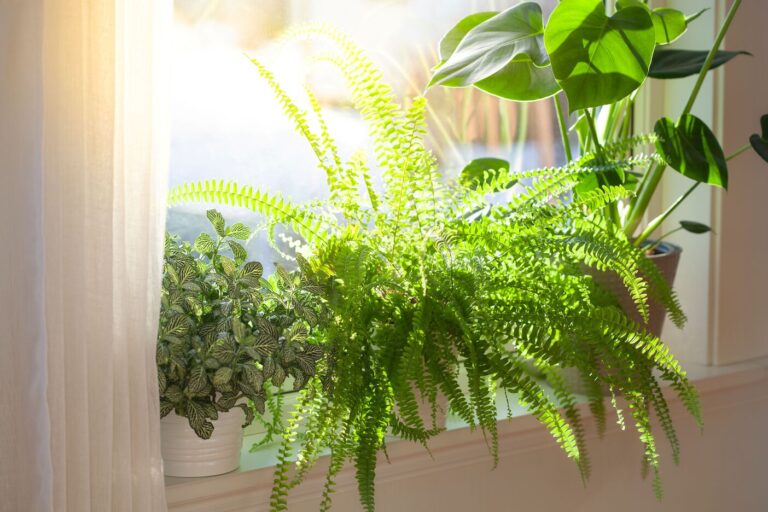
The amount of light houseplants require varies, from tough low-light survivors to sun-hungry herbs that require bright light most of the day. Matching the plant to the light your space actually provides is the whole game. The following chart and table show the rough daily minimums for common indoor plants.
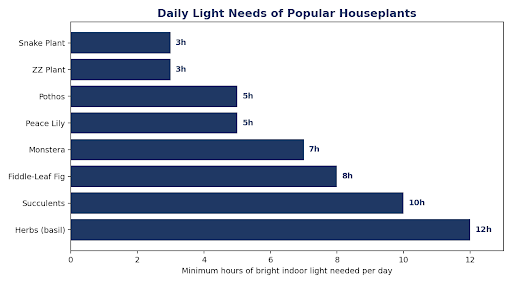
Plant | Light level | Best placement |
Snake plant, ZZ plant | Low to moderate | Interior rooms, north windows, dim corners |
Pothos, peace lily | Moderate, indirect | A few feet from an east or west window |
Monstera, fiddle-leaf fig | Bright, indirect | Near a bright window, out of harsh direct sun |
Succulents, cacti, herbs | Direct sun | A sunny south-facing window |
Treat these rules of thumb as starting points, not laws, as individual homes and exposures differ. But do make sure to choose plants to fit your light rather than forcing a light-hungry plant into a dim spot and hoping it copes.
To know how much light a room gets, it’s necessary to keep an eye on the lighting in the room throughout the entire day. A window that looks bright at noon may sit in shade by mid-afternoon, and a room that seems bright to your eyes may actually be dim for a plant’s requirements.
A simple test is the shadow check. On a sunny day, hold your hand a foot above where the plant will sit. A sharp, crisp shadow means bright light; a soft, fuzzy shadow means moderate light, and almost no shadow means low light. This test takes a minute and tells you more than a guess.
If you want to get even more accurate, use a light meter. These instruments are easy to use and give accurate results.
South-facing windows give the most and strongest light, which is ideal for sun-lovers like succulents and herbs. East windows offer gentle morning light, while west windows provide stronger afternoon light, and north windows give off the weakest light, which is best suited to low-light plants.
Knowing your exposures lets you place each plant where it will actually thrive. For instance, your fiddle-leaf fig near bright south- or west-facing glass and your snake plant happily sitting in a north-facing room. Working with your window orientation is far easier than fighting it.
Leggy, stretched growth reaching toward the window, small pale new leaves, loss of variegation, slow or stalled growth, and lower leaves dropping are the classic tells of insufficient light. A plant leaning toward the light is quite literally asking for more.
The fix is usually to move the plant closer to a window, to a brighter exposure location, or under a grow light. Catching these signs early, before the plant is badly weakened, makes the difference between a quick recovery and a slow decline.
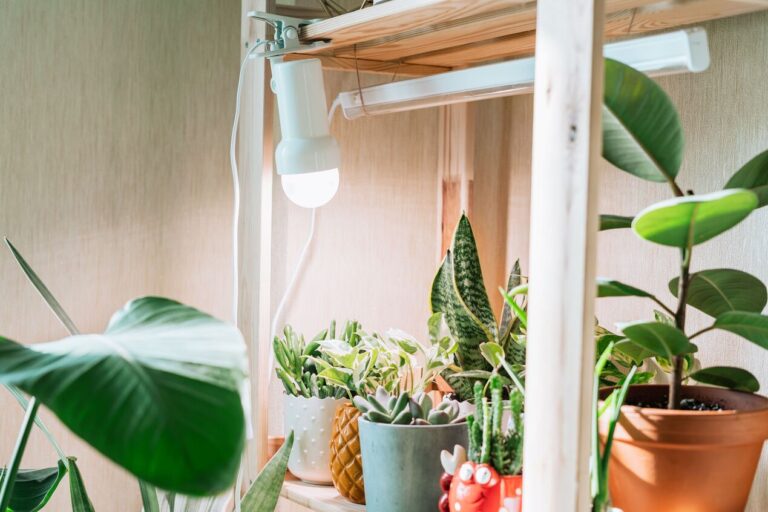
Modern LED full spectrum grow lights are efficient and effective. For a genuinely dark space, or to get a plant through short winter days, a good full spectrum grow light on a timer can keep plants healthy in a way that the available natural light alone cannot support.
Key considerations to keep in mind are adequate light intensity, the right distance from the plant, and a consistent daily schedule (usually 12 to 14 hours). When your home simply doesn’t have enough daylight for your plants’ needs, full spectrum grow lights are the reliable workaround, enabling you to grow greenery almost anywhere.
Most houseplants slow down growth in winter and need less watering and no feeding during this time. Overwatering a plant that is barely growing in low winter light is one of the most common ways to kill it.
Move plants closer to your brightest windows for the season, keep the glass clean so no light is wasted, and add a grow light where daylight is thin. Adjusting care to the lower light, rather than treating winter like summer, is what carries a collection through to spring.
Humidity matters, though light always comes first. Many popular houseplants, tropical species especially, prefer more humidity than a typical heated or air-conditioned home provides. The results of insufficient humidity show up as brown leaf tips and crisp edges.
Grouping plants together, using a pebble tray, or running a small humidifier all help. Get the light right first, then fine-tune humidity, and tropical plants that sulk in dry indoor air will look markedly better.
The rooms with the best light are the ideal ones for indoor gardens. This is often a bright living room, a sunny kitchen, or a south-facing window anywhere. Kitchens and bathrooms also add useful humidity that many plants enjoy, provided they still get enough light.
Rather than scattering plants wherever there is a gap, build your indoor garden where the light is strongest and cluster plants with similar needs together. Doing this looks intentional and makes care far simpler when everything in one spot wants the same conditions.
To keep plants healthy, rotate them a quarter turn every couple of weeks. Plants grow toward their light source, so one that never moves becomes lopsided, full and leafy on the window side and sparse on the room side. Regular rotation keeps growth even and the plant looking full from every angle.
This small habit will pay off with better-looking, healthier plants. Rotating also gives you a routine moment to inspect each plant up close, which is often how you catch a pest or other problem while it’s still easy to deal with.
Forgiving plants that tolerate irregular care and a range of light are your best choices when you’re first starting out growing houseplants. These include snake plant, ZZ plant, pothos, and heartleaf philodendron. These selections shrug off a missed watering, adapt to moderate or low light, and grow reliably, which will build your confidence.
Starting with these before moving on to fussier tropicals sets you up to succeed. A few easy plants teach you how to read light, and those skills carry over when you are ready for something more demanding.
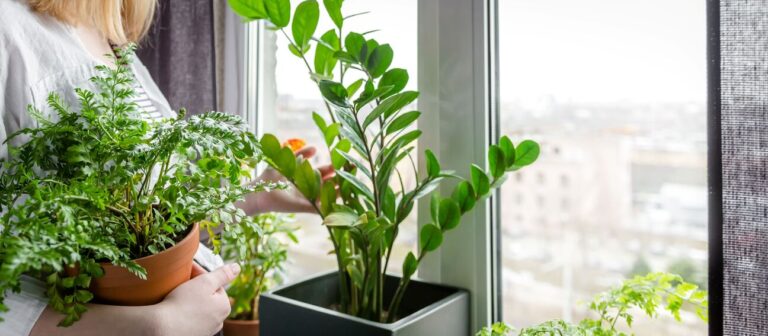
Begin by leaning into low-light champions mentioned here, including snake plant, ZZ plant, and pothos, and pair them with grow lights to expand your options. For many homes that is enough to keep a lush indoor garden going.
Of course, some homes are genuinely light starved, with small windows, few exposures, and rooms that stay dim all day. When that is the constraint, the lasting fix is architectural. For instance, a thoughtful home remodeling in South Denver project that adds larger windows, a skylight, or a sun tunnel can transform a dark room into one where daylight-loving houseplants finally thrive.
A skylight or a sun tunnel can turn a dim interior kitchen or bath into a viable spot for bright-light plants. Enlarging a window can move a whole room up a light category, from low-light-only to a place monsteras and fiddleleaf figs are happy.
More daylight also simply makes a home feel better to live in. If you have reached the limit of what grow lights and low-light species allow and still want a greener home, bringing in more natural light is what expands the palette of houseplants you can actually keep.
Put the right plant in the right light and style around that constraint. Tall floor plants near bright windows, trailing plants on shelves that catch indirect light, low-light plants confidently filling the darker corners—the arrangement follows the light, not the other way around.
The most lush, healthy-looking indoor gardens are the ones where placement respects each plant’s needs. Style and plant health aren’t working against one another when every plant is in light it likes. The whole space looks better and takes less work to maintain.
Thriving houseplants come down to light more than any other factor. Learn the light in each room, match plants to what that light can support, watch for the early signs of too little, and lean on grow lights when daylight falls short. Do that and most indoor plant struggles disappear.
And when a room is simply too dark for the greenery you dream of, remember that light is something you can add. This can be accomplished through grow lights or via a permanent fix by adding more windows and daylight, giving your plants the light they need for an indoor garden that flourishes.