About Tradescantia Nanouk

Tradescantia Nanouk Introduction

Tradescantia Nanouk is a compact, trailing perennial celebrated for its thick, succulent-like leaves splashed with vivid stripes of pink, purple, cream, and green. A patented cultivar developed in the Netherlands from Tradescantia fluminensis and Tradescantia albiflora parentage, Nanouk was bred specifically for its dense, bushy growth habit and exceptionally vibrant coloration, setting it apart from many of its wilder wandering-jew relatives.

The species group from which Nanouk descends is native to the tropical and subtropical regions of South America, particularly Brazil, Argentina, and Uruguay, where related Tradescantia species scramble along forest floors and stream banks as low-growing groundcover. Nanouk itself, however, is a cultivated hybrid rather than a naturally occurring wild plant, and it does not have a true native range; it was created for the ornamental houseplant trade and quickly became popular for its Instagram-worthy coloring.

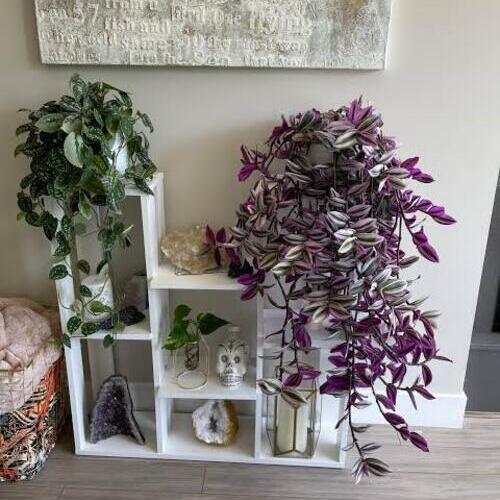
Nanouk’s most notable feature is its sturdy, fleshy foliage, which is thicker and more resilient to handling and light fluctuations than older Tradescantia varieties like zebrina or fluminensis. The oval leaves grow in an alternating pattern along trailing stems, making it equally attractive in hanging baskets, on shelves where its stems can cascade, or trained upright on a small trellis. Occasional small, three-petaled pink to purple flowers may appear, adding a subtle bonus to its already eye-catching leaves.

Tradescantia Nanouk Care & Growing Guide

Tradescantia Nanouk is considered a relatively easy, forgiving houseplant, well suited to growers who want bold color without demanding fussy care. The single most important factor for maintaining its vivid pink and purple stripes is bright light; too little light causes the plant to green out and lose its signature coloring, so placing it near a bright window with several hours of indirect or gently filtered direct sun each day is key.

Watering should be approached with a ‘soak and dry’ rhythm: allow the top inch or so of soil to dry out between waterings, then water thoroughly. Nanouk’s thicker, succulent-like leaves store some moisture, giving it more drought tolerance than thinner-leaved houseplants, but prolonged dryness will still cause leaf curling and stem dieback, while consistently soggy soil quickly leads to root rot. Regular pinching and trimming keeps the plant bushy and prevents the classic ‘leggy’ look that trailing Tradescantia varieties are prone to when stems stretch toward light.

Beyond watering and light, Nanouk appreciates average to warm room temperatures, moderate humidity, and monthly feeding during the growing season. It propagates exceptionally easily from stem cuttings, making it simple to refresh an aging plant or share cuttings with friends. With bright light, attentive watering, and occasional grooming, Tradescantia Nanouk rewards growers with fast, colorful, cascading growth.

 Soil Soil

Tradescantia Nanouk grows best in a light, well-draining potting mix, such as a standard houseplant soil amended with perlite or coarse sand to improve drainage and prevent compaction around its fleshy stems and roots. A slightly acidic to neutral pH range of about 6.0 to 6.5 supports healthy nutrient uptake. Incorporating a small amount of organic compost can boost fertility, though this plant is not particularly demanding when it comes to soil richness.

Soil composition has a direct impact on Nanouk’s health: dense, poorly draining soil traps excess moisture around the roots and encourages rot, while very sandy or fast-draining soil may require more frequent watering to prevent the succulent-like leaves from shriveling. A balanced, airy mix supports steady root growth and reduces stress on the plant.

Common soil problems include poor drainage, which quickly leads to root rot in this moisture-sensitive species; compaction, which restricts root growth and often shows up as slowed growth or wilting despite watering; inappropriate pH, which can inhibit nutrient absorption and cause dull or faded leaf coloring; salt build-up from fertilizer or hard tap water, seen as a white crust on the soil surface; nutrient deficiencies, which may present as pale new growth or loss of vibrant striping; and root boundness, where a crowded pot leads to stunted growth and roots visibly circling or emerging from drainage holes.

 Fertilizer Fertilizer

Feed Tradescantia Nanouk with a balanced, water-soluble liquid fertilizer (such as a 10-10-10 or 20-20-20 formula) diluted to half strength, applied every 4 weeks during the active growing season in spring and summer. Reduce or suspend feeding in fall and winter when growth naturally slows.

Signs of over-fertilization include a white crust on the soil surface, browning or burnt leaf edges, and wilting despite adequate watering. Signs of under-fertilization include pale, washed-out leaf coloring, slowed growth, and smaller-than-normal new leaves.

Organic alternatives include diluted fish emulsion, compost tea, or worm castings applied lightly to the topsoil, providing a gentler nutrient boost. Nanouk has no unusual nutrient requirements beyond standard macronutrients, though a diluted micronutrient supplement can help if new growth appears unusually pale, which may indicate an iron deficiency in alkaline soil conditions.

 Watering Watering

Water Tradescantia Nanouk when the top inch of soil has dried out, then water thoroughly until excess drains from the pot’s drainage holes, allowing the soil to dry slightly again before the next watering. Room-temperature filtered, distilled, or rainwater is preferred, as the plant can be sensitive to the chlorine, fluoride, and salts in hard tap water, which may cause leaf tip browning over time.

Signs of underwatering include curling, shriveled, or wilting leaves and dry, pulling-away soil. Signs of overwatering include yellowing lower leaves, mushy or blackened stems, a sour smell from the soil, and root rot, which can quickly become fatal if not corrected.

Watering needs shift with the seasons: during the active growing season in spring and summer, the plant uses water more quickly and may need watering every 5-9 days, while in fall and winter, when growth slows, watering frequency should be reduced to every 10-14 days or longer, always checking soil moisture rather than following a fixed schedule.

Tradescantia Nanouk Watering Calculator

🪴 Precision Watering Intelligence

Science-Based Hydration for Your Collection

Stop guessing. Most houseplant failures are caused by volumetric errors and improper moisture tension. Our deterministic calculator moves beyond "once-a-week" watering by analyzing the four critical pillars of root health:

  • • Transpiration Coefficients: 120+ species mapped by metabolic rate.
  • • Substrate Porosity: Adjusts for Standard vs. Cactus/Well-Draining mixes.
  • • Geometric Volume (V = π r² h): Calculates exact cups based on pot surface area.
  • • The Drainage Factor: Accounts for pot material (Terracotta) and the risk of a perched water table.

Personalized for this plant

6"
🪴
--
approx. every --

Disclaimer: Our calculator is pretty smart. We’ve crunched the numbers, but we’re not measuring the quantum state of your living room. Since we don’t know your exact indoor temperature, humidity, light, airflow, or whether your plant receives daily sweet nothings and motivational speeches, use this calculator as a guide—and always keep an eye on your plant.

 Lighting Lighting

Tradescantia Nanouk needs bright light to maintain its signature pink, purple, and cream variegation, ideally several hours of bright, indirect light daily, with some gentle direct morning or late-afternoon sun tolerated and even beneficial for color intensity. A south-, east-, or west-facing window with sheer curtains, or a spot with bright ambient light, works well.

Signs of insufficient light include the plant reverting to mostly green leaves, loss of pink and purple striping, leggy or sparse growth with long gaps between leaves, and slower overall growth. Signs of excessive or harsh direct light include bleached or scorched patches on the leaves, crispy brown edges, and leaf curling.

If natural light is inadequate, supplementing with a full-spectrum grow light for about 10-12 hours daily can help maintain vivid coloration. If light is too intense, moving the plant back from the window slightly or filtering direct rays with a sheer curtain will prevent sunburn while still providing enough brightness for good color.

 Tempature Temperature

Tradescantia Nanouk thrives in warm, average room temperatures between 65-80°F (18-27°C) and performs best when kept away from sudden temperature swings. It has low tolerance for cold and should never be exposed to temperatures below 50°F (10°C), which can cause tissue damage and leaf drop.

The plant is not frost-hardy and will suffer irreversible damage if exposed to freezing conditions, so it should always be grown as an indoor plant or brought inside well before the first frost if kept outdoors seasonally. High heat above 85°F (29°C), especially combined with direct sun, can cause wilting and leaf scorch.

To protect Nanouk from temperature extremes, keep it away from drafty windows, exterior doors, and heating or air conditioning vents, and avoid placing it near radiators or cold glass in winter. Consistent, moderate warmth supports the best growth and color retention.

 Humidity Humidity

Tradescantia Nanouk prefers moderate to slightly elevated humidity levels of around 40-60% but generally adapts well to average indoor household humidity. It is more forgiving of drier air than many tropical foliage plants thanks to its thicker, more succulent leaf tissue.

Symptoms of low humidity stress include crispy or browning leaf tips and edges, while excessively high humidity combined with poor air circulation can encourage fungal issues such as leaf spot or root rot if paired with overwatering.

To increase humidity, a pebble tray filled with water placed beneath the pot provides gentle, consistent moisture through evaporation. Grouping plants together can also raise local humidity. Occasional misting offers mild, short-term benefit but is less critical for this species given its moisture-retentive leaves; a small humidifier is the most reliable method in particularly dry indoor climates.

 ropagation Propagation

Tradescantia Nanouk propagates very easily and reliably from stem cuttings, making this by far the preferred and most successful method; growing from seed is uncommon and not typically practiced for this cultivar.

Step-by-step stem cutting propagation guide:
1. Select a healthy, non-flowering stem and use clean, sharp scissors or pruning shears to snip a 3-5 inch section just below a leaf node.
2. Remove the lower one or two leaves from the cutting to expose the node, which is where new roots will form.
3. Choose to root the cutting either in water or directly in moist, well-draining potting mix.
4. If rooting in water, place the cutting in a clear glass or jar with the node submerged, and change the water every few days to keep it fresh.
5. If rooting in soil, dip the cut end in rooting hormone (optional but helpful), then insert the node into slightly moist potting mix.
6. Place the cutting in bright, indirect light, avoiding direct harsh sun during the rooting phase.
7. Keep water cuttings topped off or soil cuttings lightly moist, checking every couple of days.
8. Roots typically begin to appear within 1-2 weeks in water, or 2-3 weeks in soil.
9. Once roots are at least an inch long (for water propagation), transplant the cutting into a small pot with well-draining potting mix.
10. Continue routine care, and new top growth typically appears within a few weeks as the young plant establishes.

The best time to propagate is during the active growing season in spring or summer, when warmth and light encourage faster rooting. Water propagation tends to show visible root development slightly faster and offers a satisfying way to monitor progress, while soil propagation often results in a sturdier root system from the start; both methods have high success rates for this easy-to-root species, typically establishing into an independent plant within 4-6 weeks.

 Potting Potting

Choose a pot with adequate drainage holes, sized only slightly larger than the current root ball, since Tradescantia Nanouk has a relatively shallow, spreading root system and does not need a deep container. Plastic or glazed ceramic pots work well and help retain slightly more moisture, though terracotta is also suitable for growers who tend to overwater. Use a well-draining potting mix amended with perlite for aeration.

Repot approximately once a year, or whenever the plant shows signs of being pot-bound, such as roots circling the interior of the pot or emerging from drainage holes, water running through too quickly without being absorbed, or noticeably slowed growth despite otherwise good care. Because Nanouk grows quickly and can become leggy, repotting alongside a refresh of trimmed cuttings is a common combined task.

Root pruning is rarely necessary, but any dead, mushy, or overly tangled roots can be trimmed with clean, sharp scissors during repotting. When moving to a new pot, handle the root ball gently, water lightly after transplanting, and keep the plant in bright but indirect light for a week or two to reduce transplant stress.

 Pruning Pruning

Best Time to Prune

The best time to prune Tradescantia Nanouk is during the active growing season in spring or summer, though light trimming can be done any time leggy or damaged stems appear.

Frequency

Regular light pruning every few weeks helps maintain a full, bushy shape and prevents the plant from becoming sparse or overly trailing.

Purpose

Pruning encourages branching and denser growth, removes leggy or fading stems, and provides healthy cuttings that can be used for propagation.

Tools and Preparation

Use clean, sharp scissors or pruning shears, sanitized with rubbing alcohol before and after use, and consider wearing gloves since the sap can mildly irritate skin.

Step-by-Step Pruning Guide

  1. Examine the plant and identify long, leggy, or sparsely leaved stems as well as any yellowing or damaged growth.
  2. Select a point just above a healthy leaf node where you want new branching to occur.
  3. Using sanitized scissors, make a clean cut just above the chosen node.
  4. Remove any fully yellowed or dead leaves and stems at their base.
  5. Save healthy trimmed stem sections for propagation if desired.
  6. Dispose of damaged or diseased material away from the plant to prevent the spread of pests or fungal issues.
  7. Water lightly after pruning to support recovery.

Aftercare

Keep the plant in its usual bright, indirect light spot and maintain regular watering; new branching growth typically appears within a couple of weeks.

Special Considerations

Regular pinching of stem tips, even outside of formal pruning sessions, encourages a fuller, bushier plant and helps prevent the bare, leggy stems common in older or under-lit Tradescantia specimens.

 Blooming Blooming

Tradescantia Nanouk can produce small flowers intermittently throughout the year when grown in bright light indoors, with blooming most likely during the warmer months of spring and summer. Flowers are short-lived, often lasting only a day before fading, but the plant may produce a succession of blooms over the growing season under favorable conditions. Optimal flowering conditions include bright light, warm temperatures, and consistent moisture. The flowers are small, delicate, and three-petaled, ranging from soft pink to light purple, appearing at the stem tips and adding a gentle accent to the plant’s already colorful striped foliage; flowering is considered a bonus feature rather than the plant’s main attraction.

 Pests & Diseases Pests and Diseases

Pests

Name: Spider Mites

Symptoms: Fine webbing on leaf undersides, tiny stippled or speckled discoloration, and a dull or dusty appearance to the foliage.

Treatment: Increase humidity, rinse the foliage with lukewarm water, and treat with insecticidal soap or neem oil, repeating every 7-10 days until resolved.

Name: Aphids

Symptoms: Clusters of small green or black insects on new growth and stem tips, sticky honeydew residue, and distorted or curling new leaves.

Treatment: Rinse off aphids with water, apply insecticidal soap or neem oil, and repeat treatment weekly until the infestation clears.

Name: Mealybugs

Symptoms: Small, cottony white masses in leaf joints and along stems, sticky honeydew, and weakened or yellowing growth.

Treatment: Dab visible mealybugs with a cotton swab dipped in rubbing alcohol, then treat the entire plant with insecticidal soap or neem oil, repeating weekly until clear.

Diseases

Name: Root Rot

Symptoms: Mushy, blackened stems and roots, wilting despite moist soil, foul odor from the soil, and leaf yellowing or collapse.

Treatment: Remove the plant from its pot, trim away all affected tissue with sterilized tools, repot into fresh well-draining soil, and reduce watering frequency going forward.

Name: Leaf Spot

Symptoms: Small brown, black, or water-soaked spots on leaves, sometimes with yellow halos, typically linked to fungal or bacterial pathogens.

Treatment: Remove affected leaves promptly, avoid wetting the foliage during watering, improve air circulation, and apply a copper-based fungicide if the problem persists.

Name: Botrytis (Gray Mold)

Symptoms: Fuzzy gray mold on damaged or decaying plant tissue, often appearing in cool, humid, poorly ventilated conditions.

Treatment: Remove and discard affected plant parts, increase airflow around the plant, avoid overhead watering, and apply a fungicide if the mold spreads.

 Special Features Special Features

Tradescantia Nanouk’s standout feature is its bold, saturated variegation of pink, purple, cream, and green striping, which appears on thick, succulent-like leaves that give the plant a slightly more resilient, sculptural presence compared to older wandering-jew varieties. Its naturally trailing habit makes it a versatile choice for hanging baskets, elevated shelves, or as a colorful groundcover-style filler in mixed containers, cascading gracefully over the edges of its pot. The plant also grows quickly and roots easily from cuttings, making it a rewarding species for sharing with friends or filling out a collection inexpensively. Occasional small, three-petaled pink to purple flowers appear as a subtle bonus, though the foliage itself remains the plant’s primary and most celebrated ornamental feature.

 Benefits Plant Benefits

Tradescantia Nanouk is grown almost exclusively as a decorative houseplant, and unlike some related Tradescantia species that have limited folk medicinal use in their native regions, Nanouk itself is a modern ornamental cultivar without an established history of herbal or pharmaceutical use. Because its sap can cause mild skin irritation, the plant should be treated purely as a decorative species rather than used for any home remedy purposes.

  Additional Information Additional Information

Tradescantia Nanouk is a trademarked, patented cultivar, meaning commercial propagation for resale may be restricted in some regions, though home growers can typically propagate cuttings for personal use or gifting. It is closely related to other popular Tradescantia houseplants like zebrina and fluminensis but is distinguished by its thicker leaves and more compact, bushy growth habit. Its striking coloration and easy care have made it one of the most popular trending houseplants in recent years, especially on social media.

  Lifecycle Life Cycle

Tradescantia Nanouk is a fast-growing herbaceous perennial that continuously produces new trailing stems and leaves throughout its active growing season in spring and summer, with growth slowing but generally continuing at a reduced pace through fall and winter given adequate light and warmth. Unlike some plants, it does not typically enter a pronounced dormancy period indoors, though cooler temperatures and lower light in winter will naturally slow its growth rate. Over time, older stems can become leggy or sparse, so the plant benefits from regular pruning and propagation of fresh cuttings to maintain a full, youthful appearance indefinitely.

  Plant ToxicityAre Tradescantia Nanouk Poisonous, Toxic

Tradescantia Nanouk contains calcium oxalate crystals and irritant sap distributed throughout the leaves and stems. It is considered mildly toxic to cats, dogs, and humans, primarily causing skin and gastrointestinal irritation rather than severe systemic poisoning.

Affected organisms: Cats, dogs, and humans (including children) can experience irritation from contact with or ingestion of plant sap. Cats appear to be particularly sensitive to skin contact, sometimes developing dermatitis.

Symptoms: Oral irritation, drooling, and vomiting after ingestion; skin redness, itching, or a mild rash after contact with the sap, especially in pets that brush against broken stems or chew on leaves. Some cats develop swelling of the lips, ears, or paws after contact.

Severity: Generally mild. Most cases involve temporary irritation rather than serious poisoning, though sensitive individuals or animals may react more strongly to skin contact.

First aid steps: Rinse the mouth or affected skin area with cool water to remove sap residue, and monitor for continued irritation. For pets showing persistent redness, swelling, or discomfort, contact a veterinarian. For children with skin irritation or oral exposure, wash the area and contact a pediatrician or poison control if symptoms persist.

Preventive measures: Keep the plant out of reach of pets and small children, wear gloves when pruning or handling cuttings, and promptly clean up any fallen leaf or stem debris that pets might chew.

 FAQ Frequently Asked Questions

Is Tradescantia Nanouk toxic to cats and dogs?

Yes, Tradescantia Nanouk contains calcium oxalates and irritant sap that can cause mild skin and gastrointestinal irritation in cats and dogs.

How often should I water my Tradescantia Nanouk?

Water when the top inch of soil has dried out, typically every 5 to 9 days during the growing season and less often in winter.

Why is my Tradescantia Nanouk losing its pink and purple color?

Insufficient light is the most common cause; moving the plant to a brighter spot with more indirect or gentle direct sun usually restores vibrant coloring.

How much light does Tradescantia Nanouk need?

It needs bright light, ideally several hours of bright indirect light with some tolerance for gentle direct morning or late-afternoon sun.

How do I propagate Tradescantia Nanouk?

It propagates easily from stem cuttings rooted in either water or moist potting mix, typically establishing within four to six weeks.

Why is my Tradescantia Nanouk leggy or sparse?

Leggy growth is usually caused by insufficient light or lack of regular pruning; increasing light and pinching stem tips encourages fuller, bushier growth.

What type of soil is best for Tradescantia Nanouk?

A light, well-draining potting mix amended with perlite, with a slightly acidic pH between 6.0 and 6.5, works best.

Does Tradescantia Nanouk need high humidity?

No, it adapts well to average indoor humidity between 40 and 60 percent thanks to its thicker, moisture-retentive leaves.

Why are the leaves of my Tradescantia Nanouk curling?

Leaf curling is often a sign of underwatering or low humidity; checking soil moisture and adjusting the watering schedule usually resolves the issue.

What temperature range is ideal for Tradescantia Nanouk?

It thrives between 65 and 80°F (18 to 27°C) and should be protected from temperatures below 50°F (10°C).

Can I grow this plant in my indoor spaceCan I grow Tradescantia Nanouk in my indoor space

Difficulty: Easy

Size: Small

Light: High

Water: Medium

Flowering: Yes

Pet Safe: No

Air Purifier: Low

Can I grow this plant in my indoor spaceTradescantia 'Nanouk' botanical details

Common Name: Tradescantia Nanouk

Other Common Names: Fantasy Venice, Tricolor Tradescantia, Pink and Purple Wandering Jew, Nanouk Wandering Jew

Botanical Name: Tradescantia 'Nanouk'

Native Area: Cultivated hybrid developed in the Netherlands; parent species are native to tropical and subtropical South America, including Brazil, Argentina, and Uruguay

Family Name: Commelinaceae

Plant Type: Herbaceous trailing perennial (cultivar/hybrid)

Genus: Tradescantia

Kingdom: Plantae

 Photo Gallery Photo Gallery

 Care recommendationsMy Tradescantia Nanouk Plant Care Recommendations

  •   Buy onlineBuy Tradescantia Nanouk Online

    “Bring Home This Beauty Today”

    “Get Your Own Tradescantia Nanouk Before It’s Gone”

    “Shop Trusted Sellers – Limited Availability”

    “Free Delivery”

    Trandescantia Nanouk Plant Care
    Trandescantia Nanouk Plant Care

    As an Amazon Associate, I earn commission from qualifying purchases.

      Plant Joke Plant Puns and Jokes

    Why did the Tradescantia Nanouk refuse to stay in one place? It was born to wander, jew know!

    Newsletter Signup Signup to our newsletter and download Tradescantia Nanouk care guide

    AI Julie Chatbot, ask me!
    Let's ask AI Julie
    Chatbot Icon