About Purple Shamrock
Purple Shamrock Introduction
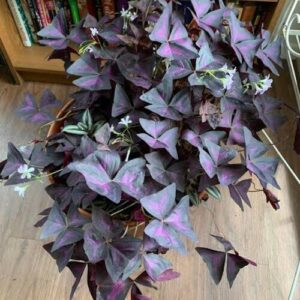
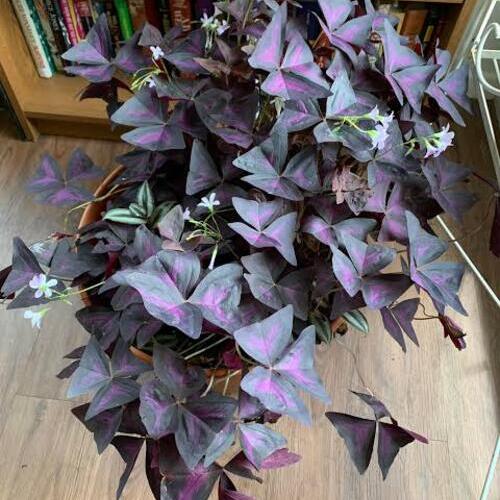
The Purple Shamrock, botanically known as Oxalis triangularis, is a striking rhizomatous perennial prized for its deep violet-purple, butterfly-shaped foliage. Native to Brazil and other parts of subtropical South America, it belongs to the wood sorrel family and has become a beloved houseplant and garden ornamental worldwide due to its dramatic coloration and unusual leaf movement.
The plant grows from small, scaly rhizomes (sometimes mistaken for bulbs) that store energy and allow the plant to go dormant during periods of stress, such as low light or drought, before resprouting. Each leaf is divided into three triangular leaflets that fold together like a fan, a trait that gives the plant its common association with clover and shamrocks, even though it is botanically unrelated to true shamrocks (which are typically Trifolium species).
One of the most captivating features of Purple Shamrock is its nyctinastic behavior: the leaves open wide during daylight hours to capture sunlight and fold closed at night or in low light, a rhythmic motion driven by changes in turgor pressure within specialized cells at the base of each leaflet. Delicate, funnel-shaped white to pale pink flowers appear intermittently above the foliage, adding a soft contrast to the rich purple leaves and making this plant a popular choice for adding color and movement to indoor plant collections.
Purple Shamrock Care & Growing Guide
Purple Shamrock is widely regarded as a low-maintenance, rewarding houseplant, making it an excellent choice for beginners and experienced growers alike. Success starts with providing bright, indirect light; while the plant can tolerate some direct morning sun, harsh afternoon rays can scorch the delicate leaves. Placing it near an east- or west-facing window typically provides the balance of brightness needed to maintain vivid purple coloration without stress.
Watering should follow a moderate, consistent rhythm. Allow the top inch or two of soil to dry out between waterings, then water thoroughly until excess drains from the pot’s drainage holes. Overwatering is the most common cause of trouble, leading to rhizome rot, while prolonged drought will cause the plant to wilt and eventually go dormant. It is normal for Purple Shamrock to enter a dormancy period once or twice a year, during which the foliage yellows and dies back; simply reduce watering and allow the rhizomes to rest before growth resumes.
Beyond light and water, Purple Shamrock appreciates average household humidity, temperatures between 60-75°F (15-24°C), and monthly feeding with a balanced, diluted liquid fertilizer during the active growing season. Repotting every one to two years refreshes the soil and gives the spreading rhizomes room to multiply. With attentive but simple care, this plant rewards growers with lush, colorful foliage and charming daily leaf movement for years to come.
Soil
Purple Shamrock thrives in a well-draining, loose potting mix composed of standard potting soil blended with perlite or coarse sand to improve aeration and prevent waterlogging around the rhizomes. A slightly acidic to neutral pH range of about 6.0 to 7.0 is ideal for nutrient uptake and healthy growth. Adding organic matter such as compost or well-rotted leaf mold can boost fertility and improve moisture retention without compacting the soil.
Soil composition directly affects rhizome health: overly dense or waterlogged soil restricts oxygen to the roots and encourages fungal rot, while soil that is too sandy or fast-draining may dry out too quickly and stress the plant. A balanced mix supports steady moisture availability while allowing excess water to escape.
Common soil problems include poor drainage, which leads to root and rhizome rot; compaction, which restricts root expansion and gas exchange over time and signals a need for repotting or soil refreshment; inappropriate pH, which can lock out essential nutrients like iron and magnesium, causing yellowing leaves; salt build-up from excess fertilizer or hard tap water, visible as white crusting on the soil surface and pot edges; nutrient deficiencies, often showing as pale or stunted new growth; and root or rhizome boundness, where the plant becomes overcrowded in its container, indicated by rhizomes pushing up through the soil surface or stunted growth despite good care.
Fertilizer
Feed Purple Shamrock with a balanced, water-soluble liquid fertilizer (such as a 10-10-10 or 20-20-20 formula) diluted to half strength, applied once a month during the active growing season in spring and summer. Suspend feeding during dormancy or the low-light winter months when growth naturally slows.
Signs of over-fertilization include a white crust on the soil surface, browning or burnt-looking leaf edges, and wilting despite adequate water. Signs of under-fertilization include pale or yellowing new growth, sparse flowering, and slowed overall growth.
Organic alternatives include diluted fish emulsion, compost tea, or worm castings worked lightly into the topsoil, which provide a gentler, slow-release nutrient source. This species has no unusual nutrient requirements beyond the standard macronutrients, though occasional supplementation with a diluted micronutrient feed can help if yellowing suggests an iron or magnesium deficiency in alkaline soils.
Watering
Water Purple Shamrock when the top 1-2 inches of soil feel dry to the touch, then water thoroughly until liquid drains from the pot’s bottom, discarding any standing water in the saucer. Room-temperature filtered, distilled, or rainwater is preferred, as this plant can be somewhat sensitive to the chlorine, fluoride, and mineral salts found in hard tap water, which may cause leaf tip browning over time.
Signs of underwatering include wilting, curling, or drooping leaves and dry, crumbly soil pulling away from the pot’s edges. Signs of overwatering include yellowing leaves, mushy or blackened stems, a sour smell from the soil, and eventual rhizome rot.
Watering needs shift seasonally: during the active growing season in spring and summer, the plant benefits from more frequent watering as it uses moisture quickly, while in fall and winter, or during natural dormancy periods when the foliage dies back, watering should be reduced significantly to prevent rot while the rhizomes rest.
Purple Shamrock Watering Calculator
🪴 Precision Watering Intelligence
Science-Based Hydration for Your Collection
Stop guessing. Most houseplant failures are caused by volumetric errors and improper moisture tension. Our deterministic calculator moves beyond "once-a-week" watering by analyzing the four critical pillars of root health:
- • Transpiration Coefficients: 120+ species mapped by metabolic rate.
- • Substrate Porosity: Adjusts for Standard vs. Cactus/Well-Draining mixes.
- • Geometric Volume (V = π r² h): Calculates exact cups based on pot surface area.
- • The Drainage Factor: Accounts for pot material (Terracotta) and the risk of a perched water table.
Personalized for this plant
Disclaimer: Our calculator is pretty smart. We’ve crunched the numbers, but we’re not measuring the quantum state of your living room. Since we don’t know your exact indoor temperature, humidity, light, airflow, or whether your plant receives daily sweet nothings and motivational speeches, use this calculator as a guide—and always keep an eye on your plant.
Lighting
Purple Shamrock prefers bright, indirect light for at least 6 hours daily, such as that found near an east- or west-facing window. It can tolerate a few hours of gentle direct morning sun, which often intensifies the purple leaf coloration, but should be shielded from harsh, direct afternoon sun that can scorch or bleach the foliage.
Signs of insufficient light include leggy or stretched stems, fading of the purple color toward green, reduced flowering, and leaves that stay closed even during the day. Signs of excessive or overly intense light include bleached, pale, or crispy leaf edges and wilting despite adequate soil moisture.
If natural light is limited, supplementing with a full-spectrum grow light for 10-12 hours a day can maintain healthy growth and vibrant color. Conversely, if light is too intense, moving the plant a few feet back from the window or adding a sheer curtain can diffuse the rays and prevent leaf damage.
Temperature
Purple Shamrock thrives in average room temperatures between 60-75°F (15-24°C) and performs best with some day-to-night temperature variation, which can even encourage more vivid coloration. It has moderate tolerance for brief fluctuations but is sensitive to prolonged cold or heat extremes.
Temperatures below 50°F (10°C) can trigger dormancy or cause cold damage, while sustained exposure to frost will kill the foliage and can damage the rhizomes if grown outdoors in unprotected conditions. On the other end, temperatures above 85°F (29°C) combined with intense light can cause wilting and leaf stress.
To protect the plant from extremes, keep it away from drafty windows, exterior doors, and heating or air conditioning vents. In regions with cold winters, bring outdoor-grown specimens indoors or store dormant rhizomes in a cool, dry location until conditions improve.
Humidity
Purple Shamrock adapts well to average indoor humidity levels of around 40-50% but appreciates slightly higher humidity when available. It is fairly tolerant of typical household conditions and does not require intensive humidity management.
Symptoms of low humidity stress include crispy or browning leaf margins and slightly curled leaflets, while excessively high humidity combined with poor airflow can promote fungal issues such as powdery mildew or leaf spot.
To boost humidity, a pebble tray filled with water placed beneath the pot offers gentle, consistent moisture through evaporation without waterlogging the soil. Occasional light misting can help in very dry climates, though it is less critical for this species than for tropical foliage plants. A small humidifier nearby is the most effective and adjustable method in particularly arid indoor environments.
Propagation
Purple Shamrock is most commonly and reliably propagated through rhizome division, though it can also occasionally be grown from seed with much lower and slower success rates. Division is by far the preferred method among growers because it produces mature, flowering-size plants far more quickly than seed propagation.
Step-by-step rhizome division guide:
1. Choose a mature, healthy plant, ideally during a natural dormancy period when the foliage has died back, making the rhizomes easier to access.
2. Gently remove the plant from its pot and shake or brush away excess soil to expose the small, scaly rhizomes.
3. Separate the rhizomes by hand into clusters of several rhizomes each, ensuring each division has healthy, firm, unblemished tissue.
4. Discard any soft, mushy, or discolored rhizomes, which indicate rot.
5. Prepare small pots with a well-draining potting mix.
6. Plant the rhizome clusters about 1-2 inches deep, spacing them a couple of inches apart within the pot.
7. Water lightly to settle the soil without saturating it.
8. Place the newly potted divisions in bright, indirect light and keep the soil lightly moist but not soggy.
9. New shoots typically emerge within 2-4 weeks as the plant breaks dormancy and resumes active growth.
10. Resume regular watering and light fertilizing once new growth is well established.
The best time to propagate is in early spring, just as the plant is coming out of dormancy, or immediately after a dormancy cycle. Rhizome division establishes noticeably faster than seed propagation, with new growth often visible within a month, while seed-grown plants can take considerably longer to reach a comparable size.
Potting
Choose a pot with ample drainage holes and a diameter only slightly larger than the current root mass, since Purple Shamrock’s shallow rhizome system does not require deep pots. Terracotta or unglazed ceramic pots are excellent choices, as their porous material helps wick away excess moisture and reduces the risk of rot. Use a well-draining potting mix amended with perlite or coarse sand.
Repot approximately every 1-2 years, or whenever the plant shows signs it has outgrown its container, such as rhizomes crowding or pushing up through the soil surface, water running straight through without being absorbed, significantly reduced or stunted growth despite good care, or roots visible through drainage holes.
Root pruning is rarely necessary for this species, but overly congested or circling roots can be gently teased apart or trimmed with clean, sharp scissors during repotting to encourage healthier growth. When transitioning to a new pot, repot during dormancy or early in the growing season to minimize stress, handle the rhizomes gently, water lightly after repotting, and keep the plant in indirect light for a week or two while it adjusts.
Pruning
Best Time to Prune
The ideal time to prune Purple Shamrock is during or just after its natural dormancy period, or any time throughout the growing season when spent, yellowing, or damaged foliage appears.
Frequency
Light, routine pruning can be done as needed, typically every few weeks, to remove tired or discolored leaves and spent flower stems.
Purpose
Pruning helps maintain a tidy appearance, redirects the plant’s energy toward healthy new growth, and reduces the risk of fungal issues by removing decaying material.
Tools and Preparation
Use clean, sharp scissors or pruning snips, wiped with rubbing alcohol before and after use to prevent the spread of disease.
Step-by-Step Pruning Guide
- Inspect the plant and identify yellowing, wilting, or damaged leaves and spent flower stems.
- Trace each unwanted leaf or stem down to its base near the soil line.
- Using sanitized scissors, snip the stem cleanly at its base rather than pulling or tearing it away.
- Remove spent flower stalks in the same manner once blooms have faded.
- Dispose of the trimmed material away from the plant to prevent fungal spores or pests from lingering nearby.
- Water lightly after pruning to help the plant recover from any minor stress.
Aftercare
Keep the plant in its normal bright, indirect light location and maintain regular watering; new growth typically resumes within a few weeks.
Special Considerations
If the entire plant appears to be dying back uniformly, this is often natural dormancy rather than a problem, and heavy pruning can be paired with reduced watering until new shoots appear.
Blooming
Purple Shamrock can bloom intermittently throughout the year when grown indoors under adequate light, with the heaviest flush of flowers typically occurring in spring and summer. Individual blooms are short-lived, lasting only a few days each, but the plant produces flowers in successive waves over several weeks. Optimal blooming conditions include bright, indirect light, consistent moisture, and temperatures in the 65-75°F (18-24°C) range. Flowers are small, funnel-shaped, and appear in clusters of five petals in white to soft pink shades, held on slender stems that rise above the purple foliage, creating a delicate contrast against the dark leaves.
Pests and Diseases
Pests
Name: Spider Mites
Symptoms: Fine webbing on leaf undersides, stippled or speckled discoloration, and overall dull or bronzed foliage appearance.
Treatment: Increase humidity, rinse foliage with lukewarm water, and treat with insecticidal soap or neem oil, repeating every 7-10 days until resolved.
Name: Aphids
Symptoms: Clusters of small green, black, or white insects on new growth and flower stems, sticky honeydew residue, and curling leaves.
Treatment: Wipe or spray off aphids with water, apply insecticidal soap or neem oil, and introduce natural predators such as ladybugs for outdoor specimens.
Name: Mealybugs
Symptoms: Small, cottony white masses in leaf joints and along stems, along with sticky residue and yellowing leaves.
Treatment: Dab visible mealybugs with a cotton swab dipped in rubbing alcohol, then treat the whole plant with insecticidal soap or neem oil, repeating weekly until clear.
Diseases
Name: Rhizome/Root Rot
Symptoms: Mushy, blackened rhizomes or roots, wilting despite moist soil, foul odor from the soil, and collapsing foliage.
Treatment: Remove the plant from its pot, trim away all affected tissue with sterilized tools, repot into fresh, well-draining soil, and reduce watering frequency going forward.
Name: Powdery Mildew
Symptoms: White, powdery coating on leaf surfaces, typically in conditions of high humidity and poor air circulation.
Treatment: Improve airflow around the plant, remove and discard affected leaves, and apply a fungicidal spray or homemade solution of diluted potassium bicarbonate if needed.
Name: Leaf Spot
Symptoms: Small brown or black spots on leaves, sometimes with yellow halos, caused by fungal or bacterial pathogens.
Treatment: Remove affected leaves promptly, avoid overhead watering that wets the foliage, and apply a copper-based fungicide if the issue persists.
Special Features
Purple Shamrock’s most celebrated feature is its rich, deep-purple, triangular foliage, which provides a dramatic pop of color rarely found in easy-care houseplants, and which intensifies with adequate bright light. Beyond its striking color, the plant exhibits fascinating nyctinastic movement, opening its leaves during the day and folding them closed at night in a gentle, clock-like rhythm that many growers find mesmerizing to watch. It also produces delicate white to pale pink flowers intermittently throughout the growing season, adding subtle seasonal interest against the dark leaves. As a bonus, the plant is easy to propagate and share, and its rhizomes can be stored dormant, making it a fun, low-fuss plant for collectors interested in seasonal cycles and unique foliage color rather than blooms alone.
Plant Benefits
While Purple Shamrock is grown primarily as an ornamental, some related Oxalis species have a history of traditional folk use for their tart, oxalic-acid-rich leaves in small culinary amounts and in traditional remedies for minor ailments such as sore throats or fevers in their native regions. However, due to the oxalic acid content, medicinal or culinary use is not recommended, and the plant should be treated strictly as a decorative species rather than an herbal remedy.
Additional Information
Purple Shamrock is sometimes confused with true shamrocks (Trifolium species) or with lucky four-leaf clovers, but it is botanically unrelated, belonging instead to the wood sorrel family. The plant’s rhizomes are frost-tender, so gardeners in cooler climates typically grow it as a container plant that can be brought indoors, or lift and store the rhizomes over winter if planted outdoors in summer. Its dramatic color and easy-care nature have made it a popular gift plant and a common feature in mixed succulent and houseplant arrangements.
Life Cycle
Purple Shamrock grows from underground rhizomes that sprout leafy shoots and periodically flower during active growth phases in spring and summer. As conditions change, such as reduced light, cooler temperatures, or natural seasonal rhythms, the plant enters dormancy: foliage yellows and dies back while the rhizomes remain alive underground, conserving energy. After a rest period of several weeks to a couple of months, the rhizomes sprout new growth, restarting the above-ground cycle. Over time, rhizomes multiply and can be divided to produce new, independent plants, allowing the species to persist and spread indefinitely under suitable care.
Are Purple Shamrock Poisonous, Toxic
Purple Shamrock contains soluble calcium oxalates and oxalic acid concentrated in the leaves, stems, and rhizomes. It is considered toxic to cats, dogs, and children if ingested in significant quantities.
Affected organisms: Cats, dogs, horses, and humans (particularly young children) are all susceptible, with cats and dogs generally at higher risk due to their smaller body size and tendency to chew on houseplants.
Symptoms: Drooling, vomiting, diarrhea, loss of appetite, lethargy, and in severe or repeated ingestion cases, tremors, kidney damage, or changes in heart rhythm due to calcium oxalate binding with blood calcium. Mild oral irritation, redness, or swelling of the mouth and tongue may also occur.
Severity: Generally classified as mildly to moderately toxic. Small accidental nibbles usually cause only mild gastrointestinal upset, but large ingestions, especially by small pets, can be more serious and warrant veterinary attention.
First aid steps: Remove the animal or child from access to the plant, rinse the mouth gently with water if irritation is visible, and offer water to drink. Contact a veterinarian, pediatrician, or poison control center promptly, especially if large amounts were consumed or symptoms are severe. Do not induce vomiting unless directed by a professional.
Preventive measures: Keep the plant on high shelves, in hanging planters, or in rooms inaccessible to pets and small children. Consider pet-safe deterrent sprays and always supervise curious pets around new houseplants.
Frequently Asked Questions
Is Purple Shamrock toxic to cats and dogs?
Yes, Purple Shamrock contains calcium oxalates and is considered mildly to moderately toxic to cats and dogs if ingested, potentially causing drooling, vomiting, or lethargy.
How often should I water my Purple Shamrock?
Water when the top one to two inches of soil feel dry, typically every one to two weeks, adjusting for season and reducing watering during dormancy.
Why do the leaves of my Purple Shamrock close up?
This is a natural process called nyctinasty, where the leaves fold closed at night or in low light and reopen during the day.
Why is my Purple Shamrock dying back or losing its leaves?
This is often natural dormancy rather than a problem; the plant will typically resprout from its rhizomes after a rest period with reduced watering.
How much light does Purple Shamrock need?
It needs bright, indirect light for several hours a day, with some gentle direct morning sun, to maintain its vivid purple color.
How do I propagate Purple Shamrock?
The plant is most easily propagated by dividing its rhizomes and replanting the divisions in fresh, well-draining soil.
Why are the leaves of my Purple Shamrock turning green?
Insufficient light often causes the vivid purple coloring to fade toward green; moving the plant to a brighter spot usually restores the color.
Does Purple Shamrock need a dormancy period?
Yes, most plants naturally cycle through dormancy once or twice a year, during which watering should be reduced until new growth resumes.
Can Purple Shamrock be grown outdoors?
It can be grown outdoors in warm climates or as a seasonal container plant, but its rhizomes are frost-tender and need protection or indoor storage in winter.
What type of soil is best for Purple Shamrock?
A well-draining potting mix amended with perlite or coarse sand, with a slightly acidic to neutral pH between 6.0 and 7.0, works best.
Can I grow Purple Shamrock in my indoor space
Difficulty: Easy
Size: Small
Light: Medium
Water: Medium
Flowering: Yes
Pet Safe: No
Air Purifier: Low
Oxalis triangularis botanical details
Common Name: Purple Shamrock
Other Common Names: False Shamrock, Purple Wood Sorrel, Love Plant, Purple Trefoil, Purple Clover, Good Luck Plant, Purpleleaf Shamrock
Botanical Name: Oxalis triangularis
Native Area: Brazil and subtropical regions of South America, including parts of Argentina, Bolivia, Paraguay, and Uruguay
Family Name: Oxalidaceae
Plant Type: Herbaceous perennial (rhizomatous)
Genus: Oxalis
Kingdom: Plantae
Photo Gallery
My Purple Shamrock Plant Care Recommendations
- Perky Plant fertilizer: https://amzn.to/3RdLA00
- Seaweed extract: https://amzn.to/3z2CsFh
- Rooting hormone: https://amzn.to/3bIXi0t
- Espoma fertilizer: https://amzn.to/3vPa9bs
- Worm compost: https://amzn.to/3HVL01u
- Full-spectrum Light Bulb-Large: https://amzn.to/3yR6VBu
- Full-spectrum Lighting: https://amzn.to/3qhhaiv
- Light meter: https://amzn.to/4dpmp3s
- Moisture meter: https://amzn.to/3TEUu5N
- Hygrometer: https://amzn.to/3Cf6h2F
- Pruning shears: https://amzn.to/3X6oOcg
- ProMix Potting Soil: https://amzn.to/3iVIrjE
- My Organic Green Gourmet Houseplant Fertilizer: Healthy Houseplants Store
- My Perfect Pumice: Healthy Houseplants Store
- My Healthy Houseplants Store: All Products
Buy Purple Shamrock Online
✅ “Bring Home This Beauty Today”
✅ “Get Your Own Purple Shamrock Before It’s Gone”
✅ “Shop Trusted Sellers – Limited Availability”
✅ “Free Delivery”
As an Amazon Associate, I earn commission from qualifying purchases.
Plant Puns and Jokes
Why did the Purple Shamrock close its leaves at the party? It heard things were about to get a little too ‘oxalis-citing’ and needed some rest!