About Polka Dot Begonia
Polka Dot Begonia Introduction
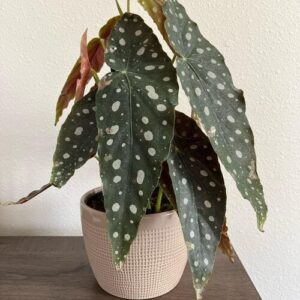
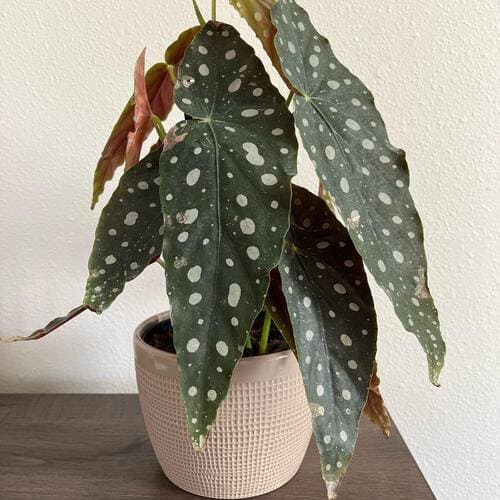
The Polka Dot Begonia (Begonia maculata) is a striking cane-type begonia prized for its large, angel-wing-shaped olive-green leaves dotted with irregular rows of silvery-white spots. The undersides of the leaves carry a deep maroon-red hue, creating a dramatic contrast whenever the foliage moves or is backlit. Mature plants develop thick, jointed, bamboo-like canes that can reach two to three feet indoors, giving the plant an upright, slightly architectural growth habit that distinguishes it from mounding or trailing begonia types.
This species is native to the Atlantic Forest region of southeastern Brazil, where it grows as an understory plant beneath the dense rainforest canopy. In its native habitat it experiences dappled, filtered light, high humidity, and warm, stable temperatures year-round, conditions that inform most of its care requirements in cultivation. It was formally described in the twentieth century and has since become one of the most sought-after houseplants in the broader Begonia genus, largely because of its unusual spotted patterning, which is genuinely rare among foliage plants.
Beyond its ornamental leaves, Begonia maculata produces clusters of small white to pale pink flowers, typically in spring and summer, that dangle beneath the canes on slender stems. While the blooms are attractive, most growers cultivate this plant primarily for its foliage. With consistent warmth, bright indirect light, and attentive watering, it grows relatively quickly for a begonia and can be pruned to encourage a fuller, bushier form over time.
Polka Dot Begonia Care & Growing Guide
Caring for a Polka Dot Begonia successfully comes down to recreating its native understory conditions: bright, indirect light, evenly moist (but never soggy) soil, and reliably high humidity. Place it near an east- or north-facing window, or a few feet back from a bright south- or west-facing one, where it receives filtered light throughout the day. Direct, intense sun will scorch the thin leaves, while too little light causes leggy stems and faded spotting.
Water thoroughly whenever the top inch or two of soil has dried out, then allow excess water to drain completely; this begonia is notably sensitive to overwatering, which quickly leads to root rot and stem collapse. A well-draining, chunky potting mix and a pot with drainage holes are essential. Humidity is the other major factor in success: aim for 50 percent or higher, using a pebble tray, humidifier, or grouping with other plants, since dry household air causes crispy leaf edges and slowed growth.
Feed lightly during the active growing season, keep temperatures in a warm, stable range, and prune leggy canes periodically to encourage branching and a fuller silhouette. Repot only when the plant is noticeably rootbound, as Polka Dot Begonias generally prefer being slightly snug in their containers. With these basics in place, this begonia rewards attentive but not overly fussy care with fast, striking growth.
Soil
Polka Dot Begonia thrives in a light, well-draining, chunky potting mix rather than a dense, moisture-retentive soil. A good blend combines standard potting soil with perlite, orchid bark, and coarse sand or pumice to promote excellent drainage while still holding some moisture. An ideal pH range is slightly acidic to neutral, roughly 6.0 to 6.5. Adding compost or worm castings can supply gentle, steady nutrition. Because this begonia’s fibrous roots are prone to rot in compacted or waterlogged soil, drainage matters more than moisture retention; the mix should dry partially between waterings without staying wet at the core.
Common soil problems include poor drainage, which causes root rot and yellowing leaves; compaction over time, which restricts oxygen to the roots and slows growth; inappropriate pH, which can lock out nutrients like iron and magnesium leading to chlorosis; salt build-up from fertilizer or tap water, visible as a white crust on the soil surface and pot rim; and nutrient deficiencies, often showing as pale or stunted new growth. Root boundness, where roots circle tightly within the pot, restricts water uptake and signals it’s time to repot into fresh, well-aerated soil.
Fertilizer
Feed Polka Dot Begonia with a balanced, water-soluble houseplant fertilizer diluted to half strength, applied every 4 to 6 weeks during the active growing season of spring and summer. Reduce or suspend fertilizing in fall and winter when growth naturally slows. Signs of over-fertilization include brown, crispy leaf tips and edges, a white crust of salts on the soil surface, and wilting despite adequate moisture, while under-fertilization shows as pale, small, or slow-growing new leaves. Organic alternatives such as diluted fish emulsion, worm castings, or compost tea can provide gentler, steady nutrition. This species benefits from adequate nitrogen for leaf growth along with trace micronutrients like magnesium and iron, deficiencies of which can cause interveinal yellowing on new leaves.
Watering
Water Polka Dot Begonia when the top 1-2 inches of soil feel dry, then water thoroughly until it drains from the bottom of the pot, discarding any standing water in the saucer. Room-temperature filtered, distilled, or rainwater is preferable, since this species can be sensitive to the chlorine, fluoride, and mineral salts found in some tap water, which may cause leaf tip browning over time. Signs of underwatering include drooping, curling leaves and dry, crispy edges, while overwatering shows as yellowing leaves, soft or mushy stems, and a musty smell from the soil indicating root rot. Watering needs increase during the warmer growing months of spring and summer when the plant is actively producing new canes and leaves, and should be reduced in fall and winter as growth slows and the plant uses less water.
Polka Dot Begonia Watering Calculator
🪴 Precision Watering Intelligence
Science-Based Hydration for Your Collection
Stop guessing. Most houseplant failures are caused by volumetric errors and improper moisture tension. Our deterministic calculator moves beyond "once-a-week" watering by analyzing the four critical pillars of root health:
- • Transpiration Coefficients: 120+ species mapped by metabolic rate.
- • Substrate Porosity: Adjusts for Standard vs. Cactus/Well-Draining mixes.
- • Geometric Volume (V = π r² h): Calculates exact cups based on pot surface area.
- • The Drainage Factor: Accounts for pot material (Terracotta) and the risk of a perched water table.
Personalized for this plant
Disclaimer: Our calculator is pretty smart. We’ve crunched the numbers, but we’re not measuring the quantum state of your living room. Since we don’t know your exact indoor temperature, humidity, light, airflow, or whether your plant receives daily sweet nothings and motivational speeches, use this calculator as a guide—and always keep an eye on your plant.
Lighting
Bright, indirect light is essential for Polka Dot Begonia; an east-facing window or a spot several feet from a south- or west-facing window works well. Filtered natural light through a sheer curtain also suits it. Insufficient light causes leggy, sparse stems, smaller leaves, and faded or less distinct silver spotting, while excessive direct sun causes brown, crispy patches or bleached, faded leaf color from scorching. If natural light is limited, a full-spectrum grow light positioned 12-18 inches above the plant for 10-12 hours a day can supplement or replace sunlight effectively, helping maintain vivid spot patterning and compact, bushy growth.
Temperature
Polka Dot Begonia thrives in average indoor temperatures between 65-80°F (18-27°C) and does not tolerate cold well. It is sensitive to temperatures below 55°F (13°C), which can cause leaf drop and stunted growth, and it should never be exposed to frost. It also dislikes sudden temperature swings and cold drafts from windows, doors, or air conditioning vents, which can shock the plant and cause leaf loss. To protect it from extremes, keep it away from drafty windows in winter and out of direct proximity to heating vents or radiators, which can dry it out. Maintaining a stable, warm environment year-round supports the most consistent growth.
Humidity
Polka Dot Begonia prefers relatively high humidity, ideally 50 percent or above, reflecting its rainforest understory origins. Low humidity stress appears as brown, crispy leaf edges and tips, curling foliage, and slowed or stunted growth, while excessively high humidity combined with poor airflow can encourage fungal issues like powdery mildew on the leaves. To raise humidity, a room humidifier is the most effective and consistent method, particularly in dry climates or heated winter rooms. Pebble trays filled with water placed beneath the pot offer modest, localized humidity gains. Grouping plants together also helps raise local humidity through collective transpiration. Misting directly onto the leaves is generally less effective and can even encourage fungal spotting on this species, so it is not the preferred method.
Propagation
Polka Dot Begonia is most commonly propagated from stem cuttings, which root reliably in water or moist soil. Leaf cuttings can also work but are slower and less consistent than stem cuttings. The best time to propagate is during spring or summer when the plant is actively growing.
1. Select a healthy cane with at least one or two leaf nodes, and use clean, sharp scissors to cut a 4-6 inch section just below a node.
2. Remove the lower leaves, leaving one or two at the top of the cutting.
3. Place the cutting in a clean jar of room-temperature water, or insert it into a moist, well-draining propagation mix.
4. Keep the cutting in bright, indirect light and warm temperatures around 70-75°F (21-24°C).
5. Change the water every few days if using the water method, or keep soil consistently moist if using the soil method.
6. Roots typically begin to appear within 2-4 weeks.
7. Once roots reach about 1-2 inches long, pot the cutting into a well-draining potting mix.
8. Keep the newly potted cutting in high humidity and indirect light for several weeks as it establishes.
Water propagation tends to have a slightly higher success rate and allows growers to visually monitor root development, while soil propagation, though a bit slower to show visible progress, often produces a sturdier root system for transplanting. Newly rooted cuttings generally establish and begin producing new growth within 4 to 8 weeks of potting.
Potting
Use a pot with ample drainage holes, ideally terracotta or another breathable material that helps excess moisture evaporate and reduces the risk of root rot. A well-draining chunky mix of potting soil, perlite, and orchid bark suits this species well. Polka Dot Begonia prefers being slightly snug in its pot, so repotting is generally only necessary every 1-2 years, or when roots are visibly circling the drainage holes or emerging from the soil surface. Signs it needs repotting include water running straight through without being absorbed, slowed growth despite good care, and roots crowding out the soil. When repotting, gently loosen any tightly circling roots and trim away any that are mushy, blackened, or clearly rotten. Move up only one pot size at a time to avoid oversized pots holding excess moisture. Water lightly after repotting and keep the plant in stable, indirect light for a week or two to minimize transplant stress.
Pruning
Best Time to Prune
Prune Polka Dot Begonia in spring or early summer, at the start of its active growing season, so it has ample time to recover and push new growth.
Frequency and Purpose
Light pruning every few months helps maintain a bushy, compact shape, removes leggy or bare canes, and encourages branching rather than tall, sparse growth.
Tools and Preparation
Use clean, sharp bypass pruners or scissors sterilized with rubbing alcohol to prevent spreading disease between cuts.
Step-by-Step Pruning Guide
- Inspect the plant and identify canes that are leggy, bare at the base, damaged, or overly tall.
- Make a clean cut just above a leaf node, at roughly a 45-degree angle.
- Remove any yellowing, damaged, or dead leaves along the remaining canes.
- Cut back no more than one-third of the plant’s total growth in a single session to avoid stress.
- Save healthy cuttings for propagation if desired.
Aftercare
Water lightly after pruning, keep the plant in stable indirect light, and resume normal fertilizing once new growth appears, typically within a few weeks.
Special Considerations
Avoid pruning heavily in fall or winter when the plant’s energy reserves and growth rate are lower, since recovery will be much slower.
Blooming
Begonia maculata typically blooms in spring and summer, though indoor plants with consistent warmth and light can flower intermittently throughout the year. Blooming duration for an individual flush generally lasts several weeks, with clusters of pendant, drooping flowers appearing at the leaf axils near the tips of mature canes. Flowering frequency depends heavily on light levels and plant maturity; younger or low-light plants may not bloom at all. Optimal blooming conditions include bright indirect light, temperatures between 65-80°F (18-27°C), and consistent but moderate watering. The flowers themselves are small, waxy, and typically white with a faint pink blush, borne in loose clusters of male and female blooms on the same plant, with male flowers being showier and female flowers bearing a distinctive winged seed capsule behind the petals.
Pests and Diseases
Pests
Name: Mealybugs
Symptoms: White, cottony clusters on stems and leaf undersides; sticky honeydew residue; yellowing leaves.
Treatment: Wipe affected areas with rubbing alcohol on a cotton swab, then treat with insecticidal soap or neem oil, repeating weekly until resolved.
Name: Spider Mites
Symptoms: Fine webbing on leaf undersides, tiny yellow or bronze speckling on leaves, overall dull appearance.
Treatment: Increase humidity, rinse leaves thoroughly, and apply insecticidal soap or neem oil; isolate the plant to prevent spread.
Name: Aphids
Symptoms: Small green or black insects clustered on new growth; curled or distorted leaves; sticky residue.
Treatment: Spray off with water, then apply insecticidal soap or neem oil, repeating every 5-7 days as needed.
Name: Whiteflies
Symptoms: Small white flying insects that scatter when disturbed; sticky honeydew on leaves; yellowing foliage.
Treatment: Use yellow sticky traps, apply insecticidal soap, and improve air circulation around the plant.
Diseases
Name: Powdery Mildew
Symptoms: White, powdery fungal coating on leaf surfaces, particularly in humid, poorly ventilated conditions.
Treatment: Improve air circulation, avoid wetting the foliage, and apply a fungicide labeled for powdery mildew if needed.
Name: Root Rot
Symptoms: Wilting despite moist soil, blackened and mushy roots, yellowing lower leaves, foul odor from soil.
Treatment: Remove the plant from its pot, trim away rotten roots, repot into fresh well-draining soil, and reduce watering frequency.
Name: Bacterial Leaf Spot
Symptoms: Water-soaked spots on leaves that turn brown or black, sometimes with a yellow halo.
Treatment: Remove and discard affected leaves, avoid overhead watering, and improve airflow around the plant.
Name: Botrytis (Gray Mold)
Symptoms: Fuzzy gray mold on leaves, stems, or flowers, typically in cool, damp, poorly ventilated conditions.
Treatment: Remove affected plant parts, increase airflow, reduce humidity slightly, and apply a fungicide if the infection persists.
Special Features
The Polka Dot Begonia stands out among houseplants for its bold, almost artificial-looking silver-spotted foliage paired with a deep maroon leaf underside, a combination rarely seen elsewhere in the plant world. Its upright, cane-like growth habit gives it a distinctive architectural presence that differs from the mounding form of many other begonias, making it a striking focal point on a shelf or plant stand. Though grown primarily for its foliage, it does produce delicate clusters of white to blush-pink flowers that add seasonal interest. Its relatively fast growth rate for a begonia, combined with how easily it propagates from stem cuttings, makes it a popular plant for sharing among collectors and a rewarding one to watch develop over time.
Plant Benefits
Begonia maculata is not commonly used for herbal or pharmaceutical purposes and is primarily valued as an ornamental plant. Unlike some other begonia species that have limited traditional folk-medicine uses in their native regions, Begonia maculata has no well-established or scientifically validated medicinal applications, and given its toxicity to pets and children, ingestion or self-medicating use is not recommended.
Additional Information
Begonia maculata is sometimes confused with cultivars like ‘Wightii’ or ‘Torch,’ which share the spotted pattern but differ slightly in leaf shape or size. It is a member of the wax begonia and cane begonia group, distinguished by its jointed, bamboo-like stems. The plant is not frost hardy and is typically grown as a houseplant in most climates, though it can be moved outdoors to a shaded patio during warm summer months.
Life Cycle
Polka Dot Begonia is a perennial evergreen subshrub that, under suitable indoor conditions, grows and maintains foliage year-round without a dormancy period, though growth slows noticeably in lower light and cooler temperatures during fall and winter. New canes emerge from the base or from nodes along existing stems, gradually lengthening and producing new spotted leaves as they mature. With good care, a cutting can grow into a well-established, multi-caned plant within one to two years, and mature plants can live for many years indoors, especially when periodically pruned and occasionally propagated to maintain vigor.
Are Polka Dot Begonia Poisonous, Toxic
Begonia maculata is considered toxic to cats, dogs, and children if ingested. The highest concentration of toxic compounds, primarily soluble calcium oxalates, is found in the underground tuber and root portions of the plant, though the leaves and stems also contain lower levels. Cats, dogs, and other animals that chew on the plant are affected, as are children who might mouth the leaves. Symptoms of toxicity include oral irritation, intense burning of the mouth and tongue, excessive drooling, difficulty swallowing, vomiting, and in cases involving ingestion of tuber material, more significant kidney effects. Severity is generally considered mild to moderate for leaf and stem exposure, but higher for tuber ingestion. First aid steps include rinsing the mouth with water, offering water to drink, removing any plant material from the mouth, and contacting a veterinarian or poison control center promptly, especially if symptoms are severe or if a large amount was ingested. Preventive measures include keeping the plant on high shelves or in rooms inaccessible to pets and small children, and promptly cleaning up any dropped leaves or plant debris.
Frequently Asked Questions
Is Polka Dot Begonia easy to care for?
It is considered an intermediate-level houseplant; it needs consistent humidity, bright indirect light, and careful watering, but it is not overly difficult once these conditions are met.
Is Polka Dot Begonia toxic to cats and dogs?
Yes, it contains calcium oxalates, particularly concentrated in the tubers, and can cause oral irritation, drooling, and vomiting if ingested by pets.
How often should I water my Polka Dot Begonia?
Water when the top 1-2 inches of soil have dried out, typically every 7-10 days, adjusting for light, humidity, and season.
Why is my Polka Dot Begonia losing its spots?
Faded spotting is usually caused by insufficient light; moving the plant to a brighter, indirect light location often restores more vivid patterning on new growth.
Does Polka Dot Begonia like humidity?
Yes, it prefers humidity of 50 percent or higher and will develop crispy leaf edges in dry air.
How do you propagate Polka Dot Begonia?
It propagates easily from stem cuttings placed in water or moist soil, typically rooting within 2-4 weeks.
Why are the leaves on my Polka Dot Begonia turning yellow?
Yellowing leaves most often indicate overwatering or poor drainage leading to root stress, though it can also signal a nutrient deficiency.
How big does a Polka Dot Begonia get?
Indoors it typically reaches 2-3 feet tall, with an upright, cane-like growth habit.
Does Polka Dot Begonia flower?
Yes, it produces small clusters of white to pale pink flowers, most often in spring and summer.
How often should I repot Polka Dot Begonia?
Repotting is generally needed every 1-2 years, or when the plant becomes visibly rootbound.
Can I grow Polka Dot Begonia in my indoor space
Difficulty: Intermediate
Size: Medium
Light: Medium
Water: Medium
Flowering: Yes
Pet Safe: No
Air Purifier: Low
Begonia maculata botanical details
Common Name: Polka Dot Begonia
Other Common Names: Angel Wing Begonia, Spotted Begonia, Trout Begonia, Clown Begonia
Botanical Name: Begonia maculata
Native Area: Atlantic Forest region of southeastern Brazil, South America
Family Name: Begoniaceae
Plant Type: Perennial (evergreen subshrub, cane-type begonia)
Genus: Begonia
Kingdom: Plantae
Photo Gallery
My Polka Dot Begonia Plant Care Recommendations
- Perky Plant fertilizer: https://amzn.to/3RdLA00
- Seaweed extract: https://amzn.to/3z2CsFh
- Rooting hormone: https://amzn.to/3bIXi0t
- Espoma fertilizer: https://amzn.to/3vPa9bs
- Worm compost: https://amzn.to/3HVL01u
- Full-spectrum Light Bulb-Large: https://amzn.to/3yR6VBu
- Full-spectrum Lighting: https://amzn.to/3qhhaiv
- Light meter: https://amzn.to/4dpmp3s
- Moisture meter: https://amzn.to/3TEUu5N
- Hygrometer: https://amzn.to/3Cf6h2F
- Pruning shears: https://amzn.to/3X6oOcg
- ProMix Potting Soil: https://amzn.to/3iVIrjE
- My Organic Green Gourmet Houseplant Fertilizer: Healthy Houseplants Store
- My Perfect Pumice: Healthy Houseplants Store
- My Healthy Houseplants Store: All Products
Buy Polka Dot Begonia Online
✅ “Bring Home This Beauty Today”
✅ “Get Your Own Polka Dot Begonia Before It’s Gone”
✅ “Shop Trusted Sellers – Limited Availability”
✅ “Free Delivery”
As an Amazon Associate, I earn commission from qualifying purchases.
Plant Puns and Jokes
Why did the Polka Dot Begonia refuse to play hide and seek? Because with all those spots, it could never blend in!