


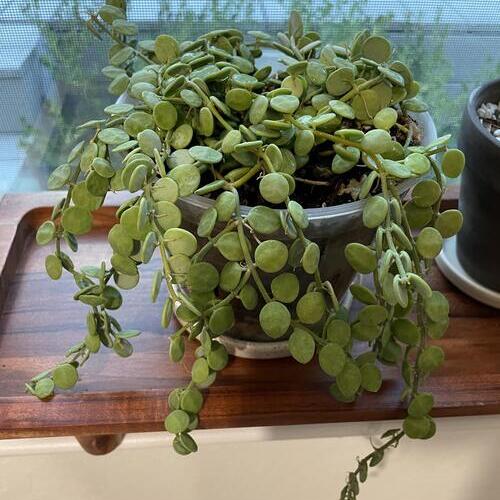
String of Nickels, botanically classified as Dischidia nummularia, is a distinctive epiphytic succulent vine belonging to the Apocynaceae family, the same broad plant family that includes hoyas, milkweeds, and oleander, though this species bears little visual resemblance to those more familiar relatives. It is native to the tropical lowland and mid-elevation forests of Southeast Asia, including Malaysia, Indonesia, and the Philippines, along with parts of Australia and various Pacific Islands, where it grows not rooted in soil but as an epiphyte, clinging to tree bark and branches with small adventitious roots that anchor the plant while drawing minimal moisture and nutrients from decomposing organic debris caught in bark crevices, an adaptation that has shaped its strong preference for excellent drainage and tolerance of intermittent, rather than constant, moisture.
The defining feature of this species is its small, round, coin- or button-shaped succulent leaves, typically under an inch in diameter, which grow densely packed and slightly overlapping along thin, wiry, trailing or climbing stems, giving mature specimens a textured, shingled appearance quite distinct from the broader or more elongated foliage typical of many other trailing houseplants. These fleshy leaves store water efficiently, allowing the plant to tolerate periods of drought far better than consistently soggy conditions, a trait shared broadly among Dischidia species that have adapted to the sometimes unpredictable moisture availability of an epiphytic lifestyle high in the forest canopy.
What makes Dischidia nummularia particularly appealing to houseplant collectors is the combination of its low-maintenance care profile, unusual and tactile foliage texture, and graceful trailing habit, which lends itself beautifully to hanging baskets, mounted bark or driftwood displays, and terrarium settings where its delicate stems can cascade freely. Its relative tolerance of the lower humidity and less-than-perfect watering consistency typical of many indoor environments, combined with its compact size and slow, manageable growth rate, have made this species an increasingly popular choice among collectors of unusual epiphytes and succulents seeking an alternative to more mainstream trailing plants.
Caring for String of Nickels is relatively straightforward once its epiphytic origins and corresponding preference for excellent drainage are understood, making it a rewarding choice for growers with some prior succulent or epiphyte experience who appreciate its delicate, coin-like foliage. This plant thrives with bright, filtered light, a loose, extremely well-draining potting mix similar to what is used for orchids or other epiphytic succulents, and a watering routine that allows the soil to dry out substantially between waterings, since like most epiphytic succulents, Dischidia nummularia is highly susceptible to root and stem rot in consistently moist conditions.
During the active growing season in spring and summer, String of Nickels benefits from bright, filtered light or a few hours of gentle direct morning sun, regular but infrequent watering once the soil has dried out, moderate humidity, and light, diluted feeding to support steady trailing growth. Because the plant produces thin, wiry stems that trail or climb, growers should provide a hanging basket, elevated shelf, or small trellis to display its cascading habit, and can pinch back the growing tips occasionally to encourage bushier, fuller growth rather than a single long, sparse strand.
As temperatures cool in autumn and winter, watering should be reduced significantly to accommodate the plant’s slower growth and reduced water uptake during this rest period, though the plant should still be kept in a warm location away from cold drafts and protected from temperatures that drop too low for its tropical origins. With bright filtered light, careful attention to drainage, and a watering rhythm that respects its epiphytic preference for drying out between waterings, String of Nickels rewards attentive growers with a slowly lengthening, densely leaved cascade that becomes more textural and visually striking with each passing year.
 Soil
Soil
String of Nickels requires an extremely well-draining, chunky potting mix quite different from standard potting soil, more closely resembling a blend suited to orchids, hoyas, or other epiphytic succulents. A recommended mix combines orchid bark, perlite, and coarse sand or pumice in roughly equal parts, sometimes with a small amount of standard potting soil or coconut coir added for minimal moisture retention, replicating the loose, airy, quick-draining pockets of organic debris this species would naturally root into on tree bark. The ideal soil pH is slightly acidic to neutral, generally between 6.0 and 7.0.
Soil composition plays a particularly significant role in this plant’s long-term health, since as an obligate epiphyte in the wild, it is exceptionally vulnerable to root and stem rot in any soil that retains moisture for extended periods, far more so than many terrestrial succulents. Adding extra orchid bark or coarse perlite improves aeration around the root system, mimicking the airy growing conditions of its epiphytic origins, while keeping organic matter to a minimum helps prevent the kind of moisture retention that this species tolerates poorly.
Common soil problems to watch for include poor drainage, which can quickly and severely affect this highly rot-prone species, given its strong preference for a substrate that dries quickly after watering; soil compaction over time, which restricts root aeration and should be corrected with periodic repotting into fresh, chunky mix; inappropriate pH, which can hinder nutrient uptake and weaken overall vigor; salt build-up from tap water or fertilizer residue, visible as a white crust on the soil surface and best remedied by flushing thoroughly with water during the growing season; and nutrient deficiencies, often presenting as pale, slow foliage growth, correctable with light, appropriately timed fertilization. Root-boundness is generally well tolerated by this species and may even be mildly beneficial in encouraging more compact growth, though a container that has become severely overcrowded with roots should still be sized up to maintain overall plant vigor.
 Fertilizer
String of Nickels has relatively modest fertilization needs and benefits from light feeding during its active spring and summer growing season, using a balanced, water-soluble fertilizer diluted to half or quarter strength and applied roughly once every four to six weeks while the plant is actively producing new trailing growth. Fertilization should be reduced or suspended entirely during the cooler autumn and winter months, when growth naturally slows and the plant enters a period of reduced nutrient uptake, as feeding during this period offers little benefit and can lead to salt buildup in the soil. Signs of over-fertilization include white, crusty salt deposits on the soil surface, leaf tip burn or discoloration, and unusually soft or weak new growth, while under-fertilization typically presents as pale, sparse foliage growth and a general slowing of new stem development over successive growing seasons. Organic alternatives such as a well-diluted fish emulsion or a light application of worm castings can be used during the active growing season for growers preferring a more natural approach, and because this species evolved drawing minimal nutrients from decomposing debris caught in tree bark, restraint with fertilizer generally serves this plant better than frequent or heavy feeding.
 Watering
Watering String of Nickels should follow the classic succulent approach of thorough soaking followed by substantial drying, reflecting this epiphytic species’ strong adaptation to intermittent rainfall and quick-draining conditions in its native tree-bark habitat rather than consistently moist soil. During the active growing season in spring and summer, water deeply enough that excess moisture drains freely from the pot, then allow the top half to two-thirds of the soil to dry out before watering again, typically every seven to twelve days depending on light, temperature, and humidity levels. Rainwater, distilled water, or tap water left to sit for twenty-four hours to dissipate chlorine is generally preferred, as this species can be somewhat sensitive to long-term mineral buildup from hard tap water affecting root health.
During the cooler months of autumn and winter, watering should be reduced significantly, allowing the soil to dry out almost completely between waterings, typically every two to three weeks, to accommodate the plant’s slower growth and reduced water needs during this rest period. Signs of overwatering include soft, translucent, or mushy leaves, yellowing foliage that drops readily, and a sour smell or visible mold at the soil surface, all of which require immediate corrective action such as reducing water and improving drainage, while signs of underwatering include shriveled, wrinkled, or noticeably deflated leaves that lose their typical plumpness, though the plant recovers readily once watering resumes. Because this species is considerably more tolerant of drought than of consistently wet soil, erring toward underwatering rather than overwatering is the safer approach for long-term plant health.
Stop guessing. Most houseplant failures are caused by volumetric errors and improper moisture tension. Our deterministic calculator moves beyond "once-a-week" watering by analyzing the four critical pillars of root health:
Personalized for this plant
Disclaimer: Our calculator is pretty smart. We’ve crunched the numbers, but we’re not measuring the quantum state of your living room. Since we don’t know your exact indoor temperature, humidity, light, airflow, or whether your plant receives daily sweet nothings and motivational speeches, use this calculator as a guide—and always keep an eye on your plant.
 Lighting
String of Nickels thrives in bright, filtered light, mimicking the dappled sunlight it would naturally receive while growing on tree bark beneath a partial forest canopy, making an east-facing window or a spot near a sheer-curtained south- or west-facing window ideal for indoor specimens. Insufficient light causes the plant to produce sparse, elongated growth with increased spacing between leaves, a loss of the tightly packed, shingled appearance that makes the foliage visually appealing, and a significant reduction in the likelihood of flowering. Excessive, intense direct sun, particularly through unfiltered south-facing windows in the height of summer, can scorch the small succulent leaves, causing bleached, yellowish, or brown patches, so a plant being moved into brighter conditions should be acclimated gradually over one to two weeks. If natural light is inadequate, supplement with a full-spectrum LED or fluorescent grow light for ten to twelve hours daily, positioned at a moderate distance to avoid leaf burn while still providing sufficient intensity to maintain compact, healthy growth.
 Temperature
String of Nickels prefers warm, tropical to subtropical temperatures, thriving between 65°F and 85°F (18°C to 29°C) year-round, and showing relatively little benefit from or need for a distinct cooler winter rest period compared to some other epiphytic plants, though slightly reduced temperatures in winter alongside reduced watering are well tolerated. It has limited cold tolerance and should be protected from temperatures below 55°F (13°C), with prolonged exposure to cold conditions potentially causing leaf drop, stem dieback, or more serious damage, making outdoor cultivation suitable only in warm, frost-free climates or as a seasonal patio plant brought indoors before cold weather arrives. The plant tolerates typical indoor temperature fluctuations reasonably well but should be kept away from cold drafts near winter windows and doors, as well as away from hot, dry air from heating vents, both of which can stress the plant and cause leaf shriveling. To protect it from temperature extremes, bring container specimens indoors well ahead of any autumn cold snap, and avoid placing the plant directly against cold glass in winter, where nighttime window temperatures can drop noticeably below the surrounding room temperature.
 Humidity
String of Nickels prefers moderate humidity levels, generally in the range of 40 to 60 percent, reflecting the humid forest environments of its native range, though this species shows reasonably good tolerance for the lower humidity typical of average indoor homes compared to some more humidity-demanding tropical plants. Low humidity over extended periods can cause slightly slower growth and occasional leaf shriveling at the stem tips, while symptoms of appropriately balanced humidity include plump, firm, glossy leaves and steady, healthy trailing growth. Effective humidifying methods for this species include occasional light misting of the foliage, placing the pot on a humidity or pebble tray, grouping it with other humidity-appreciating plants, or using a room humidifier during particularly dry winter months, though because this species tolerates lower humidity reasonably well, such measures are more about optimizing growth than a strict requirement. Because excessively stagnant, overly humid air combined with poor ventilation can occasionally encourage fungal issues on the dense, overlapping foliage, pairing any humidity increases with good air circulation helps maintain healthy growth without inviting disease.
 Propagation
String of Nickels is relatively easy to propagate through stem cuttings, taken from healthy, mature trailing stems, making this by far the most common, fastest, and most reliable method used by home growers, while propagation from seed is possible but considerably slower, less predictable, and rarely practiced outside of specialized breeding programs. The best time to propagate is during the active growing season in spring or early summer, when both the parent plant and new cuttings establish and root most vigorously.
Compared to stem cutting propagation, growing String of Nickels from seed is considerably slower and less commonly practiced, given the difficulty of obtaining viable seed from cultivated specimens and the extended timeline required for seedlings to reach a mature, ornamental size. Rooted cuttings typically establish as independent, actively growing plants within four to six weeks under suitable conditions, with visible trailing growth resuming shortly after establishment.
 Potting
String of Nickels should be planted in a small to medium pot with ample drainage holes, and terracotta or unglazed ceramic containers are often preferred over plastic since their porous walls allow additional moisture to evaporate, helping to compensate for this species’ strong preference for quick-drying substrate. Hanging baskets, mounted bark or driftwood displays, and shallow, wide containers are all excellent options given the plant’s naturally trailing, epiphytic growth habit. Repotting is typically needed every two to three years for actively growing specimens, and should be done in spring using a fresh, chunky, well-draining mix, though this species tends to tolerate being somewhat pot-bound, so overly frequent repotting into much larger containers should generally be avoided. Signs that repotting is needed include roots visibly emerging from drainage holes or densely circling the pot’s interior, water passing through too quickly without being absorbed, and a noticeable decline in growth rate despite otherwise appropriate care. When repotting, handle the root system gently, and if roots are extremely dense or circling, light root pruning with clean, sterilized tools can help refresh the root system, though this should be done conservatively given the species’ relatively delicate root structure. To minimize transplant stress, repot during active growth when possible, and withhold heavy watering for several days after repotting to allow the root system to settle into its new soil.
 Pruning
String of Nickels benefits from occasional, light pruning to encourage bushier, fuller growth, remove any thin, leggy, or damaged stems, and keep the trailing cascade balanced and attractive over time. Pruning is best performed during the active growing season in spring or summer, when the plant recovers and produces new growth most readily, though damaged or dead stems can be trimmed away at any time as needed.
Use a clean, sharp pair of small scissors or pruning snips, sterilized with rubbing alcohol before and between cuts to reduce the risk of disease transmission. This species lacks any significant sap irritation concerns for most growers, though washing hands after handling any cut plant material is a good general practice, and gloves are optional rather than necessary.
After pruning, keep the plant in its usual bright, filtered light location and maintain a normal watering routine, as this species does not require an extended recovery period or special aftercare following light trimming. Avoid heavy, drastic pruning all at once, since removing too much foliage in a single session can stress the plant and slow its recovery; instead, favor light, incremental trims spread across the growing season. Regular, gentle pruning over time helps maintain a dense, evenly filled cascade of coin-shaped foliage rather than a sparse, leggy vine with growth concentrated only at the stem tips.
 Blooming
String of Nickels produces small, subtle flowers primarily during the warm growing months of spring and summer, though its blooms are so tiny and understated that most growers cultivate this species for its distinctive coin-shaped foliage rather than for any dramatic floral display. Each flower is typically only a few millimeters across, waxy in texture, and pale cream, yellow, or greenish-white in color, emerging singly or in small clusters from the leaf axils along the trailing stems, a flower structure characteristic of the broader Apocynaceae family to which Dischidia belongs. Flowering frequency and reliability depend heavily on light intensity, with plants grown in bright, filtered light or given some direct morning sun considerably more likely to bloom than those kept in low-light conditions, where the plant may grow indefinitely without ever producing flowers. Because the blooms are so small and easily overlooked amid the plant’s dense, overlapping round leaves, many indoor growers are surprised to discover flowering has occurred at all, and the species is best appreciated as a foliage plant whose occasional blooms are a pleasant bonus rather than a primary feature.
 Pests and Diseases
Name: Mealybugs
Symptoms: Cottony white masses nestled between the overlapping, coin-shaped leaves and along the stems, often accompanied by sticky honeydew residue and weakened or discolored growth.
Treatment: Dab visible clusters with rubbing alcohol on a cotton swab, then treat the plant with insecticidal soap or diluted neem oil, repeating every seven to ten days until the infestation is resolved.
Name: Scale Insects
Symptoms: Small, brown or tan, shell-like bumps along the stems and undersides of leaves, accompanied by sticky residue and occasional yellowing of affected areas.
Treatment: Scrape off visible scale by hand where accessible and treat with horticultural oil or a systemic insecticide for widespread infestations.
Name: Spider Mites
Symptoms: Fine webbing between the densely packed leaves, stippled or bronzed discoloration, and general decline, particularly in hot, dry indoor conditions with insufficient humidity.
Treatment: Rinse the foliage with water to dislodge mites, increase humidity and air circulation, and apply a miticide or insecticidal soap as needed for persistent infestations.
Name: Aphids
Symptoms: Small clusters of green or black insects on new growth near the stem tips, often causing distorted or stunted growth in young leaves.
Treatment: Dislodge aphids with a gentle stream of water and follow with insecticidal soap or neem oil applications until the population is under control.
Name: Stem and Root Rot
Symptoms: Soft, mushy, translucent, or discolored stems and leaves, wilting or leaf drop despite otherwise adequate care, and a foul odor from the soil.
Treatment: Remove the plant from its pot, cut away all soft or discolored tissue using a sterilized blade, allow the remaining healthy tissue to dry and callus thoroughly, and repot in fresh, well-draining mix, significantly reducing watering going forward.
Name: Fungal Leaf Spot
Symptoms: Small brown, black, or reddish spots appearing on the round leaves during periods of high humidity or poor air circulation, particularly where foliage remains damp for extended periods.
Treatment: Remove affected leaves promptly, improve air circulation around the plant, avoid overhead watering that wets the foliage excessively, and apply a copper-based fungicide if the problem persists or spreads.
Name: Leaf Shrivel from Underwatering
Symptoms: Leaves that appear deflated, wrinkled, or noticeably thinner than their typical plump, coin-like form, most often affecting the oldest leaves first.
Treatment: Resume a normal, thorough watering schedule, ensuring the plant is watered deeply enough to fully saturate the root zone before allowing it to dry out again, and monitor for gradual plumping of new growth over the following weeks.
 Special Features
String of Nickels is celebrated for its distinctive, densely packed, coin-shaped succulent leaves that overlap along thin, wiry, trailing stems, creating a textured, shingled visual effect quite different from the more elongated foliage of many other trailing houseplants, making it a popular choice for hanging baskets, mounted displays, and terrariums where its delicate cascading habit can be fully appreciated. As a member of the Dischidia genus, this species shares a fascinating ecological history with its close relatives, several of which have evolved specialized, pouch-like leaves that house colonies of ants in a mutualistic relationship in their native rainforest habitats, and though Dischidia nummularia itself does not typically form these dramatic ant-house structures, its round, water-storing leaves reflect the same succulent, epiphytic adaptations that allow the genus to thrive clinging to tree bark with minimal soil. The plant’s compact size, tolerance of the lower humidity and inconsistent watering common in typical indoor environments, and unusual, tactile foliage make it a favorite among succulent and epiphyte collectors seeking something different from more commonly grown trailing plants like pothos or string of pearls.
 Plant Benefits
Dischidia species, including Dischidia nummularia, have a limited history of use in traditional folk medicine in parts of Southeast Asia, with anecdotal reports of preparations from the leaves or stems used for minor skin irritations or as a component of traditional remedies, though none of these applications have been substantiated through rigorous clinical research, and the plant should not be considered a reliable or safe source of any herbal treatment. Unlike some succulents with more established nutritional or medicinal reputations, this species is grown almost exclusively for ornamental purposes, valued for its unusual coin-shaped foliage and low-maintenance trailing habit rather than any home health application, and any interest in its chemical constituents remains largely confined to botanical or ethnobotanical curiosity rather than practical herbal use. Growers interested in the wellness or aromatherapy associations sometimes attributed to houseplants may appreciate String of Nickels primarily for its calming, tactile visual appeal and its contribution to indoor greenery rather than for any genuine pharmacological benefit.
 Additional Information
String of Nickels belongs to the genus Dischidia, a group of roughly 80 to 100 species within the Apocynaceae family, many of which are epiphytic vines native to tropical Asia and the Pacific, and several of which, unlike Dischidia nummularia, have evolved dramatic pouch-shaped or urn-shaped leaves that form symbiotic partnerships with ant colonies in their native habitats. The common name ‘String of Nickels’ draws an obvious visual comparison to the small, round, coin-shaped leaves, though growers should be aware that several other trailing succulents share similarly coin- or button-inspired common names, so confirming the botanical name Dischidia nummularia is useful when purchasing or discussing this specific species. As a member of the same family as Hoya, String of Nickels shares some general care similarities with those popular epiphytic vines, including a preference for bright filtered light, excellent drainage, and a tolerance for being somewhat pot-bound, making it an appealing addition for growers who already cultivate hoyas and are looking to expand into a related but visually distinct genus. The plant’s compact size and tolerance for close, humid microclimates also make it a popular candidate for large glass terrariums and vivariums, where its trailing stems can be allowed to drape naturally over branches, cork bark, or other mounted materials.
 Life Cycle
String of Nickels begins its life as a rooted stem cutting or, less commonly, a seedling, quickly establishing a network of thin, wiry stems that trail or climb by producing small adventitious roots along their length wherever they contact a suitable surface, a growth habit reflecting its epiphytic origins clinging to tree bark and branches in its native humid forests. As the plant matures, it produces an increasing density of small, round, coin-like succulent leaves along each stem, giving the mature plant its characteristic overlapping, shingled appearance, while new stems continue to lengthen steadily during the warm growing season from spring through early autumn. Growth slows considerably during the cooler, lower-light months of late autumn and winter, when the plant essentially rests, requiring minimal water and no fertilizer during this dormant period. Given adequate light, warmth, and humidity, String of Nickels is a long-lived perennial capable of trailing for several feet over the years or being trained to climb a small support, with mature specimens often developing a dense, curtain-like cascade of foliage that becomes more impressive with each passing growing season. Because this species is an obligate or facultative epiphyte in the wild, closely associated in some regions with ant colonies that inhabit specialized leaf pouches formed by related Dischidia species, its cultivated life cycle is somewhat simplified compared to its wild ecology, though the plant retains its preference for excellent drainage, bright filtered light, and the kind of intermittent moisture typical of an epiphytic lifestyle.
 Are String of Nickels Poisonous, Toxic
Dischidia nummularia is generally considered non-toxic to cats, dogs, and humans, making it a relatively safe choice for households with curious pets or young children compared to many other popular houseplants, though as with most plant material, ingestion of larger quantities can occasionally cause mild gastrointestinal upset in sensitive individuals. Symptoms, if they occur, are typically limited to mild drooling, vomiting, or diarrhea resulting from the physical irritation of ingesting plant fiber rather than any significant toxic compound, and severe reactions are uncommon with this species. If a pet or child does experience digestive upset after chewing on or ingesting plant material, monitoring for resolution of symptoms is usually sufficient, though contacting a veterinarian or pediatrician is advisable if symptoms are severe, persistent, or accompanied by other concerning signs. Preventive measures are less critical for this species compared to toxic houseplants, though it remains good general practice to discourage pets and young children from chewing on any houseplant material, and to keep an eye on curious pets around the plant’s thin, trailing stems, which can be easily tangled, chewed, or pulled down from hanging displays.
 Frequently Asked Questions
No, String of Nickels is generally considered non-toxic to cats, dogs, and humans, though ingesting large amounts of plant material can occasionally cause mild digestive upset.
Shriveled, deflated leaves are typically a sign of underwatering, since this succulent species stores water in its round leaves and needs a thorough soak once the soil has dried out.
Water deeply when the top half to two-thirds of the soil has dried out, typically every seven to twelve days during active growth, and much less often, roughly every two to three weeks, during the cooler winter rest period.
It needs bright, filtered light similar to dappled sunlight beneath a forest canopy, since insufficient light causes sparse, elongated growth and reduces the chance of flowering.
Yes, but the flowers are extremely small, waxy, and pale in color, and blooming is more likely with bright light; many growers cultivate this plant primarily for its foliage rather than its blooms.
It needs an extremely well-draining, chunky mix similar to an orchid or hoya blend, with orchid bark, perlite, and coarse sand, and a soil pH between 6.0 and 7.0.
The easiest method is taking a stem cutting of at least two to three inches with several leaves attached and rooting it in a well-draining mix or in water.
Yes, Dischidia and Hoya are both members of the Apocynaceae family and share similar epiphytic growth habits and care requirements, including a preference for bright light and excellent drainage.
Yes, it grows well indoors near a bright, filtered window and is well suited to hanging baskets, mounted displays, or terrariums given its naturally trailing habit.
Soft, mushy, or dropping leaves are usually a sign of overwatering or poor drainage, so it’s best to let the soil dry out more between waterings and ensure the pot and mix drain quickly.
 Can I grow String of Nickels in my indoor space
Difficulty: Intermediate
Size: Small
Light: Medium
Water: Low
Flowering: Yes
Pet Safe: Yes
Air Purifier: Low
 Dischidia nummularia botanical details
Common Name: String of Nickels
Other Common Names: Button Orchid, Coin Dischidia, Million Hearts (regional), Nickel Vine, Dischidia Nummularia Vine, Watermelon Dischidia (regional, informal)
Botanical Name: Dischidia nummularia
Native Area: Tropical regions of Southeast Asia, including Malaysia, Indonesia, the Philippines, and parts of Australia and the Pacific Islands, where it grows epiphytically on tree bark and branches in humid, lowland to mid-elevation forests
Family Name: Apocynaceae
Plant Type: Epiphytic succulent vine (trailing perennial)
Genus: Dischidia
Kingdom: Plantae
 Photo Gallery
 My String of Nickels Plant Care Recommendations
If you find the Houseplant Encyclopedia helpful and would like to support Healthy Houseplants, you can use the links below to shop for recommended plants, products, and plant-care supplies.
Some links are affiliate links, which means I may earn a small commission if you make a qualifying purchase through them, at no additional cost to you. Thank you for supporting Healthy Houseplants and helping me continue to provide free plant-care information!

Want even more personalized plant-care help? Check out my AI Julie Chatbot—trained on my 20 years of houseplant knowledge, not just information from the internet!  Try it now:Ask AI Julie
 Buy String of Nickels Online
✅ “Bring Home This Beauty Today”
✅ “Get Your Own String of Nickels Before It’s Gone”
✅ “Shop Trusted Sellers – Limited Availability”
✅ “Free Delivery”
As an Amazon Associate, I earn commission from qualifying purchases.
 Plant Puns and Jokes
Why did the String of Nickels refuse to invest in the stock market? It already had all its wealth trailing along the vine!
 Signup to our newsletter and download String of Nickels care guide

