


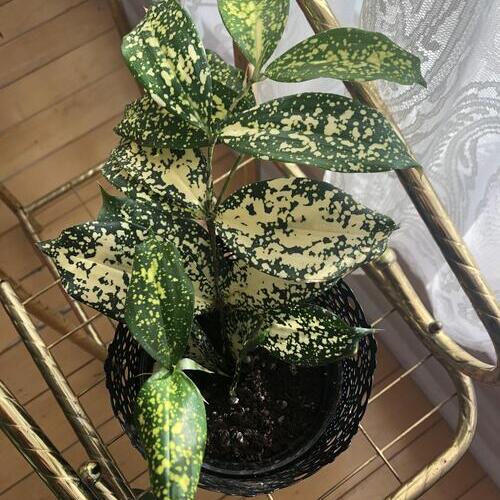
The Gold Dust Dracaena, botanically known as Dracaena surculosa (sometimes still labeled by its older synonym Dracaena godseffiana), is a distinctive shrubby houseplant prized for its slender, wiry, cane-like stems and unusual whorled leaves speckled with irregular cream, white, or golden-yellow spots against a glossy dark green background. Unlike the more familiar strap-leaved dracaenas such as the corn plant or dragon tree, this species has a delicate, almost bamboo-like appearance, with thin stems that branch and arch gracefully, giving the plant an airy, sculptural silhouette that works well as an accent piece rather than a bold focal point. The speckled variegation pattern, which resembles flecks of gold dust scattered across the foliage, varies somewhat from leaf to leaf and cultivar to cultivar, with some forms showing denser spotting than others.
Native to the tropical understory forests of West Africa, particularly Cameroon and surrounding coastal regions, Dracaena surculosa evolved growing beneath a dense forest canopy where direct sunlight rarely reaches the forest floor. This origin explains its excellent tolerance of low to medium indoor light conditions, a trait that sets it apart from many other more light-demanding foliage plants. In its native habitat, it grows in loose, humus-rich soil enriched by decomposing leaf litter, and its rhizomatous root system allows it to spread slowly and produce new shoots from the base over time.
As a member of the Asparagaceae family, the Gold Dust Dracaena is related to other popular dracaenas as well as snake plants and spider plants, though its growth habit and speckled foliage make it visually quite distinct from its more common relatives. It is a slow to moderate grower that typically reaches a mature size of about 2 to 4 feet indoors, making it a manageable, long-lived specimen for tabletops, plant stands, or mixed foliage arrangements. Its unusual texture, tolerance for lower light, and relatively easygoing nature have made it a longtime favorite among indoor gardeners looking for something a bit different from typical broad-leaved houseplants.
Caring for the Gold Dust Dracaena is refreshingly straightforward, making it an excellent choice for beginners as well as experienced plant keepers looking for a low-maintenance accent plant. It thrives in medium, indirect light, and its natural tolerance for lower light conditions makes it one of the more forgiving dracaenas for dimmer rooms or offices, though direct sun should be avoided as it can scorch the delicate speckled leaves. A spot a few feet back from an east, north, or filtered south or west-facing window generally works well.
Watering should follow a moderate, consistent rhythm: allow the top inch or two of soil to dry out before watering thoroughly, then let any excess drain away completely, since this species can be sensitive to both prolonged drought and consistently soggy conditions. Like most dracaenas, Gold Dust Dracaena is notably sensitive to fluoride and chlorine found in tap water, which can cause the telltale brown leaf-tip burn common to the genus, so filtered, distilled, or rainwater is strongly recommended whenever possible.
Beyond light and water, this species appreciates warm, stable temperatures between 65 and 80°F (18–27°C), moderate humidity, and a well-draining, loose potting mix. Light feeding during the active growing season in spring and summer supports steady growth and healthy foliage color, while fertilizing should be paused in fall and winter as growth slows naturally. With its slow growth rate, minimal pruning needs, and general tolerance for a range of indoor conditions, the Gold Dust Dracaena rewards fairly minimal effort with years of attractive, low-fuss greenery.
 Soil
Soil
The Gold Dust Dracaena grows best in a light, well-draining potting mix that allows excess water to pass through easily while retaining enough moisture to support its shallow, spreading root system. A blend of standard potting soil combined with perlite and a bit of coarse sand or orchid bark creates an ideal loose, airy structure similar to the humus-rich forest floor conditions of its native habitat. A slightly acidic to neutral pH range of about 6.0 to 6.5 supports healthy nutrient uptake.
Good drainage is essential, as this species, like other dracaenas, is quite susceptible to root rot in compacted or consistently wet soil. Adding extra perlite or bark can help improve aeration and prevent the soil from becoming overly dense over time. Soil problems to watch for include poor drainage (which can quickly lead to root rot and yellowing lower leaves), compaction (which restricts root growth and oxygen availability), inappropriate pH (which can lock out key nutrients and cause pale or discolored foliage), salt build-up from tap water or over-fertilizing (visible as a white crust on the soil surface or brown leaf-tip burn), and nutrient deficiencies (often showing as slow growth or faded variegation). Root-bound plants, identifiable by roots circling the pot’s interior or emerging from drainage holes, should be repotted with fresh soil and, if necessary, some light root pruning to encourage healthy new growth.
 Fertilizer
During the active growing season of spring and summer, the Gold Dust Dracaena benefits from feeding every four to six weeks with a balanced, water-soluble houseplant fertilizer diluted to half strength. Feeding should be paused entirely during fall and winter, when the plant’s growth naturally slows and its nutrient needs decrease significantly. A fertilizer with a roughly balanced N-P-K ratio supports both healthy foliage development and steady overall growth.
Signs of over-fertilization include browned, crispy leaf tips and margins, a visible white crust of salt buildup on the soil surface, and stunted or distorted new growth. Under-fertilization, by contrast, typically presents as slow growth, smaller than expected new leaves, and a general dulling of the characteristic gold speckled variegation. Organic alternatives such as diluted fish emulsion, compost tea, or worm castings can serve as gentler, slow-release nutrient sources. This species is not known for any unusual or highly specific nutrient requirements beyond standard balanced houseplant feeding practices, and it is notably tolerant of infrequent feeding compared to faster-growing tropical plants.
 Watering
Water the Gold Dust Dracaena once the top inch or two of soil has dried out, then water thoroughly until excess drains from the pot’s base. During the active growing season in spring and summer, this typically means watering every 7 to 10 days, while in fall and winter the interval should be extended to roughly every 10 to 14 days as growth slows. Filtered, distilled, or rainwater is strongly preferred, as this species is particularly sensitive to the fluoride, chlorine, and mineral salts commonly found in tap water, which frequently causes the characteristic brown leaf-tip burn seen across the dracaena genus.
Signs of underwatering include drooping or curling leaves, dry and crispy leaf tips, and slowed or stalled growth. Overwatering, on the other hand, typically presents as yellowing lower leaves, a soft or mushy stem base, and a musty odor from the soil that can indicate the onset of root rot. Adjusting watering frequency with the seasons and checking soil moisture by touch before watering, rather than following a fixed schedule, will help maintain the right balance for this moderately drought-tolerant species.
Stop guessing. Most houseplant failures are caused by volumetric errors and improper moisture tension. Our deterministic calculator moves beyond "once-a-week" watering by analyzing the four critical pillars of root health:
Personalized for this plant
Disclaimer: Our calculator is pretty smart. We’ve crunched the numbers, but we’re not measuring the quantum state of your living room. Since we don’t know your exact indoor temperature, humidity, light, airflow, or whether your plant receives daily sweet nothings and motivational speeches, use this calculator as a guide—and always keep an eye on your plant.
 Lighting
Medium, indirect light is ideal for the Gold Dust Dracaena, and this species is notably more tolerant of lower light conditions than many other houseplants, thanks to its native understory origins. A spot a few feet from an east or north-facing window, or filtered light from a south or west-facing window, works well, and it can also adapt reasonably well to dimmer corners or offices with primarily artificial lighting. Direct sun, however, should be avoided, as it can scorch the leaves and cause the delicate speckled variegation to fade or bleach.
Signs of insufficient light include noticeably slowed growth, smaller and more widely spaced new leaves, and a general loss of vibrancy in the leaf speckling. Excessive or direct light exposure, by contrast, can cause bleached or scorched patches on the foliage, particularly on leaves suddenly exposed to stronger sun. If natural light is limited, a full-spectrum grow light placed 12 to 24 inches above the plant for 10 to 12 hours daily can help supplement natural conditions and support steady growth, particularly in low-light rooms.
 Temperature
The Gold Dust Dracaena grows best within a temperature range of 65 to 80°F (18–27°C), consistent with its warm tropical origins. It has limited cold tolerance and should be protected from temperatures below 55°F (13°C), as cold exposure can cause leaf discoloration, blackened stem tips, and stunted or halted growth. The plant should be kept away from cold drafts, drafty windows, and air conditioning vents, as sudden temperature swings can cause stress and leaf drop.
While it tolerates typical indoor temperature fluctuations reasonably well, it has no frost tolerance and should never be exposed to freezing conditions. In warmer climates, it can be grown outdoors in shaded, protected spots during the summer months, but should be brought indoors well before temperatures begin to drop in autumn. Keeping the plant away from heating vents in winter and maintaining stable, consistent warmth throughout the year will support the healthiest, most attractive growth.
 Humidity
The Gold Dust Dracaena prefers moderate humidity levels, generally between 40 and 60 percent, and is fairly adaptable to typical indoor humidity conditions compared to more demanding tropical species. In excessively dry environments, particularly during winter when indoor heating reduces ambient moisture, the plant may show mild signs of humidity stress such as browning leaf tips or a slight loss of leaf luster.
To increase humidity if needed, a pebble tray filled with water placed beneath the pot (without letting the pot sit directly in the water) can provide a modest, localized boost. Grouping this plant with other houseplants also creates a beneficial shared microclimate through collective transpiration. A humidifier offers the most consistent and effective humidity support, particularly useful in very dry climates or centrally heated homes, though this species generally does not require aggressive humidity intervention to thrive. Light misting can provide occasional temporary relief but is less effective than ambient humidity solutions and should be done in the morning to allow foliage to dry before evening, minimizing fungal risk.
 Propagation
The Gold Dust Dracaena is most commonly and successfully propagated through stem cuttings, which root readily and establish relatively quickly compared to some other propagation methods for this species, such as division, which is possible but less commonly used by home growers.
Step-by-step stem cutting guide:
1. Select a healthy stem and use clean, sharp scissors or pruning shears to cut a 4 to 6 inch section that includes at least two or three leaf nodes.
2. Remove the lower leaves, leaving just a few at the top of the cutting.
3. Allow the cut end to air dry and callus for a few hours to reduce the risk of rot.
4. Optionally dip the cut end in rooting hormone powder to encourage faster root development.
5. Insert the cutting into a small pot filled with a moist, well-draining mix of perlite and peat, or place it in a glass of filtered water to root.
6. Position the cutting in bright, indirect light and maintain warm temperatures around 70 to 75°F (21–24°C).
7. Keep the growing medium consistently moist (or refresh the water weekly if rooting in water) until roots develop.
8. Once roots reach about an inch or more in length, typically within 4 to 8 weeks, transplant the cutting into a well-draining potting mix.
Stem cutting propagation has a good success rate under warm, consistently moist conditions, typically around 70 to 85 percent, with new plants generally establishing visible new growth within 6 to 10 weeks. Late spring through summer is the best time to propagate, taking advantage of the parent plant’s active growing season for faster rooting and establishment.
 Potting
The Gold Dust Dracaena does well in a pot with adequate drainage holes to prevent water from accumulating around its roots. A well-draining potting mix, as described in the soil section, paired with a container only slightly larger than the current root ball, supports healthy growth without retaining excess moisture. Repotting every two to three years is generally sufficient for this slow-growing species, or sooner if the plant becomes visibly root-bound.
Signs that repotting is needed include roots circling the surface of the soil or emerging from the drainage holes, water passing through the pot too quickly without being absorbed, and slowed growth despite otherwise consistent care. When repotting, gently loosen the root ball and trim away any damaged, mushy, or excessively tangled roots with sterilized scissors. Move the plant to a pot only one size larger than its previous container to avoid overpotting, which can lead to waterlogged soil and root rot. After repotting, water lightly and keep the plant in a stable, moderately bright location for a week or two to help it recover from transplant stress with minimal setback.
 Pruning
Prune the Gold Dust Dracaena as needed throughout the year, though light shaping is best done in spring or early summer when the plant is entering active growth and can recover more quickly.
Pruning helps control the plant’s height and shape, encourages bushier growth by promoting branching, removes yellowing or damaged foliage, and keeps the plant looking tidy and healthy.
Clean, sharp pruning shears or scissors sterilized with rubbing alcohol before and after use.
Water lightly if the soil is dry and return the plant to its usual bright, indirect light location. Avoid fertilizing immediately after a significant pruning session to give the plant time to recover.
Avoid removing more than 20 to 25 percent of the plant’s total foliage or canes at one time to prevent excessive stress.
 Blooming
The Gold Dust Dracaena produces small, star-shaped, fragrant flowers, typically in shades of white to pale yellow, though flowering indoors is uncommon and considered a secondary feature to its ornamental foliage. When blooming does occur, it most often happens in summer, with flowers emerging in small clusters along the stems and opening primarily at night, releasing a sweet, noticeable fragrance that can fill a room. Individual flowers are relatively short-lived, lasting only a day or two, but a mature, well-established plant may produce successive small clusters over the course of several weeks. Indoor flowering is relatively rare and tends to occur more often in plants grown in brighter conditions or those that have reached a more mature age, with greenhouse-grown specimens flowering considerably more reliably than typical houseplants.
 Pests and Diseases
Name: Spider Mites
Symptoms: Fine webbing on leaves and stems, tiny yellow or bronze speckling on leaf surfaces, overall dulling of foliage color.
Treatment: Rinse the plant thoroughly with water, increase humidity, and treat with insecticidal soap or neem oil, repeating every 7 to 10 days until resolved.
Name: Mealybugs
Symptoms: Small, cottony white clusters at leaf axils and along stems, sticky honeydew residue on leaves and nearby surfaces.
Treatment: Dab visible clusters with rubbing alcohol on a cotton swab, then treat the entire plant with insecticidal soap or neem oil, repeating as needed.
Name: Scale Insects
Symptoms: Small, brown or tan bumps attached to stems and the undersides of leaves, sticky residue, and yellowing foliage.
Treatment: Scrape off visible scale gently with a soft brush or cloth dipped in rubbing alcohol, then treat with horticultural oil or insecticidal soap.
Name: Root Rot
Symptoms: Yellowing and wilting leaves, mushy and dark roots, foul odor from the soil.
Treatment: Remove the plant from its pot, trim away affected roots, and repot into fresh, well-draining soil; reduce watering frequency going forward.
Name: Leaf Spot (Fungal)
Symptoms: Brown or black spots, sometimes with yellow halos, appearing on leaves, particularly in overly humid or poorly ventilated conditions.
Treatment: Remove affected leaves, improve air circulation around the plant, avoid overhead watering, and apply a copper-based fungicide if the issue persists.
 Special Features
The Gold Dust Dracaena’s most distinctive feature is its unusual speckled foliage, marked with irregular cream, white, or golden-yellow flecks scattered across glossy dark green leaves, giving it a delicate, almost hand-painted appearance quite different from the bold solid or striped foliage of most other dracaenas. Its slender, wiry, cane-like stems and gracefully arching growth habit lend it an airy, sculptural quality that pairs beautifully with bolder foliage plants in mixed arrangements. As a bonus, its excellent tolerance for lower light conditions makes it a practical choice for offices, hallways, or rooms with limited natural light where many other houseplants would struggle. Combined with strong overall air-purifying qualities and a naturally slow growth rate that keeps maintenance to a minimum, the Gold Dust Dracaena offers a long-lasting, low-fuss source of unique textural interest for any indoor plant collection.
 Plant Benefits
As a member of the Dracaena genus, the Gold Dust Dracaena has been included in studies on indoor air quality and is recognized for its notable ability to help filter certain common household air pollutants, contributing to its high air-purifying rating. However, it does not have well-documented herbal or pharmaceutical applications for human use and, given its toxicity to pets and mild toxicity to humans if ingested, should never be consumed or used in home remedies.
 Additional Information
The Gold Dust Dracaena is sometimes still sold or labeled under its older synonym, Dracaena godseffiana, and gardeners may encounter both names used interchangeably in the trade. Several cultivated varieties exist with differing degrees and patterns of leaf speckling, including forms with denser gold spotting and others with more sparse or larger cream-colored blotches, so appearance can vary somewhat between specimens even within the same species.
 Life Cycle
The Gold Dust Dracaena is a slow-growing, rhizomatous shrub that develops from an underground rhizome capable of producing multiple wiry canes over time. It begins as a small cluster of thin stems bearing whorled, speckled leaves, gradually branching and thickening as it matures over several years into a multi-caned, shrubby specimen typically reaching 2 to 4 feet in height indoors. Mature, well-established plants may occasionally produce small clusters of fragrant, star-shaped flowers, particularly in brighter conditions, though indoor flowering remains relatively uncommon. With appropriate care, this species can live for many years, even decades, indoors, periodically benefiting from light pruning to maintain shape and occasional propagation via stem cuttings to produce vigorous new plants from mature growth.
 Are Gold Dust Dracaena Poisonous, Toxic
The Gold Dust Dracaena, like most members of the Dracaena genus, is considered toxic to cats and dogs, and mildly irritating if ingested by children. The toxic principle is a group of steroidal saponins found throughout the plant, particularly concentrated in the leaves. In pets, ingestion typically causes vomiting (sometimes with blood present), loss of appetite, depression or lethargy, excessive drooling, and dilated pupils, particularly in cats. In children, ingestion of plant material may cause mild oral irritation, nausea, or vomiting, though severe reactions are uncommon given the plant’s generally low overall toxicity level. Severity is generally considered mild to moderate, with symptoms typically resolving within a day or so once the plant material has passed through the digestive system.
If ingestion occurs, remove any remaining plant material from the mouth, rinse the mouth gently with water, and monitor closely for worsening symptoms. Contact a veterinarian promptly if a pet shows signs of vomiting, lethargy, or dilated pupils, and contact a pediatrician or poison control center if a child experiences persistent nausea, vomiting, or oral discomfort. Preventive measures include keeping the plant on high shelves or in rooms inaccessible to curious pets and small children, and promptly cleaning up any fallen leaves or plant debris.
 Frequently Asked Questions
No, the Gold Dust Dracaena is toxic to cats and dogs and can cause vomiting, drooling, and lethargy if ingested.
It thrives in medium, indirect light and tolerates lower light conditions better than most dracaenas, though direct sun should be avoided.
Brown leaf tips are usually caused by fluoride or chlorine sensitivity from tap water, low humidity, or inconsistent watering.
Water when the top inch or two of soil is dry, typically every 7 to 10 days during the growing season.
Yes, Dracaena godseffiana is an older botanical synonym still occasionally used for this same species in the plant trade.
It typically reaches a mature size of about 2 to 4 feet tall when grown indoors.
Yes, it has a high air-purifying rating and is recognized for helping filter common indoor air pollutants.
It is most commonly propagated through stem cuttings rooted in moist perlite-peat mix or water during the warmer growing months.
Flowering indoors is uncommon but can occur, producing small, fragrant white to pale yellow blooms that open at night.
Yes, it is considered an easy, low-maintenance houseplant that tolerates a range of light conditions and infrequent watering.
 Can I grow Gold Dust Dracaena in my indoor space
Difficulty: Easy
Size: Medium
Light: Medium
Water: Medium
Flowering: Yes
Pet Safe: No
Air Purifier: High
 Dracaena surculosa botanical details
Common Name: Gold Dust Dracaena
Other Common Names: Spotted Dracaena, Japanese Dracaena, Florida Beauty, Gold Dust Plant
Botanical Name: Dracaena surculosa
Native Area: Tropical West Africa, including Cameroon, and parts of coastal East Africa
Family Name: Asparagaceae
Plant Type: Shrub (evergreen perennial)
Genus: Dracaena
Kingdom: Plantae
 Photo Gallery
 My Gold Dust Dracaena Plant Care Recommendations
If you find the Houseplant Encyclopedia helpful and would like to support Healthy Houseplants, you can use the links below to shop for recommended plants, products, and plant-care supplies.
Some links are affiliate links, which means I may earn a small commission if you make a qualifying purchase through them, at no additional cost to you. Thank you for supporting Healthy Houseplants and helping me continue to provide free plant-care information!

Want even more personalized plant-care help? Check out my AI Julie Chatbot—trained on my 20 years of houseplant knowledge, not just information from the internet!  Try it now:Ask AI Julie
 Buy Gold Dust Dracaena Online
✅ “Bring Home This Beauty Today”
✅ “Get Your Own Gold Dust Dracaena Before It’s Gone”
✅ “Shop Trusted Sellers – Limited Availability”
✅ “Free Delivery”
As an Amazon Associate, I earn commission from qualifying purchases.
 Plant Puns and Jokes
Why did the Gold Dust Dracaena get invited to every dinner party? Because it always brought a little extra sparkle to the table without demanding all the attention!
 Signup to our newsletter and download Gold Dust Dracaena care guide

