


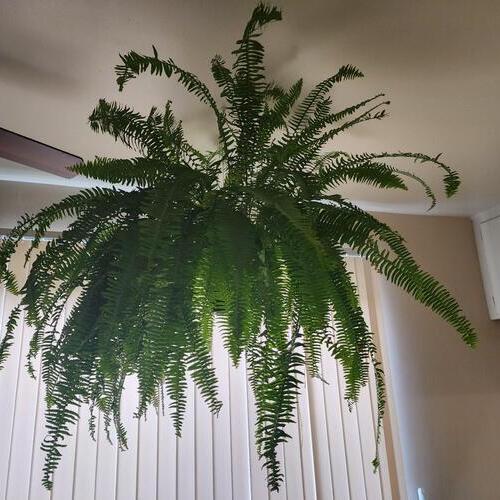
The Kimberley Queen Fern is a robust, upright-growing fern native to the tropical woodlands and rocky escarpments of northern Australia, most notably the Kimberley region of Western Australia and parts of Queensland, from which its common name is derived. It produces broad, arching fronds composed of stiff, leathery, sword-shaped leaflets called pinnae, which grow in a dense, symmetrical rosette from a central crown. Unlike its more delicate cousin the Boston fern, Nephrolepis obliterata has thicker, more upright, glossier foliage that holds its shape well and sheds far less debris, giving it a tidier, more architectural appearance both indoors and out.
In its native habitat, the Kimberley Queen Fern grows terrestrially in the dappled shade of open woodlands and along the banks of seasonal watercourses, where it experiences a distinct wet and dry season. This natural rhythm has made the species notably more drought- and sun-tolerant than many other Nephrolepis species, and it is one of the more forgiving ferns available for home cultivation as a result. It spreads slowly via short rhizomes and occasionally produces runners, allowing established clumps to widen gradually over time, though it is far less aggressive or invasive than some other sword fern relatives.
Mature Kimberley Queen Ferns typically reach 2 to 3 feet in both height and spread, forming a substantial, fountain-like clump of fronds that can extend up to 3 feet long under good conditions. It is commonly grown as a houseplant in cooler climates and as a landscape or patio plant in warmer, frost-free regions, where it is frequently used in hanging baskets, large planters, and shaded garden beds. Its resilience, relatively low maintenance needs, and lush, full appearance have made it one of the most widely sold ferns in the nursery trade.
The Kimberley Queen Fern has earned a reputation as one of the easiest ferns to grow, largely because of its Australian origins in a climate with pronounced wet and dry cycles, which has given it more tolerance for fluctuating conditions than many rainforest-native ferns. It performs best in bright, indirect light or partial shade, tolerating a wider range of light levels than most ferns, including brief periods of morning sun, though harsh afternoon sun will scorch its fronds. Consistent moisture is still important, but this fern is noticeably more forgiving of a missed watering than delicate species like maidenhair fern, making it a good choice for less experienced growers.
Watering and humidity work together to keep the fronds lush and green. The plant prefers evenly moist, well-draining soil and benefits from moderate to high humidity, though it adapts reasonably well to average indoor humidity levels compared to many other ferns, only showing stress in particularly dry, heated indoor air. Regular watering during the growing season, paired with occasional misting or humidity trays in dry climates, will keep the foliage full and vibrant, while allowing the topsoil to dry slightly between waterings helps prevent root rot in this otherwise resilient species.
Beyond light and water, the Kimberley Queen Fern benefits from warm, draft-free conditions, a rich and well-draining potting mix, and light feeding during spring and summer. It requires only occasional grooming to remove old or damaged fronds and rarely needs repotting more than once every couple of years. Its combination of hardiness, attractive upright form, and relatively low care demands has made it a favorite for covered patios, shaded porches, offices, and homes where a lush, tropical look is desired without the fussiness of more delicate fern species.
 Soil
Soil
The Kimberley Queen Fern grows best in a rich, well-draining potting mix that retains moisture without becoming waterlogged, reflecting the periodically moist, organically rich soils of its native Australian woodland habitat. A quality all-purpose potting mix amended with peat moss or coco coir for moisture retention, along with perlite or coarse sand for drainage, works well; a blend of roughly two parts potting soil, one part peat or coco coir, and one part perlite is a reliable starting ratio. The ideal soil pH is slightly acidic to neutral, generally in the range of 5.0 to 6.5, which supports healthy nutrient uptake for this species.
Soil composition has a direct impact on the fern’s overall vigor: a mix that is too dense or compacted restricts oxygen flow to the roots and increases the likelihood of root rot, while a mix that drains too quickly will dry out the fine, fibrous root system too fast, leading to crispy, browning frond tips even with regular watering. Amendments such as compost or well-aged organic matter provide a steady source of nutrients and help the soil retain the humus-like structure this fern prefers, while a thin layer of mulch on the soil surface can help regulate moisture and temperature for outdoor plantings.
Common soil problems to watch for include poor drainage, which shows up as yellowing fronds, a sour smell, and blackened root tips; compaction over time, which restricts root expansion and is best corrected with periodic repotting into fresh mix; inappropriate pH, which can limit nutrient availability even when fertilizing correctly; salt build-up from tap water or over-fertilizing, visible as a white crust on the soil surface and linked to frond-tip browning; and nutrient deficiencies from old, depleted potting mix, which show up as pale or stunted new growth. Root-boundness, in which roots become tightly packed and circle the base of the pot, is another sign that fresh soil and a larger container are needed.
 Fertilizer
The Kimberley Queen Fern is a light to moderate feeder and benefits from a balanced, water-soluble liquid fertilizer diluted to half strength, applied approximately every four weeks during the active growing season in spring and summer. Feeding should be reduced to once every couple of months, or paused entirely, during fall and winter when growth naturally slows. A balanced fertilizer with a roughly even ratio of nitrogen, phosphorus, and potassium supports healthy, vigorous frond production without pushing overly fast, weak growth.
Over-fertilizing is a fairly common issue and typically presents as browning frond tips and margins, a white or crusty mineral buildup on the soil surface, and in more severe cases, wilting or frond drop as excess salts damage the root system. Under-fertilizing is less common but can appear as pale, smaller new fronds, slowed growth, and an overall thinner, less lush appearance over successive growing seasons. Growers who prefer to avoid synthetic fertilizers can use organic alternatives such as diluted fish emulsion, seaweed extract, or worm-casting tea, which release nutrients more gradually and are generally less likely to cause salt burn. Flushing the soil thoroughly with plain water every couple of months helps prevent fertilizer salts from accumulating to damaging levels, particularly for potted specimens.
 Watering
The Kimberley Queen Fern prefers evenly moist soil, watered thoroughly whenever the top inch of soil begins to feel dry, then allowed to drain fully so the roots are never left standing in water. While it appreciates consistent moisture, this fern is considerably more drought-tolerant than most Nephrolepis species thanks to its native adaptation to a seasonal dry period, making it more forgiving of an occasional missed watering than delicate ferns like maidenhair. It is not especially sensitive to water quality and generally does well with regular tap water, though growers in areas with very hard or heavily chlorinated water may notice improved frond quality when using filtered or distilled water.
Overwatering typically shows up as yellowing fronds, a mushy or blackened crown or rhizome, and a musty smell from the soil, and can progress to root rot if the soil remains saturated for extended periods. Underwatering causes fronds to become dry, crispy, and prone to shedding leaflets, with older fronds often browning and dying back first as the plant redirects limited moisture to new growth. Because this fern tolerates brief dry spells reasonably well but still prefers consistent moisture for its best appearance, most growers find success watering on a regular schedule rather than waiting for visible wilting.
Watering needs shift with the seasons: during the active growing months of spring and summer, the plant uses water more quickly and may need watering every four to six days depending on light, humidity, and pot size, while in fall and winter, growth slows and watering frequency can typically be reduced to roughly every seven to ten days to avoid waterlogging a plant using less moisture.
Stop guessing. Most houseplant failures are caused by volumetric errors and improper moisture tension. Our deterministic calculator moves beyond "once-a-week" watering by analyzing the four critical pillars of root health:
Personalized for this plant
Disclaimer: Our calculator is pretty smart. We’ve crunched the numbers, but we’re not measuring the quantum state of your living room. Since we don’t know your exact indoor temperature, humidity, light, airflow, or whether your plant receives daily sweet nothings and motivational speeches, use this calculator as a guide—and always keep an eye on your plant.
 Lighting
The Kimberley Queen Fern thrives in bright, indirect light or partial shade, and it is notably more light-tolerant than many other fern species, able to handle both dimmer indoor corners and brighter, filtered outdoor conditions. An east-facing window, a spot a few feet back from a south- or west-facing window, or a covered porch with filtered light are all good locations. It can also tolerate a few hours of gentle morning sun, particularly outdoors in cooler climates, though prolonged direct sun, especially harsh afternoon exposure, will scorch and bleach the fronds.
Signs of insufficient light include pale green or yellowish fronds, sparse and leggy growth, and a general slowing of new frond production as the plant conserves energy. Signs of excessive light include bleached, whitish or brown patches on the fronds, curling or crisping leaflet edges, and an overall faded, sun-stressed appearance, particularly on fronds facing the light source most directly. If natural light is too intense, moving the plant further from the window, adding a sheer curtain, or relocating it to filtered shade will help; if light is too low, moving it closer to a bright window or supplementing with a full-spectrum grow light for eight to ten hours daily can restore fuller, more vigorous growth.
 Temperature
The Kimberley Queen Fern thrives in warm conditions between about 60 and 80°F (16 to 27°C), performing best when temperatures stay on the warmer end of that range during active growth. It has limited cold tolerance and should be protected from temperatures below roughly 50°F (10°C), which can cause frond damage, browning, and slowed growth, and it is not frost-hardy, making it suitable only for outdoor, year-round cultivation in frost-free or near-frost-free climates. The plant is also sensitive to sudden temperature swings and cold drafts from air conditioning vents, open windows, or exterior doors, which can stress the fronds and lead to browning or leaflet drop independent of watering issues.
To protect the plant from cold, it should be kept away from drafty windows and doors in winter and brought indoors well before the first frost if grown outdoors seasonally. In regions with occasional cold snaps, moving container-grown plants to a sheltered spot, covering outdoor plantings with frost cloth, or temporarily relocating the plant indoors can prevent cold damage. In summer, intense heat combined with low humidity or direct sun exposure can also stress the fern, so providing afternoon shade and maintaining adequate soil moisture will help it stay healthy through temperature extremes in either direction.
 Humidity
The Kimberley Queen Fern prefers moderate to high humidity, ideally in the 40 to 60% range, but it is considerably more tolerant of average indoor humidity than many other fern species, which is part of why it has become such a popular low-fuss houseplant fern. In very dry climates or heavily heated or air-conditioned homes, low humidity can still cause stress, typically showing up as browning frond tips and edges, increased leaflet shedding, and a slightly dull or crispy texture to the foliage. Excessively high humidity combined with poor air circulation can occasionally encourage fungal issues, so good airflow should be maintained alongside any humidity increases.
Several methods can help boost humidity when needed. A humidifier placed nearby is the most reliable option in dry indoor environments, particularly during winter heating season. Pebble trays, where the pot sits above a layer of water and gravel without the roots touching the water directly, provide a modest, gentle humidity boost through evaporation and work reasonably well for this fern given its greater humidity tolerance. Occasional misting can offer brief relief and helps rinse dust from the fronds, though it should be done in the morning to allow foliage to dry before evening and reduce fungal risk. Grouping the fern with other plants, or placing it in naturally humid rooms like a bathroom with adequate light, are also effective and low-effort ways to keep humidity levels comfortable for this adaptable species.
 Propagation
The Kimberley Queen Fern is most commonly and reliably propagated through division of its rhizomatous root clump, since this method produces new plants quickly and preserves the parent plant’s exact characteristics; propagation from spores is possible but considerably slower and more technically demanding, making it better suited to experienced growers or hobbyist breeders than typical home propagation. Division works best in spring, as the plant enters its active growing season and can recover and re-establish most quickly.
Step-by-step division guide:
1. Water the parent plant thoroughly a day or two before dividing to soften the soil and reduce stress on the root system.
2. Carefully remove the entire plant from its pot and gently shake or rinse away excess soil to expose the rhizome and root clumps.
3. Identify natural divisions in the clump where multiple crowns of fronds are growing from separate sections of rhizome, each with its own roots attached.
4. Using a clean, sharp knife or by gently pulling apart looser sections by hand, separate the clump into divisions, ensuring each section retains healthy roots and at least a few fronds.
5. Trim away any damaged, mushy, or blackened roots with sterilized scissors or shears.
6. Pot each division into a container with fresh, well-draining potting mix appropriate for ferns, and water thoroughly.
7. Place the newly potted divisions in bright, indirect light with warm temperatures and consistently moist soil while they establish.
8. Expect new frond growth within three to six weeks as a sign that the division has successfully rooted.
Division generally has a high success rate when performed on a healthy, well-established parent plant, typically establishing faster and more reliably than spore propagation, which can take several months to produce visible new growth and requires carefully controlled humidity and sterile conditions to succeed. Divided plants typically take one to two months to fully re-establish vigorous new growth, while spore-grown plants may take six months to a year or more to reach a comparable size.
 Potting
The Kimberley Queen Fern does well in a pot that is only slightly larger than its current root ball, allowing room for the rhizome to spread without leaving excess soil that can hold too much moisture and promote root rot. A pot with generous drainage holes is essential, and either plastic or glazed ceramic containers work well, though unglazed terracotta can also be used successfully since this fern is somewhat more forgiving of drying out than more delicate species. A rich, well-draining potting mix, similar to the blend described in the soil section, should be used at planting or repotting time.
Repotting is typically needed every one to two years, or whenever the plant shows signs such as roots becoming visibly crowded or circling at the bottom of the pot, roots emerging from drainage holes, water running through too quickly without being absorbed, or a noticeable slowdown in new frond production despite otherwise good care. When repotting, moving up just one pot size is generally sufficient, since oversized pots can hold excess moisture and increase root rot risk. Root pruning is rarely necessary, but any mushy, blackened, or clearly rotten roots found during repotting should be trimmed away with sterilized scissors before repotting into fresh mix.
To transition the plant with minimal stress, repot during the growing season, water the plant a day or two beforehand, handle the root ball gently to minimize breakage, and keep the newly repotted fern out of direct sun and in a warm, humid spot for one to two weeks while it adjusts, watering normally throughout the recovery period.
 Pruning
The best time to prune the Kimberley Queen Fern is during the active growing season in spring or summer, when the plant recovers quickly, though dead or damaged fronds can be trimmed at any time of year as needed.
Pruning is done as needed rather than on a fixed schedule, primarily to remove yellowed, browning, or damaged fronds, encourage fuller new growth, and keep the plant looking tidy and healthy.
Use clean, sharp pruning shears or scissors, wiping the blades with rubbing alcohol before and after use to prevent the spread of pathogens between plants.
After pruning, keep the plant in its usual warm, bright, indirect-light spot and maintain regular watering; avoid heavy fertilizing immediately after a significant pruning session to give the plant time to recover.
Avoid removing more than a third of the plant’s foliage at one time, since removing too much at once can stress the fern and slow its recovery, and always use sterilized tools to reduce the risk of introducing disease through open cuts.
 Blooming
The Kimberley Queen Fern does not produce flowers, as it is a fern that reproduces via spores rather than seeds and lacks any true flowering structure. Instead of blooms, mature, healthy fronds develop small, rust-colored clusters of spore cases called sori on the undersides of the leaflets, typically appearing on older, established fronds year-round when growing conditions are favorable. These spore clusters are sometimes mistaken by new growers for a pest problem or disease, but they are a normal and healthy reproductive structure rather than a sign of trouble. Because there is no bloom period, ornamental interest centers entirely on the fern’s lush, evergreen foliage rather than any seasonal flowering display.
 Pests and Diseases
Name: Scale insects
Symptoms: Small, brown, dome-shaped bumps attached to the fronds and stems, often accompanied by sticky honeydew residue and yellowing of affected foliage.
Treatment: Scrape off visible scale by hand or with a cotton swab dipped in rubbing alcohol, then treat the plant with insecticidal soap or horticultural oil, repeating applications every one to two weeks until the infestation clears.
Name: Mealybugs
Symptoms: Small, white, cottony clusters in leaflet joints and along stems, along with sticky honeydew and possible sooty mold growth.
Treatment: Dab visible clusters with a cotton swab dipped in rubbing alcohol, then treat the whole plant with insecticidal soap or neem oil, repeating every one to two weeks until no new bugs appear.
Name: Spider mites
Symptoms: Fine webbing on the undersides of fronds, tiny stippled or speckled discoloration on the leaflets, and an overall dull, dusty appearance to the foliage.
Treatment: Isolate the plant, rinse fronds thoroughly with lukewarm water, increase humidity to discourage mites, and apply insecticidal soap or neem oil to all frond surfaces every seven to ten days until resolved.
Name: Fern scale (a species-specific scale pest)
Symptoms: Tiny, flat, white or brown scale insects clustered along the frond midribs and undersides, causing yellow speckling and general decline if left untreated.
Treatment: Remove heavily infested fronds, treat remaining foliage with horticultural oil or insecticidal soap, and repeat treatments every one to two weeks, since fern scale can be persistent and may require several rounds to fully eliminate.
Name: Root rot
Symptoms: Yellowing fronds, a mushy or blackened crown or rhizome, foul soil odor, and stunted or collapsing growth caused by prolonged waterlogged soil.
Treatment: Remove the plant from its pot, trim away all rotten roots with sterilized scissors, and repot into fresh, well-draining mix; reduce watering frequency and ensure the pot has adequate drainage going forward.
Name: Leaf spot (fungal or bacterial)
Symptoms: Dark brown or black spots on the fronds, sometimes with a yellow halo, that can spread under damp, poorly ventilated conditions.
Treatment: Remove and discard affected fronds, avoid wetting foliage during watering, improve air circulation around the plant, and apply a fungicide labeled for ferns if the spread continues.
Name: Rhizoctonia blight
Symptoms: Rapid browning and collapse of fronds near the crown, often accompanied by a web-like fungal growth in humid, crowded conditions.
Treatment: Remove and discard affected fronds immediately, reduce humidity and improve airflow around the plant, avoid overhead watering, and apply a fungicide labeled for Rhizoctonia if the issue persists.
 Special Features
The Kimberley Queen Fern is prized for its lush, upright, fountain-like form and glossy, sword-shaped fronds that hold their shape and color far better than many other ferns, making it an especially tidy and low-litter choice for indoor and covered outdoor spaces. Its Australian origin gives it a notable resilience to fluctuating light, occasional drought, and average indoor humidity that sets it apart from more finicky fern relatives, making it a favorite starter fern for those new to growing ferns successfully. As a non-toxic, air-purifying, evergreen plant with a naturally full and architectural silhouette, it works beautifully as a statement piece in hanging baskets, large floor planters, or shaded garden beds, offering year-round greenery without the delicate fussiness typically associated with ferns.
 Plant Benefits
The Kimberley Queen Fern does not have established herbal, medicinal, or pharmaceutical uses and is grown strictly as an ornamental foliage plant; it is not used in traditional or modern herbal medicine. Like many leafy houseplants, it contributes modestly to indoor air quality through foliage transpiration and general air filtration, and ferns as a group are commonly noted for above-average humidity contribution to indoor spaces due to their high transpiration rates, though this species has not been individually studied for specific air-purifying benefits beyond general foliage plant contributions.
 Additional Information
The Kimberley Queen Fern is often confused with the Boston fern (Nephrolepis exaltata ‘Bostoniensis’), but the two are readily distinguished by frond texture and habit: Kimberley Queen fronds are stiffer, more upright, and glossier, while Boston fern fronds are softer, more arching, and prone to greater frond and leaflet shedding. Because of its greater sun tolerance, drought resistance, and lower litter, the Kimberley Queen Fern has increasingly replaced the Boston fern as the preferred choice for hanging baskets and patio plantings in many nurseries and landscaping applications, particularly in warmer climates where its Australian heritage gives it a natural advantage.
 Life Cycle
The Kimberley Queen Fern is a herbaceous perennial that grows from a spreading rhizome rather than a single central stem, producing new fronds in a continuous, unfurling cycle from the center of the crown known as fiddleheads before they mature into full, arching fronds. Under favorable warm, bright, and consistently moist conditions, the plant grows steadily year-round, with growth slowing noticeably in cooler temperatures and lower light during fall and winter. As the rhizome matures and spreads, it produces additional crowns that can be divided into new individual plants once the clump has filled its container. Individual fronds typically persist for many months before naturally yellowing and dying back, at which point they are replaced by new growth from the crown, and with good care the plant can live and continue producing fresh fronds for many years, gradually forming an increasingly full and substantial clump.
 Are Kimberley Queen Fern Poisonous, Toxic
The Kimberley Queen Fern is considered non-toxic to cats, dogs, and humans, including children, according to the ASPCA’s list of pet-safe plants, making it one of the more worry-free ferns for households with curious pets. It does not contain known toxic alkaloids, oxalates, or other harmful compounds in its fronds, rhizomes, or spores. As with most non-toxic houseplants, ingesting a large quantity of frond material can still occasionally cause mild, temporary gastrointestinal upset in pets or children, such as drooling, mild vomiting, or stomach discomfort, generally due to the fibrous, mechanically irritating texture of the foliage rather than any true poisoning, and severity is typically very low. If a pet or child ingests a significant amount and shows signs of distress, offering water, monitoring symptoms, and contacting a veterinarian, pediatrician, or poison control center if symptoms persist or worsen is a reasonable course of action. As a general precaution, it is still wise to discourage pets and young children from chewing on any houseplant, since soil, fertilizer residues, or pest treatments applied to the plant could pose a separate risk even though the fern tissue itself is safe.
 Frequently Asked Questions
Yes, the Kimberley Queen Fern is considered an easy, beginner-friendly fern thanks to its Australian origins, which give it better tolerance for fluctuating light, occasional drought, and average indoor humidity than many other fern species.
Kimberley Queen ferns have stiffer, glossier, more upright fronds and shed far less debris, while Boston ferns have softer, more arching fronds that shed leaflets more readily.
Water when the top inch of soil feels dry, generally every four to six days in the growing season and every seven to ten days in fall and winter.
No, the Kimberley Queen Fern is considered non-toxic to cats, dogs, and humans according to the ASPCA.
It prefers bright, indirect light or partial shade and tolerates a wider range of light levels than most ferns, though direct afternoon sun will scorch the fronds.
Browning fronds are most often caused by low humidity, underwatering, or excess direct sun exposure, and can also result from mineral buildup or over-fertilizing.
Yes, it can be grown outdoors year-round in frost-free or near-frost-free climates in shaded or filtered-light locations, and is often used in hanging baskets and patio plantings.
It is most commonly propagated by dividing the rhizome into sections that each include roots and fronds, ideally in spring.
No, it is a fern and does not produce flowers; it reproduces via spores found on the undersides of mature fronds.
It typically reaches 2 to 3 feet in both height and spread at maturity, forming a full, fountain-like clump of fronds.
 Can I grow Kimberley Queen Fern in my indoor space
Difficulty: Easy
Size: Medium
Light: Medium
Water: Medium
Flowering: No
Pet Safe: Yes
Air Purifier: High
 Nephrolepis obliterata botanical details
Common Name: Kimberley Queen Fern
Other Common Names: Australian Sword Fern, Emerald Fern, Kimberley Fern
Botanical Name: Nephrolepis obliterata
Native Area: Tropical Australia, including Queensland and the Kimberley region of Western Australia
Family Name: Nephrolepidaceae (sometimes classified under Lomariopsidaceae or Davalliaceae)
Plant Type: Herbaceous perennial fern
Genus: Nephrolepis
Kingdom: Plantae
 Photo Gallery
 My Kimberley Queen Fern Plant Care Recommendations
If you find the Houseplant Encyclopedia helpful and would like to support Healthy Houseplants, you can use the links below to shop for recommended plants, products, and plant-care supplies.
Some links are affiliate links, which means I may earn a small commission if you make a qualifying purchase through them, at no additional cost to you. Thank you for supporting Healthy Houseplants and helping me continue to provide free plant-care information!

Want even more personalized plant-care help? Check out my AI Julie Chatbot—trained on my 20 years of houseplant knowledge, not just information from the internet!  Try it now:Ask AI Julie
 Buy Kimberley Queen Fern Online
✅ “Bring Home This Beauty Today”
✅ “Get Your Own Kimberley Queen Fern Before It’s Gone”
✅ “Shop Trusted Sellers – Limited Availability”
✅ “Free Delivery”
As an Amazon Associate, I earn commission from qualifying purchases.
 Plant Puns and Jokes
Why did the Kimberley Queen Fern refuse to compete in the fern beauty pageant? Because it already knew it would win, frond down.
 Signup to our newsletter and download Kimberley Queen Fern care guide

