Excess moisture entering a basement or crawlspace can contribute to elevated humidity inside some homes. For indoor gardeners, persistently high humidity combined with poor air circulation and overly wet potting mix can create conditions that favor fungal problems and fungus gnats.
Taking control of structural moisture from the outside can help protect both your home and your indoor garden. Managing exterior water flow is one part of creating a more balanced indoor environment where potted plants can remain healthy throughout the year.
How Does Excess Moisture Affect Houseplant Transpiration?
Indoor plants release water vapor through small pores on their leaves during normal transpiration. When relative humidity is high, the difference in moisture between the inside of a leaf and the surrounding air decreases, which can slow transpiration.
How much this affects a plant varies according to the species and growing conditions. For the indoor gardener, an additional concern is that high humidity combined with low airflow and frequent watering can cause potting mix to remain wet longer than intended.
When potting mix stays excessively wet for prolonged periods, oxygen levels around the roots can decline. This can interfere with healthy root function and increase the risk of root problems.
Maintaining balanced humidity, appropriate watering practices, and adequate air circulation helps create healthier conditions for both foliage and roots.
What Role Do External Drainage Channels Play in the Indoor Climate?
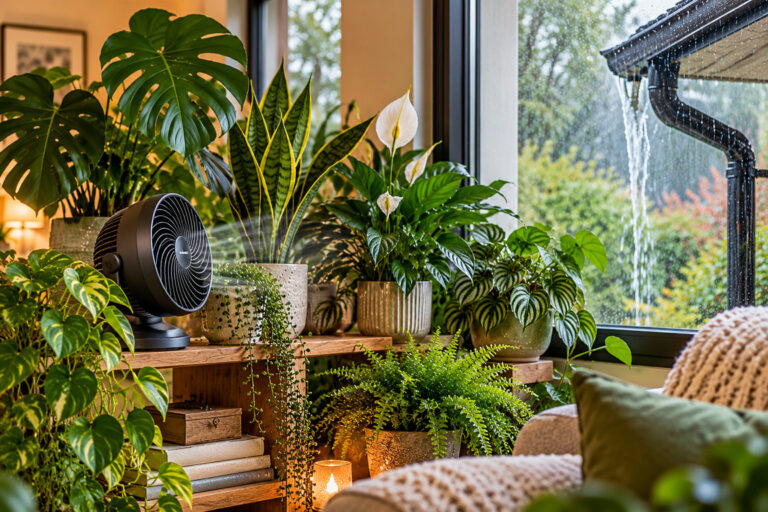
Roof surfaces collect large quantities of rainwater during storms. Without effective drainage, water can run down exterior walls and collect near the foundation. In homes vulnerable to water intrusion, this can contribute to moisture problems in basements or crawlspaces and potentially raise humidity levels inside the home.
Functional gutters and downspouts help channel rainwater away from foundation walls. Homeowners who need installation or routine maintenance can rely on professionals such as MY Pittsburgh Gutters to help keep exterior drainage systems clear and functioning properly.
Keeping gutters and downspouts free of debris also helps reduce water pooling around the home, which can contribute to foundation and basement moisture issues.
Why High Indoor Humidity Can Contribute to Root and Soil Problems
High humidity can slow the rate at which potting mix dries, particularly when combined with low light, poor air circulation, or frequent watering.
Potting mixes that remain excessively wet for extended periods contain less available oxygen around the roots and can increase the risk of root problems. Affected plants may develop yellowing or wilting foliage, and damaged roots can become dark and soft.
Because wilting can occur when a plant is either too wet or too dry, it is important to check the potting mix before watering again rather than automatically assuming that a wilted plant needs more water.
Persistently moist potting mix also creates favorable conditions for fungus gnats. Their larvae feed primarily on fungi, algae, and decaying organic matter in the potting mix and may also feed on plant roots, particularly on young plants and seedlings.
High humidity combined with poor air circulation can also favor certain fungal and bacterial plant diseases. Managing household moisture, avoiding excessive watering, and providing adequate airflow can help reduce these problems.
How Do You Maintain Balanced Indoor Air Circulation for Houseplants?
Air circulation works alongside humidity and moisture control to create healthier conditions around houseplants. Stagnant air can allow overly humid microclimates to develop around dense groupings of foliage.
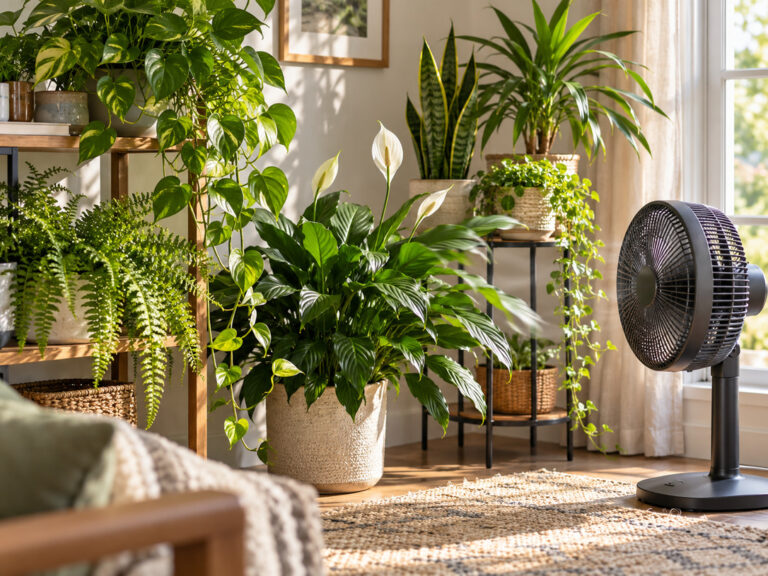
Gentle air movement around houseplants can help prevent these stagnant, humid pockets from developing. A small oscillating fan used when needed can improve circulation without subjecting plants to a strong, constant draft.
Spacing plants so air can move around leaves and stems can also reduce conditions favorable to certain fungal and bacterial diseases. This is especially important when numerous houseplants are grouped together on shelves, windowsills, or plant stands.
Opening interior doors can help air circulate between rooms. Running exhaust fans during cooking or showering can also prevent temporary humidity spikes from lingering near plant displays.
At the same time, avoid placing houseplants directly in the path of heating or air-conditioning vents, where strong drafts and temperature extremes can stress foliage.
Create a Balanced Environment for Healthy Houseplants
Managing structural moisture from the outside can be one part of maintaining a stable indoor environment. Preventing unnecessary water intrusion around foundations, basements, and crawlspaces can help reduce excessive household moisture.
Inside the home, appropriate watering, good drainage, adequate air circulation, and balanced humidity all play important roles in houseplant health.
By paying attention to both the conditions surrounding your home and the growing environment immediately around your plants, you can create healthier conditions for your indoor garden throughout the year.
Julie Bawden-Davis is a best-selling garden author, blogger, YouTuber and Master Gardener dedicated to sharing indoor gardening expertise with aspiring gardeners. She has published several gardening books and more than 5,000 articles in major publications. A former garden columnist for the LA Times, San Francisco Chronicle and Parade.com, she is founder of HealthyHouseplants.com and its YouTube channel.
 Julie Bawden-DavisOctober 23, 2026