A houseplant can look perfectly healthy one month and become leggy, uneven, or overcrowded the next. Long stems, damaged leaves, and weak growth can affect both its appearance and overall condition. Pruning is one of the simplest ways to maintain a balanced indoor garden and encourage healthier growth.
However, trimming houseplants involves more than removing unwanted leaves.Knowing when to prune, where to cut, and how much growth to remove can help a houseplant recover well and produce healthier new growth. With the right approach, you can improve your plant’s shape, encourage branching, and remove unhealthy growth without unnecessary stress.
When Is the Best Time to Prune Houseplants?
For most indoor plants, late winter and early spring are ideal times for routine pruning. As daylight increases, many houseplants begin producing fresh growth. Trimming during this period gives them an opportunity to quickly develop new shoots and recover from minor pruning stress.
Fast-growing varieties, including pothos, philodendrons, and some types of ivy, may benefit from occasional light trimming throughout their active growing season. Removing a few stem tips can help control their size and encourage fuller growth.
However, not every pruning task needs to wait until spring. Dead, damaged, or diseased leaves can be removed whenever needed. Waiting too long may allow unhealthy plant material to remain in contact with healthy foliage.
Signs Your Houseplant Needs Pruning
Not every indoor plant needs regular trimming. Some naturally stay compact, while others develop long stems and need occasional attention. Look for these common signs:
Leggy growth: Long stems with widely spaced leaves often indicate that a plant needs better shaping. Insufficient light may also contribute to this problem.
Dead or yellowing foliage: Completely damaged leaves no longer contribute to healthy growth and can be removed.
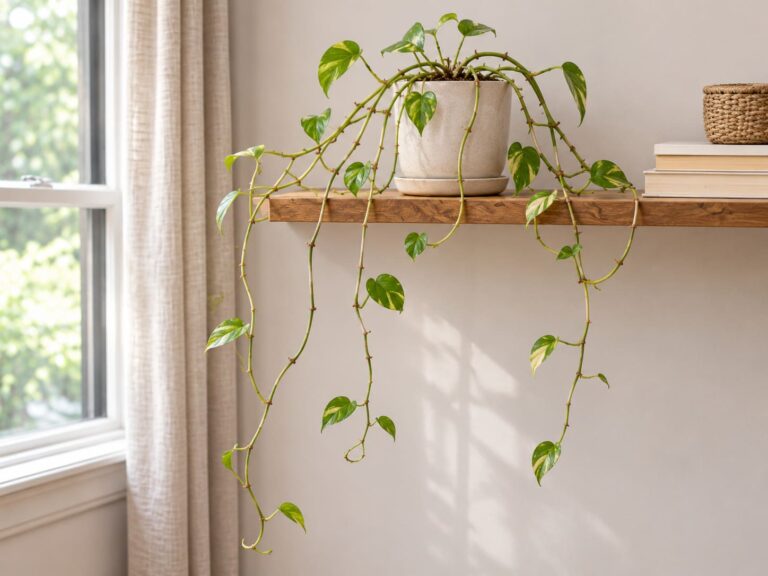
Overgrown stems: Trailing plants may become difficult to manage when their vines extend beyond the available growing space.
Uneven appearance: A plant growing heavily toward one side may benefit from selective trimming.
Damaged or diseased sections: Broken stems and affected foliage should be removed to maintain plant health.
Before pruning, examine the entire plant rather than focusing on one noticeable problem. This helps you identify which sections genuinely need attention and prevents unnecessary cutting.
Essential Tools for Pruning Indoor Plants
Using suitable tools makes pruning easier and helps produce clean cuts. For most small and medium-sized houseplants, sharp pruning scissors or bypass pruning shears are sufficient.
Keep the following supplies available:
Sharp pruning scissors: Useful for trimming small stems, leaves, and delicate growth.
Bypass pruning shears: Suitable for thicker stems that require a stronger cutting tool.
70%-90% Rubbing alcohol: Helps disinfect cutting blades before and between plants.
Gloves: Useful when handling plants with irritating sap or other substances that may affect the skin.
A clean collection tray: Keeps removed leaves and stems away from surrounding pots and growing surfaces.
Always clean your tools before use. If you have been cutting diseased plant material, disinfect the blades before moving to another section or plant. This helps reduce the risk of spreading plant diseases.
How to Prune Houseplants Step-by-Step
Pruning becomes easier when you follow a simple process. Instead of cutting several stems immediately, assess the plant and work gradually.
1. Examine the Plant Carefully
Start by checking the leaves, stems, and overall shape. Identify dead foliage, damaged sections, and unusually long stems. Look for healthy nodes, where leaves or branches emerge from the stem.
Understanding the plant’s structure helps you decide where to make cuts without removing important growing points.
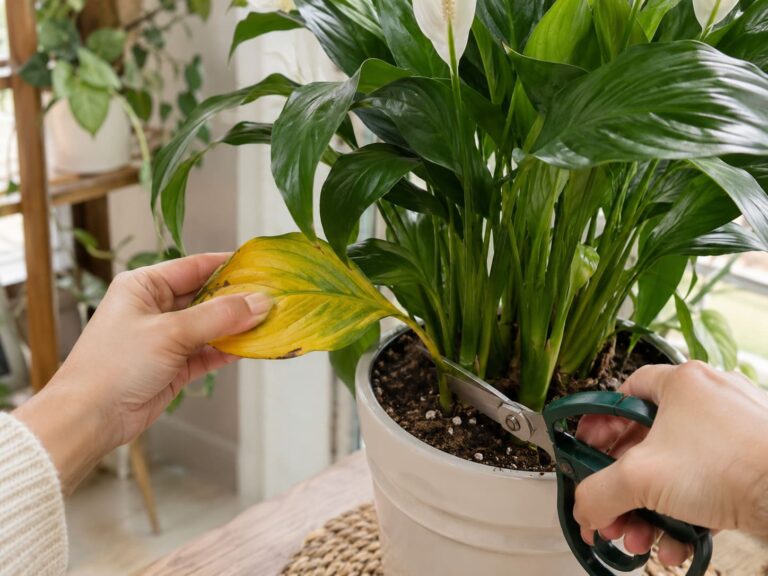
2. Remove Dead and Damaged Leaves
Begin with leaves that are completely yellow, brown, or damaged. Use clean garden shears or pruners to cut them near the base of their stems without injuring the main plant.
If only the tips of a leaf are brown, you can trim the affected area while following the leaf’s natural shape. Avoid cutting deeply into healthy green tissue.
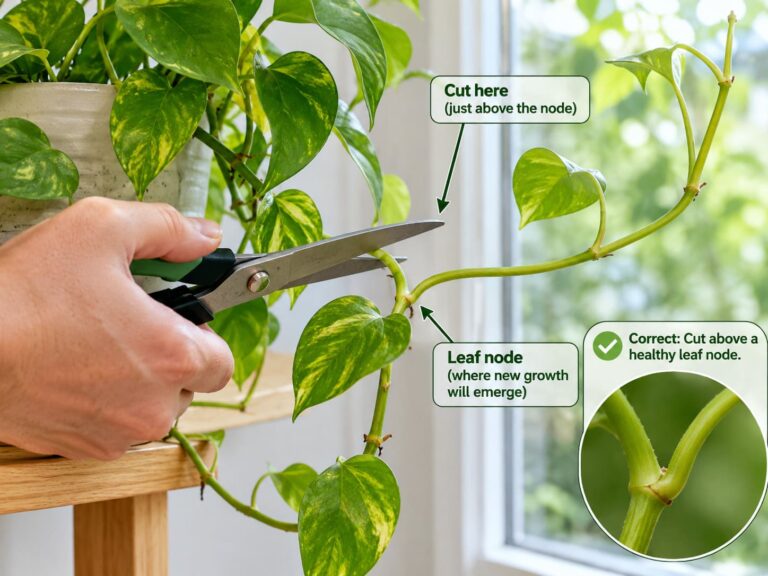
3. Trim Leggy Stems Above a Leaf Node
A leaf node is particularly important when shaping indoor plants because new growth will develop from buds at this point.
When shortening a leggy stem, make a clean cut just above a healthy node. This encourages branching and can help the plant develop a fuller appearance over time.
For example, trimming a long pothos vine above a node can encourage new growth at the node, which will make the plant bushier at that point. The removed cutting may also be suitable for propagation.
4. Shape the Plant Gradually
Once damaged foliage and excessively long stems have been removed, examine the plant from different angles. Trim any remaining sections that disturb its natural shape.
Avoid cutting too much at once. Removing a large portion of healthy foliage can reduce the plant’s ability to produce energy through photosynthesis. For routine maintenance, pruning no more than 25%-30% of the plant at one time is generally safer than extensive trimming.
5. Clean Up After Pruning
Collect the removed leaves and stems, then inspect the remaining foliage for any additional damage. Keep the growing area clean and return the plant to a suitable location with appropriate lighting.
How Different Houseplants Respond to Pruning
Different varieties respond to trimming in different ways, so it’s a good idea to understand their growth habits.
Pothos: These trailing plants tolerate regular trimming. Shortening long vines can encourage branching, while healthy cuttings can be rooted in water or suitable growing media.
Philodendrons: Many vining philodendrons benefit from occasional trimming to control excessive length and encourage a fuller appearance. Make cuts above healthy nodes.
Monstera: Remove damaged leaves and shorten unwanted stems when necessary. Avoid removing too much healthy foliage, particularly from younger plants that are still developing.
Spider plants: Trim brown leaf tips and remove older leaves when needed. You can also separate and propagate mature plantlets to manage crowded growth.
Peace lilies: Remove yellowing leaves and faded flower stalks near their base. Avoid excessive cutting, because healthy leaves are important for continued growth.
Some plants, including palms and certain orchids, have specific pruning requirements. Avoid cutting healthy growing points or removing foliage without checking the plant’s particular needs.
Common Pruning Mistakes to Avoid
Pruning can also be useful when you need to reduce the amount of space a houseplant occupies. This may be helpful when reorganizing a smaller home or preparing for a move. A seniors guide to downsizing to a rental apartment can provide broader planning considerations for reducing household belongings, including houseplants, while adapting to a smaller living space.
When pruning for size, avoid drastically cutting back a healthy plant all at once. Instead, shorten overly long stems gradually while maintaining enough healthy foliage to support continued growth.
Caring for Houseplants After Pruning
After pruning, give your plant time to adjust. Place it in an environment that provides the light and temperature conditions it normally requires. Avoid exposing freshly trimmed plants to sudden changes in their surroundings.
Continue checking the soil before watering. After substantial pruning, a plant may drink more slowly because it has less foliage.
Hold off on fertilizing immediately after substantial pruning. Resume normal feeding when the plant shows signs of active growth and follow the fertilizer’s recommended instructions.
Keep Your Indoor Garden Healthy with Regular Pruning
Pruning is an important part of keeping houseplants attractive and healthy. By removing damaged foliage, shortening overgrown stems, and encouraging balanced branching, you can help indoor plants maintain their natural shape and continue producing fresh growth.
The key is to understand each plant’s requirements and make thoughtful cuts rather than removing healthy growth unnecessarily. With clean tools, suitable timing, and consistent aftercare, even a simple pruning routine can make a noticeable difference to the appearance and condition of your indoor garden.
 Plant ParentNovember 6, 2026