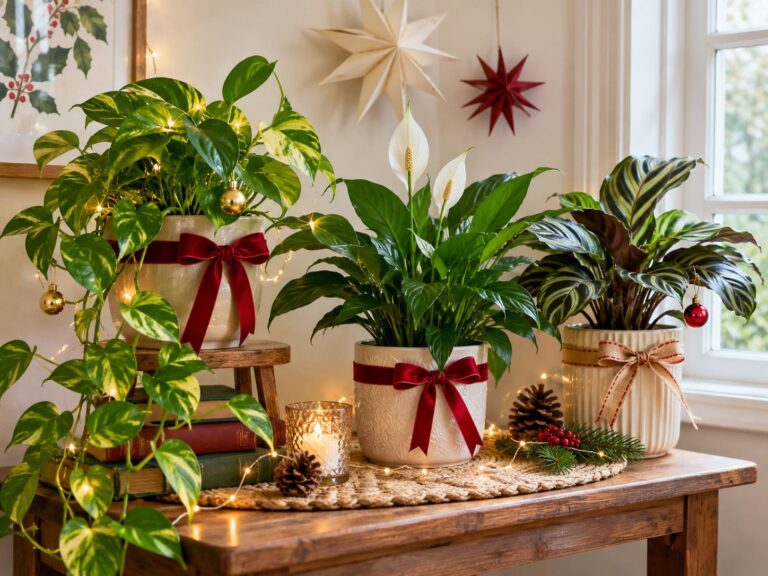
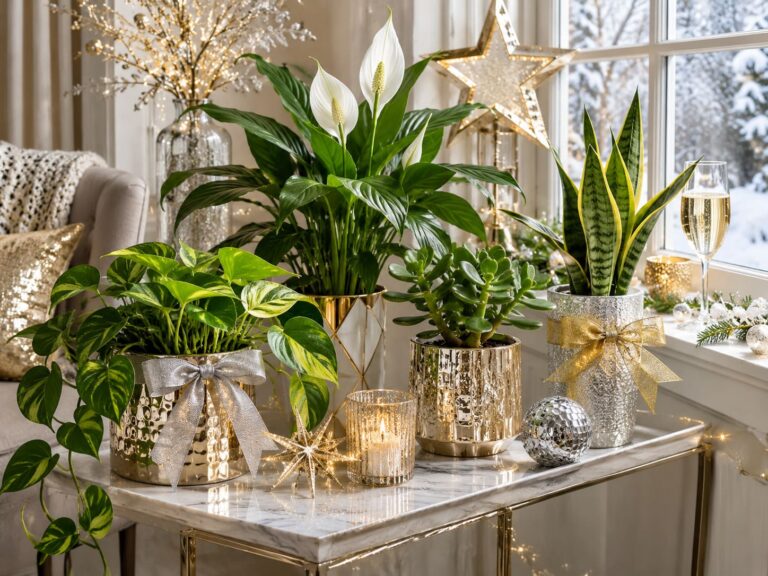
I love decorating my houseplants for the holiday season and making them part of the celebration. Because I have a large indoor plant collection, moving everything into a corner to make room for holiday decorations simply isn’t practical—and, frankly, it doesn’t look very good either.
Instead, I work the plants into the decorating. I’ve even used tall floor plants, such as a corn plant (Dracaena fragrans), as a kind of living Christmas tree by decorating them with lightweight seasonal accents.
Blending lush indoor foliage with seasonal decorations is an easy way to bring warmth and personality to your home during winter. Houseplants already provide color, texture, and structure, so rather than moving them aside, you can let them become part of the display.
Trailing pothos, tall Ficus trees, broad peace lilies, and other established plants can provide a natural foundation for seasonal decorating. Adding a few well-chosen accents lets you celebrate the season without overwhelming your rooms or covering every available surface with decorations.
How Can You Plan Seasonal Decor Updates Strategically?
Decorating several rooms can become expensive quickly, especially when you’re buying items you may only use for a few weeks each year. One way to keep costs manageable is to build on what is already in your home.
Your houseplants provide plenty of visual impact on their own, so you may only need a few seasonal touches to change the look. You can shop holiday decor on sale for smaller accents that complement your plants, such as ribbons, lightweight ornaments, decorative picks, or planter covers.
Rather than decorating every plant, choose a few that naturally serve as focal points. A large floor plant can anchor a corner, while a trailing plant on a mantel or shelf can soften the space around seasonal decorations.
Using your existing greenery as part of the design can also keep holiday decorating from feeling overly crowded. The plants remain the foundation, while the seasonal pieces provide color and contrast.
How Do You Dress Up Established Indoor Plants Safely?
Decorating houseplants requires a light touch. Heavy ornaments can bend or break stems, and tightly wrapped decorations can interfere with new growth or damage foliage.
Choose lightweight accents and place them so they don’t put unnecessary pressure on the plant.
A few safe ways to decorate include:
Use lightweight ornaments: Paper stars, small felt ornaments, straw decorations, and other light materials are less likely to weigh down stems.
Add decorative picks carefully: If you use plant picks, place them near the edge of the container where they are less likely to disturb the root system.
Dress up the planter: A ribbon tied around a ceramic pot or a decorative sleeve can add seasonal color without touching the plant at all.
Use lights sparingly: Battery-operated micro-LED lights produce relatively little heat, but they should still be draped loosely and kept from tightly wrapping tender stems or foliage.
Before decorating, wipe dusty leaves with a soft, damp microfiber cloth. Clean foliage can make better use of the available winter light and will also look fresher as part of your seasonal display.
Are Your Plants Safe from Winter Hazards?
Holiday decorations aren’t the only thing houseplants have to contend with during winter. Shorter days, heating systems, drafts, and changing indoor temperatures can all affect plant health.
Keep decorated plants away from active radiators, fireplaces, and heating vents, where hot, dry air can cause the potting mix to dry more quickly and stress foliage.
Cold drafts can also cause problems, particularly for tropical houseplants. Avoid placing sensitive plants directly against cold windows or in the path of frequently opened exterior doors.
Grouping compatible houseplants together can help create a slightly more humid microclimate around the foliage. Just be sure plants still have adequate air circulation and enough space to inspect leaves for pests.
Continue checking the potting mix rather than watering according to a fixed schedule. Many houseplants use water more slowly during winter because growth and light levels are reduced.
Let Your Houseplants Share the Holiday Spotlight
Combining year-round houseplants with carefully chosen seasonal accents creates warmth and texture without requiring you to completely redecorate your home.
A few ribbons, lightweight ornaments, decorative picks, or planter covers can transform familiar plants into part of your winter decor while still allowing them to remain healthy.
By letting your houseplants do much of the visual work, you can create inviting seasonal spaces that feel natural, personal, and alive throughout the winter months.
Julie Bawden-Davis is a best-selling garden author, blogger, YouTuber and Master Gardener dedicated to sharing indoor gardening expertise with aspiring gardeners. She has published several gardening books and more than 5,000 articles in major publications. A former garden columnist for the LA Times, San Francisco Chronicle and Parade.com, she is founder of HealthyHouseplants.com and its YouTube channel.
 Julie Bawden-DavisNovember 24, 2026