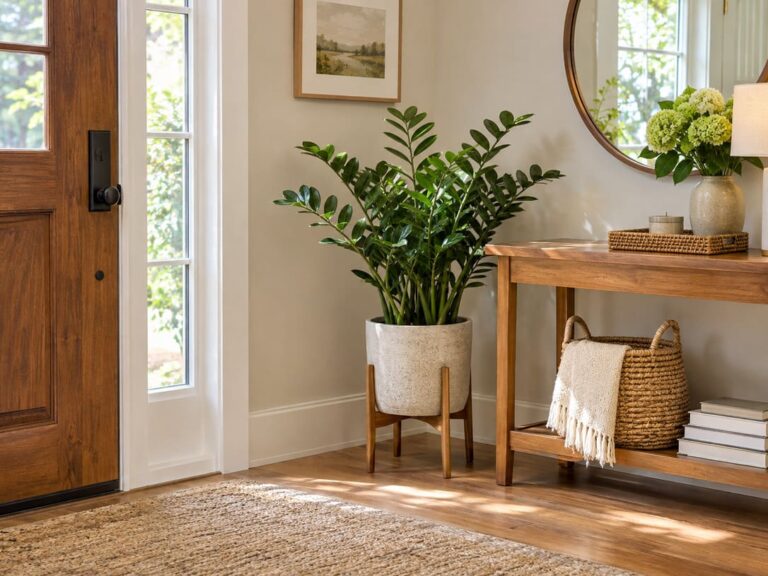
One of the first things people often comment on when they walk into my home is all the houseplants. They notice the greenery right away, and I frequently hear how much they like the look and feel the plants bring to the space.
That makes the entry an especially good place to combine houseplants with natural materials. A healthy plant by the door, a bench of warm wood, and the cool weight of a bronze handle can make the space feel calm and welcoming. Natural materials and living things have a way of working beautifully together.
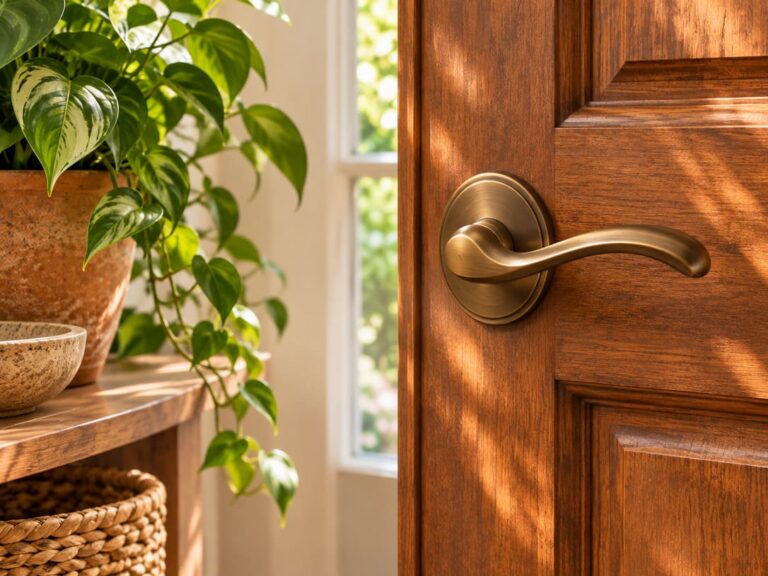
Hand-cast pieces such as Rocky Mountain Door Hardware, made from solid bronze with finishes that change with time and touch, share that same organic spirit with the plants that sit beside them. With a little planning, you can create an entry that greets visitors warmly while also providing conditions in which your houseplants can thrive.
Read the Light Before You Choose a Plant
Entries can be tricky places for plants. Many have only a small window, a sidelight beside the door, or a transom above it. Some get very little daylight at all.
Before you choose a plant, spend some time noticing how light moves through the space. Is there direct sun at any time of day? Does the entry remain relatively dim even at noon? A light meter or light meter app can help you get a more accurate idea of how much light is actually available.
If your entry receives bright, indirect light for much of the day, you have plenty of choices. A lower-light entry calls for plants that tolerate less light, although even these plants still require sufficient light for healthy growth.
If the space is too dark for the plants you want to grow, supplemental grow lighting is a better solution than repeatedly moving plants between the entry and a brighter room. A small grow light on a timer can sometimes be incorporated into a shelf or fixture that suits the style of the space.
Watch Out for Drafts and Temperature Changes
An entry has one challenge that few other rooms share. The front door opens and closes throughout the day, potentially exposing nearby plants to sudden changes in temperature.
Many popular houseplants are tropical or subtropical and dislike cold drafts. Repeated exposure to chilly air can stress sensitive plants and may contribute to leaf yellowing, curling, browning, or leaf drop.
Place plants away from the direct path of incoming cold air whenever possible. A position beside a console table or farther into the room may provide more stable conditions.
Keep plants away from heating vents and radiators as well, since blasts of hot, dry air can also damage foliage. And watch the door swing. A plant positioned in the wrong place may take a knock every time someone comes home.
Plants That Handle Life Near the Door
Some houseplants are more adaptable than others and may work well in an entry when they receive sufficient light.
Snake plants have an upright shape and tolerate lower-light conditions better than many houseplants. ZZ plants have glossy foliage and are similarly adaptable. Cast iron plants are known for tolerating relatively low light, while Chinese evergreens come in attractive shades of green, silver, and sometimes pink.
For a brighter entry, you have additional options. A rubber plant can make a dramatic statement where light is plentiful. Trailing pothos can soften the edge of a shelf or console where conditions suit the plant.
If you share your home with cats or dogs, check the safety of each plant before bringing it home, since several commonly grown houseplants can cause problems if pets chew them.
Let Natural Materials Carry the Theme
Plants look especially attractive when the materials around them feel natural too. Designers often call this approach biophilic design—a style that brings elements, textures, shapes, and colors associated with nature into indoor spaces.
In an entry, that might mean a wood bench, stone or terracotta planters, a woven basket for shoes, or a linen runner on a side table.
Hardware can play a quieter role in the same design. A bronze door lever or grip has an earthy warmth that pairs naturally with green foliage and wood. Some designs even take inspiration from branches, leaves, twigs, or smooth stones.
Over time, certain bronze finishes change where they are repeatedly touched, creating a surface that develops character with use. Combined with living plants and other natural materials, these details can make an entry feel grounded and welcoming rather than overly formal.
Simple Plant Care for a Busy Space
An entry sees plenty of traffic, and a few simple habits can help plants growing there stay healthy.
Dust may accumulate on foliage near frequently used doors, so wipe broad leaves periodically with a soft, damp microfiber cloth.
Use saucers beneath pots and empty excess water after watering. This protects floors and furniture while preventing containers from sitting in standing water.
If light reaches the plant primarily from one direction, rotate the pot periodically to encourage more balanced growth.
Pay attention to changing conditions throughout the year as well. An entry that receives plenty of light in summer may become considerably dimmer during winter, while seasonal temperature changes can create new drafts around doors and windows.
A welcoming entry doesn’t need to be large or filled with things. A healthy houseplant, a few natural textures, and thoughtfully chosen materials can make coming home feel like a small daily pleasure.
 Plant ParentNovember 19, 2026