In many homes, indoor plants are treated as a finishing touch. They’re often chosen to soften a room, add color, and make a space feel more lived in. But keeping them healthy is not just a matter of choosing the right corner near a window or sticking to a watering routine.
Plant health is shaped by the broader indoor environment, and that includes the quality of the home’s water, drainage, and moisture control. When those systems are unreliable, even well-cared-for plants can struggle in ways that are easy to misread.
That matters because the same conditions that affect plants often affect the home itself. Water that drains poorly, excess moisture around sinks and potting areas, or persistent humidity can create a less stable indoor environment overall.
Homes need proper ventilation to maintain indoor air quality and reduce humidity. And if there are undetected leaks and excessive condensation, such moisture can lead to mold and damage to the home. That means that healthy indoor plants are a sign that the home’s water systems are functioning properly, too.
Water Quality Affects More Than a Plant’s Watering Schedule
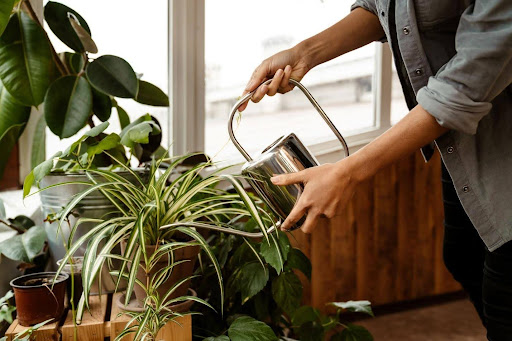
Plant owners often focus on how often they water, but the quality and consistency of that water also matter. Indoor plants are sensitive to repeated stress, and that can come from water that is not delivered consistently, from overwatering caused by guesswork, or from household systems that make plant care harder than it should be.
In practical terms, a home with a stable water supply and flow and dependable fixtures makes it easier to water plants properly without turning every routine task into trial and error.
For many households, this fits into a broader water-efficiency conversation. Fixing leaks immediately and using more efficient fittings is important, because small household water losses add up quickly. A dripping faucet can waste gallons of water over time. If a household is already losing water through avoidable plumbing issues, plant care often becomes part of a less efficient pattern rather than a well-managed one.
Drainage Matters for Plants and for the Spaces Around Them
When people talk about drainage for indoor plants, they usually mean what happens inside the pot. That is important, but household drainage also matters. Excess water from plant trays, sink rinsing, repotting and general clean-up still must go somewhere. If a kitchen or laundry drain is already slow, plant care becomes messier and less predictable. Over time, that turns a simple habit into one more source of moisture around cupboards, benches or floor surfaces.
This is one reason reliable household drainage matters more than many plant owners expect. It’s advisable to have leaky plumbing or blocked drainage pipes fixed as soon as possible, because ongoing moisture problems can escalate into mold and damage inside the home.
In a home filled with indoor greenery, that advice is even more relevant because watering routines naturally increase contact with moisture around internal spaces.
Reliable Plumbing Makes Plant Care Easier to Keep Consistent
One of the easiest ways to make indoor plant care more manageable is to remove unnecessary friction from the routine. Consistent tap pressure, dependable drainage and working fixtures make it easier to water plants carefully, rinse leaves, clean trays, and deal with excess water without delay.
When those systems are underperforming, people tend to adapt with shortcuts, using the wrong tap, postponing maintenance, or changing plant routines to fit around household problems rather than the plants’ needs.
That is why some homeowners prefer to sort out the underlying system rather than keep adjusting the care routine around it. For households trying to avoid those interruptions, working with alocal plumber Hawthorn can help ensure the home’s plumbing is stable enough to support everyday tasks, including plant care. In a home where plants are part of daily life, plumbing reliability is less of a background issue than it first appears.
Indoor Plants Can Help a Room Feel Better, but Moisture Still Has to Be Managed
Indoor plants do influence how a room feels. They can soften dry-looking spaces, make a home feel calmer, and contribute some moisture through transpiration. But there is a difference between a balanced indoor environment and a damp one. Your Home explains that ventilation helps reduce humidity and improve indoor air quality, as mold grows best in damp, poorly ventilated areas. That means the best approach is to control the source of moisture.
That is an important distinction because plant owners sometimes assume more moisture is automatically better. In reality, homes need balance. Too little humidity can be hard on some plant varieties, but too much moisture around windows, walls, bathrooms or utility spaces creates a different problem entirely. Plants can be part of a healthier-feeling home, but they should sit within a space that is ventilated and dry where it needs to be.
Small Home Adjustments Often Improve Both Plant Health and Everyday Living
Not every improvement needs to be dramatic. Fixing a dripping tap, clearing a slow drain, improving ventilation in a humid room, or making sure water disposal areas work properly can all make indoor plant care easier while improving how the home functions overall. Fixing leaks and using water-efficient fittings are small actions across daily routines that make a meaningful difference over time.
That practical mindset suits homes where indoor plants are part of everyday life. The goal is not to build a mini greenhouse indoors or rely on plants to solve indoor-environment problems on their own. It is to create a home where water is delivered efficiently, moisture is managed properly, and plant care fits naturally into the routine without adding avoidable mess or maintenance.
Julie Bawden-Davis is a best-selling garden author, blogger, YouTuber and Master Gardener dedicated to sharing indoor gardening expertise with aspiring gardeners. She has published several gardening books and more than 5,000 articles in major publications. A former garden columnist for the LA Times, San Francisco Chronicle and Parade.com, she is founder of HealthyHouseplants.com and its YouTube channel.
 Julie Bawden-DavisMarch 31, 2026