Renting doesn’t have to mean your houseplants die before you get your security deposit back. With a little planning, you can bring home all sorts of lovely greenery to keep and then take your indoor garden with you when you move.
There are some basic rules to follow, though, to make sure your houseplants don’t cause any damage in your rental home.
How to Choose the Best Houseplants for Your Space
We tend to judge how much light a room gets based on how it looks when we first walk in. We fail to notice that the windows are on the north side of the house or that they are blocked by a balcony or a wall of books.
Assess the natural light of your windows by knowing their orientation and how many hours of light will penetrate into your home during different times of the day and year.
Most rental homes do not have the large windows that allow a lot of natural light to pour in. But don’t worry! There are plenty of beautiful houseplants that thrive in low to moderate light. Here are some to get you started.
Pothos: These plants are practically impossible to kill and are happy in low light conditions.
Snake plants (neglect tolerant, can live in dimly lit areas)
ZZ plants (glossy, elegant, and drought-tolerant)
Heartleaf philodendrons (fast-growing and forgiving)
Cast-iron plants (they earned that name for a reason)
When choosing the right houseplants for your home, pick ones that require the same amount of light as the windows in your rental home provide. Instead of picking a plant that thrives in a house with lots of light and then being disappointed when it doesn’t do well in your low-light home, choose ones that have been known to thrive in homes with low light.
Protect Your Floors and Windowsills
Water damage is the number one thing to worry about when it comes to houseplants and your lease. When plants sit in water for extended periods of time, it can cause water to leak out from the stems and sit in a puddle on the floor or windowsill. When this water seeps into the wood and evaporates, it can leave a ring or stain behind. In severe cases, the damage could cost you hundreds or even thousands of dollars when you move out.
These simple habits make a big difference:
Use pots with drainage holes in combination with a sturdy saucer or cachepot to hold water.
Use a waterproof tray, a cork mat, or a rubber shelf liner on windowsills and on wood floors where you will be placing large floor plants.
Remove water from the saucer 30 minutes after watering to prevent roots from sitting in water.
Water your plants slowly from the top down to prevent water from pooling around the roots.
Large floor plants need more water, which raises the risk of damage if they sit directly on the floor. A rolling plant stand with a built-in drip tray solves this. Such a setup keeps moisture from seeping into the flooring and makes cleanup easy.
Manage Humidity Without Creating Moisture Problems
While some houseplants can thrive in the average home’s less-than-humid air, there are many popular tropical plants that prefer to be in very humid air, such as ferns, calatheas, and orchids. To boost humidity, many houseplant enthusiasts mist their plants constantly or even install a humidifier.
While good for the plants, misting and humidifiers can create problems in poorly ventilated spaces, creating ideal situations for mold to develop on walls and windowsills.
Excess water on the floor can seep into walls and cause black or green spots, and on windowsills it can leave rings or stains once it dries. Keep the floor dry and wipe down any wet surfaces promptly to prevent damage.
A better approach:
Group plants together so they create a shared humidity microclimate.
Place the stems of the plants in water-filled, small pebble trays. The evaporation from the surface of the water will increase the ambient humidity and help to prevent the roots from sitting in water.
A compact cool-mist humidifier can help maintain a humid environment. Set on low, it won’t oversaturate the air or encourage mold. These must be placed away from walls and furniture to prevent water from dripping down surfaces.
Keep rooms ventilated when running any humidifier.
Even with good ventilation, dry air from heating can stress your plants. If you notice this, it’s worth mentioning to your landlord or property manager. Dry air isn’t just tough on plants; it can point to broader ventilation issues worth addressing. Companies like Earnest Homes approach this by prioritizing ventilation standards as part of their overall property maintenance commitments.
Use Grow Lights Without Drilling into Walls
If your rental doesn’t get enough natural light for the plants you love, grow lights are a practical solution. The key is choosing ones that don’t require permanent installation.
Look for:
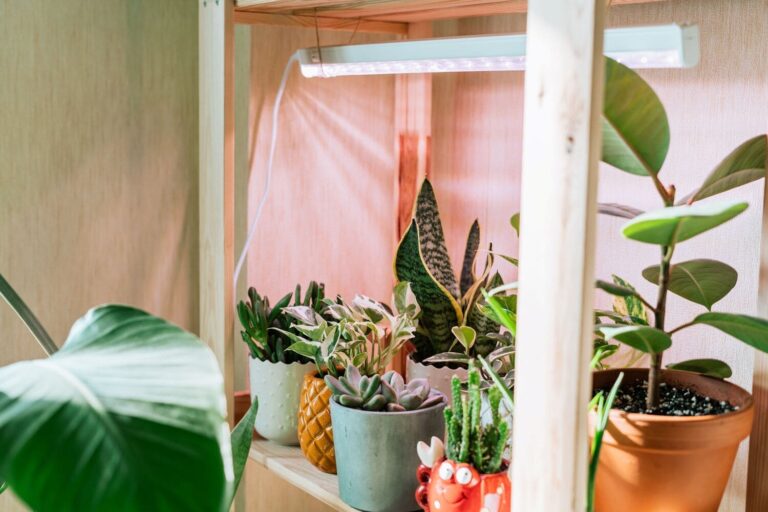
Clip-on grow lights that can be attached to shelves or around pot rims.
Freestanding grow light floor lamps.
LED grow light strips with adhesive backing (use removable command strips to attach to the shelves of your plant stands).
Full-spectrum LED grow lights use very little electricity, so they won’t meaningfully affect your bill.
Keep Pests from Becoming a Problem
Houseplant pests travel easily between homes, especially in adjacent units. The three most common pests that affect houseplants are fungus gnats, spider mites, and mealybugs.
Prevention is far easier than treatment. Keep these tips in mind:
Inspect new plants carefully before bringing them indoors (check leaf undersides and soil surface)
Quarantine new arrivals for one to two weeks before placing them near existing plants.
Don’t overwater. Fungus gnats are commonly found in wet soil, so try not to leave the soil of your houseplants continually moist.
Wipe down your houseplants on a monthly basis with a damp cloth to get rid of the dust on the leaves. This also helps you catch pest problems early, before they spread.
If you do get pests in your plants, treat them quickly with neem oil spray or insecticidal soap. These are two of the safest and most effective ways to control pests on houseplants. The EPA’s Safer Choice program is a great resource for identifying the safest and most environmentally friendly products for your home and your houseplants.
Prepare Plants for Inspections and Moving Day
As a plant parent, two days matter most for your indoor plants: your rental inspection and moving day.
Make sure you can pick up and take all your plants with you when you move. A couple of weeks before a rental inspection, look for water marks on windowsills and for dirty windowsills. Make sure the saucers for all of your plants are clean and dry.
When you know you have a move ahead of you, start to get your plants ready for the transition a few weeks prior to the big day. Prune plants that trail in order to pack them more easily, and group smaller plants together in boxes of soil that have been filled with newspaper in order to provide plenty of support for the roots during the move.
If you have taken the time to nurture a strong root system, practice good drainage, and give your houseplants the proper amount of light, this will ensure that your beloved plants will survive the move in good health.
Renting and plant parenthood can absolutely coexist. With a little thought to the details, you can have a lovely space, adhere to the terms of your lease, and be able to move on to your next adventure with your beloved plants in tow.
Julie Bawden-Davis is a best-selling garden author, blogger, YouTuber and Master Gardener dedicated to sharing indoor gardening expertise with aspiring gardeners. She has published several gardening books and more than 5,000 articles in major publications. A former garden columnist for the LA Times, San Francisco Chronicle and Parade.com, she is founder of HealthyHouseplants.com and its YouTube channel.
 Julie Bawden-DavisJuly 15, 2026