Indoor gardening is deeply rewarding until your favorite fern starts yellowing or your pothos develops root rot. If you’re like many plant lovers, your enthusiasm to nurture may come with an unfortunate side effect: overwatering.
Too much water is the number one killer of houseplants, even for well-intentioned growers. But here’s the good news: understanding how water moves (or doesn’t) through your containers, soil and space can help you prevent most of the common issues. With a few clever, plumbing-savvy strategies, you can protect your indoor jungle and make plant care more intuitive.
Ready to turn your black thumb green? Let’s dive into the root (literally) of the issue.
Know the Signs of Overwatering
Before we look at solutions, it’s important to know when overwatering is happening. The signs often mimic other plant problems, which is why people sometimes misdiagnose it as underwatering and pour on even more water. Look out for:
Mushy stems or leaves
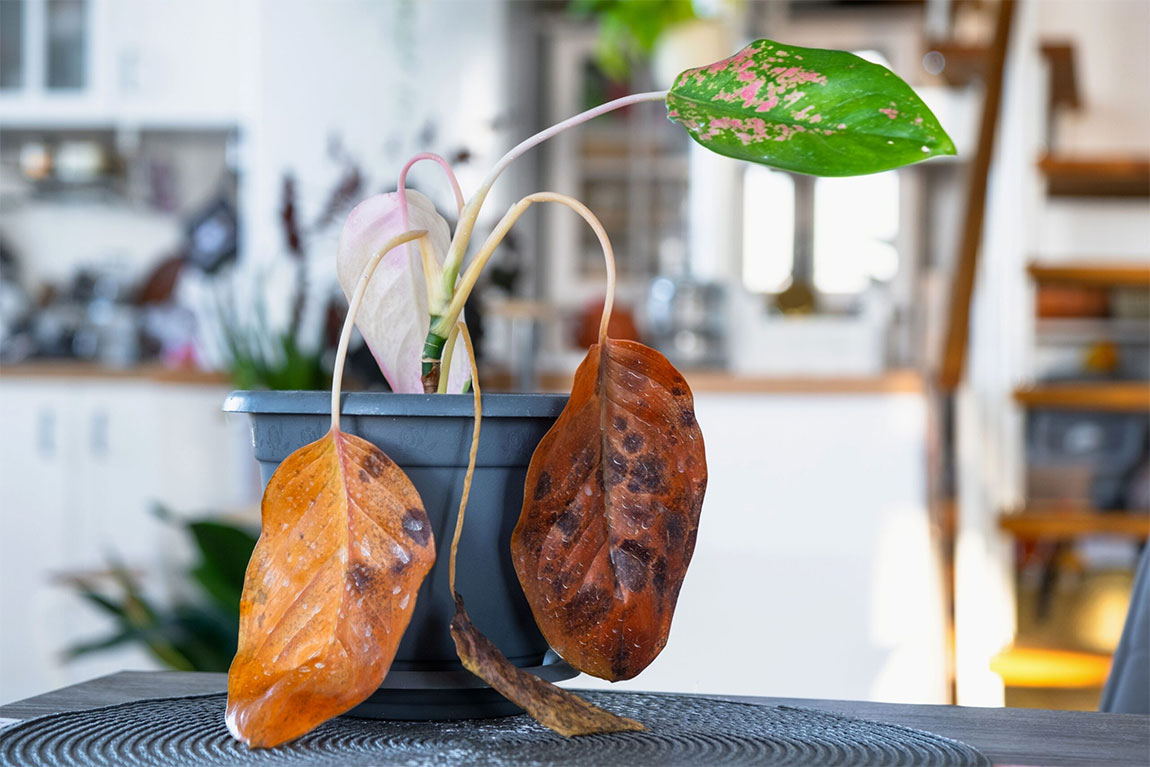
Brown or black spotting on leaves
Yellowing, especially from the bottom up
Mold or fungus gnats
Soil that’s constantly soggy
A sour or musty smell from the pot
If your plant’s roots are brown and mushy when you remove it from the pot, you’ve got root rot, a classic symptom of too much moisture and poor drainage.
Pink Chinese Evergreen (Aglaonema) with Fungal Leaf Spot Disease from Overwatering
Choose the Right Pot With Proper Drainage
This may sound basic, but it’s amazing how often people skip this step in favor of cute pots. A good indoor planter must have at least one drainage hole at the bottom. No exceptions.
If your favorite container doesn’t have one, before repotting, either drill a hole (if the material allows) or use the pot as a decorative cachepot, slipping in a nursery pot with drainage inside it. Always empty out excess water from the outer container to avoid creating a stagnant pool.
Get Smart With Soil Selection
Not all potting mixes are created equal. The wrong mix will hold onto too much water, especially in indoor environments where evaporation is slower.
For most houseplants, choose a well-draining, nutrient-retentive mix that contains ingredients like:
Perlite
Pumice
Peat moss
Coconut coir
Vermicompost
Avoid using garden soil or heavy compost blends indoors. If you’re planting succulents or cacti, opt for a sandy, gritty mix specifically designed for arid plants.
Elevate Your Pots
Setting your pots directly on saucers or the floor can create a situation where water has nowhere to escape. Try using plant risers or pot feet to create air flow underneath and prevent the drainage holes from getting clogged. If you grow on shelves or stands, choose designs with slats or open bottoms so that air circulates freely. Such a design helps dry out the bottom soil layers more efficiently.
Consider Self-Watering Systems, But Use Them Wisely
Self-watering pots can be helpful, especially if you travel often or tend to forget watering. But they also carry risks when used improperly. If the wick system delivers too much moisture, or if your plant hates wet feet (like calatheas or fiddle leaf figs), it may backfire.
Make sure to:
Monitor the water reservoir regularly
Adjust for seasonal humidity and light
Choose self-watering designs with overflow prevention
Check that the plant does well with a self-watering system
Pro tip: add a layer of LECA (lightweight expanded clay aggregate) at the base of your self-watering pot to buffer excess water.
Envato Elements - Impact Photography
Plumbing-Inspired Tip: Build a Drainage Buffer Layer
While not a substitute for a drainage hole, you can create a buffer at the bottom of your pots using pebbles, charcoal or LECA. This allows excess water to pool away from roots. Still, this method works best with proper drainage, not instead of it. Otherwise, you just create a hidden swamp under your plant that can’t escape.
Monitor Moisture Accurately (Don’t Just Rely on Touch)
Many of us do the classic finger test: stick a finger in the soil and see if it’s dry. While better than nothing, it’s far from accurate. Moisture meters, available at garden centers or online, offer better insight. A reliable analog or digital moisture meter can show you what’s happening deep in the pot, often where rot starts. Just remember to clean the probe between uses, and avoid leaving it in the soil permanently.
Improve Drainage in Built-In Planters or Concrete Troughs
Built-in containers or concrete planters are stylish and durable, but they often lack good drainage. If you’re designing an indoor garden nook or custom feature, plan for plumbing flexibility from the start.
This is where working with professionals can come in handy. For example, trusted Moreton Bay plumbing experts can help you install safe water outlet systems, improve internal drainage paths, or even incorporate overflow catchment drains beneath fixed planters. It’s a small investment that pays off big in plant health and building protection. They might also advise on water reuse systems, like diverting graywater from your sink to a planter-friendly filtration system.
Avoid Hidden Leaks and Wicking Problems
Sometimes, your planter leaks slowly onto wooden floors or shelves, causing long-term damage. Or you may find that your plant stand is drawing moisture up into the container (a phenomenon called reverse wicking). Using waterproof saucers and trays is a must, but so is checking for hairline cracks or seepage areas. Keep a microfiber cloth or cork mat under your plants as a buffer.
Envato Elements - sedrik2007
How Humidity and Airflow Help
Indoor plants suffer more in overwatered conditions when the air is stagnant. A humid but breezy environment encourages natural evaporation and helps dry soil faster. Use small fans on timers, or open windows when the weather allows. Humidity trays and grouping plants together can balance moisture in the air without dumping it in the soil.
Plant-by-Plant Watering Rules
Understanding the native habitat of your houseplants is key. Snake plants, ZZ plants, pony tail palms and succulents need their soil to dry out completely between waterings. Ferns, on the other hand, enjoy more constant moisture. Label your pots or keep a watering calendar. Apps like Planta or Greg can help track care routines without guesswork. For example, watering once a week might be perfect for a spider plant but disastrous for an aloe vera. When in doubt, err on the side of underwatering—most plants can bounce back from thirst, but not from rot.
Use Government-Recommended Practices
Indoor water management isn’t just for plant health; it’s part of broader conservation efforts. According to the U.S. Environmental Protection Agency, indoor water use accounts for nearly 70 percent of residential consumption, and leaks or inefficient systems contribute to massive waste.
Being mindful of indoor plant watering can help you join the movement toward more efficient water use. From repairing leaky faucets to selecting high-efficiency fixtures and adjusting your watering practices, the benefits ripple beyond your home. You don’t need to be a horticulturist or a plumbing pro to keep your indoor plants thriving. All it takes is a better understanding of how water behaves in your space, combined with the right tools, containers, and a bit of planning.
With these plumbing-smart tips, your fiddle leaf won’t flop and your pothos won’t pout. Instead, they’ll thank you with lush leaves and vibrant growth—proof that less really is more when it comes to watering.
Let your indoor jungle flourish, just keep those roots above water.
Julie Bawden-Davis is a best-selling garden author, blogger, YouTuber and Master Gardener dedicated to sharing indoor gardening expertise with aspiring gardeners. She has published several gardening books and more than 5,000 articles in major publications. A former garden columnist for the LA Times, San Francisco Chronicle and Parade.com, she is founder of HealthyHouseplants.com and its YouTube channel.
 Julie Bawden-DavisJuly 22, 2025