About Jewel Alocasia

Jewel Alocasia Introduction

Alocasia cuprea, widely known as the Jewel Alocasia, is a striking rhizomatous perennial in the arum family prized by collectors for its heavily quilted, metallic foliage. The species is native to the lowland and hill rainforests of Borneo, where it grows as an understory plant on the humid, shaded forest floor, often nestled among leaf litter and rocky outcrops. In its natural habitat it receives filtered light through the forest canopy, consistently warm temperatures, and very high ambient humidity, conditions that have shaped its reputation as a rewarding but somewhat demanding houseplant.

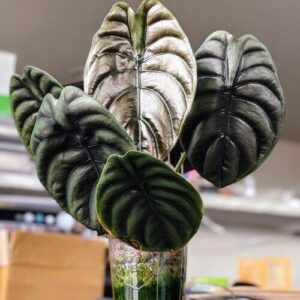
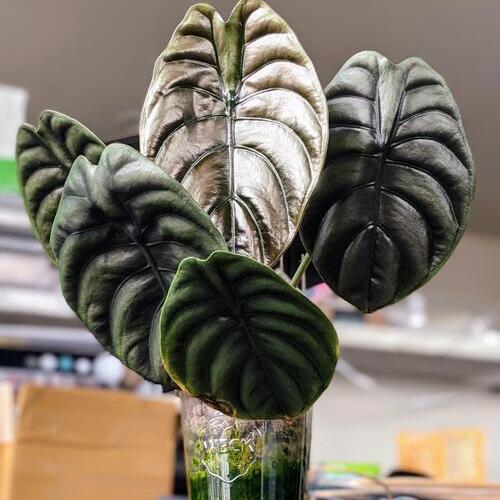
The most notable feature of Alocasia cuprea is its foliage: broad, ovate to heart-shaped leaves with a deeply embossed, corrugated surface that catches light in a way few other houseplants can match. The upper leaf surface has a dark bronze-green to almost purplish-black metallic sheen, often with a coppery or purple cast depending on the cultivar and lighting conditions, while the underside is typically a rich burgundy or deep purple. The prominent, sunken veins create a quilted, almost reptilian texture that gives the plant its ‘jewel’ reputation among aroid enthusiasts.

Alocasia cuprea grows from a thick underground rhizome and tends to stay relatively compact compared to many of its larger Alocasia relatives, making it well suited to container culture indoors. Under ideal conditions it can produce an aroid-typical inflorescence consisting of a spathe and spadix, though flowering is uncommon in home cultivation and the plant is grown almost exclusively for its dramatic foliage rather than its blooms.

Jewel Alocasia Care & Growing Guide

Caring for Alocasia cuprea successfully means trying to replicate the warm, humid, filtered-light conditions of a Bornean rainforest floor as closely as possible. This is not considered a beginner houseplant; it can be sensitive to inconsistent watering, low humidity, and drafts, and it will let you know quickly when conditions are off by drooping or curling its leaves. That said, with a stable routine it can be a long-lived and spectacular specimen plant.

The foundation of good care is a well-draining, chunky aroid potting mix, bright indirect light away from direct sun, and a watering rhythm that keeps the soil evenly moist without ever becoming waterlogged. Humidity is arguably the single biggest factor in success with this species; most homes are far too dry for it year-round, so supplemental humidity from a humidifier, pebble tray, or enclosed growing area is strongly recommended rather than optional.

Beyond the basics, consistent warmth, regular but light feeding during the growing season, and periodic repotting as the rhizome fills its container will keep the plant vigorous. Alocasia cuprea also goes through a natural period of slowed growth or partial dormancy in lower light months, during which watering and fertilizing should be scaled back. Understanding and working with this seasonal rhythm, rather than fighting it, is key to keeping the plant healthy over the long term.

 Soil Soil

Alocasia cuprea needs a light, chunky, fast-draining aroid mix rather than standard potting soil. A good base combines regular potting soil or coco coir with orchid bark, perlite, and horticultural charcoal in roughly equal parts, giving the roots plenty of air pockets while still holding some moisture. A slightly acidic to neutral pH of about 5.5 to 6.5 suits this species well.

Drainage is critical: the rhizome and roots are prone to rot if they sit in soggy, compacted soil, so the mix should never stay saturated for long after watering. Amendments such as horticultural charcoal help keep the mix fresh and reduce the risk of bacterial buildup, while worm castings or a small amount of compost can be mixed in to provide slow-release nutrients.

Soil composition has a direct effect on plant health: overly dense, moisture-retentive soil leads to poor oxygen availability at the roots, root rot, and stunted growth, while an appropriately airy mix supports vigorous root development and larger leaves. Common soil problems to watch for include poor drainage and compaction (dense, water-logged mix that suffocates roots), inappropriate pH (locking out nutrient uptake), salt build-up from fertilizer or tap water (visible as a white crust on the soil surface or pot rim), nutrient deficiencies (pale or small new leaves), and root boundness, where a congested root system circles the pot and reduces the plant’s ability to take up water and nutrients, signaling it is time to repot.

 Fertilizer Fertilizer

During the active growing season in spring and summer, Alocasia cuprea benefits from regular but light feeding, roughly every 4 weeks, using a balanced, water-soluble houseplant fertilizer diluted to about half strength. Fertilizing should be reduced or paused entirely in fall and winter when the plant’s growth naturally slows.

Signs of over-fertilization include a white crust of salts on the soil surface, browning leaf margins or tips that appear burnt, and wilting despite adequate water. Under-fertilization tends to show up as pale, small, or slow-growing new leaves and generally weak growth over time.

Organic alternatives such as diluted worm castings tea, fish emulsion, or a light top-dressing of worm castings can provide a gentler, slow-release nutrient source. This species, like many aroids, particularly benefits from adequate nitrogen for leaf growth along with micronutrients like magnesium and iron; yellowing between leaf veins can sometimes indicate a magnesium or iron deficiency rather than a general nutrient shortage.

 Watering Watering

Alocasia cuprea prefers evenly moist, but never waterlogged, soil. A good rule of thumb is to water thoroughly once the top inch or so of soil has dried out, then let the excess drain away completely rather than letting the pot sit in standing water. Room-temperature filtered, distilled, or rainwater is preferable to hard tap water, since this species can be sensitive to the salts, chlorine, and fluoride often present in tap water, which may cause leaf-tip burn over time.

Signs of underwatering include drooping, curling, or crispy leaf edges and a generally wilted appearance that improves after watering. Overwatering tends to show up as yellowing lower leaves, a mushy or foul-smelling stem or rhizome base, and soil that stays wet for many days without drying, which is often an early sign of root rot.

Watering needs shift seasonally: during the active growing season in spring and summer, the plant will dry out faster and may need water every several days to weekly, depending on light, temperature, and pot size. In fall and winter, when growth slows, watering frequency should be reduced, allowing the soil to dry out a bit more between waterings to avoid rot while the plant is using less water overall.

Jewel Alocasia Watering Calculator

🪴 Precision Watering Intelligence

Science-Based Hydration for Your Collection

Stop guessing. Most houseplant failures are caused by volumetric errors and improper moisture tension. Our deterministic calculator moves beyond "once-a-week" watering by analyzing the four critical pillars of root health:

  • • Transpiration Coefficients: 120+ species mapped by metabolic rate.
  • • Substrate Porosity: Adjusts for Standard vs. Cactus/Well-Draining mixes.
  • • Geometric Volume (V = π r² h): Calculates exact cups based on pot surface area.
  • • The Drainage Factor: Accounts for pot material (Terracotta) and the risk of a perched water table.

Personalized for this plant

6"
🪴
--
approx. every --

Disclaimer: Our calculator is pretty smart. We’ve crunched the numbers, but we’re not measuring the quantum state of your living room. Since we don’t know your exact indoor temperature, humidity, light, airflow, or whether your plant receives daily sweet nothings and motivational speeches, use this calculator as a guide—and always keep an eye on your plant.

 Lighting Lighting

Alocasia cuprea does best in bright, indirect light, similar to the dappled, filtered sunlight it would receive under a rainforest canopy. An east-facing window, or a spot a few feet back from a south- or west-facing window with a sheer curtain, works well. Direct, unfiltered sun, especially midday or afternoon sun, should be avoided.

Signs of insufficient light include leggy or slow growth, smaller new leaves, dulling of the metallic leaf sheen, and the plant leaning noticeably toward a light source. Excessive or direct light shows up as bleached, pale, or scorched patches on the leaves, crispy brown edges, and a washed-out rather than richly colored leaf surface.

If natural light is insufficient, a full-spectrum LED grow light placed 12 to 24 inches above the plant for roughly 10 to 12 hours a day is an effective substitute or supplement, particularly in winter or in rooms without strong natural light. Rotating the pot periodically also helps ensure even growth on all sides of the plant.

 Tempature Temperature

Alocasia cuprea thrives in consistently warm conditions, ideally between about 65 and 85°F (18 to 29°C). It is sensitive to cold and should be protected from temperatures below roughly 60°F (15°C), which can cause growth to stall or leaves to suffer chilling damage. It also does not tolerate sudden cold drafts, such as those from air conditioning vents, exterior doors, or drafty winter windows.

The plant tolerates a moderate day-to-night temperature swing but prefers overall stability; frequent large fluctuations can stress it and contribute to leaf drop or slowed growth. Extreme heat above the mid-90s°F, especially combined with low humidity, can also cause stress and leaf scorch.

To protect the plant from temperature extremes, keep it away from drafty windows and doors in winter, avoid placing it directly under or near HVAC vents, and bring it away from cold glass on frosty nights. In very hot climates, some afternoon shade and extra humidity help offset heat stress.

 Humidity Humidity

High humidity, ideally in the range of 60 to 80 percent, is one of the most important factors for success with Alocasia cuprea. Average indoor humidity, often 30 to 40 percent, is well below what this species prefers and is a common cause of poor performance.

Low humidity stress shows up as crispy, browning leaf edges and tips, curling leaves, and slowed or stunted new growth. High humidity is rarely a direct problem for the plant itself, though it can increase the risk of fungal issues if combined with poor air circulation.

Effective humidifying methods include running a small room humidifier near the plant, which is generally the most reliable option, grouping plants together to raise local humidity, using a pebble tray filled with water beneath (not touching) the pot, or growing the plant in an enclosed cabinet, greenhouse cabinet, or terrarium-style setup. Misting alone provides only a brief, minor humidity boost and is not a substitute for these more consistent methods.

 ropagation Propagation

Alocasia cuprea is most reliably propagated by division of its rhizome, since it does not readily produce plantlets or offsets the way some other aroids do. Rhizome division has a notably higher success rate than attempting to root a single leaf cutting, which generally will not produce a new plant on its own because Alocasia leaves lack the growth points needed to regenerate a whole plant.

Step-by-step rhizome division:
1. Choose a mature, healthy plant with a rhizome that has at least two visible growth points or nodes.
2. Water the plant a day beforehand so the root ball is easier to work with.
3. Carefully remove the plant from its pot and gently rinse or brush away soil to expose the rhizome.
4. Identify natural divisions or nodes along the rhizome where it can be separated with roots attached to each section.
5. Use a clean, sharp, sterilized knife or shears to cut through the rhizome between growth points.
6. Allow the cut surfaces to air dry for a few hours, optionally dusting them with cinnamon or a fungicidal powder to reduce infection risk.
7. Pot each division into a small container with a well-draining aroid mix, water lightly, and place in warm, humid, bright indirect light.
8. Maintain high humidity (ideally with a humidity dome or enclosed setup) while new roots establish.

The best time to propagate is in spring or early summer at the start of the active growing season, when the plant has the most energy to recover. Newly divided sections typically take several weeks to a few months to establish visible new roots and growth, and full establishment as an independent, actively growing plant can take a full growing season.

 Potting Potting

Alocasia cuprea does best in a pot only slightly larger than its current root mass, since an oversized pot holds excess moisture that can lead to root rot. A pot with generous drainage holes is essential; terracotta or another breathable material can help excess moisture evaporate, though plastic nursery pots work fine as long as drainage is good. Use a chunky, well-draining aroid mix as described in the soil guidance.

Repotting is generally needed every 1 to 2 years, or sooner if the plant is a vigorous grower. Signs that it’s time to repot include roots visibly circling the drainage holes or growing out of them, water running straight through the pot without being absorbed, the plant drying out unusually fast between waterings, or the rhizome clearly outgrowing the container.

If roots are densely circling or root-bound, gently teasing them apart, and trimming any mushy, dead, or excessively long roots with clean shears, encourages healthier growth in the new pot. When transitioning to a new pot, minimize stress by working quickly, keeping as much of the existing root mass intact as possible, watering lightly after repotting rather than heavily, and placing the plant in stable warmth, humidity, and indirect light for a couple of weeks while it adjusts.

 Pruning Pruning

Best Time to Prune

The best time to prune Alocasia cuprea is during the active growing season in spring or summer, when the plant can recover and push new growth quickly.

Frequency and Purpose

Pruning is done as needed rather than on a fixed schedule, mainly to remove yellowing, damaged, or dead leaves and to keep the plant tidy and disease-free.

Tools and Preparation

Use a clean, sharp pair of pruning shears or scissors, sterilized with rubbing alcohol before and between cuts to avoid spreading disease. Wearing gloves is recommended, since the sap can irritate skin.

Step-by-Step Pruning Guide

  1. Inspect the plant and identify any yellow, brown, damaged, or dead leaves.
  2. Sterilize your cutting tool with rubbing alcohol.
  3. Cut the leaf stem (petiole) as close to the base or rhizome as possible without damaging surrounding healthy tissue.
  4. Dispose of removed foliage rather than composting it if any disease or pest issue is suspected.
  5. Wipe down your tool again after finishing.

Aftercare

Keep the plant in its usual warm, humid, indirect-light conditions after pruning, and avoid fertilizing immediately after a heavy pruning session; resume normal watering and feeding once new growth appears.

Special Considerations

Because Alocasia cuprea is grown primarily for its foliage, avoid removing healthy leaves purely for shaping; only prune leaves that are damaged, diseased, or fully spent to preserve the plant’s overall display.

 Blooming Blooming

Alocasia cuprea rarely flowers in cultivation, and blooming is not the reason this species is grown. When flowering does occur, typically in warm, humid, high-light greenhouse conditions rather than average home environments, it produces a single aroid-type inflorescence with a pale greenish-white to cream spathe surrounding a central spadix, similar in form to other Alocasia species. There is no reliably defined ‘bloom season’ for indoor-grown plants since flowering is sporadic and dependent on maturity and near-ideal growing conditions rather than a fixed calendar period. Most growers will never see this plant flower indoors, and its ornamental value rests entirely on its foliage.

 Pests & Diseases Pests and Diseases

Pests

Name: Spider mites

Symptoms: Fine webbing on the undersides of leaves, stippled or speckled yellowing on leaf surfaces, and a dusty appearance from tiny moving specks, especially in dry conditions.

Treatment: Isolate the plant, rinse leaves thoroughly under running water, raise humidity, and treat with insecticidal soap or horticultural oil, repeating every 5 to 7 days until the infestation clears.

Name: Mealybugs

Symptoms: Small white, cottony clusters in leaf axils and along stems, sticky honeydew residue, and sooty mold developing on affected areas.

Treatment: Dab visible mealybugs with a cotton swab dipped in rubbing alcohol, then treat the whole plant with insecticidal soap or neem oil, repeating weekly until resolved.

Name: Scale insects

Symptoms: Small, immobile brown or tan bumps on stems and leaf undersides, along with sticky honeydew and yellowing foliage.

Treatment: Scrape off visible scale gently, then apply horticultural oil or insecticidal soap to smother remaining insects and eggs, repeating treatments over several weeks.

Diseases

Name: Root rot

Symptoms: Yellowing and wilting leaves despite moist soil, a mushy or foul-smelling rhizome or root base, and stunted or halted growth.

Treatment: Remove the plant from its pot, trim away all mushy or blackened roots and rhizome tissue with a sterilized tool, treat cuts with a fungicide, and repot into fresh, well-draining mix; reduce watering going forward.

Name: Bacterial or fungal leaf spot

Symptoms: Discrete brown, black, or water-soaked spots on leaves, sometimes with a yellow halo, that can spread in humid, stagnant air.

Treatment: Remove affected leaves, improve air circulation, avoid overhead watering that wets the foliage, and apply an appropriate fungicide or bactericide if the issue persists or spreads.

 Special Features Special Features

Alocasia cuprea’s defining special feature is its extraordinary foliage: deeply quilted, metallic bronze-to-purple leaves with a reflective, almost lacquered sheen that shifts in color and intensity depending on the angle and quality of light hitting them. This dramatic texture and coloration has made it one of the most sought-after collector aroids, often used as a striking focal point or accent plant rather than a background piece. It does not produce edible fruit or fragrant flowers and is grown almost exclusively for its architectural, jewel-toned leaves, which pair strikingly with other lush-green tropical foliage in a display.

 Benefits Plant Benefits

Alocasia cuprea has no established culinary, herbal, or pharmaceutical uses and is not used in traditional or modern herbal medicine. Like most Alocasia species, it contains calcium oxalate crystals that make it unsafe to ingest, so it is grown strictly as an ornamental foliage plant rather than for any medicinal or edible benefit.

  Additional Information Additional Information

Alocasia cuprea is part of a broader group of ‘jewel Alocasias’ prized for textured, colorful foliage, which also includes species like Alocasia reginula and Alocasia melo. Because it is slower-growing and more demanding of stable humidity and warmth than many common houseplants, it is often grown in enclosed cabinets, greenhouse cabinets, or terrarium-style setups by dedicated collectors rather than as an open-room plant.

  Lifecycle Life Cycle

Alocasia cuprea is a rhizomatous evergreen perennial rather than an annual, meaning it does not complete its life cycle in a single season and, under good indoor care, can live and grow for many years. It grows from a thick underground rhizome that stores energy and periodically sends up new leaves, with each individual leaf lasting many months before naturally yellowing and being replaced by new growth. The plant experiences a more active growth phase in spring and summer with warmer temperatures and longer daylight, and a slower, semi-dormant phase in fall and winter when growth largely pauses. Over time, as the rhizome matures and thickens, the plant can be divided to produce multiple new specimens, effectively resetting a portion of its life cycle in each new division.

  Plant ToxicityAre Jewel Alocasia Poisonous, Toxic

Alocasia cuprea is toxic to cats, dogs, and humans, including children. All parts of the plant, especially the leaves and stem, contain insoluble calcium oxalate crystals (raphides) along with other irritating compounds typical of the Araceae family. Chewing or biting into any part of the plant releases these needle-like crystals into the mouth and tissue, causing immediate mechanical irritation.

Affected organisms include cats, dogs, and other pets that chew on houseplants, as well as young children who may put leaves in their mouths. Symptoms typically include intense oral irritation, burning pain, excessive drooling, swelling of the lips, tongue, and mouth, difficulty swallowing, and in some cases vomiting. Severity is usually mild to moderate; ingestion is rarely life-threatening but can be significantly distressing, and swelling in the airway is a rare but serious concern if a large amount is chewed.

First aid steps include rinsing the mouth with water or milk, wiping away any visible plant material, and offering a cold treat such as ice chips or a popsicle to soothe irritation. Contact a veterinarian or, for a child, poison control or a pediatrician promptly, especially if swelling, drooling, or difficulty breathing develops. Preventive measures include placing the plant well out of reach of pets and small children, choosing a hanging or high shelf location, and considering a pet-safe alternative in households with plant-chewing animals.

 FAQ Frequently Asked Questions

Is Alocasia cuprea toxic to cats and dogs?

Yes. Alocasia cuprea contains calcium oxalate crystals that are toxic to cats, dogs, and humans, causing oral irritation, drooling, and swelling if chewed.

How often should I water Alocasia cuprea?

Water when the top inch of soil has dried out, keeping the soil evenly moist but never soggy, and reduce frequency in fall and winter.

What humidity does Alocasia cuprea need?

It prefers high humidity, ideally 60 to 80 percent, achieved with a humidifier, pebble tray, or enclosed growing space.

Why are the leaves of my Alocasia cuprea curling?

Leaf curling is most often caused by underwatering, low humidity, or temperature stress, especially cold drafts.

How much light does Alocasia cuprea need?

Bright, indirect light is ideal; direct sun can scorch the leaves while too little light causes leggy growth and dull color.

How do you propagate Alocasia cuprea?

It is propagated by dividing the rhizome into sections that each have a growth point and some roots, ideally in spring or summer.

Why is my Alocasia cuprea losing leaves?

Occasional lower leaf loss is normal as older leaves are replaced, but rapid leaf drop usually points to overwatering, root rot, or a sudden environmental change.

What kind of soil does Alocasia cuprea need?

A chunky, well-draining aroid mix of potting soil, orchid bark, perlite, and charcoal with a slightly acidic pH works best.

Is Alocasia cuprea easy to grow?

It is considered an advanced-level houseplant, since it needs consistently high humidity, warmth, and careful watering to thrive.

How big does Alocasia cuprea get?

It stays relatively compact compared to other Alocasias, generally classified as a small houseplant suited to container growing.

Can I grow this plant in my indoor spaceCan I grow Jewel Alocasia in my indoor space

Difficulty: Advanced

Size: Small

Light: Medium

Water: Medium

Flowering: Yes

Pet Safe: No

Air Purifier: Low

Can I grow this plant in my indoor spaceAlocasia cuprea botanical details

Common Name: Jewel Alocasia

Other Common Names: Red Secret Alocasia, Copper/Bronze Alocasia, Mirror Alocasia

Botanical Name: Alocasia cuprea

Native Area: Borneo (Malaysia and Indonesia), Southeast Asia

Family Name: Araceae

Plant Type: Perennial (rhizomatous evergreen)

Genus: Alocasia

Kingdom: Plantae

 Photo Gallery Photo Gallery

 Care recommendationsMy Jewel Alocasia Plant Care Recommendations

  •   Buy onlineBuy Jewel Alocasia Online

    “Bring Home This Beauty Today”

    “Get Your Own Jewel Alocasia Before It’s Gone”

    “Shop Trusted Sellers – Limited Availability”

    “Free Delivery”

    Alocasia Cuprea Plant Care
    Alocasia Cuprea Plant Care

    As an Amazon Associate, I earn commission from qualifying purchases.

      Plant Joke Plant Puns and Jokes

    Why did the Alocasia cuprea refuse to compete in the garden beauty pageant? It said it was already clearly the most ‘polished’ contestant in the room.

    Newsletter Signup Signup to our newsletter and download Jewel Alocasia care guide

    AI Julie Chatbot, ask me!
    Let's ask AI Julie
    Chatbot Icon