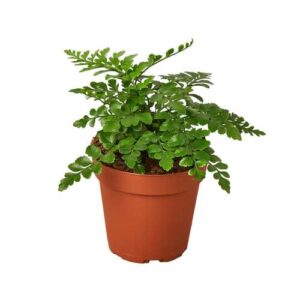
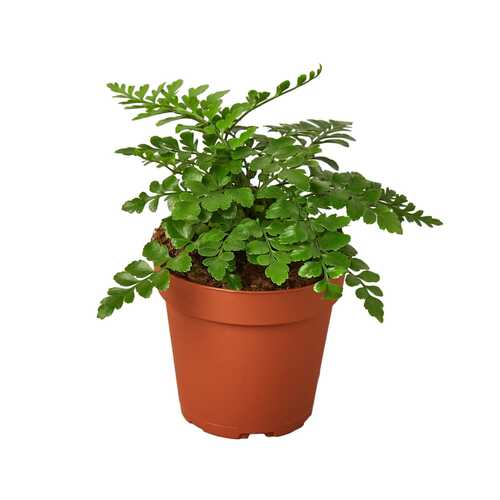
About Austral Gem Fern

Austral Gem Fern Introduction

The Austral Gem Fern is a naturally occurring hybrid fern that arose from a cross between two Australian and Pacific Island native species, Asplenium dimorphum and Asplenium difforme. It was first identified in cultivation in Australia and has since become a popular houseplant worldwide thanks to its glossy, leathery fronds and forgiving nature. Unlike many delicate ferns, the Austral Gem is a robust hybrid that combines the hardiness of its parent species with an appealing, refined appearance, making it a favorite for interior plantscaping and terrariums alike.

The plant produces dense rosettes of dark green, ruffled, strap-like fronds that emerge from a central crown, giving it a texture reminiscent of a bird’s nest fern but with more deeply lobed and wavy margins. As a hybrid, the Austral Gem Fern is sterile and does not produce viable spores, so it is propagated exclusively through division of its crown or offsets. This sterility also means the plant channels its energy into vigorous, dense foliage growth rather than reproduction, resulting in a consistently lush appearance.

In its natural growth pattern (inherited from its epiphytic and lithophytic parent species), the Austral Gem Fern would grow on tree trunks, rocks, or forest floors in humid, shaded understories of subtropical and tropical rainforests. This origin explains its preference for indirect light, high humidity, and well-draining, organically rich growing media. It is a moderately compact fern, typically reaching 12 to 24 inches in both height and spread at maturity, making it well suited to tabletops, shelves, and hanging arrangements indoors.

Austral Gem Fern Care & Growing Guide

Caring for the Austral Gem Fern is considered relatively easy compared to many of its more finicky fern relatives, making it a great choice for those new to growing ferns indoors. The most important factors for success are consistent moisture, elevated humidity, and protection from direct, harsh sunlight. This fern thrives in the bright, indirect light of an east- or north-facing window, or a few feet back from a south- or west-facing window where light is filtered.

Consistency is the guiding principle for this plant’s care. The Austral Gem Fern prefers evenly moist (but not soggy) soil at all times, and its fronds will quickly show signs of stress, such as browning tips or curling, if the growing medium is allowed to dry out completely or if it sits in standing water. Pairing a well-draining, peat- or coco coir-based potting mix with a pot that has ample drainage holes will help maintain this balance. Because it evolved in humid rainforest understories, this fern also benefits greatly from higher ambient humidity, which can be provided through pebble trays, grouping with other plants, or a small humidifier.

Beyond watering and humidity, the Austral Gem Fern is not a heavy feeder and only requires light, diluted fertilizer during its active growing season in spring and summer. It also does not require frequent pruning beyond removing occasional dead or damaged fronds, and repotting is only needed every one to two years as the plant fills out its container. With these baseline conditions met, the Austral Gem Fern rewards growers with dense, glossy foliage year-round and requires comparatively little fuss to remain healthy.

 Soil Soil

The Austral Gem Fern grows best in a light, well-draining, organically rich potting mix that retains moisture without becoming waterlogged. A blend of standard potting soil, peat moss or coco coir, perlite, and a portion of orchid bark or charcoal mimics the loose, humus-rich substrates this fern’s parent species would encounter growing epiphytically or on rocky forest floors. An ideal soil pH range is slightly acidic to neutral, roughly 5.5 to 6.5. Amendments such as compost or worm castings can be mixed in to boost organic matter and nutrient availability, while perlite or coarse sand improves drainage and aeration.

Good soil composition directly affects the fern’s root health and, in turn, its overall vigor: a mix that is too dense or moisture-retentive can suffocate roots and lead to root rot, while a mix that drains too quickly will cause the shallow root system to dry out and stress the plant. Common soil problems to watch for include poor drainage (leading to yellowing fronds and root rot), soil compaction over time (which restricts oxygen to the roots and can be corrected by repotting with fresh, aerated mix), inappropriate pH (which can lock out nutrients), salt build-up from tap water or over-fertilizing (visible as white crust on the soil surface, correctable by flushing the soil with distilled water), nutrient deficiencies (pale or stunted fronds), and root boundness, where a fern left too long in its pot develops a dense mass of circling roots that restricts water uptake and signals it’s time to repot into a larger container.

 Fertilizer Fertilizer

The Austral Gem Fern is a light to moderate feeder. During the active growing season of spring through summer, feed every four to six weeks with a balanced, water-soluble houseplant fertilizer diluted to about half or quarter strength, as ferns are generally sensitive to concentrated fertilizer salts. Fertilizing can be paused or reduced to once every couple of months, or stopped altogether, during fall and winter when growth naturally slows.

Signs of over-fertilization include browning frond tips and margins, a white crusty buildup of salts on the soil surface, and wilting despite adequate water, while signs of under-fertilization include pale green or yellowish fronds, slow or minimal new growth, and an overall lackluster appearance. Organic alternatives such as diluted liquid seaweed or kelp extract, fish emulsion, or worm-casting tea can be used in place of synthetic fertilizers and tend to be gentler on the fern’s roots. Ferns in general, including the Austral Gem, benefit from balanced nitrogen, phosphorus, and potassium along with trace micronutrients like magnesium and iron, deficiencies of which can show up as interveinal yellowing on the fronds.

 Watering Watering

The Austral Gem Fern prefers consistently moist soil and does not like to dry out completely between waterings, though it also does not tolerate sitting in waterlogged soil. A good rule of thumb is to water when the top inch of soil feels just barely dry to the touch, ensuring thorough saturation until water drains from the bottom of the pot, then discarding any excess water from the saucer. Rainwater, distilled water, or filtered water is preferable to hard tap water, since ferns can be sensitive to the chlorine, fluoride, and mineral salts commonly found in tap water, which can cause brown, crispy frond tips over time.

Signs of underwatering include crispy, browning frond tips and edges, curling or drooping fronds, and an overall dry, brittle appearance. Signs of overwatering include yellowing fronds, a mushy or blackened crown or rhizome, a sour smell from the soil, and eventual root rot. Watering needs increase during the active growing season in spring and summer, when the plant is producing new fronds and using more water, and should be reduced somewhat in fall and winter when growth slows and the risk of overwatering in cooler, lower-light conditions rises.

Austral Gem Fern Watering Calculator

🪴 Precision Watering Intelligence

Science-Based Hydration for Your Collection

Stop guessing. Most houseplant failures are caused by volumetric errors and improper moisture tension. Our deterministic calculator moves beyond "once-a-week" watering by analyzing the four critical pillars of root health:

  • • Transpiration Coefficients: 120+ species mapped by metabolic rate.
  • • Substrate Porosity: Adjusts for Standard vs. Cactus/Well-Draining mixes.
  • • Geometric Volume (V = π r² h): Calculates exact cups based on pot surface area.
  • • The Drainage Factor: Accounts for pot material (Terracotta) and the risk of a perched water table.

Personalized for this plant

6"
🪴
--
approx. every --

Disclaimer: Our calculator is pretty smart. We’ve crunched the numbers, but we’re not measuring the quantum state of your living room. Since we don’t know your exact indoor temperature, humidity, light, airflow, or whether your plant receives daily sweet nothings and motivational speeches, use this calculator as a guide—and always keep an eye on your plant.

 Lighting Lighting

The Austral Gem Fern thrives in bright, indirect light, such as that found near an east-facing window or several feet back from a south- or west-facing window with a sheer curtain to diffuse direct rays. It also tolerates medium to somewhat lower light conditions reasonably well, making it versatile for interior spaces away from windows, though growth will be slower in low light. Direct, unfiltered sunlight, especially intense afternoon sun, should be avoided, as it can scorch the fronds.

Signs of insufficient light include leggy, sparse growth, smaller new fronds, and a general loss of the plant’s characteristic density and deep green color, sometimes trending pale or yellow-green. Signs of excessive light exposure include bleached, faded, or crispy brown patches on the fronds, particularly on the side facing the light source. If natural light is suboptimal, the plant can be moved closer to a bright window, or a full-spectrum grow light can be used on a timer for 10 to 12 hours a day to supplement or replace natural light in dim interiors.

 Tempature Temperature

The Austral Gem Fern grows best within an ideal temperature range of about 60 to 80°F (16 to 27°C), reflecting the mild to warm subtropical and tropical conditions of its native range. It has moderate tolerance to short-term fluctuations within this range but is sensitive to cold drafts, sudden temperature drops, and frost, all of which can damage or kill fronds. Temperatures consistently below 50°F (10°C) should be avoided, as should hot, direct heat sources like radiators or heating vents, which can dry out the plant rapidly. To protect the plant from temperature extremes, keep it away from drafty doors, windows, and air conditioning or heating vents, and bring any outdoor or patio specimens indoors well before the first frost in cooler climates.

 Humidity Humidity

The Austral Gem Fern prefers moderate to high humidity, generally in the range of 50 to 70 percent, reflecting its rainforest understory origins. In average home environments, which often sit at lower humidity, especially in winter with heating systems running, humidity can be raised through several methods. A pebble tray filled with water placed beneath the pot (without letting the pot sit directly in water) offers modest, localized humidity through evaporation. Grouping several plants together also raises humidity in a microclimate. For a more significant and reliable boost, a small room humidifier is the most effective method, particularly in dry climates or heated indoor spaces. Light misting can offer temporary relief but is the least effective long-term solution and can encourage fungal issues if fronds stay wet too long without airflow.

Symptoms of low humidity stress include browning, crispy frond edges and tips, curling fronds, and slowed or stunted new growth. Symptoms of excessively high humidity combined with poor air circulation include fungal spotting or a grayish mold on fronds, so good airflow should always accompany humidity increases.

 ropagation Propagation

The Austral Gem Fern is a sterile hybrid and does not produce viable spores, so it cannot be propagated by the spore method typical of many ferns. Instead, it is propagated exclusively through division of the crown and its offsets (also called pups), which the plant naturally produces around its base as it matures.

Step-by-step division guide:
1. Choose a mature, healthy plant with multiple visible growth points or offsets at the base.
2. Water the plant a day before dividing to reduce transplant stress.
3. Gently remove the plant from its pot and shake or rinse away excess soil to expose the root mass.
4. Identify natural separations between crowns or offsets, each with its own roots and fronds attached.
5. Using a clean, sharp knife or your hands, carefully separate the offsets from the main plant, keeping as many roots intact as possible.
6. Pot each division into a small container filled with a well-draining, moisture-retentive fern mix.
7. Water thoroughly and place the new divisions in a warm spot with bright, indirect light and high humidity, using a humidity dome or clear plastic bag if needed.
8. Keep the soil consistently moist while the new divisions establish roots over the following several weeks.

Division has a high success rate when offsets have their own root systems attached, generally establishing within four to eight weeks under warm, humid conditions. The best time to propagate is in spring or early summer, coinciding with the plant’s natural active growth period, which supports faster recovery and establishment.

 Potting Potting

The Austral Gem Fern prefers a pot only slightly larger than its root mass, as ferns generally dislike being overpotted in excessively large containers, which can hold too much moisture and lead to root rot. A pot with ample drainage holes is essential, paired with a well-draining, organically rich fern mix as described in the soil section. Terra cotta or other breathable pot materials can help prevent overly soggy soil, while plastic or glazed ceramic pots retain moisture longer, which may suit drier indoor environments.

Repotting is generally needed every one to two years, or when the plant becomes visibly root-bound, which shows up as roots circling densely at the surface or emerging from drainage holes, slowed growth, or the plant drying out unusually fast after watering. When repotting, gently loosen and, if necessary, lightly prune any excessively circling or damaged roots to encourage healthy outward growth, but avoid heavy root pruning, as ferns can be sensitive to aggressive root disturbance. To minimize transplant stress, repot during the growing season, use fresh but similar soil composition, water thoroughly after transplanting, and keep the plant in stable, humid, indirect-light conditions for a couple of weeks while it adjusts.

 Pruning Pruning

When to Prune the Austral Gem Fern

Pruning is best done during the growing season, in spring or summer, though dead or damaged fronds can be removed at any time of year as needed.

Frequency and Purpose

Pruning is generally minimal and infrequent for this fern, mainly involving the removal of old, yellowing, or dead fronds to maintain a tidy appearance and redirect the plant’s energy toward healthy new growth.

Tools and Preparation

Use clean, sharp pruning snips or scissors, wiping the blades with rubbing alcohol before and after use to prevent the spread of disease between plants.

Step-by-Step Pruning Guide

  1. Inspect the plant and identify any yellow, brown, or damaged fronds at their base.
  2. Using clean shears, cut the affected frond as close to the base or crown as possible without damaging surrounding healthy tissue.
  3. Remove any fallen debris from the soil surface to reduce the risk of fungal or pest issues.
  4. Trim away any fronds that are broken, diseased, or heavily pest-damaged, disposing of them away from other houseplants.
  5. Avoid cutting into the central crown, as this is the growth point for new fronds.

Aftercare and Special Considerations

After pruning, keep the plant in its normal care conditions of indirect light and consistent humidity; no special aftercare products are typically needed. Avoid over-pruning healthy green fronds, as the plant relies on them for photosynthesis and energy storage.

 Blooming Blooming

As a fern, the Austral Gem Fern does not produce flowers or blooms at any point in its life cycle. Ferns are non-flowering vascular plants that reproduce via spores rather than seeds; however, because the Austral Gem is a sterile hybrid, it does not even produce viable spores. Instead of a bloom cycle, the plant’s seasonal interest comes from continuous, evergreen foliage production, with the most vigorous new frond growth (fiddleheads unfurling) occurring during the warm growing months of spring through early autumn under optimal light, warmth, and humidity.

 Pests & Diseases Pests and Diseases

Pests

Name: Mealybugs

Symptoms: Small, white, cottony masses on frond undersides and stems, along with sticky honeydew residue and possible sooty mold.

Treatment: Isolate the plant, wipe off visible pests with a cotton swab dipped in rubbing alcohol, and treat with insecticidal soap or neem oil, repeating every 7 to 10 days until resolved.

Name: Scale insects

Symptoms: Small, brown or tan, dome-shaped bumps along stems and frond undersides, with yellowing fronds and sticky honeydew.

Treatment: Scrape off scale manually, treat with horticultural oil or insecticidal soap, and improve airflow around the plant to discourage reinfestation.

Name: Spider mites

Symptoms: Fine webbing on the undersides of fronds, stippled or speckled yellowing, and dry, dusty-looking foliage, especially in low-humidity conditions.

Treatment: Increase humidity, rinse fronds with water to dislodge mites, and apply insecticidal soap or neem oil, repeating treatments weekly.

Diseases

Name: Root rot

Symptoms: Yellowing or blackening fronds, mushy or foul-smelling roots and crown, and stunted growth caused by overly wet, poorly draining soil.

Treatment: Remove the plant from wet soil, trim away rotten roots with sterilized tools, repot into fresh, well-draining mix, and reduce watering frequency going forward.

Name: Fungal leaf spot

Symptoms: Small, dark, water-soaked spots on fronds that may enlarge and merge, typically caused by excess moisture on foliage and poor air circulation.

Treatment: Remove and dispose of affected fronds, avoid overhead watering or misting directly onto foliage, improve air circulation, and apply a fungicide labeled for ferns if the issue persists.

 Special Features Special Features

The Austral Gem Fern stands out among houseplant ferns for its dense, glossy, deeply ruffled fronds that give it a refined, almost sculptural texture distinct from the finer, lacier look of many other ferns. As a naturally sterile hybrid, it maintains a tidy, non-spreading growth habit indoors since it cannot self-seed or spore-spread into surrounding pots, making it a low-mess choice for indoor plant collections. Its resilience, compared to more temperamental ferns like maidenhair fern, combined with its attractive year-round evergreen foliage, has made it an increasingly popular choice for interior plantscaping, terrariums, and mixed foliage displays.

 Benefits Plant Benefits

The Austral Gem Fern has no documented herbal, medicinal, or pharmaceutical uses; its primary benefit is ornamental and environmental, contributing to indoor greenery, general air quality through typical plant respiration and transpiration, and modest ambient humidity in the immediate area around the plant.

  Additional Information Additional Information

Because the Austral Gem Fern is a hybrid rather than a naturally occurring wild species, it is not typically found growing wild in native habitats and exists primarily in cultivation. It is sometimes confused with true bird’s nest ferns (Asplenium nidus) due to a similar rosette growth habit, but it can be distinguished by its more deeply lobed, ruffled, and glossier fronds. Its sterility and resulting inability to spread via spores also makes it a low-maintenance option for growers concerned about fern spores spreading to other pots or surfaces in a home.

  Lifecycle Life Cycle

As a fern and a sterile hybrid, the Austral Gem Fern does not follow the typical seed-to-flower life cycle of flowering plants, nor does it complete the spore-to-gametophyte cycle typical of fertile ferns, since it produces no viable spores. Instead, its life cycle is one of continuous vegetative growth: a young division or offset establishes roots, develops a central crown, and steadily produces new fronds that unfurl from tightly coiled fiddleheads. Over months and years, the plant matures into a dense rosette, periodically producing new offsets at its base that can be divided to create new individual plants, effectively allowing the hybrid to persist and multiply indefinitely through vegetative propagation alone.

  Plant ToxicityAre Austral Gem Fern Poisonous, Toxic

The Austral Gem Fern, like other Asplenium species, is considered non-toxic. No parts of the plant (fronds, rhizome, or crown) are known to contain toxic compounds harmful to cats, dogs, or children. Because it is a hybrid fern with no known toxic principle identified in either parent species, ingestion of small amounts of foliage is not expected to cause systemic poisoning. In rare cases, ingesting large quantities of any houseplant foliage can cause mild, non-specific gastrointestinal upset, such as drooling, mild vomiting, or stomach discomfort in pets, simply due to the fibrous plant material rather than any toxin. Severity, if any reaction occurs, is typically mild and self-limiting. First aid steps include removing any remaining plant material from the pet’s or child’s mouth, offering water, and monitoring for any unusual symptoms; a veterinarian or physician (or poison control) should be contacted if symptoms are severe or persistent. As a preventive measure, it is still good practice to keep any houseplant out of easy reach of curious pets and young children to discourage chewing and to prevent choking on fibrous frond material.

 FAQ Frequently Asked Questions

Is the Austral Gem Fern safe for cats and dogs?

Yes, the Austral Gem Fern is considered non-toxic and safe for cats, dogs, and children.

How often should I water my Austral Gem Fern?

Water when the top inch of soil feels barely dry, keeping the soil consistently moist but never soggy, typically every several days to once a week depending on conditions.

Does the Austral Gem Fern need bright light?

It prefers bright, indirect light but tolerates medium light well; direct sun should be avoided as it can scorch the fronds.

Why are the tips of my Austral Gem Fern turning brown?

Browning frond tips usually indicate low humidity, underwatering, or mineral buildup from tap water; increasing humidity and using filtered water often resolves this.

How do you propagate an Austral Gem Fern?

Since it is a sterile hybrid that produces no viable spores, it is propagated by dividing the crown and its offsets, each with roots attached, into separate pots.

How big does an Austral Gem Fern get?

It typically reaches a compact to medium size of about 12 to 24 inches in both height and spread at maturity.

Does the Austral Gem Fern flower?

No, as a fern it does not produce flowers; its appeal comes entirely from its evergreen, glossy foliage.

What humidity does the Austral Gem Fern need?

It prefers moderate to high humidity, roughly 50 to 70 percent, which can be boosted with a humidifier, pebble tray, or grouping with other plants.

Is the Austral Gem Fern easy to care for?

Yes, it is generally considered an easy, beginner-friendly fern as long as it receives consistent moisture, humidity, and indirect light.

How often should I fertilize my Austral Gem Fern?

Feed every four to six weeks with a diluted, balanced liquid fertilizer during the spring and summer growing season, reducing or pausing feeding in fall and winter.

Can I grow this plant in my indoor spaceCan I grow Austral Gem Fern in my indoor space

Difficulty: Easy

Size: Medium

Light: Medium

Water: Medium

Flowering: No

Pet Safe: Yes

Air Purifier: Medium

Can I grow this plant in my indoor spaceAsplenium × 'Austral Gem' (Asplenium dimorphum × Asplenium difforme) botanical details

Common Name: Austral Gem Fern

Other Common Names: Austral Gem, Birds Nest Hybrid Fern, Asplenium Austral Gem

Botanical Name: Asplenium × 'Austral Gem' (Asplenium dimorphum × Asplenium difforme)

Native Area: Australia (including Norfolk Island and Lord Howe Island) and the western Pacific Islands, reflecting the native ranges of its parent species Asplenium dimorphum and Asplenium difforme.

Family Name: Aspleniaceae

Plant Type: Perennial evergreen fern (epiphytic/terrestrial hybrid)

Genus: Asplenium

Kingdom: Plantae

 Photo Gallery Photo Gallery

  • “Bring Home This Beauty Today”

    “Get Your Own Austral Gem Fern Before It’s Gone”

    “Shop Trusted Sellers – Limited Availability”

    “Free Delivery”

    Austral Gem Fern
    Austral Gem Fern

    As an Amazon Associate, I earn commission from qualifying purchases.

      Plant Joke Plant Puns and Jokes

    Why did the Austral Gem Fern refuse to make new friends through spores? It decided division was a much more personal way to grow its social circle.

    Newsletter Signup Signup to our newsletter and download Austral Gem Fern care guide

    Chatbot Icon
    AI Julie Chatbot, ask me!