


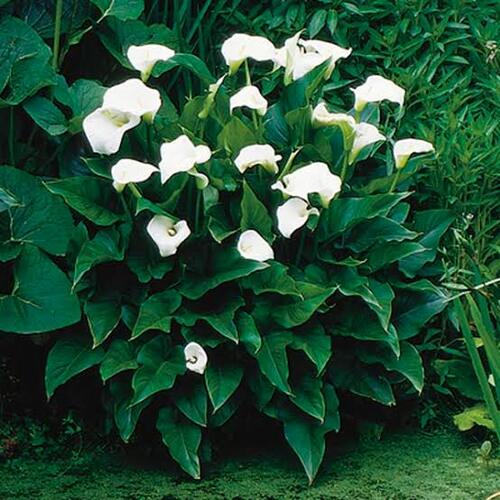
The Calla Lily, botanically Zantedeschia, is a genus of eight recognized species of rhizomatous or tuberous flowering plants native to southern and eastern Africa, with the most widely cultivated species, Zantedeschia aethiopica, originating from the marshes, streambanks, and seasonally wet grasslands of South Africa, Lesotho, Swaziland, and neighboring regions. Despite its common name, the calla lily is not a true lily at all but a member of the arum family, Araceae, placing it in the same botanical family as philodendrons, peace lilies, and anthuriums, a relationship made visible by the plant’s distinctive flower structure, which is technically not a single petal-bearing bloom but a specialized bract, or spathe, wrapped elegantly around a slender, finger-like central spadix that bears the plant’s true, tiny flowers.
The genus displays remarkable variety across its species and the many hybrid cultivars developed from them. Zantedeschia aethiopica, the classic white calla lily, produces large, funnel-shaped, pure white spathes atop tall stems above glossy, arrow-shaped, deep green leaves, and is unusual among the genus for tolerating consistently wet, even boggy, soil conditions reflecting its marshland origins. Other species and the many hybrids derived largely from Zantedeschia elliottiana and Zantedeschia rehmannii, often grouped commercially as colored or hybrid callas, produce smaller, more compact plants with spathes in a striking range of colors including yellow, pink, orange, burgundy, and near-black, and these hybrid types generally prefer a more typical well-drained, seasonally dry-dormant growing cycle rather than the constant moisture the white species tolerates.
Calla lilies have long held cultural and symbolic significance, closely associated with purity, elegance, and rebirth, and remain one of the most popular flowers in bridal bouquets and formal floral arrangements worldwide thanks to their sculptural, minimalist form and long vase life as a cut flower. Beyond the cut flower trade, calla lilies are grown extensively as garden perennials in mild, frost-free climates, as seasonal potted plants for patios and indoor display, and as houseplants brought into bloom from dormant rhizomes, offering gardeners across a wide range of climates and settings a way to enjoy the plant’s distinctive, architectural flowers.
Caring for calla lilies successfully starts with understanding which type is being grown, since the classic white Zantedeschia aethiopica and the colorful hybrid callas have meaningfully different watering and dormancy needs despite their shared genus. The white calla tolerates and even thrives in consistently moist to boggy soil, making it an excellent choice for pond margins, rain gardens, or a container that is watered generously and often, while the colorful hybrid callas prefer a more conventional watering rhythm, with the soil allowed to dry somewhat between waterings and an important dry dormancy period after their summer bloom cycle ends. Getting this distinction right from the outset prevents the two most common calla lily problems: rotting hybrid rhizomes kept too wet, or a stressed, underperforming white calla kept too dry.
Bright light is essential for strong flowering in both types, with the classic white calla tolerating a bit more shade than the hybrid types, which generally need considerably more direct sun to produce their most vividly colored blooms. Warmth is equally important, since calla lilies are frost-tender in their active growing state, and rhizomes or tubers left in the ground or in an unheated container over a hard freeze will typically be killed; in climates outside the plant’s reliably hardy zones, most growers either lift and store the rhizomes over winter or grow the plant as a seasonal annual or indoor container specimen.
Regular but not excessive feeding during the active growing season supports the large flower displays calla lilies are prized for, while a clear seasonal rhythm of active growth, bloom, and then dormancy or dieback should be respected rather than fought against, particularly for the hybrid types. Understanding and working with this natural cycle, rather than trying to keep the plant in constant active growth year-round, is the single most important key to getting calla lilies to rebloom reliably from one season to the next.
 Soil
Soil
Soil needs differ meaningfully between the classic white calla lily and the colorful hybrid types. The white Zantedeschia aethiopica tolerates rich, consistently moist to boggy soil, while hybrid colored callas require a well-draining medium that allows the tuber to dry out appropriately during dormancy.
A rich, organic, well-amended garden soil or potting mix with plenty of compost suits both types during active growth; for hybrid callas, blend in 20 to 30 percent perlite or coarse sand to ensure adequate drainage between waterings.
A mildly acidic to neutral pH between 6.0 and 6.5 is ideal for healthy nutrient uptake and vigorous flowering.
The white calla lily tolerates poor drainage and even standing water at the margins of a pond or bog garden, while hybrid colored callas require good drainage and should never be left standing in water, as their tubers are considerably more prone to rot.
Generous compost or well-rotted organic matter worked into the soil at planting time supports the vigorous growth and heavy flowering calla lilies are known for. A balanced, slow-release bulb or tuber fertilizer added at planting gives the rhizome or tuber a strong start.
For hybrid colored callas, waterlogged soil quickly leads to tuber rot, evident as a soft, mushy tuber and collapsing foliage; improve drainage with added perlite or grit and avoid overwatering during active growth.
Compacted soil restricts the vigorous root and rhizome growth calla lilies rely on for strong flowering; work compost into heavy soils before planting and avoid walking on planting beds.
Strongly alkaline soil can cause nutrient lock-out, visible as pale, yellowing foliage despite adequate fertilization; amend with compost or a small amount of sulfur to gradually lower pH if needed.
Excess fertilizer salts, particularly in container-grown callas, can cause leaf tip burn; flush the soil periodically with clean water and use fertilizer at the recommended or slightly diluted strength.
Pale, undersized foliage and weak flowering during active growth often indicate insufficient feeding; correct with regular balanced fertilizer application through the growing season.
Container-grown calla lilies that have become root- or rhizome-bound show reduced flowering and roots or offset tubers crowding the pot; divide and repot into fresh soil at the start of the next growing season.
 Fertilizer
Calla lilies are moderately heavy feeders during their active growth and flowering period, benefiting from regular fertilization to support their large leaves and abundant blooms.
A balanced, water-soluble fertilizer with a higher phosphorus ratio, such as a 5-10-5 or bloom-booster formula, supports strong flowering when applied at the recommended or slightly diluted strength.
Feed every 3 to 4 weeks from the start of active growth in spring through the end of the flowering period in summer, and stop fertilizing entirely once foliage begins to yellow and the plant enters dormancy.
Apply liquid fertilizer to moist soil rather than dry soil to reduce the risk of root or tuber burn, and avoid splashing fertilizer directly onto the foliage or flowers.
Leaf tip burn, a visible white salt crust on the soil surface, and unusually soft, weak growth are signs of overfertilization; flush the soil with clean water and reduce feeding frequency if these appear.
Pale, undersized foliage and sparse or weak flowering during the active growing season typically indicate the plant would benefit from more regular feeding.
Well-rotted compost worked into the soil at planting, or a diluted liquid seaweed or fish emulsion fertilizer applied every few weeks during active growth, provide a gentler organic alternative to synthetic fertilizers.
 Watering
Watering needs diverge sharply by type. The classic white calla lily wants consistently moist to wet soil throughout active growth and tolerates boggy conditions well, while hybrid colored callas prefer the soil to dry somewhat between waterings and require a distinct dry period during winter dormancy.
For white calla lilies, water generously and often enough to keep the soil consistently moist, even daily in hot weather or for pond-margin plantings. For hybrid colored callas, water every 5 to 7 days during active growth, allowing the top inch of soil to dry between waterings, and withhold water almost entirely during the winter dormant period.
Calla lilies are not particularly sensitive to water quality, and ordinary tap water is generally well tolerated by both types, though rainwater or filtered water is a fine alternative in areas with very hard or heavily treated water.
Wilting, drooping foliage and stems, along with premature yellowing of leaves, particularly in the moisture-loving white calla, which shows stress far more quickly from underwatering than from excess moisture.
In hybrid colored callas, a soft, mushy tuber, yellowing foliage, and a foul odor from the soil indicate overwatering and the onset of rot; the white calla is far more tolerant of wet conditions and rarely shows these symptoms unless grown in an airless, completely stagnant container.
Reduce watering for hybrid colored callas as foliage begins to yellow and die back after flowering, withholding water almost entirely during the dormant winter storage period, then resuming regular watering as new growth emerges in spring. White calla lilies can be watered generously and consistently through most of the year in mild climates, with only a modest reduction during their shorter dormant phase.
Stop guessing. Most houseplant failures are caused by volumetric errors and improper moisture tension. Our deterministic calculator moves beyond "once-a-week" watering by analyzing the four critical pillars of root health:
Personalized for this plant
Disclaimer: Our calculator is pretty smart. We’ve crunched the numbers, but we’re not measuring the quantum state of your living room. Since we don’t know your exact indoor temperature, humidity, light, airflow, or whether your plant receives daily sweet nothings and motivational speeches, use this calculator as a guide—and always keep an eye on your plant.
 Lighting
Calla lilies need bright light to flower well, ideally several hours of direct or strong filtered sun daily, roughly 800 to 2,000 foot-candles. The white calla tolerates partial shade somewhat better than the hybrid colored types, which generally need more direct sun to produce their most vivid bloom color.
Weak, sparse flowering or a complete failure to bloom, along with tall, floppy, overly lush foliage stretching toward available light.
Intense, prolonged direct sun in very hot climates can scorch the foliage and cause the spathes to fade or bleach prematurely, particularly for potted plants without adequate soil moisture to buffer heat stress.
In low-light indoor settings, supplement with a full-spectrum grow light for 10 to 12 hours a day during active growth. In very hot, intense-sun climates, provide light afternoon shade, particularly for the more sun-sensitive hybrid colored types, to prevent scorch and premature fading of blooms.
 Temperature
Calla lilies thrive in temperatures between 65 and 75°F (18 to 24°C) during active growth, corresponding to the mild, temperate climate of their native southern African range.
Calla lilies are frost-tender and will suffer significant damage or death from freezing temperatures; most hybrid colored callas are hardy only in USDA zones 8 through 10, while the white calla lily is somewhat more cold-tolerant, hardy to zone 7 in some regions with adequate mulching.
Calla lilies tolerate warm summer temperatures well, particularly the moisture-loving white calla, provided soil moisture is kept consistently high; hybrid colored types can suffer stress and shortened bloom life in prolonged extreme heat without some afternoon shade.
In climates with cold winters, lift and store hybrid calla tubers indoors over winter, or apply a heavy protective mulch layer to in-ground white calla plantings in marginal zones. Bring potted callas indoors or into a sheltered location before the first frost.
 Humidity
Moderate to high humidity, generally 40 to 60 percent, suits calla lilies well, reflecting the moist marshland and grassland habitats many species originate from in southern Africa.
Very dry air can cause crisping of leaf edges and a shorter vase life in cut calla flowers, though established garden and container plants are generally more affected by soil moisture than ambient humidity.
Excessive humidity combined with poor air circulation can encourage fungal leaf spot or gray mold on the flowers, particularly in crowded plantings.
A humidifier can help maintain adequate humidity for indoor or forced-bloom calla lilies in very dry, centrally heated rooms.
A wide tray of pebbles and water placed beneath a potted calla lily provides a modest, localized humidity boost.
Light misting of the foliage can offer temporary relief in dry conditions but is not essential, since the plant’s soil moisture level has a far greater impact on its overall health.
If fungal issues appear in an overly humid environment, increase air circulation with a fan and space plants further apart to improve airflow around the foliage and flowers.
 Propagation
Calla lilies are propagated primarily by dividing the rhizomes or tubers that naturally multiply at the base of an established clump, a reliable method that produces flowering-sized plants far more quickly than growing from seed.
Success Rate: Very High (85–95%) when divisions include at least one healthy growth eye or bud
Description: The standard, most widely used propagation method, in which the underground rhizome or tuber clump is lifted and separated into individual sections for replanting.
Steps:
Autumn, at the natural end of the growing season as the plant enters dormancy, is the ideal time to lift, divide, and either store or replant calla lily rhizomes or tubers.
Divisions with a healthy growth eye typically produce new foliage within 3 to 6 weeks of replanting in the following growing season, and many will flower in their very first season after division, provided the division was of adequate size.
 Potting
A sturdy pot with good drainage suits hybrid colored calla lilies well, while the white calla lily can also be grown successfully in a container without drainage holes if used as a pond-margin or bog planting, provided the grower is deliberately maintaining wet conditions.
Drainage holes are essential for hybrid colored callas to prevent tuber rot; the white calla lily is more forgiving of poorly drained or even waterlogged container conditions given its natural marshland habitat.
Choose a pot with enough depth to accommodate the rhizome or tuber at a planting depth of 2 to 4 inches (5 to 10 cm), with a diameter that allows some room for the clump to multiply over one to two growing seasons before needing division.
Every 1 to 2 years for actively multiplying clumps, or as needed when a pot becomes visibly crowded with offset tubers and flowering begins to decline.
A crowded pot with visible tubers pushing up at the soil surface, declining flower size or number despite good care, and roots or tubers emerging from drainage holes.
Lift the rhizome or tuber clump during dormancy, divide as described in the propagation steps if desired, and replant into fresh, well-draining soil at the appropriate depth in a container of suitable size.
Root or tuber pruning is not routinely practiced with calla lilies beyond removing any soft, damaged, or rotted tissue identified during division or repotting.
Handle rhizomes and tubers gently during any transplanting to avoid bruising, and water newly potted divisions lightly at first, increasing gradually as new growth appears, to minimize transplant stress.
 Pruning
Calla lilies require relatively light pruning, focused mainly on removing spent flowers and managing foliage as the plant transitions into its natural seasonal dormancy, rather than any significant shaping or structural cutting.
Deadhead spent flowers throughout the active blooming period as each spathe fades. Cut back yellowing foliage only after it has died back naturally at the end of the growing season, typically in autumn as the plant enters dormancy.
Check the plant every few days during peak bloom to remove faded flowers, which keeps the display attractive and redirects the plant’s energy toward remaining buds and rhizome or tuber development rather than seed production. Foliage removal is performed once per season, at the natural end of the growing cycle.
Use clean, sharp scissors or pruning shears sterilized with rubbing alcohol between cuts, and consider wearing gloves when handling calla lily foliage and stems, since the sap can cause skin irritation in sensitive individuals.
Never cut back green, actively growing foliage before it has yellowed naturally, since this significantly reduces the energy reserves the rhizome or tuber needs to flower well in the following season. After foliage removal, hybrid colored callas should be allowed to enter their dry winter dormancy, while white calla lilies in mild climates may continue with only a brief rest before resuming growth.
 Blooming
Calla lilies bloom primarily in late spring through summer, with the exact timing varying by species, climate, and whether the plant is grown outdoors in the ground or forced into bloom from a stored rhizome indoors. Outdoor plantings in mild climates typically flower from April through July, with the classic white Zantedeschia aethiopica often beginning to bloom earliest and continuing over the longest window, sometimes producing a second, lighter flush of flowers in early autumn under favorable conditions. Each individual flower, technically the funnel-shaped spathe surrounding the central spadix, lasts several weeks on the plant before fading, and a healthy, well-established clump can produce a continuous succession of new blooms over a one- to two-month period. Optimal blooming requires bright light, consistent feeding during active growth, and, for the hybrid colored callas in particular, a properly observed dry dormancy period the previous winter to recharge the tuber’s energy reserves. Flowers range from the pure white of the classic species to vivid yellow, orange, pink, red, burgundy, and near-black in the many hybrid cultivars, with the sculptural, minimalist shape of the spathe remaining the plant’s signature feature across all colors.
 Pests and Diseases
Name: Aphids
Symptoms: Small clusters of soft-bodied insects on new shoots, flower buds, and the undersides of leaves, often accompanied by sticky honeydew residue and curling new growth.
Treatment: Rinse affected foliage with a strong spray of water, or apply insecticidal soap, repeating every 5 to 7 days as needed until the infestation clears.
Name: Spider Mites
Symptoms: Fine webbing and stippled, discolored foliage, most common in hot, dry conditions, particularly for container-grown or indoor calla lilies.
Treatment: Increase humidity, rinse foliage under lukewarm water, and treat with insecticidal soap or neem oil, repeating every 5 to 7 days for several cycles.
Name: Slugs and Snails
Symptoms: Irregular holes chewed into leaves and flower spathes, along with visible slime trails, particularly common in outdoor plantings during wet weather.
Treatment: Handpick visible slugs and snails in the evening, use iron phosphate-based slug bait, or set out shallow beer traps to reduce populations around the planting.
Name: Rhizome or Tuber Rot
Symptoms: A soft, mushy, foul-smelling rhizome or tuber, along with yellowing, collapsing foliage, typically caused by overwatering, particularly in hybrid colored callas grown in poorly draining soil.
Treatment: Lift the rhizome or tuber, trim away all soft or discolored tissue with sterile tools, dust the cut surfaces with fungicidal powder, and replant into fresh, well-draining soil, adjusting the watering schedule going forward.
Name: Bacterial Soft Rot
Symptoms: A rapidly spreading, slimy, foul-smelling decay of the rhizome or tuber, often following an injury or prolonged waterlogged conditions, and generally more aggressive and faster-moving than typical fungal rot.
Treatment: Discard severely affected rhizomes or tubers entirely, as bacterial soft rot is difficult to treat once established; improve drainage and avoid overhead watering that wets the crown of remaining healthy plants.
Name: Botrytis Blight (Gray Mold)
Symptoms: Fuzzy gray mold developing on flowers and foliage, particularly in cool, humid, poorly ventilated conditions or after prolonged rainy weather.
Treatment: Remove affected flowers and foliage promptly, improve air circulation around the planting, avoid overhead watering, and apply a fungicide labeled for botrytis if the problem persists or spreads.
 Special Features
Calla lilies are celebrated above all for the sculptural elegance of their trumpet-shaped spathes, a form so distinctive and graceful that it has become a recurring motif in art, architecture, and design well beyond the garden itself. Their long-lasting cut flowers, often lasting one to two weeks in a vase, and their availability in an unusually wide color range for a single genus, from pure white to yellow, pink, orange, burgundy, and near-black, make them a favorite choice for weddings, formal events, and modern floral design alike. The classic white calla lily’s tolerance of consistently wet, boggy soil also makes it a valuable and visually striking option for pond margins and rain gardens where few other flowering perennials thrive, adding both seasonal color and architectural foliage interest to water features.
 Plant Benefits
Calla lilies have no significant established use in herbal medicine or pharmaceuticals, and given the presence of calcium oxalate crystals throughout the plant, they are not considered safe for any home remedy or edible use. Historically, some indigenous communities in the plant’s native African range have prepared the tuber through specific processing methods to reduce its toxicity for use as an emergency food source in times of scarcity, though this practice requires specialized knowledge and is not something home growers should attempt. The primary benefit of calla lilies to the modern grower remains ornamental: a strikingly architectural, long-blooming flower prized in gardens, containers, and floral design.
 Additional Information
Despite its common name, the calla lily is not a true lily and is not closely related to plants in the genus Lilium; the name persists from early common usage that predates modern botanical classification. The genus Zantedeschia is named after the Italian botanist Giovanni Zantedeschi. In some regions with mild, frost-free climates and favorable growing conditions, particularly parts of California and New Zealand, Zantedeschia aethiopica has become naturalized and, in certain contexts, is considered an invasive species due to its vigorous growth along waterways.
 Life Cycle
Calla lilies grow from a fleshy rhizome (in the case of Zantedeschia aethiopica) or a true tuber (in most hybrid colored types), following a seasonal cycle of active growth, flowering, and dormancy that mirrors the wet and dry seasons of their native southern African habitat. Active growth begins in spring as new shoots emerge, followed by a period of vigorous leaf and stem development and, ultimately, flowering in late spring through summer. After blooming finishes, foliage gradually yellows and dies back, and the plant enters a dormant period during which the rhizome or tuber rests and, in hybrid colored types especially, should be kept largely dry. During dormancy, offset rhizomes or tubers often form at the base of the parent, which can be divided to produce new, independently flowering plants. In frost-free climates, particularly for the white calla lily, the dormant period may be brief or minimal, with the plant remaining semi-evergreen and continuing to grow through much of the year, while hybrid colored callas in most climates require a more clearly defined dry winter rest to flower reliably the following season.
 Are Calla Lily Poisonous, Toxic
Calla lilies are toxic to cats, dogs, and humans if ingested. All Zantedeschia species contain insoluble calcium oxalate crystals throughout the plant, making them a common and frequently reported household plant toxicity, particularly given their popularity as both garden plants and cut flowers.
All parts of the plant are toxic, including the leaves, spathe, spadix, and especially the underground rhizome or tuber, which contains a particularly high concentration of calcium oxalate crystals.
Chewing or ingesting any part of the plant releases needle-like calcium oxalate crystals that cause immediate, intense oral irritation, including burning of the mouth and tongue, excessive drooling, difficulty swallowing, and vomiting; in more significant ingestions, swelling of the airway can occur.
Handling the plant, particularly the sap of a cut or damaged stem or rhizome, can cause skin irritation and redness in sensitive individuals.
Moderate. Symptoms are typically very uncomfortable but rarely life-threatening in small exposures, though significant ingestion, particularly of the rhizome, or any sign of airway swelling warrants urgent veterinary or medical attention.
Rinse the mouth thoroughly with water, offer a small amount of milk to help soothe irritation, and contact a veterinarian, physician, or poison control center promptly, especially if drooling, swelling, or difficulty breathing develop.
Wash any irritated skin area with soap and water and avoid further contact with the plant’s sap.
Keep potted calla lilies and cut flower arrangements well out of reach of curious pets and young children, store dormant rhizomes securely in a location pets cannot access, and wear gloves when dividing or handling rhizomes directly.
 Frequently Asked Questions
Yes, all parts of the calla lily contain calcium oxalate crystals that are toxic to cats and dogs, causing oral irritation, drooling, and vomiting if chewed or ingested.
The classic white calla lily prefers consistently moist to boggy soil, while hybrid colored callas should dry out somewhat between waterings, roughly every 5 to 7 days during active growth.
Calla lilies flower best with several hours of bright or direct sun daily; the white calla tolerates a bit more shade, while hybrid colored types generally need more direct sun for vivid bloom color.
In climates with freezing winters, hybrid colored calla tubers should be lifted and stored indoors over winter, while the more cold-tolerant white calla can often survive in the ground with heavy mulch in marginal zones.
Calla lilies are propagated by dividing the rhizome or tuber clump during dormancy, ensuring each division includes at least one healthy growth eye before replanting.
Poor flowering is usually caused by insufficient light, an overcrowded pot in need of division, or, for hybrid colored callas, a lack of the dry winter dormancy period needed to recharge the tuber.
Individual calla lily spathes typically last several weeks on the plant, and cut calla lily flowers can last one to two weeks in a vase with proper care.
Yellowing foliage after flowering is a normal part of the plant entering seasonal dormancy, but yellowing during active growth, especially with soft tubers, usually points to overwatering or rot in hybrid colored types.
Yes, calla lilies can be grown indoors as potted plants with bright light, appropriate watering for the specific type, and a respected seasonal dormancy period to encourage reblooming.
No, despite its common name, the calla lily is a member of the arum family, Araceae, and is not related to true lilies in the genus Lilium.
 Can I grow Calla Lily in my indoor space
Difficulty: Intermediate
Size: Medium
Light: High
Water: High
Flowering: Yes
Pet Safe: No
Air Purifier: Medium
 Zantedeschia spp. (commonly Zantedeschia aethiopica) botanical details
Common Name: Calla Lily
Other Common Names: Arum Lily, Trumpet Lily, Pig Lily, Lily of the Nile, White Arum
Botanical Name: Zantedeschia spp. (commonly Zantedeschia aethiopica)
Native Area: Southern and eastern Africa, including South Africa, Lesotho, Swaziland, and neighboring regions, where Zantedeschia aethiopica in particular grows naturally in marshes, streambanks, and seasonally wet grassland.
Family Name: Araceae
Plant Type: Perennial rhizomatous or tuberous flowering plant
Genus: Zantedeschia
Kingdom: Plantae
 Photo Gallery
 My Calla Lily Plant Care Recommendations
If you find the Houseplant Encyclopedia helpful and would like to support Healthy Houseplants, you can use the links below to shop for recommended plants, products, and plant-care supplies.
Some links are affiliate links, which means I may earn a small commission if you make a qualifying purchase through them, at no additional cost to you. Thank you for supporting Healthy Houseplants and helping me continue to provide free plant-care information!

Want even more personalized plant-care help? Check out my AI Julie Chatbot—trained on my 20 years of houseplant knowledge, not just information from the internet!  Try it now:Ask AI Julie
 Buy Calla Lily Online
✅ “Bring Home This Beauty Today”
✅ “Get Your Own Calla Lily Before It’s Gone”
✅ “Shop Trusted Sellers – Limited Availability”
✅ “Free Delivery”
As an Amazon Associate, I earn commission from qualifying purchases.
 Plant Puns and Jokes
Why did the calla lily refuse to be called a true lily at the flower show? Because it didn’t want to be judged by a family it wasn’t even part of.
 Signup to our newsletter and download Calla Lily care guide

