About Cat Palm
Cat Palm Introduction
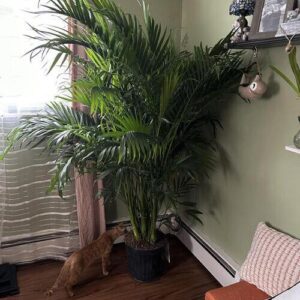
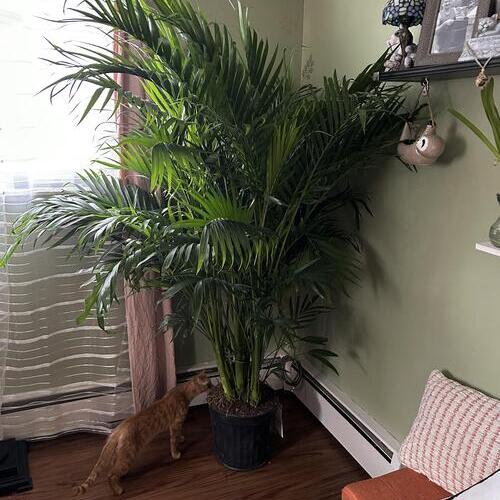
The Cat Palm (Chamaedorea cataractarum) is a clumping, feather-leaved palm native to the tropical rainforests of southern Mexico and Central America, where it grows along streambanks and in the moist understory beneath taller trees. Unlike many palms that develop a single tall trunk, the Cat Palm is trunkless, sending up multiple slender stems from a central base that produce a dense, bushy mound of arching, dark green fronds. In its native habitat it can reach 3 to 6 feet in height and width, though as a houseplant it typically stays more compact, making it a popular choice for filling floor space with lush, jungle-like texture without towering overhead.
The species name cataractarum references its love of moisture, as it is often found growing near waterfalls and streams in the wild, tolerating periodically wet, boggy soil far better than most other palms. Each frond is pinnate, composed of numerous narrow, glossy leaflets arranged along a central rachis, giving the plant a soft, feathery appearance that is gentler and less rigid than many other palm species. This growth habit, combined with its non-toxic nature, has made it an especially popular choice for households with pets and young children.
Beyond its ornamental appeal, the Cat Palm has become a staple of interior plantscaping in offices, hotel lobbies, and homes because of its ability to tolerate lower light levels than sun-loving palms while still maintaining vigorous, attractive growth. Its dense clumping habit also makes it useful as a natural privacy screen or focal point in a room, and its preference for consistently moist soil sets it apart from the drought-tolerant reputation many people associate with palms.
Cat Palm Care & Growing Guide
Caring for a Cat Palm successfully comes down to replicating the humid, semi-shaded, consistently moist conditions of its native streamside habitat. Place it in bright, indirect light, ideally near an east or north-facing window, and avoid direct afternoon sun, which can scorch its delicate fronds. Because it evolved beneath a forest canopy, it is naturally adapted to filtered light and will not thrive in deep shade for extended periods, though it tolerates lower light better than most sun-loving palms.
Consistent moisture is the single most important factor in Cat Palm care. The soil should be kept evenly moist but never waterlogged or allowed to dry out completely, as this plant is notably less drought-tolerant than other common houseplant palms. A well-draining, peat-based potting mix that still retains moisture works best, and pots should always have drainage holes to prevent standing water at the roots. Because Cat Palms are native to humid tropical environments, they also appreciate elevated humidity; dry indoor air, especially in winter, can lead to brown, crispy frond tips.
Round out care with light, regular feeding during the growing season, warm and stable temperatures away from cold drafts or heating vents, and occasional grooming to remove spent or yellowing fronds. Cat Palms are relatively slow growing and rarely need repotting more than once every two to three years. With attentive watering and adequate humidity, this palm rewards minimal fuss with dense, evergreen greenery that stays attractive year-round.
Soil
Cat Palms prefer a rich, well-draining, peat-based potting mix that still holds a good amount of moisture, reflecting their native streamside habitat. A blend of standard potting soil, peat moss or coco coir, and a small amount of perlite or coarse sand strikes the right balance between moisture retention and drainage. Ideal soil pH is slightly acidic to neutral, in the range of about 6.0 to 6.5, which supports optimal nutrient uptake. Because this palm tolerates wetter soil than most other palm species, amendments like extra compost or peat that boost water-holding capacity are beneficial, while heavy, dense garden soil should be avoided as it can compact and suffocate the roots. Poor drainage combined with compacted, heavy soil is one of the most common problems, leading to root rot; conversely, soil that drains too quickly and dries out fully between waterings will stress the plant and cause frond browning. Watch for soil compaction over time, which restricts oxygen to the roots, as well as salt build-up from tap water or fertilizer, visible as white crust on the soil surface, and periodically flush the soil with plain water to prevent this. Nutrient deficiencies, particularly of magnesium and potassium, can appear as yellowing or spotted fronds and are best corrected with a balanced, palm-specific fertilizer. Root-boundness, where roots circle tightly at the pot’s edges, signals it is time to repot into fresh, appropriately structured soil.
Fertilizer
Feed the Cat Palm with a balanced, water-soluble houseplant or palm-specific fertilizer diluted to about half strength, applied roughly once a month during the active growing season in spring and summer. Reduce or stop fertilizing in fall and winter, when growth naturally slows and excess nutrients are more likely to build up in the soil rather than be used by the plant. Signs of over-fertilization include browned or burnt leaf tips, a white crust of salts on the soil surface, and stunted or wilted growth, and can be corrected by flushing the soil thoroughly with plain water and withholding feeding for a few weeks. Under-fertilization typically appears as pale, yellowing fronds and slow, weak growth, and can be addressed by resuming a consistent light feeding schedule. Palms, including the Cat Palm, are especially prone to magnesium and potassium deficiencies, which show up as yellow banding or spotting on older fronds, so a fertilizer formulated for palms with added micronutrients is ideal. For an organic alternative, a diluted fish emulsion, compost tea, or worm castings worked lightly into the topsoil can supply gentler, slow-release nutrition.
Watering
Cat Palms like consistently moist soil and are notably less tolerant of drought than most other houseplant palms, so the top inch of soil should never be allowed to fully dry out. Water thoroughly when the surface soil feels just barely dry to the touch, ensuring water drains freely from the pot’s base, and avoid letting the pot sit in standing water. Room-temperature filtered, distilled, or rainwater is preferable to hard tap water, since Cat Palms can be sensitive to the fluoride, chlorine, and mineral salts often found in tap water, which may cause brown leaf tip burn over time. Underwatering shows up as drooping, curling, or crispy brown fronds, while overwatering or poor drainage leads to yellowing leaves, a sour smell from the soil, and eventually root rot with mushy, blackened roots. During the active growing season in spring and summer, the plant will need more frequent watering, while in fall and winter, when growth slows and light levels drop, watering frequency should be reduced slightly, though the soil should still never be allowed to dry out completely.
Cat Palm Watering Calculator
🪴 Precision Watering Intelligence
Science-Based Hydration for Your Collection
Stop guessing. Most houseplant failures are caused by volumetric errors and improper moisture tension. Our deterministic calculator moves beyond "once-a-week" watering by analyzing the four critical pillars of root health:
- • Transpiration Coefficients: 120+ species mapped by metabolic rate.
- • Substrate Porosity: Adjusts for Standard vs. Cactus/Well-Draining mixes.
- • Geometric Volume (V = π r² h): Calculates exact cups based on pot surface area.
- • The Drainage Factor: Accounts for pot material (Terracotta) and the risk of a perched water table.
Personalized for this plant
Disclaimer: Our calculator is pretty smart. We’ve crunched the numbers, but we’re not measuring the quantum state of your living room. Since we don’t know your exact indoor temperature, humidity, light, airflow, or whether your plant receives daily sweet nothings and motivational speeches, use this calculator as a guide—and always keep an eye on your plant.
Lighting
Cat Palms thrive in bright, indirect light, such as that found a few feet back from an east or north-facing window, or filtered light near a south or west window. They can tolerate medium and even fairly low light conditions better than most palms, making them well suited to offices and interior rooms, though growth will slow in very dim settings. Direct, intense sunlight, especially harsh afternoon sun, should be avoided, as it can scorch the fronds, causing brown, bleached, or crispy patches. Signs of insufficient light include sparse, leggy growth, smaller new fronds, and a noticeably slower growth rate, while signs of excessive light include yellowing, bleached, or scorched leaflets, particularly on the side facing the light source. If natural light is inadequate, rotate the plant periodically for even growth, move it closer to a window, or supplement with a full-spectrum grow light positioned a foot or two above the canopy for several hours a day; conversely, if leaves show signs of sun stress, move the plant further from the window or add a sheer curtain to diffuse the light.
Temperature
The Cat Palm grows best in warm, stable temperatures between about 65 and 80°F (18 to 27°C), reflecting its tropical origins. It has little tolerance for cold and should be protected from temperatures below about 50°F (10°C), as chilly drafts or cold snaps can cause blackened, damaged fronds and stunted growth. It should also be kept away from sudden temperature swings, such as drafts from doors, windows, or air conditioning vents, as well as heat sources like radiators, which can dry out the foliage. If grown outdoors in warm climates, bring the plant indoors or provide frost protection well before temperatures drop into the 40s, and always acclimate it gradually when moving it between indoor and outdoor conditions to reduce stress.
Humidity
As a native of humid tropical rainforests, the Cat Palm prefers relatively high humidity, ideally in the range of 50 percent or above, though it can adapt to average indoor household humidity with some care. Low humidity, especially common in winter with indoor heating, commonly causes brown, crispy leaf tips and edges, while stress from very low humidity can also make the plant more susceptible to spider mites. Signs of humidity stress include curling fronds and browning leaflet margins, whereas excessively high humidity combined with poor air circulation can encourage fungal issues on the foliage. To raise humidity, group the plant with other houseplants, place it on a pebble tray filled with water so the pot sits above the waterline, or run a small humidifier nearby, all of which are effective, low-maintenance solutions. Regular light misting can offer a brief humidity boost and also helps deter spider mites, though it is less effective long term than a humidifier or pebble tray, and leaves should be allowed to dry to avoid fungal spotting.
Propagation
The most reliable way to propagate a Cat Palm is by division, since, unlike single-trunk palms, it naturally grows in dense clumps of multiple stems arising from a shared root system. Division has a notably higher success rate than growing new plants from seed, which is slow, inconsistent, and rarely attempted by home growers due to poor germination rates and the years it takes seedlings to mature. The best time to divide a Cat Palm is in spring or early summer, at the start of the active growing season, when the plant can recover and establish new roots most quickly.
1. Water the parent plant thoroughly a day before dividing to reduce transplant stress.
2. Carefully remove the plant from its pot and gently brush or rinse away excess soil from the root ball.
3. Identify natural clumps of stems that each have their own root mass attached.
4. Using a clean, sharp knife or your hands, gently separate a healthy clump of at least two to three stems with intact roots from the main plant.
5. Trim away any damaged, mushy, or overly long roots with sterilized shears.
6. Plant each divided section into its own pot with fresh, well-draining, moisture-retentive potting mix.
7. Water thoroughly and place the new divisions in bright, indirect light with high humidity.
8. Keep the soil consistently moist for the next several weeks while new roots establish.
9. Expect visible new growth within four to eight weeks, with the division fully established as an independent plant within two to three months.
Potting
Choose a sturdy pot with ample drainage holes, sized only slightly larger than the current root ball, as Cat Palms generally prefer being somewhat snug in their containers. A well-draining, moisture-retentive potting mix, such as a peat- or coco coir-based blend with added perlite, supports both the plant’s need for consistent moisture and healthy root aeration. Because Cat Palms are slow to moderate growers, they typically only need repotting every two to three years. Signs that repotting is due include roots visibly circling the pot’s interior or emerging from the drainage holes, water running straight through without being absorbed, and slowed growth despite otherwise good care. When repotting, minimize root disturbance as much as possible; only trim roots that are clearly dead, mushy, or extremely rootbound, since Cat Palm roots are sensitive and don’t respond well to heavy pruning. Move the plant to its new pot at the same soil depth as before, backfill gently with fresh mix, water thoroughly, and keep the plant in stable, indirect light for a couple of weeks afterward to help it recover from transplant stress with minimal shock.
Pruning
When to Prune
Prune the Cat Palm as needed throughout the year, primarily to remove fronds that have become yellow, brown, or fully dead, since spent foliage does not regreen and only draws energy away from healthy growth.
Frequency and Purpose
Light grooming every few months is usually sufficient; the main purpose is cosmetic and to promote overall plant health by removing dead or diseased material before it can attract pests or fungal issues.
Tools and Preparation
Use clean, sharp pruning shears or scissors, and wipe the blades with rubbing alcohol before and after use to prevent spreading disease between plants.
Step-by-Step Pruning Guide
- Inspect the plant and identify fronds that are more than 50 percent yellow, brown, or damaged.
- Sterilize your pruning shears with rubbing alcohol.
- Follow the frond down to its base near the soil line or main stem.
- Cut the frond cleanly at its base, avoiding cutting into healthy green stem tissue.
- Avoid removing fronds that are still mostly green, even if they have some minor tip browning, since they still contribute energy to the plant.
- Dispose of removed foliage rather than composting it if any pest or disease was suspected.
- Wipe down tools again after finishing.
Aftercare and Special Considerations
After pruning, resume normal watering and light care; avoid fertilizing immediately after a heavy pruning session, and never remove more than a third of the plant’s foliage at once, as over-pruning can stress the palm and slow its recovery.
Blooming
Cat Palms can produce small, inconspicuous flowers in spring to early summer when grown in ideal conditions, though flowering is rare and insignificant indoors. Blooms appear as short, branched clusters of tiny yellow flowers emerging near the base of the fronds, and each bloom cycle lasts only a few weeks. Flowering is more common in mature, outdoor, or greenhouse-grown specimens with high humidity, warm temperatures, and bright indirect light, and even then the flowers are more of a botanical curiosity than an ornamental feature, as they are quickly overshadowed by the foliage.
Pests and Diseases
Pests
Name: Spider Mites
Symptoms: Fine webbing on the undersides of fronds, stippled or speckled yellow leaflets, and overall dull or dusty-looking foliage, especially in low-humidity conditions.
Treatment: Rinse foliage thoroughly with lukewarm water, increase humidity around the plant, and treat with insecticidal soap or neem oil, repeating every 7 to 10 days until mites are gone.
Name: Mealybugs
Symptoms: Small, white, cottony clusters found in leaf axils and along stems, accompanied by sticky honeydew residue and possible sooty mold.
Treatment: Dab visible mealybugs with a cotton swab dipped in rubbing alcohol, then treat the whole plant with insecticidal soap or neem oil, repeating weekly until fully resolved.
Name: Scale Insects
Symptoms: Small, brown or tan, dome-shaped bumps on stems and the undersides of fronds that don’t wipe off easily, along with sticky honeydew and yellowing leaves.
Treatment: Scrape off visible scale with a soft brush or fingernail, then apply horticultural oil or neem oil to smother remaining insects and eggs, repeating treatments every two weeks.
Diseases
Name: Root Rot
Symptoms: Wilting or yellowing fronds despite moist soil, a foul odor from the soil, and dark, mushy roots when the plant is removed from its pot.
Treatment: Remove the plant from its pot, trim away all rotted roots with sterilized shears, repot into fresh, well-draining soil, and reduce watering frequency going forward.
Name: Leaf Spot (Fungal)
Symptoms: Brown or black spots, sometimes with yellow halos, scattered across the fronds, often worsened by high humidity combined with poor air circulation.
Treatment: Remove and dispose of affected fronds, improve air circulation around the plant, avoid overhead watering or misting onto foliage, and apply a fungicide labeled for ornamental plants if the issue persists.
Special Features
The Cat Palm stands out among houseplant palms for its lush, trunkless, clumping growth habit that creates a full, jungle-like appearance without the need for high ceilings or extensive floor space. Its arching, feathery, deep green fronds offer year-round textural interest, and because it is non-toxic, it is a particularly appealing choice for pet owners and families seeking safe, air-purifying greenery. Its tolerance for consistently moist soil and lower light than most palms also makes it a versatile, forgiving addition to bathrooms, offices, and other spots where humidity tends to run higher than average.
Plant Benefits
The Cat Palm has no established herbal, medicinal, or pharmaceutical uses; its primary benefits are ornamental and environmental, including mild air-purifying qualities and its contribution to indoor humidity and overall well-being through biophilic, greenery-rich interior design.
Additional Information
Cat Palms are one of the few palms genuinely comfortable in consistently moist, humid conditions, making them a natural fit for bathrooms with bright windows or well-lit kitchens. They are also commonly sold as small, densely potted clusters of multiple young plants rather than a single specimen, which is why mature indoor specimens often appear especially full and bushy compared to other palm species.
Life Cycle
As a perennial, evergreen palm, the Cat Palm does not die back seasonally but grows continuously and slowly year-round, with the most active growth occurring in spring and summer under warm temperatures and bright, indirect light. New stems emerge from the base of the clump over time, gradually increasing the plant’s overall fullness and width rather than height, since it lacks a true trunk. Individual fronds typically persist for one to a few years before naturally yellowing and dying off, at which point they can be pruned away, while the plant as a whole can live for many years indoors with consistent care, slowly maturing into a dense, multi-stemmed specimen.
Are Cat Palm Poisonous, Toxic
The Cat Palm is considered non-toxic to cats, dogs, and humans, including children, according to the ASPCA. No part of the plant—including the fronds, stems, or roots—contains known toxic compounds that cause poisoning if ingested. Because of this, it is one of the safer houseplant choices for pet owners and families with small children. That said, ingestion of any plant material in large quantities can occasionally cause mild, temporary gastrointestinal upset such as vomiting or diarrhea simply due to the plant fiber rather than any toxin. If a pet or child consumes a large amount of foliage and shows signs of distress, contact a veterinarian, pediatrician, or poison control center for guidance, though serious toxicity is not expected. As a general precaution, discourage pets from chewing on any houseplant, and keep decorative pot moss or fertilizer spikes out of reach, as those additives may pose more risk than the plant itself.
Frequently Asked Questions
Can I grow Cat Palm in my indoor space
Difficulty: Intermediate
Size: Medium
Light: Medium
Water: High
Flowering: Yes
Pet Safe: Yes
Air Purifier: Medium
Chamaedorea cataractarum botanical details
Common Name: Cat Palm
Other Common Names: Cascade Palm, Cataract Palm
Botanical Name: Chamaedorea cataractarum
Native Area: Southern Mexico and Central America (Belize, Guatemala), typically found growing along streams and in humid rainforest understories.
Family Name: Arecaceae
Plant Type: Perennial, clumping palm (evergreen)
Genus: Chamaedorea
Kingdom: Plantae
Photo Gallery
My Cat Palm Plant Care Recommendations
- Perky Plant fertilizer: https://amzn.to/3RdLA00
- Seaweed extract: https://amzn.to/3z2CsFh
- Rooting hormone: https://amzn.to/3bIXi0t
- Espoma fertilizer: https://amzn.to/3vPa9bs
- Worm compost: https://amzn.to/3HVL01u
- Full-spectrum Light Bulb-Large: https://amzn.to/3yR6VBu
- Full-spectrum Lighting: https://amzn.to/3qhhaiv
- Light meter: https://amzn.to/4dpmp3s
- Moisture meter: https://amzn.to/3TEUu5N
- Hygrometer: https://amzn.to/3Cf6h2F
- Pruning shears: https://amzn.to/3X6oOcg
- ProMix Potting Soil: https://amzn.to/3iVIrjE
- My Organic Green Gourmet Houseplant Fertilizer: Healthy Houseplants Store
- My Perfect Pumice: Healthy Houseplants Store
- My Healthy Houseplants Store: All Products
Buy Cat Palm Online
✅ “Bring Home This Beauty Today”
✅ “Get Your Own Cat Palm Before It’s Gone”
✅ “Shop Trusted Sellers – Limited Availability”
✅ “Free Delivery”
As an Amazon Associate, I earn commission from qualifying purchases.
Plant Puns and Jokes
Why did the Cat Palm get invited to every party? Because it always brought the fronds!