


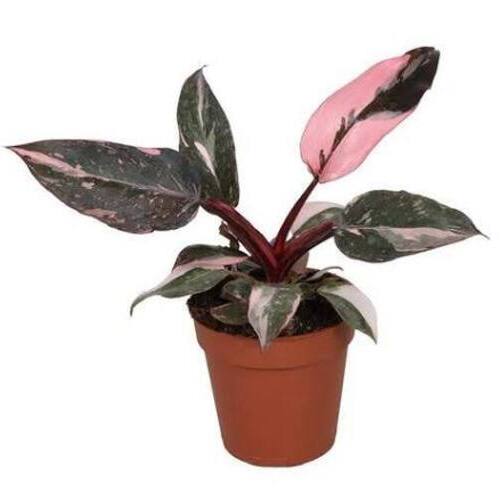
Philodendron erubescens ‘Pink Princess’ is one of the most coveted and visually dramatic foliage houseplants in the contemporary indoor plant market, celebrated above all else for its extraordinary natural variegation — bold, irregular splashes and sectors of bubblegum pink, blush, and deep magenta set against deep, glossy, near-black burgundy-green leaves. This spectacular colouration is not produced by any artificial process: it results from a natural, genetically unstable chimeric mutation that causes the cells in certain leaf sections to lack the chlorophyll-producing organelles (chloroplasts) responsible for green colouration, leaving those sections expressing their underlying anthocyanin pigmentation in shades of vivid pink. Because this mutation is chimeric — meaning it exists in some stem cell lineages but not others — the distribution of pink variegation across the leaves and stems is inherently unpredictable, variable, and unrepeatable. No two leaves, and no two plants, ever display the same pattern, making every Pink Princess Philodendron a uniquely individual specimen.
Philodendron erubescens ‘Pink Princess’ is a cultivar of the species Philodendron erubescens, the Blushing Philodendron, which is native to the tropical rainforests of Colombia and other parts of northern South America. Like its parent species, the Pink Princess grows as a semi-vining, hemi-epiphytic plant in its natural habitat, using aerial roots to attach to and climb the trunks of rainforest trees as it grows toward the canopy light. In cultivation, it develops a semi-vining, climbing habit that benefits greatly from the support of a moss pole, coir totem, or trellis, which encourages the production of the larger, more dramatically variegated leaves that are the plant’s signature characteristic. Without climbing support, it will trail or sprawl, producing somewhat smaller leaves. The deep, wine-red to burgundy petioles, the glossy, near-black mature leaves, and the vivid pink variegation together create a colour palette of extraordinary sophistication.
The Pink Princess Philodendron entered the mainstream houseplant market in the early 2010s and reached peak popularity during the global indoor plant boom of 2019–2022, when individual specimens with high-quality variegation commanded prices of hundreds or even thousands of dollars in auction markets. While prices have moderated as tissue culture propagation has made the cultivar more widely available, it remains among the most premium-priced common aroids in the houseplant trade. Its appeal lies not only in its striking beauty but also in the inherent unpredictability of its variegation — the excitement of each new leaf’s unfurling, never knowing whether it will emerge with bold pink sectors, subtle blush flecks, or (occasionally) reverting to solid green or solid pink (albino) — creates an ongoing sense of anticipation and engagement that few other houseplants can match.
Caring for Philodendron Pink Princess is an intermediate-level challenge that rewards attentive growers with one of the most spectacular foliage displays available in the indoor plant world. Its core care requirements are broadly similar to other members of the Philodendron erubescens group: bright indirect light, consistently moist but well-draining soil, warm temperatures, moderate to high humidity, and regular fertilization during the growing season. However, the Pink Princess carries one unique and critical care consideration that distinguishes it from almost all other houseplants: active management of its chimeric variegation. Because the pink colouration is produced by unstable, chlorophyll-deficient cells, the plant can at any time revert toward producing entirely green leaves (reverting to the non-variegated parent type) or, conversely, can begin producing entirely pink or white albino leaves that contain no chlorophyll and cannot photosynthesize. Both extremes are undesirable and must be managed through strategic pruning.
The most important single care factor for maintaining the Pink Princess’s signature variegation is providing the correct level of bright, indirect light. Variegated plants in general, and Pink Princess in particular, require more light than their solid-green counterparts because the pink, chlorophyll-free sections of each leaf cannot contribute to photosynthesis — the entire plant’s energy needs must be met by the green portions alone. Insufficient light is the most common cause of reversion toward solid green, as the plant compensates for reduced photosynthetic capacity by producing more green tissue. Bright indirect light of 400–1,000 foot-candles for 10–12 hours per day is the target. Direct scorching sun, however, bleaches and burns the pink sections, which contain no protective pigmentation against solar damage.
Beyond light management, the Pink Princess requires the same excellent drainage and conservative watering discipline as other philodendrons — moist but never waterlogged soil, with the top 1–2 inches allowed to dry before rewatering. Humidity above 50%, warm temperatures consistently above 65°F (18°C), and monthly balanced fertilization during the growing season complete the care programme. Providing a moss pole significantly improves leaf size and variegation quality as the plant matures. The Pink Princess is rewarding to grow and, with proper care and a degree of patience with the inherent unpredictability of its variegation, delivers an unparalleled aesthetic experience among common houseplants.
 Soil
Soil
Philodendron Pink Princess thrives in a rich, organically fertile, well-aerated, and free-draining potting mix that supports robust root development while preventing the waterlogging that leads to root rot. The ideal mix maintains consistent moisture during active growth while draining freely and allowing roots access to both water and oxygen simultaneously. Because the pink variegated sections of the leaves cannot photosynthesise, the plant’s root system and green leaf sections must be in peak condition to compensate — making excellent soil quality and drainage particularly important for this cultivar.
An ideal mix consists of 40% peat-free potting mix or coco coir, 30% perlite or pumice for drainage and aeration, 20% orchid bark for structure and additional aeration, and 10% worm castings or compost for slow-release fertility and microbial activity. This creates a rich, open, chunky medium that balances moisture retention with excellent drainage.
Optimal soil pH is 5.5–7.0, with the plant performing best in the mildly acidic range of 5.8–6.5. This mirrors the naturally acidic forest floor soils of the parent species’ native Colombian habitat and ensures optimal availability of iron, manganese, and other micronutrients essential for healthy leaf production.
Good drainage is critical, particularly for a plant with chlorophyll-deficient pink sections that are already operating at reduced photosynthetic efficiency. Root rot reduces the plant’s overall vigour and invariably accelerates variegation decline and reversion. The mix must drain freely while retaining moderate moisture.
Horticultural charcoal at 5–10% by volume helps maintain a clean, aerobic root zone. Mycorrhizal inoculants applied to the root ball at potting time enhance root efficiency and nutrient uptake. Slow-release fertilizer granules blended into the mix at potting time provide a baseline nutrient supply for the first 3–6 months.
Waterlogged soil destroys roots, causing yellowing, wilting despite moist soil, and stem blackening. In the Pink Princess, root rot also typically triggers a stress response that accelerates reversion toward solid green foliage as the plant redirects energy toward maximising photosynthetic efficiency. Solution: repot into a more open, amended mix with additional perlite or bark.
Organic components break down over time, reducing pore space and drainage. Repot into fresh, well-amended mix every 1–2 years to maintain soil structure and aeration.
Alkaline soil above pH 7.0 can cause iron and manganese lock-out, resulting in interveinal chlorosis (yellowing between the veins of new leaves). Test soil pH annually and amend with sulphur or use filtered/rainwater for irrigation.
Mineral salt accumulation from synthetic fertilizers and tap water appears as white surface deposits and may cause brown leaf tip burn. Flush soil with clean water every 2–3 months and use fertilizer at half strength.
The Pink Princess’s reduced photosynthetic capacity means it may be more susceptible to nutritional stress than all-green counterparts. Regular fertilization during the growing season is important to compensate. Pale new leaves may indicate nitrogen or iron deficiency.
Roots emerging from drainage holes or rapid soil drying indicates a root-bound plant. Repot into a container 1–2 inches larger in diameter. Note that slight root restriction can sometimes help moderate growth rate and encourage more stable variegation expression.
 Fertilizer
Fertilization of Philodendron Pink Princess requires careful balance. The plant has a moderate to vigorous nutrient demand during active growth, but its reduced photosynthetic capacity due to the chlorophyll-free pink sections means that overfertilization — which produces lush, rapid vegetative growth — can paradoxically destabilise the variegation pattern. Consistent, moderate fertilization during the growing season supports healthy root and leaf development without overwhelming the plant’s capacity to manage the chimeric mutation responsibly.
A balanced, water-soluble fertilizer with an NPK ratio of 20-20-20 or 10-10-10, diluted to half the label-recommended strength, applied every 2–4 weeks during spring and summer. Some growers prefer a slightly lower-nitrogen formulation during the peak growing season to moderate vegetative growth rate and give the chimeric variegation more time to stabilise in each new leaf.
Every 2–4 weeks during spring and summer. Once every 6–8 weeks in early autumn. Withhold all fertilization from late autumn through winter.
Water lightly before applying liquid fertilizer to prevent chemical burn on dry roots. Apply the diluted solution evenly across the soil surface. Never apply fertilizer to a stressed, recently repotted, or pest-affected plant.
Brown or scorched leaf tips and margins; white crusty salt deposits on the soil surface; yellowing of leaves despite adequate watering and light; unusually rapid, soft vegetative growth that may be accompanied by an increase in solid-green reversion leaves; wilting despite moist soil in severe cases.
Pale, progressively lighter green sections in the variegated leaves; abnormally small new leaves; slowed growth throughout the growing season; gradual loss of the deep, glossy leaf quality and the richness of the dark green-burgundy background colouration.
Worm castings top-dressed onto the soil surface at the beginning of the growing season provide gentle, slow-release balanced nutrients with minimal burn risk and excellent microbial activity. Monthly diluted liquid seaweed extract supports micronutrient availability and root health. Compost teas maintain soil microbial diversity.
Magnesium supplementation via monthly Epsom salts applications (1 teaspoon per gallon of water) supports chlorophyll production in the green leaf sections, which must work harder to compensate for the photosynthetically inactive pink areas. Iron chelate supplements address interveinal chlorosis if it develops on new growth.
 Watering
Philodendron Pink Princess requires consistently moist soil during active growth but is highly susceptible to root rot from waterlogging. The ideal regime is to water thoroughly when the top 1–2 inches of soil have dried, draining completely after each watering. The reduced photosynthetic capacity of the variegated sections means root health is even more critical for this cultivar than for solid-green philodendrons — any root damage from overwatering directly compromises the plant’s ability to maintain the bold variegation it is grown for.
Every 7–10 days during spring and summer. Every 14–21 days in autumn and winter as growth slows. Always assess soil moisture with a finger or moisture meter before watering rather than following a calendar schedule.
The Pink Princess is moderately sensitive to fluoride and chlorine in tap water, which can cause marginal leaf browning over time and may contribute to browning of the pale pink sections which are particularly sensitive. Filtered water, collected rainwater, or tap water left overnight to off-gas chlorine is preferred.
Wilting, drooping leaves and petioles despite adequate light; dry, pulling-away-from-pot-edge soil; yellowing of older leaves; crispy brown margins on both green and pink leaf sections; slowed new leaf production.
Yellowing of leaves — particularly lower leaves; soft, darkened stem tissue at the base; persistently saturated soil; foul soil odour; fungus gnats around the soil surface; dark mushy root tips on inspection. Overwatering stress in Pink Princess frequently triggers reversion toward solid green foliage as the plant prioritises photosynthetic efficiency in a stressed state.
Reduce watering significantly in autumn and winter as growth slows. Allow a greater proportion of the soil to dry between waterings — approximately 2–3 inches of the top soil depth. Resume more frequent watering as temperatures and light increase in spring. During periods of intense summer heat, monitor soil moisture more frequently as evaporation and transpiration rates increase.
Stop guessing. Most houseplant failures are caused by volumetric errors and improper moisture tension. Our deterministic calculator moves beyond "once-a-week" watering by analyzing the four critical pillars of root health:
Personalized for this plant
Disclaimer: Our calculator is pretty smart. We’ve crunched the numbers, but we’re not measuring the quantum state of your living room. Since we don’t know your exact indoor temperature, humidity, light, airflow, or whether your plant receives daily sweet nothings and motivational speeches, use this calculator as a guide—and always keep an eye on your plant.
 Lighting
Philodendron Pink Princess requires bright indirect light of 400–1,000 foot-candles for 10–12 hours per day. This is a higher light requirement than most solid-green philodendrons and is directly linked to the plant’s variegation health: the pink, chlorophyll-free leaf sections cannot photosynthesise, so the remaining green tissue must receive sufficient light to power the entire plant’s metabolic needs. An east-facing window with morning direct sun, or a few feet from a bright south- or west-facing window filtered by a sheer curtain, provides the ideal balance of light intensity and protection from harsh direct rays.
Light is the single most important environmental factor for maintaining the Pink Princess’s prized variegation. Insufficient light is the primary driver of reversion to solid green — the plant compensates for reduced photosynthetic efficiency by producing more chlorophyll-containing green tissue. Conversely, variegation is most stable, bold, and vibrant in consistently bright indirect light. If the plant begins producing consecutively solid-green leaves, increasing light intensity is the first intervention.
Progressive reversion toward solid green, uniformly dark-green leaves without pink variegation; etiolated, leggy stem growth with widely spaced internodes; small new leaves; the plant leaning or growing strongly toward the light source.
The pink sections, lacking protective chlorophyll, are particularly vulnerable to photodamage. Bleached, whitened, or scorched patches on the pink areas of leaves; crispy, papery pink sections; bleaching of the deep green or burgundy pigmentation in the dark leaf sections. Direct midday sun through glass is particularly damaging.
Supplement with a full-spectrum LED grow light providing 500–1,000 foot-candles for 12–14 hours per day if natural bright light is unavailable. Position 12–24 inches above the plant. Rotate the pot 90 degrees every 2–4 weeks to ensure even light distribution and balanced growth of the climbing or trailing habit.
 Temperature
Philodendron Pink Princess thrives at temperatures between 65°F and 85°F (18°C–29°C). This range reflects the warm, stable tropical conditions of its parent species’ native Colombian habitat and aligns comfortably with most indoor environments.
This cultivar is cold-sensitive and cannot tolerate temperatures below 55°F (13°C) for extended periods. Cold damage manifests as dark, water-soaked patches on both the green and pink sections of the leaves, blackening of petioles, and in severe cases, widespread plant collapse. The pink, chlorophyll-deficient sections may show cold damage symptoms before the green sections due to their reduced cellular robustness. Cold drafts from single-pane windows, exterior doors, or air conditioning vents are a common indoor cold damage source.
The plant handles warm temperatures up to approximately 90°F (32°C) well provided humidity is adequate and it is protected from direct scorching sun. Very high heat combined with low humidity may cause accelerated moisture loss and stress in the sensitive pink leaf sections.
Pink Princess Philodendron prefers stable, consistent temperatures and is sensitive to sudden fluctuations. Rapid temperature drops can trigger stress responses that may accelerate variegation reversion. Avoid positioning near heat or cooling vents, exterior doors, or drafty windows.
In winter, move the plant away from cold external windows and insulate windowsill plants from cold glass. Ensure air conditioning does not blow cold air directly at the plant. Maintain consistent warmth year-round — temperature stability is as important as staying within the ideal range for this premium cultivar.
 Humidity
Philodendron Pink Princess prefers relative humidity of 50–70% for optimal growth and foliage quality. It tolerates standard household levels of 30–50% without severe visible stress, but the best variegation quality — including the richest pink colouration, largest leaf size, and finest glossy surface — is achieved and maintained at higher humidity. The delicate pink sections of the leaves, which lack the structural proteins provided by chloroplasts, may be slightly more prone to desiccation stress than the green sections at very low humidity.
Brown, crispy tips and margins on both the green and pink leaf sections; curling or cupping leaf edges; dulling of the characteristic high-gloss leaf surface; reduced leaf size; slower emergence of new leaves from the growing point.
Ambient humidity above 80%, combined with cool temperatures and poor air circulation, promotes fungal diseases including Botrytis and bacterial leaf spot. Watch for water-soaked patches, soft brown lesions, or premature leaf decay. Good airflow is essential in high-humidity environments.
The most effective and consistent method for maintaining optimal 55–70% humidity year-round. A cool-mist ultrasonic humidifier positioned within 3–5 feet of the plant significantly improves variegation quality, leaf size, and surface gloss. Highly recommended for serious cultivation of this premium cultivar.
A tray of pebbles and water beneath the pot provides a modest localised humidity boost as water evaporates. Moderately effective as a supplementary measure.
Lightly misting the large glossy leaves 2–3 times per week provides a temporary humidity boost and keeps the surface clean and dust-free. Effective as a supplement; ensure good airflow to prevent water sitting on the leaf surface for extended periods, particularly in the warmer, shelter of the leaf petiole axils.
Clustering the Pink Princess with other tropical houseplants creates a shared humid microclimate through collective transpiration. A natural and aesthetically pleasing approach.
If ambient humidity exceeds 80%, improve air circulation with a fan, ensure the potting mix is well-draining, and avoid daily misting. Adequate ventilation prevents fungal disease development in humid growing environments.
 Propagation
Propagating Philodendron Pink Princess is straightforward using stem cuttings, and this is the method used by both home growers and commercial producers. However, there is a critical and unique consideration for this cultivar: because the pink variegation is produced by an unstable chimeric mutation, there is no guarantee that a cutting taken from a variegated stem will produce a plant with the same degree or quality of variegation. Cuttings taken from heavily variegated stem sections are most likely to produce well-variegated offspring, while cuttings from reverting solid-green portions will typically produce all-green plants. This unpredictability is inherent to the chimeric nature of the cultivar and cannot be eliminated. The best time to propagate is spring through early summer.
For best chances of variegated offspring: always take cuttings from stem sections that already carry visible pink variegation on the leaves or visible pale pink streaking on the stem itself. Avoid sections that have reverted to solid green or solid pink.
Success Rate: High (80–90%) for rooting; variable for variegation quality in offspring
Description: The most popular and accessible propagation method for home growers. Variegated stem sections are rooted in water before transfer to soil.
Steps:
Success Rate: High (75–88%)
Description: Direct soil propagation avoids the water-to-soil transition stress and may produce more robust initial root systems.
Steps:
Success Rate: Moderate (65–80%)
Description: For maximising yield from a limited quantity of stem material, individual nodes can be rooted separately. Each node has the potential to produce a new plant, though this method is slower and more vulnerable to failure.
Steps:
Late spring to mid-summer (May–July) when temperatures above 68°F (20°C) maximally accelerate rooting and new growth establishment.
Under optimal conditions, Pink Princess cuttings root in 2–4 weeks and produce new growth within 6–10 weeks. A fully established, independently growing young plant can be expected within 2–3 months of propagation.
 Potting
Medium-weight pots with excellent drainage are ideal. Terracotta pots work well for managing moisture levels through evaporative wicking, which reduces root rot risk for this susceptible cultivar. For larger specimens, medium-weight ceramic or plastic nursery pots with good drainage holes are also appropriate. Avoid very lightweight plastic pots as the Pink Princess’s vining growth and moss pole attachment can make it top-heavy.
Drainage holes are absolutely mandatory. A layer of coarse perlite or pumice at the base of the pot provides additional drainage insurance. Always empty saucers within 30 minutes of watering.
Choose a pot 1–2 inches larger than the current root ball. Avoid significant overpotting, which retains excess moist soil volume and dramatically increases root rot risk — a particularly serious concern for this cultivar, where root damage directly impacts variegation stability.
Every 1–2 years in spring, or when the plant shows clear signs of being root-bound. Spring repotting aligns with the onset of active growth, giving the plant maximum recovery time during the warm growing season.
Roots emerging densely from drainage holes; soil drying unusually quickly after watering; visibly stunted growth despite optimal light and fertilization; the plant becoming top-heavy relative to its pot, particularly if growing on a moss pole.
Providing a moist moss pole or coir totem is one of the single most impactful care decisions for Pink Princess Philodendron. As the plant climbs, it attaches its aerial roots to the pole’s moist surface, drawing additional moisture and nutrients. This triggers the production of progressively larger leaves with bolder, more dramatic variegation — a phenomenon directly linked to the plant’s natural epiphytic growth strategy. A moist moss pole should be considered essential equipment rather than optional for growers seeking maximum leaf size and variegation quality.
Water 24–48 hours before repotting to reduce transplant stress. Gently remove the plant from its current pot, loosen the root ball, and inspect all roots. Trim any dead, mushy, or rotted roots with sterile scissors. Repot into fresh amended mix at the same planting depth. Do not fertilize for 4–6 weeks post-repotting.
Root pruning may be performed on mature specimens where continued pot size increase is impractical. Trim no more than 20–25% of the total root mass with sterile scissors. Allow the plant to recover in a shaded, humid location for 2 weeks before returning to normal care.
After repotting, maintain elevated humidity and avoid direct sun exposure for 2 weeks. Monitor the first new leaf produced after repotting for variegation quality — post-repot stress sometimes temporarily disrupts variegation pattern before stabilising.
 Pruning
Pruning of Philodendron Pink Princess serves two distinct and equally important purposes: standard horticultural maintenance — removing damaged, yellowing, or ageing leaves and managing stem length — and the critically important management of variegation quality through selective pruning of reverting stem sections. This variegation management is unique to chimeric cultivars like the Pink Princess and has no equivalent in the care of solid-coloured houseplants. Understanding and practising both types of pruning is essential for maintaining this plant in its most ornamentally desirable state.
Because the pink variegation of Philodendron Pink Princess is produced by an unstable chimeric mutation, the plant can at any time begin producing leaves that are predominantly or entirely solid green (reversion), or conversely, begin producing leaves that are predominantly or entirely pink/white (albino). Both extremes are undesirable and must be managed by pruning back to the most recent node that produced a desirably variegated leaf. Solid green reversion reduces the plant’s ornamental value; solid pink/albino sections are photosynthetically non-functional and if left to dominate the plant’s growth will weaken and eventually kill it through starvation. When you identify consecutive solid-green or solid-pink/white new leaves, act promptly by pruning back to the last well-variegated node.
Variegation management pruning should be performed as soon as reversion is identified — this is not seasonal and should not be delayed. Standard maintenance pruning (removal of damaged or yellowing leaves, length management) is best performed in early spring at the onset of active growth, though minor maintenance can be performed at any time.
Monitor the variegation quality of each new leaf as it emerges and be prepared to prune at any point during the growing season if consecutive reversion leaves are produced. Standard maintenance pruning: once or twice per year as needed.
Management of variegation stability and quality (the primary purpose unique to this cultivar); removal of damaged, yellowing, or pest-affected leaves; collection of propagation cuttings; management of stem length on vining specimens; improvement of the plant’s overall form and display.
Sharp bypass pruning shears or clean, sharp scissors sterilized with 70% isopropyl alcohol. Disposable gloves to protect skin from the calcium oxalate-containing sap. A clean cloth for wiping blade residue between cuts.
After variegation management pruning, observe the new growing tip that develops from the node below the cut over the following 4–8 weeks. The variegation quality of the next 2–3 leaves will indicate whether the pruning has successfully redirected the plant toward improved chimeric expression. If consecutive reversion continues, repeat the pruning process. Maintain optimal bright indirect light, humidity, and fertilization throughout this recovery period, as suboptimal conditions are a primary driver of reversion continuation.
The calcium oxalate-containing sap from cut petioles and stems can irritate sensitive skin and eyes. Always wash hands thoroughly after pruning even if gloves were worn. Reversion management in chimeric plants like the Pink Princess is a continuous commitment rather than a one-time fix — no amount of pruning can permanently stabilise the chimeric mutation, and growers must accept the inherent unpredictability of variegation as part of the unique character of this cultivar. A plant that produces consecutive highly variegated leaves for months may begin reverting without any change in care — this is normal and reflects the fundamental genetic instability of chimeric plants rather than a care failure.
 Blooming
Philodendron erubescens ‘Pink Princess’ rarely blooms in indoor cultivation and is grown exclusively for its spectacular variegated foliage rather than any floral display. When flowering does occur in mature specimens — typically requiring 5–10 or more years of cultivation under ideal conditions — the inflorescence is the typical Araceae spathe-and-spadix structure. A waxy, pale green to white spathe (a modified leaf bract) partially encloses the spadix — a slender spike bearing the true, tiny individual flowers. The spathe may have a slightly pinkish or reddish tinge on its outer surface, consistent with the reddish colouration characteristic of Philodendron erubescens. The inflorescence is not ornamentally significant compared to the plant’s extraordinary foliage and would be considered a curiosity rather than a visual highlight.
Most indoor growers of Philodendron Pink Princess will never see the plant flower, as the combination of sufficient maturity, optimal light, and other environmental conditions needed to trigger reproductive activity is rarely achieved in typical home cultivation. No special measures to induce flowering are recommended or practised, as the plant’s energy is far better directed toward producing new variegated foliage.
 Pests and Diseases
Name: Mealybugs (Pseudococcus spp.)
Symptoms: White, cottony, waxy clusters at leaf axils, along petioles, on leaf undersides, and at the growing point; sticky honeydew residue on leaf surfaces; sooty black mould developing on honeydew; distorted or stunted new growth; yellowing of affected foliage. A notable risk for Pink Princess: mealybug feeding stress often triggers or accelerates variegation reversion as the plant redirects resources to basic survival.
Treatment: Isolate the plant immediately. Remove all visible mealybug clusters with a cotton swab or cloth soaked in 70% isopropyl alcohol, paying particular attention to the growing point and leaf axils. Spray the entire plant — including all leaf undersides and petioles — with neem oil solution or insecticidal soap. For severe infestations, apply a systemic insecticide (imidacloprid) as a soil drench. Repeat contact treatment every 5–7 days for 3–4 cycles. Resolve the infestation quickly to minimise variegation disruption.
Name: Spider Mites (Tetranychus urticae)
Symptoms: Fine silky webbing on the undersides of leaves and between petioles; tiny moving specks on leaf undersides under magnification; stippled, pale discolouration on the upper leaf surface from cell piercing damage — particularly visible and disfiguring on the pink sections of the leaves; premature leaf yellowing in severe infestations. Most common in hot, dry, low-humidity conditions.
Treatment: Increase ambient humidity immediately. Wipe both surfaces of all leaves with a damp cloth to physically remove mites and webbing. Spray thoroughly with neem oil solution, insecticidal soap, or diluted 70% isopropyl alcohol (1:1 with water). Repeat every 5–7 days for 3–4 treatment cycles. Maintain humidity above 50% as a preventive measure.
Name: Thrips (Thysanoptera)
Symptoms: Silvery streaking, scarring, or bronzing on the leaf surface from cell damage — particularly prominent and aesthetically damaging on the pink sections; distorted, cupped, or deformed new growth; tiny elongated insects visible on the growing point and young leaves; black faecal specks on leaf undersides.
Treatment: Remove and dispose of the most heavily infested leaves. Spray all plant surfaces with insecticidal soap, pyrethrin-based spray, or spinosad solution. Repeat every 5 days for at least 3—4 treatments. Blue or yellow sticky traps help monitor thrip population levels.
Name: Fungus Gnats (Bradysia spp.)
Symptoms: Small dark flies around the soil surface; larvae in the top layer of moist soil; fine root hair damage; slowed growth and occasionally yellowing in heavy infestations.
Treatment: Allow the soil surface to dry more thoroughly between waterings. Apply coarse horticultural sand over the soil surface as a deterrent. Use yellow sticky traps. Apply Bacillus thuringiensis var. israelensis (Bti) or hydrogen peroxide soil drench (1:4 ratio of 3% H2O2 to water) to kill larvae.
Name: Scale Insects (Coccidae / Diaspididae)
Symptoms: Small, flat, brownish or yellowish shell-like bumps on petioles and stem sections; honeydew deposits; progressive yellowing and weakening of affected growth.
Treatment: Physical removal with isopropyl alcohol-soaked cotton swab. Neem oil or horticultural oil spray to smother crawlers. Systemic insecticide soil drench for heavy infestations.
Name: Root Rot (Pythium spp., Phytophthora spp.)
Symptoms: Wilting, yellowing, and drooping despite moist soil; soft, darkened stem tissue at the base; foul soil odour; brown mushy roots; plant instability. In the Pink Princess, root rot typically triggers rapid variegation reversion toward solid green as the plant sacrifices ornamental variegation to maximise photosynthetic efficiency in a stressed state.
Treatment: Remove from pot immediately. Trim all rotted (black, mushy, malodorous) roots with sterile scissors. Dust trimmed ends with cinnamon or sulphur. Air-dry for 1–2 hours. Repot into fresh, dry, well-draining mix. Withhold water for 48–72 hours. Address the underlying overwatering cause.
Name: Bacterial Leaf Spot (Xanthomonas spp., Pseudomonas spp.)
Symptoms: Water-soaked, dark brown to black lesions on the leaf surface with yellow halos; lesions are particularly visually prominent on the pale pink sections; may enlarge and coalesce; affected tissue becomes dry and papery.
Treatment: Remove and dispose of all affected leaves in sealed bags. Avoid all overhead watering or misting. Improve air circulation. Apply copper-based bactericide as both curative and preventive treatment.
Name: Erwinia Stem Rot (Erwinia carotovora)
Symptoms: Rapid blackening and collapse of stem tissue from the base; intensely foul putrid odour; water-soaked translucent lesions; catastrophic progression within 24–48 hours.
Treatment: Remove and destroy severely affected plants immediately. For partially affected specimens, cut well above all diseased tissue with sterile tools, treat with copper bactericide, and attempt propagation from healthy stem sections above the rot. Prevent through consistent avoidance of overwatering.
Name: Botrytis / Grey Mould (Botrytis cinerea)
Symptoms: Soft, grey-brown water-soaked patches on leaves, petioles, and stem; visible grey fuzzy mould growth in humid conditions; premature leaf and petiole collapse. More common in cool, damp, poorly ventilated environments.
Treatment: Remove all affected material immediately. Improve air circulation and reduce humidity. Apply chlorothalonil or copper-based fungicide. Avoid wetting leaves during irrigation.
 Special Features
Philodendron erubescens ‘Pink Princess’ is arguably the most dramatically variegated and visually compelling houseplant in the mainstream indoor plant market, distinguished by a colour palette so unusual and bold that it initially strikes many viewers as artificial. The combination of deep, near-black burgundy-green glossy leaf surfaces splashed and sectored with vivid bubblegum pink, blush, and pale cream creates an aesthetic that sits at the intersection of botanical wonder and contemporary interior design. What makes this variegation doubly remarkable is that it is entirely natural — the product of a spontaneous chimeric genetic mutation that no amount of selective breeding can fully stabilise or perfectly reproduce. This means that every Pink Princess is genuinely unique, and every new leaf represents a fresh piece of unrepeatable natural art. The unpredictability of the variegation pattern creates an engaging and ongoing sense of anticipation with each new leaf’s emergence — a quality shared by almost no other common houseplant. As a semi-vining climber on a moist moss pole, mature specimens develop increasingly large, dramatically patterned leaves over time, creating a display that grows more spectacular with each passing season. The plant’s moderate air-purifying capability, strong biophilic design impact, and status as one of the most culturally significant houseplant phenomena of the 2010s and 2020s further enhance its credentials as a remarkable and historically significant botanical cultivar.
 Plant Benefits
Philodendron erubescens ‘Pink Princess’ is not an edible or recognised medicinal plant and must not be consumed due to its calcium oxalate toxicity. Its benefits are primarily psychological, aesthetic, and cultural. Research in environmental psychology consistently demonstrates that the presence of distinctive, visually complex foliage plants in indoor spaces reduces perceived stress, improves mood, and enhances cognitive engagement and wellbeing. The Pink Princess, with its uniquely variable and perpetually changing variegation pattern, provides an unusually high level of ongoing visual and emotional engagement compared to static-foliage plants — each new leaf generating genuine anticipation and discovery. Its documented moderate VOC-absorbing capability contributes to marginally improved indoor air quality. In the broader cultural context, the Pink Princess became a symbol of the global houseplant movement of the early 21st century, appearing in mainstream media, design publications, and social media platforms in a way that few botanical specimens ever achieve, contributing to the wider cultural reconnection with plants and nature in urban environments.
 Additional Information
The Philodendron Pink Princess is a cultivar of Philodendron erubescens, the Blushing Philodendron, a species native to Colombian tropical rainforests. The ‘Pink Princess’ cultivar name refers specifically to the chimeric variegation mutation that produces the characteristic pink colouration. It is important to distinguish the genuine Philodendron Pink Princess from several imitations and alternatives that have appeared in the market in response to its premium pricing: Philodendron ‘Pink Congo’ — a chemically induced pink-leaf variant that reverts completely to green within months as the chemical wears off and is therefore considered fraudulent — is the most commonly encountered fake. Genuine Pink Princess cultivars maintain stable (though variable) chimeric variegation that persists indefinitely and does not revert entirely to green under normal conditions. The Pink Princess has also been produced in significant quantities via tissue culture propagation, which has substantially increased availability and reduced prices from the peak of 2019–2021. However, tissue culture plants require careful observation in their early development as the chimeric mutation is sometimes disrupted during the tissue culture process, producing plants with weaker or absent variegation compared to propagation-grown specimens. The cultivar has no RHS Award of Garden Merit designation as it is not suitable for outdoor cultivation in temperate climates.
 Life Cycle
Philodendron erubescens ‘Pink Princess’ is a perennial tropical climbing shrub that experiences no true seasonal dormancy in its native Colombian tropical habitat. In indoor cultivation in temperate climates, it undergoes a relative reduction in growth rate during autumn and winter in response to lower light levels and cooler temperatures, but does not die back or enter true dormancy. Active growth resumes vigorously in spring as conditions improve. New leaves emerge from the growing point as tightly rolled, reddish or pink-flushed buds that unfurl over several days, with each leaf’s final variegation pattern revealed progressively during the unfurling process. Under optimal conditions, a new leaf may be produced every 4–6 weeks during the active growing season. As the plant matures and climbs its support, the internodal spacing becomes more consistent and leaves grow progressively larger, with the most dramatically variegated specimens typically being mature plants that have been climbing a moist moss pole for several years. The vining stem extends indefinitely under favourable conditions. Well-maintained indoor specimens are effectively indefinite-lived perennials, with some Pink Princess plants remaining healthy and producing extraordinary foliage for a decade or more.
 Are Philodendron Pink Princess Poisonous, Toxic
Philodendron erubescens ‘Pink Princess’ is toxic to humans, cats, dogs, and other domestic animals. In common with all members of the Araceae family and the Philodendron genus, it contains insoluble calcium oxalate crystals (raphides) in all plant tissues. These microscopic, needle-sharp crystals are ejected from specialised cells called idioblasts upon chewing or bruising the plant tissue, mechanically and chemically penetrating the soft mucous membranes of the mouth, throat, and gastrointestinal tract and causing immediate, intense irritation.
All parts of the plant are toxic, including the leaves, stems, petioles, and sap. Leaves and stems contain the highest concentrations of calcium oxalate raphides.
Immediate and intense burning, stinging, and irritation of the mouth, lips, tongue, and throat; excessive drooling or salivation; pawing at the mouth in animals.
Nausea, vomiting, difficulty swallowing (dysphagia), swelling of the oral mucosa and throat, gastrointestinal distress, loss of appetite, and lethargy. In rare severe cases, significant oropharyngeal swelling may impair breathing.
The sap from cut or bruised stems and leaves may cause localised contact dermatitis — redness, itching, and irritation — in sensitive individuals.
Sap contact causes immediate irritation, redness, tearing, and pain. Flush immediately and seek medical attention.
Moderate. Fatalities are extremely rare. Significant oral discomfort and gastrointestinal distress are common following ingestion. Veterinary or medical attention should always be sought promptly.
Remove plant material from the animal’s mouth immediately. Rinse the mouth thoroughly with water. Offer water or a small amount of milk. Contact a veterinarian or the ASPCA Animal Poison Control Center (1-888-426-4435) immediately.
Rinse the mouth thoroughly with clean water. Do not induce vomiting. Contact Poison Control (1-800-222-1222 in the US) or seek emergency medical care if symptoms are severe.
Wash affected area with soap and water for at least 15 minutes.
Flush the eye with clean, lukewarm water for 15–20 minutes and seek medical attention.
Place the plant in locations completely inaccessible to children and pets. Hanging planters, high shelves, or dedicated plant rooms are ideal. Wash hands thoroughly after handling or pruning. Never allow the sap to contact eyes.
 Frequently Asked Questions
Reversion toward solid green in Philodendron Pink Princess is caused by the plant’s unstable chimeric variegation mutation shifting back toward chlorophyll-producing cells. The most common triggers are insufficient light (the most frequent cause — increase to bright indirect light of 500–1,000 foot-candles for 12 hours daily), overwatering or root rot stress, pest infestations, or simply the natural unpredictability of chimeric genetics. Prune back to the last well-variegated node immediately when consecutive solid-green leaves appear, and move the plant to a brighter location. There is no guaranteed fix — reverting is an inherent characteristic of this unstable cultivar.
The most reliable way to encourage more pink variegation in Philodendron Pink Princess is to provide consistently bright indirect light of 500–1,000 foot-candles for 10–12 hours daily. Insufficient light is the primary driver of reversion toward solid green. Additionally, ensure the plant is healthy — good drainage, correct watering, pest-free, regular fertilization — as stress of any kind accelerates reversion. Pruning back solid-green growing tips to the last variegated node can redirect growth toward more chimeric expression. However, it is important to accept that no amount of care can guarantee specific variegation levels — the chimeric mutation is inherently unpredictable.
Yes, Philodendron Pink Princess is toxic to cats and dogs. All parts of the plant contain insoluble calcium oxalate crystals that cause intense burning and irritation of the mouth and throat, excessive drooling, vomiting, and difficulty swallowing if ingested. Keep the plant completely out of reach of pets. Contact a veterinarian or the ASPCA Animal Poison Control Center (1-888-426-4435) immediately if any ingestion occurs.
Water Philodendron Pink Princess when the top 1–2 inches of soil have dried out — approximately every 7–10 days during spring and summer, and every 14–21 days in autumn and winter. Water thoroughly until water drains from the drainage holes, then empty the saucer. This cultivar’s reduced photosynthetic capacity (due to the pink non-chlorophyll sections) makes root health even more critical than for solid-green plants, so consistently avoiding overwatering is essential.
No — Philodendron Pink Congo and Pink Princess are completely different plants. Pink Princess has genuine chimeric variegation — a stable genetic mutation that produces permanent, ongoing pink colouration. Pink Congo is a chemically treated plant whose entire leaves are made temporarily pink through chemical intervention; within 6–12 months, the chemical wears off and the plant reverts completely to solid green with no pink remaining. Pink Congo is widely considered a fraudulent product when sold at Pink Princess prices. Always verify that leaves display stable, mixed green-and-pink variegation (not entirely pink) when purchasing a Pink Princess.
Philodendron Pink Princess needs more light than most solid-green philodendrons because its pink sections cannot photosynthesise. Provide bright indirect light of 400–1,000 foot-candles for 10–12 hours daily — near an east-facing window with morning sun, or a few feet from a bright south- or west-facing window with a sheer curtain. Insufficient light is the leading cause of reversion to solid green. Supplement with a full-spectrum LED grow light if natural bright light is unavailable.
Yellowing leaves in Philodendron Pink Princess are most commonly caused by overwatering or developing root rot. Other causes include insufficient light, nutrient deficiency, cold temperature exposure, or natural senescence of older lower leaves. Because this cultivar’s pink sections reduce overall photosynthetic efficiency, any additional stress from overwatering or poor light is more impactful than it would be in a fully green plant. Check soil moisture and drainage first, as root rot is the most serious and frequent cause.
Propagate Philodendron Pink Princess by stem cuttings taken from variegated portions of the plant (avoid reverting solid-green sections). Take a cutting with at least 2–3 nodes and one or more variegated leaves, then root in water or moist perlite-coco coir mix at temperatures above 68°F (20°C). Roots develop in 2–4 weeks. Best time: late spring to mid-summer. Note that cuttings from variegated stems are most likely but not guaranteed to produce variegated offspring — chimeric variegation can shift unpredictably in the new plant.
All-pink or all-white (albino) leaves in Philodendron Pink Princess indicate that the chimeric mutation has shifted toward producing entirely non-chlorophyll cells in that stem section. These leaves are photosynthetically non-functional and cannot produce energy for the plant. If consecutive albino leaves are produced, prune back the growing tip to the last node that produced a balanced green-and-pink variegated leaf. This redirects growth toward more functional chimeric expression. Leaving albino growth to dominate will progressively weaken and may eventually kill the plant through energy starvation.
A moss pole is not essential but is strongly recommended for Philodendron Pink Princess. When given a moist climbing support (moss pole, coir totem, or trellis), the plant attaches its aerial roots and is stimulated to produce progressively larger leaves with bolder, more dramatic variegation — a response to its natural epiphytic climbing growth strategy. Without support, it trails and produces smaller leaves. For growers seeking maximum leaf size and the most spectacular variegation display, a consistently moist moss pole is one of the highest-impact care investments available.
 Can I grow Philodendron Pink Princess in my indoor space
Difficulty: Intermediate
Size: Medium
Light: Medium
Water: Medium
Flowering: Yes
Pet Safe: No
Air Purifier: Medium
 Philodendron erubescens 'Pink Princess' botanical details
Common Name: Philodendron Pink Princess
Other Common Names: Pink Princess Philodendron, PPP, Pink Princess, Blushing Philodendron Pink Princess
Botanical Name: Philodendron erubescens 'Pink Princess'
Native Area: The cultivar Philodendron erubescens 'Pink Princess' is a horticultural selection with no wild occurrence. Its parent species, Philodendron erubescens, is native to the tropical rainforests of Colombia and other parts of northern South America.
Family Name: Araceae
Plant Type: Perennial tropical vining shrub
Genus: Philodendron
Kingdom: Plantae
 Photo Gallery
 My Philodendron Pink Princess Plant Care Recommendations
If you find the Houseplant Encyclopedia helpful and would like to support Healthy Houseplants, you can use the links below to shop for recommended plants, products, and plant-care supplies.
Some links are affiliate links, which means I may earn a small commission if you make a qualifying purchase through them, at no additional cost to you. Thank you for supporting Healthy Houseplants and helping me continue to provide free plant-care information!

Want even more personalized plant-care help? Check out my AI Julie Chatbot—trained on my 20 years of houseplant knowledge, not just information from the internet!  Try it now:Ask AI Julie
 Buy Philodendron Pink Princess Online
✅ “Bring Home This Beauty Today”
✅ “Get Your Own Philodendron Pink Princess Before It’s Gone”
✅ “Shop Trusted Sellers – Limited Availability”
✅ “Free Delivery”
As an Amazon Associate, I earn commission from qualifying purchases.
 Plant Puns and Jokes
Why did the Philodendron Pink Princess refuse to tell anyone what colour her next leaf would be? Because keeping people guessing is literally in her DNA — and frankly, the suspense is half her charm!
 Signup to our newsletter and download Philodendron Pink Princess care guide

