


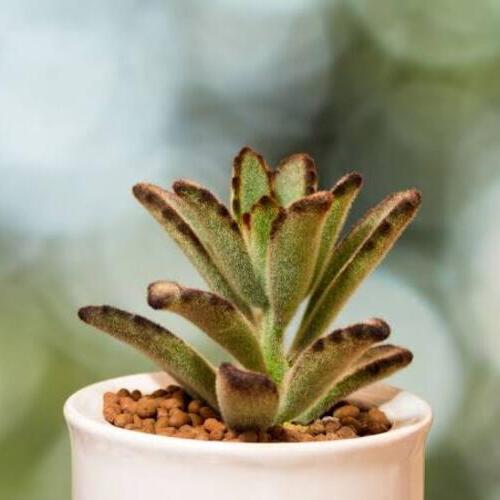
Kalanchoe tomentosa, widely known as the Chocolate Soldier, Panda Plant, or Pussy Ears, is a charming, densely felted succulent shrub native to the island of Madagascar, where it grows in rocky, semi-arid environments among sparse dry scrub and open terrain. It belongs to the large and diverse Crassulaceae family — which also includes Echeveria, Sedum, and Sempervivum — and is one of approximately 200 species in the genus Kalanchoe. In its native Madagascan habitat, K. tomentosa is adapted to survive seasonal drought, intense sunlight, and nutrient-poor soils through its succulent leaf tissues and remarkable pubescent coating of fine silver-white trichomes (hair-like structures) that protect the plant from excessive solar radiation, reduce water loss through transpiration, and reflect intense sunlight to prevent overheating.
The most immediately recognisable and endearing feature of Kalanchoe tomentosa is its extraordinarily soft, plush, velvety foliage. The fleshy, oval to spoon-shaped leaves are densely covered in fine silver-white felt-like trichomes that give the plant the appearance and texture of soft velvet or a animal’s ear — inspiring the common names Panda Plant and Pussy Ears. At the leaf margins and tips, the trichomes are coloured in rich chocolate-brown to rusty reddish-brown, creating a distinctive natural patterning that gives the Chocolate Soldier cultivar its evocative name. The standard species typically displays grey-silver trichomes with brown marginal markings, while the cultivar ‘Chocolate Soldier’ is distinguished by more intense, golden-brown to deep chocolate trichome colouring over the entire leaf surface, rather than only at the margins. Both forms are equally tactile and appealing, and both are commonly sold under the Chocolate Soldier or Panda Plant names in commerce.
As a shrubby succulent, Kalanchoe tomentosa develops a branching habit over time, growing slowly from a central stem that becomes woody with age. Mature indoor specimens typically reach 12–18 inches (30–45 cm) in height with a similar spread, though outdoor specimens in frost-free climates can become larger over many years. The plant’s compact, well-branched form, soft tactile foliage, and striking silver-and-chocolate colouration make it one of the most visually and texturally distinctive small succulents available for indoor cultivation. Its extraordinary tolerance of neglect, drought, and low-maintenance conditions makes it particularly suitable for beginner plant enthusiasts and those who travel frequently or find regular plant care challenging.
Caring for Kalanchoe tomentosa is a straightforward and forgiving experience that makes it one of the most accessible and rewarding succulents for both beginner and experienced plant enthusiasts. Its fundamental care requirements reflect its Madagascan semi-arid origins: maximum bright light, highly conservative watering, excellent drainage, and minimal fertilization. When these basic conditions are consistently provided, the Chocolate Soldier grows steadily and maintains its characteristic silver-and-chocolate velvety appearance with minimal intervention. The primary care error that damages or kills this plant — as with virtually all succulents — is overwatering, which causes root and stem rot with alarming speed given the fleshy, moisture-storing nature of the leaves and stems.
The ‘soak and dry’ watering method is the ideal approach for Kalanchoe tomentosa: water thoroughly until water drains freely from the drainage holes, then allow the soil to dry out completely — to the bottom of the pot — before watering again. During the cooler, shorter days of autumn and winter, watering should be further reduced to once per month or even less, as the plant’s reduced metabolic activity and lower transpiration rates mean it requires very little moisture during this period. A critical and non-negotiable rule with this species is that water must never contact the velvety leaf surface — moisture trapped within the dense trichomes promotes fungal disease, causes unsightly grey-brown spotting, and permanently damages the beautiful felted coating that is the plant’s primary ornamental feature.
Lighting and pot selection are the two other most important care decisions for Chocolate Soldier. This is a full-sun to bright indirect light species that requires at least 4–6 hours of direct or intense bright light daily to maintain its compact form, rich colouring, and the dense trichome development that defines its appearance. Insufficient light causes the plant to etiolate rapidly, producing stretched, pale, widely spaced leaves that permanently disfigure its characteristic compact form. A south- or west-facing windowsill is the ideal indoor position. For potting, terracotta is strongly preferred: its porous walls wick away excess moisture from the soil and significantly reduce the root rot risk that is the greatest threat to this plant’s long-term health. A dedicated cactus and succulent potting mix is essential, and the addition of extra perlite or horticultural grit is highly recommended for maximum drainage.
 Soil
Soil
Kalanchoe tomentosa requires an exceptionally well-draining, low-fertility, gritty potting medium that closely mimics the rocky, nutrient-poor soils of its native Madagascan habitat. The single most important soil characteristic for this species is the speed with which it drains: water must pass through the root zone rapidly without any pooling or prolonged saturation. Dense, moisture-retentive mixes are completely unsuitable for this species and will cause root rot within a short period.
The ideal potting medium consists of 50–60% coarse perlite, pumice, or horticultural grit combined with 40–50% quality cactus and succulent potting mix. Alternatively, a 50/50 blend of sharp horticultural sand and standard cactus mix achieves the necessary drainage characteristics. The mix should feel coarse and gritty, drain water essentially instantaneously, and dry out completely within 24–48 hours after watering.
Optimal soil pH is between 6.0 and 6.5 (mildly acidic to slightly neutral). This range supports adequate nutrient availability without promoting pathogen activity. Alkaline soils above pH 7.5 can cause micronutrient deficiencies, while strongly acidic conditions below pH 5.5 are unsuitable.
Drainage is the absolute priority and non-negotiable requirement for this species. The roots of Kalanchoe tomentosa are extremely sensitive to prolonged moisture and will rot within days in persistently damp soil. Every pot must have drainage holes, and water must escape freely from the entire root zone within moments of application.
Horticultural charcoal added at 10% by volume helps maintain a clean, aerobic root environment and inhibits fungal and bacterial activity. A thin layer of coarse grit or fine gravel over the soil surface helps prevent soil splash from contacting the lower leaf trichomes during watering — an important practical measure for maintaining the plant’s pristine appearance.
The most serious soil-related problem for Kalanchoe tomentosa. Any soil that retains moisture for more than 48 hours creates conditions that cause rapid and fatal root rot. Signs include stem blackening at the base, mushy stem tissue, a foul soil odour, and sudden plant collapse. Immediate repotting into dry, gritty mix is the only intervention.
Fine organic particles in potting mix break down over time, reducing pore space and drainage. Signs include water pooling on the surface before absorption. Repot into fresh gritty mix every 2–3 years to maintain soil structure.
Alkaline conditions above pH 7.5, commonly caused by hard tap water or limestone-derived soil, can cause yellowing from nutrient lock-out. Use rainwater or filtered water when possible and check soil pH annually.
Salt accumulation from synthetic fertilizers and mineral-rich tap water appears as white surface deposits and may cause brown leaf tip damage. Flush the soil with clean water every 2–3 months during the active season and use fertilizer at one-quarter strength or less.
True nutrient deficiency is rare in recently repotted Kalanchoe tomentosa as it is a low-nutrient-demand species. Pale, washed-out colouring in actively growing specimens may occasionally indicate very mild nitrogen deficiency. Use dilute, balanced cactus fertilizer monthly during spring and summer.
Kalanchoe tomentosa tolerates and even benefits from being mildly root-bound, as root restriction moderates growth rate and reduces overwatering risk. Repot only when roots are visibly emerging from drainage holes or the plant has become noticeably unstable.
 Fertilizer
Kalanchoe tomentosa is a very low-nutrient-demand species that requires only minimal, infrequent fertilization. Over-fertilization is a significantly more common and damaging error than under-fertilization, producing excessively lush, soft, disease-susceptible growth and accumulating mineral salts in the gritty potting medium. The rule for this species is: when in doubt, fertilize less rather than more.
A balanced, water-soluble cactus and succulent fertilizer with an NPK ratio of approximately 5-10-5 or similar, diluted to one-quarter of the label-recommended strength, is ideal. The relatively low nitrogen content of a cactus fertilizer prevents the soft, overly lush growth that high-nitrogen formulas produce in succulents. Apply during spring and summer only.
Apply dilute cactus fertilizer once per month during the active growing season (April through September). Withhold all fertilization from October through March during the winter rest period.
Apply the fertilizer solution directly to the soil, ensuring it does not contact the leaf surfaces. Water the plant lightly before applying fertilizer if the soil is completely dry. Never apply fertilizer to a newly repotted plant — wait at least 6–8 weeks after repotting before fertilizing.
Unusually soft, fast-growing, pale stem tissue that lacks the characteristic compact habit; white salt crust on the soil surface and pot edges; yellowing or scorching of leaf tips; in severe cases, root damage causing wilting despite adequate soil moisture.
Very slow growth even during the active growing season in a plant that has not been repotted for 3–4 or more years; pale, washed-out colouring. True deficiency is uncommon in plants repotted regularly into fresh cactus mix.
A very light application of worm castings worked gently into the top of the potting mix at the beginning of the growing season provides a gentle, slow-release nutrient supply with minimal burn risk. Diluted liquid seaweed extract at one-quarter strength applied once or twice during the growing season supports micronutrient availability without promoting excessive vegetative growth.
Phosphorus and potassium are more important than nitrogen for the long-term compactness, drought resistance, and structural integrity of Kalanchoe tomentosa. Avoid high-nitrogen formulas entirely.
 Watering
Kalanchoe tomentosa requires a strict drought-tolerant ‘soak and dry’ watering regime. The correct method is to water the soil thoroughly — until water drains freely from the drainage holes — then allow the soil to dry out completely throughout the entire pot depth before watering again. The plant’s succulent leaves store sufficient water to sustain it through extended dry periods, and it is far more tolerant of drought than of any excess moisture.
NEVER wet the leaves. The dense silver trichomes that cover the leaf surfaces trap and hold moisture against the leaf tissue, creating ideal conditions for fungal disease and irreversible spotting that permanently mars the plant’s appearance. Always water directly onto the soil surface at the base of the plant, using a narrow-spouted watering can or a syringe to direct water precisely. Bottom-watering by placing the pot in a tray of water for 20–30 minutes is an excellent alternative that prevents any water contact with the foliage.
Spring and summer (active growth): water every 2–3 weeks, always confirming complete soil dryness before watering. Autumn and winter (rest period): water every 4–6 weeks at most, or as infrequently as once per month. The plant may go several weeks longer between waterings in cool winter conditions without any stress.
Kalanchoe tomentosa is moderately sensitive to fluoride and chlorine in tap water, which may cause marginal leaf discolouration over time. Rainwater or filtered water is preferred. If using tap water, allow it to stand overnight to off-gas chlorine. Hard, calcium-rich tap water contributes to salt accumulation in the gritty mix.
Slight shrivelling or puckering of the normally plump, firm leaves; the leaves feel soft and slightly deflated rather than firm and turgid when gently pressed; dull, less vibrant trichome colouring. These symptoms resolve promptly after thorough watering.
Soft, translucent, waterlogged-looking leaf bases; yellowing or blackening of the stem, particularly at the base; mushy, collapsing stem tissue; a foul odour from the soil; fungus gnats around the soil surface; leaves dropping unusually easily when touched. These symptoms indicate serious damage that may be irreversible.
During winter and in cool conditions below 60°F (15°C), the plant’s metabolism slows significantly. Reduce watering to the absolute minimum — once per month or even less. Never water a cold plant, as cold, wet soil dramatically accelerates root rot. Resume more frequent watering gradually in spring as temperatures and light levels increase.
Stop guessing. Most houseplant failures are caused by volumetric errors and improper moisture tension. Our deterministic calculator moves beyond "once-a-week" watering by analyzing the four critical pillars of root health:
Personalized for this plant
Disclaimer: Our calculator is pretty smart. We’ve crunched the numbers, but we’re not measuring the quantum state of your living room. Since we don’t know your exact indoor temperature, humidity, light, airflow, or whether your plant receives daily sweet nothings and motivational speeches, use this calculator as a guide—and always keep an eye on your plant.
 Lighting
Kalanchoe tomentosa is a high-light species that thrives in bright, direct to indirect sunlight. It performs best in a south- or west-facing window receiving 4–6 hours of direct sunlight daily combined with bright ambient light. Light intensity of 1,000–3,000 foot-candles supports compact growth, dense trichome development, and the rich silver-and-chocolate colouration that makes this plant so distinctive. Outdoors in frost-free conditions, it thrives in full sun with some afternoon shade in the hottest climates.
While Kalanchoe tomentosa will survive in bright indirect light (500–1,000 foot-candles), its growth becomes noticeably etiolated and the characteristic compact rosette form deteriorates. The silver-brown patterning becomes less defined, and the plant loses the tight, branching form that makes it so attractive. It is far less shade-tolerant than many popular succulent houseplants.
Rapid, leggy etiolation with widely stretched internodes between leaves; pale, washed-out silvery colouring lacking the rich chocolate-brown patterning; soft, weak stem growth that cannot support the plant’s weight; leaves losing their compact arrangement and spacing widely along the stems; the plant leaning strongly toward the nearest light source.
In very intense, concentrated direct sun — particularly through heat-magnifying glass — the trichome layer may develop a bleached, straw-yellow appearance or the underlying leaf tissue may show sunscald (dry, papery, whitened patches). More commonly, the plant handles intense direct sun excellently, and sun scorch is far less common than etiolation from insufficient light.
If natural bright light is unavailable, supplement with a high-output full-spectrum LED grow light providing 1,500–3,000 foot-candles, running 12–14 hours per day. Position the light 12–18 inches above the plant. When transitioning an indoor-grown plant to outdoor sun exposure, acclimatise gradually over 2–3 weeks by beginning in shade or dappled light and progressively increasing sun exposure to prevent sunscald on trichome-protected tissue that has not developed full sun hardening.
 Temperature
Kalanchoe tomentosa thrives at temperatures between 60°F and 85°F (15°C–29°C). This range reflects the warm, seasonally dry conditions of its native Madagascan habitat and is comfortably within the temperature range of most indoor environments.
This species is cold-sensitive and should not be exposed to temperatures below 50°F (10°C) for extended periods. Brief exposure to 45–50°F (7–10°C) can be tolerated by healthy, dry plants but may cause cold damage in wet or stressed specimens. Frost is fatal. Temperatures below 40°F (4°C) will cause cell damage and irreversible tissue collapse.
The plant handles high temperatures well in dry conditions with good air circulation. It tolerates temperatures up to 95°F (35°C) without significant stress. High heat combined with high humidity, however, increases disease risk.
A cool, dry rest period of 50–60°F (10–16°C) for 6–8 weeks during winter, combined with reduced watering, is the most effective way to trigger flower bud formation in mature specimens of Kalanchoe tomentosa. This cool rest mimics the plant’s natural seasonal cycle in Madagascar.
Kalanchoe tomentosa tolerates reasonable temperature fluctuations better than most tropical houseplants, provided temperatures do not approach the frost threshold and the plant is dry (not waterlogged) when temperatures drop.
Keep away from frost-prone windows and exterior doorways during winter. In regions with cold winters, bring all outdoor specimens inside well before the first frost risk. Avoid cold drafts from open windows or air conditioning vents, which can cause localised cold damage to the leaves.
 Humidity
Kalanchoe tomentosa is native to the semi-arid, low-humidity environment of Madagascar and is strongly adapted to and preferring of dry air. It thrives in relative humidity of 20–40% and performs perfectly in the dry indoor air of centrally heated homes during winter. This species requires no humidity supplementation whatsoever and is one of the most suitable houseplants for consistently dry indoor environments.
This species does not experience stress at low humidity levels within normal indoor ranges. Even very low humidity (10–20%) does not cause visible stress symptoms in Kalanchoe tomentosa — it is precisely the conditions to which this plant is evolutionarily adapted.
High ambient humidity above 70–80%, particularly combined with poor air circulation and cool temperatures, significantly increases the risk of fungal diseases on the trichome-covered leaf surfaces. Grey mould (Botrytis) and powdery mildew can develop on leaves in persistently humid, stagnant conditions. Water-soaked patches on the trichome surface and a grey-white cottony growth are warning signs.
Not recommended or necessary for this species. Running a humidifier near Kalanchoe tomentosa is actively counterproductive, increasing disease risk.
Absolutely never mist Kalanchoe tomentosa. Water droplets trapped in the dense trichomes create conditions for fungal spotting, grey mould, and permanent aesthetic damage to the velvet surface.
Not recommended and unnecessary.
If the plant is grown in a naturally humid environment — such as a greenhouse, bathroom, or tropical climate — ensure maximum air circulation using fans, water very conservatively, and provide the most well-draining potting medium possible. Position the plant in the driest, most ventilated available location.
 Propagation
Kalanchoe tomentosa propagates very readily and reliably from leaf cuttings and stem cuttings, making it one of the easiest succulents to multiply at home. Both methods have high success rates when the cardinal rule of complete callousing before any soil or water contact is strictly followed. The best time to propagate is in spring or early summer during the active growing season, when warm temperatures maximise rooting speed.
All cut surfaces — whether from leaf or stem cuttings — must be allowed to dry and form a firm callous at room temperature for a minimum of 24–48 hours (and ideally 3–7 days for stem cuttings) before any contact with soil or water. Skipping or rushing this callousing step is the primary cause of cutting rot failure in this species.
Success Rate: High (75–90%) when correctly calloused
Description: Individual leaves can be removed and encouraged to produce small plantlets from their base. This is a slow but productive method that requires patience.
Steps:
Success Rate: Very High (85–95%) — the fastest method to produce a sizeable new plant
Description: Sections of healthy stem with several leaves attached root readily and produce a new branching plant much faster than leaf cuttings.
Steps:
Spring through early summer (March–June) when warm temperatures above 68°F (20°C) accelerate both callousing and root development. Propagation in autumn and winter is possible but significantly slower due to lower temperatures and reduced light.
Leaf cuttings: 3–6 months to produce a small, independently established plantlet. Stem cuttings: 3–5 weeks for initial rooting, 2–3 months to establish as a vigorous independent plant.
 Potting
Terracotta is the strongly preferred pot material for Kalanchoe tomentosa. The porous, unglazed terracotta walls allow excess soil moisture to evaporate from the sides of the pot, significantly reducing the root rot risk that is the greatest threat to this species. Terracotta also provides a traditional aesthetic that suits the plant’s silver and earthy tones beautifully. Glazed ceramic and plastic pots retain moisture much longer and are not recommended as primary choices for this species.
Drainage holes are absolutely mandatory. A layer of coarse grit or perlite at the base of the pot provides a small additional drainage buffer. Never allow the pot to sit in a saucer containing standing water. If using a decorative cachepot, check and empty it of any accumulated water within 30 minutes of watering.
Choose a pot only 1–2 inches (2.5–5 cm) wider than the plant’s current root ball diameter. Kalanchoe tomentosa performs and looks best when slightly root-bound, and an excessively large pot holds surplus moist soil volume that dramatically increases rot risk.
Every 2–3 years in spring, or when roots are emerging from drainage holes or the plant has become unstable. This species does not require frequent repotting and is best left undisturbed unless clearly necessary.
Roots growing densely through drainage holes; the plant’s growth has completely stalled despite adequate light and seasonal fertilization; the potting mix has broken down and compacted; the plant is becoming visibly unstable and top-heavy.
Allow the soil to dry completely for 1–2 weeks before repotting to firm the root ball and make handling easier. WEAR GLOVES when handling — the trichomes can be mildly irritating. Gently tip the plant from its current pot. Shake off old soil and inspect roots, trimming any dead or rotted roots with sterile scissors. Allow any cut root surfaces to dry for 30–60 minutes. Pot into fresh, dry, gritty cactus mix in the new terracotta pot. Do not water for 1 week after repotting to allow root wound callousing.
Root pruning is not routinely required or recommended for Kalanchoe tomentosa. If roots are severely pot-bound, simply step up to the next appropriate size of pot. Unnecessary root pruning creates unnecessary wound surfaces in a species already prone to rot.
After repotting, withhold water for 5–7 days and keep in moderate indirect light rather than direct sun for 1–2 weeks. Resume normal care gradually once the plant shows signs of continued growth activity.
 Pruning
Kalanchoe tomentosa does not require routine structural pruning for health maintenance, as it develops its attractive branching, shrubby form naturally without intervention. Pruning is primarily performed to remove dead, damaged, or etiolated stem sections; to encourage a bushier, more compact branching habit; to collect propagation material; or to manage the plant’s size as it matures. The plant’s slow to moderate growth rate means significant pruning is needed infrequently. Always handle with care — and ideally gloves — as the trichomes can be mildly irritating to sensitive skin, and disturbing the dense felt covering damages its ornamental appearance.
Prune in early spring as the plant enters its active growing phase, ensuring the fastest regrowth and branch development from cut nodes. Removal of individual damaged or dead leaves or stem sections may be performed at any time of year without concern.
Light maintenance pruning — removing dead leaves and any damaged stem tips — as needed throughout the year. Structural pruning to improve form or manage size: once every 1–2 years in spring as required.
Removal of etiolated, leggy stem sections resulting from insufficient light; stimulation of lateral branching to produce a bushier, more compact plant; removal of dead or damaged leaves and stems; collection of healthy stem cuttings for propagation; height management in mature specimens.
Sharp, clean scissors or bypass pruning shears sterilized with 70% isopropyl alcohol. Light gloves to protect skin from trichome irritation. Avoid touching the velvet leaf surfaces unnecessarily during pruning, as finger oils and pressure permanently damage the trichome coating and leave visible marks.
After pruning, monitor cut sites over the following weeks for the emergence of new lateral shoots, confirming successful response to the pruning stimulus. Maintain the plant in bright, direct or indirect light and warm temperatures during recovery. A light application of dilute cactus fertilizer 3–4 weeks after pruning — once wounds have calloused — will support vigorous new growth.
The dense trichome coating on Kalanchoe tomentosa leaves is extraordinarily sensitive to physical disturbance. Any contact with fingers, water droplets, or other objects leaves permanent marks on the felted surface that do not heal or recover. Always handle the plant by its stem rather than its leaves, work carefully and deliberately around the foliage during pruning, and avoid allowing water to drip onto the leaves during any care activity. This trichome preservation consideration is unique to this species among common succulent houseplants and should inform every interaction with the plant.
 Blooming
Kalanchoe tomentosa is capable of flowering under appropriate conditions, though it blooms infrequently in indoor cultivation and is grown primarily for its extraordinary tactile foliage rather than its floral display. When flowering does occur, it typically takes place in late winter to spring — generally February through April — on mature specimens that have been exposed to a cool, dry winter rest period with reduced watering and temperatures in the 55–60°F (13–16°C) range. This cool, dry dormancy period mimics the plant’s natural seasonal rhythm and appears to be a key trigger for flower initiation.
The flowers of Kalanchoe tomentosa are small, tubular, and bell-shaped, produced in loose clusters at the tips of the stems on slender upright stalks. They are typically pale yellowish-white to pale purple-pink and are covered with the same silver felting that covers the leaves, giving them an attractively furry appearance. While not dramatically showy, they add a charming seasonal interest to an already distinctive plant. Indoor-grown specimens may not flower for several years, and some may never flower without the correct cool winter rest conditions. For most growers, the extraordinary foliage texture and colouration constitute the primary ornamental appeal, and flowering is considered an occasional bonus rather than a care goal.
 Pests and Diseases
Name: Mealybugs (Pseudococcus spp.)
Symptoms: White, cottony, waxy clusters appearing between leaves, at stem joints, and at the bases of the trichome-covered leaves — where their white wax can initially be confused with the plant’s own silver trichomes. A close inspection reveals movement and a more structured, cottony texture. Sticky honeydew deposits and associated sooty mould; yellowing or distortion of affected leaves in heavy infestations. Mealybugs are one of the most common pests of Kalanchoe tomentosa and find the dense trichomes an ideal hiding environment.
Treatment: CAUTION: Avoid getting any liquid on the leaf trichomes during treatment — target only the stem and soil. Use a fine-tipped cotton swab or artist’s brush dipped in 70% isopropyl alcohol to reach into stem joints and crevices where mealybugs shelter. Apply a systemic insecticide such as imidacloprid as a soil drench — this approach is particularly valuable for Kalanchoe tomentosa as it kills the insects via the plant’s vascular system without requiring direct contact application to the delicate trichome surfaces. Isolate the affected plant immediately. Repeat treatment every 7–10 days for 3–4 cycles.
Name: Scale Insects (Coccidae / Diaspididae)
Symptoms: Small, flat, round or oval, brownish or greyish shell-like bumps attached to stems and petioles; sticky honeydew residue; progressive yellowing and weakening of the plant. Scale can be difficult to spot initially against the textured, brown-marked stem surface of K. tomentosa.
Treatment: Physical removal with a soft toothbrush or cotton swab dipped in isopropyl alcohol, targeting stems and petioles while carefully avoiding the trichome-covered leaf surfaces. Apply a systemic insecticide soil drench for widespread infestations. Monitor closely for 4–6 weeks after treatment.
Name: Spider Mites (Tetranychus urticae)
Symptoms: Fine webbing between stems and in leaf axils; tiny moving specks on the stems; stippled or dull discolouration on the trichome-covered surfaces (difficult to detect due to the felted coating); overall weakening of growth. Most common in very hot, dry conditions.
Treatment: Increase air circulation. Apply a systemic miticide as a soil drench to avoid wetting the trichome surfaces. Neem oil applied carefully to stems only (not leaves) with a fine brush may also be effective. Repeat every 5–7 days for 3–4 cycles.
Name: Fungus Gnats (Bradysia spp.)
Symptoms: Small dark flies hovering around the soil surface; larvae in the top layer of moist soil; root damage in severe infestations; slowed growth.
Treatment: Allow the soil to dry completely between waterings — this alone resolves most fungus gnat infestations, as the larvae cannot survive in dry gritty soil. Apply a layer of coarse grit over the soil surface as a physical deterrent. Use yellow sticky traps. Apply Bacillus thuringiensis var. israelensis (Bti) soil drench for persistent infestations.
Name: Root and Stem Rot (Pythium spp., Phytophthora spp., Fusarium spp.)
Symptoms: Soft, mushy, darkened, or blackened stem tissue — particularly at the soil line and base of the plant; the stem feels hollow or spongy when pressed; a foul, musty odour from the soil; leaves becoming translucent and soft at their bases; the plant toppling or collapsing at the base; roots appearing black, mushy, and malodorous on inspection.
Treatment: Remove the plant from its pot immediately. Inspect all roots and stem tissue. Cut all rotted material away with sterile scissors until only firm, healthy, cream-white tissue remains. Allow all cut surfaces to dry and callous at room temperature for several hours. Dust with powdered sulphur or cinnamon. Repot into completely fresh, dry, gritty cactus mix in a clean terracotta pot. Withhold water for at least 1 week. Prevention via consistently conservative watering and excellent drainage is the only truly effective strategy.
Name: Powdery Mildew (Erysiphales)
Symptoms: A powdery white-grey coating on the stem surfaces and occasionally on the undersides of leaves; may be initially confused with the plant’s natural trichome covering but is irregular, patchy, and spreads progressively; affected tissue may yellow beneath the mildew coating. More common in humid, poorly ventilated conditions.
Treatment: Improve air circulation around the plant immediately. Reduce ambient humidity. Apply a dilute sulphur-based fungicide spray carefully to affected stem surfaces only, avoiding the trichome-covered leaf faces. Remove heavily affected leaves. Prevent by maintaining low humidity and good ventilation.
Name: Grey Mould / Botrytis (Botrytis cinerea)
Symptoms: Soft, water-soaked, grey-brown patches on the leaves, stem, or flowers — typically beginning where water has been trapped within the trichomes; a visible grey, fuzzy mould coating in humid conditions; premature leaf and flower drop. Most common where water has been misted or splashed onto the leaves.
Treatment: Remove all affected tissue immediately. Improve air circulation and reduce humidity. Do not mist or wet the leaves under any circumstances. Apply a broad-spectrum fungicide such as chlorothalonil or copper-based fungicide to stems only. Prevention by strictly avoiding any water contact with the trichome-covered leaf surfaces is the only effective long-term strategy.
Name: Trichome Spotting (Environmental / Water Damage)
Symptoms: Irreversible brown, grey, or tan spotting or patches on the normally pristine silver trichome surface of the leaves; permanent fingerprint marks; water splash marks. These are cosmetic rather than disease issues but permanently reduce the ornamental appeal of affected leaves.
Treatment: There is no treatment for damaged trichomes — the affected leaves will retain their marks permanently. Prevent by never misting, splashing, or touching the leaf surfaces unnecessarily. The only resolution is to wait for new, unblemished leaves to grow and replace the damaged ones over time, or to prune off the most severely marked leaves.
 Special Features
Kalanchoe tomentosa is one of the most extraordinarily tactile houseplants in cultivation — its dense, plush, silver-white and chocolate-brown velvet coating is irresistibly touchable, creating an immediate sensory appeal that few other plants can match. The trichome layer that produces this remarkable texture serves a sophisticated biological function: it reflects intense solar radiation, reduces water loss through transpiration, creates a boundary layer of still air that moderates leaf temperature, and deters many herbivores. The ‘Chocolate Soldier’ cultivar’s warm golden-brown to deep chocolate colouration over its silver base gives it a uniquely warm, two-toned aesthetic that stands apart from the greener, sharper foliage of most succulents. This plant is frequently used as a sensory engagement tool in therapeutic horticulture, children’s educational gardens, and horticultural therapy programmes due to the strong and immediate tactile response its leaves elicit. As a slow-growing, long-lived, low-maintenance succulent, Kalanchoe tomentosa also develops a charming character over years of cultivation as it branches, spreads, and develops a gnarled, woody central stem that gives mature specimens the appearance of a miniature tree. Its drought tolerance, adaptability to dry indoor air, and generous propagation capacity make it an ideal ‘sharing plant’ — leaf and stem cuttings can be propagated easily and gifted to friends and family throughout the growing season.
 Plant Benefits
Kalanchoe tomentosa is not an edible plant and should not be consumed due to its cardiotoxic bufadienolide glycoside content. However, the broader genus Kalanchoe has attracted significant attention from pharmacological researchers. Various Kalanchoe species have demonstrated bioactive properties in laboratory studies, including anti-inflammatory, antimicrobial, antifungal, analgesic, and cytotoxic activities. Traditional use of Kalanchoe species in African, Brazilian, and Chinese folk medicine has been documented for wound healing, fever reduction, and anti-inflammatory applications. However, these properties relate primarily to other species in the genus rather than specifically to K. tomentosa, and no home medicinal use of Kalanchoe tomentosa is appropriate or safe given its documented toxicity to animals. The plant’s primary benefits to its human keepers are psychological and sensory: its unique tactile quality, gentle warm colouring, and ultra-low-maintenance care requirements make it an excellent plant for anxiety reduction, mindfulness practices, and the creation of calming, biophilic indoor environments. It is widely recommended in occupational and horticultural therapy settings for its sensory engagement properties and its appropriateness for those who struggle to care for more demanding plants.
 Additional Information
Kalanchoe tomentosa is one of approximately 200 species in the genus Kalanchoe, which is native primarily to Madagascar and tropical Africa. It is classified within the tribe Kalanchoeae of the family Crassulaceae. The species epithet tomentosa is derived from the Latin tomentosus, meaning ‘densely matted with hairs,’ a direct reference to the plant’s characteristic trichome covering. The common name ‘Panda Plant’ refers to the plant’s colouration pattern, which some find reminiscent of the black-and-white patterning of giant pandas, while ‘Pussy Ears’ and ‘Teddy Bear Plant’ reference the soft, animal-like texture of the leaves. The cultivar name ‘Chocolate Soldier’ specifically refers to forms with particularly intense, rich chocolate-brown to golden-brown trichome colouring rather than the more typical grey-brown marginal markings of the standard species. In cultivation, Kalanchoe tomentosa is relatively stable and does not readily hybridise with other Kalanchoe species under normal conditions. It is a popular subject for succulent collectors and is widely available in garden centres, supermarkets, and online nurseries worldwide. The plant has received the Royal Horticultural Society’s Award of Garden Merit in recognition of its outstanding qualities as a garden and houseplant.
 Life Cycle
Kalanchoe tomentosa is a long-lived perennial succulent shrub with no true seasonal dormancy in its native Madagascan habitat, where it grows in conditions of year-round warmth. In cultivation in temperate climates, it undergoes a modest reduction in growth rate during autumn and winter in response to lower light levels and cooler temperatures, but does not die back or enter true dormancy. Active growth resumes in spring as light levels and temperatures increase. Growth is slow to moderate throughout the year — mature specimens may add only 1–3 inches of new growth per season under typical indoor conditions. New leaves emerge from the growing tip of each stem branch, pushing outward in a compact rosette arrangement before the stem elongates to reveal them individually over weeks. Over many years of cultivation, the central stem and lower branches become progressively woody and may develop a gnarled, miniature-tree character that adds to the plant’s charm. Under optimal conditions with a cool winter rest, mature specimens occasionally produce small, felted flower stalks bearing tiny tubular flowers in late winter to spring. Kalanchoe tomentosa is effectively indefinite-lived under good cultivation and can remain healthy for 10–20 or more years with appropriate care.
 Are Chocolate Soldier Poisonous, Toxic
Kalanchoe tomentosa is toxic to cats, dogs, and potentially other animals. Like many members of the Kalanchoe genus, it contains bufadienolide compounds — a class of cardiotoxic glycosides similar to those found in other Kalanchoe species and in Digitalis (foxglove). These compounds affect the heart muscle and can cause significant cardiovascular disturbances in animals that ingest plant material. The level of toxicity is considered moderate to significant, and any suspected ingestion by a pet should be treated as a veterinary emergency.
All parts of the plant are considered potentially toxic, including the leaves, stems, and flowers. The leaves are the most accessible and therefore the most likely to be ingested by curious pets.
Vomiting, diarrhoea, excessive drooling, lethargy, weakness, abnormal heart rate (bradycardia or tachycardia), cardiac arrhythmias, and in severe cases of significant ingestion, collapse and potentially fatal cardiac complications. Neurological symptoms may include tremors and seizures in severe poisonings.
The plant is considered of low to moderate toxicity to humans. Ingestion may cause nausea, vomiting, abdominal discomfort, and diarrhoea. Significant human toxicity cases are rare but possible if large quantities are consumed.
The dense trichomes on the leaf surface may cause mild mechanical skin irritation in very sensitive individuals. The sap itself is not a significant primary irritant but always wash hands after handling.
Moderate to High for cats and dogs, particularly regarding cardiovascular effects. Any suspected ingestion by a cat or dog requires immediate veterinary consultation. Do not wait for symptoms to develop.
Contact a veterinarian or the ASPCA Animal Poison Control Center (1-888-426-4435) immediately. Describe the plant, the animal’s weight and breed, and estimate the quantity potentially ingested. Do not induce vomiting unless specifically directed by a veterinary professional.
Contact Poison Control (1-800-222-1222 in the US) or seek emergency medical care if a significant quantity has been ingested. Rinse the mouth with water. Do not induce vomiting.
Wash hands and affected areas with soap and water.
Keep Kalanchoe tomentosa completely out of reach of cats and dogs, preferably in rooms inaccessible to pets or on high shelves that cannot be accessed by climbing cats. Do not place on low tables, windowsills accessible to pets, or plant stands that pets can reach. If you have pets that routinely chew houseplants, consider pet-safe succulent alternatives such as Haworthia or Echeveria (though note that Echeveria may also cause mild gastrointestinal upset in pets).
 Frequently Asked Questions
Water your Chocolate Soldier plant using the soak-and-dry method: water thoroughly until water drains from the drainage holes, then allow the soil to dry out completely throughout the entire pot before watering again. In spring and summer, this typically means watering every 2–3 weeks. In autumn and winter, reduce to once per month or less. Never let the pot sit in standing water, and always water directly onto the soil — never onto the velvety leaves.
Yes, Kalanchoe tomentosa is toxic to cats and dogs. It contains bufadienolide glycosides — cardiotoxic compounds that can cause vomiting, diarrhoea, lethargy, abnormal heart rate, and in severe cases cardiac arrhythmias and collapse. The entire plant is toxic. Keep it completely out of reach of pets. Contact a veterinarian or the ASPCA Animal Poison Control Center (1-888-426-4435) immediately if ingestion is suspected.
Brown spots or permanent discolouration on the velvety leaves of Kalanchoe tomentosa are almost always caused by water contact with the trichome-covered leaf surfaces. Even a single water droplet can cause a permanent brown spot on the felted coating. Other causes include fingerprint oil contact, direct spray from watering, misting, or a sudden cold temperature event. There is no cure for damaged trichomes — the marks are permanent on affected leaves. Prevent by always watering directly onto the soil and never touching or misting the leaves.
Kalanchoe tomentosa propagates easily from leaf or stem cuttings. For leaf cuttings: remove a healthy, mature leaf cleanly from the stem, allow the base to dry and callous for 24–48 hours, then lay it on dry cactus propagation mix and mist lightly every 5–7 days. Tiny plantlets emerge from the base in 2–6 weeks. For stem cuttings: cut a 2–4 inch stem section, allow to callous for 3—7 days, then insert into dry cactus mix and water sparingly after 7–10 days. Best time to propagate is spring through early summer. Never rush the callousing step — unCalloused cuttings rot before rooting.
Leggy, etiolated growth with widely spaced, pale leaves in Kalanchoe tomentosa is almost always caused by insufficient light. This is a high-light species that requires at least 4–6 hours of bright direct or indirect sunlight daily. Move the plant to your brightest available window (south- or west-facing is ideal) or supplement with a full-spectrum grow light. Unfortunately, the etiolated portion of the stem cannot be corrected — it can be pruned back to encourage compact new branching, and the pruned sections used as propagation cuttings.
Kalanchoe tomentosa requires a very well-draining, gritty potting medium. The ideal mix is 50–60% coarse perlite or pumice combined with 40–50% quality cactus and succulent potting mix. Standard potting soil is far too moisture-retentive for this species and will cause root rot. Always use pots with drainage holes, preferably terracotta pots whose porous walls allow excess moisture to evaporate. The optimal soil pH is 6.0–6.5.
Kalanchoe tomentosa is a high-light species that thrives with 4–6 hours of bright direct or indirect sunlight daily — ideally 1,000–3,000 foot-candles. A south- or west-facing windowsill is the ideal indoor position. Insufficient light is the most common cause of etiolated, leggy growth and loss of the compact, branching form. Supplement with a full-spectrum LED grow light if natural light is inadequate.
Leaf drop in Kalanchoe tomentosa is most commonly caused by overwatering and root rot, which destroy the plant’s ability to support its leaves. Other causes include sudden cold temperature exposure (below 50°F / 10°C), physical disturbance of the plant during repotting or moving, or severe underwatering (though the plant tolerates drought much better than overwatering). Check the soil moisture and root health first, as root rot is by far the most common cause of leaf drop in this species.
No — never mist Kalanchoe tomentosa. The dense silver trichomes (tiny hairs) that cover the leaf surfaces trap and hold water droplets against the leaf tissue, creating ideal conditions for fungal disease (particularly grey mould and powdery mildew) and causing permanent brown spots and marks on the felted coating. This species is adapted to dry air and requires no humidity supplementation. Always water directly onto the soil only.
Kalanchoe tomentosa flowers infrequently in indoor cultivation and only on mature specimens. The most effective way to encourage flowering is to provide a cool, dry winter rest period: reduce watering to once per month and allow temperatures to drop to 55–60°F (13–16°C) for 6–8 weeks during winter. After this cool rest, return to warmth and normal care in spring. Flowering is triggered by this combination of cool temperature and reduced watering, mimicking the plant’s natural dry season in Madagascar. Note that many indoor-grown specimens never flower, and the plant’s primary ornamental value lies in its extraordinary velvety foliage.
 Can I grow Chocolate Soldier in my indoor space
Difficulty: Easy
Size: Small
Light: High
Water: Low
Flowering: Yes
Pet Safe: No
Air Purifier: Low
 Kalanchoe tomentosa botanical details
Common Name: Chocolate Soldier
Other Common Names: Panda Plant, Pussy Ears, Teddy Bear Plant, Velvet Leaf Kalanchoe, Plush Plant, Cocoon Plant
Botanical Name: Kalanchoe tomentosa
Native Area: Madagascar. Found growing in rocky, semi-arid, open scrubland environments, particularly in the central plateau and drier regions of the island.
Family Name: Crassulaceae
Plant Type: Perennial succulent shrub
Genus: Kalanchoe
Kingdom: Plantae
 Photo Gallery
 My Chocolate Soldier Plant Care Recommendations
If you find the Houseplant Encyclopedia helpful and would like to support Healthy Houseplants, you can use the links below to shop for recommended plants, products, and plant-care supplies.
Some links are affiliate links, which means I may earn a small commission if you make a qualifying purchase through them, at no additional cost to you. Thank you for supporting Healthy Houseplants and helping me continue to provide free plant-care information!

Want even more personalized plant-care help? Check out my AI Julie Chatbot—trained on my 20 years of houseplant knowledge, not just information from the internet!  Try it now:Ask AI Julie
 Buy Chocolate Soldier Online
✅ “Bring Home This Beauty Today”
✅ “Get Your Own Chocolate Soldier Before It’s Gone”
✅ “Shop Trusted Sellers – Limited Availability”
✅ “Free Delivery”
As an Amazon Associate, I earn commission from qualifying purchases.
 Plant Puns and Jokes
Why did the Chocolate Soldier refuse to go outside in the rain? Because it spent all year perfecting its velvet coat, and it wasn’t about to let a few drops of water ruin the look — talk about high-maintenance standards from a low-maintenance plant!
 Signup to our newsletter and download Chocolate Soldier care guide

