


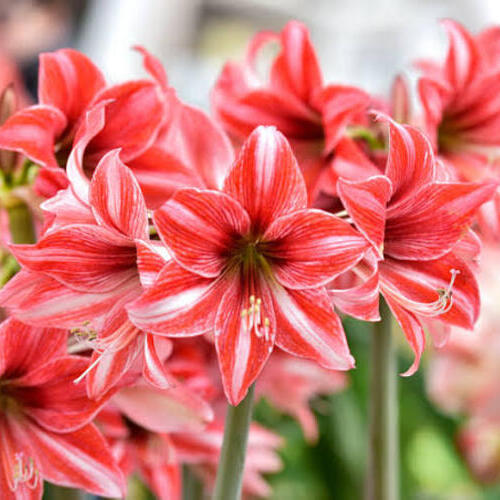
Hippeastrum × hybridum, universally sold and grown under the common name Amaryllis, is one of the world’s most popular and spectacular flowering bulb plants, celebrated for its breathtakingly large, trumpet-shaped flowers produced on tall, hollow, leafless scapes (flower stalks) during winter and early spring. The garden Amaryllis sold in commerce today is not, despite widespread belief, the true botanical genus Amaryllis — which contains only the South African species Amaryllis belladonna (the Belladonna Lily or Naked Lady). The plants universally marketed as Amaryllis are in fact hybrids within the South American genus Hippeastrum, which comprises approximately 90 species native to tropical and subtropical regions of South America, particularly Brazil, Peru, Bolivia, and Argentina. The taxonomic confusion between the two genera has persisted for centuries and remains entrenched in popular and commercial usage, though botanists draw a clear distinction between them.
The large bulbs of Hippeastrum × hybridum — which can measure 3–4 inches (7.5–10 cm) or more in diameter in mature hybrid cultivars — are the engine of the plant’s spectacular floral display. Each bulb contains fully pre-formed flower buds within its layers, and under the right conditions of warmth and moisture, it will reliably push up one or more thick flower stalks, each terminating in a cluster of two to six enormous, outward-facing trumpet flowers. The flowers of modern hybrid Amaryllis cultivars span an extraordinary colour range including pure white, cream, blush pink, flamingo pink, salmon, coral, vivid scarlet, deep crimson, burgundy, orange, yellow, striped bicolours, and picotee forms with contrasting petal margins. Individual flowers can measure 5–8 inches (12–20 cm) in diameter in the largest cultivars, creating a display of unmatched floral drama for a winter-flowering bulb. Each scape typically supports 4–6 individual flowers, and a single large bulb may produce two or more scapes in a season, extending the floral display over several weeks.
Following the flowering period, Hippeastrum × hybridum produces a rosette of long, strap-like, bright green leaves from the base of the bulb. These leaves are the plant’s photosynthetic engine, responsible for replenishing the bulb’s energy reserves through summer and early autumn in preparation for the next season’s flowering. The foliage growth phase — often called the bulb’s ‘building’ or ‘charging’ period — is critically important to flowering success in subsequent years, yet it is this phase that many growers neglect, treating the post-flowering plant as expendable once the blooms have faded. With appropriate care during the foliage phase, including full sun exposure, regular fertilization, and adequate watering, a single Amaryllis bulb can be encouraged to flower reliably year after year for a decade or more, increasing in size and flowering capacity with each passing season.
Caring for Hippeastrum × hybridum involves managing two distinct and equally important phases of its annual growth cycle: the flowering and active growth phase, and the dormancy (resting) phase that precedes and follows it. Understanding and correctly managing both phases is the key to reliable annual reflowering and the long-term health and productivity of the bulb. The initial forcing of a newly purchased bulb into bloom is straightforward and reliably achieved by almost any grower, as the bulb arrives pre-loaded with its floral potential. It is the subsequent care — nurturing the bulb through its foliage phase and managing the dormancy period correctly — that determines whether the plant will flower again in future seasons.
During the active growth and flowering phase (typically late autumn through spring), the Amaryllis bulb requires warm temperatures, bright indirect to direct light, consistent moisture, and a phosphorus- and potassium-rich fertilizer applied regularly after flowering is complete. The large strap leaves produced after the flowers fade should never be cut back prematurely — they are the mechanism by which the bulb rebuilds its energy reserves. From late summer to early autumn, water is gradually reduced and withheld entirely to trigger the dormancy period, during which the leaves yellow and die back naturally. The bulb is then rested in a cool, dark, dry location for 8–12 weeks before being brought back into warmth and light to initiate the next season’s flowering cycle.
Fertilization, bulb storage, and timing management are the three most important advanced care skills for reliably reflowering Amaryllis year after year. A high-phosphorus, potassium-rich bulb fertilizer applied every 2–3 weeks throughout the active foliage phase supports the development of the next season’s flower buds within the bulb. A correctly managed cool, dry dormancy period of at least 8 weeks is required to trigger the temperature-sensitive flowering response. And careful timing of the re-emergence from dormancy — whether timed for Christmas, Valentine’s Day, or Easter — allows the grower to schedule the spectacular flowering display to coincide with desired dates. With this understanding, Amaryllis becomes one of the most rewarding and reliable of all flowering bulb plants for both indoor and outdoor cultivation.
 Soil
Soil
Hippeastrum × hybridum thrives in a rich, well-draining, organically fertile potting mix that supports robust root development while preventing the waterlogging that causes bulb rot. The bulb’s fleshy, water-storing tissues are vulnerable to fungal and bacterial rot pathogens in conditions of excessive soil moisture, making excellent drainage the primary soil requirement for this species.
An ideal potting mix consists of 50% high-quality peat-free potting mix or coco coir, 30% perlite or coarse horticultural grit for drainage and aeration, and 20% well-rotted compost or worm castings for fertility and moisture buffering. Purpose-formulated bulb potting mixes available at garden centres are also suitable. The mix should feel moist but gritty, never dense or compacted.
Optimal soil pH is between 6.0 and 6.5 (mildly acidic). This range supports effective uptake of phosphorus, potassium, and micronutrients essential for bulb development and flower production. Alkaline soils above pH 7.0 can inhibit nutrient availability and may cause interveinal chlorosis.
Excellent drainage throughout the pot depth is essential. Water must pass freely through the root zone without accumulating around the bulb base. Pot drainage holes are mandatory, and the pot should never be allowed to sit in standing water in a saucer.
Bone meal or superphosphate worked into the base of the potting mix at planting provides a slow-release phosphorus source that supports root development and flower bud formation. Slow-release bulb fertilizer granules blended into the mix at potting time provide a sustained baseline nutrient supply throughout the growing season.
Waterlogged soil surrounding the bulb creates ideal conditions for Fusarium bulb rot, Pythium, and bacterial soft rots. Symptoms include yellowing leaves, soft mushy tissue at the bulb base, and a foul odour. Immediate removal from the pot, inspection, treatment, and repotting into fresh, well-draining mix is required.
Over time, organic components of the potting mix break down and compact, reducing aeration around the roots. Signs include slowed growth and water pooling on the surface. Repot into fresh mix every 2–3 years to maintain optimal soil structure.
Alkaline soil above pH 7.0, commonly caused by hard tap water or lime-rich soil, can cause yellowing of leaves (chlorosis) from iron and manganese lock-out. Check soil pH annually and amend with sulphur or use rainwater/filtered water to irrigate.
Regular use of synthetic fertilizers and mineral-rich tap water causes salt accumulation, manifesting as white surface deposits and brown leaf margin burn. Flush the soil periodically with clean water every 2–3 months during the active growing season.
The most common deficiency in Amaryllis is phosphorus and potassium insufficiency during the post-flowering foliage phase, leading to small, energy-depleted bulbs that fail to reflower reliably. Use a high-potassium, phosphorus-rich fertilizer consistently throughout the foliage phase.
Unlike many plants, Hippeastrum × hybridum performs best and flowers most reliably when slightly root-bound. A pot that is 1–2 inches wider than the bulb diameter is ideal — excessive pot space encourages root and vegetative growth at the expense of flowering. Repot only when roots are visibly bursting from the pot or the potting mix has been in place for 3 or more years.
 Fertilizer
Fertilization of Hippeastrum × hybridum must be stage-specific and precisely timed to the plant’s annual growth cycle. The goal of fertilization is to support robust root and leaf development during the post-flowering foliage phase, thereby maximising the accumulation of carbohydrate and nutrient reserves within the bulb for the next season’s flowering. Fertilizing during dormancy or the initial forcing stage is counterproductive and potentially harmful.
Do not fertilize from the initial planting of the dormant bulb until the flower stalk is 6–8 inches (15–20 cm) tall. The emerging bulb has sufficient energy reserves within its scales for initial development and does not require supplemental nutrients at this stage.
A single application of a balanced fertilizer (10-10-10) at half strength during or immediately after the flowering period helps transition the plant smoothly into the foliage phase without causing excessive vegetative growth at the expense of bulb reserve building.
This is the critical fertilization window. Apply a high-phosphorus, high-potassium bulb fertilizer (e.g., 5-10-10 or 6-12-12 NPK ratio, or a dedicated bulb booster formula) every 2–3 weeks from late spring through early autumn. The elevated phosphorus and potassium support flowering bud formation within the bulb and strengthen the bulb’s carbohydrate reserves. Do not use high-nitrogen fertilizers during this phase as they promote lush leaf growth at the expense of bulb development.
Withhold all fertilization during the cool dormancy period.
Excessively lush, soft, floppy foliage; white salt crust on the soil surface; brown leaf tip and margin burn; root damage; failure to flower due to excessive vegetative vigour.
Pale, light green foliage during the active growing phase; progressively smaller flowers in successive seasons; thin, undersized bulbs; failure to produce multiple scapes despite adequate light and water.
Bone meal worked into the potting mix at planting provides a slow-release phosphorus source. Top-dressing with worm castings at the start of the foliage phase provides a gentle balanced nutrient release. Diluted liquid seaweed extract applied monthly supports micronutrient availability and root health without promoting excessive vegetative growth.
Potassium is the single most important nutrient for bulb recharging and flower bud formation in Amaryllis. Ensure the fertilizer formula used during the foliage phase has at least equal or higher potassium content than nitrogen. A fortnightly application of diluted liquid potassium sulphate or tomato fertilizer (which is high in potassium) during the foliage-building phase is an effective supplementary strategy.
 Watering
Watering requirements for Hippeastrum × hybridum change significantly across its annual growth cycle and must be managed appropriately at each stage. Incorrect watering — particularly overwatering during dormancy or the early forcing stage — is the most common cause of bulb rot and plant death in this species.
When first introducing a dormant bulb to warmth: water sparingly and carefully, applying only enough to moisten the lower portion of the potting mix without saturating it. The bulb does not need significant moisture until the growing tip is actively emerging. Overwatering at this stage is the single most common cause of Amaryllis bulb rot.
Once the flower stalk and leaves are actively growing, water more consistently — allowing the top inch of soil to dry between waterings. Water thoroughly until it drains from the drainage holes, then empty the saucer. Keep the bulb neck and upper shoulders dry during watering to prevent rot at the bulb’s most vulnerable point.
During the summer foliage-building phase, water regularly — approximately every 5–7 days — as the large strap leaves drive significant transpiration. Consistent moisture during this phase is critical to effective bulb recharging.
From late summer (August–September), begin reducing watering progressively over 4–6 weeks until completely withheld. As watering ceases, the leaves will naturally yellow and die back. Once leaves are fully brown and dry, remove them and move the bulb to cool, dark, dry storage.
Withhold water entirely during the 8–12 week cool dormancy period. The bulb does not require moisture during this phase.
Amaryllis is sensitive to fluoride and chlorine in tap water, which may cause marginal leaf browning. Filtered water or water left overnight to off-gas chlorine is preferred. Avoid hard, mineral-rich water, which contributes to salt accumulation in the mix.
Limp, wilting leaves during the active growth phase; dry, bone-dry soil; slowed growth; premature leaf yellowing before the intended dormancy period.
Soft, mushy, or discoloured tissue at the bulb base; yellowing leaves with a limp rather than crisp texture; foul odour from the soil; fungus gnats; grey or black rot at the bulb neck.
Stop guessing. Most houseplant failures are caused by volumetric errors and improper moisture tension. Our deterministic calculator moves beyond "once-a-week" watering by analyzing the four critical pillars of root health:
Personalized for this plant
Disclaimer: Our calculator is pretty smart. We’ve crunched the numbers, but we’re not measuring the quantum state of your living room. Since we don’t know your exact indoor temperature, humidity, light, airflow, or whether your plant receives daily sweet nothings and motivational speeches, use this calculator as a guide—and always keep an eye on your plant.
 Lighting
Hippeastrum × hybridum requires bright, direct to indirect light throughout its active growing and foliage-building phases. During the initial forcing stage (when the bulb first emerges from dormancy), place in a warm location with bright indirect light. Once the flower stalks are well established and the plant is in full leaf, move to the brightest available location — a south- or west-facing windowsill receiving 4–6 hours of direct sun daily is ideal. Light intensity of 1,000–3,000 foot-candles supports the vigorous leaf growth and photosynthesis required to rebuild the bulb’s energy reserves after flowering.
Amaryllis will flower reliably from a pre-loaded bulb even in lower light conditions, as the flower buds are pre-formed within the bulb and do not require light to initiate. However, weak indirect light during the post-flowering foliage phase results in etiolated leaves, reduced photosynthesis, and inadequate bulb recharging — leading to smaller flowers or complete failure to reflower in subsequent seasons.
Pale, floppy, etiolated flower stalks leaning strongly toward the light; soft, limp leaves that lack the characteristic upright vigour; yellowing foliage during the active growing phase; failure to reflower in subsequent seasons due to under-charged bulbs.
Bleached, yellowed, or scorched leaf margins, particularly during intense summer sun exposure through glass. This is most common in newly emerged leaves exposed suddenly to intense direct sun.
If natural bright light is unavailable, supplement with a full-spectrum LED grow light providing 1,000–2,000 foot-candles for 12–14 hours per day during the foliage-building phase (typically spring through summer). This is particularly important for ensuring bulb recharging in locations with limited winter sun. Move plants outdoors to a sunny position during summer in frost-free periods to maximise leaf growth and photosynthesis.
 Temperature
Hippeastrum × hybridum has distinct temperature requirements at different stages of its growth cycle. During active growth and flowering: 65–75°F (18–24°C) is optimal. For dormancy induction and the rest period: 50–55°F (10–13°C) for 8–12 weeks is the critical requirement for reliable reflowering.
To initiate flowering from dormancy, bring the bulb into a room temperature of 68–75°F (20–24°C). Warm temperatures at the base of the pot (via a heat mat) can accelerate initial root development and bud emergence.
Amaryllis bulbs are damaged by frost and temperatures below 40°F (4°C). They should never be left outdoors in frost-prone climates or stored in conditions where temperatures may drop below this threshold. Brief exposure to temperatures around 45–50°F (7–10°C) is part of the intended dormancy cooling period but must not approach freezing.
During the flowering period, temperatures consistently above 80°F (27°C) shorten individual flower longevity significantly, causing blooms to fade and drop within days rather than the typical 1–2 weeks. Keeping flowering plants in a cooler room (around 65–70°F / 18–21°C) maximises the display duration.
The single most important temperature management task for reliable reflowering is providing a cool dormancy period of 50–55°F (10–13°C) for 8–12 weeks. This is most easily achieved by storing dry bulbs in an unheated basement, cool garage, or refrigerator (vegetable crisper drawer, away from fruit which emits ethylene gas). Without this cool rest period, many hybrid cultivars will fail to reliably initiate the next season’s flower buds.
Keep flowering plants away from cold drafts, heating vents, and radiators, all of which shorten flower longevity. During summer outdoor placement, bring inside before any risk of frost. In the refrigerator storage method, never store near apples or other ethylene-producing fruits, which can sterilise the flower buds.
 Humidity
Hippeastrum × hybridum is adaptable to a wide range of indoor humidity levels and does not require humidity supplementation in most typical indoor environments. It tolerates the relatively dry air of centrally heated homes during winter — the very time when it is most commonly in active growth and flower — without significant stress. Preferred humidity range is 40–60%.
At very low humidity (below 20%), prolonged during the active growing phase, the leaf tips and margins may develop minor browning and the flowers may fade or desiccate slightly faster than in more humid conditions. Flower longevity is marginally extended in moderate humidity of 50–60%.
Persistently high humidity above 80%, combined with cool temperatures and poor air circulation, can promote botrytis (grey mould) on the flowers and foliage, and may increase the risk of fungal and bacterial bulb rots. Ensure good ventilation in high-humidity environments.
A cool-mist humidifier is not typically necessary for Amaryllis but may marginally extend flower longevity during the blooming period by preventing rapid flower desiccation in very dry heated indoor air.
A pebble tray beneath the pot may provide a minor localised humidity boost during the active growing phase. Its effect on flowering longevity is minimal.
Do not mist Amaryllis flowers directly — water on the petals accelerates spotting and breakdown. Misting the leaves lightly during the foliage phase is acceptable but not necessary.
During the dormancy period, ensure the bulb is stored in a dry, well-ventilated location to prevent any surface moisture accumulation that might initiate premature fungal growth on the bulb scales.
 Propagation
Hippeastrum × hybridum can be propagated by several methods, with offset (bulblet) division being the most straightforward and reliable for home growers. Propagation from seed is possible but produces highly variable results as Hippeastrum hybrids do not come true from seed, and the time to flowering from seed is 3–5 years. Bulb cutting (the ‘twin scaling’ technique) is a more advanced propagation method that can produce multiple new bulblets from a single parent bulb. The best time to propagate is in late spring or early summer when the parent plant is in active growth.
Success Rate: Very High (90–98%)
Description: The most reliable and accessible propagation method for home growers. Mature Amaryllis bulbs regularly produce small offset bulblets (daughter bulbs) attached to the base of the parent bulb. These can be separated and grown on independently.
Steps:
Success Rate: Moderate (60–75%) — requires precision and sterile conditions
Description: An advanced propagation technique that cuts the bulb into sections to stimulate multiple new bulblets from the scale tissue. Suitable for experienced propagators who wish to multiply a particularly valued cultivar rapidly.
Steps:
Success Rate: Low to Moderate (50–70%) for germination; variable for quality
Description: Seed propagation is possible but impractical for most growers as hybrids do not come true from seed, germination requires freshly harvested seed, and the time to first flowering is 3–5 years. Best suited to amateur plant breeders interested in creating new hybrid cultivars.
Steps:
Late spring to early summer for offset division and twin scaling, coinciding with the onset of the active foliage-building phase and warm growing conditions.
Offsets: 2–3 years to flowering size. Twin scaling bulblets: 3–4 years. Seedlings: 3–5 years.
 Potting
A heavy, stable pot is preferred for Amaryllis, as the tall, heavy flower stalks make top-heavy plants prone to tipping. Terracotta pots are excellent — their weight provides ballast, their porous walls help prevent overwatering, and their classic aesthetic complements the dramatic flowers. Glazed ceramic pots also work well. Avoid lightweight plastic pots for larger bulbs as these topple easily under the weight of the flower stalks. Choose pots with drainage holes.
The pot should be only 1–2 inches (2.5–5 cm) wider than the diameter of the bulb itself. Amaryllis performs best and flowers most reliably when slightly root-bound — excessive pot space encourages root and vegetative growth rather than flowering. A standard 6–7 inch (15–18 cm) pot is appropriate for most single large hybrid bulbs.
Drainage holes are mandatory. Place a small piece of mesh or a broken terracotta shard over the drainage hole to prevent the hole from clogging with potting mix while still allowing free drainage. Never allow the pot to sit in standing water in a saucer.
Amaryllis bulbs do not need frequent repotting and perform better when slightly restricted. Repot every 3–4 years in late summer before the dormancy period, or when roots are bursting from the pot, the potting mix has completely degraded, or signs of root rot necessitate intervention.
Roots visibly bursting from all drainage holes and the soil surface; the potting mix has been in place for 3 or more years and has degraded to a dense, compacted mass; the bulb has grown and produced multiple large offsets that are overcrowding the pot; signs of soil-borne disease (foul odour, visible rot) requiring complete medium replacement.
Repot in late summer or early spring before restarting the growth cycle. Remove the bulb carefully from the old pot, gently removing old soil from the roots. Inspect the root system for rot, trimming any diseased roots with sterile scissors. Inspect the bulb for any soft, rotted, or diseased scale sections and remove carefully. Dust any cut surfaces with powdered sulphur or cinnamon. Repot into fresh mix in an appropriately sized pot, positioning the bulb so its upper one-third to one-half protrudes above the soil surface. Water lightly and return to the appropriate growth phase care routine.
A critical and often misunderstood aspect of Amaryllis potting: always leave the upper one-third to one-half of the bulb — including the neck and shoulder — exposed above the soil surface. Planting the bulb too deeply is a common error that increases bulb neck rot risk and may inhibit flowering.
After repotting, maintain the plant in a warm, sheltered location and water conservatively for 2–3 weeks to allow any disturbed or trimmed roots to recover before resuming normal care.
 Pruning
Pruning of Hippeastrum × hybridum is primarily a matter of deadheading spent flowers, cutting back the flower stalk after blooming is complete, managing the foliage during the active growing phase, and removing yellowed leaves as dormancy approaches. Unlike many houseplants, Amaryllis does not require structural pruning or shaping. Each pruning decision directly affects the plant’s ability to recharge its bulb for the following season’s flowering, and timing is of paramount importance.
As each individual trumpet flower on the scape ages, fades, and begins to collapse, remove it promptly by pinching or cutting the spent flower at its base where it attaches to the central flower stalk. This prevents the plant from directing energy into seed formation (unless deliberate pollination for seed collection is intended) and keeps the display tidy. Do not remove the entire flower stalk while any individual flowers remain.
Once all flowers on a given scape have been spent and removed, cut the hollow flower stalk down to within 1–2 inches (2.5–5 cm) of the bulb neck using sharp, clean scissors or pruning shears. Do not cut flush to the bulb as this may damage the neck tissue. Allow the short stub to dry and wither naturally. The leaves, which typically emerge alongside or shortly after the flower stalks, must be allowed to remain and grow to their full size — do not cut the leaves after flowering.
The strap-like leaves that grow throughout spring, summer, and early autumn are the plant’s photosynthetic mechanism for recharging the bulb with energy reserves for the next season’s flowering. These leaves must not be cut back, removed, or shaded during this critical phase. Allow them to grow to their full length and maintain them in the best possible light and nutritional conditions throughout the summer months.
In late summer (August–September in the Northern Hemisphere), gradually reduce watering over 4–6 weeks. The leaves will naturally begin to yellow and die back as the bulb enters dormancy. Allow this process to occur naturally — do not cut the leaves while they are still green and photosynthetically active. Only remove leaves once they are fully yellowed and brown, cutting them cleanly at the base with sterile scissors.
Sharp bypass pruning shears or clean scissors sterilized with 70% isopropyl alcohol. Gloves are recommended to protect skin from the calcium oxalate and alkaloid-containing sap of the leaves and stems.
Never cut the green foliage leaves during the active growing phase, however tempting it may be to tidy up a sprawling plant — each green leaf is actively photosynthesising and contributing directly to the bulb’s energy reserves for next year’s flowers. Premature defoliation is one of the most common reasons for Amaryllis failing to reflower in subsequent seasons. If the leaves have been damaged by pests, disease, or mechanical injury, remove only the damaged section and leave any remaining healthy green tissue intact.
 Blooming
Hippeastrum × hybridum is typically brought into bloom from late autumn through early spring — most commonly during December, January, and February when sold as a winter-flowering gift bulb in the Northern Hemisphere. The exact timing of flowering is controlled by the grower through management of the bulb’s dormancy period: bulbs brought out of dormancy (cool, dry storage) and introduced to warmth and moisture will typically begin flowering within 6–10 weeks. This allows skilled growers to time the flowering display to coincide with specific dates or occasions such as Christmas, Valentine’s Day, or Easter.
Each individual flower stalk (scape) produces a cluster of 2–6 large trumpet flowers, with each individual flower lasting approximately 1–2 weeks. A large bulb frequently produces two or more scapes in sequence, extending the total flowering period of a single bulb to 4–6 weeks or more. The flowers are dramatically large — measuring 4–8 inches (10–20 cm) in diameter in modern hybrid cultivars — and available in an extraordinary colour range from pure white and cream through all shades of pink, salmon, coral, orange, red, burgundy, and striped or picotee bicolour forms. Some cultivars produce mildly fragrant flowers, though fragrance is not a defining characteristic of the species as a whole. Optimal blooming occurs at temperatures between 70–75°F (21–24°C) with bright indirect to direct light during the active flowering period.
 Pests and Diseases
Name: Amaryllis Bulb Mite (Rhizoglyphus robini)
Symptoms: Stunted, deformed, or twisted leaf and flower stalk growth; brown, powdery, or scarred patches on the bulb surface and between bulb scales; a rust-coloured, mealy powder between the scales of affected bulbs; severely affected bulbs may fail to emerge from dormancy.
Treatment: This is the most serious and damaging pest of Amaryllis. Inspect all bulbs before planting, particularly at the neck and between the outer scales. Discard severely affected bulbs. For valuable mildly affected bulbs, remove outer damaged scales, dust with a sulphur-based powder or dip the bulb in a miticide solution, and allow to dry before repotting in fresh mix. Store bulbs in cool, dry, well-ventilated conditions to deter mite activity.
Name: Narcissus Bulb Fly (Merodon equestris)
Symptoms: Failure to emerge from dormancy; soft, hollow feel to the bulb when pressed; large maggots (larvae) found inside the bulb when it is opened; the interior of the bulb is consumed and filled with a brown, mushy, foul-smelling mass.
Treatment: There is no effective treatment once larvae are inside the bulb. Infested bulbs must be discarded. Prevent by covering the pot surface with a fine mesh during the adult fly’s activity period (spring and early summer) or by storing bulbs in sealed containers during dormancy.
Name: Mealybugs (Pseudococcus spp.)
Symptoms: White, cottony clusters between bulb scales, at the base of leaves, and in the neck of the bulb; sticky honeydew residue; yellowing or distorted foliage growth.
Treatment: Remove visible mealybug clusters with a cotton swab dipped in 70% isopropyl alcohol. Spray the plant — particularly the neck area and leaf bases — with neem oil solution or insecticidal soap. Repeat every 5–7 days for 3–4 cycles. For severe infestations, a systemic insecticide soil drench (imidacloprid) may be used during the foliage phase only — not during flowering.
Name: Aphids (Aphididae)
Symptoms: Clusters of small, soft-bodied insects on the developing flower buds, leaf bases, and undersides of leaves; distorted, curled, or sticky bud and leaf growth; sticky honeydew deposits and associated sooty mould.
Treatment: Knock aphids off manually with a strong stream of water. Spray with insecticidal soap or diluted neem oil, paying attention to all affected surfaces. Repeat every 5–7 days until the infestation is controlled. Ladybirds and other natural predators will control outdoor infestations naturally.
Name: Spider Mites (Tetranychus urticae)
Symptoms: Stippled, pale, or bronzed discolouration on the leaf surfaces; fine webbing between leaves; most common in hot, dry indoor conditions during winter heating season.
Treatment: Increase ambient humidity. Wipe leaf surfaces with a damp cloth. Spray with neem oil solution or insecticidal soap every 5–7 days for 3–4 cycles.
Name: Fusarium Bulb Rot (Fusarium oxysporum f. sp. hippeastri)
Symptoms: Red, pink, or orange-red lesions on the bulb scales and roots (a characteristic red colour distinguishes Fusarium rot from other bulb rots); soft, rotted tissue within the bulb; failure to flower or emerge from dormancy; wilting and yellowing of leaves; a distinctive pink or red mould visible on affected tissue.
Treatment: This is the most serious and prevalent disease of Amaryllis. Inspect all bulbs before planting — any bulb showing red or pink discolouration on its scales or base should be treated with caution. Remove and discard all soft, rotted tissue with a sterile knife. Soak the bulb in a fungicide solution containing thiophanate-methyl or a copper-based fungicide for 30 minutes, then allow to dry and dust with sulphur powder. Repot in fresh, sterile potting mix. Prevention through avoiding bulb injury and waterlogging is far more effective than treatment. Severely infected bulbs should be discarded.
Name: Red Blotch / Leaf Scorch (Stagonospora curtisii)
Symptoms: Distinctive red or salmon-pink spots, streaks, or lesions on the flower stalks, leaves, buds, and bulb neck; distorted, deformed growth emerging through infected areas; stunted flower stalks; the red colouration can be mistaken for normal bulb neck colour but distinguishes itself by spreading into leaves and stalks.
Treatment: Remove and destroy all affected tissue immediately. Disinfect cutting tools between cuts. Apply a systemic fungicide such as tebuconazole or propiconazole to the affected areas. Dust wounds with sulphur powder. The fungus overwinters in the bulb, so infected bulbs should be treated preventively with fungicide before storage. Avoid introducing infected bulbs into collections of healthy plants.
Name: Grey Mould / Botrytis (Botrytis cinerea)
Symptoms: Soft, grey-brown, water-soaked patches on the flowers, leaves, and stem, covered with a visible grey fuzzy mould in humid conditions; flowers developing brown spotting and collapsing prematurely; most common in cool, damp, poorly ventilated conditions.
Treatment: Remove all affected flowers and foliage immediately. Improve air circulation around the plant. Reduce humidity and avoid wetting flowers and foliage. Apply a broad-spectrum fungicide such as chlorothalonil or a copper-based fungicide. Avoid overhead watering.
Name: Soft Rot (Erwinia spp., Pythium spp.)
Symptoms: Rapid softening and liquefaction of bulb tissue; a foul, putrid odour; water-soaked, translucent areas on the bulb scales; the bulb collapses into a wet, malodorous mass.
Treatment: Soft rot progresses rapidly and is usually fatal to the bulb. If only a small area is affected, remove all diseased tissue aggressively with a sterile knife, dust with sulphur, and allow to dry. Repot in fresh, dry mix. Severely affected bulbs must be discarded. Prevention through consistently avoiding waterlogging and bulb neck wetting is essential.
 Special Features
Hippeastrum × hybridum is one of the most dramatically spectacular of all flowering bulb plants, capable of producing flowers of breathtaking size — measuring up to 8 inches (20 cm) in diameter in the largest hybrid cultivars — in a colour palette that spans virtually the entire visible spectrum from pure white through every shade of pink, orange, coral, red, and deepest burgundy, including striped bicolour and picotee forms with contrasting petal edges. This extraordinary floral drama, produced reliably from a single bulb in a pot during the bleakest months of winter, makes Amaryllis one of the most beloved and widely gifted of all flowering houseplants worldwide. The plant’s ability to be precisely timed by managing dormancy and forcing periods allows growers to schedule the spectacular flowering display to coincide with Christmas, Valentine’s Day, Easter, or any other desired occasion with reasonable accuracy — a unique feature among popular houseplants. Several premium cultivars produce mildly fragrant flowers, adding a further sensory dimension to the display. The hollow, rapidly elongating flower stalks that can grow visibly by the day during the forcing phase create a sense of theatrical anticipation, as the bulb transforms from a dry, dormant object into a spectacular floral display within just 6–10 weeks. The bulb’s capacity to reflower reliably year after year — even growing larger and producing more scapes with each passing season when correctly maintained — gives it a permanence and investment value rare among flowering bulb plants.
 Plant Benefits
Hippeastrum × hybridum is not an edible plant and must not be consumed in any form due to the presence of toxic alkaloids throughout its tissues. Historically, various Hippeastrum and true Amaryllis species have been investigated for their alkaloid content by the pharmaceutical and natural products chemistry communities. Lycorine, the primary alkaloid present in the plant, has been studied for antiviral, anti-tumour, and anti-parasitic properties in laboratory settings. Narciclasine and related Amaryllidaceae alkaloids have demonstrated cytotoxic activity against cancer cell lines in in vitro research. However, none of these bioactive compounds have been developed into approved clinical treatments, and Hippeastrum × hybridum should not be used medicinally in any home context under any circumstances. The plant’s primary benefits to its keepers are psychological and aesthetic: the dramatic winter flowering display provides powerful positive emotional impact during the bleakest months of the year, with research in horticultural therapy and positive psychology consistently demonstrating the mood-elevating, stress-reducing, and wellbeing-enhancing effects of flowering plants in indoor environments. Gifted Amaryllis bulbs are particularly valued as the act of tending, anticipating, and witnessing the emergence and flowering of the bulb creates a meaningful, engaging horticultural experience that supports mental wellbeing and connection to natural growth cycles.
 Additional Information
The widespread commercial use of the name ‘Amaryllis’ for Hippeastrum hybrids rather than the true botanical Amaryllis genus (Amaryllis belladonna, native to South Africa) has created one of the most persistent and commercially entrenched botanical name confusions in the horticultural trade. The true Amaryllis belladonna is a different plant entirely — a South African bulb producing smaller, pink, fragrant flowers on leafless scapes in late summer, with no foliage present at flowering (hence the common name ‘Naked Lady’). The Dutch bulb industry, which dominates global Hippeastrum hybrid production, has used the common name ‘Amaryllis’ for Hippeastrum for so long that it is now essentially universal in commerce and is unlikely to change despite botanical accuracy. Modern Hippeastrum × hybridum cultivars are the result of centuries of intensive selective breeding by Dutch and South American breeders, producing hundreds of named cultivars in an extraordinary range of flower sizes, forms (single, double, spider, and miniature), and colour patterns. Notable premium cultivar groups include the large-flowered Dutch hybrids, the smaller-flowered miniature hybrids, the extraordinary double-flowered cultivars such as ‘Alfresco’ and ‘Dancing Queen,’ and the dramatic dark-flowered selections such as ‘Black Pearl’ and ‘Black Velvet.’ Amaryllis has been cultivated in Europe since the 16th century following its introduction from South America and has been a centrepiece of winter floral displays in Northern European homes for hundreds of years.
 Life Cycle
Hippeastrum × hybridum follows a clearly defined annual growth cycle that growers must understand and manage to achieve reliable reflowering year after year. The cycle begins with the dormant bulb being introduced to warmth and moisture, triggering the emergence of one or more stout, hollow flower stalks from the growing point at the bulb’s nose. These stalks elongate rapidly — often visibly day by day — until the terminal cluster of flower buds swells, opens, and produces the spectacular trumpet flowers. Simultaneously or shortly after, strap-like foliage leaves emerge from the same growing point. Following the flowering period, the plant enters its all-important foliage-building phase: the leaves grow to their full length of 12–24 inches (30–60 cm) and remain actively photosynthesising throughout spring and summer, channelling energy directly into the bulb to rebuild the carbohydrate and nutrient reserves depleted by flowering. From late summer onward, water is gradually withheld, the leaves yellow and die back, and the bulb enters a state of physiological rest. A cool, dry dormancy period of 8–12 weeks at 50–55°F (10–13°C) allows the bulb to complete its internal preparation for the next season’s flowering, including the maturation of the pre-formed flower buds within the bulb’s scale layers. When dormancy is broken by warmth and moisture, the cycle begins again. Over successive years of correct management, the bulb increases in diameter, produces offsets, and typically develops the capacity to produce two or more flower scapes per season rather than the single scape of a young or smaller bulb.
 Are Amaryllis Poisonous, Toxic
Hippeastrum × hybridum (Amaryllis) is toxic to cats, dogs, horses, and humans. The entire plant contains alkaloid compounds, the most significant of which are lycorine, narciclasine, and related Amaryllidaceae alkaloids. These compounds are concentrated most highly in the bulb but are present in all plant tissues including the leaves, stems, and flowers. The bulb’s high toxin concentration makes accidental ingestion by curious pets or children a serious hazard that must be actively prevented.
All parts of the plant are toxic. The bulb contains the highest concentration of toxic alkaloids and represents the greatest ingestion risk. The leaves, flowers, and stem also contain toxic compounds at lower concentrations.
Vomiting (often profuse), salivation, diarrhoea, abdominal pain and cramping, loss of appetite, lethargy, tremors, and in severe cases of significant ingestion, convulsions, hypotension, and respiratory depression. Cats may also experience ataxia (loss of coordination).
Nausea, vomiting, abdominal pain, diarrhoea, excessive salivation, sweating, and in significant exposures, hypotension, tremors, and convulsions. Children are at higher risk due to lower body weight.
The sap from cut stems and bulb tissue may cause contact dermatitis and skin irritation in sensitive individuals — a condition sometimes called ‘lily itch’ or ‘hyacinth itch.’ Always wash hands after handling.
Sap contact may cause localised irritation. Rinse thoroughly with clean water.
Moderate to High. The bulb in particular represents a significant toxicity risk to pets and children. Ingestion of bulb material by cats or dogs requires immediate veterinary attention. Symptoms can develop rapidly and may be severe, particularly in smaller animals.
Contact a veterinarian or the ASPCA Animal Poison Control Center (1-888-426-4435) immediately. Do not wait for symptoms to develop before seeking advice. Do not induce vomiting unless specifically directed by a veterinary professional.
Contact Poison Control (1-800-222-1222 in the US) or seek emergency medical care immediately. Do not induce vomiting. Provide the Poison Control operator with information on the quantity potentially ingested.
Wash the affected area thoroughly with soap and water for at least 15 minutes.
Flush the eye immediately with clean, lukewarm water for 15–20 minutes and seek medical attention if irritation persists.
Store unpotted bulbs in a secure location inaccessible to children and pets. Display potted Amaryllis on high shelves, windowsills, or in rooms inaccessible to pets during the flowering season. Never leave bulbs on low surfaces where curious pets or children may access them. Dispose of spent plant material carefully in sealed bags rather than open compost bins. Always wash hands after handling bulbs, leaves, or cut stems.
 Frequently Asked Questions
To get your Amaryllis (Hippeastrum) to rebloom, follow the annual cycle: after flowering, allow the foliage leaves to grow through spring and summer in full sun with regular high-potassium fertilization every 2–3 weeks. From late summer, gradually stop watering over 4–6 weeks until the leaves yellow and die back. Store the dry bulb in cool conditions (50–55°F / 10–13°C) for 8–12 weeks. Then bring it back into warmth (70°F / 21°C), repot in fresh mix, and water sparingly until growth begins. Consistent leaf care over summer and an adequate cool rest period are the two most critical factors for reliable reflowering.
Yes, Amaryllis (Hippeastrum) is toxic to cats, dogs, and humans. The entire plant — especially the bulb — contains toxic alkaloids including lycorine and narciclasine that cause vomiting, salivation, diarrhoea, abdominal pain, lethargy, and in severe cases tremors and convulsions. The bulb contains the highest toxin concentration. Keep all parts of the plant out of reach of pets and children. Contact a veterinarian or Poison Control immediately if ingestion occurs.
Watering frequency for Amaryllis depends on its growth stage. When first planting a dormant bulb, water very sparingly until the stalk is actively growing. During flowering and active leaf growth, water when the top inch of soil dries, approximately every 5–7 days. During summer foliage growth, water consistently every 5–7 days. From late summer, reduce and then completely withhold water over 4–6 weeks to trigger dormancy. During the 8–12 week cool dormancy period, provide no water at all.
Amaryllis (Hippeastrum) typically blooms 6–10 weeks after being brought out of dormancy and introduced to warmth and moisture. By controlling when you end the dormancy period, you can schedule the flowering display to coincide with Christmas, Valentine’s Day, Easter, or any other occasion. Most commercially sold bulbs in the Northern Hemisphere are timed to bloom in winter — from December through March. Each flower stalk produces blooms lasting 1–2 weeks, and a large bulb may produce two or more stalks, extending the display to 4–6 weeks total.
No — never cut back Amaryllis leaves after flowering. The strap-like leaves that grow after the flowers fade are the plant’s photosynthetic mechanism for recharging the bulb with the energy needed for next year’s flowers. Premature removal of the green foliage is one of the most common reasons Amaryllis fails to rebloom. Allow the leaves to grow through spring and summer in full sun with regular fertilization, and only remove them once they have naturally yellowed and dried completely at the end of summer dormancy preparation.
Plant Amaryllis bulbs with the upper one-third to one-half of the bulb — including the neck and shoulder — exposed above the soil surface. Never bury the entire bulb. Deep planting is a common error that increases the risk of bulb neck rot and can inhibit flowering. The pot should be only 1–2 inches wider than the bulb diameter, as Amaryllis flowers best when slightly root-bound.
The most common reasons Amaryllis fails to rebloom are: insufficient light and fertilization during the post-flowering foliage phase (preventing proper bulb recharging); inadequate cool dormancy period (the bulb needs 8–12 weeks at 50–55°F / 10–13°C to initiate flower buds); premature cutting of the green foliage leaves; the bulb being too small or juvenile to flower; or Fusarium bulb rot or bulb mite damage preventing normal development. Ensure full sun and regular high-potassium fertilization during summer and provide a genuine cool dormancy period each year.
To store Amaryllis bulbs for winter dormancy: from late summer (August–September), gradually reduce watering over 4–6 weeks until completely withheld. Allow the leaves to yellow and die back naturally, then remove them once fully dried. Remove the bulb from its pot or leave it in dry soil. Store the dry bulb in a cool, dark location at 50–55°F (10–13°C) for 8–12 weeks. A cool basement, unheated garage, or refrigerator vegetable drawer works well. Do not store near fruit, which emits ethylene gas that can damage flower buds. After dormancy, bring into warmth and repot to restart the growth cycle.
Hippeastrum hybrids (Amaryllis) can be grown outdoors year-round only in frost-free climates (USDA hardiness zones 9–11, where temperatures do not drop below 20–25°F / -6 to -4°C). In colder climates, Amaryllis bulbs can be placed outdoors in their pots during summer to benefit from full sun and warm temperatures for the foliage-building phase, but must be brought indoors before any risk of frost in autumn. The bulbs are not frost-hardy and will be killed by freezing temperatures.
Amaryllis leaves turning yellow may be normal or a problem depending on the timing. In late summer and autumn, as the plant approaches its natural dormancy period, yellowing leaves are completely normal and should be allowed to die back naturally as water is withheld. However, yellowing during the active spring and summer growing phase may indicate overwatering and root rot, insufficient light, nutrient deficiency (particularly nitrogen), or bulb rot caused by Fusarium. Check the bulb for soft, discoloured tissue and assess your watering frequency and soil drainage if yellow leaves appear during the active growing season.
 Can I grow Amaryllis in my indoor space
Difficulty: Easy
Size: Medium
Light: High
Water: Medium
Flowering: Yes
Pet Safe: No
Air Purifier: Low
 Hippeastrum × hybridum botanical details
Common Name: Amaryllis
Other Common Names: Belladonna Lily, Naked Lady, March Lily, Jersey Lily, Hippeastrum, Dutch Amaryllis, Garden Amaryllis
Botanical Name: Hippeastrum × hybridum
Native Area: The hybrid Hippeastrum × hybridum is a complex cultivated hybrid derived from species native to tropical and subtropical South America, primarily Brazil, Peru, Bolivia, and Argentina. Wild Hippeastrum species are found in a range of habitats from seasonally dry grasslands and scrublands to open woodlands and forest margins.
Family Name: Amaryllidaceae
Plant Type: Perennial bulbous plant
Genus: Hippeastrum
Kingdom: Plantae
 Photo Gallery
If you find the Houseplant Encyclopedia helpful and would like to support Healthy Houseplants, you can use the links below to shop for recommended plants, products, and plant-care supplies.
Some links are affiliate links, which means I may earn a small commission if you make a qualifying purchase through them, at no additional cost to you. Thank you for supporting Healthy Houseplants and helping me continue to provide free plant-care information!

Want even more personalized plant-care help? Check out my AI Julie Chatbot—trained on my 20 years of houseplant knowledge, not just information from the internet!  Try it now:Ask AI Julie
✅ “Bring Home This Beauty Today”
✅ “Get Your Own Amaryllis Before It’s Gone”
✅ “Shop Trusted Sellers – Limited Availability”
✅ “Free Delivery”
As an Amazon Associate, I earn commission from qualifying purchases.
 Plant Puns and Jokes
Why did the Amaryllis bulb get a standing ovation? Because after spending the whole autumn doing absolutely nothing in a cool dark cupboard, it showed up in January and completely stole the show — talk about saving the drama for winter!
 Signup to our newsletter and download Amaryllis care guide
 My Amaryllis Plant Care Recommendations
 Buy Amaryllis Online
