The Story Behind My Organic Fertilizers
 Julie Bawden-DavisAugust 14, 2026


When I began speaking to garden clubs and gardening organizations in the late 1980s, I loved sharing what I had learned about growing healthier plants. Whether I was speaking about houseplants, strawberries, tomatoes, vegetables, or another gardening topic, one question almost always came up at the end of my presentations.
“What fertilizer do you recommend?”
I had an answer. The problem was it wasn’t a simple one.
I would begin talking about worm castings, bat guano, alfalfa meal, kelp meal, humic acid, mycorrhizae, beneficial bacteria, rock dust, and other organic soil amendments. While people appreciated the information, I could often see the overwhelmed looks on their faces. Buying eight or 10 separate ingredients wasn’t practical for someone who simply wanted healthier houseplants or a better crop of strawberries.
It didn’t take long for me to realize there had to be a better way.
Within a few years, I began developing my own organic fertilizer blends so gardeners could enjoy the benefits of these carefully chosen ingredients without having to buy each one separately. Those early blends eventually became the foundation of the fertilizers I continue to create today.
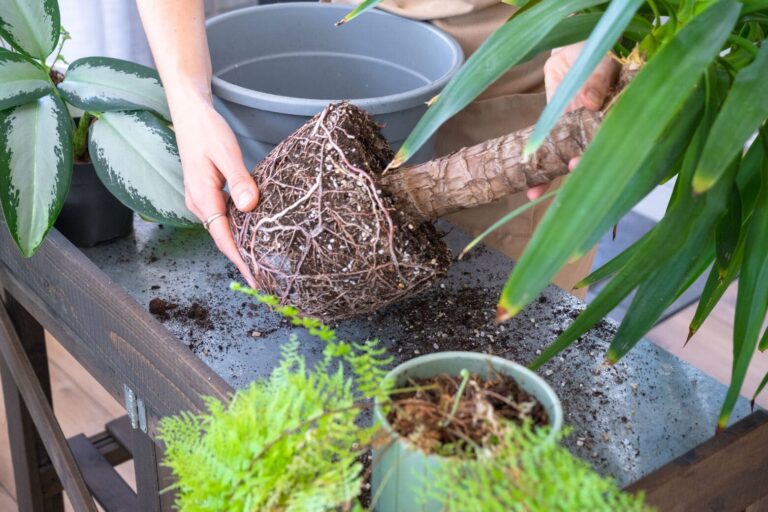
Long before organic gardening became as widely practiced as it is today, I was learning from some of the leading horticultural experts in the country while writing for the Los Angeles Times and other publications. As a garden journalist, I interviewed soil scientists, microbiologists, growers, and researchers who were helping us better understand the importance of healthy, living soil.
One of the topics that fascinated me most was the idea of feeding the soil rather than simply feeding the plant. I learned about the remarkable benefits of worm castings, mycorrhizae, beneficial bacteria, humic acid, kelp, rock dust, and other natural ingredients that work together to create healthier plants.
Recently, I received an email that made me smile. It was from George Hahn of California Vermiculture, a company I had written about decades earlier in my Los Angeles Times gardening column. He told me that after my article on the benefits of worm castings was published, the number of nurseries carrying his product increased dramatically and helped launch his business. Hearing from him all these years later was a wonderful reminder of how long I’ve been passionate about helping gardeners discover the benefits of building healthy, living soil.
As I continued researching, writing, and speaking, these ideas became the foundation of my gardening philosophy.
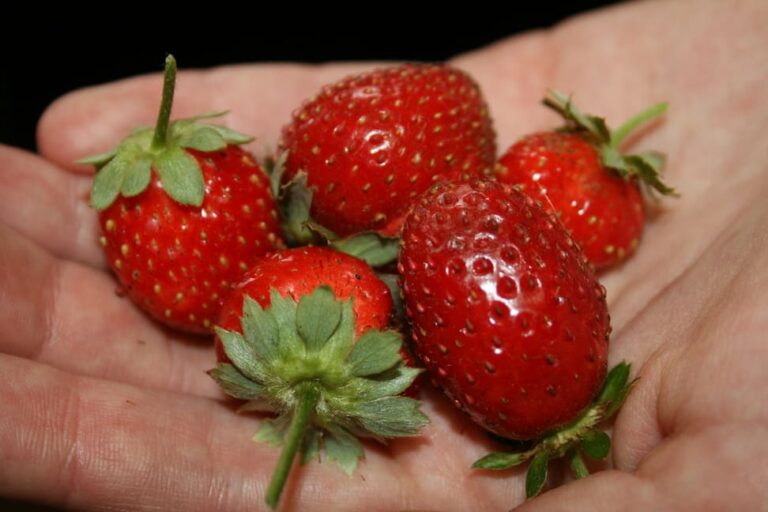
In 1994, I published the first edition of The Strawberry Story: How to Grow Great Berries Year-Round in Southern California, sharing techniques for successfully growing strawberries in our unique Southern California climate. Not long afterward, I developed my first fertilizer—Super Berry Builder—to help gardeners grow sweeter, healthier strawberries and other acid-loving fruits in our naturally alkaline soils.
A few years later, I developed Green Gourmet Houseplant Food and Terrific Tomato Fertilizer. Then, in 2006, I published Indoor Gardening the Organic Way: How to Create a Natural and Sustaining Environment for Your Houseplants. That book brought together the philosophy that had guided my gardening for years: healthy plants begin with healthy soil.
That same philosophy became the foundation for every fertilizer I developed and continues to guide the way I formulate them today.
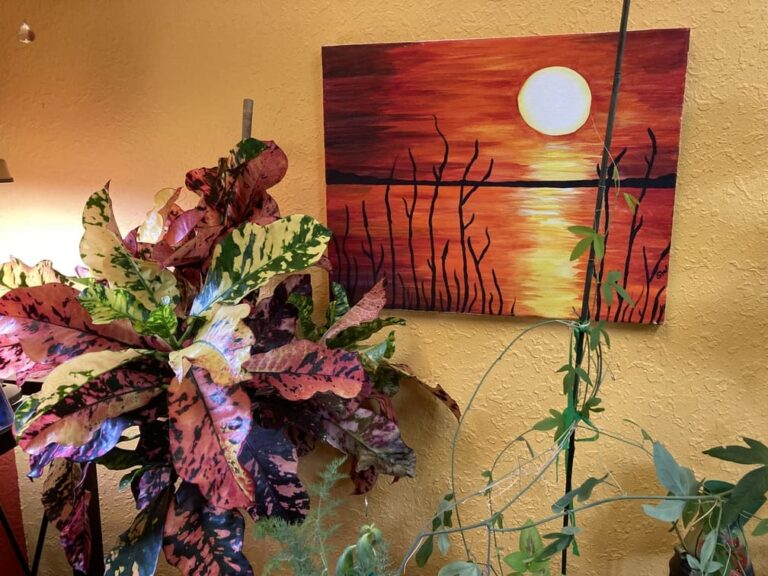
One of the things I often tell readers and viewers is that when you grow plants in containers—especially houseplants—you become Mother (or Father) Nature for those plants.
Plants growing in the ground benefit from decomposing leaves and other organic matter, beneficial fungi, microorganisms, earthworms, and a continual cycling of nutrients within the soil. Container-grown plants depend entirely on us. Whether it’s a pothos in your living room, strawberries on your patio, or tomatoes growing in containers, they have nowhere else to go for the nutrients nature would normally provide.
That simple idea has shaped the way I think about fertilizing every plant I grow.
One principle has guided my gardening for decades: feed the soil, and the soil will feed the plant.
Healthy soil is alive. It contains beneficial organisms and organic matter working together to make nutrients available to plant roots over time. Rather than simply supplying nutrients directly to a plant, I wanted my fertilizers to help create a healthier soil environment as well.
That’s why I have long preferred organic fertilizers. Organic ingredients nourish the soil while providing steady nutrition for growing plants. My goal has always been to work with nature by building healthy soil that, in turn, supports healthier plants.
I also wanted to simplify the process. Instead of asking gardeners to purchase a long list of separate ingredients, I created complete fertilizers that combine many of the organic amendments I had been recommending for years.
That philosophy has shaped every formula I have created. Rather than focusing only on supplying nitrogen, phosphorus, and potassium, I wanted to include many of the natural ingredients plants would encounter in healthy soil.
For example, humic acid mimics the decomposed organic matter that continually enriches garden soil, while mycorrhizal fungi recreate the beneficial fungal partnerships many plants rely on in nature to improve water and nutrient uptake. Together with ingredients such as worm castings, kelp meal, rock dust, and other organic amendments, they help create a healthier growing environment rather than simply feeding the plant.
Each of my fertilizers grew out of a particular gardening need, but they all share the same soil-first philosophy. I developed each blend to make organic fertilizing simpler by bringing together carefully selected ingredients that nourish the soil while providing plants with the nutrients they need to thrive. And, as I have from the beginning, I still hand-mix every batch myself.
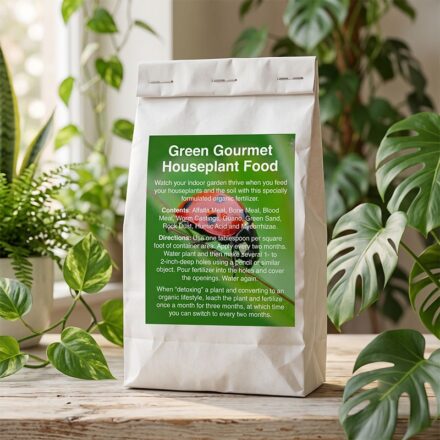
Green Gourmet Houseplant Food was developed with one goal in mind—to provide container-grown houseplants with many of the nutrients nature would provide if they were growing in the ground.
As I often tell my readers and viewers, you become Mother (or Father) Nature for your indoor garden. Because houseplants live in a limited amount of potting soil, they rely entirely on us to replenish nutrients and maintain a healthy growing environment. I wanted Green Gourmet to do more than simply fertilize. I wanted it to support the soil itself.
The blend contains the essential macronutrients—nitrogen, phosphorus, and potassium—along with a wide variety of micronutrients and organic ingredients, including worm castings, alfalfa meal, bone meal, blood meal, greensand, guano, rock dust, humic acid, and mycorrhizae. Together, these ingredients help nourish both the soil and the plant, providing a more natural way to support healthy, vigorous growth.
One of the things I enjoy most is hearing from gardeners who have been using Green Gourmet for years. Every so often someone will contact me and say, “I need another bag of your Green Gourmet!” Those conversations always remind me why I started making it in the first place.
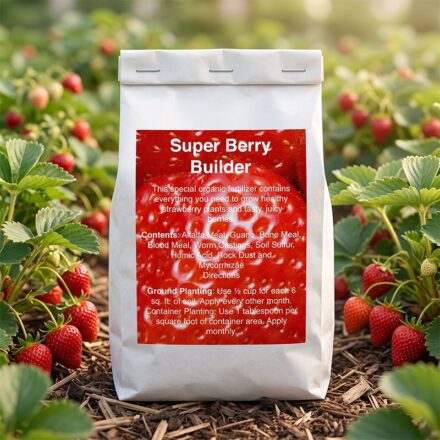
Super Berry Builder was actually my first fertilizer, and it grew directly out of my work with strawberries.
After publishing The Strawberry Story: How to Grow Great Berries Year-Round in Southern California and speaking to gardeners throughout the region, I realized many people were struggling with the same challenge: growing strawberries successfully in our naturally alkaline soils.
I wanted to create an organic fertilizer specifically formulated for strawberries and other acid-loving fruiting plants, including blueberries. The blend includes ingredients that support healthy soil while also helping create conditions these plants prefer.
Even today, gardeners still tell me how much they enjoy growing sweeter, healthier berries with Super Berry Builder.
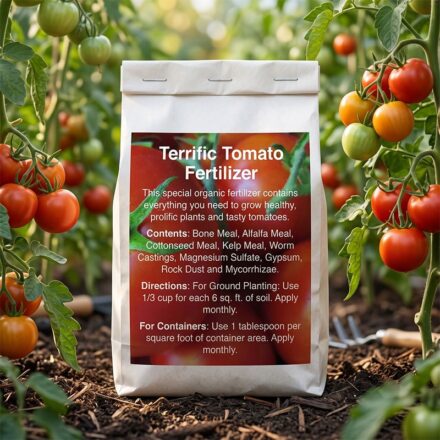
Not long after developing Super Berry Builder, I turned my attention to another favorite garden crop—tomatoes.
Tomatoes are among the hungriest plants in the vegetable garden. They benefit from consistent nutrition throughout the growing season, particularly when grown in containers, which are so common here in Southern California.
Terrific Tomato Fertilizer combines organic ingredients chosen to support vigorous plants, healthy root systems, and productive harvests. Like my other fertilizers, it was developed with the goal of feeding the soil while providing balanced nutrition for the plant.
My blends are built to feed the soil, not just the plant. Instead of only supplying the macronutrients nitrogen, phosphorus, and potassium, each fertilizer also feeds the soil with micronutrients via organic ingredients like worm castings, rock dust, kelp meal, humic acid, and mycorrhizae.
These additions help build a healthy, sustainable living soil environment — much the same way nutrients would cycle naturally if your plants were growing in the ground.
Green Gourmet Houseplant Food is safe to use on all houseplants — it was formulated for general use across most container-grown houseplants.
If you’re growing acid-loving houseplants, such as citrus or strawberries, Super Berry Builder is a better fit, since it acidifies the soil.
Yes, you can. The fertilizer is best suited for plants primarily grown for their foliage.
Super Berry Builder and Terrific Tomato Fertilizer can be used on plants grown indoors and outdoors.
Organic fertilizers release nutrients more gradually than synthetic ones, so they’re generally more forgiving on schedule.
I recommend fertilizing every 6 to 8 weeks during the active growing season — generally spring through early fall.
Each fertilizer was developed for a specific need:
Green Gourmet Houseplant Food supports general houseplants. Super Berry Builder is formulated for strawberries and other acid-loving fruiting plants. Terrific Tomato Fertilizer is designed for the heavy, consistent feeding tomatoes need through the growing season.
Organic ingredients nourish the soil itself, not just the plant. Synthetic fertilizers generally feed plants quickly but do little to build the living soil ecosystem — and can even harm it.
Organic fertilizers give the soil organic matter containing beneficial organisms that support healthier soil and plants.
My blends contain a variety of organic ingredients chosen to nourish both the soil and the plant.
Green Gourmet Houseplant Food
Super Berry Builder
Terrific Tomato Fertilizer
Yes — I’ve hand-mixed every batch myself since I started developing these blends more than 30 years ago.
Gardening has always been a journey of learning, and I continue to develop new products as gardeners ask new questions.
I’m currently working on additional organic fertilizers for vegetables, flowers, fruit trees, and bulbs. Each new formula follows the same philosophy that guided my first fertilizer decades ago. My aim is to create healthy soil first, and healthier plants naturally follow.

One of my favorite memories came during a talk at the South Coast Plaza Home and Garden Show. After my presentation, I had just one bag of Super Berry Builder left. Two gardeners both wanted it, and for a moment I wasn’t sure how we were going to settle the matter! We all laughed about it, but it reminded me that gardeners were excited to have a simple, organic fertilizer designed specifically for the plants they were growing.
That enthusiasm has stayed with me ever since, and more than 30 years later, I’m still making the fertilizers that grew out of those early conversations with gardeners.
Although the ways I share gardening information have expanded over the years, my mission has remained the same. I continue speaking to garden clubs and community organizations, and today I also teach through my books, my articles, the Healthy Houseplants website, the Healthy Houseplants YouTube channel, and The SoCal Garden Haven YouTube channel and blog.
No matter where I’m teaching, I still receive questions about fertilizer. Fortunately, my answer is much simpler than it was all those years ago, because I spent decades researching, interviewing experts, experimenting in my own gardens, and creating fertilizers that reflect everything I learned along the way.
Whether I’m helping someone grow a healthier pothos, sweeter strawberries, or a bumper crop of tomatoes, my goal is always to help gardeners work with nature rather than against it.
Healthy soil grows healthy plants. That simple philosophy inspired my first fertilizer more than 30 years ago, continues to guide every batch I hand-mix today, and will shape every fertilizer I develop in the future.