How to Hand-Pollinate Fruiting Plants Indoors
 Plant ParentOctober 22, 2026



Growing fruiting plants indoors can be an exciting and rewarding experience. There’s something especially satisfying about watching a plant flower, develop fruit, and eventually produce something you can harvest and enjoy.
But what happens when your indoor fruiting plants bloom beautifully and then fail to produce fruit? One possible explanation is inadequate pollination.
Outdoors, insects, wind, and other natural processes help transfer pollen between flowers or within individual flowers. Indoors, those processes may be limited or absent. Fortunately, you can often lend nature a helping hand by pollinating flowers yourself.
Hand-pollination is a simple technique that can improve fruit production for certain indoor-grown plants. The method you use depends on the plant you’re growing and how its flowers reproduce.
Pollination occurs when pollen is transferred to the receptive part of a flower, known as the stigma. This is an important step in fruit production. When growing plants indoors, you can sometimes help the process along by transferring pollen yourself.
Some plants have flowers containing both male and female reproductive structures. Others produce separate male and female flowers, sometimes on the same plant and sometimes on different plants. Certain plants can pollinate themselves, while others require pollen from another flower or a genetically different plant.
Outdoors, pollination may occur with the help of bees and other insects, wind, or movement of the plant. Indoors, where pollinators are usually absent and air movement is often limited, you may need to help the process along.
Keep in mind that not every indoor fruiting plant requires hand-pollination. Understanding how your particular plant reproduces is the first step.
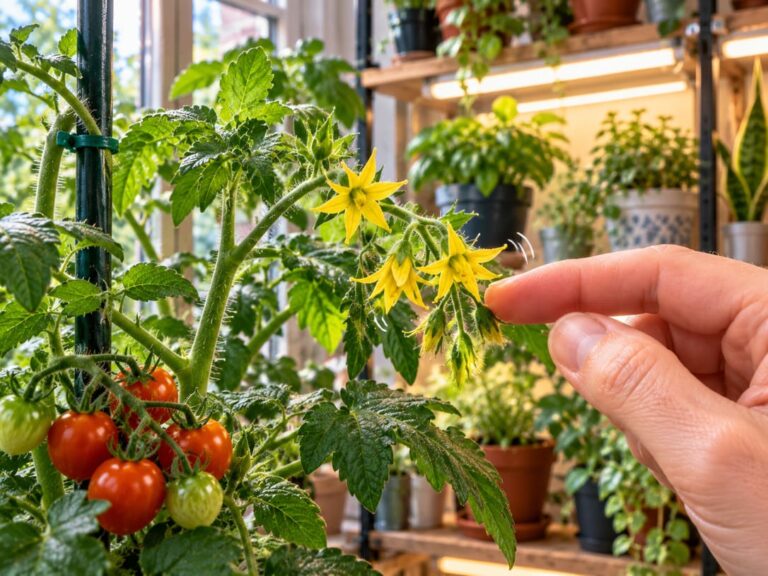
Tomato flowers contain both male and female reproductive structures and are generally self-pollinating. Rather than transferring pollen from one flower to another, your goal is to help release pollen within each flower. You can accomplish this by gently tapping or vibrating the flower cluster. Some gardeners use a small electric toothbrush, gently touching the vibrating back of the toothbrush to the flower stem or flower cluster stem rather than directly to the delicate flowers.
For best results, gently vibrate or tap the flowers when they are fully open, preferably during the day when temperatures are between 65°F and 85°F. Avoid attempting pollination during periods of excessive heat or cold, as these conditions can reduce pollen viability and interfere with fruit set. Very high humidity can prevent pollen from releasing properly, while extremely low humidity can dry out the stigma and interfere with successful pollination.
Most commonly grown peppers also have flowers capable of self-pollination. Gently tapping or shaking the flowering stems may help distribute pollen. You can also use a small, soft paintbrush to move pollen within the flowers.
Peppers may drop flowers when temperatures are too high or low, or when other growing conditions are unfavorable. Hand-pollination won’t necessarily solve those problems.
Eggplants produce flowers containing both male and female reproductive structures and are generally self-pollinating. However, when grown indoors without natural air movement or pollinating insects, they may benefit from a little assistance.
Gently tap or vibrate the open flowers to help release pollen. As with tomatoes and peppers, suitable temperatures and healthy growing conditions are important for successful fruit development.
Beans, particularly compact bush varieties, can be grown indoors with sufficient light. Most common beans, including green beans, have self-pollinating flowers and generally don’t require hand-pollination to produce pods.
If you’re growing beans indoors, you can gently shake the flowering stems to encourage pollen movement, although this usually isn’t necessary. More importantly, provide plenty of light and suitable temperatures, as insufficient light and temperature extremes can interfere with flowering and pod development.
Strawberry flowers contain numerous individual female reproductive structures, each of which needs to be pollinated for the fruit to develop fully and evenly. Inadequate pollination can result in misshapen strawberries, although other growing conditions can also affect fruit development.
When growing strawberries indoors, use a small, soft paintbrush to gently move pollen around the yellow center of each open flower. This helps pollinate the flower evenly, encouraging the development of a well-formed strawberry. For best results, repeat the process daily while the flowers remain open and receptive to pollen.
Interested in growing strawberries indoors? In my Healthy Houseplants video below, I demonstrate how to plant bare root ‘Seascape’ strawberries and explain the growing conditions they need. Once your plants begin flowering, you can use the hand-pollination technique described above to help encourage fruit development.
Many commonly grown citrus varieties are self-fertile, meaning they can produce fruit without pollen from a different variety. However, their pollination requirements vary.
For indoor citrus, if hand-pollination is needed, use a small, soft paintbrush to collect pollen from the yellow, pollen-bearing anthers surrounding the center of an open citrus flower. Then gently brush the pollen onto the stigma at the tip of the central female reproductive structure.
Some citrus varieties produce fruit without fertilization, while others benefit from cross-pollination. Research the particular citrus variety you’re growing before deciding whether hand-pollination is necessary.
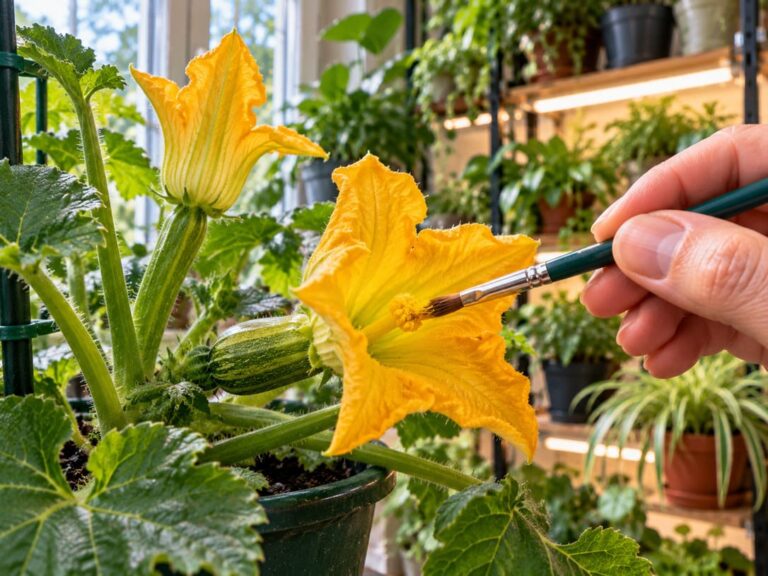
Some cucumber and squash varieties produce separate male and female flowers. Male flowers produce pollen, while female flowers have a small, immature fruit-like structure behind the flower.
To hand-pollinate, collect pollen from a freshly opened male flower using a small paintbrush, then gently transfer it to the stigma of an open female flower. You can also remove a male flower’s petals and carefully touch its pollen-bearing anthers directly to the female flower’s stigma.
Some cucumber varieties are parthenocarpic, meaning they can develop fruit without pollination. These varieties are often particularly useful for indoor or greenhouse growing, and hand-pollination generally isn’t necessary. In some varieties, unnecessary pollination can actually produce misshapen or seeded fruit.
The following steps work for many plants that benefit from manual pollen transfer.
Determine whether your plant produces flowers containing both male and female structures or separate male and female flowers. This will help you choose the appropriate pollination method.
Work with freshly opened flowers when pollen is available and the stigma is receptive. For many plants, morning is a good time to try, although the ideal timing varies by species and environmental conditions.
A small, clean, soft artist’s paintbrush is often all you need. Cotton swabs can also work, although a soft brush generally gives you more control when working with delicate flowers.
For self-pollinating plants such as tomatoes, gentle vibration may be more effective than a brush.
For plants requiring manual pollen transfer, gently touch the brush to the pollen-bearing anthers and then to the receptive stigma.
For plants such as tomatoes, gently vibrate or tap the flowers to help release pollen.
Avoid damaging the flowers.
New flowers may open over several days or weeks, so check your plants regularly.
Depending on the plant, repeating hand-pollination while flowers are receptive may improve your chances of success.
After successful pollination and fertilization, the flower’s ovary may begin to enlarge and develop into fruit. Remember that not every pollinated flower will produce mature fruit. Plants sometimes abort flowers or developing fruit when growing conditions aren’t favorable.
If you’ve tried hand-pollinating your indoor plants without success, don’t assume you’ve done something wrong. Pollination is only one part of fruit production.
Insufficient light: Fruiting plants generally require substantial light to support flowering and fruit development. Many need supplemental grow lights when cultivated indoors.
Unsuitable temperatures: Excessively high or low temperatures can interfere with pollen viability, flower development, and fruit set.
Humidity problems: Excessively high humidity can cause pollen to clump together and prevent it from releasing properly, while very low humidity can dry out the stigma, making successful pollination more difficult. The ideal humidity level varies by plant.
Poor plant health: Plants experiencing water stress, nutrient deficiencies, root problems, or pest infestations may struggle to produce and retain fruit.
Incompatible pollen: Some plants require pollen from another compatible variety. Transferring pollen within a single plant may not be sufficient.
Natural flower or fruit drop: Plants sometimes produce more flowers or developing fruit than they can support.
The key is to evaluate the plant’s overall growing conditions rather than focusing exclusively on pollination.
One of the pleasures of indoor gardening is discovering how much you can accomplish when you understand what your plants need.
Hand-pollination is another way to take on the role of Mother or Father Nature by helping provide a process that might otherwise occur outdoors.
Whether you’re growing tomatoes, peppers, strawberries, citrus, or other fruiting plants indoors, understanding how their flowers are pollinated is an important part of successful fruit production. Once you know what your plants need, you can lend nature a helping hand when necessary and enjoy the satisfaction of harvesting fruit from your indoor garden.