Complete Guide to Moving House with Plants: How to Pack, Transport and Protect Houseplants
 Plant ParentOctober 8, 2026


 Plant ParentOctober 8, 2026
Moving house is stressful enough when you only have furniture, boxes, and paperwork to think about. Add a collection of houseplants into the mix and things become a little more complicated.
Plants cannot simply be packed into a box several days before moving day. They need light, ventilation and careful handling, while large leaves, delicate stems and heavy ceramic pots can make transportation difficult.
The good news is that moving house with plants is perfectly manageable with some preparation.
Whether you have a few small succulents on a windowsill or an entire collection of tropical houseplants, this guide explains how to pack, transport and settle your plants into their new home while reducing the risk of damage.
Plants become accustomed to their surroundings.
Light levels, temperature, humidity, watering routines, and even their position within a room, all remain relatively consistent when they stay in the same home. Moving changes several of these things at once.
Plants may experience:
This does not mean your plants will necessarily suffer lasting damage. The aim is simply to minimize unnecessary stress and give them time to adjust once they arrive.
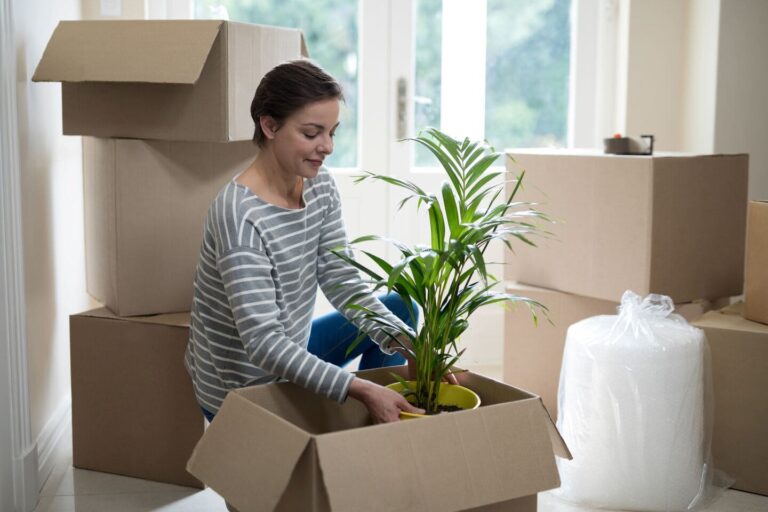
Avoid leaving plant preparation until the morning of the move. A few days of planning can make transporting them considerably easier.
Start by looking through your collection and identifying which plants may need extra attention.
Pay particular attention to:
You should also consider how each plant will actually travel.
If you are using a removal company, check beforehand whether they are willing to transport houseplants. Some movers may have restrictions because plants can be difficult to secure and are more fragile than normal household belongings.
Where practical, transporting particularly valuable or delicate plants yourself can give you more control over how they are handled.
Moving day usually means placing plants much closer together than normal. That makes it a good opportunity to inspect them carefully beforehand.
Check:
Look for signs of common houseplant pests such as spider mites, scale insects, mealybugs, and fungus gnats.
If one plant appears to have a pest problem, keep it separate rather than packing it alongside the rest of your collection. The last thing you want is for one infected plant to introduce pests to several others while they are packed closely together.
Usually, you do not want plants to be hydrated before transportation. However, wet soil makes pots considerably heavier and increases the chance of water leaking into boxes or onto other belongings.
Avoid watering during the three days immediately before a move where appropriate, which will help reduce both weight and leakage.
Keep in mind that watering needs depend on the plant. A cactus or succulent can normally tolerate being dry much longer than a moisture-loving tropical plant. Use the plant’s normal requirements as your guide rather than applying exactly the same routine to every species.
Plant type | Before moving |
Cacti and succulents | Usually fine to remain fairly dry |
Tropical foliage plants | Avoid soaking immediately before moving |
Ferns | Do not allow them to dry excessively |
Orchids | Keep to their normal watering rhythm |
Large floor plants | Slightly drier soil can make them easier to carry |
The main goal is to avoid moving plants while their compost is unnecessarily saturated.
Large plants can become awkward to move simply because of their shape. Long stems and wide foliage can catch against doors, boxes, and other belongings.
Lightly pruning damaged, dead, or excessively long growth can make some plants easier to handle. Reducing particularly mature plants into a more compact shape can reduce the likelihood of long growth being broken during a move.
However, avoid heavily pruning a healthy plant simply to make moving easier. Pruning itself can be stressful, and combining major pruning with a completely new environment is not advised.

One of the easiest ways to make houseplants safer to transport is to separate the plant from its decorative outer pot. Many houseplants sit inside lightweight plastic nursery pots that are then placed inside heavier ceramic or decorative containers.
Transporting the plant in the nursery pot can:
Pack decorative pots in the same way you would pack other fragile household items. Wrap them individually and make sure they cannot knock against one another during transportation.
The best packing method depends on the size and shape of the plant.
Small and medium plants can usually be transported in boxes, while larger plants may need to remain upright and be protected individually.
Small plants are usually the easiest to move. Place several similarly sized pots into a sturdy box and fill the gaps around the pots so they cannot slide around.
Suitable packing materials can include:
The objective is to secure the pots, not compress the foliage.Leave enough space above the plants so leaves are not crushed when the box is moved.
Medium plants can often be placed individually or in small groups inside open-top boxes. Make sure the base of each pot is stable.
For plants with spreading foliage, avoid squeezing several plants into a box simply to save space. One broken branch can take much longer to recover than the small amount of space saved by overpacking.
Large plants such as monsteras, fiddle-leaf figs, and tall palms and dracaenas, may not fit inside conventional boxes.
Instead, protect the pot and loosely bring the foliage together where possible. Horticultural fleece can be useful for protecting larger plants without adding significant weight.
Do not bind leaves tightly against the stem. The aim is to stop foliage catching on surrounding objects while still allowing the plant to retain its natural shape.
Plant | Best packing method | Main risk |
Succulents | Small individual compartments | Snapped leaves |
Cacti | Secure pot and protect spines | Injury and damaged spines |
Trailing plants | Gather vines loosely inside box | Tangled or broken stems |
Monstera | Protect large leaves and keep upright | Torn leaves |
Fiddle-leaf fig | Keep upright and loosely wrap | Stem and leaf damage |
Fern | Open box with foliage supported | Crushed fronds |
Orchid | Individual box with pot secured | Broken flower spikes |
Palm | Loosely gather foliage | Bent or snapped fronds |
Trailing houseplants present a different problem. Plants such as pothos, philodendrons, and string-of-hearts can have stems stretching several yards.
Do not simply bundle those stems tightly together. Instead, carefully gather them into loose loops and place them inside or around the plant’s container without sharp bends.
If the plant is attached to a moss pole, trellis or other support, check that the support is secure before moving it.
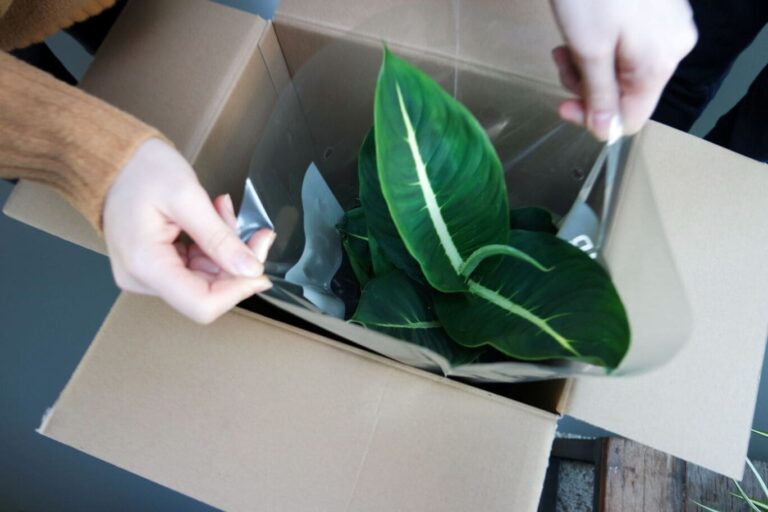
Houseplants generally dislike sudden temperature changes. That matters especially if your plants have to spend time outside, in a moving van, or in an unheated vehicle.
Protect houseplants from sudden exposure to cold during transportation, particularly in winter.
During cold weather:
Hot weather can create the opposite problem. Avoid leaving houseplants inside a parked vehicle where temperatures can rise quickly.
It depends.
A removal van can work perfectly well for robust plants if they are properly secured, but delicate or valuable plants may be better transported separately. Plants should never simply be placed between heavy boxes where shifting items could crush them.
If they are traveling in the removal vehicle:
Plants should ideally be among the last items loaded and the first items removed.
Houseplants become much harder to move safely when they are competing for space with furniture, boxes, and people carrying belongings through the same room.
Where possible, designate one clear area for plants before transportation.
Moving in stages can also make the process easier, particularly when there is a gap between leaving one property and fully settling into another.
If furniture and household belongings are making the transition difficult, using a moving house storage facility can provide somewhere temporary for bulky items while keeping fragile plants accessible and reducing the amount that needs to be moved at once.
That can be especially useful if you are:
Temporary storage is commonly used for exactly these situations, allowing furniture, boxes, and household items to remain out of the way during the transition.
Most household belongings can be boxed several days or even weeks before moving. Houseplants are different. Plants need light and airflow, so avoid sealing them inside boxes long before transportation.
Prepare your packing materials in advance but leave final packing until close to departure. That way the plants spend the minimum possible amount of time in dark or restricted conditions.
Plant boxes should be immediately recognizable.
Write something clear such as:
LIVE PLANTS – KEEP UPRIGHT
You may also want to mark:
Labels are especially important if other people are helping with the move. A box containing a pothos can look exactly like a box containing kitchen equipment when viewed from the outside.
Large established houseplants can be among the hardest possessions to move.
Before moving one, measure:
A plant that fits comfortably in your living room may not fit through a narrow hallway once you try to move it.
If necessary, gently tie spreading branches inward using soft plant ties. Never pull them tightly enough to damage stems. For exceptionally heavy containers, a plant trolley or furniture dolly can make transportation safer.
If you are transporting houseplants yourself, the car is often the safest place for smaller and more delicate plants.
Use boxes to prevent pots from sliding during braking or cornering.
Keep plants away from:
For longer journeys, check plants during stops if practical.
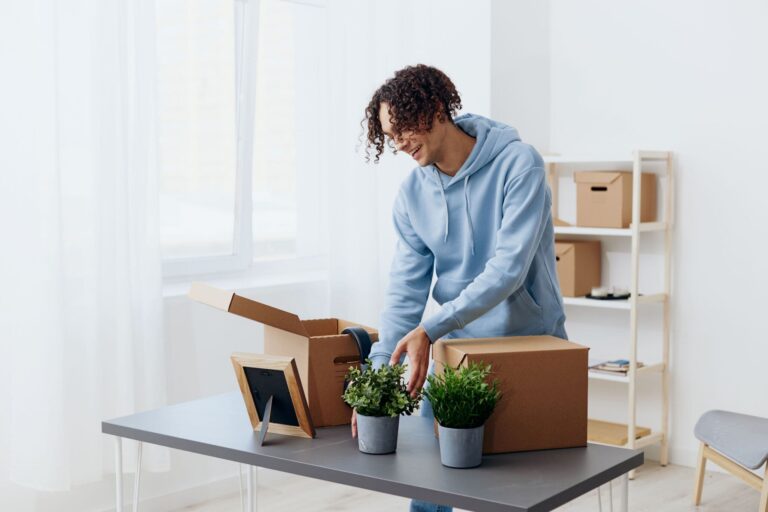
Your plants should be unpacked relatively quickly. Do not leave them sitting in dark boxes while everything else in the house is organized.
Unpack promptly and initially giving plants a relatively calm environment with moderate light while they adjust.
Choose a temporary position away from:
You do not need to find every plant’s permanent position immediately. Giving them a stable temporary location is usually better than repeatedly moving them around the house.
Even when transported perfectly, houseplants may respond to their new environment.
You might notice:
Remember that the new property may have completely different light levels and humidity. Abrupt changes in growing conditions can cause excessive leaf loss in houseplants, which is why acclimatization is important. Avoid immediately making lots of additional changes.
Unless there is a clear reason to do so, moving week is generally not the ideal time to:
Give them time to settle first.
A window that looks similar to one in your previous property may receive a completely different amount of light.
Before permanently placing plants, consider:
The needs of individual species can vary enormously. Houseplants encompass species originating from very different natural environments, from shaded tropical habitats to dry regions.
Try to recreate conditions like those the plant was successfully growing in before the move.
Use this checklist before leaving your old home.
| Check | Done? |
| Inspect plants for pests | ☐ |
| Avoid unnecessary watering immediately before moving | ☐ |
| Remove damaged or dead foliage | ☐ |
| Separate heavy decorative pots | ☐ |
| Secure individual plant pots | ☐ |
| Protect delicate foliage | ☐ |
| Gather trailing stems safely | ☐ |
| Label plant boxes | ☐ |
| Confirm plants can fit through doorways | ☐ |
| Decide which plants will travel separately | ☐ |
| Keep plants away from heavy furniture | ☐ |
| Prepare a suitable area at the new property | ☐ |
Saturated soil makes pots heavier and increases the risk of leaks.
Plants should spend as little time as practical inside dark boxes.
The pot should not be able to slide freely inside the box.
Give leaves and branches enough room rather than squeezing too many plants together.
Both excessive heat and cold can damage houseplants.
Moving already changes the plant’s environment. Avoid adding unnecessary disruption unless repotting is genuinely required.
Heavy ceramic containers are often easier and safer to transport separately.
Furniture can wait. Plants should come out of dark boxes relatively quickly.
| When | What to do |
| 1–2 weeks before | Plan transport and check large plants will fit |
| Several days before | Inspect for pests and prepare boxes/materials |
| 2–3 days before | Water lightly, avoiding unnecessary heavy watering |
| Day before | Separate decorative pots and organize plants |
| Moving day | Pack, secure, and transport plants upright |
| On arrival | Unpack plants promptly |
| First few days | Keep conditions stable and observe plants |
| Following weeks | Gradually settle plants into permanent positions |
The biggest difference between successfully moving houseplants and arriving with damaged plants is usually preparation.
Keep pots stable, protect fragile foliage, avoid unnecessary temperature extremes, and give plants priority when loading and unloading.
Most importantly, remember plants are living things rather than ordinary household possessions. They should be packed as late as practical, transported carefully, and unpacked relatively quickly.
Once you reach your new home, give them time to adjust before making major changes to their care.
A few drooping leaves after a move do not necessarily mean something has gone wrong. With suitable light, temperature, and their normal care routine restored, most established houseplants will settle successfully into their new surroundings.