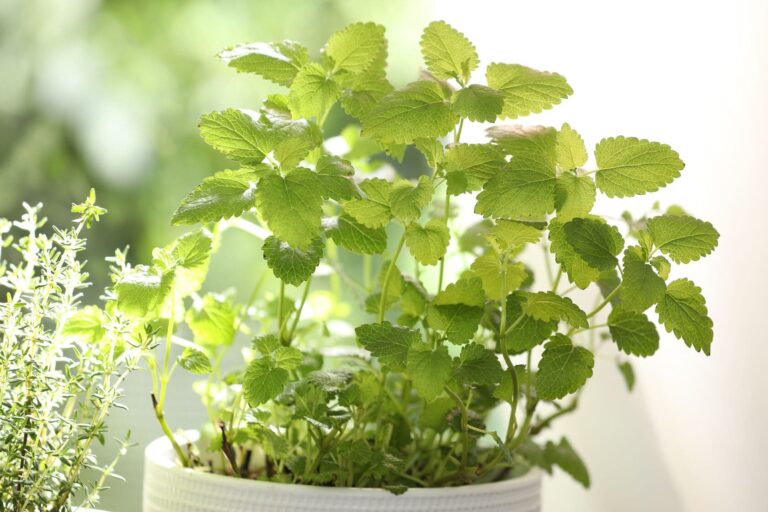
If you’re looking for an easy-to-grow herb that smells wonderful, tastes great, and performs well indoors, lemon balm (Melissa officinalis) is an excellent choice. With its bright green leaves and refreshing lemon scent, this member of the mint family makes an attractive addition to a sunny windowsill or indoor herb garden.
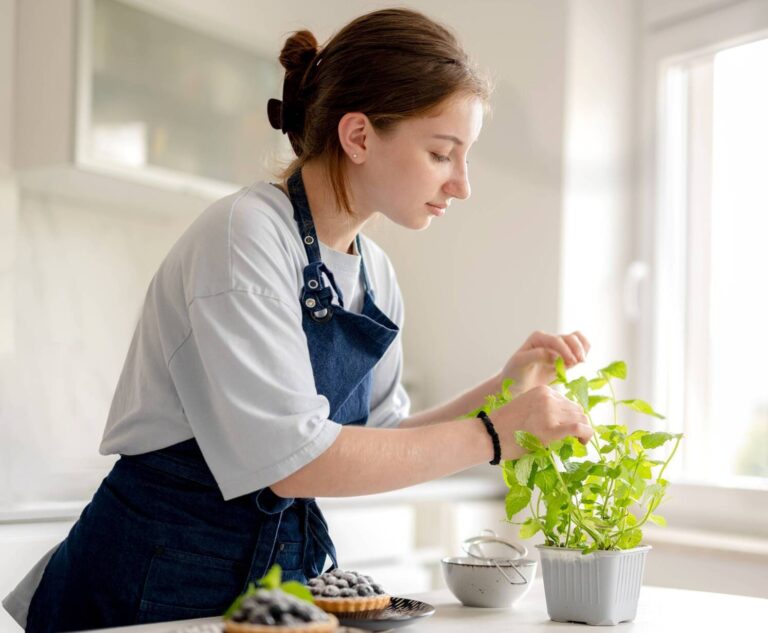
I’ve always appreciated lemon balm for its versatility. Fresh leaves can be used in teas, salads, desserts, and beverages, while simply brushing against the foliage releases a pleasant citrus fragrance. It’s also one of the more forgiving herbs to grow indoors, making it a good choice for beginning indoor gardeners.
Why Grow Lemon Balm Indoors?
Having lemon balm growing inside means you can enjoy fresh leaves whenever you need them. The plant’s fragrant foliage adds a subtle lemon flavor to recipes and homemade teas, and many gardeners enjoy keeping it nearby simply for its uplifting scent.
Unlike some herbs that struggle indoors, lemon balm adapts well to life in containers. While growth may slow during winter, a healthy plant will continue producing foliage throughout the year when given adequate light.
Another advantage is that lemon balm generally tolerates average household humidity levels. You won’t need special humidifiers or frequent misting to keep it happy.
Give Lemon Balm Plenty of Light
Like most culinary herbs, lemon balm grows best in bright light. Place your plant near a sunny south- or west-facing window whenever possible. A location that receives several hours of direct sunlight each day will help encourage compact growth and strong fragrance.
If natural light is limited, supplementing with a full-spectrum grow light can make a big difference. Plants grown in insufficient light often become leggy and produce less aromatic leaves.
One sign that your lemon balm isn’t getting enough light is stretched growth with long spaces between leaves. Moving the plant to a brighter location will usually correct the problem.
Choosing the Right Container and Soil
One of the most important factors in successfully growing lemon balm indoors is providing good drainage. While the plant enjoys evenly moist soil, it does not like sitting in waterlogged conditions.
Select a container with drainage holes and use a quality potting mix designed for herbs, vegetables, or houseplants. If you’d like to improve drainage further, mix in some perlite to keep the soil light and airy.
Lemon balm grows well in terra cotta, plastic, or glazed ceramic pots, provided drainage is adequate. I often tell indoor gardeners that drainage holes are far more important than the type of container you choose.
As the plant grows, you’ll eventually need to repot it. If you notice roots circling the bottom of the pot or emerging through drainage holes, it’s time to move up one container size.
Water Carefully
When it comes to watering lemon balm, consistency is key.
Allow the top inch of soil to dry before watering thoroughly. Rather than watering on a strict schedule, check the soil regularly and let the plant tell you when it needs moisture.
When you do water, soak the soil until excess moisture drains from the bottom of the pot. Empty any saucer afterward so roots aren’t left sitting in standing water.
During winter, growth naturally slows down and the plant typically requires less frequent watering.
Fertilizing and Pruning
Lemon balm isn’t a heavy feeder. During spring and summer, apply a well-balanced, organic liquid fertilizer at half strength about once a month.
Avoid overfertilizing, as excessive feeding can reduce the concentration of the fragrant oils that give lemon balm its characteristic scent and flavor.
Regular harvesting and pruning help keep plants full and bushy. Cut stems just above a set of leaves to encourage branching. If flower buds begin to form, pinch them off to keep the plant focused on producing foliage.
The flowers themselves are edible and make an attractive garnish for salads, desserts, and beverages.
Propagating New Plants
One of the pleasures of growing lemon balm is how easy it is to propagate.
Stem cuttings root readily in water. Simply take a cutting several inches long, remove the lower leaves, and place it in a glass of water in a bright location. Within a few weeks, roots should develop and the new plant can be transferred to soil.
Mature plants can also be divided when repotting, allowing you to create several new plants from one established specimen.
Common Problems and Solutions
Fortunately, lemon balm experiences relatively few problems indoors.
Yellow leaves often indicate overwatering or poor drainage. Allow the soil to dry slightly and make sure excess water can escape freely from the container.
Powdery mildew occasionally develops when air circulation is poor. Providing better airflow and avoiding wet foliage usually helps prevent this issue.
Spider mites and fungus gnats may sometimes appear. If pest populations become persistent, taking action early is important. In addition to using insecticidal soap or other appropriate treatments, many indoor gardeners find that pest-management products designed specifically for indoor spaces can help reduce nuisance insects before they become a major problem.
Harvesting Lemon Balm
Once plants reach about 6 to 8 inches tall, you can begin harvesting regularly. Snip stems as needed, but avoid removing more than one-third of the plant at a time.
Frequent harvesting actually encourages fuller growth, so don’t be shy about using your lemon balm. Fresh leaves are especially flavorful when picked in the morning, when essential oil levels are often at their highest.
With bright light, proper watering, and occasional pruning, lemon balm can provide a steady supply of fragrant leaves throughout the year. Whether you’re brewing tea, flavoring recipes, or simply enjoying its fresh citrus scent, this easygoing herb is a rewarding addition to any indoor garden.
Julie Bawden-Davis is a best-selling garden author, blogger, YouTuber and Master Gardener dedicated to sharing indoor gardening expertise with aspiring gardeners. She has published several gardening books and more than 5,000 articles in major publications. A former garden columnist for the LA Times, San Francisco Chronicle and Parade.com, she is founder of HealthyHouseplants.com and its YouTube channel.
 Julie Bawden-DavisJune 14, 2026