About Fishtail Hoya
Fishtail Hoya Introduction
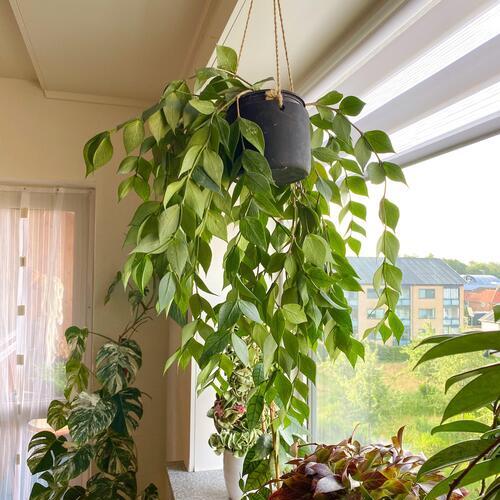
Hoya polyneura, commonly known as the Fishtail Hoya, is a striking epiphytic vine prized for its narrow, deeply veined leaves that fan out like the tail of a fish. Each leaf is lance-shaped with three to five prominent longitudinal veins running from base to tip, giving the foliage a distinctive pleated, fishbone appearance that sets it apart from the broader, waxier leaves of many other Hoya species. The plant belongs to the diverse genus Hoya, part of the milkweed subfamily Asclepiadoideae within Apocynaceae, and is native to the cool, humid forests of the eastern Himalayas, including parts of northeastern India, Nepal, Bhutan, and southern China, where it grows as an epiphyte or lithophyte in filtered, dappled light beneath the forest canopy.
In its natural habitat, Fishtail Hoya clings to tree bark and mossy rocks using aerial roots, drawing moisture from humid mountain air and periodic rainfall rather than from a dense soil medium. This epiphytic lifestyle explains many of its cultivation quirks, including its preference for chunky, fast-draining substrates and its tolerance for brief dry spells between waterings. Unlike tropical lowland Hoyas, H. polyneura hails from higher elevations and cooler microclimates, which makes it comparatively more tolerant of cooler nighttime temperatures than many of its heat-loving relatives, though it still cannot withstand frost.
When mature and given adequate light, Fishtail Hoya produces small, star-shaped flower clusters (umbels) in shades of pale yellow to cream, often with a subtle reddish or maroon center, emitting a light, sweet fragrance most noticeable in the evening. The blooms arise from spur-like structures called peduncles that persist on the plant and should never be removed, as they continue to produce new flowers season after season. Beyond its ornamental value, the plant’s cascading growth habit makes it an excellent candidate for hanging baskets or trained supports, where its trailing vines and fan-like foliage can be fully appreciated.
Fishtail Hoya Care & Growing Guide
Caring for the Fishtail Hoya begins with recreating the bright, indirect light and airy root conditions it would experience clinging to a tree in its Himalayan forest home. Place it near an east or filtered south/west-facing window where it receives plenty of bright, indirect light without prolonged direct sun, which can scorch its thin, papery leaves. A chunky, well-aerated potting mix composed of orchid bark, perlite, and a small amount of coco coir or peat mimics the loose, organic debris the plant would root into on tree branches, and it strongly prefers a shallow to medium-depth pot that allows excess moisture to escape quickly.
Watering should follow a soak-and-dry rhythm: thoroughly moisten the growing medium, then allow the top inch or two to dry out before watering again, reducing frequency further in cooler months. Because Fishtail Hoya is more sensitive to consistently soggy roots than to occasional underwatering, err on the side of slightly less water rather than more, and always ensure the pot has excellent drainage. Humidity plays an outsized role in keeping this species happy; aim for 50 percent or higher, which can be achieved with a pebble tray, a nearby humidifier, or grouping it with other moisture-loving plants.
Round out care with a balanced, diluted liquid fertilizer during the active spring and summer growing season, moderate temperatures between 60 and 80°F (15–27°C), and patience, as Fishtail Hoya is a slow grower that rewards consistency over time. Avoid disturbing the plant’s roots unnecessarily, since Hoyas generally dislike frequent repotting, and always leave spent flower peduncles intact, as they will rebloom. With stable conditions and minimal fuss, this Hoya can live for many years, gradually filling out into a lush, cascading specimen.
Soil
Fishtail Hoya thrives in a light, chunky, fast-draining substrate that mimics the organic debris it would root into as an epiphyte on tree bark in the wild. An ideal mix combines orchid bark, perlite, and a smaller portion of coco coir or peat moss in roughly equal parts, sometimes with added charcoal to keep the mix fresh and reduce the risk of root rot. The plant prefers a slightly acidic to neutral pH range of about 6.0 to 6.5, which supports healthy nutrient uptake without allowing salts or minerals to accumulate excessively. Good drainage is non-negotiable: water should pass through the pot within seconds of watering, and the mix should never remain saturated for extended periods, since compacted, moisture-retentive soil is one of the leading causes of root rot in this species. Soil problems to watch for include poor drainage from mixes that are too fine or peat-heavy, compaction over time as organic matter breaks down (requiring a refresh every 1–2 years), inappropriate pH from mineral-heavy tap water, salt build-up from over-fertilizing (visible as a white crust on the soil surface or pot rim), nutrient deficiencies from old, depleted mix, and root boundness, which actually tends to benefit this species’ blooming but should not be allowed to progress to the point of restricting water uptake entirely.
Fertilizer
Feed Fishtail Hoya with a balanced, water-soluble fertilizer (such as a 20-20-20 formula) diluted to half or quarter strength, applied every 4–6 weeks during the active growing season from spring through summer, tapering off to little or no feeding in fall and winter when growth naturally slows. A fertilizer slightly higher in phosphorus can help encourage blooming once the plant is mature and established. Signs of over-fertilization include a white, crusty buildup on the soil surface, browned or burnt leaf tips and edges, and stunted new growth, while under-fertilization typically shows as pale, yellowish leaves and minimal new growth over an extended period despite otherwise good care. Organic alternatives such as diluted fish emulsion, worm castings tea, or a light top-dressing of compost can provide a gentler, slow-release nutrient source, and occasional flushing of the soil with plain water helps prevent salt accumulation from any fertilizer type.
Watering
Water Fishtail Hoya thoroughly when the top inch or two of the potting mix has dried out, then allow the excess to drain completely so the roots are never left sitting in water. Room-temperature rainwater, distilled water, or filtered water is preferable to hard tap water, which can leave mineral salt deposits on the roots and soil surface over time; if tap water is the only option, letting it sit out for 24 hours before use helps dissipate some chlorine. Signs of underwatering include shriveled, wrinkled, or noticeably thin leaves and slowed growth, while overwatering presents as yellowing lower leaves, a mushy or blackened stem base, and a sour smell from the soil, all of which point toward root rot. Watering frequency should be reduced by roughly half during the cooler autumn and winter months when growth slows, and increased again in spring and summer as the plant enters active growth and light levels rise.
Fishtail Hoya Watering Calculator
🪴 Precision Watering Intelligence
Science-Based Hydration for Your Collection
Stop guessing. Most houseplant failures are caused by volumetric errors and improper moisture tension. Our deterministic calculator moves beyond "once-a-week" watering by analyzing the four critical pillars of root health:
- • Transpiration Coefficients: 120+ species mapped by metabolic rate.
- • Substrate Porosity: Adjusts for Standard vs. Cactus/Well-Draining mixes.
- • Geometric Volume (V = π r² h): Calculates exact cups based on pot surface area.
- • The Drainage Factor: Accounts for pot material (Terracotta) and the risk of a perched water table.
Personalized for this plant
Disclaimer: Our calculator is pretty smart. We’ve crunched the numbers, but we’re not measuring the quantum state of your living room. Since we don’t know your exact indoor temperature, humidity, light, airflow, or whether your plant receives daily sweet nothings and motivational speeches, use this calculator as a guide—and always keep an eye on your plant.
Lighting
Bright, indirect light is essential for a healthy, floriferous Fishtail Hoya. A spot near an east-facing window, or a few feet back from a south- or west-facing window with a sheer curtain, provides the dappled brightness this plant would receive under a forest canopy. Insufficient light manifests as leggy, sparse growth, smaller and paler leaves, and a reluctance to flower even after years of otherwise good care. Excessive or direct light, particularly intense afternoon sun, causes bleached, yellowing, or crispy brown patches on the thin leaves, especially along the edges. If natural light is limited, a full-spectrum LED grow light positioned 12–18 inches above the plant for 10–12 hours a day can supplement or fully replace sunlight, and rotating the plant periodically ensures even growth on all sides.
Temperature
This Hoya does best within a temperature range of about 60–80°F (15–27°C), and its Himalayan origins make it somewhat more tolerant of cooler nights than many tropical Hoya species, though it should never be exposed to temperatures below 50°F (10°C) for extended periods. Sudden temperature swings, cold drafts near windows and doors, and proximity to heating or air conditioning vents can stress the plant, leading to leaf drop or slowed growth. During winter, keep the plant away from cold windowpanes and drafty entryways, and in summer, avoid placing it in direct outdoor sun or in a spot where temperatures regularly exceed 85°F (29°C) without adequate humidity and airflow to offset heat stress.
Humidity
Fishtail Hoya prefers moderate to high humidity, ideally in the 50–70 percent range, reflecting the moist mountain forests of its native habitat. In low-humidity environments, leaves may develop crispy or curling edges, slowed growth, and a dull appearance, while consistently very high humidity paired with poor air circulation can encourage fungal issues on foliage. Effective ways to raise humidity include placing the pot on a pebble tray filled with water (ensuring the pot itself sits above the waterline), running a small humidifier nearby, or grouping the plant with other humidity-loving houseplants to create a beneficial microclimate. Misting offers only a brief, minor humidity boost and is less effective long-term than a humidifier or pebble tray, and if used, should be done in the morning to allow leaves to dry before evening to reduce fungal risk.
Propagation
Fishtail Hoya is most commonly and successfully propagated through stem cuttings, though air layering is also possible for larger, more established vines. Stem cuttings root reliably in either water or a moist perlite/sphagnum moss mix, with moss or perlite generally producing sturdier root systems than water propagation, which can sometimes lead to a difficult transition when moving rooted cuttings into soil. Late spring through summer, during the plant’s active growth period, is the best time to take cuttings, as warmth and longer daylight hours speed up root development.
Step-by-step guide: 1) Select a healthy stem with at least two to three leaf nodes, avoiding flowering or peduncle-bearing sections if possible so the plant retains its bloom spurs. 2) Using clean, sharp scissors or pruning shears, cut just below a node, creating a cutting roughly 4–6 inches long. 3) Remove the lowest set of leaves to expose one or two bare nodes, which is where roots will emerge. 4) Optionally dip the cut end in rooting hormone to encourage faster root development. 5) Place the cutting in a jar of room-temperature water with the nodes submerged, or insert it into a moist perlite-sphagnum mix. 6) Position the cutting in bright, indirect light and maintain consistent warmth (around 70–75°F) and humidity. 7) Change water every few days if water propagating, or keep the medium consistently moist but not soggy if using a soil-based method. 8) Look for root growth within 3–6 weeks; roots reaching about an inch or two long indicate readiness for potting. 9) Transplant the rooted cutting into a well-draining Hoya mix, watering lightly to settle the soil. 10) Keep the newly potted cutting in bright, indirect light with high humidity for several weeks as it establishes, avoiding fertilizer until new growth appears, which typically signals successful establishment within one to two months.
Potting
Choose a pot only slightly larger than the current root mass, ideally with generous drainage holes, since Fishtail Hoya prefers to be somewhat snug or even mildly root-bound, which can encourage blooming. Terracotta or unglazed clay pots are especially well suited to this species because their porous walls allow excess moisture to evaporate, further reducing the risk of root rot in the chunky, fast-draining mix this plant requires. Repotting is generally only necessary every 2–3 years, or when roots begin growing visibly out of the drainage holes, the potting mix has broken down and become compacted, or growth noticeably stalls despite otherwise good care. Signs it’s time to repot include water running through too quickly without being absorbed, roots circling densely at the surface, or the plant becoming top-heavy and unstable in its container. When repotting, minimize root disturbance as much as possible, gently teasing apart only obviously dead or rotted roots, and avoid heavy root pruning, which this species tolerates poorly; work quickly, keep the plant in similar light conditions before and after the move, and hold off on fertilizing for several weeks to allow it to settle with minimal transplant stress.
Pruning
When to Prune
The best time to prune Fishtail Hoya is in late winter or early spring, just before the plant enters its active growing season, though light maintenance trimming can be done any time of year.
Purpose of Pruning
Pruning is used to remove damaged, dead, or leggy stems, encourage bushier growth, and control the plant’s trailing length, but it is not required for flowering, since blooms arise from permanent peduncles rather than new growth tips.
Tools and Preparation
Use clean, sharp bypass pruning shears or scissors, wiping the blades with rubbing alcohol before and after use to prevent the spread of disease between plants.
Step-by-Step Pruning Guide
- Inspect the vine and identify any yellowed, shriveled, or dead stems and leaves to remove first.
- Cut damaged stems back to healthy tissue, making cuts just above a leaf node at a slight angle.
- To control length or shape, select healthy stems and trim just above a node, leaving as much of the vine intact as possible.
- Avoid cutting the small, woody, peg-like peduncles that remain after flowering, as these will continue to produce blooms for years.
- Remove any crossing or overly crowded stems to improve air circulation through the plant.
- Wipe away any sap that seeps from cut ends using a damp cloth.
Aftercare
Keep the freshly pruned plant in its normal bright, indirect light spot, maintain regular watering, and hold off on fertilizing for one to two weeks to let the plant recover before resuming feeding.
Special Considerations
Because Fishtail Hoya is slow-growing, prune conservatively and only when necessary, and always wear gloves or wash hands after handling cuttings, as the sap can occasionally irritate sensitive skin.
Blooming
Fishtail Hoya typically blooms in late spring through summer, though mature, well-established plants may produce sporadic flushes into early autumn under ideal conditions. Each umbel of small star-shaped flowers can last one to two weeks, and healthy plants may rebloom multiple times per season from the same persistent peduncles. Blooming is most reliable when the plant receives bright, indirect light for most of the day, experiences a modest day-night temperature differential, and is slightly root-bound in its pot. Flowers are pale yellow to cream with a soft reddish or maroon central corona, and they release a delicate, sweet fragrance that intensifies in the evening hours.
Pests and Diseases
Pests
Name: Mealybugs
Symptoms: Small, white, cottony clusters in leaf axils and along stems; sticky honeydew residue; yellowing or distorted leaves.
Treatment: Dab visible clusters with a cotton swab dipped in isopropyl alcohol, then treat the whole plant with insecticidal soap or neem oil every 7–10 days until resolved.
Name: Spider Mites
Symptoms: Fine webbing on the undersides of leaves, stippled or bronzed leaf discoloration, and overall dulling of foliage, especially in dry conditions.
Treatment: Increase humidity, rinse foliage thoroughly under lukewarm water, and apply insecticidal soap or neem oil, repeating every 5–7 days until mites are eliminated.
Name: Scale Insects
Symptoms: Small, brown or tan raised bumps on stems and leaf undersides; sticky honeydew; yellowing leaves.
Treatment: Scrape off visible scale with a soft brush or fingernail, then apply horticultural oil or neem oil to smother remaining insects and eggs, repeating as needed.
Diseases
Name: Root Rot
Symptoms: Mushy, blackened roots and stem base, wilting despite moist soil, yellowing leaves, and a foul odor from the potting mix.
Treatment: Remove the plant from its pot, trim away all rotted roots with sterilized scissors, repot into fresh, fast-draining mix, and reduce watering frequency going forward.
Name: Fungal Leaf Spot
Symptoms: Brown or black spots with yellow halos scattered across leaves, often following prolonged leaf wetness or poor air circulation.
Treatment: Remove affected leaves, improve airflow around the plant, avoid overhead watering or misting onto foliage, and apply a copper-based fungicide if the issue persists.
Special Features
Fishtail Hoya stands out among houseplant Hoyas for its uniquely narrow, deeply veined leaves that create a delicate, fern-like or fishbone silhouette unlike the thick, waxy foliage typical of the genus, making it a favorite among collectors seeking textural variety. Its cascading, trailing growth habit lends itself beautifully to hanging baskets, macrame hangers, or shelf display, where the fanned leaves and, when mature, clusters of pale yellow, faintly fragrant star-shaped flowers can be admired up close. The plant’s persistent flowering spurs mean that with patient, consistent care it can rebloom in the same spots year after year, rewarding long-term growers with an increasingly floriferous specimen over time.
Plant Benefits
Hoya polyneura is not widely recognized for medicinal or pharmaceutical use, though certain Hoya species have a history in traditional folk medicine across parts of Asia, where sap or leaf preparations from related species have occasionally been used topically for minor skin ailments. No significant scientific research substantiates therapeutic claims specific to Hoya polyneura, and it should be treated primarily as an ornamental plant rather than a source of herbal remedy.
Additional Information
Fishtail Hoya is sometimes confused with other narrow-leafed Hoya species, but its multi-veined, fan-like foliage pattern is a reliable identifying trait. It is considered a slower-growing Hoya compared to more common varieties like Hoya carnosa, so growers should temper expectations for rapid size increase and instead focus on providing stable, consistent conditions over the long term.
Life Cycle
As a perennial epiphytic vine, Fishtail Hoya has no fixed annual life cycle and can live for many years, even decades, under stable indoor conditions. Growth begins with root and vine establishment, followed by a slow vegetative phase of leaf and stem elongation, eventually giving way to flowering once the plant matures and reaches sufficient size, typically requiring a year or more from a rooted cutting. Once mature, the plant enters a repeating annual rhythm of active growth and blooming in the warmer months followed by a semi-dormant rest period in cooler, lower-light months, with flowering spurs persisting and reactivating each season rather than being replaced.
Are Fishtail Hoya Poisonous, Toxic
Hoya polyneura is generally regarded as non-toxic to cats, dogs, and humans, including children, according to the ASPCA’s listing of the broader Hoya genus. The sap is not classified as containing significant toxic compounds, though, like many plants, it can cause mild gastrointestinal upset (such as drooling, nausea, or mild vomiting) if a pet or child chews and ingests a large quantity of leaf or stem material, largely due to the plant’s fibrous texture and minor irritant compounds rather than true poisoning. In rare cases, the milky latex-like sap common to Apocynaceae family members can cause mild skin irritation or dermatitis in sensitive individuals upon contact. If ingestion occurs and mild symptoms appear, rinse the mouth with water, offer small sips of water, and monitor closely; contact a veterinarian or physician if vomiting persists, if breathing difficulty occurs, or if a large amount was consumed. As a general precaution, keep any houseplant out of easy reach of curious pets and young children, and wash hands after pruning to avoid transferring sap to eyes or mouth.
Frequently Asked Questions
Is Hoya polyneura easy to care for?
Hoya polyneura is considered an intermediate-level plant. It requires more humidity and more careful watering than common Hoya species, but is manageable once its light, water, and soil needs are understood.
Is Fishtail Hoya toxic to cats and dogs?
No, Fishtail Hoya is generally considered non-toxic to cats and dogs, though ingesting large amounts of plant material may cause mild stomach upset.
How often should I water my Fishtail Hoya?
Water when the top inch or two of soil has dried out, typically every one to two weeks depending on light, humidity, and season, allowing the plant to dry slightly between waterings.
Why won’t my Fishtail Hoya bloom?
Lack of blooming is usually due to insufficient light, an overly young or immature plant, or a pot that is too large, since this Hoya tends to flower better when slightly root-bound.
What kind of soil does Fishtail Hoya need?
It needs a chunky, fast-draining mix of orchid bark, perlite, and a small amount of coco coir or peat, mimicking the loose organic material it would root into in the wild.
How do I propagate Fishtail Hoya?
It is most commonly propagated from stem cuttings with at least one leaf node, rooted in water, perlite, or moist sphagnum moss, typically taking three to six weeks to develop roots.
Should I remove the flower peduncles after blooming?
No, the peduncles should always be left on the plant, as they are permanent structures that will continue to produce new flowers in future blooming seasons.
How much humidity does Fishtail Hoya need?
It prefers moderate to high humidity, ideally between 50 and 70 percent, which can be achieved with a pebble tray, humidifier, or by grouping it with other plants.
Why are my Fishtail Hoya leaves curling or crispy?
Curling or crispy leaves typically indicate low humidity, underwatering, or too much direct light, and can often be resolved by increasing humidity and adjusting light exposure.
How big does Hoya polyneura get?
Fishtail Hoya is a small to medium-sized trailing plant, with vines that can eventually reach two to three feet or more in length when mature and well cared for.
Can I grow Fishtail Hoya in my indoor space
Difficulty: Intermediate
Size: Small to Medium
Light: Medium
Water: Low
Flowering: Yes
Pet Safe: Yes
Air Purifier: Low
Hoya polyneura botanical details
Common Name: Fishtail Hoya
Other Common Names: Himalayan Fishtail Hoya, Fish Tail Hoya, Wax Plant (generic Hoya term)
Botanical Name: Hoya polyneura
Native Area: Eastern Himalayas, including northeastern India, Nepal, Bhutan, and southern China
Family Name: Apocynaceae
Plant Type: Epiphytic perennial vine
Genus: Hoya
Kingdom: Plantae
Photo Gallery
My Fishtail Hoya Plant Care Recommendations
- Perky Plant fertilizer: https://amzn.to/3RdLA00
- Seaweed extract: https://amzn.to/3z2CsFh
- Rooting hormone: https://amzn.to/3bIXi0t
- Espoma fertilizer: https://amzn.to/3vPa9bs
- Worm compost: https://amzn.to/3HVL01u
- Full-spectrum Light Bulb-Large: https://amzn.to/3yR6VBu
- Full-spectrum Lighting: https://amzn.to/3qhhaiv
- Light meter: https://amzn.to/4dpmp3s
- Moisture meter: https://amzn.to/3TEUu5N
- Hygrometer: https://amzn.to/3Cf6h2F
- Pruning shears: https://amzn.to/3X6oOcg
- ProMix Potting Soil: https://amzn.to/3iVIrjE
- My Organic Green Gourmet Houseplant Fertilizer: Healthy Houseplants Store
- My Perfect Pumice: Healthy Houseplants Store
- My Healthy Houseplants Store: All Products
Buy Fishtail Hoya Online
✅ “Bring Home This Beauty Today”
✅ “Get Your Own Fishtail Hoya Before It’s Gone”
✅ “Shop Trusted Sellers – Limited Availability”
✅ “Free Delivery”
As an Amazon Associate, I earn commission from qualifying purchases.
Plant Puns and Jokes
Why did the Fishtail Hoya refuse to race the other houseplants? Because it already knew it would finish in dead last, but it didn’t mind taking things slow and steady.