About Hoya Australis
Hoya Australis Introduction
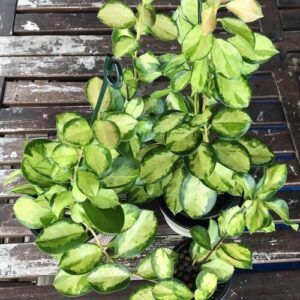
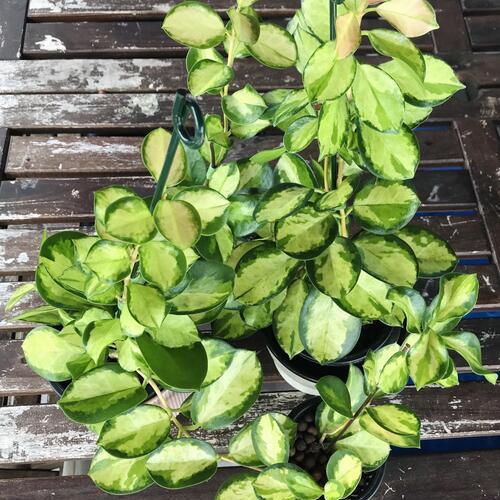
Hoya australis, commonly known as the Common Waxflower or Hoya Australis, is a robust, twining vine celebrated for its thick, glossy, succulent-like leaves and its abundant clusters of intensely fragrant, star-shaped flowers. The leaves are broadly oval to elliptical, deep green, and noticeably fleshy, storing water in a manner similar to many succulents, which gives the plant excellent resilience to occasional drought and makes it one of the hardier members of the Hoya genus. This species is native to Australia, where it occurs naturally across coastal and near-coastal regions of Queensland and New South Wales, as well as parts of the South Pacific, including islands such as Vanuatu, Fiji, and New Caledonia, growing as an epiphyte or lithophyte scrambling up trees, rocks, and cliff faces in subtropical and tropical forest margins.
In habitat, Hoya australis is often found clinging to host trees or rocky outcrops using twining stems and small aerial roots, thriving in the bright, filtered light of forest edges and open woodland rather than the deep shade of dense rainforest interiors. This tolerance for brighter conditions than many other Hoya species makes it an adaptable and rewarding houseplant, capable of handling a few hours of direct morning or late-afternoon sun once acclimated. Several regional varieties and subspecies exist, including Hoya australis subsp. australis, subsp. rupicola, and others, which vary slightly in leaf shape, size, and cold tolerance depending on their specific native range.
The plant’s crowning feature is its flower display: large, rounded umbels of 20 to 30 waxy, white to pale pink star-shaped flowers, each with a contrasting red or burgundy center, open in flushes throughout the warm months and release a powerful, sweet fragrance reminiscent of jasmine or gardenia, particularly strong in the evening. Vigorous and fast-growing compared to many other Hoyas, it can quickly climb trellises or cascade from hanging baskets, making it equally suited to training on a support or allowing to trail freely, and its thick, drought-tolerant leaves make it notably forgiving of inconsistent watering.
Hoya Australis Care & Growing Guide
Hoya australis is one of the more forgiving and vigorous Hoyas to grow, making it an excellent choice for beginners transitioning into this genus. Provide it with bright, indirect light for most of the day, with some tolerance for a few hours of gentle direct morning or late-day sun, which actually encourages more prolific blooming and can give the foliage a attractive reddish blush at the leaf margins. A chunky, fast-draining substrate made from orchid bark, perlite, and a smaller portion of coco coir or potting soil allows the thick roots to breathe while still retaining enough moisture between waterings.
Thanks to its succulent-like leaves, this Hoya stores water efficiently and prefers to dry out somewhat between waterings rather than being kept constantly moist; allow the top half of the pot to dry before watering thoroughly and letting excess drain away completely. It is considerably more drought-tolerant than many houseplants, so occasional missed waterings are far less damaging than consistently soggy soil, which remains the primary threat to root health. Moderate humidity is appreciated but not as critical for this species as it is for thinner-leaved Hoyas, since its fleshy foliage handles drier household air reasonably well.
Round out care with regular light feeding during the growing season, warm and stable temperatures, and a sturdy support or hanging location that allows its vigorous, twining stems to climb or cascade freely. Once established, Hoya australis rewards minimal intervention with fast growth and reliably heavy, fragrant flowering, and like all Hoyas, it should never have its spent flower peduncles removed, as they will continue producing new blooms for years to come.
Soil
Hoya australis thrives in a chunky, fast-draining substrate that balances moisture retention with excellent aeration, reflecting its epiphytic and lithophytic habits in the wild. A well-suited mix combines orchid bark, perlite, and a smaller proportion of coco coir or standard potting soil, with the option to add horticultural charcoal to keep the substrate fresh and reduce the risk of root rot. This species tolerates a fairly wide pH range but performs best in slightly acidic to neutral soil, roughly 6.0 to 7.0, which supports steady nutrient uptake. Because of its thick, water-storing leaves, Hoya australis is more forgiving of brief lapses in soil moisture than of consistently wet conditions, so excellent drainage is essential to prevent waterlogging. Soil problems to watch for include poor drainage from overly dense or peat-heavy mixes, compaction as organic material breaks down over one to two years, inappropriate pH from mineral-laden tap water, salt build-up from over-fertilizing (seen as a white crust on the soil surface), nutrient deficiencies in old, depleted substrate, and root boundness, which this vigorous grower tends to tolerate well and which can even encourage more prolific flowering before repotting becomes necessary.
Fertilizer
Feed Hoya australis with a balanced, water-soluble fertilizer diluted to half strength, applied every 4 to 6 weeks during the active growing season from spring through summer, reducing or pausing feeding entirely during the slower-growth months of fall and winter. A fertilizer with slightly elevated phosphorus and potassium content can help support the heavy flowering this species is known for once it reaches maturity. Signs of over-fertilization include a white, crusty salt buildup on the soil surface, browned or burnt leaf tips, and stunted new growth, while under-fertilization typically appears as pale, slow-growing foliage and reduced flowering over time. Organic alternatives such as diluted fish emulsion, compost tea, or worm castings can provide a gentler, slow-release source of nutrients, and periodically flushing the soil with plain water helps prevent salt accumulation from any fertilizer regimen.
Watering
Water Hoya australis thoroughly when the top half of the potting mix has dried out, then allow any excess to drain away completely, as this species’ thick, succulent-like leaves store water efficiently and tolerate drying out between waterings far better than sitting in soggy soil. Rainwater, distilled water, or filtered water at room temperature is preferable to hard tap water, which can leave mineral deposits over time, though this species is somewhat more tolerant of average tap water than thinner-leaved Hoyas. Signs of underwatering include noticeably wrinkled, softened, or slightly shriveled leaves, while overwatering presents as yellowing leaves, mushy stems near the soil line, and a sour smell from the potting mix, indicating root rot. Reduce watering frequency by roughly half during the cooler, lower-light months of autumn and winter, and increase it again as active growth resumes in spring and summer.
Hoya Australis Watering Calculator
🪴 Precision Watering Intelligence
Science-Based Hydration for Your Collection
Stop guessing. Most houseplant failures are caused by volumetric errors and improper moisture tension. Our deterministic calculator moves beyond "once-a-week" watering by analyzing the four critical pillars of root health:
- • Transpiration Coefficients: 120+ species mapped by metabolic rate.
- • Substrate Porosity: Adjusts for Standard vs. Cactus/Well-Draining mixes.
- • Geometric Volume (V = π r² h): Calculates exact cups based on pot surface area.
- • The Drainage Factor: Accounts for pot material (Terracotta) and the risk of a perched water table.
Personalized for this plant
Disclaimer: Our calculator is pretty smart. We’ve crunched the numbers, but we’re not measuring the quantum state of your living room. Since we don’t know your exact indoor temperature, humidity, light, airflow, or whether your plant receives daily sweet nothings and motivational speeches, use this calculator as a guide—and always keep an eye on your plant.
Lighting
Hoya australis is notably more sun-tolerant than many other Hoya species and performs best with bright, indirect light for the majority of the day, supplemented by a few hours of gentle direct morning or late-afternoon sun, which encourages the most abundant flowering. Insufficient light results in leggy, sparse vine growth, smaller leaves, a loss of the attractive reddish leaf-margin blush, and little to no flowering even on otherwise healthy plants. Excessive harsh midday sun, particularly through unfiltered glass, can still cause bleached or scorched patches on the leaves, so acclimate the plant gradually to brighter positions. If natural light is limited, a full-spectrum LED grow light positioned 12 to 18 inches above the plant for 12 to 14 hours daily can effectively supplement or replace sunlight, and rotating the plant periodically ensures balanced, even growth.
Temperature
Hoya australis thrives in warm conditions between 65 and 85°F (18–29°C) and, being native to relatively mild coastal Australian and Pacific climates, has slightly better cold tolerance than many tropical Hoyas, though it still cannot withstand frost or prolonged exposure below 50°F (10°C). Sudden cold drafts, proximity to air conditioning vents, or cold windowpanes in winter can cause leaf drop or slowed growth, so keep the plant away from these stress points during colder months. In summer, this heat-tolerant species handles warm temperatures well, though it should be protected from prolonged exposure above 90°F (32°C) paired with low humidity, which can stress even this relatively resilient Hoya.
Humidity
While Hoya australis appreciates moderate humidity in the 40 to 60 percent range, its thick, succulent-like leaves make it considerably more tolerant of average indoor humidity than many thinner-leaved Hoya species. In very dry environments, leaves may show minor edge crisping or a slightly dull appearance over time, though the plant generally continues to grow and flower reasonably well. Excessively high humidity combined with poor air circulation can occasionally encourage fungal issues on foliage or flowers, so good airflow remains important. Simple methods such as a pebble tray, occasional grouping with other plants, or a nearby humidifier can nudge humidity upward if desired, though this species does not require the intensive humidity management that more delicate Hoyas demand, and misting offers only a brief, minor benefit that is not essential for this drought-tolerant species.
Propagation
Hoya australis propagates readily and reliably from stem cuttings, making it one of the easier Hoyas to multiply, with success rates for stem cuttings notably higher than for seed propagation, which is rarely practiced outside of specialized breeding. Cuttings root well in either water or a moist perlite-based mix, with soil or perlite propagation generally producing a more robust root system suited for transplanting than water propagation alone. Late spring through summer, during the plant’s most active growth period, offers the fastest rooting and establishment.
Step-by-step guide: 1) Select a healthy, mature stem with at least two to three leaf nodes, avoiding sections currently in bloom. 2) Using clean, sharp scissors or pruning shears, cut just below a node to create a cutting roughly 4 to 6 inches long. 3) Remove the lowest set of leaves to expose one or two bare nodes. 4) Optionally dip the cut end in rooting hormone to speed root development. 5) Place the cutting in a jar of room-temperature water with nodes submerged, or insert it into a moist perlite or perlite-coco coir mix. 6) Keep the cutting in bright, indirect light with consistent warmth around 70–80°F. 7) Refresh water every few days for water propagation, or keep the medium evenly moist but not waterlogged for soil-based propagation. 8) Expect visible root growth within 2 to 4 weeks, faster than many other Hoya species thanks to this plant’s vigorous growth habit. 9) Once roots reach one to two inches long, transplant into a well-draining Hoya mix. 10) Maintain bright, indirect light and steady humidity for several weeks as the new plant establishes, typically taking one to two months to show strong new growth and settle in fully.
Potting
Select a pot only slightly larger than the current root mass, with ample drainage holes, as Hoya australis tends to flower more reliably when kept somewhat snug in its container. Terracotta or other porous, unglazed pots work particularly well, as their breathable walls help excess moisture evaporate and further reduce the risk of root rot in this species’ fast-draining mix. Repotting is typically needed every 2 to 3 years, or sooner given this vigorous grower’s faster pace compared to other Hoyas, and is indicated by roots emerging from drainage holes, compacted or depleted potting mix, or a noticeably top-heavy, unstable plant. When repotting, minimize disturbance to the root ball, trimming away only clearly dead or rotted roots rather than performing extensive root pruning, which this species tolerates but does not require. Move the plant to its new pot with fresh mix, water it in lightly, and keep it in familiar light conditions for a couple of weeks afterward to ease the transition with minimal stress.
Pruning
When to Prune
The best time to prune Hoya australis is in late winter or early spring, just before the onset of active growth, though light shaping and maintenance can be done throughout the growing season as needed.
Purpose of Pruning
Pruning helps control this vigorous vine’s length, remove damaged or leggy stems, and encourage bushier, fuller growth, though it is not necessary to trigger flowering, since blooms arise from permanent peduncles rather than new growth tips.
Tools and Preparation
Use clean, sharp bypass pruning shears, sterilizing the blades with rubbing alcohol before and after use to prevent the spread of disease between plants.
Step-by-Step Pruning Guide
- Examine the vine and identify any yellowed, damaged, or overly leggy stems to remove first.
- Cut damaged or unwanted stems back to healthy tissue, making clean cuts just above a leaf node at a slight angle.
- To control overall length, trim vigorous stems back by up to a third, always cutting just above a node.
- Take care to avoid cutting the small, woody peduncles left behind after flowering, as these continue producing new blooms for years.
- Remove any crowded or crossing stems to improve airflow and light penetration through the plant.
- Wipe away any sap that seeps from cut ends using a damp cloth to keep the work area and tools clean.
Aftercare
Return the plant to its usual bright light location, resume normal watering, and wait one to two weeks before fertilizing to allow it to recover fully from pruning.
Special Considerations
Because Hoya australis grows vigorously, more assertive pruning is generally well tolerated compared to slower-growing Hoya species, but gloves or hand-washing after handling cuttings is still recommended, as the sap can occasionally irritate sensitive skin.
Blooming
Hoya australis blooms most heavily from late spring through summer, with mature, well-established plants sometimes continuing sporadic flushes into early autumn under warm, bright conditions. Each rounded umbel can hold 20 to 30 individual star-shaped flowers and typically lasts about one to two weeks before fading, with vigorous plants capable of producing several umbels in succession from the same persistent peduncles throughout the season. Optimal blooming occurs with bright light, warm daytime temperatures, and a period of slightly cooler nights, along with a plant that is somewhat root-bound in its container. Flowers are waxy white to blush pink with a deep red or burgundy central corona, and they produce a strong, sweet fragrance, often compared to jasmine, that is most pronounced in the evening and at night.
Pests and Diseases
Pests
Name: Mealybugs
Symptoms: Small, white, cottony masses in leaf axils and along stems, sticky honeydew residue on leaves, and distorted or yellowing new growth.
Treatment: Remove visible clusters with a cotton swab dipped in isopropyl alcohol, then apply insecticidal soap or neem oil to the entire plant every 7–10 days until fully resolved.
Name: Spider Mites
Symptoms: Fine webbing on leaf undersides, stippled or bronzed discoloration on leaves, and an overall dull, dusty appearance, particularly in dry indoor conditions.
Treatment: Rinse foliage thoroughly with lukewarm water, increase ambient humidity, and treat with insecticidal soap or neem oil weekly until mites are no longer present.
Name: Aphids
Symptoms: Clusters of small green, black, or yellow insects on new growth and flower buds, along with sticky honeydew and curled or distorted new leaves.
Treatment: Spray affected areas with a strong stream of water to dislodge aphids, then apply insecticidal soap or neem oil every 5–7 days until the infestation clears.
Diseases
Name: Root Rot
Symptoms: Soft, blackened roots and stem base, wilting despite consistently moist soil, yellowing leaves, and an unpleasant odor from the potting mix.
Treatment: Remove the plant from its pot, trim away all rotted roots with sterilized scissors, repot into fresh, fast-draining mix, and reduce watering frequency going forward.
Name: Fungal Leaf Spot
Symptoms: Brown or black spotting, sometimes with yellow halos, scattered across leaf surfaces, typically following prolonged leaf wetness or crowded, poorly ventilated conditions.
Treatment: Remove and discard affected leaves, improve air circulation around the plant, avoid wetting foliage during watering, and apply a copper-based fungicide if spotting continues to spread.
Special Features
Hoya australis is best known for its exceptionally fragrant, large clusters of waxy white flowers, which release a powerful, sweet scent reminiscent of jasmine or gardenia, particularly strong in the evening, making it a favorite for placement near windows, patios, or entryways where the fragrance can be fully enjoyed. Its thick, succulent-like leaves give it far greater drought tolerance than many other Hoyas, making it a forgiving, low-maintenance choice for growers who may occasionally miss a watering. As a vigorous climber, it readily trains onto trellises, moss poles, or archways, or can be left to cascade freely from a hanging basket, offering versatile styling options along with its reliable, heavy seasonal bloom display.
Plant Benefits
Hoya australis is not widely documented for medicinal or pharmaceutical use in modern herbal practice, though some Hoya species have a limited history of traditional topical use in parts of Australia and the Pacific for minor skin complaints. There is no significant scientific research validating therapeutic claims specific to Hoya australis, and it is best regarded as a fragrant ornamental plant rather than a source of herbal remedy.
Additional Information
Hoya australis encompasses several recognized subspecies and regional varieties, such as subsp. rupicola and subsp. sanae, which can differ somewhat in leaf shape, size, and cold hardiness depending on their native range, so growers should note that care needs may vary slightly by variety. It is considered one of the faster-growing and more sun-tolerant Hoyas available in cultivation, making it a popular gateway species for newcomers to the genus.
Life Cycle
As a perennial epiphytic vine, Hoya australis has no fixed annual life cycle and, given stable growing conditions, can live for many years, often decades, while steadily increasing in size and vigor. Growth begins with establishment of roots and initial vine extension, followed by a vigorous vegetative phase of leaf and stem growth that, compared to many other Hoyas, proceeds relatively quickly, often allowing the plant to reach flowering maturity within one to two years from a rooted cutting. Once mature, the plant settles into a recurring seasonal rhythm of vigorous growth and heavy flowering during the warm months, followed by a slower, semi-dormant period in cooler, lower-light months, with its woody flower peduncles persisting and reactivating each season rather than being replaced.
Are Hoya Australis Poisonous, Toxic
Hoya australis is generally regarded as non-toxic to cats, dogs, and humans, including children, consistent with the ASPCA’s classification of the broader Hoya genus as pet-safe. The milky sap is not considered to contain significant toxic compounds, though ingestion of a large quantity of leaf or stem material can occasionally cause mild gastrointestinal upset such as drooling, nausea, or mild vomiting, largely due to the plant’s fibrous texture rather than true poisoning. As with other Apocynaceae family members, the sap can occasionally cause mild skin irritation or contact dermatitis in sensitive individuals. If ingestion occurs and mild symptoms appear, rinse the mouth with water and offer small sips of water, monitoring closely; seek veterinary or medical attention if vomiting persists, breathing difficulty develops, or a substantial quantity was consumed. As a general precaution, keep the plant out of easy reach of curious pets and young children, and wash hands after pruning or propagating to avoid transferring sap to the eyes or mouth.
Frequently Asked Questions
Is Hoya australis easy to care for?
Yes, Hoya australis is considered one of the easiest Hoya species to grow, thanks to its drought tolerance, vigorous growth habit, and adaptability to a range of light conditions.
Is Hoya australis toxic to cats and dogs?
No, Hoya australis is generally considered non-toxic to cats and dogs, though eating large amounts of plant material may cause mild stomach upset.
Why does my Hoya australis smell so strong at night?
Hoya australis flowers release most of their sweet, jasmine-like fragrance in the evening and at night as a natural adaptation to attract nocturnal pollinators.
How much light does Hoya australis need?
It needs bright, indirect light for most of the day and tolerates a few hours of gentle direct morning or late-afternoon sun, which often encourages heavier flowering.
How often should I water Hoya australis?
Water when the top half of the potting mix has dried out, typically every one to two weeks, since its thick, succulent-like leaves store water and tolerate drying out between waterings.
Why won’t my Hoya australis bloom?
Lack of blooming is usually caused by insufficient light, an immature plant, or a pot that is too large, since this Hoya flowers more reliably when kept somewhat root-bound.
How fast does Hoya australis grow?
Hoya australis is one of the faster-growing Hoya species, capable of producing several feet of new vine growth in a single growing season under good conditions.
How do I propagate Hoya australis?
It propagates easily from stem cuttings with at least one leaf node, rooted in water or a moist perlite mix, typically showing roots within two to four weeks.
Should I remove the flower peduncles after blooming?
No, the peduncles should always remain on the plant, as they are permanent structures that continue producing new flower clusters in future blooming seasons.
How big does Hoya australis get?
Hoya australis is a medium to large vining plant that can grow several feet in length, whether trained onto a support or allowed to trail from a hanging basket.
Can I grow Hoya Australis in my indoor space
Difficulty: Easy
Size: Medium to Large
Light: Medium to High
Water: Low
Flowering: Yes
Pet Safe: Yes
Air Purifier: Low
Hoya australis botanical details
Common Name: Hoya Australis
Other Common Names: Common Waxflower, Australian Wax Flower, Native Wax Vine
Botanical Name: Hoya australis
Native Area: Coastal and near-coastal Australia (Queensland and New South Wales) and parts of the South Pacific, including Vanuatu, Fiji, and New Caledonia
Family Name: Apocynaceae
Plant Type: Epiphytic perennial vine
Genus: Hoya
Kingdom: Plantae
Photo Gallery
My Hoya Australis Plant Care Recommendations
- Perky Plant fertilizer: https://amzn.to/3RdLA00
- Seaweed extract: https://amzn.to/3z2CsFh
- Rooting hormone: https://amzn.to/3bIXi0t
- Espoma fertilizer: https://amzn.to/3vPa9bs
- Worm compost: https://amzn.to/3HVL01u
- Full-spectrum Light Bulb-Large: https://amzn.to/3yR6VBu
- Full-spectrum Lighting: https://amzn.to/3qhhaiv
- Light meter: https://amzn.to/4dpmp3s
- Moisture meter: https://amzn.to/3TEUu5N
- Hygrometer: https://amzn.to/3Cf6h2F
- Pruning shears: https://amzn.to/3X6oOcg
- ProMix Potting Soil: https://amzn.to/3iVIrjE
- My Organic Green Gourmet Houseplant Fertilizer: Healthy Houseplants Store
- My Perfect Pumice: Healthy Houseplants Store
- My Healthy Houseplants Store: All Products
Buy Hoya Australis Online
✅ “Bring Home This Beauty Today”
✅ “Get Your Own Hoya Australis Before It’s Gone”
✅ “Shop Trusted Sellers – Limited Availability”
✅ “Free Delivery”
As an Amazon Associate, I earn commission from qualifying purchases.
Plant Puns and Jokes
Why is Hoya australis always the life of the party? Because once the sun goes down, it can’t stop showing off its fragrance and everyone in the room notices.