About Sweetheart Hoya
Sweetheart Hoya Introduction
Hoya kerrii, widely known as the Sweetheart Hoya, is a succulent-leaved climbing and trailing vine native to the tropical forests of Southeast Asia. It belongs to the wax plant genus Hoya, a group prized by collectors for thick, glossy foliage and clusters of star-shaped, often fragrant flowers. In its native habitat, Hoya kerrii grows as an epiphyte or hemi-epiphyte, using its twining stems to climb tree trunks and anchor itself in the loose, humus-rich debris that collects in the forks of branches, where filtered light and high humidity create ideal growing conditions.
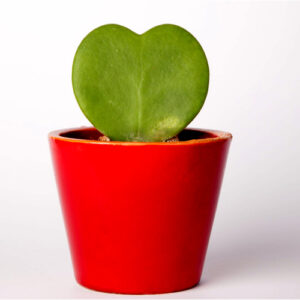
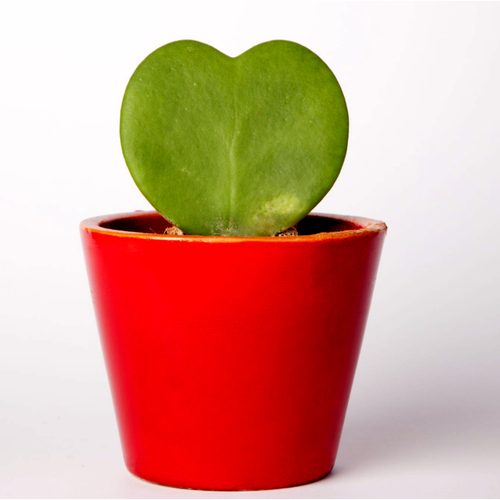
The species is instantly recognizable for its thick, heart-shaped leaves, a feature that has made it a beloved novelty gift around Valentine’s Day, where single rooted leaves are often sold in small pots under names like Lucky Heart Plant or Valentine Hoya. Each leaf is deeply succulent, storing water much like the leaves of a jade plant, which allows the species to withstand periods of drought in the wild. Mature plants produce long, woody, vining stems that can stretch several feet when given a trellis or support, eventually producing umbels of star-shaped flowers.
In cultivation, Hoya kerrii is valued both as a novelty single-leaf houseplant and, when allowed to mature into a full vine, as a long-lived, low-maintenance specimen plant. Established vines can live for decades with minimal care, and older specimens are capable of producing clusters of waxy, star-shaped blooms that release a sweet fragrance and small droplets of nectar, a characteristic shared across many species in the Hoya genus.
Sweetheart Hoya Care & Growing Guide
Caring for Hoya kerrii centers around replicating the conditions of its native tree-canopy habitat: bright, filtered light, a fast-draining growing medium, and a watering rhythm that allows the succulent leaves to dry out between drinks. Because the plant stores water in its foliage, it is far more forgiving of neglect than of overwatering, making it an excellent choice for busy plant owners or those new to succulent-type houseplants. A chunky, well-aerated potting mix combined with a pot that has drainage holes is the single most important factor in long-term success.
Light is the second pillar of good care. Bright, indirect light for several hours a day encourages compact growth and, eventually, flowering, while a spot that is too dim will lead to slow, leggy growth and a plant that never blooms. Direct, intense afternoon sun can scorch the leaves, so an east-facing window or a spot a few feet back from a bright south or west window tends to work best. Rotating the pot occasionally helps the plant grow evenly toward the light source.
Beyond light and water, Hoya kerrii benefits from warm temperatures, moderate humidity, and a light feeding schedule during the active growing season in spring and summer. It has minimal pruning needs and, if purchased as a single leaf cutting, requires patience: a leaf without a node attached will survive and even grow slightly but will not produce new vining growth, so gardeners hoping for a full vine should seek out cuttings that include at least one node. With consistent, moderate care, Hoya kerrii is a resilient, long-lived plant that rewards patience with unique foliage and, eventually, clusters of fragrant star-shaped flowers.
Soil
Hoya kerrii thrives in a light, fast-draining, chunky mix rather than dense standard potting soil. A blend of roughly equal parts orchid bark, perlite, and a peat-free or coco-coir-based potting mix mimics the loose organic debris the plant would root into on a tree branch in the wild. Adding a handful of horticultural charcoal helps keep the mix fresh and reduces the risk of root rot. The ideal pH range is mildly acidic to neutral, around 6.0 to 6.5, which supports good nutrient uptake without allowing salts to build up. Because the leaves already store water, a heavy or moisture-retentive soil is the most common cause of failure, since it keeps the shallow root system wet for too long. Common soil-related problems include poor drainage from compacted, all-purpose potting soil, salt build-up from tap water and fertilizer residue (visible as a white crust on the soil surface or pot rim), nutrient deficiencies in old, depleted mix, and root-boundness in plants left in the same small pot for several years. Flushing the pot with plain water every few months helps clear excess salts, and repotting every two to three years into fresh mix prevents compaction and replenishes nutrients.
Fertilizer
Feed Hoya kerrii with a balanced, water-soluble houseplant fertilizer (such as a 20-20-20 or similar formula) diluted to half strength, applied every 4-6 weeks during the spring and summer active growing season. Suspend feeding in fall and winter when growth naturally slows. A fertilizer slightly higher in phosphorus and potassium can help encourage blooming on mature vines once they reach flowering size. Signs of over-fertilization include a crust of white mineral salts on the soil surface, brown, crispy leaf tips or margins, and slowed growth despite adequate light and water; signs of under-fertilization include pale, slow-growing foliage and a lack of new growth over multiple growing seasons. Organic alternatives such as diluted fish emulsion, worm castings mixed into the topsoil, or a slow-release organic pellet fertilizer work well and reduce the risk of salt build-up compared to synthetic formulas. Flushing the soil with plain water every couple of months helps prevent fertilizer salts from accumulating around the succulent root system.
Watering
Allow the top half to two-thirds of the potting mix to dry out completely between waterings, then water thoroughly until it drains from the bottom of the pot. Because the thick leaves store water, Hoya kerrii is considerably more drought-tolerant than most houseplants and much more susceptible to harm from overwatering than underwatering. Room-temperature tap water is generally fine, though rainwater or distilled water can help avoid mineral and salt build-up over time in areas with hard tap water. Overwatering shows up as soft, mushy, or wrinkled leaves, yellowing foliage, and a musty smell from the soil indicating root rot, while underwatering causes leaves to become slightly wrinkled or deflated but still firm, recovering quickly once watered. During the spring and summer growing season, watering may be needed roughly every 1-2 weeks depending on light and temperature; in fall and winter, when growth slows, watering frequency should be reduced to every 3-4 weeks or longer, always checking the mix rather than following a fixed calendar.
Sweetheart Hoya Watering Calculator
🪴 Precision Watering Intelligence
Science-Based Hydration for Your Collection
Stop guessing. Most houseplant failures are caused by volumetric errors and improper moisture tension. Our deterministic calculator moves beyond "once-a-week" watering by analyzing the four critical pillars of root health:
- • Transpiration Coefficients: 120+ species mapped by metabolic rate.
- • Substrate Porosity: Adjusts for Standard vs. Cactus/Well-Draining mixes.
- • Geometric Volume (V = π r² h): Calculates exact cups based on pot surface area.
- • The Drainage Factor: Accounts for pot material (Terracotta) and the risk of a perched water table.
Personalized for this plant
Disclaimer: Our calculator is pretty smart. We’ve crunched the numbers, but we’re not measuring the quantum state of your living room. Since we don’t know your exact indoor temperature, humidity, light, airflow, or whether your plant receives daily sweet nothings and motivational speeches, use this calculator as a guide—and always keep an eye on your plant.
Lighting
Bright, indirect light is ideal for Hoya kerrii, such as an unobstructed east-facing window or a spot several feet back from a south- or west-facing window. A few hours of gentle morning sun is tolerated and even beneficial, encouraging thicker leaves and eventual flowering, but intense, direct afternoon sun can scorch the succulent leaves, leaving pale or brown patches. Signs of too little light include slow or stalled growth, thin or unusually dark green leaves, and a vine that never produces flowers. Signs of too much direct sun include bleached, yellowish, or crispy brown patches on the sun-facing side of the leaves. If natural light is limited, a full-spectrum LED grow light placed 12-18 inches above the plant for 10-12 hours a day is an effective substitute, and sheer curtains can be used to soften overly intense direct sun without eliminating brightness.
Temperature
Hoya kerrii grows best in warm conditions between 65-85°F (18-29°C) and should be protected from temperatures below 50°F (10°C), as it has no frost tolerance and can suffer chilling damage or leaf drop in cold drafts. It tolerates normal day-to-night temperature fluctuations well and, in fact, a slightly cooler night temperature in the 60s°F during spring can help trigger flowering on mature vines. Keep the plant away from cold windowsills in winter, air conditioning vents, and drafty doors, and bring any plants kept outdoors in summer inside well before nighttime temperatures approach 50°F. In very hot climates, provide light shade during the most intense afternoon heat to prevent leaf scorch, especially above 90°F (32°C).
Humidity
Hoya kerrii tolerates average indoor humidity but performs best in moderate humidity of around 40-60%. Low humidity rarely causes serious damage thanks to the succulent leaves, though prolonged very dry air can lead to slightly wrinkled or slow-growing leaves. High humidity combined with poor airflow, on the other hand, can encourage fungal issues on the leaves or stems, so consistent moderate humidity with good air circulation is the real goal rather than maximizing humidity. Effective ways to raise humidity include grouping the plant with other houseplants, setting the pot on a pebble tray with water kept below the base of the pot, or running a small room humidifier nearby; misting the thick leaves directly offers little benefit and can encourage fungal spotting if water sits on the foliage, so it is not recommended as a primary humidity method for this species.
Propagation
Propagating Hoya kerrii from Stem Cuttings
The most reliable way to propagate Hoya kerrii into a full vining plant is by stem cuttings that include at least one leaf node, since the node is where new roots and shoots will form. A single detached leaf without a node attached may root and survive for a long time but will not produce new growth, which is why many gift-shop ‘single heart’ plants never grow beyond one leaf.
- Select a healthy, mature stem with at least two to three leaves and one or more nodes, avoiding stems with signs of disease or pest damage.
- Using clean, sharp scissors or pruning shears, cut a 4-6 inch section just below a node.
- Allow the cut end to callous over for a few hours to a day in a dry, shaded spot to reduce the risk of rot.
- Optionally dip the cut end in rooting hormone to encourage faster root development.
- Plant the cutting in a small pot of well-draining mix (such as perlite and orchid bark), burying at least one node beneath the surface, or place the cutting in water with the node submerged.
- Keep the cutting in bright, indirect light and warm temperatures of at least 70°F (21°C).
- If rooting in soil, keep the mix lightly moist but not soggy; if rooting in water, change the water every few days.
- Check for root development after 3-4 weeks by gently tugging the cutting for resistance.
- Once roots are at least an inch long, transplant water-rooted cuttings into a well-draining potting mix.
- Continue routine care, expecting new leaf growth to appear within 1-3 months as the young plant establishes.
Stem cuttings with a node rooted in a chunky soil mix tend to have the highest long-term success rate and produce a vining plant fastest, while water propagation is easy to monitor but often requires a careful transition period to avoid transplant shock. Late spring through summer is the best time to take cuttings, coinciding with the plant’s natural active growth period, and new growth is typically visible within one to three months, though full vine establishment can take a full growing season.
Potting
Choose a pot only slightly larger than the current root ball, with ample drainage holes, since Hoya kerrii’s roots dislike sitting in excess moisture; unglazed terracotta is a good choice as it wicks away extra moisture. Repotting is generally needed only every 2-3 years, as this species prefers to be slightly root-bound and often blooms more reliably when snug in its pot. Signs that repotting is needed include roots visibly circling the drainage holes or growing out of them, water running straight through the pot without being absorbed, and a noticeable slowdown in growth despite otherwise good care. When repotting, gently loosen the outer roots, trim away any mushy, dark, or dead roots with clean shears, and avoid disturbing the root ball more than necessary. Move the plant to its new pot with fresh, well-draining mix, water lightly, and keep it out of direct sun and away from fertilizer for a couple of weeks afterward to reduce transplant stress.
Pruning
When and Why to Prune Hoya Kerrii
Pruning is minimal for Hoya kerrii and is mainly used to remove damaged or dead growth, control the length of an overgrown vine, or take cuttings for propagation. The best time to prune is in spring or early summer, at the start of the active growing season, so the plant can recover and push new growth quickly.
Tools and Preparation
Use clean, sharp scissors or pruning shears, wiped with rubbing alcohol before and after use to prevent spreading disease between plants.
- Inspect the vine and identify any yellowed, damaged, or overly long stems to remove.
- Make cuts just above a leaf node, at a slight angle, to encourage clean healing and new branching.
- Never cut off the short, woody flower spurs (peduncles) left behind after blooming, since Hoya kerrii reuses these same spurs to flower again in future seasons.
- Remove no more than about a quarter of the plant’s total growth in a single session to avoid shocking it.
- Dispose of or use healthy trimmed sections for propagation as described in the propagation guide.
- Wipe tools clean again after finishing.
Aftercare
After pruning, keep the plant in its normal bright, indirect light spot, hold off on fertilizing for a couple of weeks, and water as usual once the soil has dried appropriately, allowing the plant to focus its energy on recovery and new growth.
Blooming
Mature Hoya kerrii typically bloom in the warmer months, from late spring through summer, though established indoor plants can flower intermittently whenever conditions are favorable. Flowering is not guaranteed on young or single-leaf plants; vines generally need two to three years or more of steady growth before producing their first umbel. Each bloom cycle produces a spherical cluster (umbel) of 15-25 small, star-shaped flowers, typically cream to pale yellow with a red or burgundy center, that stay open for about a week and release a sweet, honey-like fragrance most noticeable in the evening. Small beads of nectar form at the center of each flower. Blooming is encouraged by bright indirect light, a consistent watering rhythm, and a period of slightly cooler night temperatures; established peduncles (flower spurs) should never be removed, as the plant reuses them for repeat blooming in following seasons.
Pests and Diseases
Pests
Name: Mealybugs
Symptoms: Small, cottony white clusters in leaf joints and along stems; sticky honeydew residue on leaves; sooty mold may develop.
Treatment: Dab visible mealybugs with a cotton swab dipped in rubbing alcohol, then treat the whole plant with insecticidal soap or neem oil, repeating every 7-10 days until the infestation clears.
Name: Spider mites
Symptoms: Fine webbing on the undersides of leaves, tiny speckled or stippled discoloration on leaf surfaces, and dry, dusty-looking foliage.
Treatment: Increase humidity, rinse leaves with a strong stream of water, and apply insecticidal soap or a miticide, repeating treatments every 5-7 days since mite eggs are resistant to a single application.
Name: Scale insects
Symptoms: Small, flat or dome-shaped brown or tan bumps on stems and leaf undersides that do not brush off easily; yellowing leaves; sticky honeydew.
Treatment: Scrape off visible scale gently with a fingernail or soft brush, then treat with horticultural oil or neem oil, reapplying every two weeks until no new scale appears.
Diseases
Name: Root rot
Symptoms: Mushy, dark, or foul-smelling roots, wilting despite moist soil, yellowing leaves, and stunted growth.
Treatment: Remove the plant from its pot, trim away all affected roots with sterilized scissors, repot into fresh well-draining mix, and reduce watering frequency going forward.
Name: Fungal leaf spot
Symptoms: Circular brown, black, or yellow-haloed spots on the leaf surface, sometimes with a slightly sunken texture.
Treatment: Remove and discard affected leaves, improve air circulation around the plant, avoid wetting the foliage when watering, and apply a copper-based fungicide if the spotting continues to spread.
Special Features
Hoya kerrii is best known for its uniquely thick, glossy, heart-shaped leaves, which have made single-leaf cuttings a popular novelty gift around Valentine’s Day under names like the Lucky Heart Plant. Beyond its ornamental foliage, mature vines produce clusters of star-shaped, waxy flowers with a sweet evening fragrance and small droplets of nectar at the center of each bloom, adding seasonal interest to an otherwise foliage-focused plant. Its long-lived, low-maintenance nature and drought tolerance also make it a rewarding long-term houseplant, capable of thriving for many years with only modest care once established.
Plant Benefits
Hoya kerrii has no significant established herbal or pharmaceutical uses in modern practice. It is grown primarily as an ornamental houseplant rather than for medicinal purposes, and no part of the plant is recommended for consumption or home remedy use.
Additional Information
Single detached leaves of Hoya kerrii, often sold without a node, will slowly wither and eventually die back after a year or more since they cannot produce new roots or shoots on their own; buyers who want a full, growing vine should specifically look for cuttings that include at least one node and a section of stem.
Life Cycle
Hoya kerrii is a long-lived, slow-to-moderate growing perennial vine. Cuttings root within a few weeks to a couple of months, followed by a juvenile phase of one to several years focused on vegetative (leaf and stem) growth before the plant reaches maturity. Only once mature, and typically only when allowed to vine and climb rather than being kept as a single leaf, will the plant produce flowering spurs that bloom repeatedly, sometimes for decades, in subsequent growing seasons. With appropriate care, a single vine can live and continue producing new growth and flowers for well over twenty years.
Are Sweetheart Hoya Poisonous, Toxic
Hoya kerrii is generally classified as non-toxic to cats, dogs, and humans, including children, according to the ASPCA’s listing for the Hoya genus. No part of the plant – leaves, stems, or flowers – is known to contain toxins that cause serious poisoning if chewed or ingested. Mild gastrointestinal upset, such as slight nausea or an upset stomach, can occasionally occur in pets or children after chewing on the fibrous leaves or stem sap, simply due to the plant’s texture and sap rather than a true toxic compound. Symptoms, if any occur, are typically limited to mild drooling, lip licking, or brief stomach discomfort. As a precaution, rinse the mouth with water and offer a small amount of water to drink if a pet or child has chewed on a leaf, and monitor for any unusual symptoms. Contact a veterinarian, physician, or poison control center if symptoms persist or worsen, or if a large quantity of plant material was consumed, since individual sensitivities can vary. Keeping the plant out of easy reach of curious pets and toddlers is still good general practice, both to protect the plant’s leaves and to avoid any minor stomach upset.
Frequently Asked Questions
Will a single Hoya kerrii leaf grow into a full plant?
Only if the leaf cutting includes a node. A leaf without a node can survive for a long time but will not produce new growth.
Is Hoya kerrii toxic to cats and dogs?
No, Hoya kerrii is generally considered non-toxic to cats and dogs, with at most mild stomach upset possible if chewed.
How often should I water Hoya kerrii?
Water only after the top half to two-thirds of the soil has dried out, typically every one to two weeks in summer and much less often in winter.
How much light does Hoya kerrii need?
Bright, indirect light for several hours a day, such as near an east-facing window, with protection from intense direct afternoon sun.
Why won’t my Hoya kerrii bloom?
Hoya kerrii typically needs a few years of mature vining growth, consistent bright light, and stable care before it will produce flowers.
What kind of soil does Hoya kerrii need?
A chunky, fast-draining mix of potting soil, orchid bark, and perlite works best, with a mildly acidic pH around 6.0 to 6.5.
How do you propagate Hoya kerrii?
Take a stem cutting that includes at least one leaf node, root it in water or a well-draining mix, and transplant once roots are about an inch long.
Does Hoya kerrii need high humidity?
It tolerates average household humidity well but grows best in moderate humidity around 40 to 60 percent.
How often should Hoya kerrii be repotted?
Roughly every two to three years, since the plant tends to prefer being slightly root-bound and often blooms better when snug in its pot.
What temperature does Hoya kerrii prefer?
Warm conditions between 65 and 85°F, with protection from any temperatures below 50°F and from cold drafts.
Can I grow Sweetheart Hoya in my indoor space
Difficulty: Easy
Size: Medium
Light: Medium
Water: Low
Flowering: Yes
Pet Safe: Yes
Air Purifier: Low
Hoya kerrii botanical details
Common Name: Sweetheart Hoya
Other Common Names: Valentine Hoya, Valentine's Hoya, Lucky Heart Plant, Heart-Leaf Hoya, Sweetheart Wax Plant, Hoya Kerrii Variegata (for the variegated cultivar)
Botanical Name: Hoya kerrii
Native Area: Tropical and subtropical Southeast Asia, including Thailand, Vietnam, Cambodia, Laos, peninsular Malaysia, Java, Sumatra, and parts of southern China.
Family Name: Apocynaceae
Plant Type: Succulent, evergreen climbing/trailing vine (epiphytic perennial)
Genus: Hoya
Kingdom: Plantae
Photo Gallery
My Sweetheart Hoya Plant Care Recommendations
- Perky Plant fertilizer: https://amzn.to/3RdLA00
- Seaweed extract: https://amzn.to/3z2CsFh
- Rooting hormone: https://amzn.to/3bIXi0t
- Espoma fertilizer: https://amzn.to/3vPa9bs
- Worm compost: https://amzn.to/3HVL01u
- Full-spectrum Light Bulb-Large: https://amzn.to/3yR6VBu
- Full-spectrum Lighting: https://amzn.to/3qhhaiv
- Light meter: https://amzn.to/4dpmp3s
- Moisture meter: https://amzn.to/3TEUu5N
- Hygrometer: https://amzn.to/3Cf6h2F
- Pruning shears: https://amzn.to/3X6oOcg
- ProMix Potting Soil: https://amzn.to/3iVIrjE
- My Organic Green Gourmet Houseplant Fertilizer: Healthy Houseplants Store
- My Perfect Pumice: Healthy Houseplants Store
- My Healthy Houseplants Store: All Products
Buy Sweetheart Hoya Online
✅ “Bring Home This Beauty Today”
✅ “Get Your Own Sweetheart Hoya Before It’s Gone”
✅ “Shop Trusted Sellers – Limited Availability”
✅ “Free Delivery”
As an Amazon Associate, I earn commission from qualifying purchases.
Plant Puns and Jokes
Why did the Hoya kerrii refuse to rush into a relationship? Because it takes its time growing a heart before it commits to blooming.