About Hoya Pubicalyx
Hoya Pubicalyx Introduction
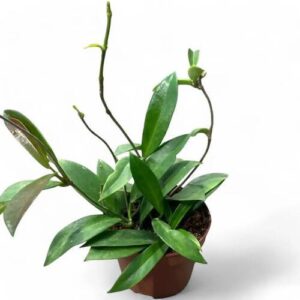
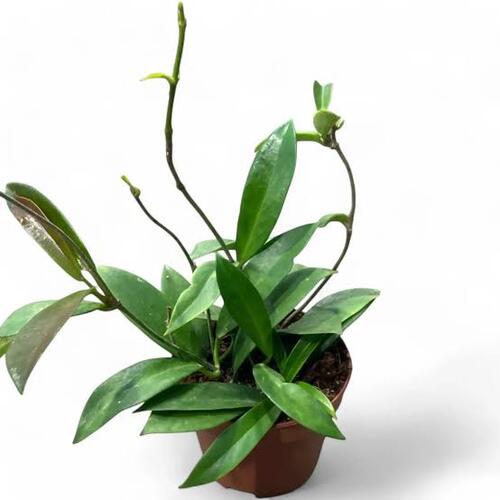
Hoya pubicalyx is a trailing, evergreen vine in the milkweed subfamily (Apocynaceae, subfamily Asclepiadoideae), native to the Philippines where it grows as an epiphyte and semi-succulent climber in humid, semi-shaded forest margins. It is prized among houseplant collectors for its thick, waxy, dark green leaves that are often speckled or splashed with silvery gray flecks, and for its ability to produce large, rounded umbels of star-shaped flowers with a heady, chocolate-and-caramel fragrance most noticeable in the evening.
In its native habitat, Hoya pubicalyx clings to trees and other supports using twining stems and aerial roots, drawing moisture and nutrients from humid air, decaying leaf litter, and bark rather than deep soil. This epiphytic lifestyle is why the species tolerates being somewhat root-bound and prefers a chunky, fast-draining growing medium over dense potting soil. Cultivated forms and named cultivars, such as ‘Royal Hawaiian Purple’, ‘Black Dragon’, ‘Splash’, and ‘Pink Silver’, vary in leaf variegation and flower coloration, ranging from deep maroon-purple to nearly black blooms with a contrasting pale corona.
Hoya pubicalyx is a vigorous grower compared to many of its slower Hoya relatives, and under favorable conditions it can produce several flushes of blooms per year on the same flowering spurs, called peduncles, which should never be removed after flowering since they will rebloom repeatedly. Its resilience, relatively fast growth, and striking, fragrant flower clusters have made it one of the most popular Hoya species in cultivation worldwide.
Hoya Pubicalyx Care & Growing Guide
Caring for Hoya pubicalyx centers on replicating its native epiphytic conditions: bright, indirect light, a chunky and fast-draining substrate, and a watering rhythm that allows the roots to dry between soakings. This species tolerates a bit of neglect better than overwatering, so most care mistakes come from keeping the medium too consistently wet rather than too dry. A sturdy pole, trellis, or hanging basket gives the vining stems room to climb or cascade, which encourages more robust growth and better flowering over time.
Beyond light and water, Hoya pubicalyx appreciates warm temperatures, moderate to high humidity, and regular but light feeding during its active growing season in spring and summer. It is not a fussy plant once established, but consistency helps: sudden swings in light, temperature, or watering frequency can cause leaf drop or stalled growth. Because it is a semi-succulent vine, its leaves store some water, giving it a buffer against occasional missed waterings.
Patience is especially useful with this species when it comes to blooming. Young plants or recent cuttings may take a year or more to flower, but once mature and given adequate light, Hoya pubicalyx often rewards growers with clusters of 20 to 40 star-shaped flowers per umbel, produced repeatedly from the same short woody spurs. Avoid moving the plant once buds have formed, as Hoyas can drop buds in response to environmental changes, and resist the urge to prune away spent flower stalks, since new blooms emerge from the same points.
Soil
Hoya pubicalyx needs a light, chunky, fast-draining medium rather than dense potting soil, reflecting its epiphytic origins. A good mix combines standard potting soil or coco coir with orchid bark, perlite, and a handful of charcoal in roughly equal parts, aiming for a blend that dries out within several days after watering while still holding some moisture around the roots. Ideal soil pH is mildly acidic to neutral, around 6.0 to 6.5. Amendments like perlite or pumice improve aeration and prevent compaction, while orchid bark mimics the bark substrate the plant would cling to in the wild.
Poor drainage is the most common soil problem, leading to root rot, yellowing leaves, and a mushy stem base; this is usually caused by using regular garden soil or a mix that stays soggy. Compaction over time reduces oxygen to the roots and can be corrected by repotting into fresh, chunky mix every one to two years. Overly alkaline soil can cause nutrient lockout, showing as pale or yellowing new growth, while salt build-up from excess fertilizer manifests as crusty white deposits on the soil surface or leaf tip burn and is remedied by flushing the pot with water every few months. Nutrient deficiencies, such as nitrogen deficiency causing pale leaves, are addressed through regular light feeding. Because Hoya pubicalyx tolerates and often prefers being slightly root-bound, occasional root boundness is not itself a problem, but severely compacted roots that circle the pot repeatedly should still be loosened at repotting time.
Fertilizer
Feed Hoya pubicalyx every three to four weeks during spring and summer with a balanced, water-soluble liquid fertilizer, such as a 20-20-20 formula, diluted to half strength, or a fertilizer formulated for blooming plants with slightly higher phosphorus to support flowering. Reduce or stop feeding in fall and winter when growth naturally slows. Signs of over-fertilization include a white crust on the soil surface, burned or browned leaf tips and edges, and stunted growth, while under-fertilization shows as pale green or yellowish leaves, slow growth, and reduced or absent flowering over successive seasons. Organic alternatives include diluted fish emulsion, seaweed or kelp extract, or worm castings mixed into the topsoil, which provide a gentler, slow-release nutrient source. Hoyas benefit particularly from adequate potassium and phosphorus to support flowering, and occasional micronutrient supplementation, such as a diluted seaweed extract, can help prevent trace mineral deficiencies.
Watering
Water Hoya pubicalyx thoroughly when the top half to two-thirds of the growing medium has dried out, then allow excess water to drain completely; this is typically every one to two weeks, adjusted for light, temperature, and pot size. The plant tolerates lukewarm rainwater, distilled water, or filtered water best, and can be sensitive over time to the fluoride, chlorine, and mineral salts in hard tap water, which may cause leaf tip browning. Signs of underwatering include wrinkled, slightly shriveled leaves and a limp appearance that recovers quickly after watering. Overwatering is more damaging and shows as yellowing lower leaves, a soft or mushy stem base, a sour smell from the soil, and root rot if prolonged. During active growth in spring and summer, watering frequency increases; in fall and winter, when growth slows, allow the medium to dry out more fully between waterings to prevent rot in cooler, lower-light conditions.
Hoya Pubicalyx Watering Calculator
🪴 Precision Watering Intelligence
Science-Based Hydration for Your Collection
Stop guessing. Most houseplant failures are caused by volumetric errors and improper moisture tension. Our deterministic calculator moves beyond "once-a-week" watering by analyzing the four critical pillars of root health:
- • Transpiration Coefficients: 120+ species mapped by metabolic rate.
- • Substrate Porosity: Adjusts for Standard vs. Cactus/Well-Draining mixes.
- • Geometric Volume (V = π r² h): Calculates exact cups based on pot surface area.
- • The Drainage Factor: Accounts for pot material (Terracotta) and the risk of a perched water table.
Personalized for this plant
Disclaimer: Our calculator is pretty smart. We’ve crunched the numbers, but we’re not measuring the quantum state of your living room. Since we don’t know your exact indoor temperature, humidity, light, airflow, or whether your plant receives daily sweet nothings and motivational speeches, use this calculator as a guide—and always keep an eye on your plant.
Lighting
Hoya pubicalyx thrives in bright, indirect light, such as near an east-facing window or a few feet back from a south- or west-facing window with a sheer curtain. A few hours of gentle direct morning or late-afternoon sun can encourage more compact growth and better flowering, but harsh midday direct sun should be avoided. Insufficient light shows as leggy, stretched stems with wide spacing between leaves, fewer or smaller leaves, loss of leaf variegation, and reluctance to flower. Excessive or harsh direct light causes bleached, yellowish, or scorched patches on the leaves, sometimes with a reddish or purplish tint as a stress response. If natural light is limited, a full-spectrum LED grow light positioned 12 to 18 inches above the plant for 10 to 14 hours daily can supplement or replace sunlight effectively, particularly in winter or in low-light rooms.
Temperature
This species thrives in warm conditions between 65°F and 85°F (18°C to 29°C), reflecting its tropical Philippine origin. It tolerates brief dips to around 50°F (10°C) without serious damage but should be protected from prolonged cold, drafts, and frost, which can cause leaf drop, blackened tissue, or death in extreme cases. Hoya pubicalyx also dislikes sudden temperature swings, such as being placed near an air conditioning vent, a drafty window, or a heating register, which can stress the plant and trigger bud or leaf drop. In regions with cold winters, keep the plant indoors away from cold glass and drafts, and avoid moving it outdoors until nighttime temperatures reliably stay above 55°F (13°C).
Humidity
Hoya pubicalyx prefers moderate to high humidity, ideally in the 50 to 70 percent range, though it adapts reasonably well to average indoor humidity of 40 percent or higher. Low humidity can cause crispy or curling leaf edges and slower growth, while extremely high humidity combined with poor air circulation can encourage fungal issues on leaves or flowers. To raise humidity, use a pebble tray with water beneath the pot, run a small humidifier nearby, or group the plant with other humidity-loving houseplants; misting offers only brief, minor benefit and is less effective long-term than a humidifier or pebble tray, and can even encourage fungal spotting if leaves stay wet in low light. Good airflow from a nearby fan helps offset any risk from higher humidity.
Propagation
Hoya pubicalyx is most commonly propagated from stem cuttings, either rooted in water or directly in a chunky, well-draining medium, and less commonly by layering. Water propagation tends to show visible root growth faster and is popular for its simplicity, while soil or perlite propagation often produces sturdier root systems better adapted to the eventual growing medium, though it takes slightly longer to show visible progress. The best time to propagate is during the active growing season in spring or summer when warmth and light support faster rooting.
Step-by-step guide:
1. Select a healthy stem with at least two to three leaf nodes, cutting just below a node with clean, sharp scissors or pruning shears.
2. Allow the cut end to callus over for a few hours to a day in a dry, shaded spot, which helps prevent rot.
3. For water propagation, submerge the lower node(s) in a jar of room-temperature water, keeping leaves above the waterline, and place in bright, indirect light.
4. For soil propagation, dip the cut end lightly in rooting hormone if desired, then insert the node into a moist, well-draining mix of perlite, orchid bark, and coco coir.
5. Keep the cutting warm, around 70 to 80°F (21 to 27°C), and maintain consistent moisture without waterlogging the medium.
6. Increase humidity around the cutting using a humidity dome, clear plastic bag, or propagation box to reduce moisture loss through the leaves.
7. Check for root development after two to four weeks; water propagation roots are visible directly, while soil cuttings can be gently tugged to feel for resistance indicating root growth.
8. Once roots reach one to two inches long, transplant the cutting into a small pot with standard Hoya potting mix.
9. Keep the newly potted cutting in bright, indirect light and maintain even moisture for the first few weeks as it establishes.
10. Expect the new plant to establish fully within two to three months, with active vining growth resuming shortly after.
Potting
Use a pot with ample drainage holes, ideally terracotta or another breathable material that helps excess moisture evaporate, sized only slightly larger than the current root ball since Hoya pubicalyx flowers more reliably when somewhat root-bound. A chunky mix of potting soil, orchid bark, and perlite in roughly equal parts provides the aeration and drainage this epiphytic vine needs. Repotting is generally needed only every two to three years, or when roots are visibly circling densely at the pot’s edges, growth has stalled despite good care, or water begins running through the pot too quickly, indicating the medium has broken down.
Signs that repotting is needed include roots growing out of drainage holes, the plant drying out unusually fast after watering, or a noticeably degraded, compacted medium. Root pruning is rarely necessary for this species, but if roots are extremely dense and circling, trimming away no more than about a quarter of the root mass with clean shears can encourage healthier growth. When transitioning to a new pot, water the plant a day or two beforehand to reduce transplant stress, gently loosen the root ball, place it at the same soil depth in the new pot, and keep the plant in stable, bright indirect light for a week or two afterward while avoiding fertilizer until new growth appears.
Pruning
Best Time to Prune
Prune Hoya pubicalyx in spring or early summer at the start of active growth, which allows the plant to recover and produce new growth quickly.
Frequency and Purpose
Light pruning once or twice a year is typically enough, primarily to remove dead, damaged, or overly leggy stems and to shape the plant’s vining growth. Never cut off the short woody flower spurs (peduncles), since these rebloom repeatedly over the years.
Tools and Preparation
Use clean, sharp bypass pruning shears or scissors, sterilized with rubbing alcohol before and after use to prevent disease spread. Wear gloves if sensitive to the plant’s milky latex sap.
Step-by-Step Pruning Guide
- Inspect the vine and identify any yellowed, dead, or damaged stems to remove first.
- Locate healthy leaf nodes and make cuts just above a node at a slight angle.
- Remove no more than about one-quarter of the plant’s total growth in a single session to avoid stressing it.
- Avoid cutting spent flower stalks (peduncles); leave them intact for future blooms.
- Wipe away any milky sap from cut surfaces and tools with a damp cloth.
- Dispose of or propagate the trimmed cuttings as desired.
Aftercare
Keep the newly pruned plant in its usual bright, indirect light spot, maintain normal watering, and hold off on fertilizing for a couple of weeks to let the plant recover.
Special Considerations
Because Hoya pubicalyx reblooms from the same peduncles, gardeners should prune conservatively and prioritize shaping over hard cutbacks.
Blooming
Hoya pubicalyx typically blooms from late spring through summer, with some mature plants flowering intermittently into fall under warm, bright conditions. Individual umbels can last one to two weeks, and a single flowering spur (peduncle) may rebloom multiple times a year for several years if left undisturbed. Blooming is most reliable with bright indirect to some direct light, warm temperatures above 65°F (18°C), and a plant that is slightly root-bound. Flowers are star-shaped, borne in rounded clusters of 20 to 40 blossoms, typically deep maroon to purplish-black with a pale pink or white central corona, and release a strong chocolate-caramel fragrance most pronounced in the evening and at night.
Pests and Diseases
Pests
Name: Mealybugs
Symptoms: Small, white, cottony clusters at leaf nodes, stem joints, and leaf undersides; sticky honeydew residue; sooty mold growth.
Treatment: Dab visible mealybugs with a cotton swab dipped in isopropyl alcohol, then treat the whole plant with insecticidal soap or neem oil weekly until the infestation clears.
Name: Aphids
Symptoms: Clusters of small green, black, or brown insects on new growth and flower buds; distorted new leaves; sticky honeydew.
Treatment: Rinse the plant with a strong stream of water, then apply insecticidal soap or neem oil, repeating every five to seven days until aphids are gone.
Name: Scale insects
Symptoms: Small, flat or domed brown bumps attached to stems and leaves that do not move; yellowing leaves; sticky residue.
Treatment: Scrape off visible scale with a fingernail or soft brush, then treat with horticultural oil or insecticidal soap, repeating treatments to catch newly hatched crawlers.
Name: Spider mites
Symptoms: Fine webbing between leaves and stems, tiny speckled or stippled discoloration on leaves, and dry, dusty-looking foliage, especially in low humidity.
Treatment: Increase humidity, rinse foliage thoroughly, and apply insecticidal soap or miticide, treating every few days for two weeks to break the reproduction cycle.
Diseases
Name: Root rot
Symptoms: Wilting despite moist soil, yellowing lower leaves, a mushy or blackened stem base, and a foul odor from the soil.
Treatment: Remove the plant from its pot, trim away all mushy, dark roots with sterilized shears, repot into fresh well-draining mix, and reduce watering frequency going forward.
Name: Fungal leaf spot
Symptoms: Brown, black, or yellow-ringed spots on leaves, sometimes with a slightly sunken texture, typically worsened by high humidity and poor airflow.
Treatment: Remove affected leaves, improve air circulation, avoid wetting foliage when watering, and apply a copper-based fungicide if the spread continues.
Name: Bud drop
Symptoms: Flower buds forming but falling off before opening, often linked to sudden changes in light, temperature, or watering.
Treatment: Keep the plant in a stable location once buds form, maintain consistent watering, and avoid moving or rotating the plant until flowers open.
Special Features
Hoya pubicalyx stands out among houseplants for its combination of thick, glossy, semi-succulent leaves and its dramatic, richly fragrant flower clusters, which release a distinct chocolate-and-caramel scent most noticeable in the evening. Its vining habit makes it versatile for hanging baskets, trellises, or trained displays along a wall or window, and popular cultivars offer variation in leaf speckling and flower color from deep maroon to nearly black. Unlike many flowering houseplants, its blooms emerge repeatedly from the same permanent flowering spurs over many years, rewarding patient growers with increasingly abundant flower clusters as the plant matures.
Plant Benefits
Hoya pubicalyx is grown primarily as an ornamental plant, and there is no well-documented traditional herbal or pharmaceutical use specific to this species. Its main benefits are aesthetic and experiential: attractive variegated foliage, fragrant evening blooms, and the calming, low-maintenance engagement of caring for a long-lived flowering vine.
Additional Information
Hoya pubicalyx is one of the more genetically variable Hoya species in cultivation, giving rise to numerous named cultivars distinguished by leaf speckling and flower color. It is a favorite for indoor growers who want a relatively fast, forgiving Hoya compared to slower-growing species, and it responds particularly well to being grown on a moss pole or trellis, which can encourage larger, more mature-looking leaves and more reliable flowering than plants left to trail unsupported.
Life Cycle
As a perennial epiphytic vine, Hoya pubicalyx has no defined annual life cycle and can live for many years, even decades, with proper care, continuously producing new vining growth and repeat blooms from the same flowering spurs. Young cuttings first establish roots and vegetative growth over several months before reaching flowering maturity, which typically takes one to two years depending on light and care. Once mature, the plant enters a repeating seasonal rhythm of active growth and flowering in spring through summer, followed by a slower, semi-dormant period in fall and winter with reduced watering and feeding needs.
Are Hoya Pubicalyx Poisonous, Toxic
Hoya pubicalyx is generally regarded as non-toxic to cats, dogs, and humans, and is commonly listed by veterinary and horticultural sources as a pet-safe houseplant. Like other Hoyas, it contains a milky latex sap in its stems and leaves that can cause mild gastrointestinal upset (drooling, mild vomiting) or minor skin irritation if a large amount is chewed or the sap contacts sensitive skin, but it does not contain the more serious cardiac glycosides found in some other Apocynaceae relatives. If a pet or child ingests plant material and shows discomfort, rinse the mouth with water, wipe away any visible sap, and monitor for symptoms; contact a veterinarian or pediatrician/poison control if symptoms persist or worsen. As a precaution, keep the plant out of reach of pets prone to chewing foliage, and wash hands after handling cut stems.
Frequently Asked Questions
How often should I water Hoya pubicalyx?
Water when the top half to two-thirds of the soil has dried out, typically every one to two weeks, adjusting for light, temperature, and season.
Is Hoya pubicalyx toxic to cats and dogs?
Hoya pubicalyx is generally considered non-toxic to cats and dogs, though its milky sap can cause mild stomach upset if a large amount is ingested.
Why is my Hoya pubicalyx not flowering?
Lack of flowering is usually due to insufficient light, a plant that is too young or recently repotted, or being under-fed; bright indirect light and being slightly root-bound encourage blooming.
How much light does Hoya pubicalyx need?
It needs bright, indirect light, with a few hours of gentle direct morning or late-afternoon sun being beneficial, while harsh midday sun should be avoided.
How do I propagate Hoya pubicalyx?
Take a stem cutting with two to three nodes, let it callus briefly, then root it in water or a chunky, well-draining medium in bright, warm, humid conditions.
Should I cut off the flower stalks after blooming?
No, the flower spurs, called peduncles, should be left intact since Hoya pubicalyx reblooms repeatedly from the same spurs over multiple seasons.
What kind of soil does Hoya pubicalyx need?
A chunky, fast-draining mix of potting soil, orchid bark, and perlite works well, with a mildly acidic to neutral pH around 6.0 to 6.5.
Why are the leaves of my Hoya pubicalyx turning yellow?
Yellowing leaves are most often caused by overwatering or poor drainage, though nutrient deficiency or too much direct sun can also be factors.
How big does Hoya pubicalyx get?
It is a moderate-sized vining plant that can trail or climb several feet, with vines commonly reaching three to ten feet or more in length when well established.
Does Hoya pubicalyx need high humidity?
It prefers moderate to high humidity, ideally 50 to 70 percent, but adapts reasonably well to typical indoor humidity levels above 40 percent.
Can I grow Hoya Pubicalyx in my indoor space
Difficulty: Easy
Size: Medium
Light: Medium
Water: Low
Flowering: Yes
Pet Safe: Yes
Air Purifier: Low
Hoya pubicalyx botanical details
Common Name: Hoya Pubicalyx
Other Common Names: Wax Plant, Porcelain Flower, Fuzzy-Petaled Hoya, Hindu Rope-Adjacent Wax Vine (informal), Royal Hawaiian Hoya (for select cultivars)
Botanical Name: Hoya pubicalyx
Native Area: Philippines (endemic to the archipelago, growing epiphytically in humid lowland and montane forests)
Family Name: Apocynaceae
Plant Type: Evergreen perennial vine (epiphytic, semi-succulent climber)
Genus: Hoya
Kingdom: Plantae
Photo Gallery
My Hoya Pubicalyx Plant Care Recommendations
- Perky Plant fertilizer: https://amzn.to/3RdLA00
- Seaweed extract: https://amzn.to/3z2CsFh
- Rooting hormone: https://amzn.to/3bIXi0t
- Espoma fertilizer: https://amzn.to/3vPa9bs
- Worm compost: https://amzn.to/3HVL01u
- Full-spectrum Light Bulb-Large: https://amzn.to/3yR6VBu
- Full-spectrum Lighting: https://amzn.to/3qhhaiv
- Light meter: https://amzn.to/4dpmp3s
- Moisture meter: https://amzn.to/3TEUu5N
- Hygrometer: https://amzn.to/3Cf6h2F
- Pruning shears: https://amzn.to/3X6oOcg
- ProMix Potting Soil: https://amzn.to/3iVIrjE
- My Organic Green Gourmet Houseplant Fertilizer: Healthy Houseplants Store
- My Perfect Pumice: Healthy Houseplants Store
- My Healthy Houseplants Store: All Products
Buy Hoya Pubicalyx Online
✅ “Bring Home This Beauty Today”
✅ “Get Your Own Hoya Pubicalyx Before It’s Gone”
✅ “Shop Trusted Sellers – Limited Availability”
✅ “Free Delivery”
As an Amazon Associate, I earn commission from qualifying purchases.
Plant Puns and Jokes
Why did the Hoya pubicalyx refuse to leave the party? Because it was having a real vine time and didn’t want its blooms to peduncle out early!